
Meiosis Heredity and Genetics Transmission of traits from
- Slides: 29
Meiosis
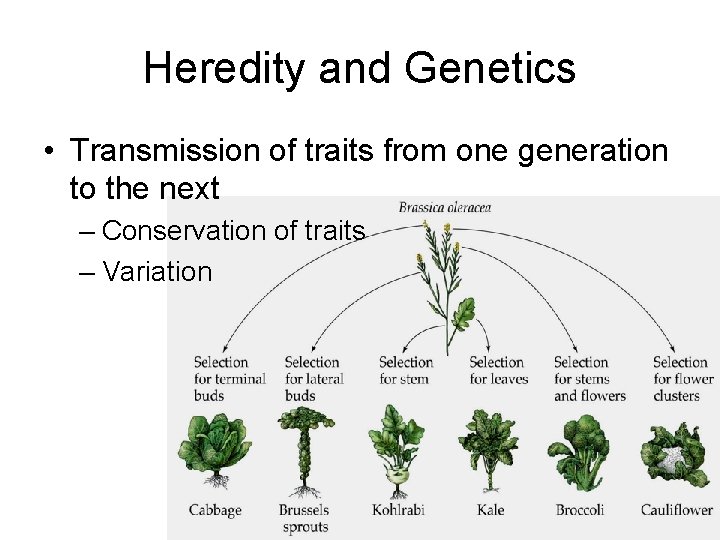
Heredity and Genetics • Transmission of traits from one generation to the next – Conservation of traits – Variation
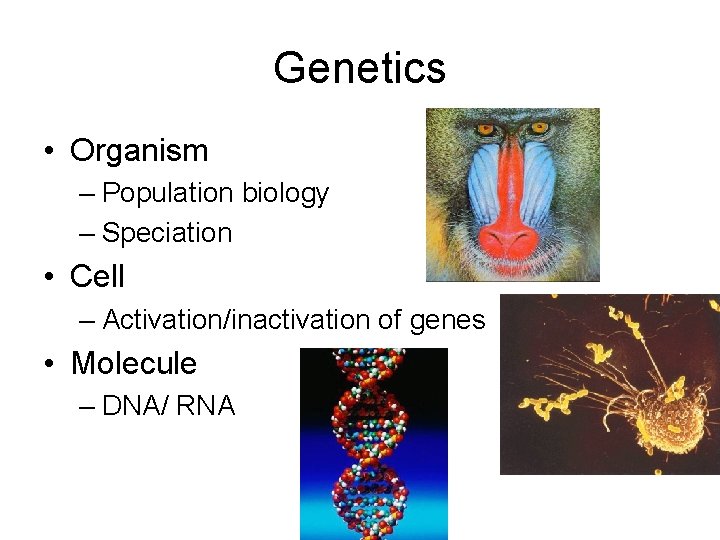
Genetics • Organism – Population biology – Speciation • Cell – Activation/inactivation of genes • Molecule – DNA/ RNA
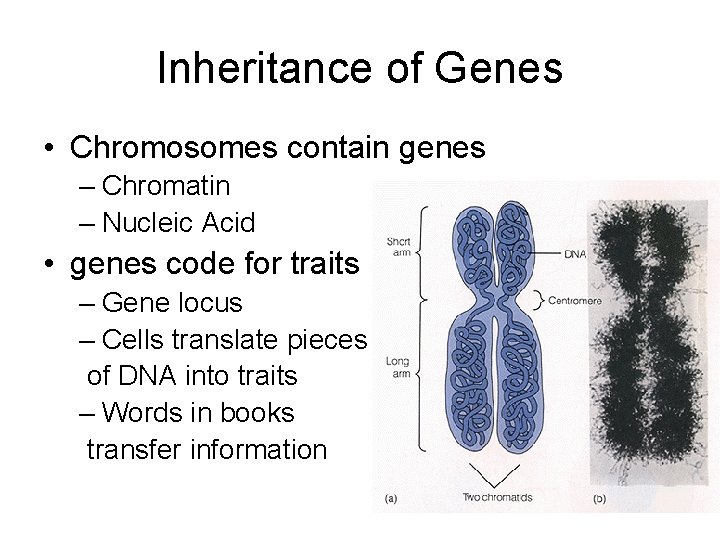
Inheritance of Genes • Chromosomes contain genes – Chromatin – Nucleic Acid • genes code for traits – Gene locus – Cells translate pieces of DNA into traits – Words in books transfer information
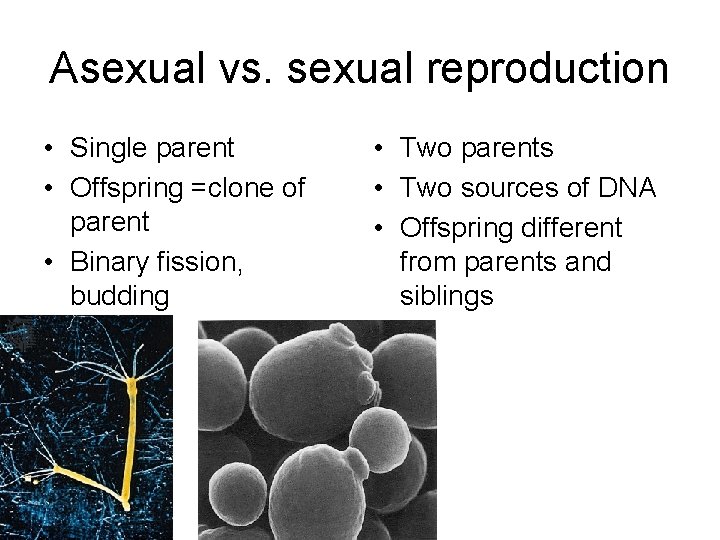
Asexual vs. sexual reproduction • Single parent • Offspring =clone of parent • Binary fission, budding • Two parents • Two sources of DNA • Offspring different from parents and siblings
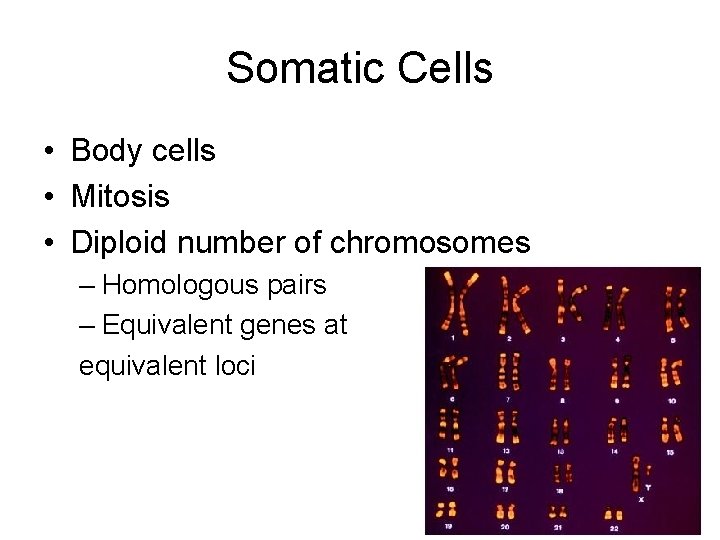
Somatic Cells • Body cells • Mitosis • Diploid number of chromosomes – Homologous pairs – Equivalent genes at equivalent loci
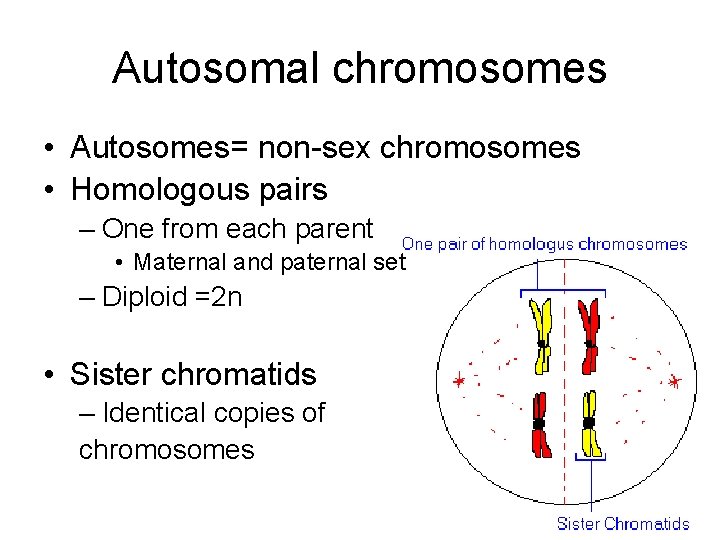
Autosomal chromosomes • Autosomes= non-sex chromosomes • Homologous pairs – One from each parent • Maternal and paternal set – Diploid =2 n • Sister chromatids – Identical copies of chromosomes
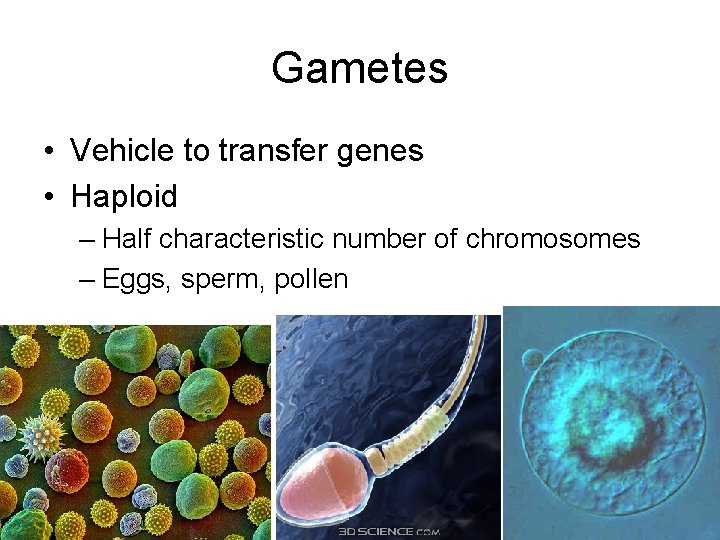
Gametes • Vehicle to transfer genes • Haploid – Half characteristic number of chromosomes – Eggs, sperm, pollen
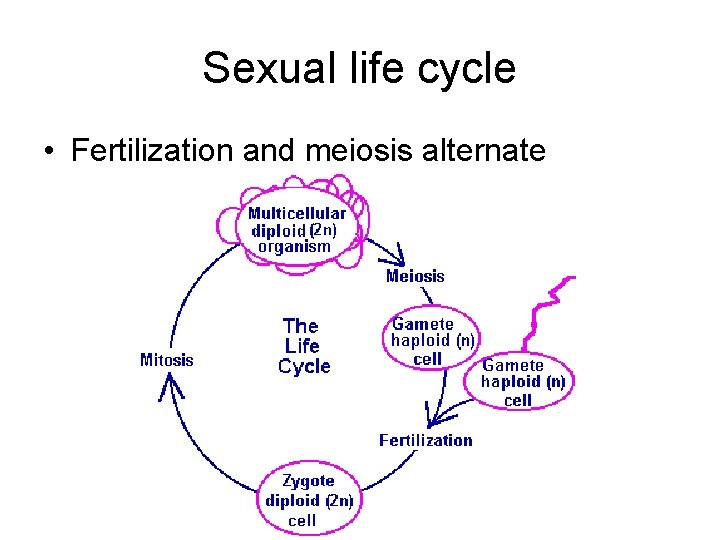
Sexual life cycle • Fertilization and meiosis alternate
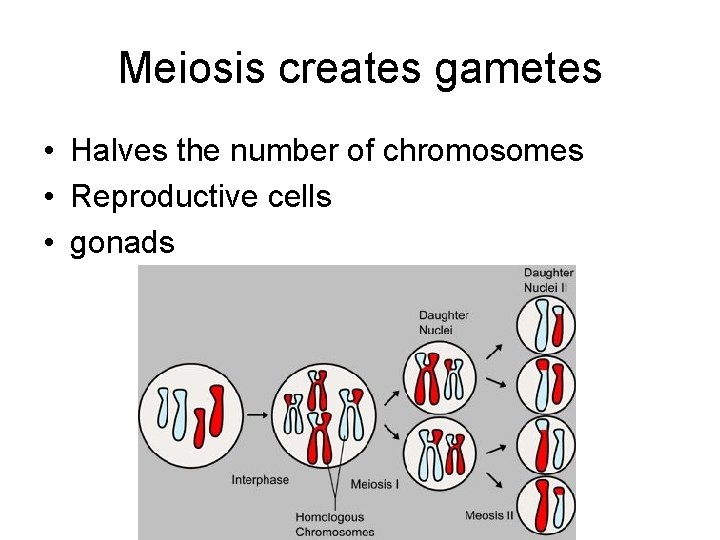
Meiosis creates gametes • Halves the number of chromosomes • Reproductive cells • gonads
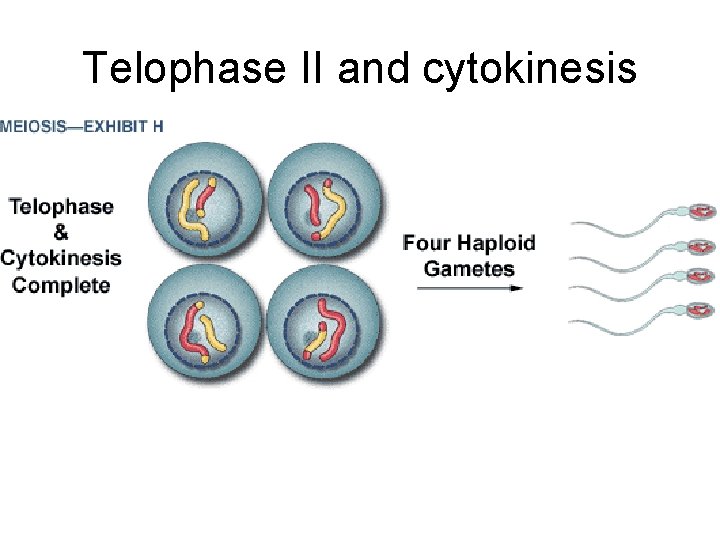
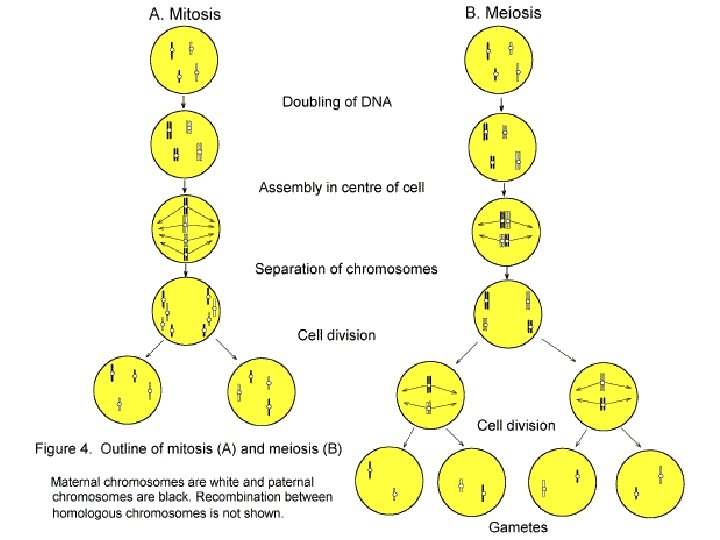
Stages of Meiosis • 2 divisions – Meiosis I separates homologous chromosomes – Meiosis II separates sister chromatids • Mechanism is almost identical to mitosis • Creates 4 unique, haploid gametes
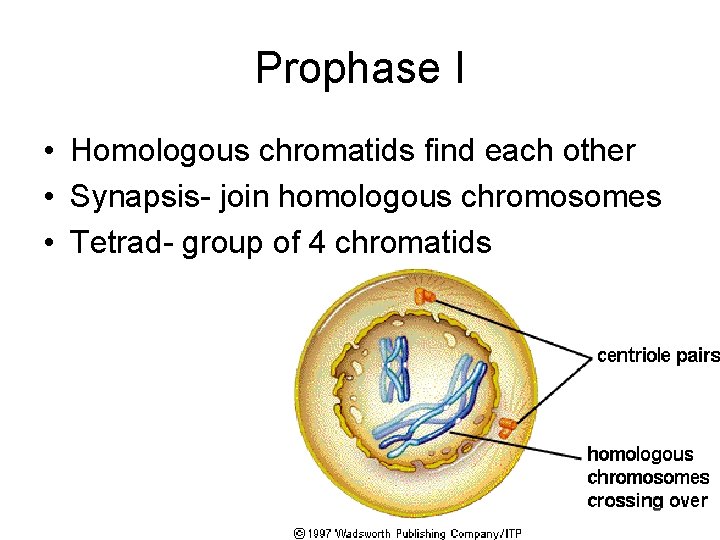
Prophase I • Homologous chromatids find each other • Synapsis- join homologous chromosomes • Tetrad- group of 4 chromatids
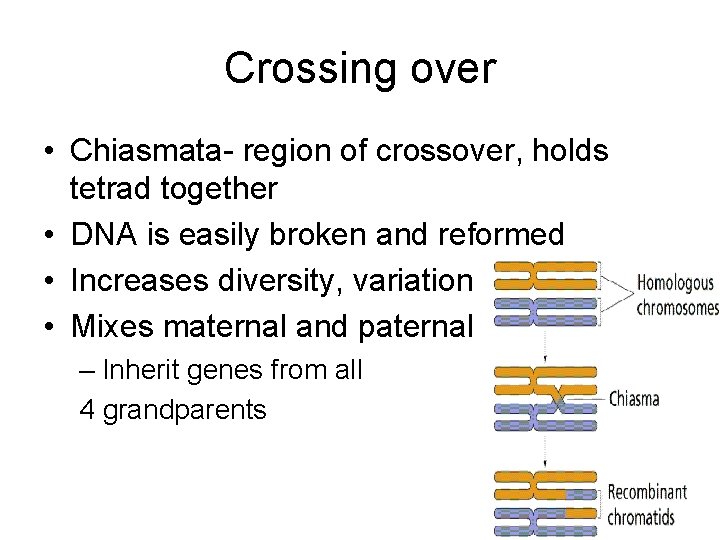
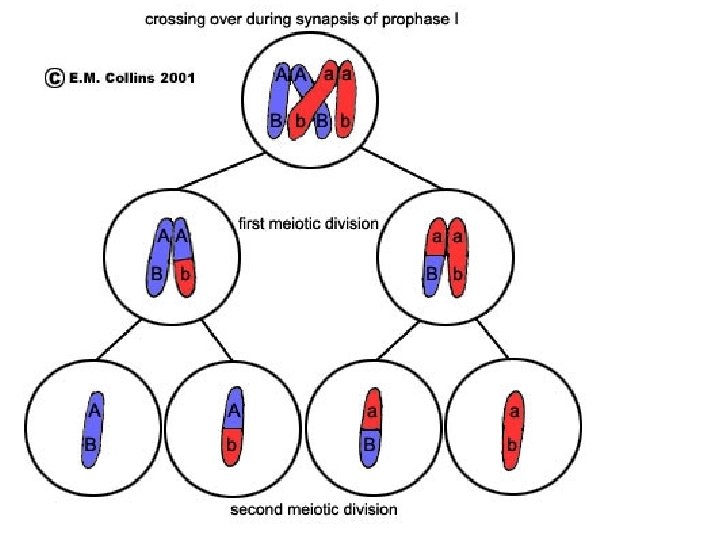
Crossing over • Chiasmata- region of crossover, holds tetrad together • DNA is easily broken and reformed • Increases diversity, variation • Mixes maternal and paternal – Inherit genes from all 4 grandparents
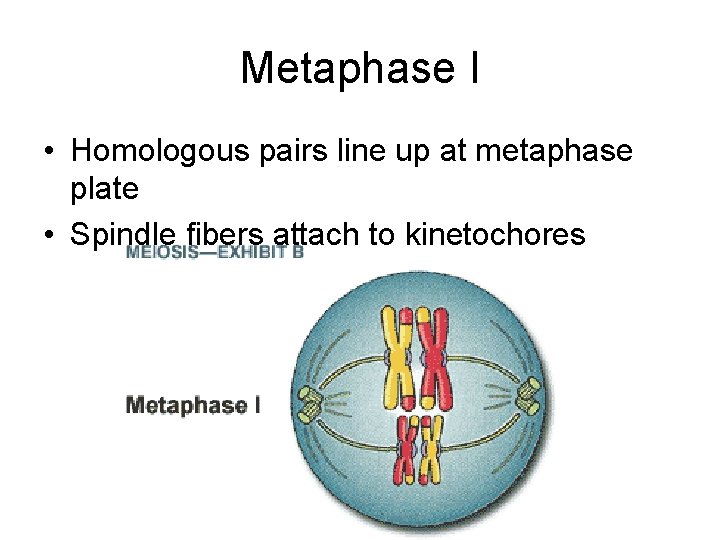
Metaphase I • Homologous pairs line up at metaphase plate • Spindle fibers attach to kinetochores
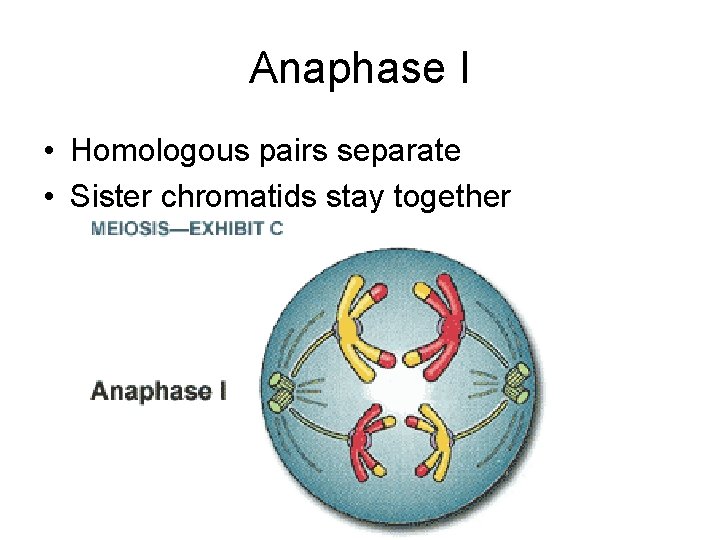
Anaphase I • Homologous pairs separate • Sister chromatids stay together
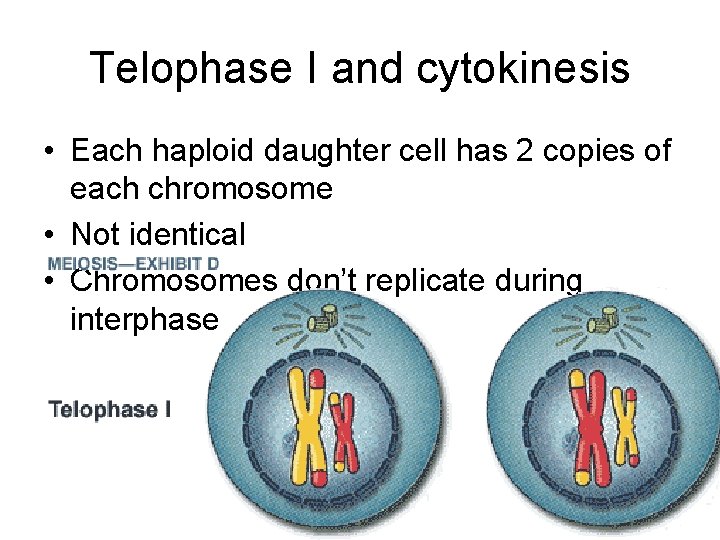
Telophase I and cytokinesis • Each haploid daughter cell has 2 copies of each chromosome • Not identical • Chromosomes don’t replicate during interphase
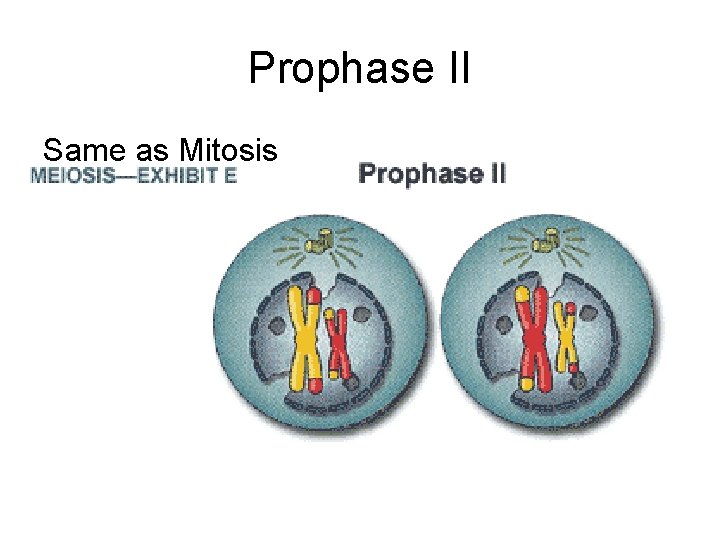
Prophase II Same as Mitosis
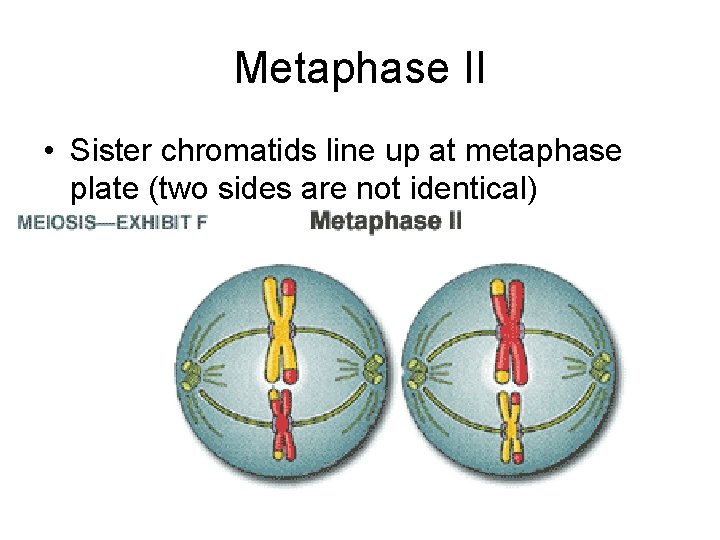
Metaphase II • Sister chromatids line up at metaphase plate (two sides are not identical)
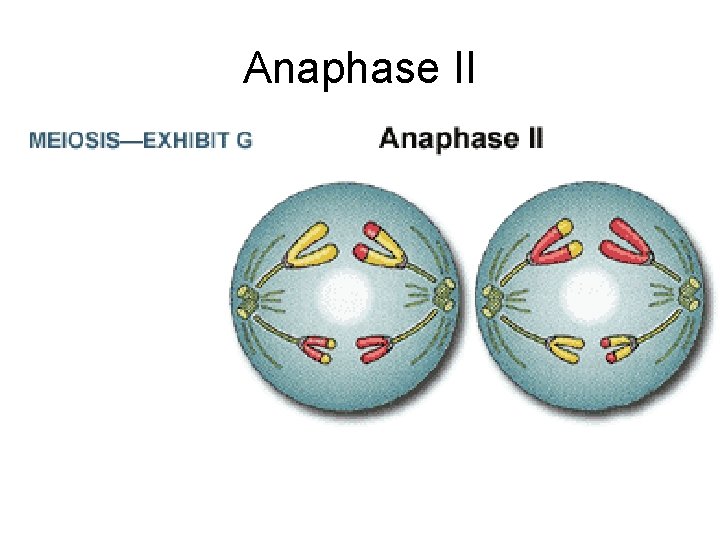
Anaphase II
Telophase II and cytokinesis
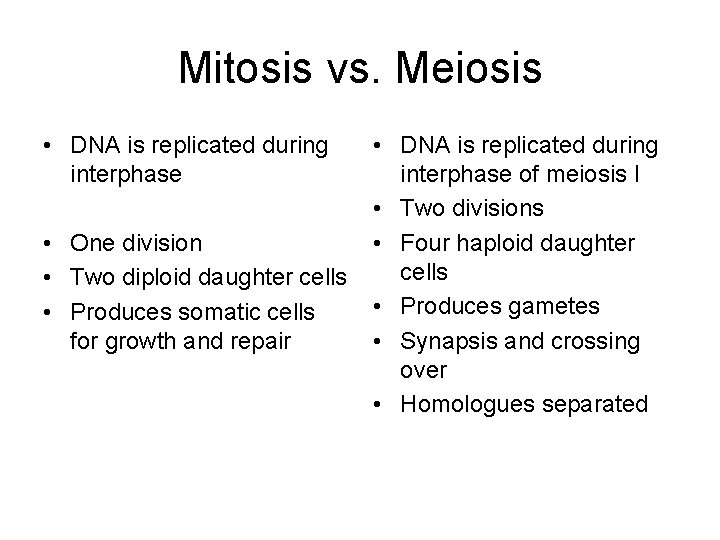
Mitosis vs. Meiosis • DNA is replicated during interphase • One division • Two diploid daughter cells • Produces somatic cells for growth and repair • DNA is replicated during interphase of meiosis I • Two divisions • Four haploid daughter cells • Produces gametes • Synapsis and crossing over • Homologues separated
Meiosis increases genetic variation • Sexually reproducing species are more diverse • Three factors – Independent Assortment – Crossing Over – Random fertilization
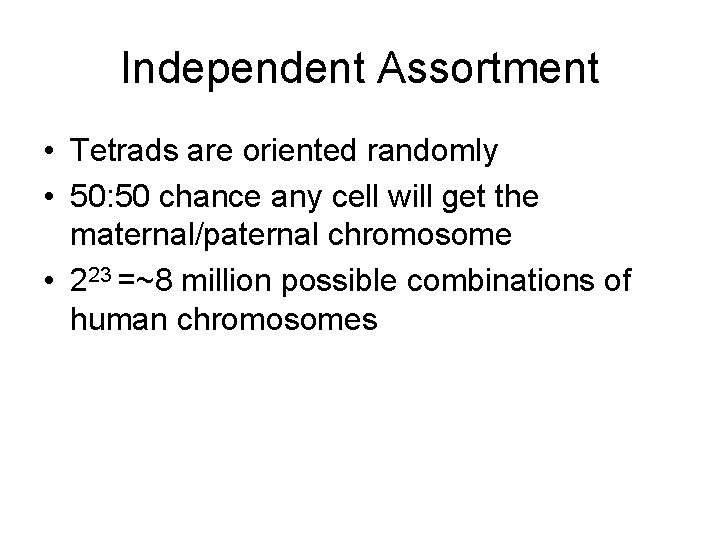
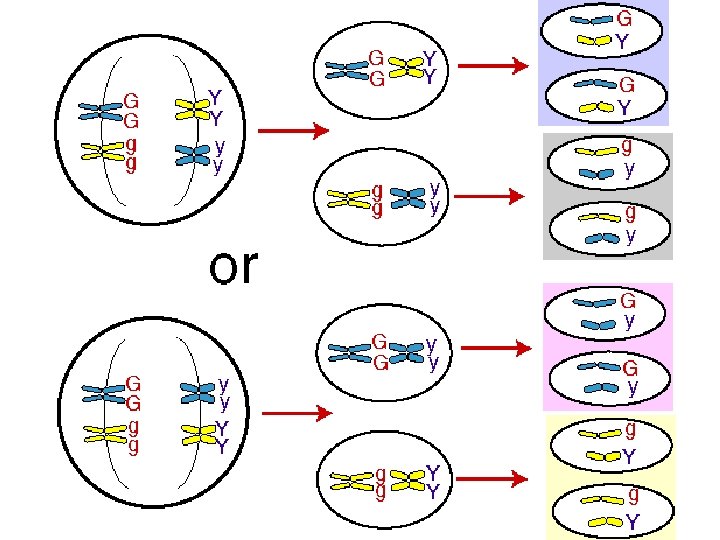
Independent Assortment • Tetrads are oriented randomly • 50: 50 chance any cell will get the maternal/paternal chromosome • 223 =~8 million possible combinations of human chromosomes
Crossing Over • Recombinant chromosomes contain genes from both maternal and paternal chromosomes • 1 -3 crossovers/chromosome • Sister chromatids can be oriented in two ways during metaphase II
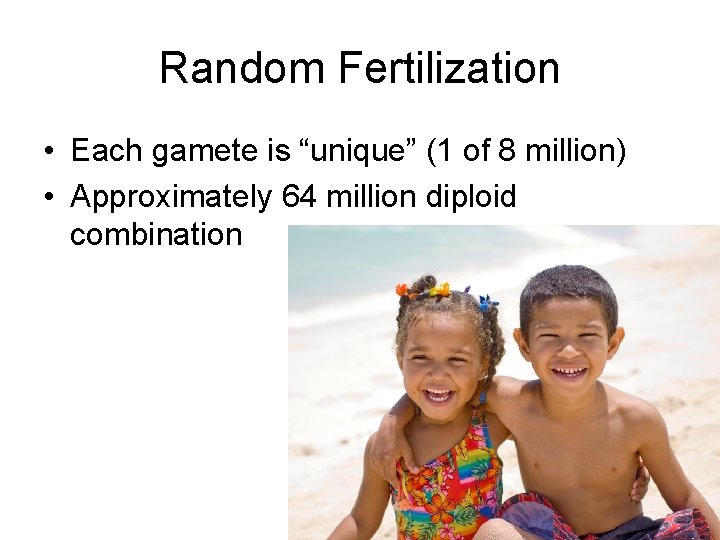
Random Fertilization • Each gamete is “unique” (1 of 8 million) • Approximately 64 million diploid combination
Evolutionary Significance • Mendel recognized that traits were passed from parents to offspring • Darwin recognized that some individuals were more reproductively successful • Neither knew about DNA, chromosomes • Meiosis explains both theories