
Meiosis Haploid cells cell having one set of
- Slides: 27
Meiosis
Haploid cells - cell having one set of chromosomes Diploid cells - cell having two sets of chromosomes
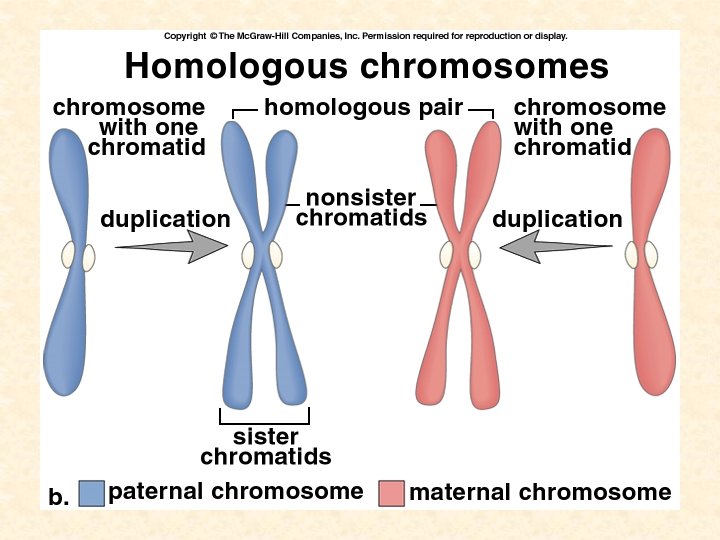
• Somatic cells - body cells • Homologous – chromosome that are exactly alike in size and location of the centromere • Gametes - a specialized haploid cell involved in reproduction
Role of Meiosis • To produce haploid gametes from diploid germ cells. • Occurs only in the gonads • Plays an important role in creating genetic variability through the processes of:
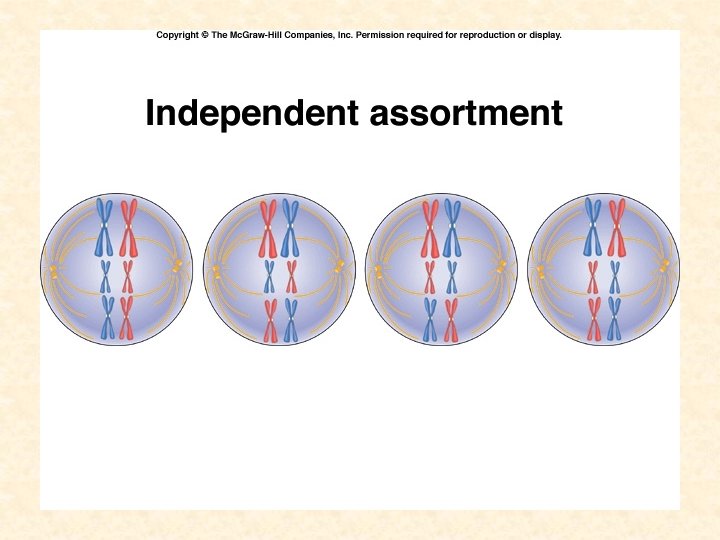
Processes of genetic variability • Segregation: separation of chromosomes • Independent assortment: the separation is random and independent of circumstances
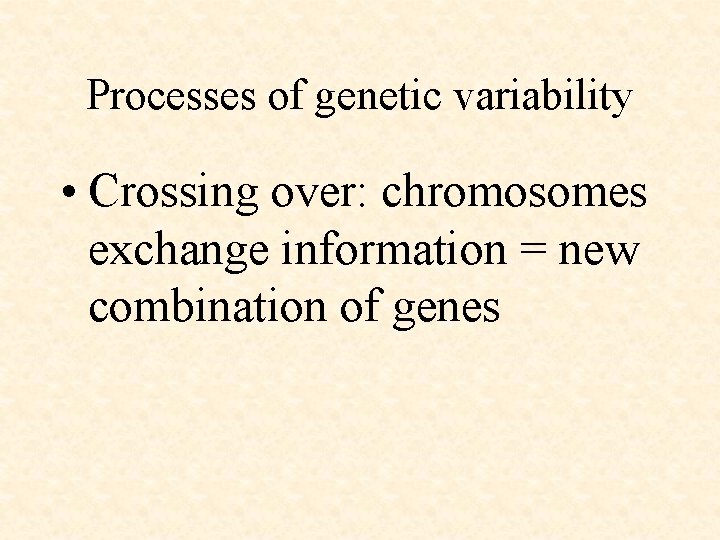
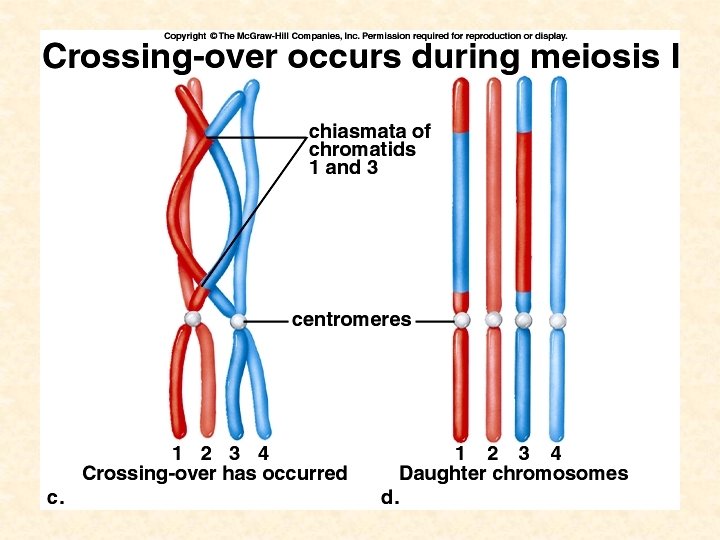
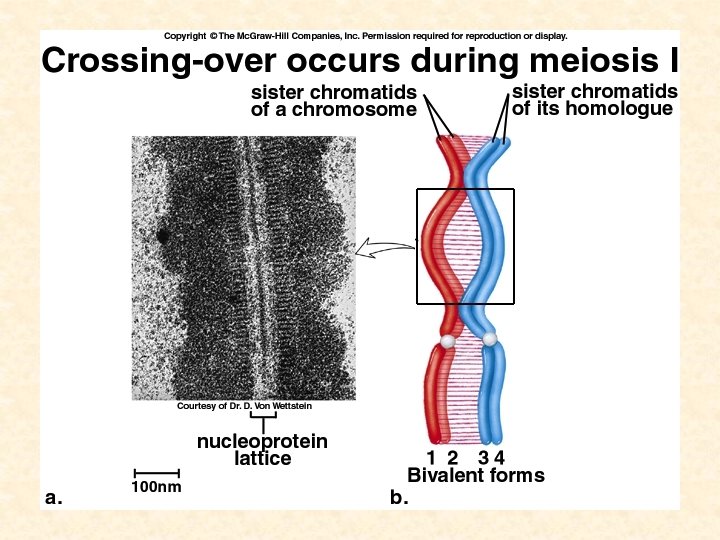
Processes of genetic variability • Crossing over: chromosomes exchange information = new combination of genes
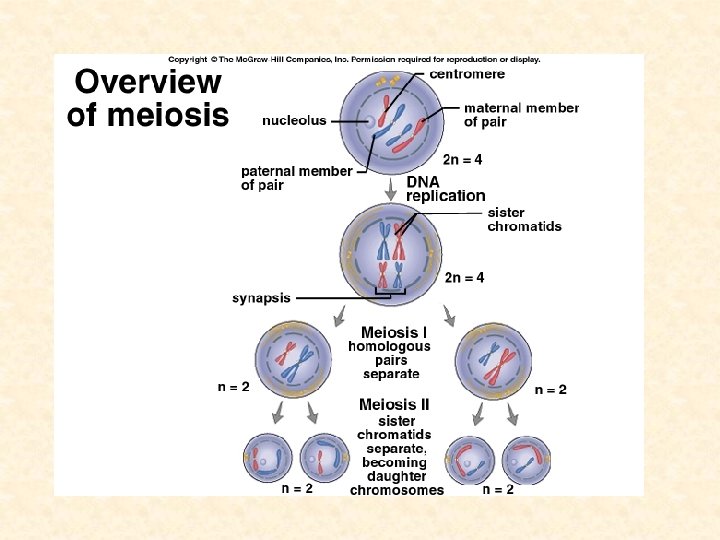
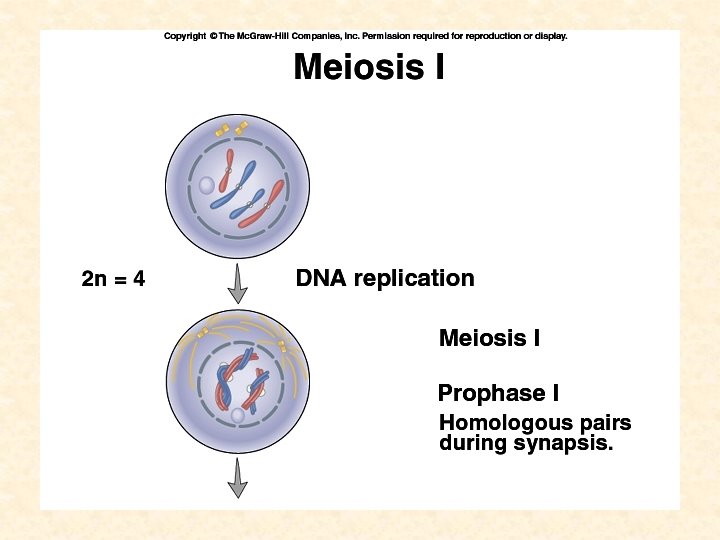
Interphase • S phase—replication • Cell is now diploid with all chromosomes being mitotic Meiosis I—reductive division • Creates 2 haploid cells with mitotic chromosomes (cut chromosome # in half • Consists of several stages
Prophase I—Like prophase in mitosis. Synapsis—homologous chromosomes attach to form tetrads. • Crossing over occurs. • Reshuffling of genes. Genetic recombination. Important for creating variability.
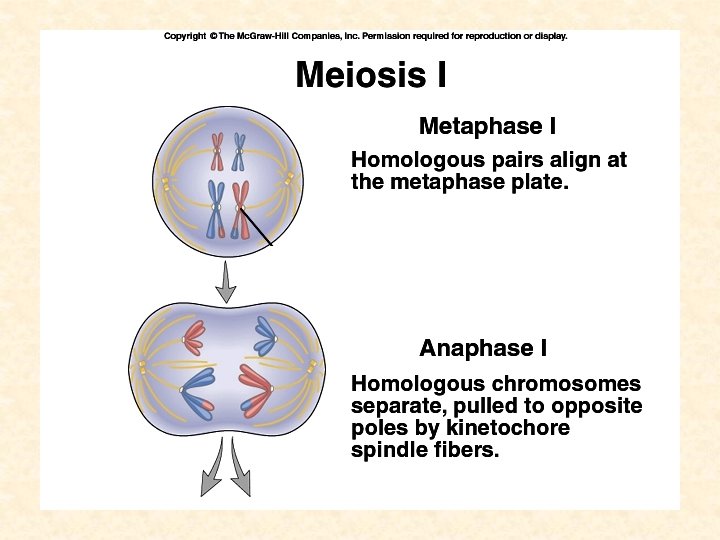
Metaphase I— • tetrads are aligned in such a way that the homologous chromosomes are situated across from each other. • Independent Assortment—maternal and paternal chromosomes are line up on the opposite sides of the metaphase plate in a random fashion. • When these homologues split during anaphase I. The new nuclei consist of a mixture of maternal and paternal • Importance for genetic variability
Anaphase I • Homologous chromosomes (w/ both chromatids) separate and move to opposite ends of the cell
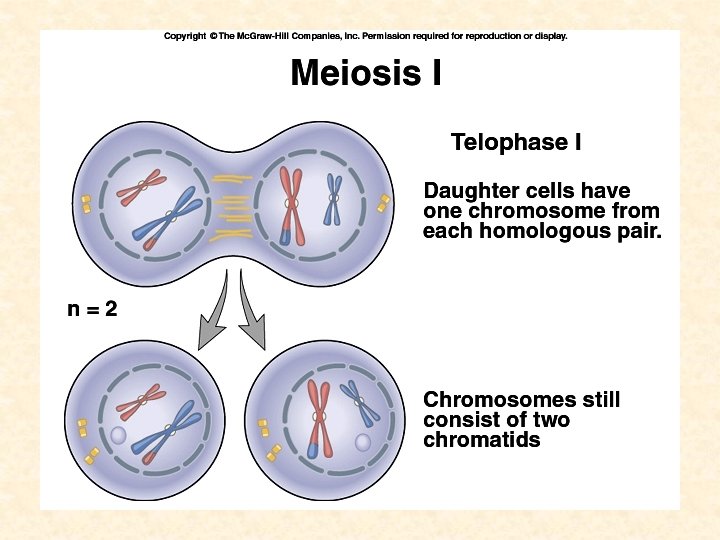
Telophase I—Similar to telophase in mitosis. Cytokinesis Interphase II • Now have 2 haploid cells with mitotic chromosomes. • Very brief. No DNA replication
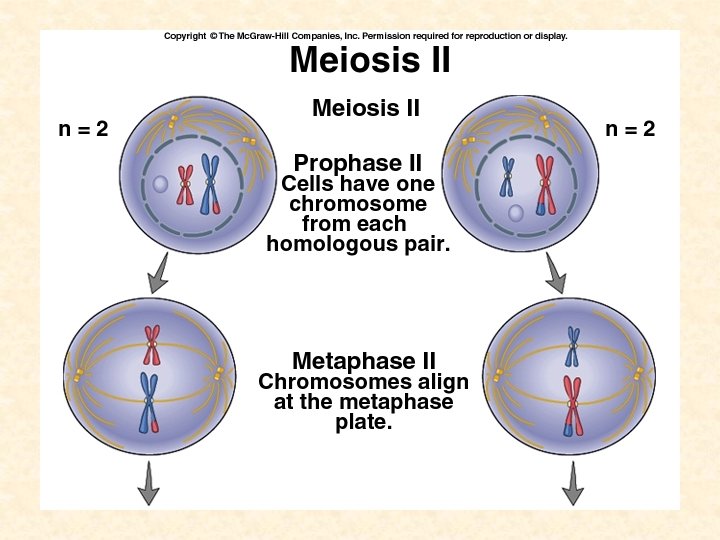
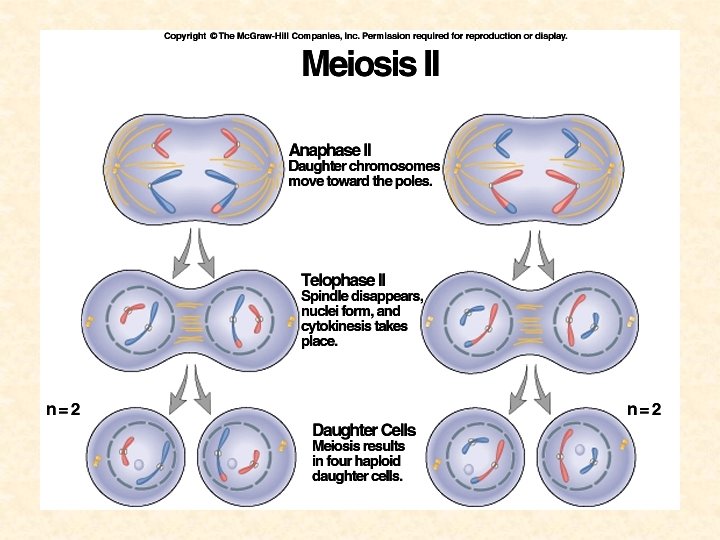
Meiosis II Almost the same as Mitosis. • 2 cells are formed from each of the cells from Meiosis I. • These cells are haploid and have chromosomes formed by only one chromatid. • These cells develop into gametes
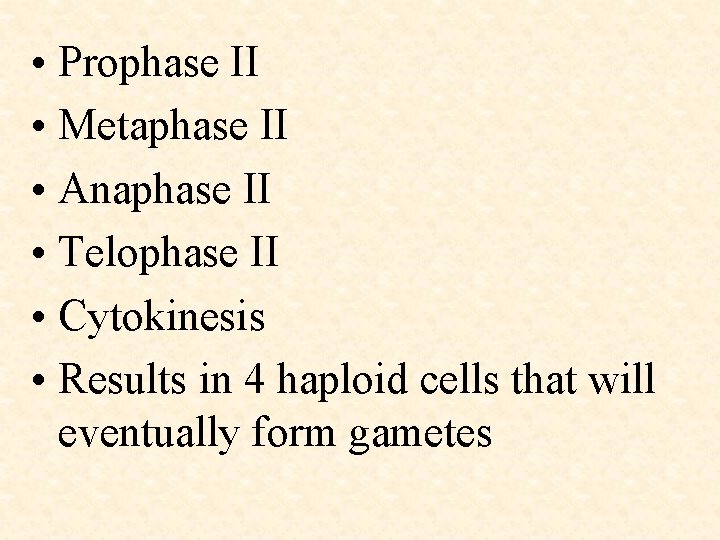
• Prophase II • Metaphase II • Anaphase II • Telophase II • Cytokinesis • Results in 4 haploid cells that will eventually form gametes
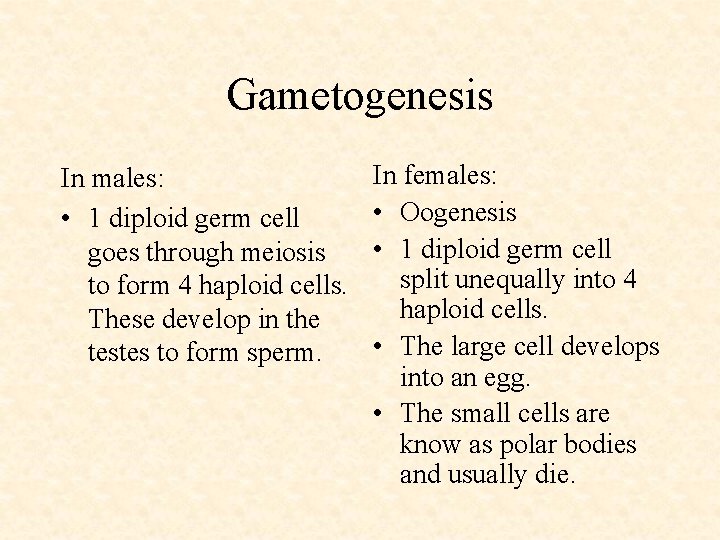
Gametogenesis In males: • 1 diploid germ cell goes through meiosis to form 4 haploid cells. These develop in the testes to form sperm. In females: • Oogenesis • 1 diploid germ cell split unequally into 4 haploid cells. • The large cell develops into an egg. • The small cells are know as polar bodies and usually die.
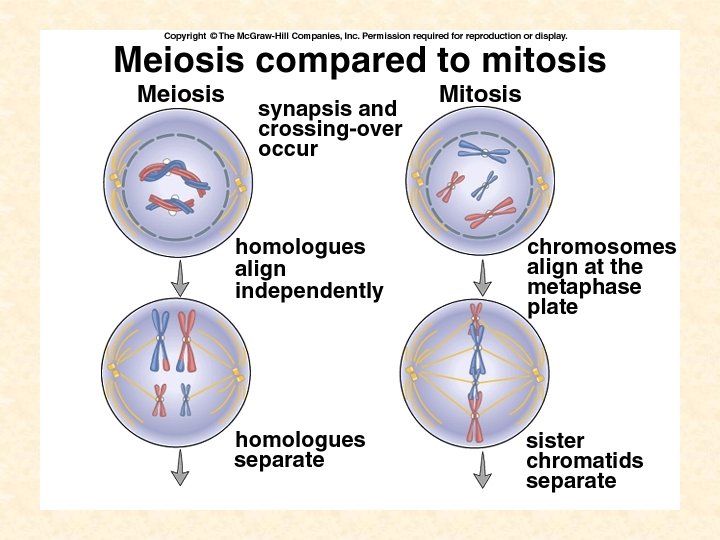
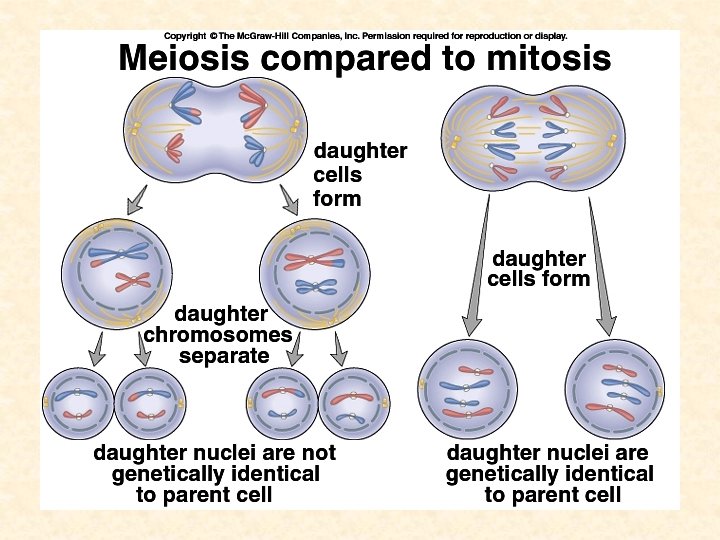
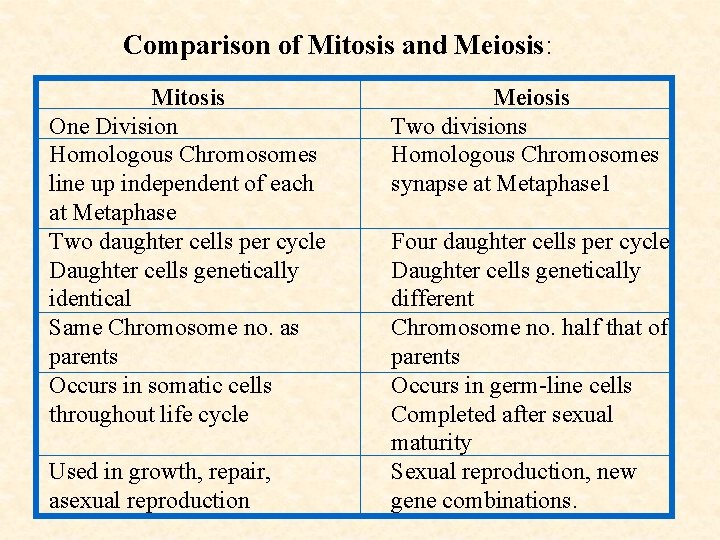
Comparison of Mitosis and Meiosis: Mitosis One Division Homologous Chromosomes line up independent of each at Metaphase Two daughter cells per cycle Daughter cells genetically identical Same Chromosome no. as parents Occurs in somatic cells throughout life cycle Used in growth, repair, asexual reproduction Meiosis Two divisions Homologous Chromosomes synapse at Metaphase 1 Four daughter cells per cycle Daughter cells genetically different Chromosome no. half that of parents Occurs in germ-line cells Completed after sexual maturity Sexual reproduction, new gene combinations.