
Meiosis Gametes n Sex cells egg and sperm
- Slides: 27
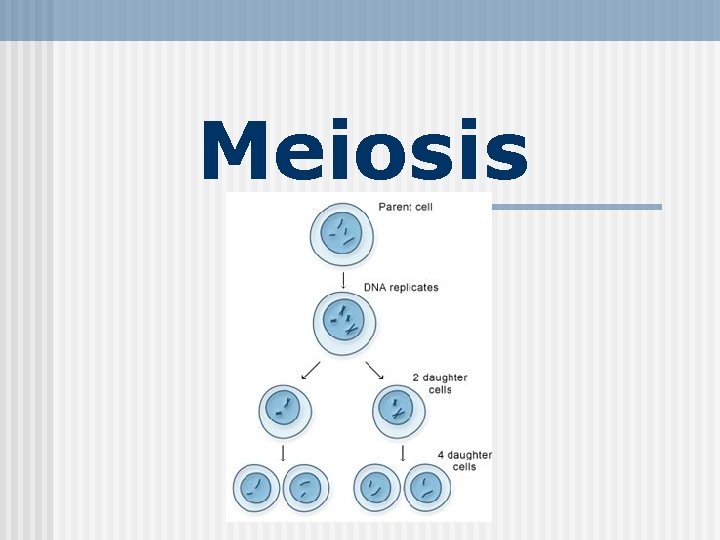
Meiosis
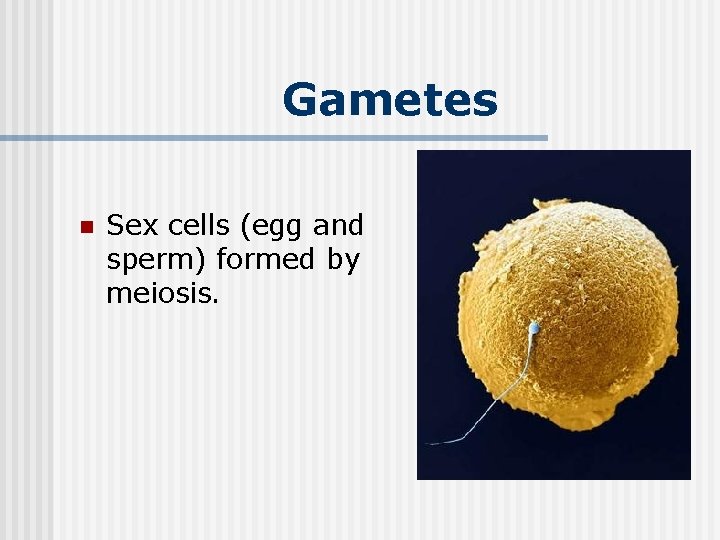
Gametes n Sex cells (egg and sperm) formed by meiosis.
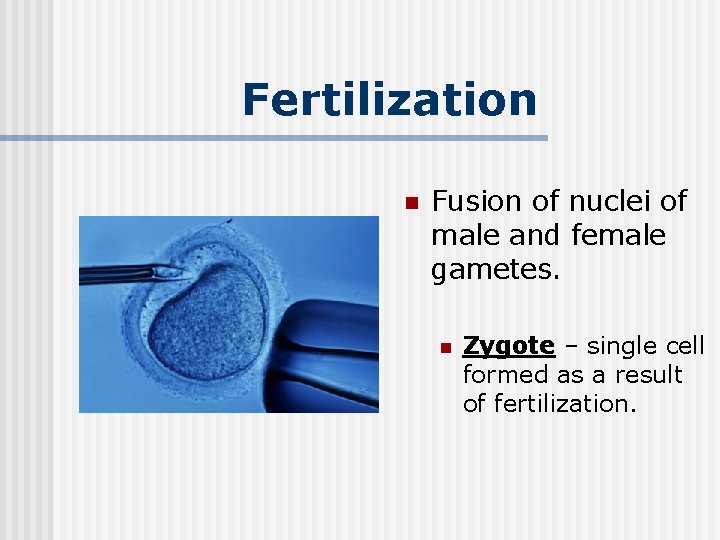
Fertilization n Fusion of nuclei of male and female gametes. n Zygote – single cell formed as a result of fertilization.
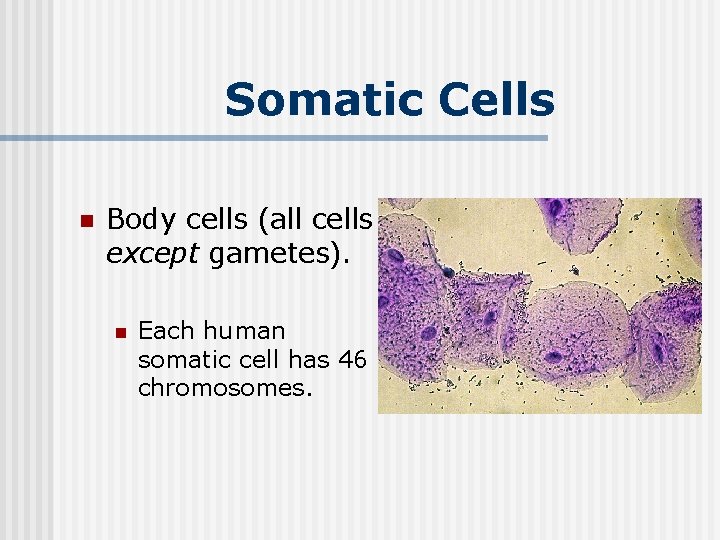
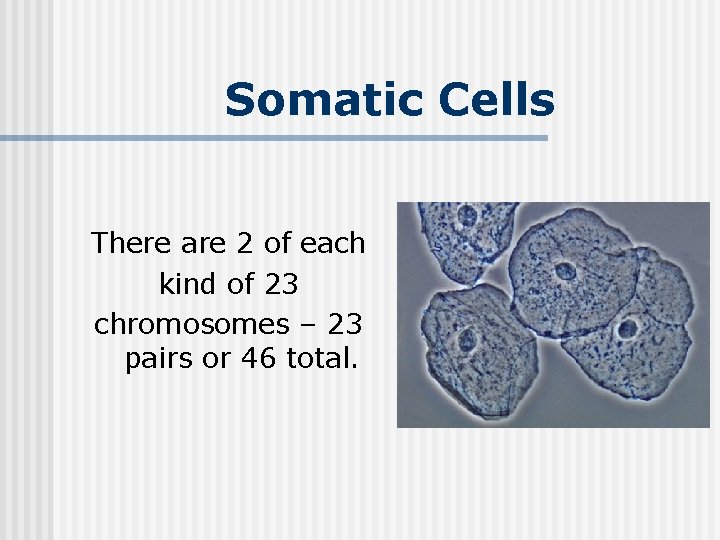
Somatic Cells n Body cells (all cells except gametes). n Each human somatic cell has 46 chromosomes.
Somatic Cells There are 2 of each kind of 23 chromosomes – 23 pairs or 46 total.
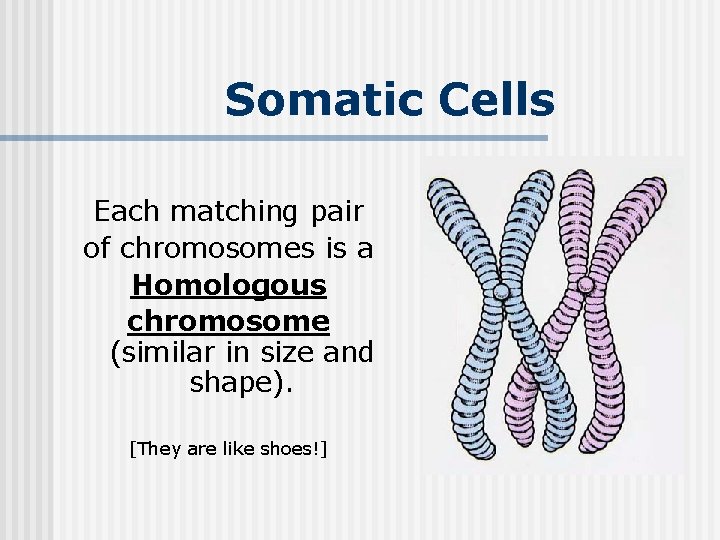
Somatic Cells Each matching pair of chromosomes is a Homologous chromosome (similar in size and shape). [They are like shoes!]
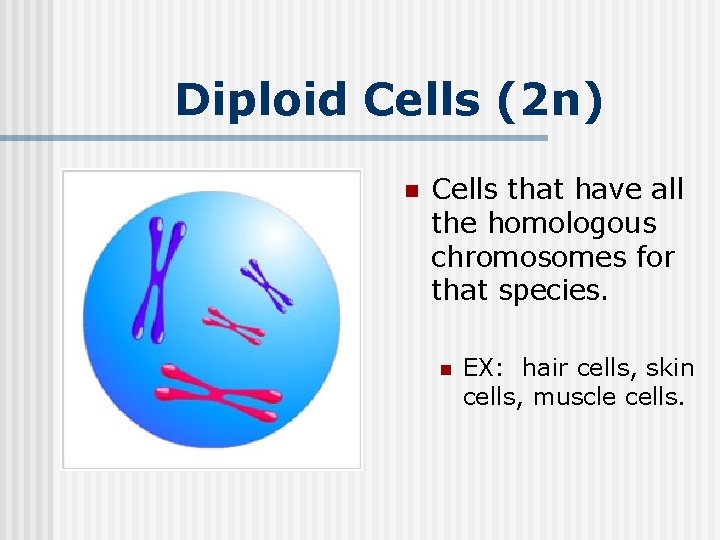
Diploid Cells (2 n) n Cells that have all the homologous chromosomes for that species. n EX: hair cells, skin cells, muscle cells.
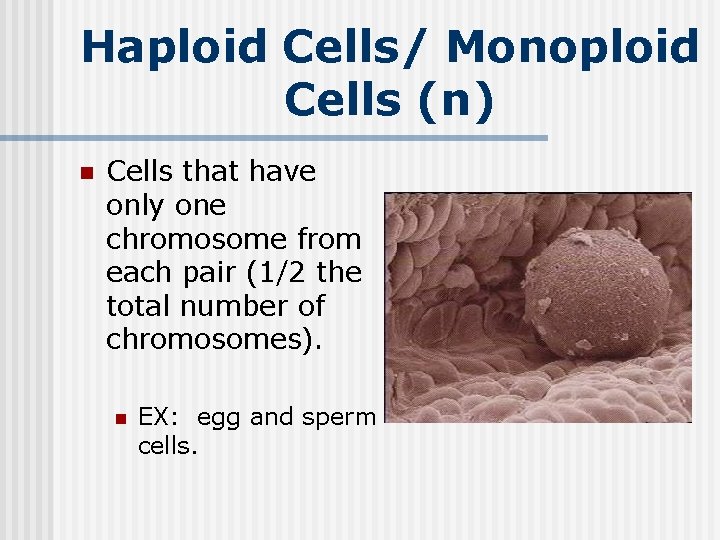
Haploid Cells/ Monoploid Cells (n) n Cells that have only one chromosome from each pair (1/2 the total number of chromosomes). n EX: egg and sperm cells.
Stages of Meiosis (“Reduction Division”) n Takes place in specialized diploid cells that result in haploid cells. n Interphase takes place before meiosis begins.
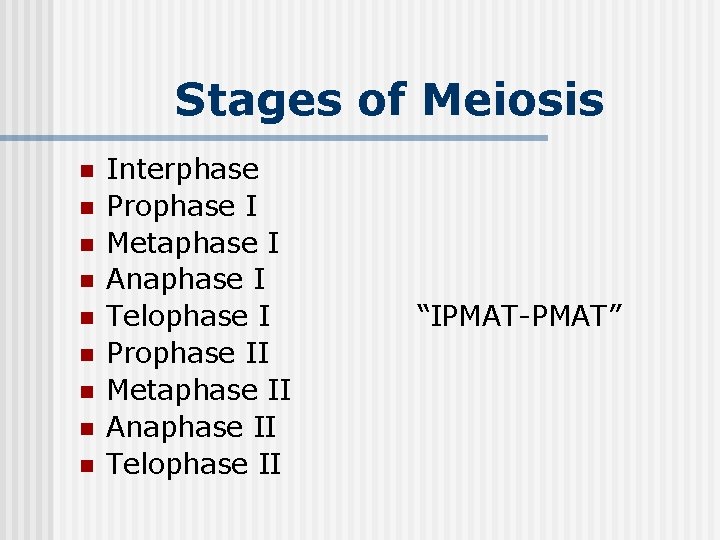
Stages of Meiosis n n n n n Interphase Prophase I Metaphase I Anaphase I Telophase I Prophase II Metaphase II Anaphase II Telophase II “IPMAT-PMAT”
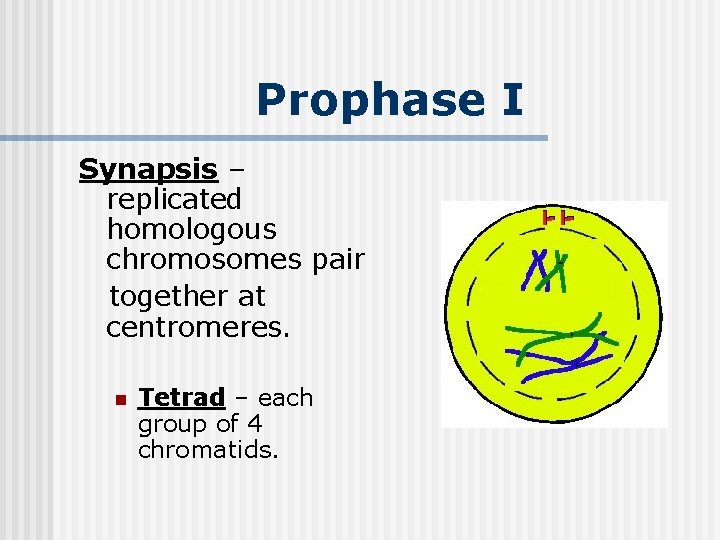
Prophase I Synapsis – replicated homologous chromosomes pair together at centromeres. n Tetrad – each group of 4 chromatids.
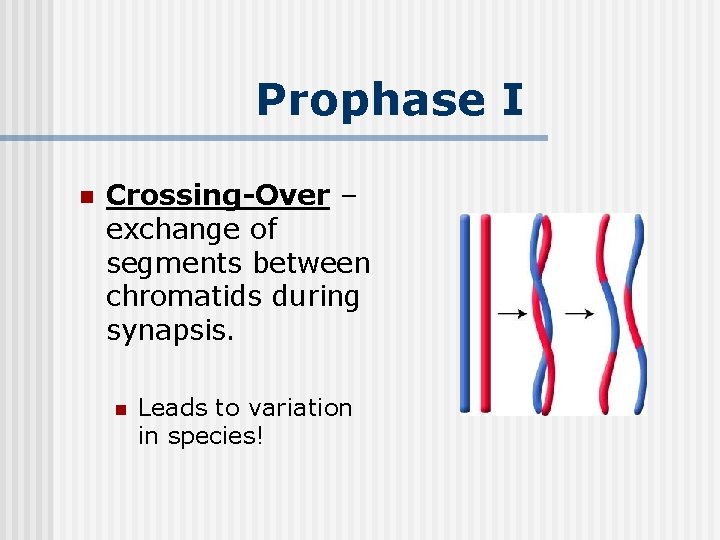
Prophase I n Crossing-Over – exchange of segments between chromatids during synapsis. n Leads to variation in species!
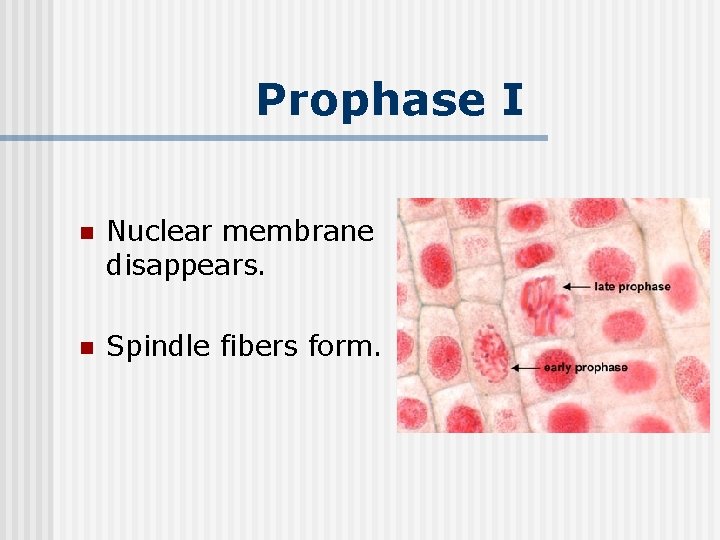
Prophase I n Nuclear membrane disappears. n Spindle fibers form.
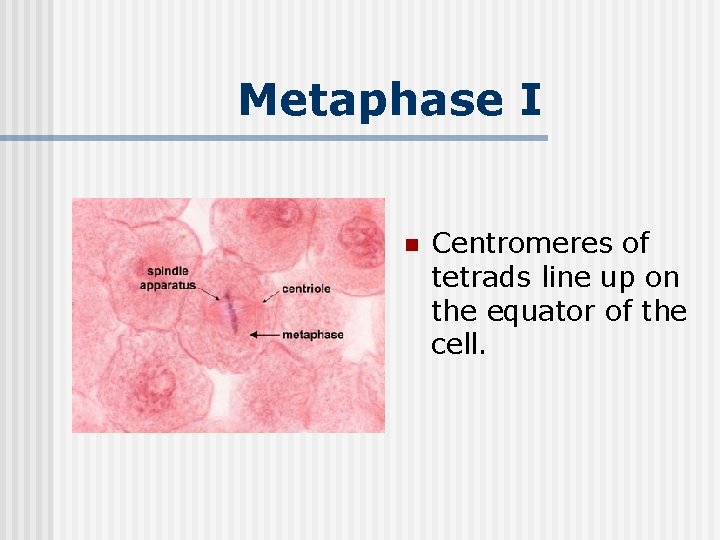
Metaphase I n Centromeres of tetrads line up on the equator of the cell.
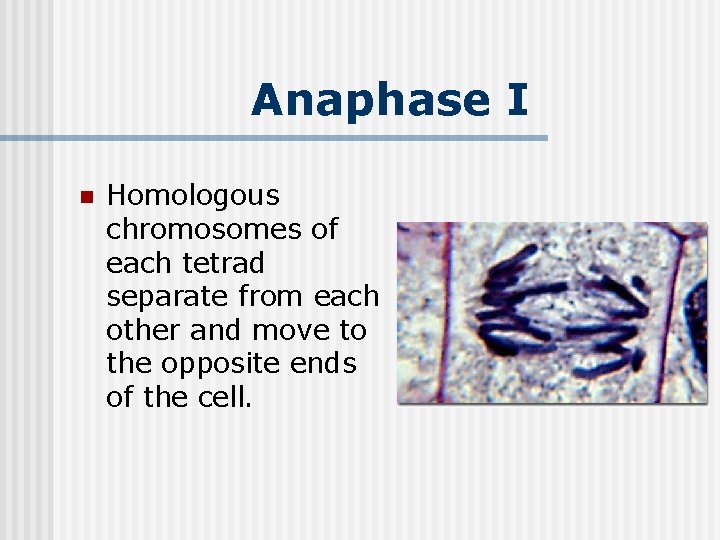
Anaphase I n Homologous chromosomes of each tetrad separate from each other and move to the opposite ends of the cell.
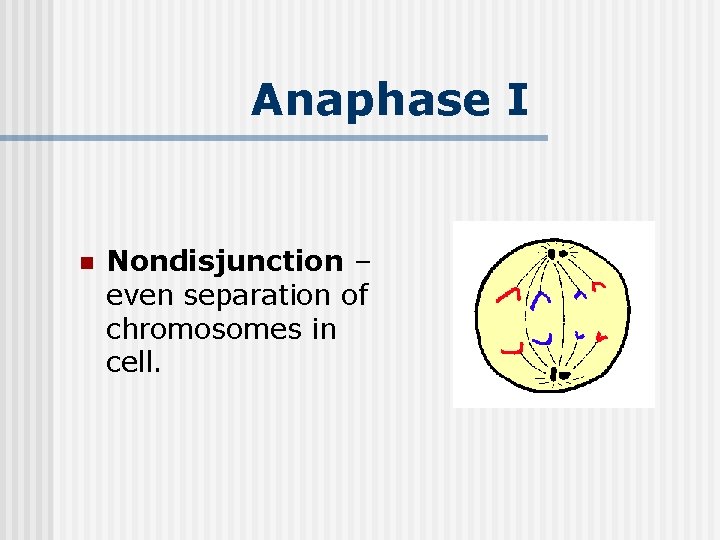
Anaphase I n Nondisjunction – even separation of chromosomes in cell.
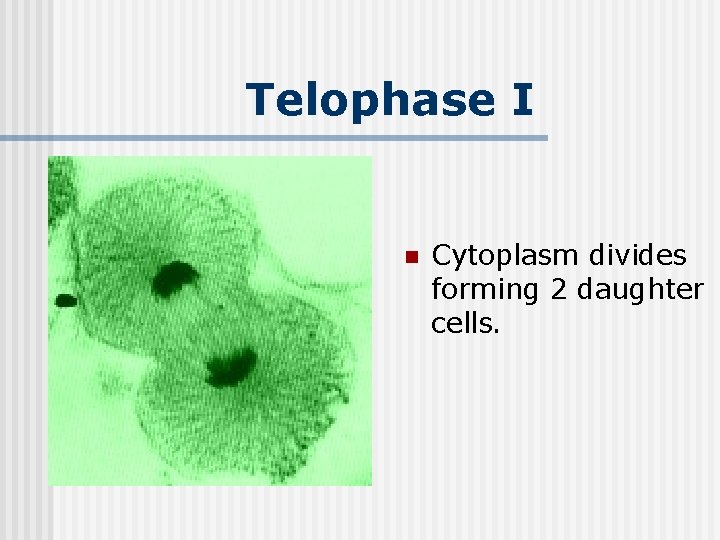
Telophase I n Cytoplasm divides forming 2 daughter cells.
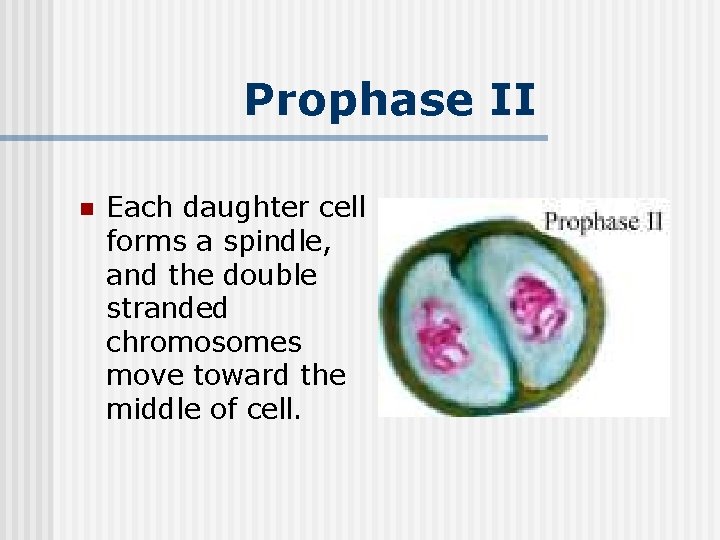
Prophase II n Each daughter cell forms a spindle, and the double stranded chromosomes move toward the middle of cell.
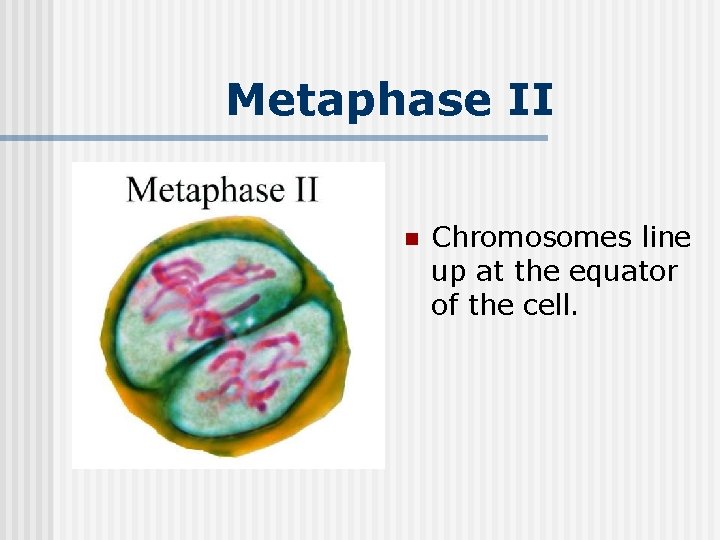
Metaphase II n Chromosomes line up at the equator of the cell.
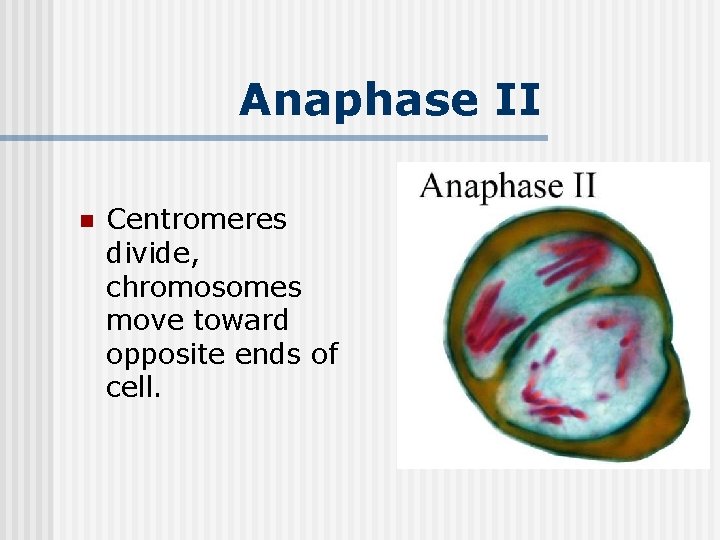
Anaphase II n Centromeres divide, chromosomes move toward opposite ends of cell.
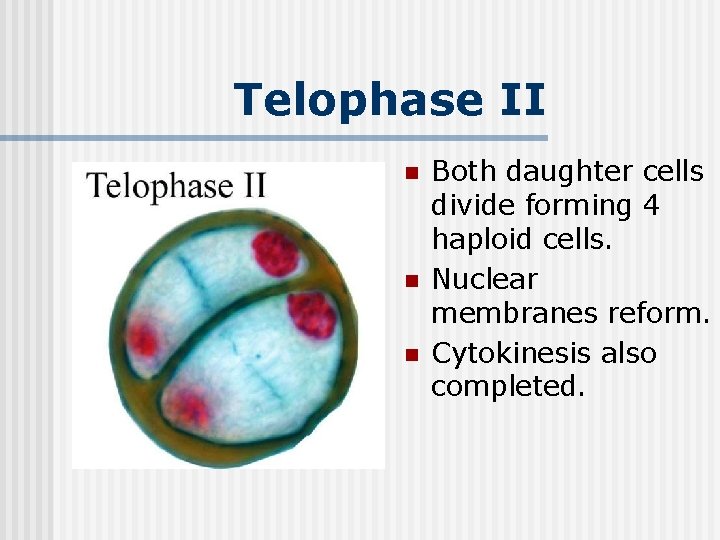
Telophase II n n n Both daughter cells divide forming 4 haploid cells. Nuclear membranes reform. Cytokinesis also completed.
Mitosis – vs - Meiosis Occurs in growth and Occurs in production asexual reproduction of gametes
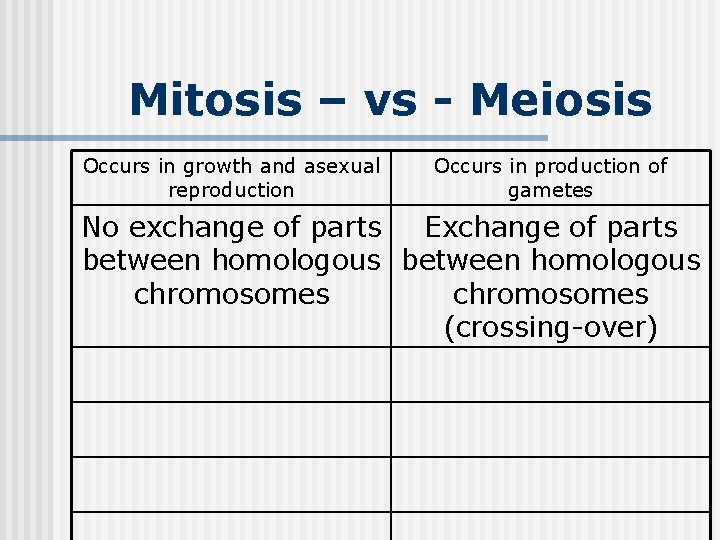
Mitosis – vs - Meiosis Occurs in growth and asexual reproduction Occurs in production of gametes No exchange of parts Exchange of parts between homologous chromosomes (crossing-over)
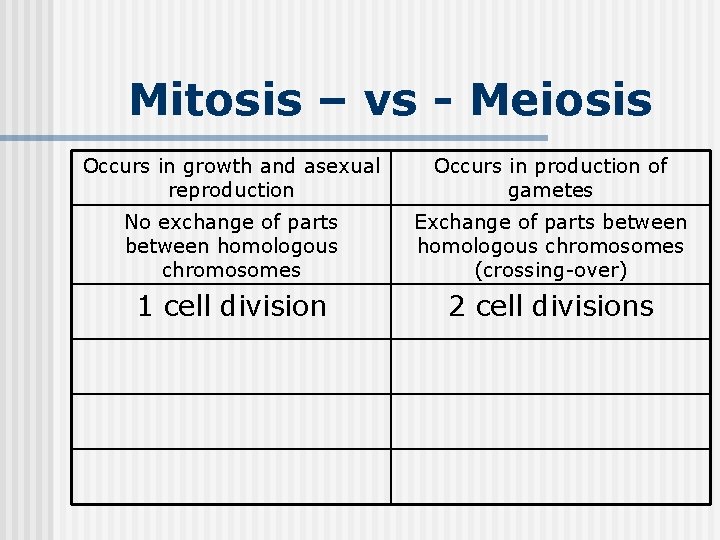
Mitosis – vs - Meiosis Occurs in growth and asexual reproduction Occurs in production of gametes No exchange of parts between homologous chromosomes Exchange of parts between homologous chromosomes (crossing-over) 1 cell division 2 cell divisions
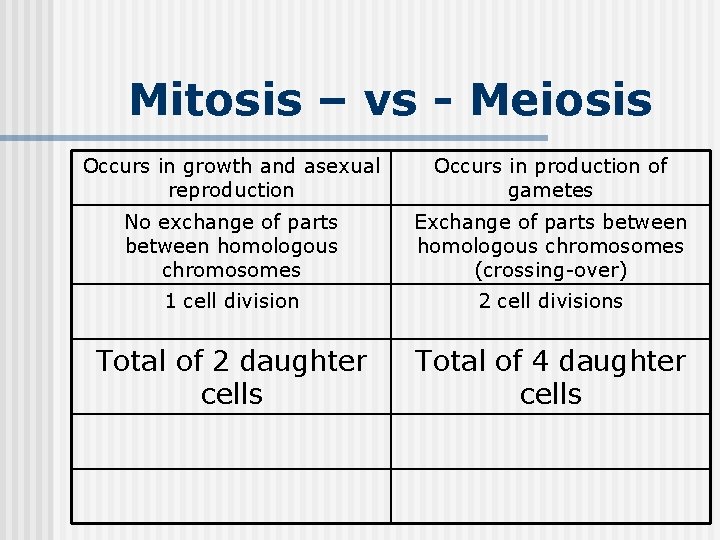
Mitosis – vs - Meiosis Occurs in growth and asexual reproduction Occurs in production of gametes No exchange of parts between homologous chromosomes Exchange of parts between homologous chromosomes (crossing-over) 1 cell division 2 cell divisions Total of 2 daughter cells Total of 4 daughter cells
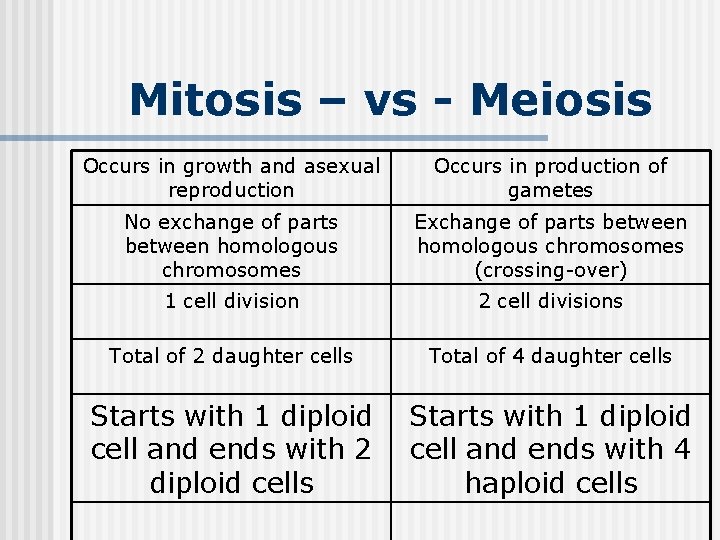
Mitosis – vs - Meiosis Occurs in growth and asexual reproduction Occurs in production of gametes No exchange of parts between homologous chromosomes Exchange of parts between homologous chromosomes (crossing-over) 1 cell division 2 cell divisions Total of 2 daughter cells Total of 4 daughter cells Starts with 1 diploid cell and ends with 2 diploid cells Starts with 1 diploid cell and ends with 4 haploid cells
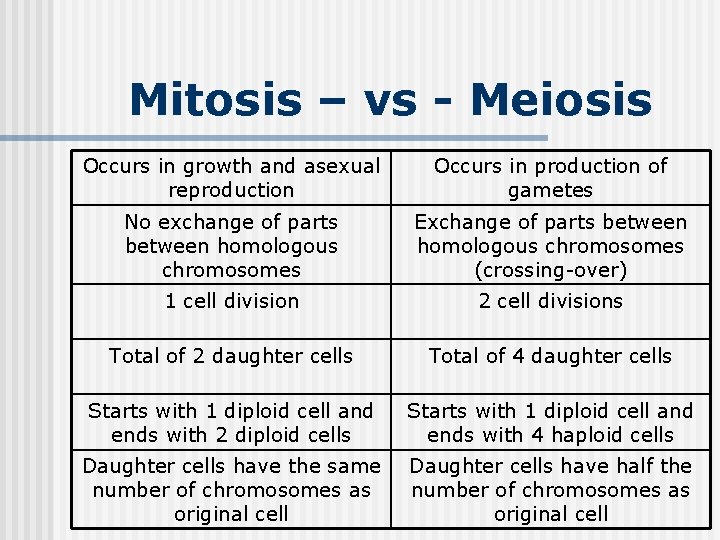
Mitosis – vs - Meiosis Occurs in growth and asexual reproduction Occurs in production of gametes No exchange of parts between homologous chromosomes Exchange of parts between homologous chromosomes (crossing-over) 1 cell division 2 cell divisions Total of 2 daughter cells Total of 4 daughter cells Starts with 1 diploid cell and ends with 2 diploid cells Starts with 1 diploid cell and ends with 4 haploid cells Daughter cells have the same number of chromosomes as original cell Daughter cells have half the number of chromosomes as original cell