
Meiosis Chromosome Number The two sets of chromosomes

Meiosis

Chromosome Number • The two sets of chromosomes are homologous, each chromosomes from the male parent has a corresponding chromosome from the female. • Fruit flies have 8 chromosomes. • 4 came from the fly’s male parent, and 4 came from the female parent.
Diploid & Haploid • Diploid: cell with 2 sets of chromosomes. – Diploid: 2 N Fruit Fly: 2 N=8 Humans: 2 N=46 • Haploid: cell with 1 set of chromosomes, i. e. gametes. – Haploid: N Fruit Flies: N=4 Humans: N=23
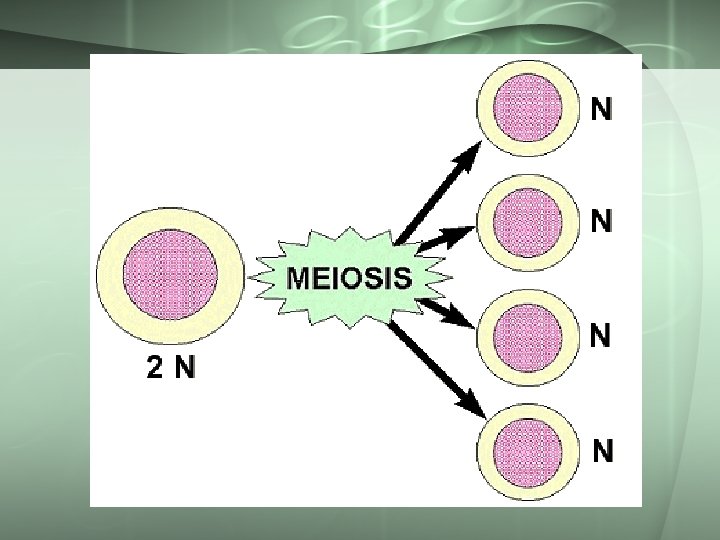
Meiosis • 1 Diploid cell 4 haploid cells • Chromosome no. is halved • Separate homologous chromosomes
Meiosis I • Interphase I: copy chromosomes • Prophase I: pair homologous chromosome, form a tetrad • Metaphase I: spindle fibers attach to chromosome. • Anaphase I: fibers pull homologous chromosomes toward opposite ends. • Telophase I & Cytokinesis: nuclear membranes form. Cell separates into 2 cells.
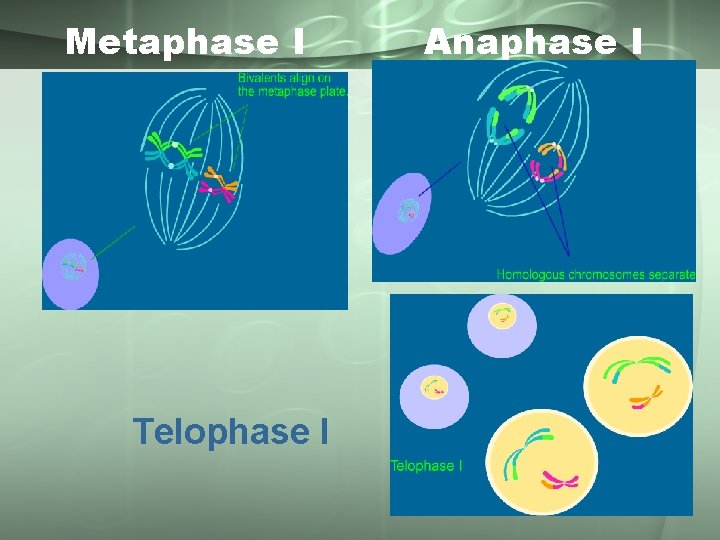
Metaphase I Telophase I Anaphase I
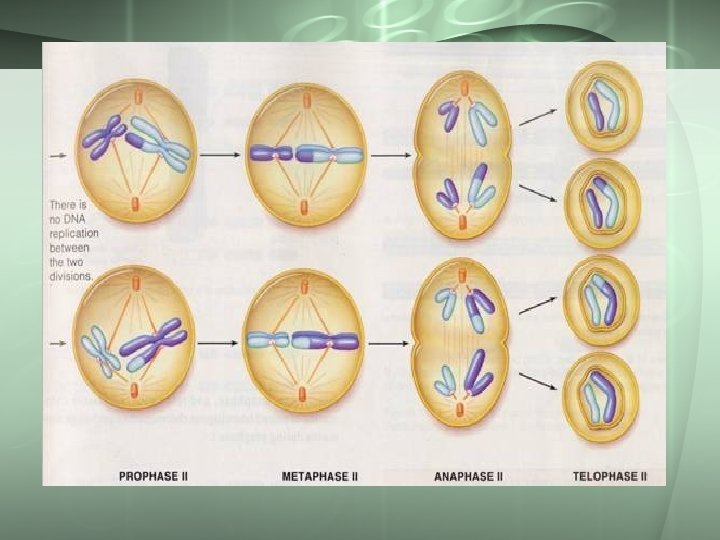
Meiosis II • Prophase II: 2 haploid cells, with ½ the number of chromosomes. • Metaphase II: chromosomes line up in the middle. • Anaphase II: sister chromatids separate and move toward opposite ends. • Telophase & Cytokinesis: result in 4 haploid (N) cells.
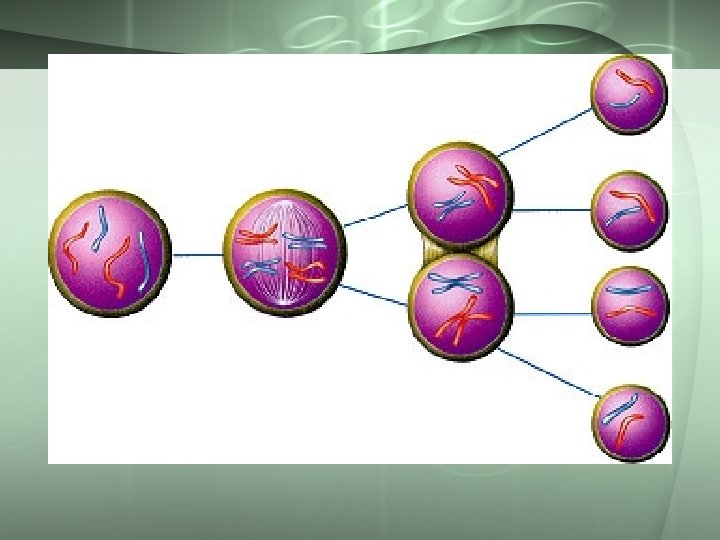
Mitosis • 2 Cells • Identical • Diploid Meiosis • 4 Cells • Not Identical • Haploid
Gene Linkage • Chromosome: group of linked genes. • Traits appear to be inherited together. • Chromosomes assort independently, not genes.
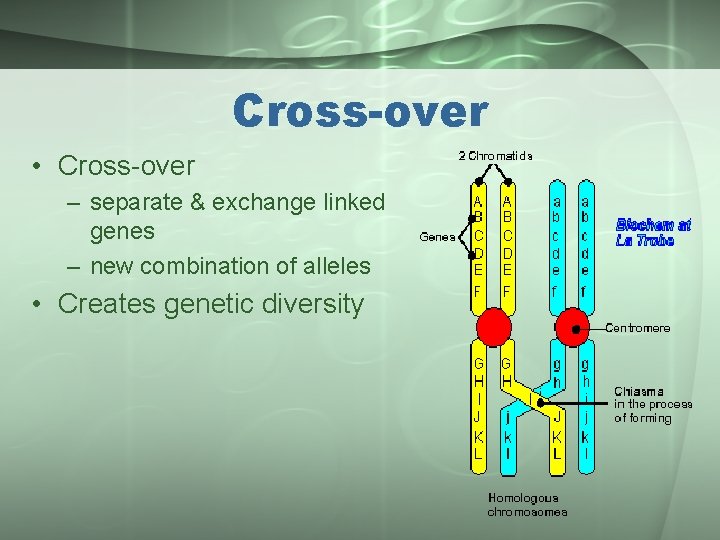
Cross-over • Cross-over – separate & exchange linked genes – new combination of alleles • Creates genetic diversity

Cross-over
Gene Maps • The further apart two genes are, the more likely they are to be separated by crossover. • The rate of separation/recombination are used to create a map of the distances between genes. • Gene Map: shows the relevant location of each known gene on a chromosome.
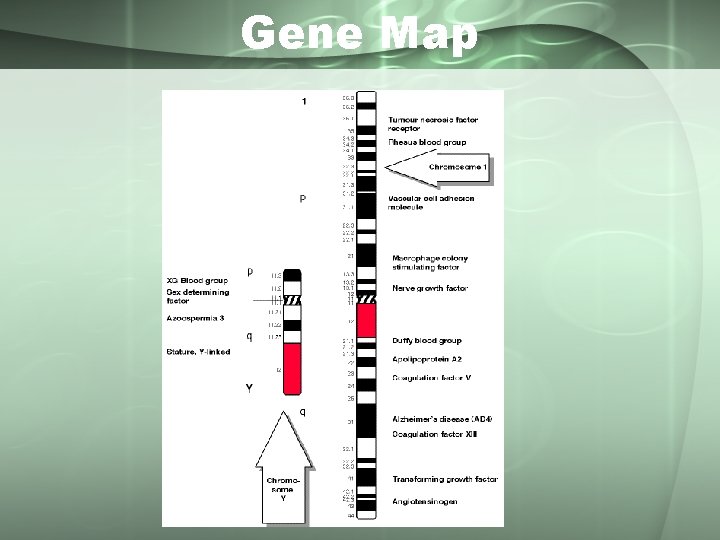
Gene Map
- Slides: 16