
Meiosis Chromosome Number Diploid Haploid 2 n 1
Meiosis

Chromosome Number Diploid Haploid 2 n 1 n Cells that have 2 copies of each chromosome. Cells that have 1 copy of each chromosome. One copy came from mother cell and one came from father cell. The chromosome came from either the mother or the father.
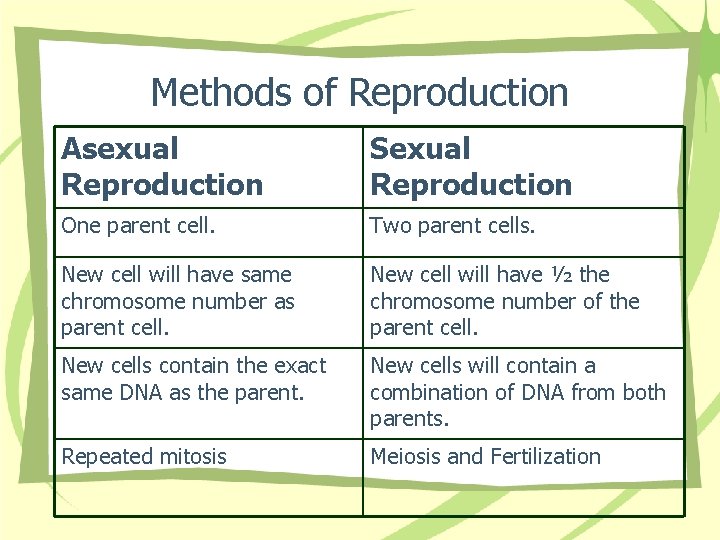
Methods of Reproduction Asexual Reproduction Sexual Reproduction One parent cell. Two parent cells. New cell will have same chromosome number as parent cell. New cell will have ½ the chromosome number of the parent cell. New cells contain the exact same DNA as the parent. New cells will contain a combination of DNA from both parents. Repeated mitosis Meiosis and Fertilization
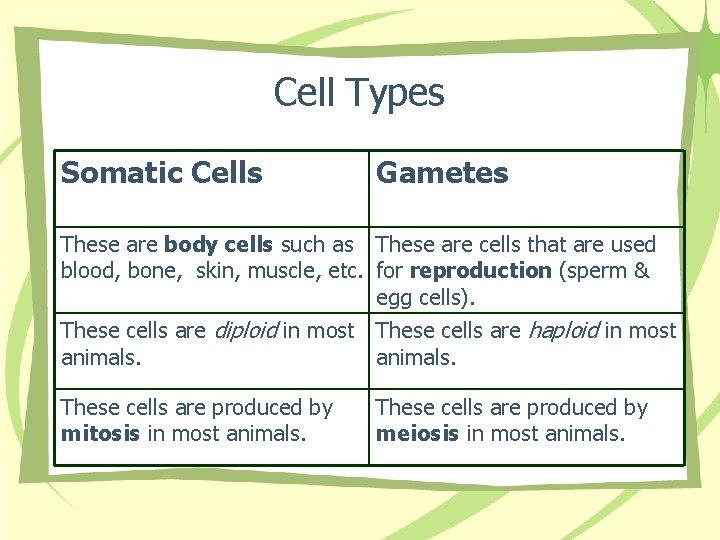
Cell Types Somatic Cells Gametes These are body cells such as These are cells that are used blood, bone, skin, muscle, etc. for reproduction (sperm & egg cells). These cells are diploid in most These cells are haploid in most animals. These cells are produced by mitosis in most animals. These cells are produced by meiosis in most animals.
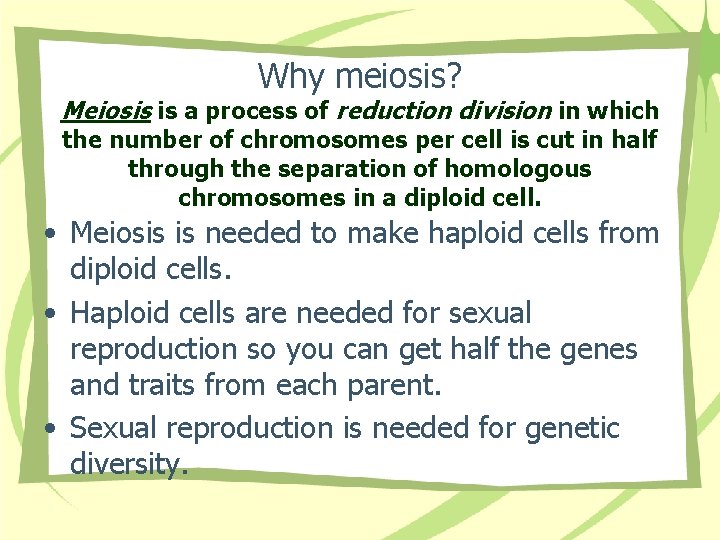
Why meiosis? Meiosis is a process of reduction division in which the number of chromosomes per cell is cut in half through the separation of homologous chromosomes in a diploid cell. • Meiosis is needed to make haploid cells from diploid cells. • Haploid cells are needed for sexual reproduction so you can get half the genes and traits from each parent. • Sexual reproduction is needed for genetic diversity.
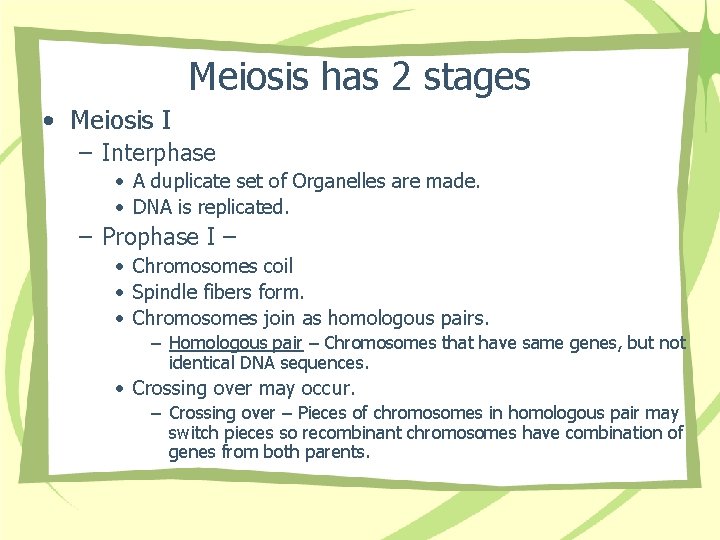
Meiosis has 2 stages • Meiosis I – Interphase • A duplicate set of Organelles are made. • DNA is replicated. – Prophase I – • Chromosomes coil • Spindle fibers form. • Chromosomes join as homologous pairs. – Homologous pair – Chromosomes that have same genes, but not identical DNA sequences. • Crossing over may occur. – Crossing over – Pieces of chromosomes in homologous pair may switch pieces so recombinant chromosomes have combination of genes from both parents.
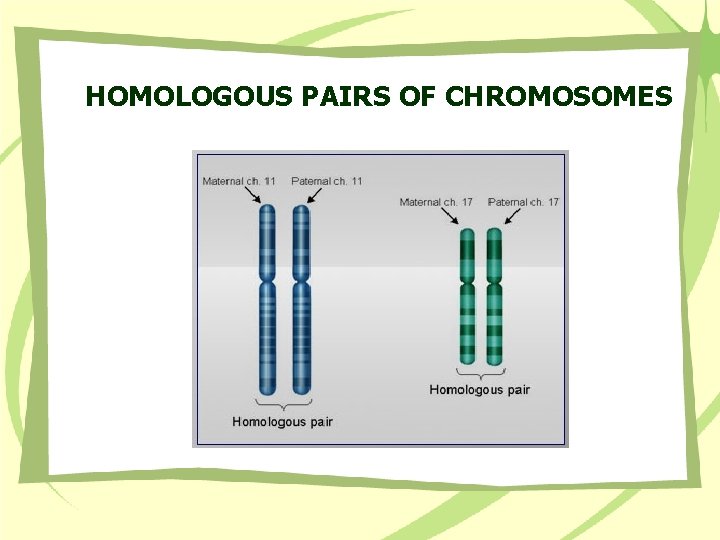
HOMOLOGOUS PAIRS OF CHROMOSOMES
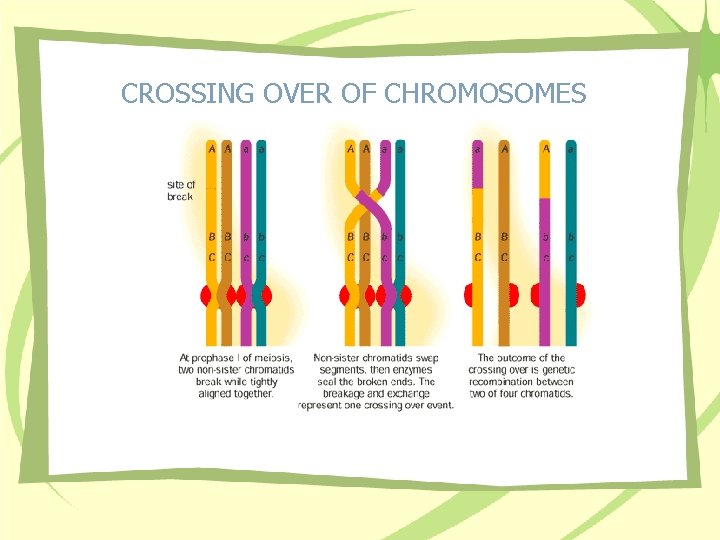
CROSSING OVER OF CHROMOSOMES
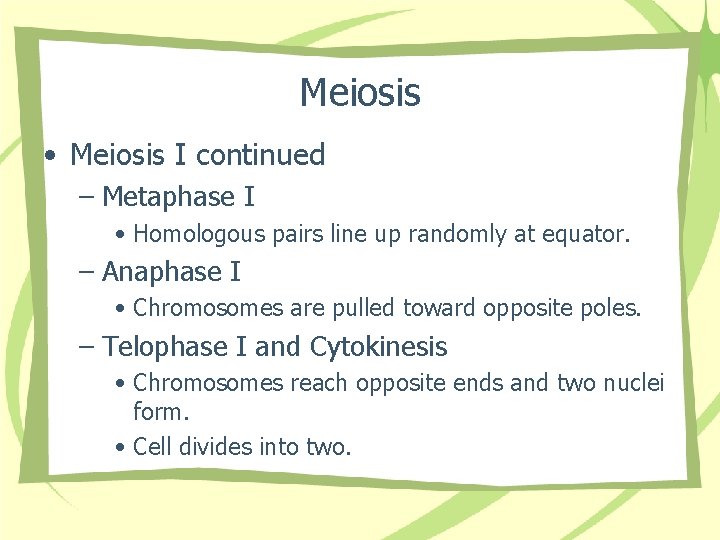
Meiosis • Meiosis I continued – Metaphase I • Homologous pairs line up randomly at equator. – Anaphase I • Chromosomes are pulled toward opposite poles. – Telophase I and Cytokinesis • Chromosomes reach opposite ends and two nuclei form. • Cell divides into two.
Meiosis • Meiosis II (looks a lot like mitosis) – Prophase II • Nuclear membranes dissolve in each cell. – Metaphase II • Chromosomes line up with centromere on equator. – Anaphase II • Centromere breaks and sister chromatid (chromosomes) are pulled to opposite poles. – Telophase II and Cytokinesis • • Chromosomes reach poles Chromosomes uncoil Nuclei form. Each cell divides to form two.
Genetic Variation from Sexual Reproduction • Meiosis – Crossing Over – Recombinant chromosomes can be formed that contain genes from both parents. – Independent Assortment – Chromosomes can line up in any formation during metaphase I so many combinations of parents’ chromosomes can be formed. • Fertilization – Random Fertilization – Any sperm could fertilize any egg if they came into contact.
Genetic Variation from Sexual Reproduction • Let’s ignore crossing over. • Independent Assortment – In humans, each chromosome pair could line up 2 ways. We have 23 chromosome pairs. That gives us 223 = about 8 million possible gametes per parent. • Random Fertilization – In humans, each parent could make about 8 million different gametes. That give us 8 million x 8 million = almost 70 trillion possible children per couple.
- Slides: 12