
MEIOSIS Chapter 11 1 Non replicated chromosome Replicated
- Slides: 19
MEIOSIS Chapter 11 1
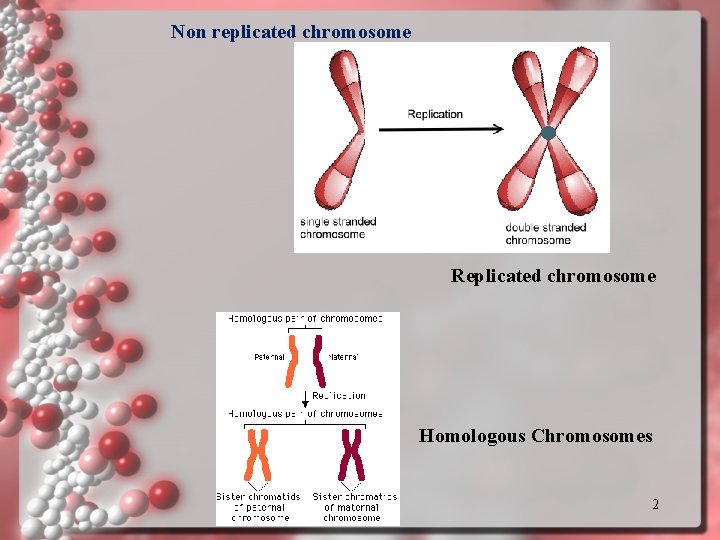
Non replicated chromosome Replicated chromosome Homologous Chromosomes 2
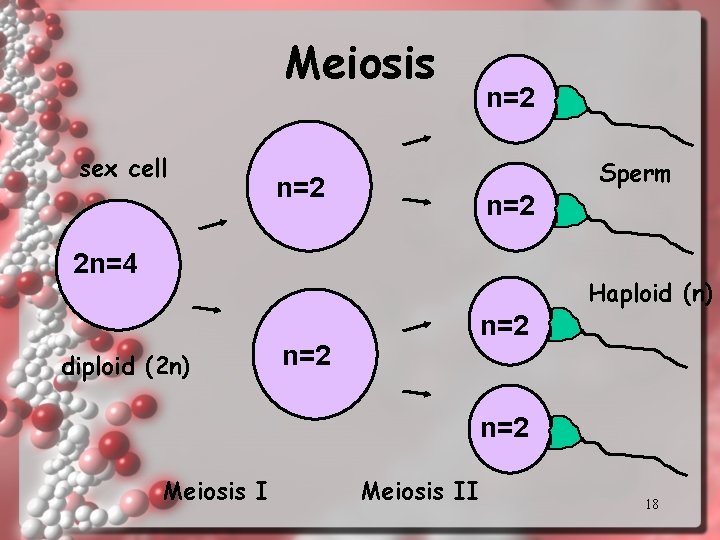
• Meiosis is referred to as reduction division. This is because in meiosis the number of chromosomes is reduced by half through the separation of homologous chromosomes. The cell goes from one diploid (2 N) cell to four haploid (N) cells. This only occurs only in the cells that produce gametes (testes and ovaries). 3
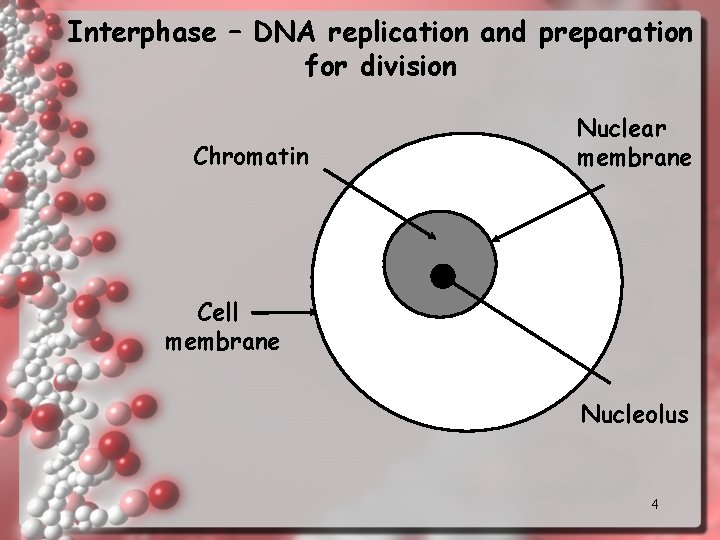
Interphase – DNA replication and preparation for division Chromatin Nuclear membrane Cell membrane Nucleolus 4
Stages of Meiosis I 5
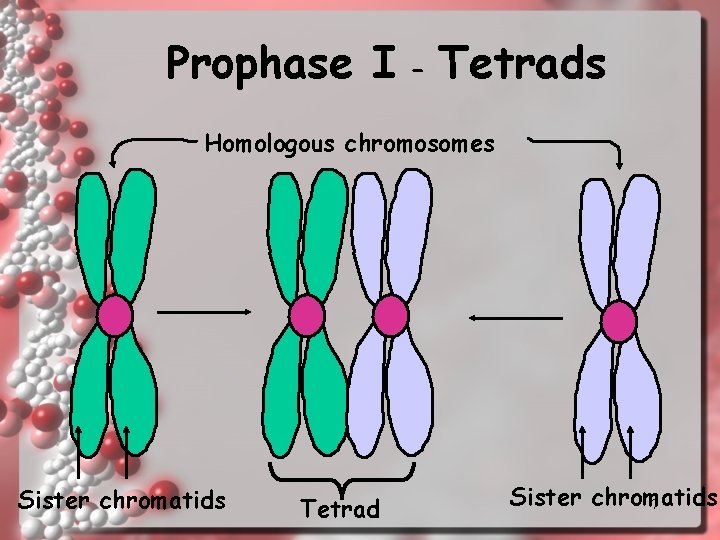
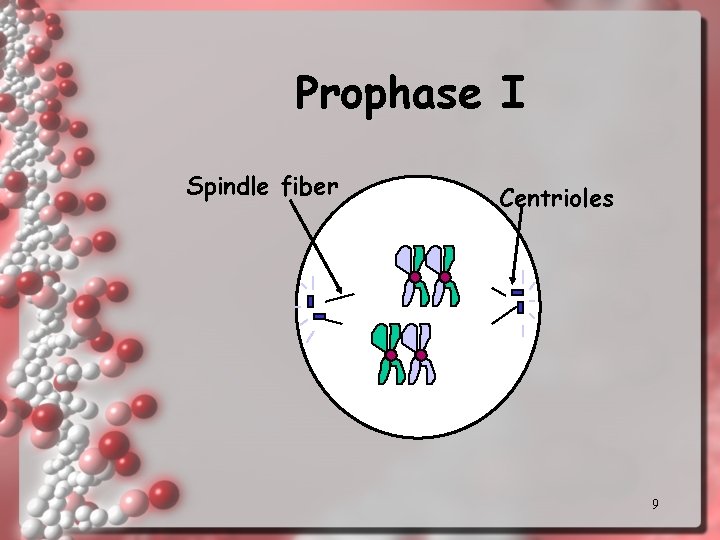
Prophase I • Chromosomes become visible • nucleolus and nuclear envelope disappear • Tetrads form: paired maternal and paternal homologous chromosomes with two chromatids each 6
Prophase I - Tetrads Homologous chromosomes Sister chromatids Tetrad Sister chromatids 7
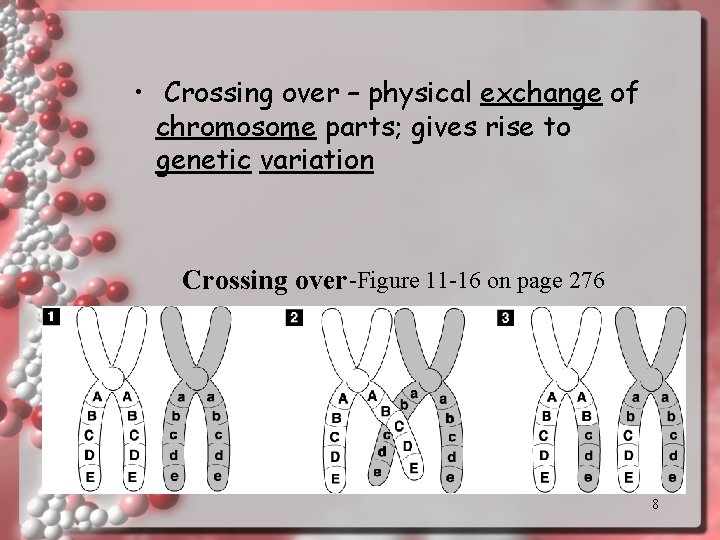
• Crossing over – physical exchange of chromosome parts; gives rise to genetic variation Crossing over -Figure 11 -16 on page 276 8
Prophase I Spindle fiber Centrioles 9
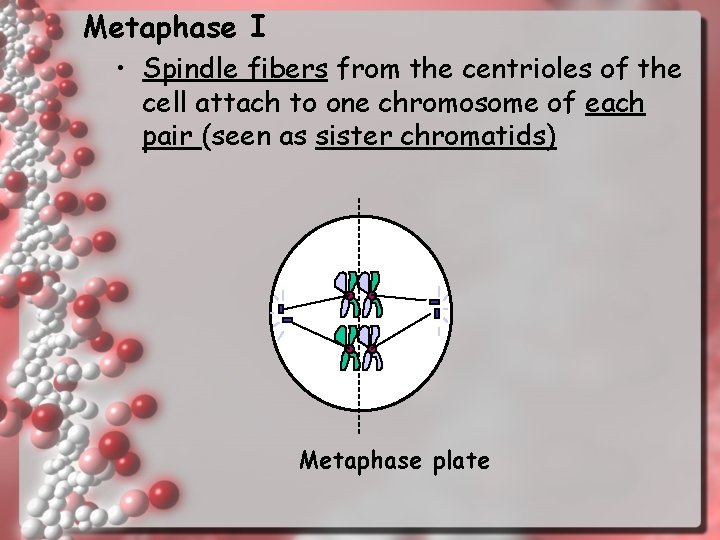
Metaphase I • Spindle fibers from the centrioles of the cell attach to one chromosome of each pair (seen as sister chromatids) Metaphase plate
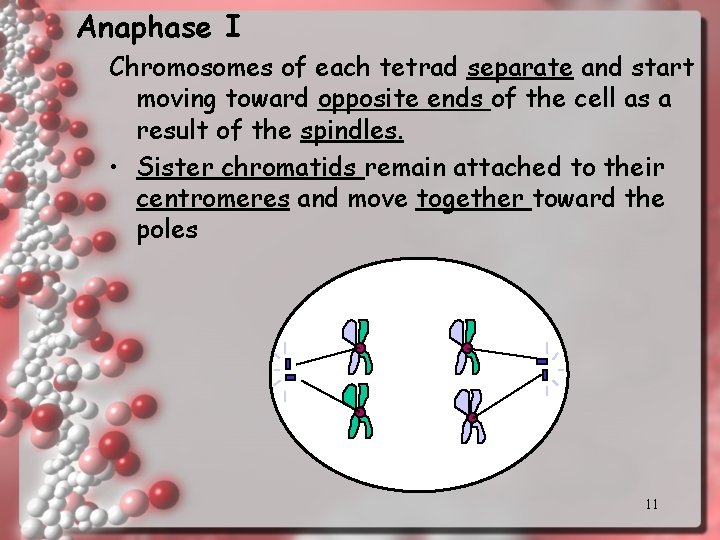
Anaphase I Chromosomes of each tetrad separate and start moving toward opposite ends of the cell as a result of the spindles. • Sister chromatids remain attached to their centromeres and move together toward the poles 11
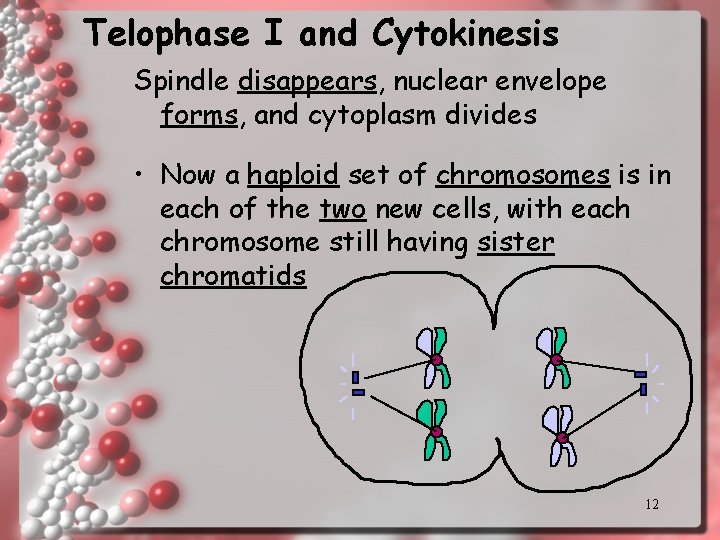
Telophase I and Cytokinesis Spindle disappears, nuclear envelope forms, and cytoplasm divides • Now a haploid set of chromosomes is in each of the two new cells, with each chromosome still having sister chromatids 12
Meiosis II 13
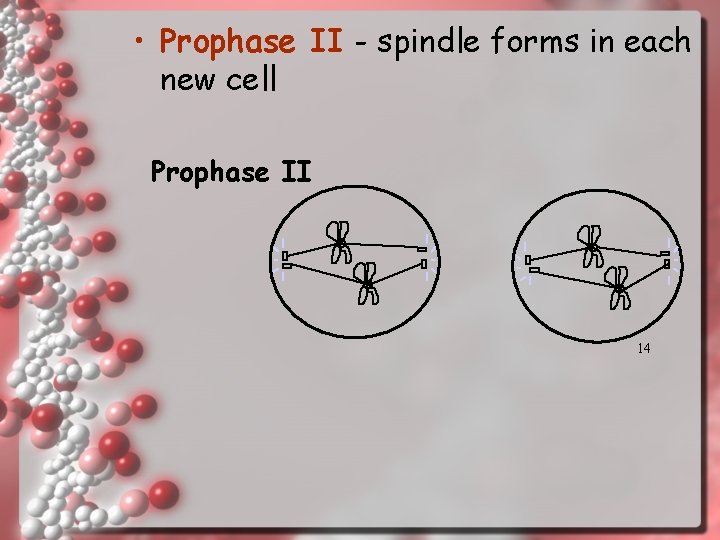
• Prophase II - spindle forms in each new cell Prophase II 14
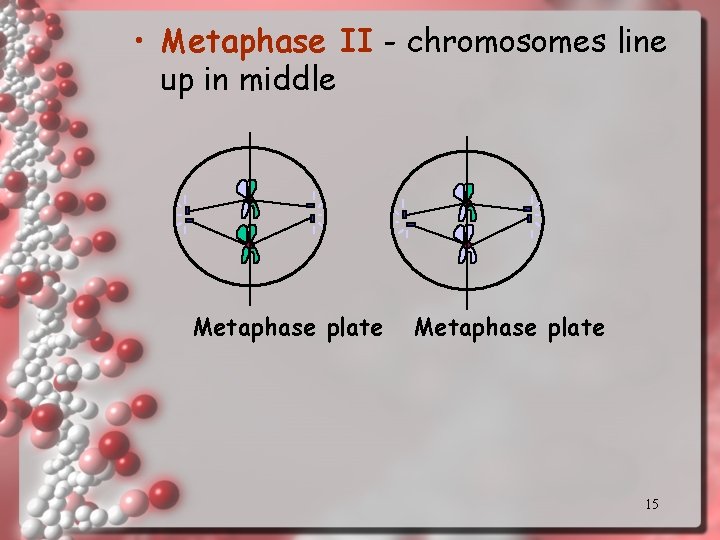
• Metaphase II - chromosomes line up in middle Metaphase plate 15
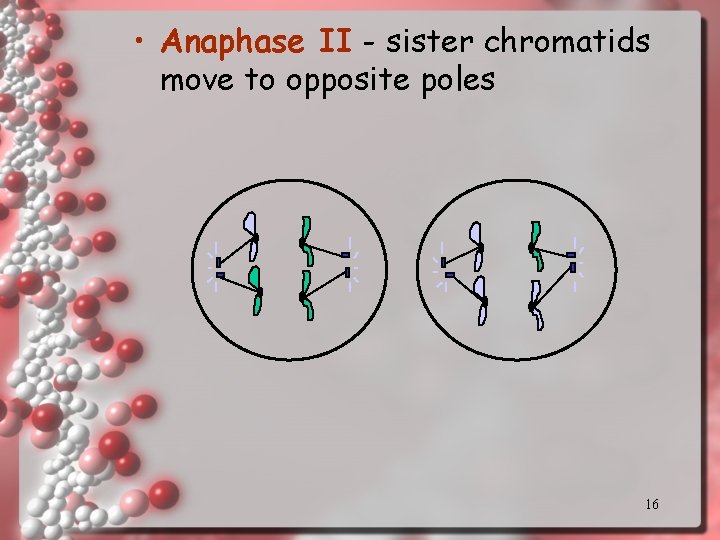
• Anaphase II - sister chromatids move to opposite poles 16
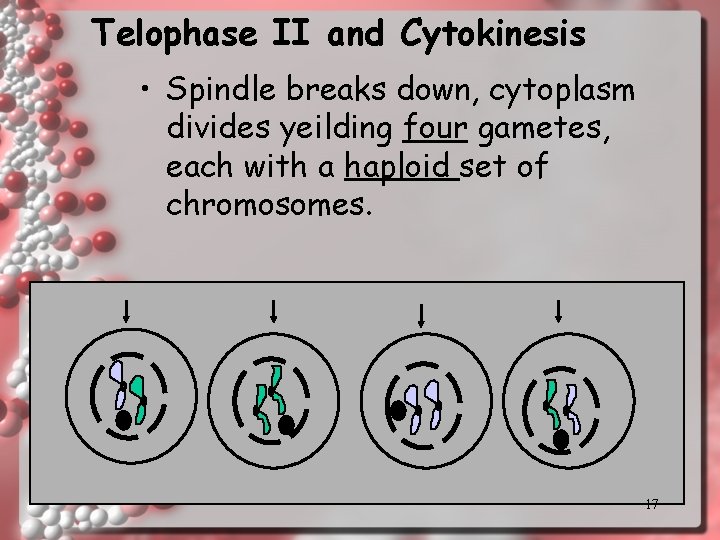
Telophase II and Cytokinesis • Spindle breaks down, cytoplasm divides yeilding four gametes, each with a haploid set of chromosomes. 17
Meiosis sex cell n=2 Sperm n=2 2 n=4 Haploid (n) diploid (2 n) n=2 n=2 Meiosis II 18
• Meiosis/sexual reproduction allows for genetic variation 19