
Meiosis Biology I Meiosis 1 2 Is the
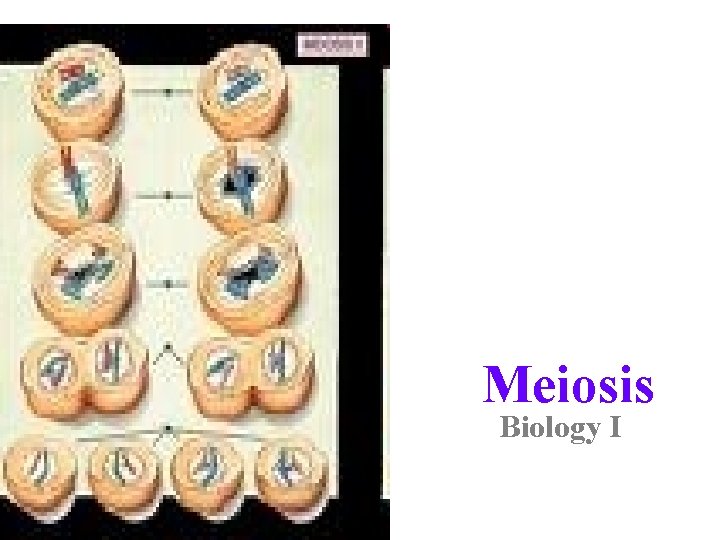
Meiosis Biology I
Meiosis • • • 1) 2) • Is the reproduction of gametes Gametes= Sex Cells There are two types of sex cells Sperm- Males Egg or Ovum- Females Sex cells are Haploid or n (have one set of chromosomes) Ex. Human egg and sperm both have 23 chromosomes.
Meiosis • Unlike Mitosis, Meiosis has two divisions Meiosis I and Meiosis II • Meiosis I – is the reductive division because the chromosome # is reduced by half • Meioisis II- is similar to mitosis • Four (4) genetically different gametes are formed at the end of Meiosis II
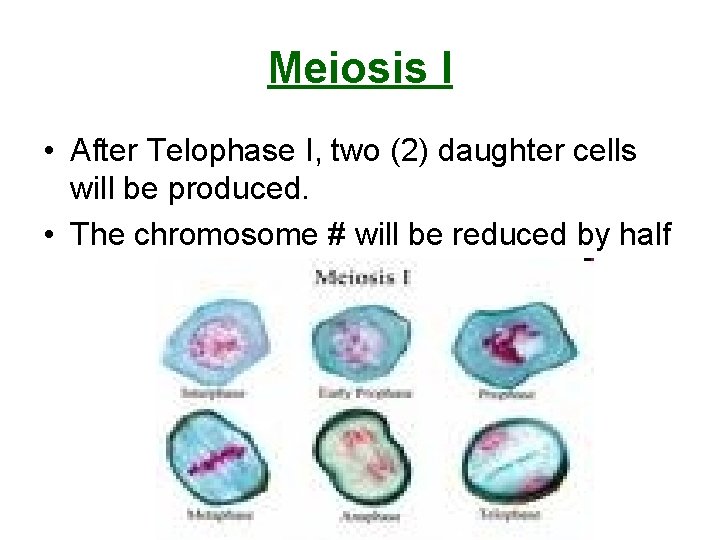
Meiosis I • After Telophase I, two (2) daughter cells will be produced. • The chromosome # will be reduced by half
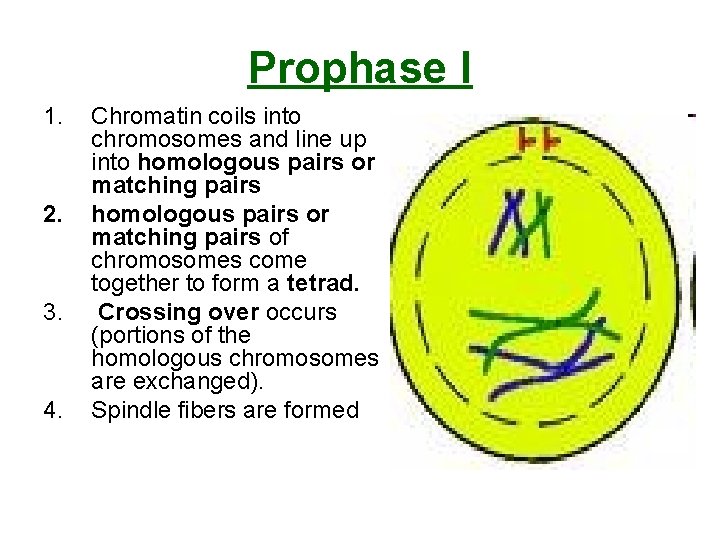
Prophase I 1. 2. 3. 4. Chromatin coils into chromosomes and line up into homologous pairs or matching pairs of chromosomes come together to form a tetrad. Crossing over occurs (portions of the homologous chromosomes are exchanged). Spindle fibers are formed
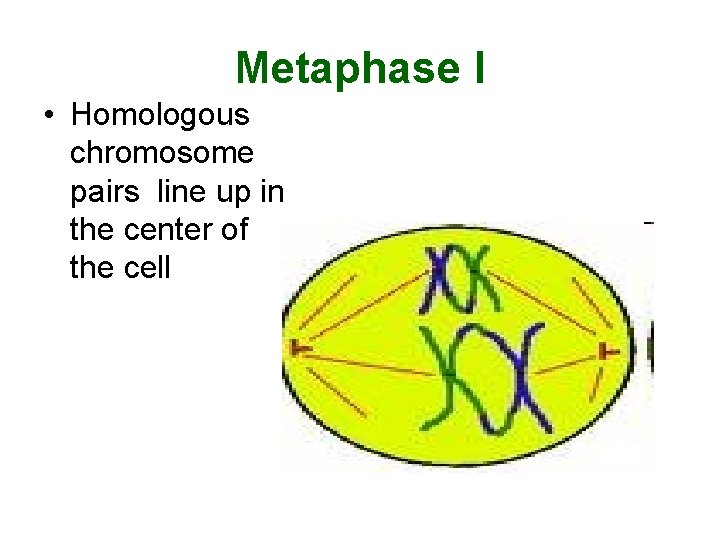
Metaphase I • Homologous chromosome pairs line up in the center of the cell
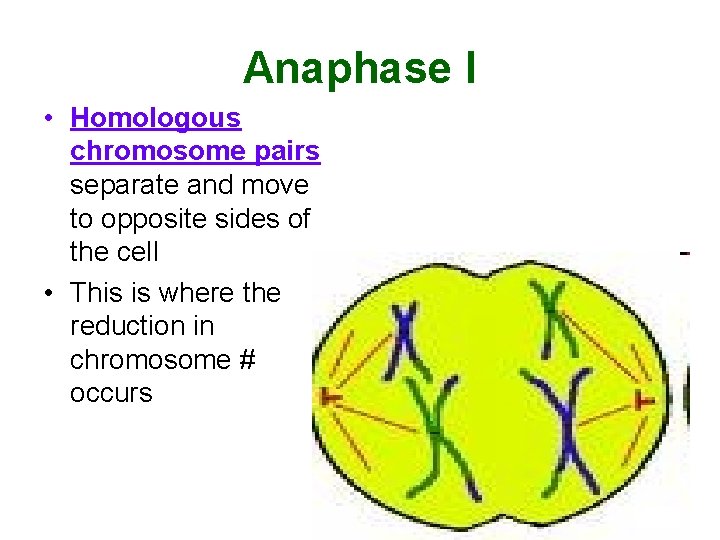
Anaphase I • Homologous chromosome pairs separate and move to opposite sides of the cell • This is where the reduction in chromosome # occurs
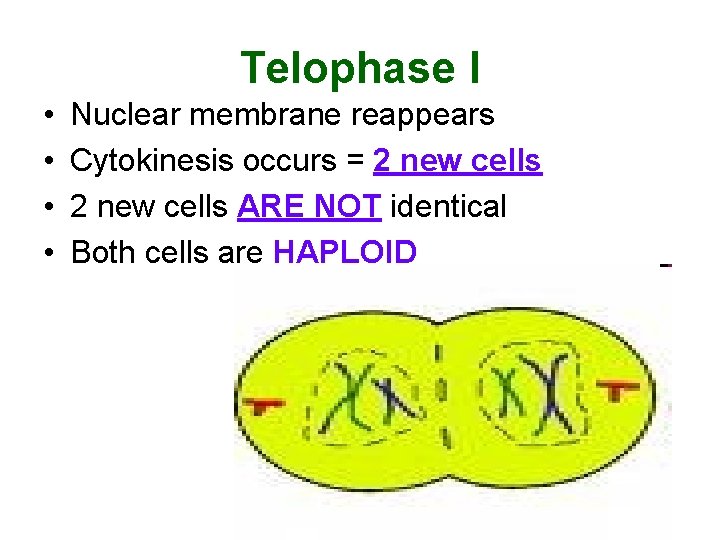
Telophase I • • Nuclear membrane reappears Cytokinesis occurs = 2 new cells ARE NOT identical Both cells are HAPLOID
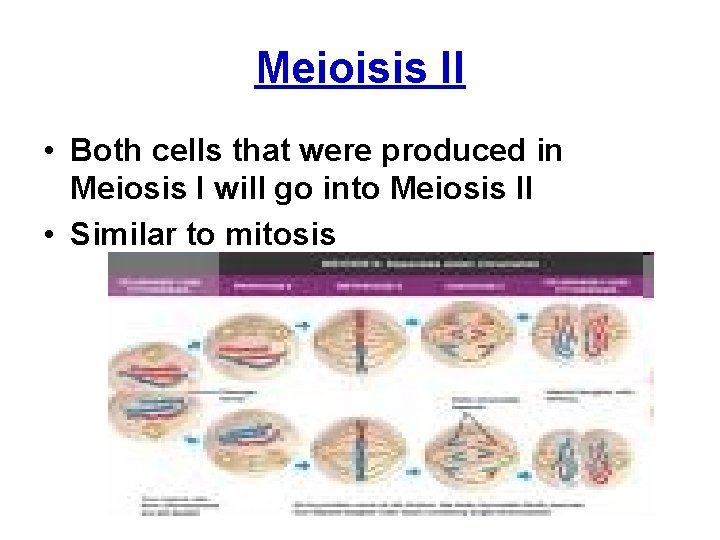
Meioisis II • Both cells that were produced in Meiosis I will go into Meiosis II • Similar to mitosis
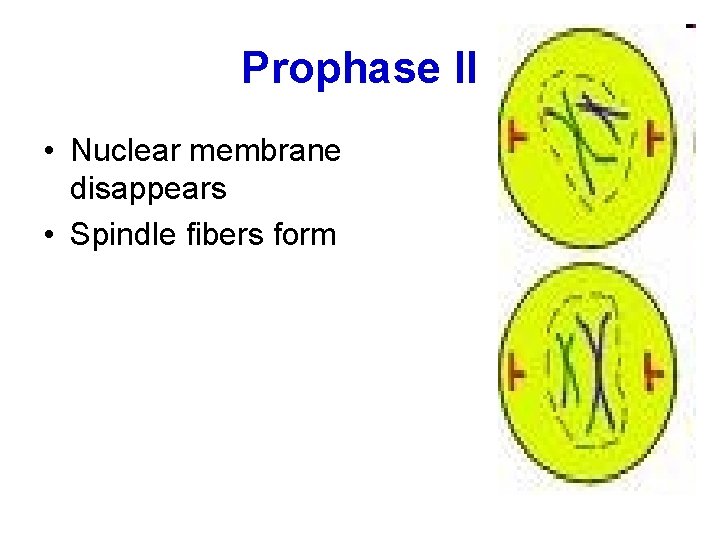
Prophase II • Nuclear membrane disappears • Spindle fibers form
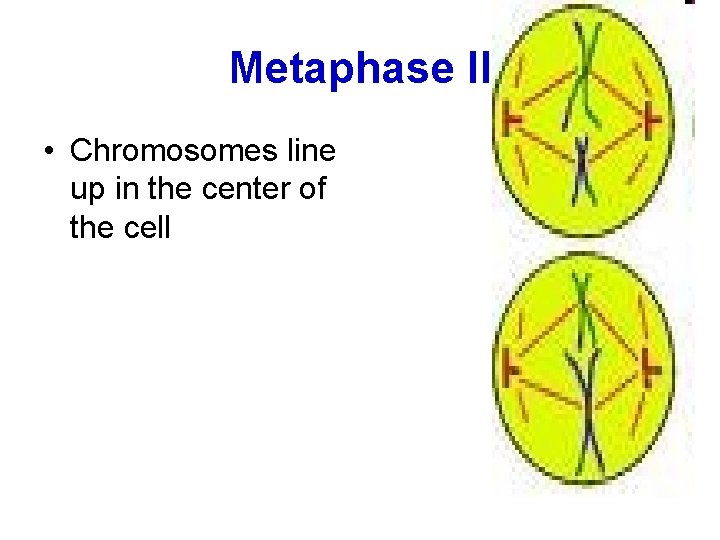
Metaphase II • Chromosomes line up in the center of the cell
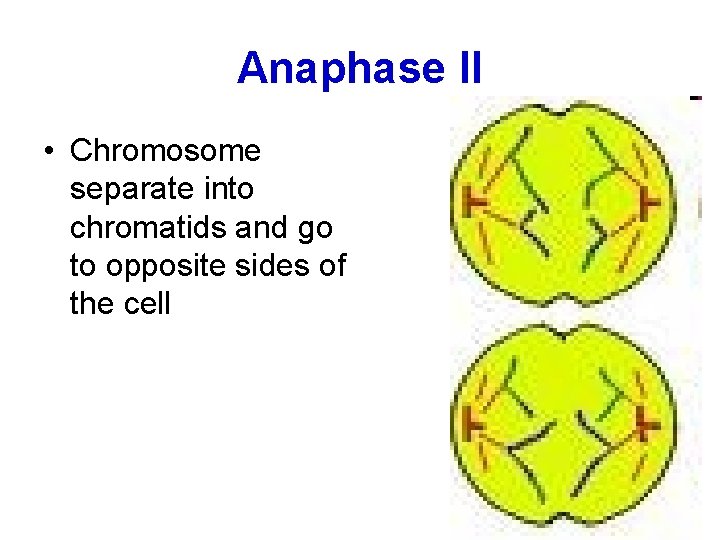
Anaphase II • Chromosome separate into chromatids and go to opposite sides of the cell
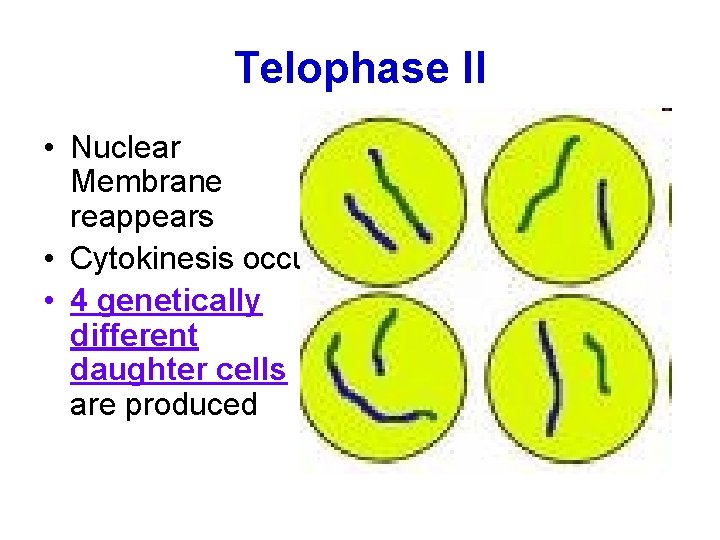
Telophase II • Nuclear Membrane reappears • Cytokinesis occurs • 4 genetically different daughter cells are produced
Mitosis • vs produces somatic or body cells • Chromosome # DOES NOT changes (diploid) • 1 cell division • 2 daughter cells • daughter cells are identical to parent cell • Asexual reproduction Meiosis • produces sex cells or gametes • Chromosome # changes (diploid haploid) • 2 cell divisions • 4 cells (gametes) • daughter cells are different from each other and the parent cell • Sexual reproduction
- Slides: 14