
Meiosis and Sexual Reproduction Meiosis Chromosomes Q What


- Slides: 25
Meiosis and Sexual Reproduction
Meiosis & Chromosomes Q) What is a chromosome? A) A chromosome is a long strand of genes Humans have 23 pairs (each pair is called a homologous pair) We ALL get one SET of chromosomes from dad and one set from mom
Chromosomes What’s a homologous pair? 1. )Chromosomes that code for the same traits 2. )But, each member of the pair can have different information (different versions or alleles of the same genes)
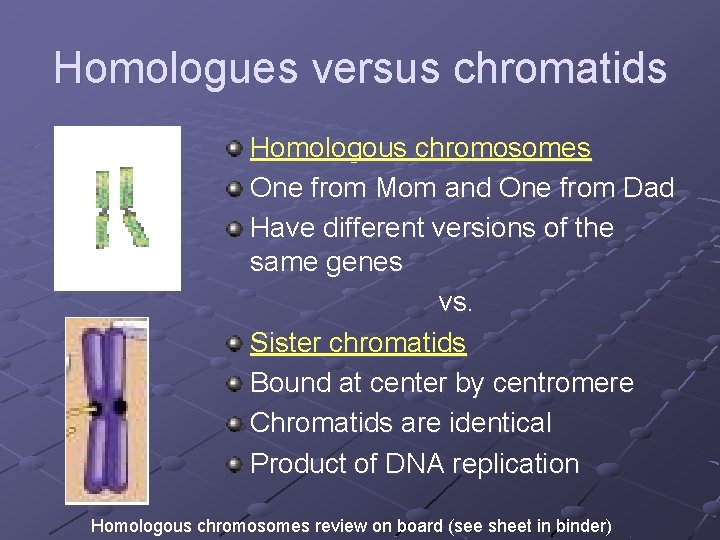
Homologues versus chromatids Homologous chromosomes One from Mom and One from Dad Have different versions of the same genes vs. Sister chromatids Bound at center by centromere Chromatids are identical Product of DNA replication Homologous chromosomes review on board (see sheet in binder)
Chromosomes (n) n is the number of pairs (or the number of different types of chromosomes) 2 n is the total number of chromosomes In humans n = 23 In chimpanzees n = 24 In the king crab n = 104
More on Chromosomes Humans reproduce sexually Sexual reproduction means simply that the offspring receive genetic material from BOTH the mother and father
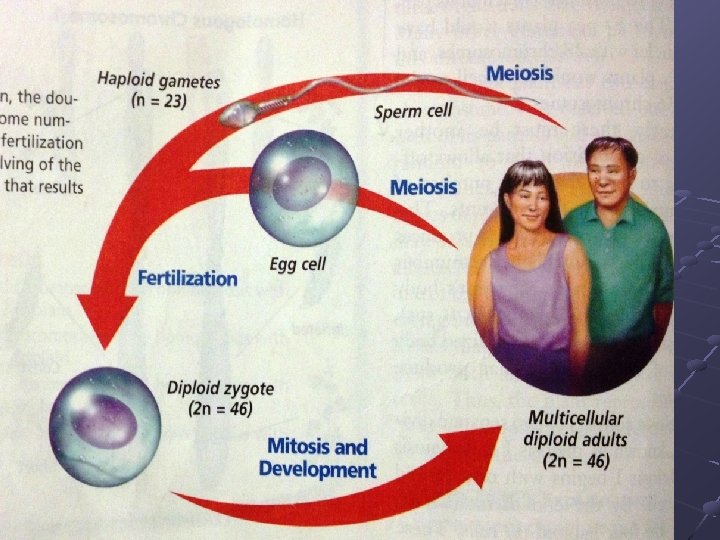
Meiosis… Meiosis creates cells with only half the “normal” number of chromosomes, (gametes), when these cells join (fertilization) the new individual has the same number of chromosomes as each parent. Location: specialized body cells of cell parent (ovary/testes) that produce gametes (egg/sperm cells)
Haploidy and Diploidy A cell that has 1 copy of each type of chromosome is haploid n Human gametes (egg & sperm) are haploid (n) A cell that has 2 copies of each type of chromosome are diploid n Human somatic cells (body cells) are diploid (2 n)
And now…Phases of Meiosis video clip – 3: 47
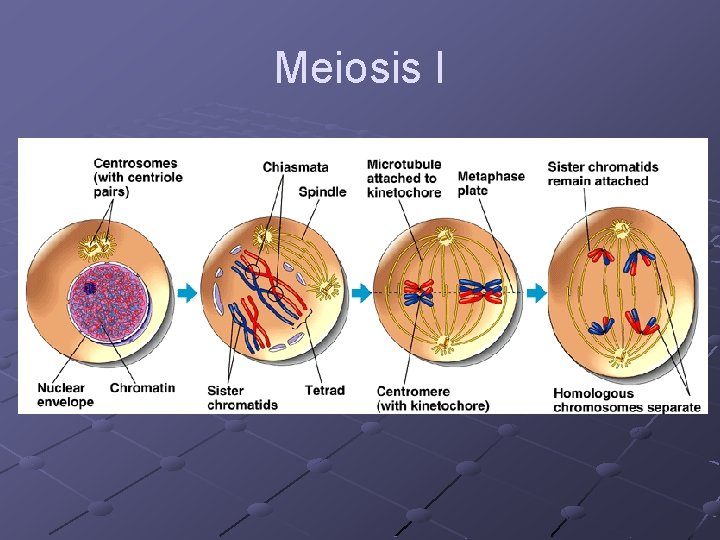
Meiosis I Interphase n n n Cell spends 90 % of its life in this phase (like mitosis) Growth Cell carries out life processes (except reproduction) Chromosome (DNA) replication takes place Centrioles replicate
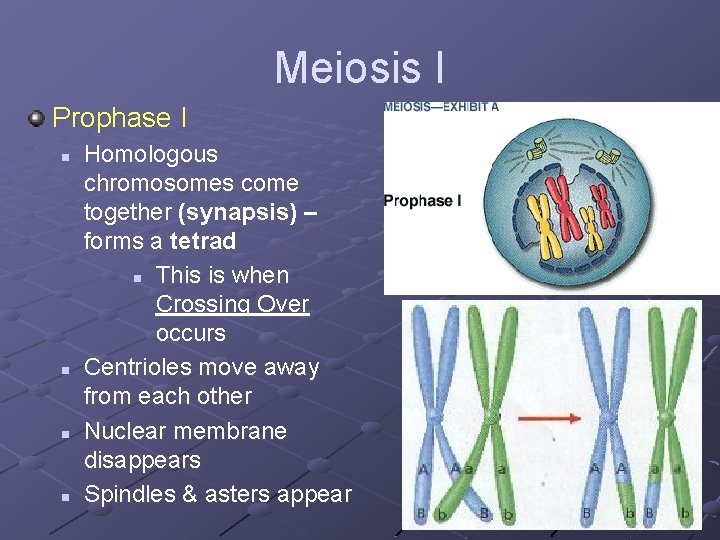
Meiosis I Prophase I n n Homologous chromosomes come together (synapsis) – forms a tetrad n This is when Crossing Over occurs Centrioles move away from each other Nuclear membrane disappears Spindles & asters appear
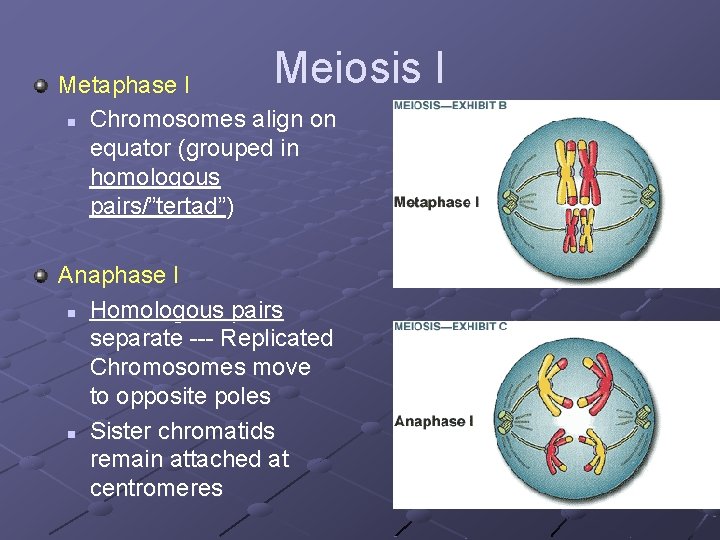
Meiosis I Metaphase I n Chromosomes align on equator (grouped in homologous pairs/”tertad”) Anaphase I n Homologous pairs separate --- Replicated Chromosomes move to opposite poles n Sister chromatids remain attached at centromeres
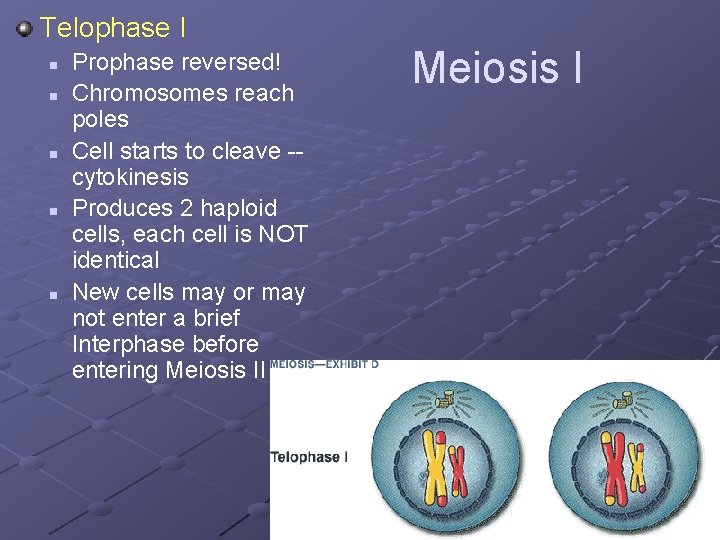
Telophase I n n n Prophase reversed! Chromosomes reach poles Cell starts to cleave -cytokinesis Produces 2 haploid cells, each cell is NOT identical New cells may or may not enter a brief Interphase before entering Meiosis II Meiosis I
Meiosis I
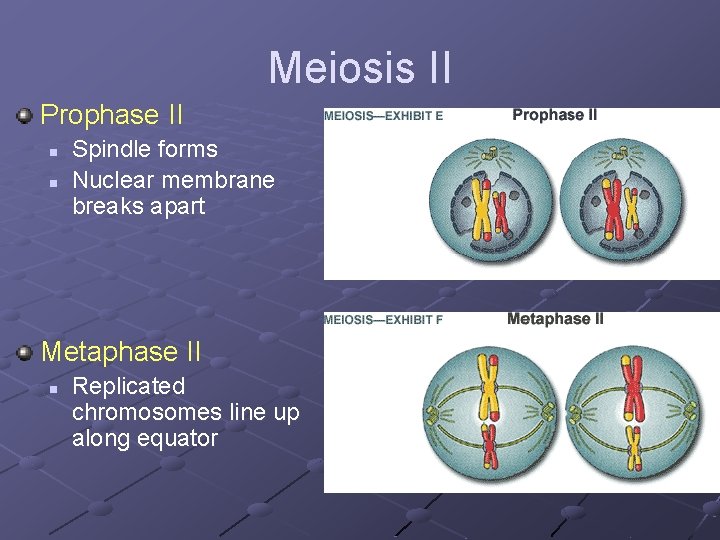
Meiosis II Prophase II n n Spindle forms Nuclear membrane breaks apart Metaphase II n Replicated chromosomes line up along equator
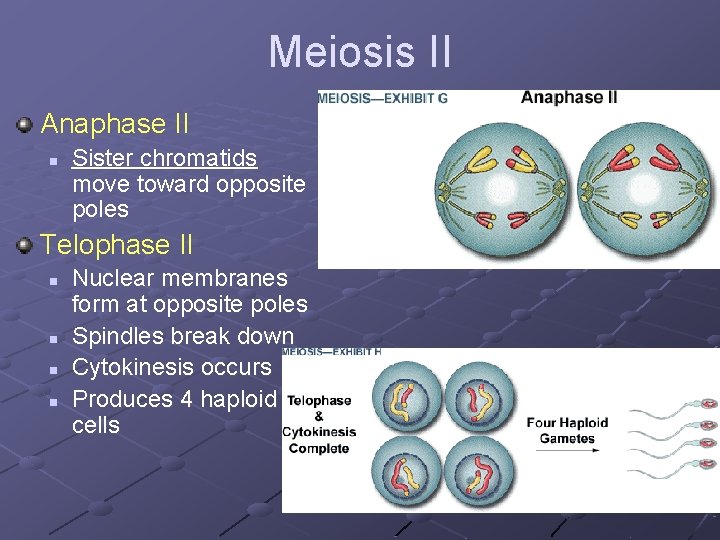
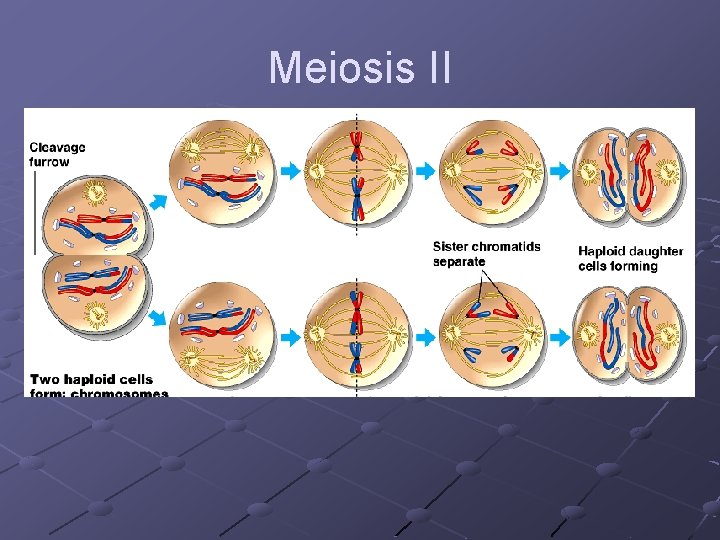
Meiosis II Anaphase II n Sister chromatids move toward opposite poles Telophase II n n Nuclear membranes form at opposite poles Spindles break down Cytokinesis occurs Produces 4 haploid cells
Meiosis II
Recap: Meiosis 2 = Meiosis I, except that chromosomes don’t replicate (no Interphase) 4 HAPLOID cells are formed (at end of meiosis) Each cell has HALF the genetic information of the original cell b/c it has only one chromosome from each homologous pair Haploid cells become gametes transmit their genes to offspring
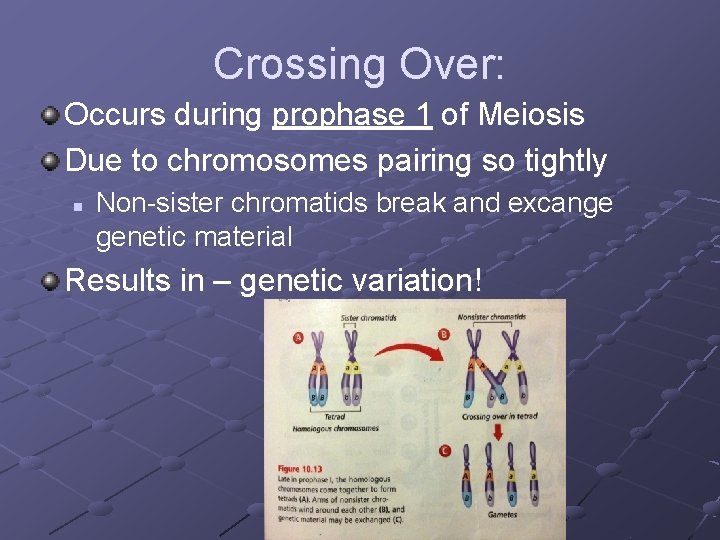
Crossing Over: Occurs during prophase 1 of Meiosis Due to chromosomes pairing so tightly n Non-sister chromatids break and excange genetic material Results in – genetic variation!
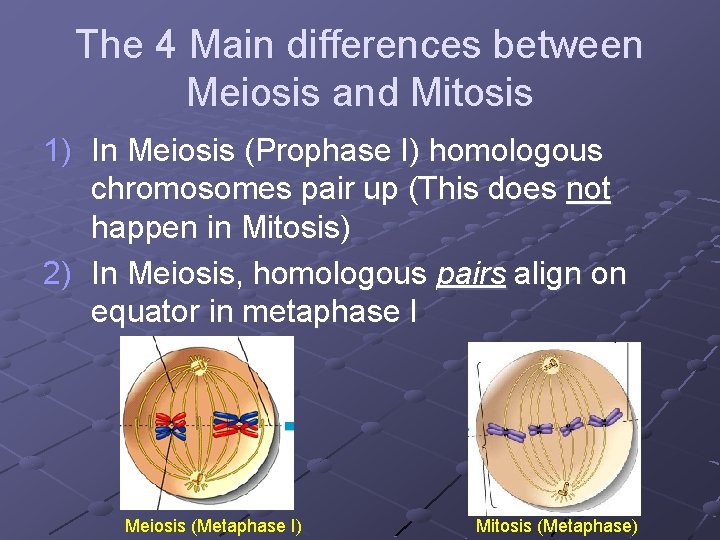
The 4 Main differences between Meiosis and Mitosis 1) In Meiosis (Prophase I) homologous chromosomes pair up (This does not happen in Mitosis) 2) In Meiosis, homologous pairs align on equator in metaphase I Meiosis (Metaphase I) Mitosis (Metaphase)
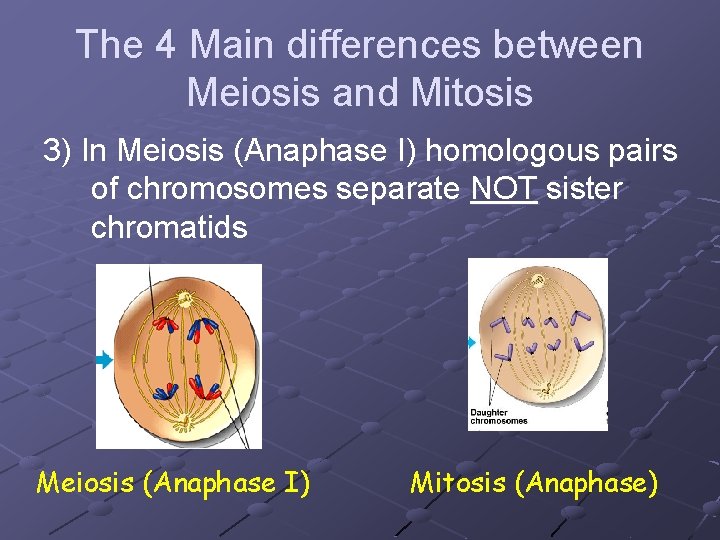
The 4 Main differences between Meiosis and Mitosis 3) In Meiosis (Anaphase I) homologous pairs of chromosomes separate NOT sister chromatids Meiosis (Anaphase I) Mitosis (Anaphase)
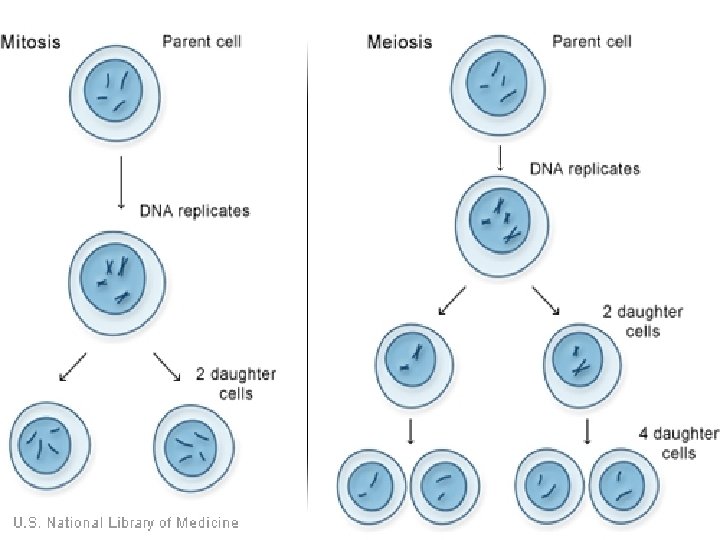
The 4 Main differences between Meiosis and Mitosis 4) Meiosis results in 4 haploid daughter cells. Mitosis results in 2 diploid daughter cells
Go to Sexual Reproduction PPT