
Meiosis 9 TH BIOLOGY Chromosomes Half of YOUR

Meiosis 9 TH BIOLOGY
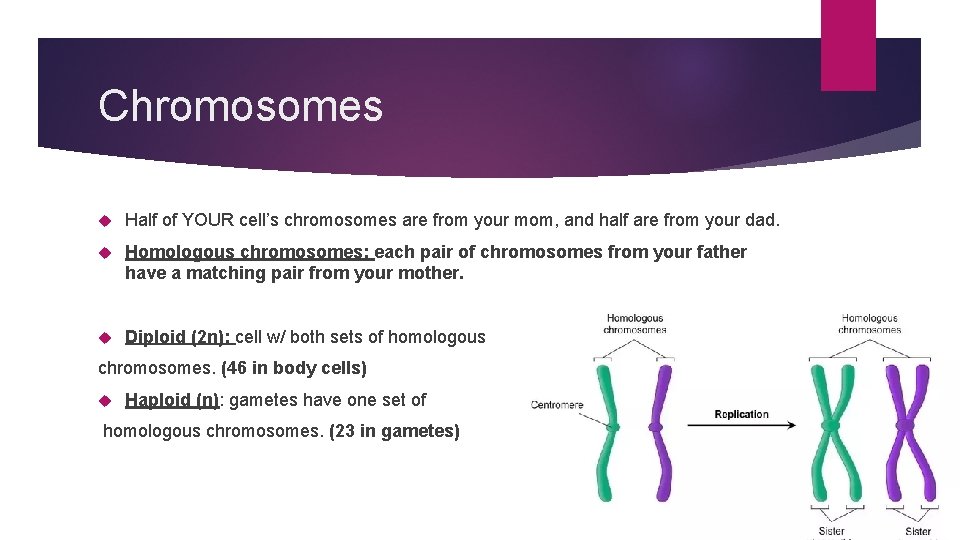
Chromosomes Half of YOUR cell’s chromosomes are from your mom, and half are from your dad. Homologous chromosomes: each pair of chromosomes from your father have a matching pair from your mother. Diploid (2 n): cell w/ both sets of homologous chromosomes. (46 in body cells) Haploid (n): gametes have one set of homologous chromosomes. (23 in gametes)
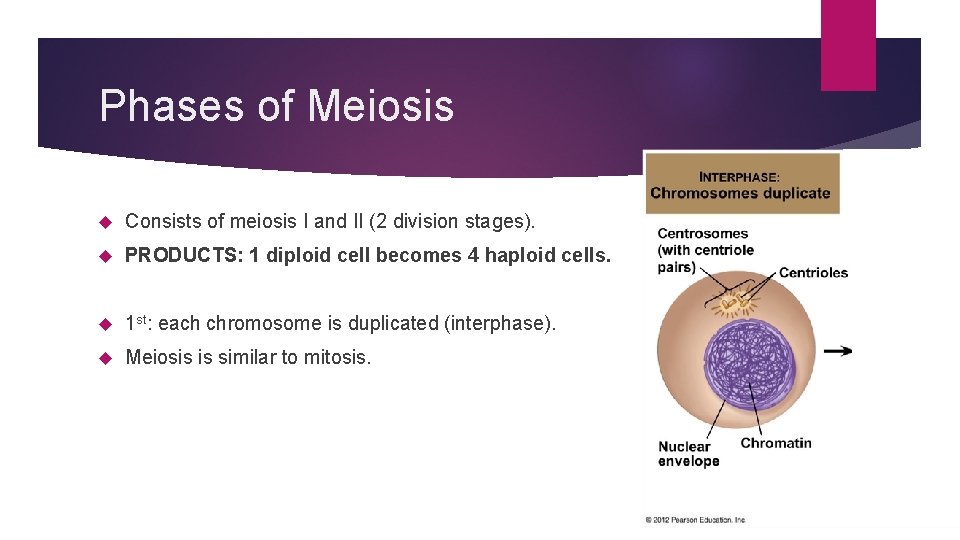
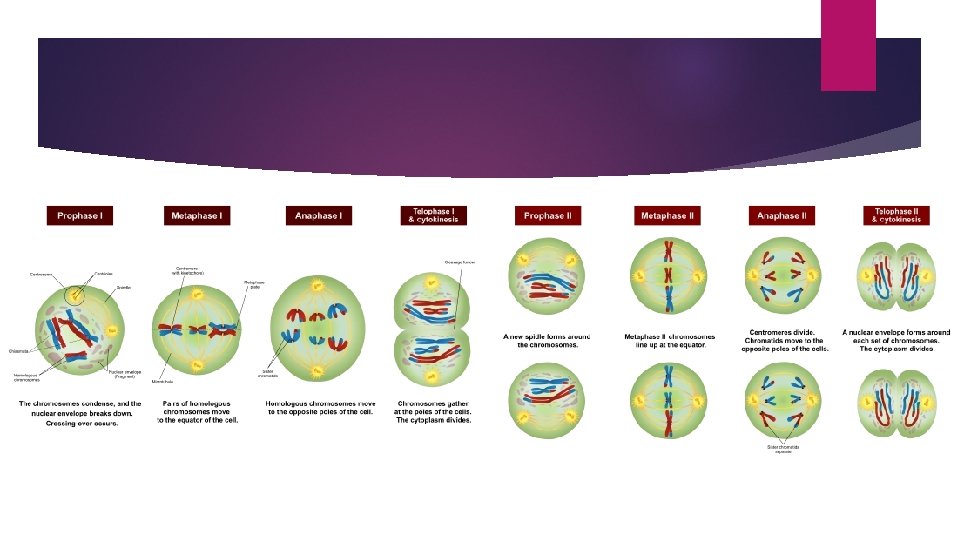
Phases of Meiosis Consists of meiosis I and II (2 division stages). PRODUCTS: 1 diploid cell becomes 4 haploid cells. 1 st: each chromosome is duplicated (interphase). Meiosis is similar to mitosis.
Meiosis I PMAT and cytokinesis all occur as in mitosis BUT the outcome is different. The 2 daughter cells have mix/matched pairs of homologous chromosomes. DIFFERENT CHROMOSOMES THAN THE ORIGINAL CELL.
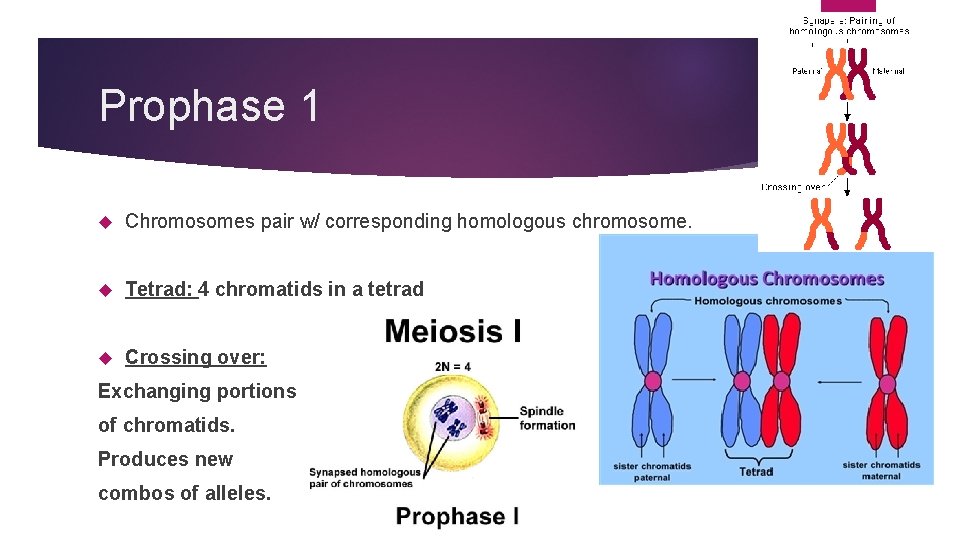
Prophase 1 Chromosomes pair w/ corresponding homologous chromosome. Tetrad: 4 chromatids in a tetrad Crossing over: Exchanging portions of chromatids. Produces new combos of alleles.

Meiosis II
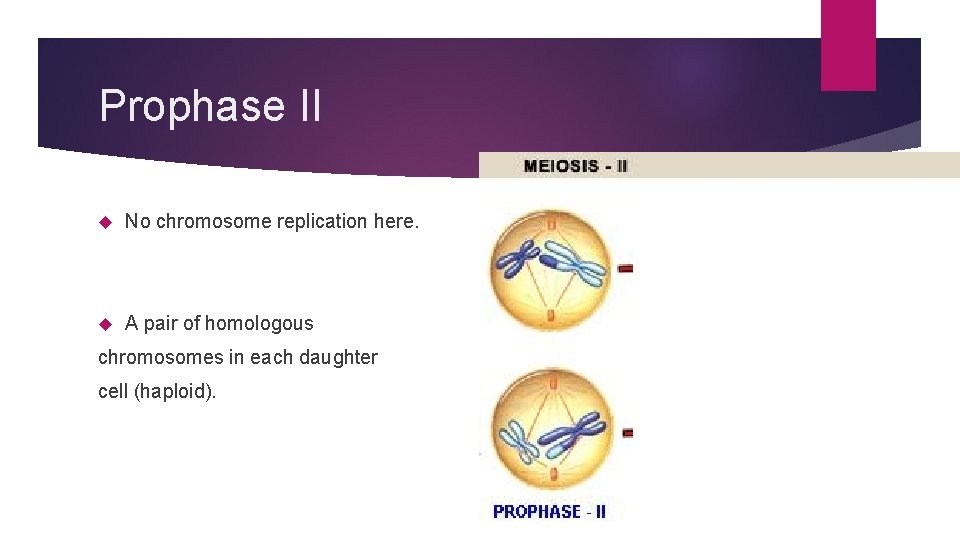
Prophase II No chromosome replication here. A pair of homologous chromosomes in each daughter cell (haploid).

Metaphase II
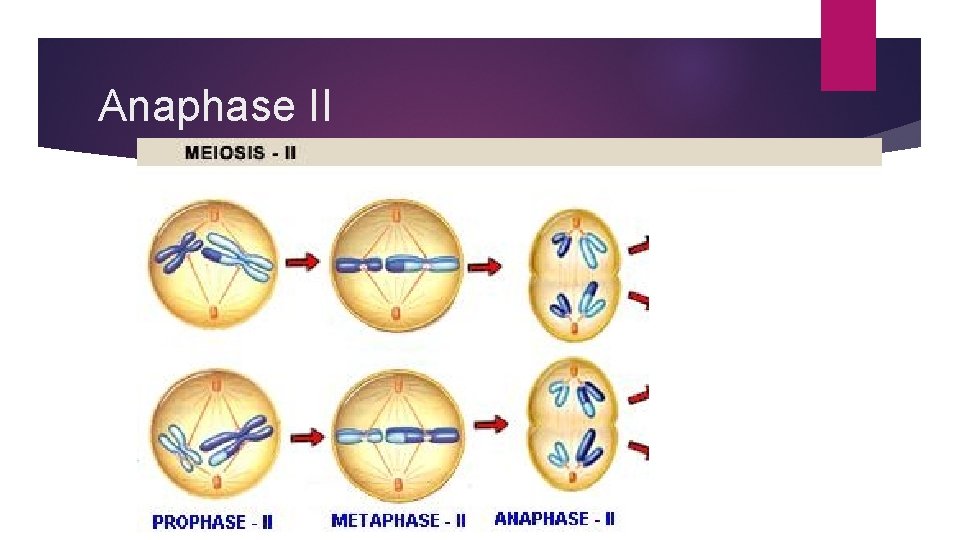
Anaphase II
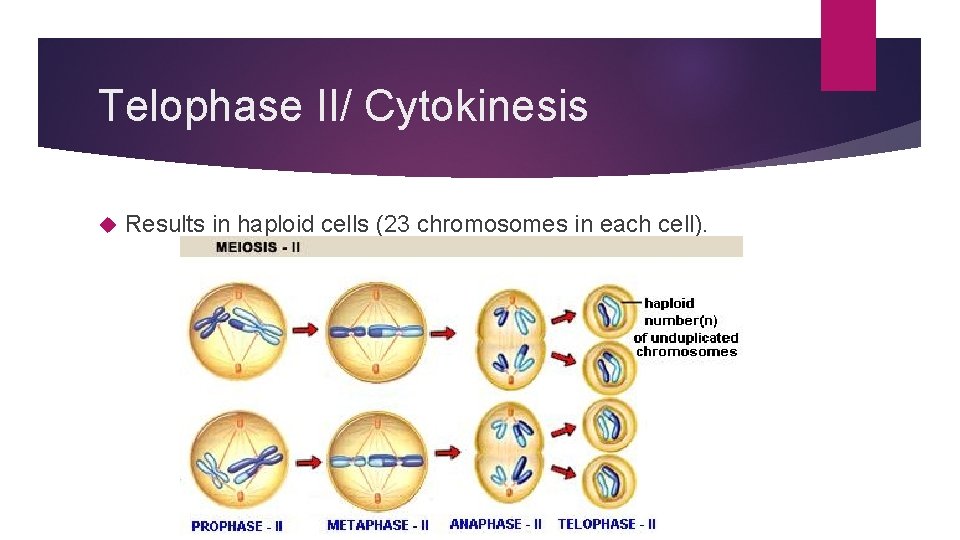
Telophase II/ Cytokinesis Results in haploid cells (23 chromosomes in each cell).
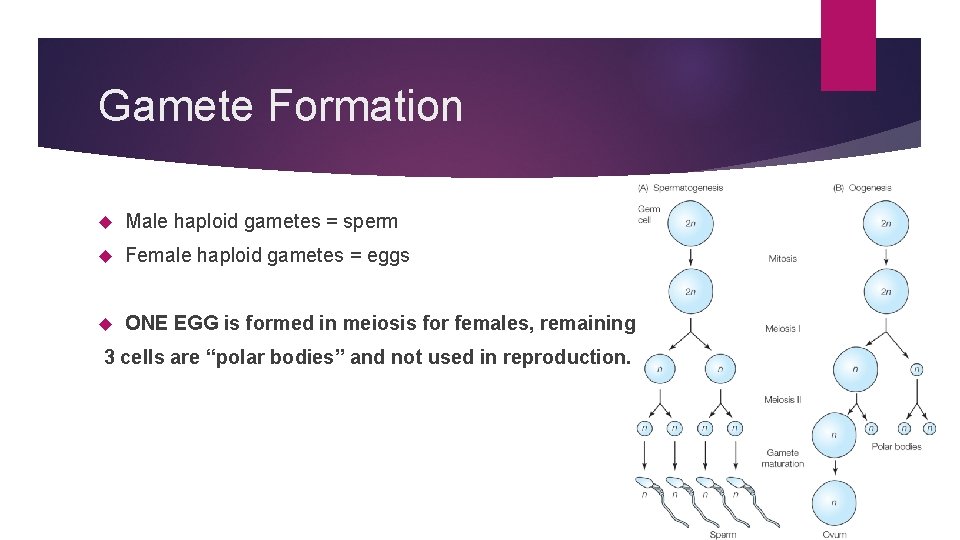
Gamete Formation Male haploid gametes = sperm Female haploid gametes = eggs ONE EGG is formed in meiosis for females, remaining 3 cells are “polar bodies” and not used in reproduction.
Comparing Mitosis and Meiosis produces four genetically different haploid cells. Mitosis = diploid cell dividing into 2 diploid daughter cells. Alleles and chromosomes identical to parent cells. Body growth and repair. Meiosis: diploid cell divides into 4 haploid cells. Genetically different cells. Sexually reproducing animals produce gametes.
- Slides: 13