
Megacities Introduction Definition Megacities worldwide Problems Challenges and
Megacities ·Introduction ·Definition ·Megacities worldwide ·Problems, Challenges and Chances ·Test your Knowledge
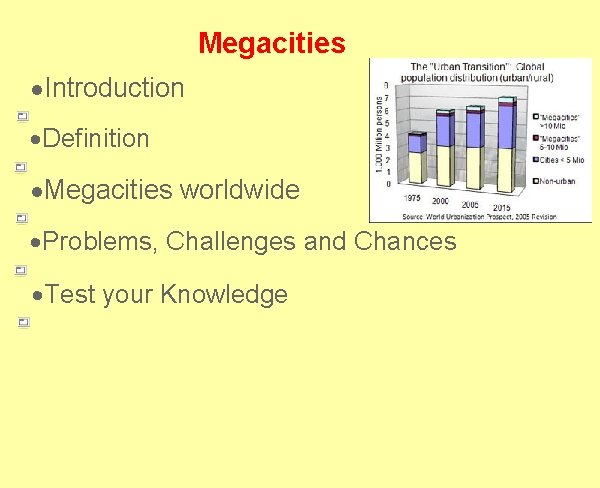
Introduction ·In 1800 only 3% of the world's population lived in cities. By the end of the 20 th century, 47% did so. ·In 1950, there were 83 cities with populations exceeding one million. ·By 2007, this had risen to 468 settlements of more than one million people. ·According to calculations of the United Nations, today's urban population of 3. 3 billion will rise to nearly 5 billion by 2030, when three out of five people will live in cities and more than 2 billion people will be living in slums. The increase in the number of megacities causes huge problems, especially in Africa and Asia.

Definition ·a metropolitan area with a total population of more than 10 million people ·a single metropolitan area or two or more metropolitan areas which have grown to such an extent, that they now form one urban area. ·megapolis or megalopolis: ·metacity or hypercity: more than 20 million people. used synonymously with megacity.
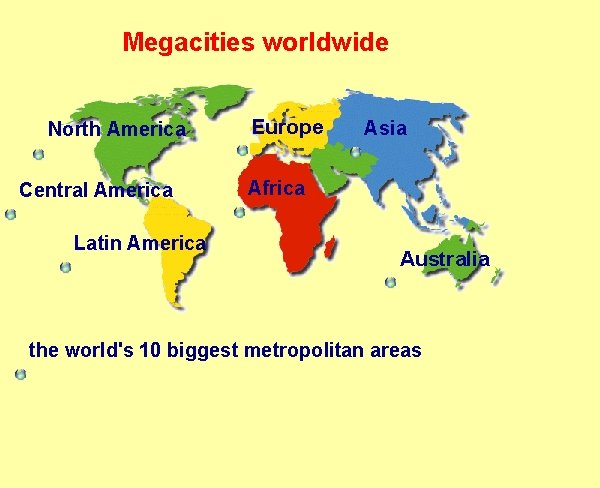
Megacities worldwide North America Central America Latin America Europe Asia Africa Australia the world's 10 biggest metropolitan areas

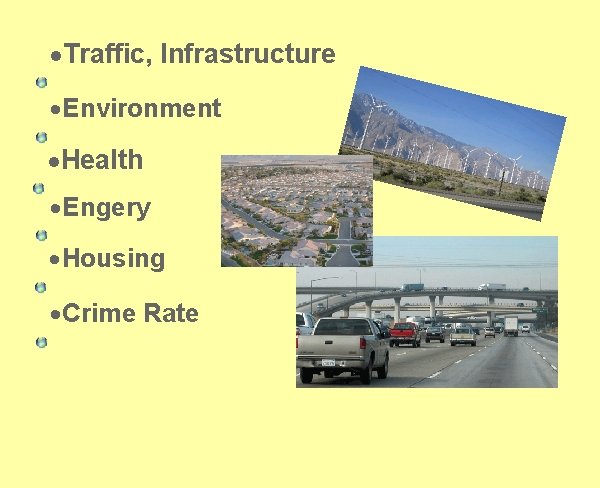
Problems, Challenges and Chances In many poor countries, overpopulated slums exhibit high rates of disease due to unsanitary conditions, malnutrition, and lack of basic health care. Many countries in the developing world neither have the legal nor the financial capacity to deal with the rapid of growth of mega cities. Approximately one-sixth of today's world's population now live in shanty towns, which are seen as "breeding grounds" for social problems such as crime, drug addiction, alcoholism, poverty and unemployment.
·Traffic, Infrastructure ·Environment ·Health ·Engery ·Housing ·Crime Rate

·listening ·reading ·writing ·vocabulary ·grammar ·check what you learned Test your Knowledge
- Slides: 7