
Meeting the Needs of our Learners Redesigned Curriculum
- Slides: 55
Meeting the Needs of our Learners: Redesigned Curriculum Prince Rupert
Why Redesign our Curriculum: • Present construct of the curriculum is 20+ years old • Learners today are not the learners of 20 years ago and the world has changed • We know lots more about teaching and learning • Feedback from teachers and educators: • more flexibility • explore passions and interests of kids • allow for a better fit for different communities
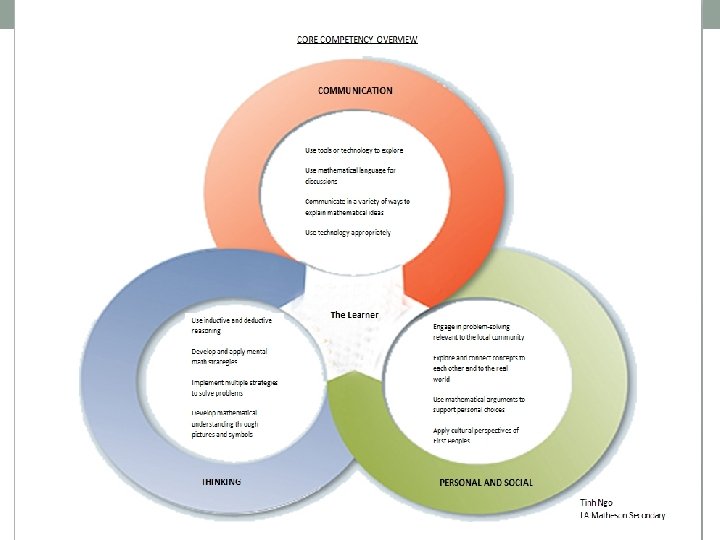
Core Competencies - in your work with students …… • Notice them, name them and nurture them • Use the language with kids • Together, focus on learning about them • Build student ownership and voice
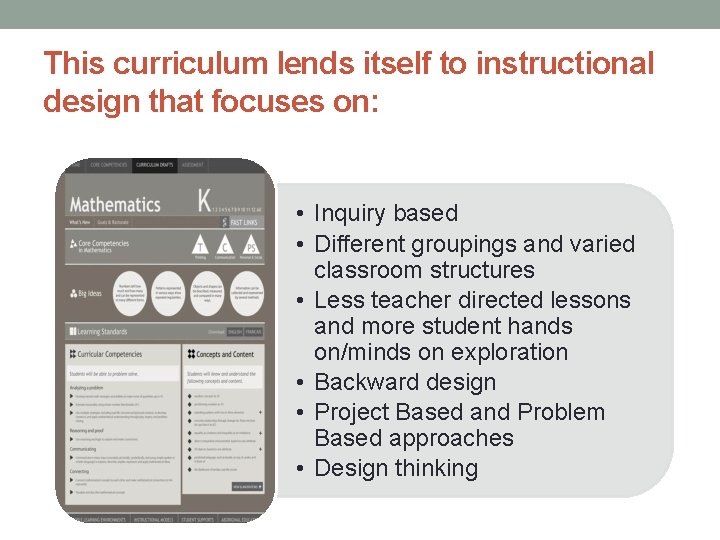
This curriculum lends itself to instructional design that focuses on: • Inquiry based • Different groupings and varied classroom structures • Less teacher directed lessons and more student hands on/minds on exploration • Backward design • Project Based and Problem Based approaches • Design thinking
Planning • Teachers will approach planning differently • Teachers might: • begin with the Big Ideas • start with important content • consider the curricular competencies
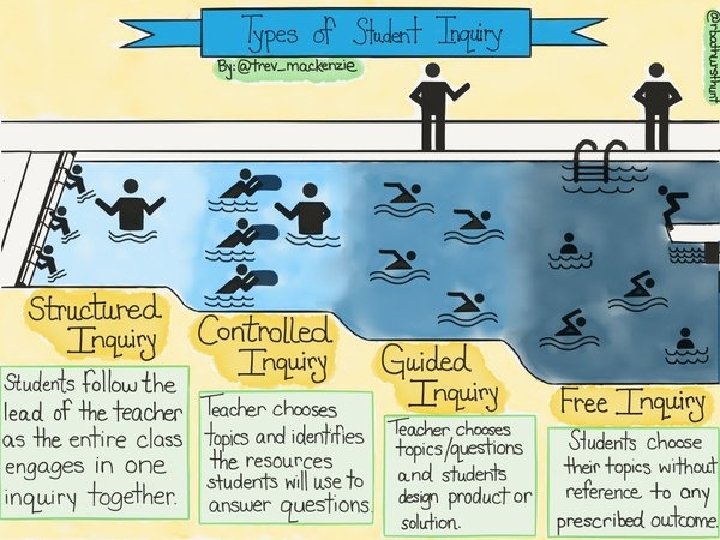
What is Inquiry? • Inquiry is a dynamic process of being open to wonder and puzzlement and coming to know and understand the world • Inquiry is based on the belief that understanding is constructed through the process of people working and collaborating together as they pose and solve the problems, make discoveries and rigorously test the discoveries • Inquiry is essential to the way in which knowledge is personally and collectively constructed and created
Essential Questions in an Inquiry Approach • derived from the big ideas and are the basis of deep learning • linked to the students, their community, interests and passions • based on important concepts – “Sticky Questions” • guide and focus the inquiry • shape the learning experience to the context and interdisciplinary studies • best generated and shaped with students
Check out this resource Focus on Inquiry Authors: Sharon Friesen with Candace Saar, Amy Park, Chenoa Marcotte, Tony Hampshire, Barb Martin, Barb Brown & Judy Martin Galileo Educational Network | Werklund School of Education, University of Calgary • © 2015 Galileo Educational Network
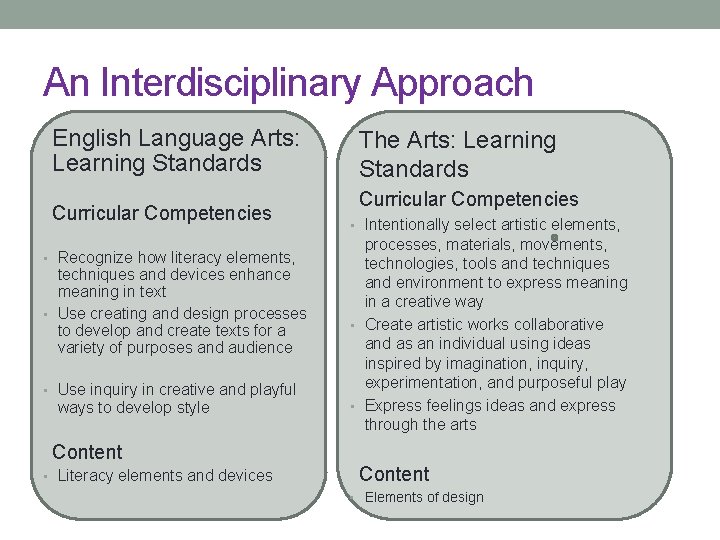
An Interdisciplinary Approach English Language Arts: Learning Standards Curricular Competencies • Recognize how literacy elements, techniques and devices enhance meaning in text • Use creating and design processes to develop and create texts for a variety of purposes and audience • Use inquiry in creative and playful ways to develop style Content • Literacy elements and devices The Arts: Learning Standards Curricular Competencies • Intentionally select artistic elements, processes, materials, movements, technologies, tools and techniques and environment to express meaning in a creative way • Create artistic works collaborative and as an individual using ideas inspired by imagination, inquiry, experimentation, and purposeful play • Express feelings ideas and express through the arts Content • Elements of design
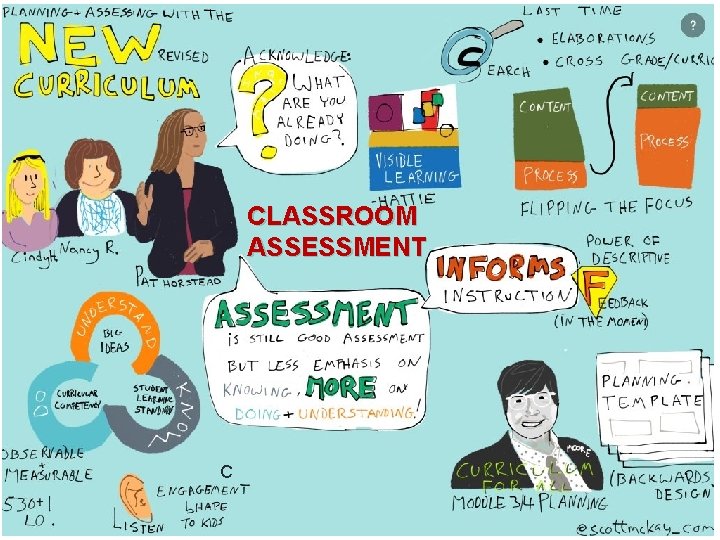
CLASSROOM ASSESSMENT C
Assessment – Focus for Today ØPrinciples of Assessment ØSuccess Criteria ØDescriptive Feedback ØQuestioning ØSelf-assessment
ØHow we conceptualize curriculum and instruction, impacts and influences the way that we assess, evaluate and ultimately report. ØAs our classrooms change and we teach differently, we need to assess differently.
Meta Analysis – Supporting Learners • John Hattie’s work suggests importance of students being active in the learning process, feedback (informative rather than evaluative), challenging but achievable goals, questioning (open ended, clarifying, extending) • Black and Wiliam’s work suggests the importance of assessment for learning – clear goals, descriptive feedback, questioning, student self-assessment • Robert Marzano work suggested that effective assessment improved learning
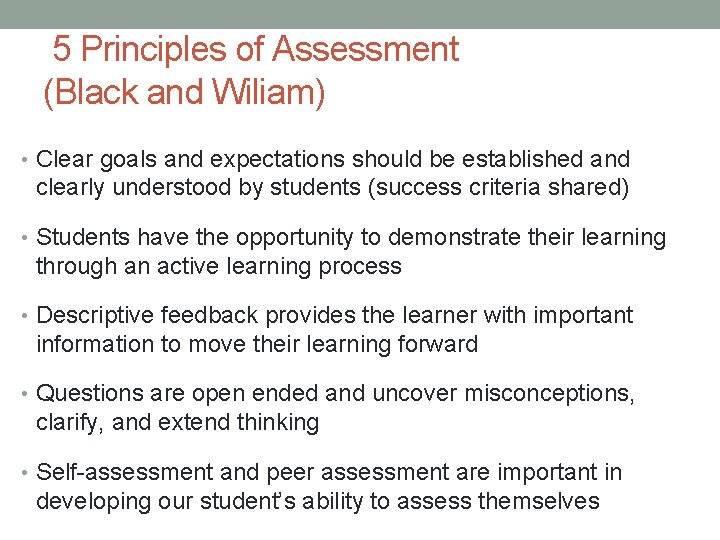
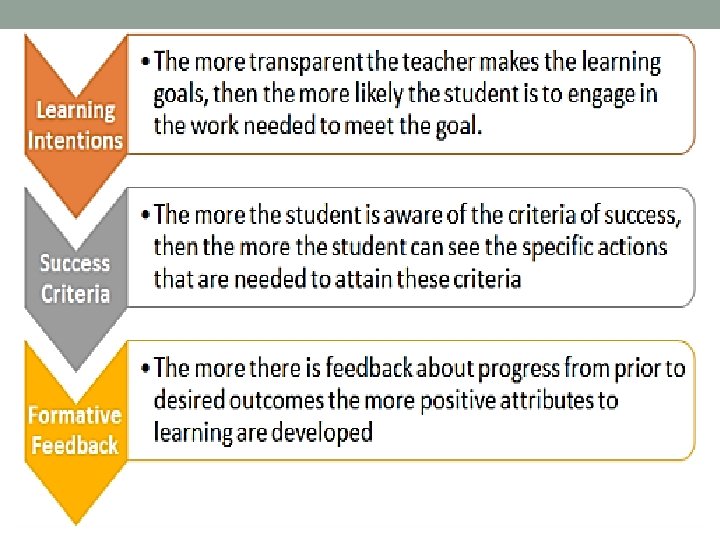
5 Principles of Assessment (Black and Wiliam) • Clear goals and expectations should be established and clearly understood by students (success criteria shared) • Students have the opportunity to demonstrate their learning through an active learning process • Descriptive feedback provides the learner with important information to move their learning forward • Questions are open ended and uncover misconceptions, clarify, and extend thinking • Self-assessment and peer assessment are important in developing our student’s ability to assess themselves
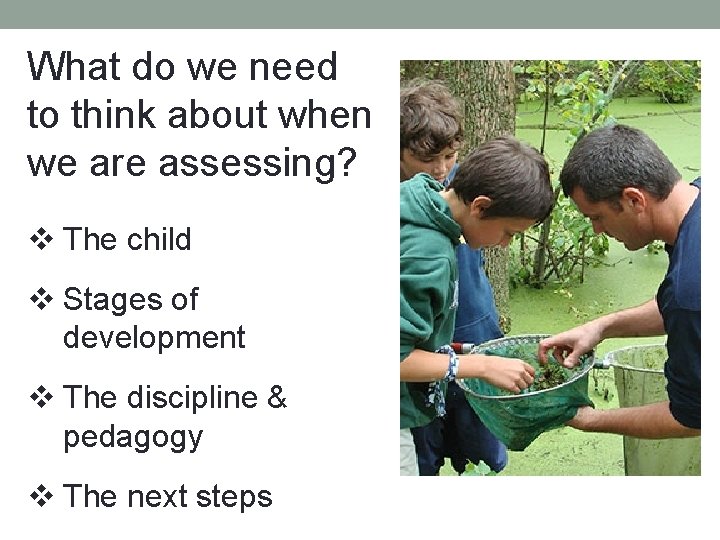
What do we need to think about when we are assessing? v The child v Stages of development v The discipline & pedagogy v The next steps
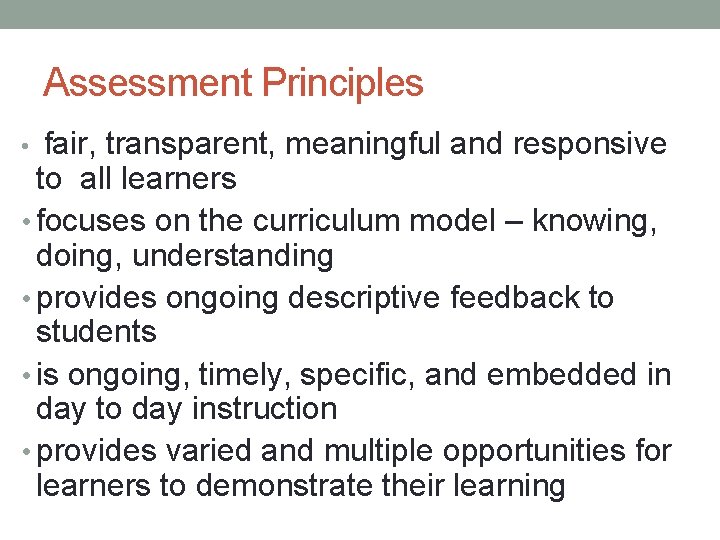
Assessment Principles • fair, transparent, meaningful and responsive to all learners • focuses on the curriculum model – knowing, doing, understanding • provides ongoing descriptive feedback to students • is ongoing, timely, specific, and embedded in day to day instruction • provides varied and multiple opportunities for learners to demonstrate their learning
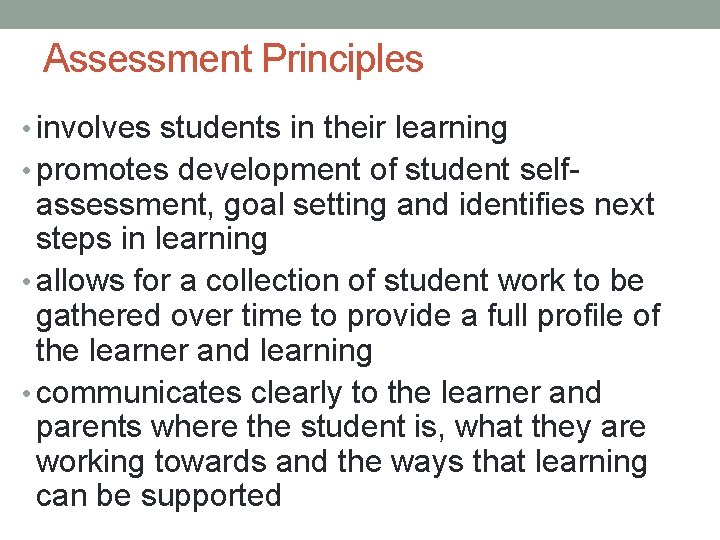
Assessment Principles • involves students in their learning • promotes development of student self- assessment, goal setting and identifies next steps in learning • allows for a collection of student work to be gathered over time to provide a full profile of the learner and learning • communicates clearly to the learner and parents where the student is, what they are working towards and the ways that learning can be supported
So what is Different? • focus on doing, building understanding not just knowing • including students in the process • more embedded, ongoing assessment linked to instruction • less of an “event” at the end • purpose is to identify gaps and areas to extend learning • provides information that helps teachers adjust instruction – is my instruction working?
• emphasis on descriptive feedback and feedback to the student in the moment • Focus on questioning as a way to clarify and extend thinking and uncover “misconceptions’ • assessment to determine who needs more guidance, a mini lesson, small group instruction, different approach, targeted approach • builds a profile of a student from evidenced gathered over time rather than a set of marks • recognizes the continuum between formative and summative
Pick a Principle • Choose one of the principles. What are the practices that align? What does it look like in your classroom? What could you do more of? Less of? • Where are you in your understanding and application of the principles?
There is a Shift in Assessment What are some of the “shifts” for you when you think about assessment? What are some of the things you have started to do differently in your work with students? What are some of the questions that still come to mind?
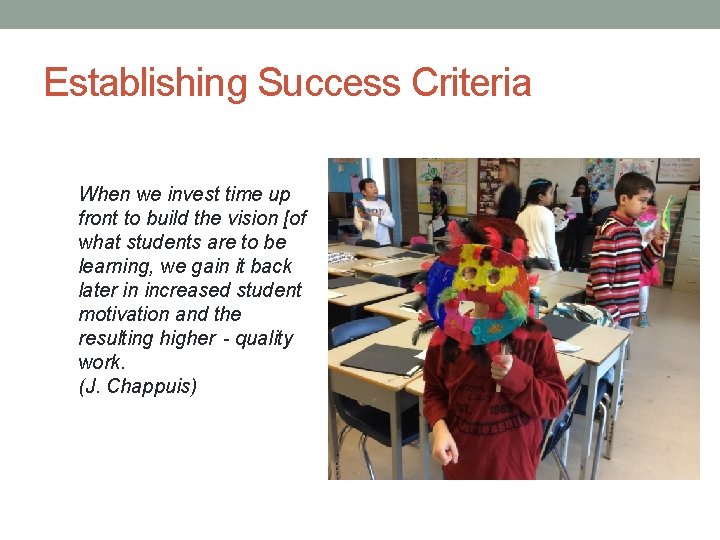
Establishing Success Criteria When we invest time up front to build the vision [of what students are to be learning, we gain it back later in increased student motivation and the resulting higher‐quality work. (J. Chappuis)
Developing Success Criteria 1. Let’s go back to the inter-disciplinary unit based on ELA and the Arts 1. Look at the learning standards 1. What would the criteria for success be? 2. What would you hope to see in kids work? 2. Look at the kids examples: 1. What are the qualities and attributes you see in the student work? 2. What are the qualities and attributes that you see in the one that you think is most closely aligned to excellence? What sets it apart?
We ensure students understand success by: • Identifying and co-constructing criteria for success • Sharing and clarifying success • Using student friendly language • Using samples, models, exemplars to show success • Modeling process of applying success criteria to examples, samples • Having students practice applying success criteria to anonymous examples • Using the success criteria for teacher feedback, self assessment and peer assessment
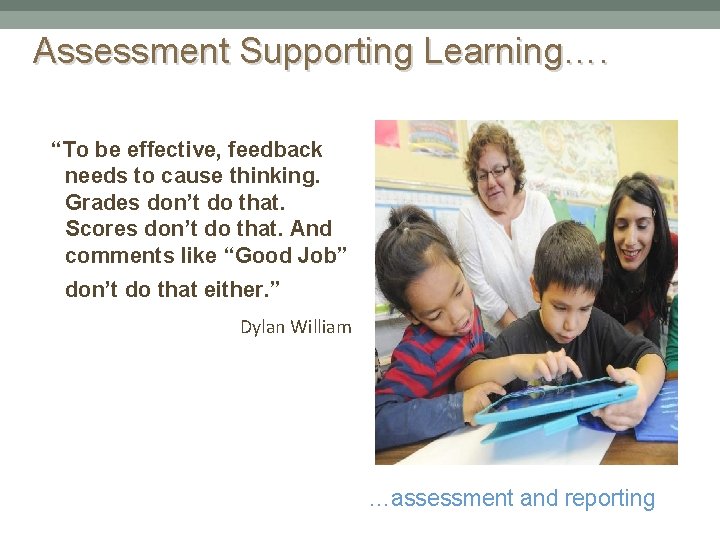
Assessment Supporting Learning…. “To be effective, feedback needs to cause thinking. Grades don’t do that. Scores don’t do that. And comments like “Good Job” don’t do that either. ” Dylan William …assessment and reporting
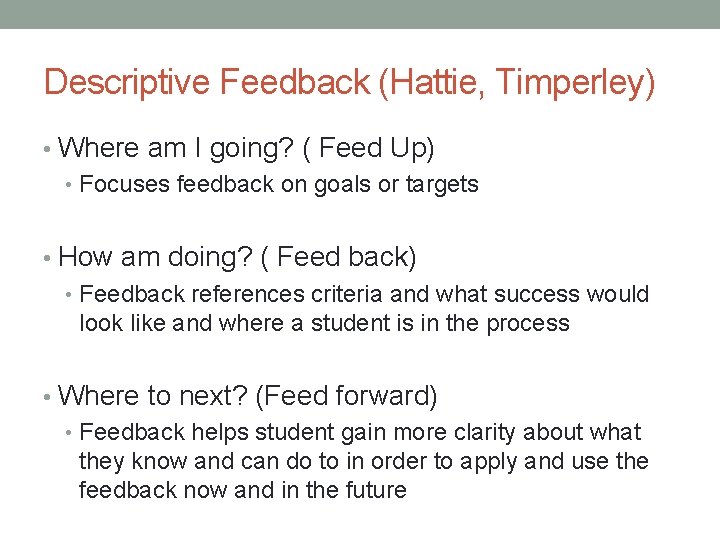
Descriptive Feedback (Hattie, Timperley) • Where am I going? ( Feed Up) • Focuses feedback on goals or targets • How am doing? ( Feed back) • Feedback references criteria and what success would look like and where a student is in the process • Where to next? (Feed forward) • Feedback helps student gain more clarity about what they know and can do to in order to apply and use the feedback now and in the future
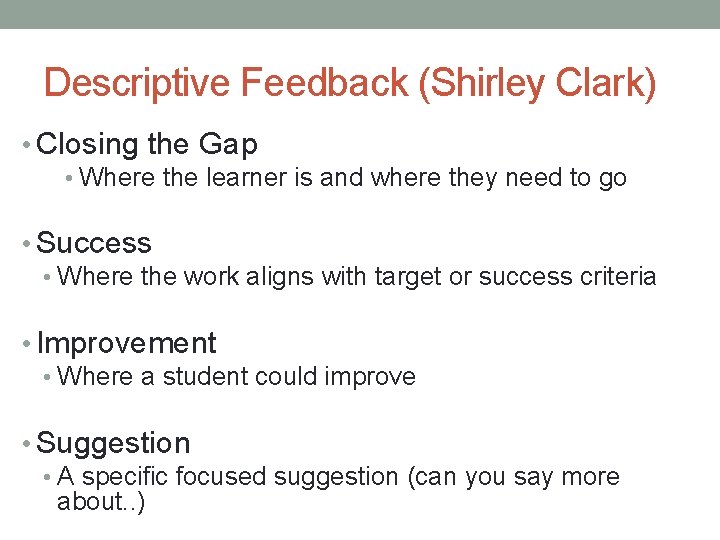
Descriptive Feedback (Shirley Clark) • Closing the Gap • Where the learner is and where they need to go • Success • Where the work aligns with target or success criteria • Improvement • Where a student could improve • Suggestion • A specific focused suggestion (can you say more about. . )
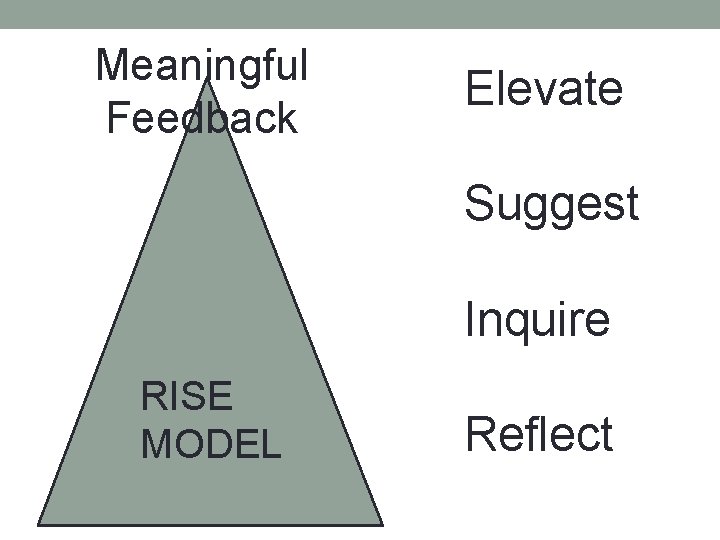
Meaningful Feedback Elevate Suggest Inquire RISE MODEL Reflect
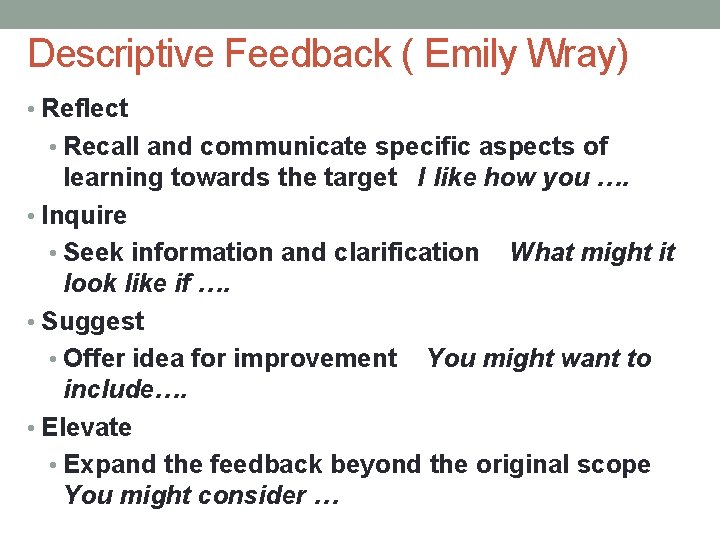
Descriptive Feedback ( Emily Wray) • Reflect • Recall and communicate specific aspects of learning towards the target I like how you …. • Inquire • Seek information and clarification What might it look like if …. • Suggest • Offer idea for improvement You might want to include…. • Elevate • Expand the feedback beyond the original scope You might consider …
Creating Feedback Prompts • Consider one of the organizers – or combine some of the organizers • Create a list of prompts that you could use to provide students descriptive feedback
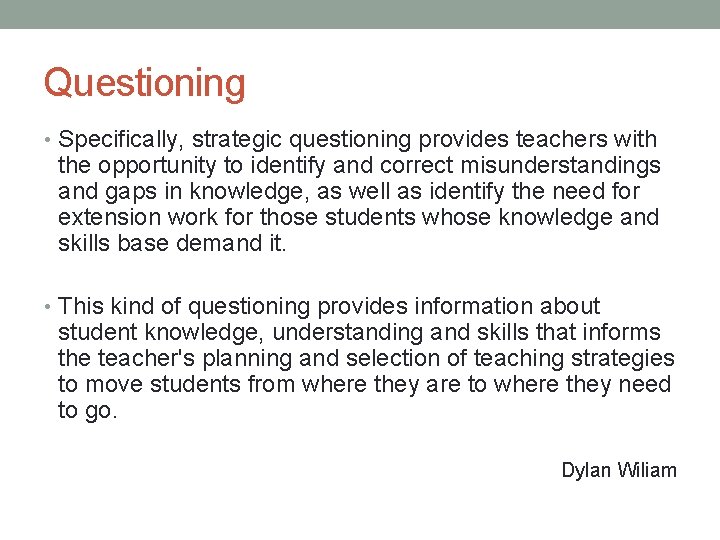
Questioning • Specifically, strategic questioning provides teachers with the opportunity to identify and correct misunderstandings and gaps in knowledge, as well as identify the need for extension work for those students whose knowledge and skills base demand it. • This kind of questioning provides information about student knowledge, understanding and skills that informs the teacher's planning and selection of teaching strategies to move students from where they are to where they need to go. Dylan Wiliam
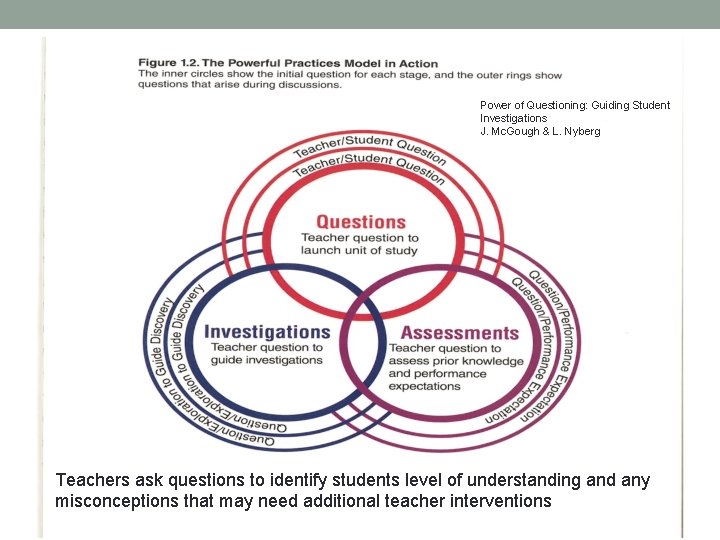
Power of Questioning: Guiding Student Investigations J. Mc. Gough & L. Nyberg Teachers ask questions to identify students level of understanding and any misconceptions that may need additional teacher interventions
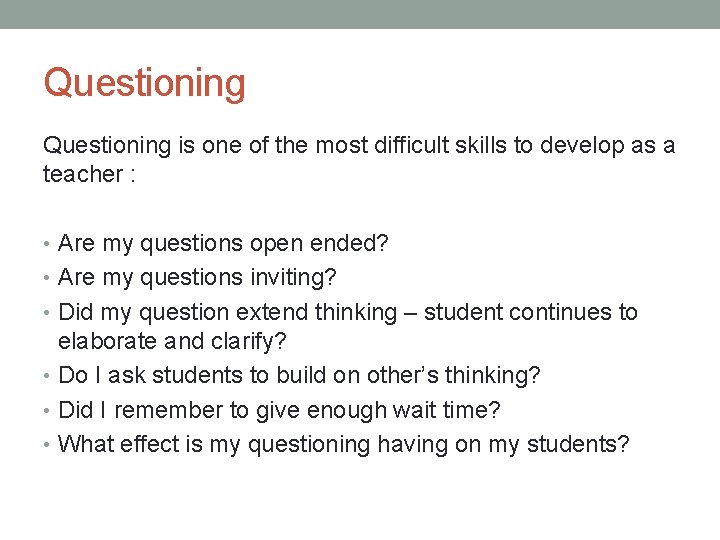
Questioning is one of the most difficult skills to develop as a teacher : • Are my questions open ended? • Are my questions inviting? • Did my question extend thinking – student continues to elaborate and clarify? • Do I ask students to build on other’s thinking? • Did I remember to give enough wait time? • What effect is my questioning having on my students?
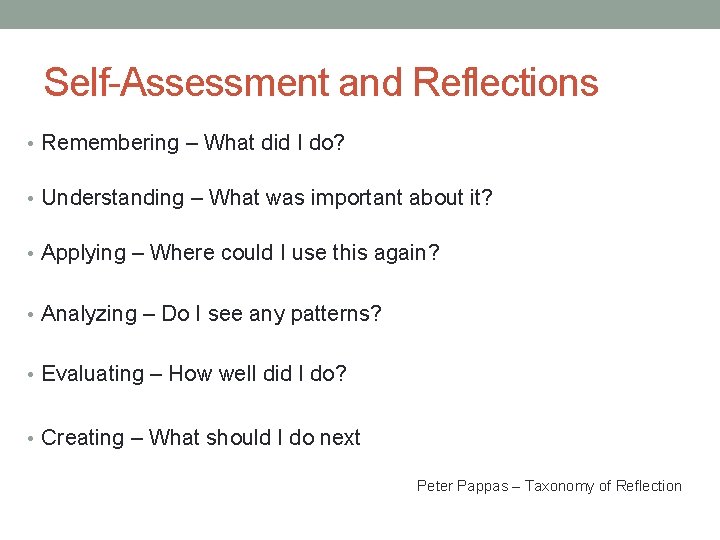
Self-Assessment and Reflections • Remembering – What did I do? • Understanding – What was important about it? • Applying – Where could I use this again? • Analyzing – Do I see any patterns? • Evaluating – How well did I do? • Creating – What should I do next Peter Pappas – Taxonomy of Reflection
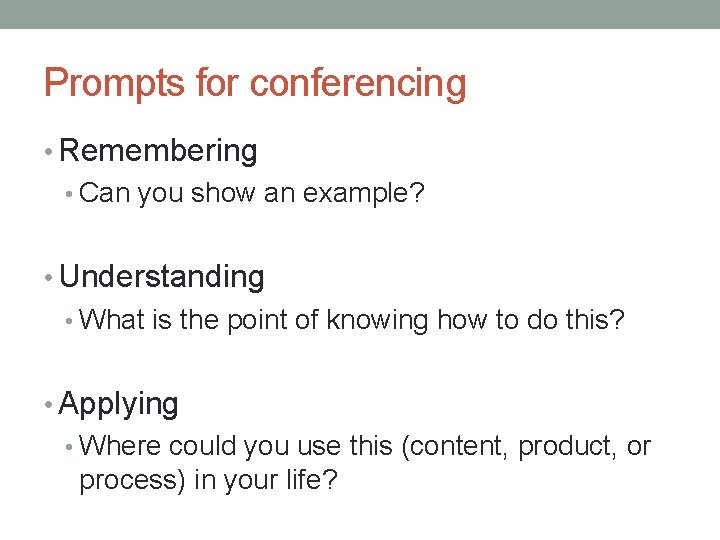
Prompts for conferencing • Remembering • Can you show an example? • Understanding • What is the point of knowing how to do this? • Applying • Where could you use this (content, product, or process) in your life?
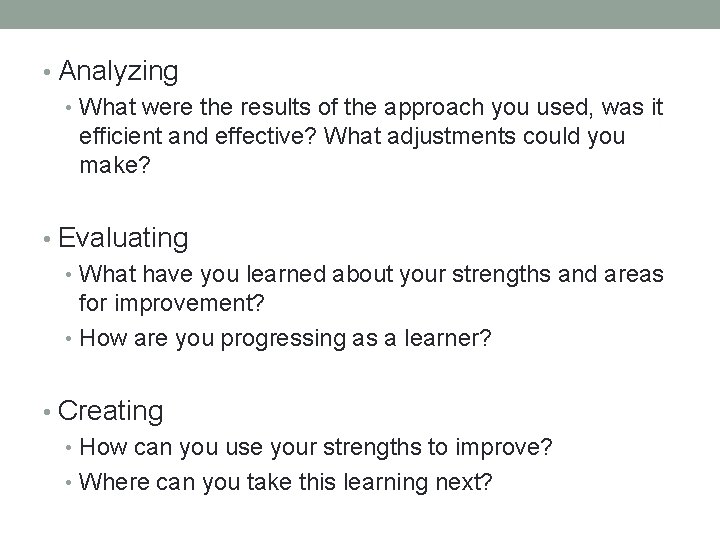
• Analyzing • What were the results of the approach you used, was it efficient and effective? What adjustments could you make? • Evaluating • What have you learned about your strengths and areas for improvement? • How are you progressing as a learner? • Creating • How can you use your strengths to improve? • Where can you take this learning next?
Assessment – How Might I Start? • allow different ways for students to represent learning • consider multiple ways of gathering evidence • emphasis on observations, descriptive feedback, questioning, conferencing and interviewing • build language of thinking, communicating, personal & social competence in relation to the disciplines • develop ownership and student voice through self- assessment of the Core Competencies
With a partner/group talk about Assessment • What are things that you will take away as “ahaa’s” ? • What do you want to learn more about? • What are you already doing – what will you do more of? • What will you do less of? • What is your burning question?
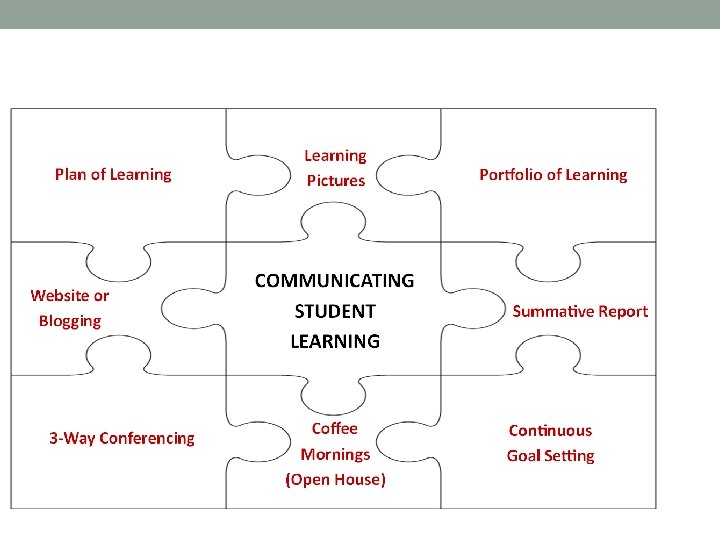
COMMUNICATING STUDENT LEARNING AND REPORTING
In your experience. . • What are the important things that parents want to know about their child? • How are the best ways you have found to build parent understanding of where their child is in the learning process? • What are some of the dilemmas you face as a teacher when it comes to communicating and reporting student learning?
Principles of Communicating and Reporting to Parents • clear, understandable language • well informed about the growth, progress and achievement of their child • It makes learning visible - examples of student work, portfolio, student led, electronic tools and communication provide an illustrative profile of the learner • understand the next steps in their child’s learning and development and ways they can be supported • provides information about the learner as a member of the learning community, how they approach learning and communicates that the teacher knows and cares about the learner • outlines specific interventions and supports • provides a summary and documents the students learning experience
Communicating Student Learning • What are some of the ways that you have found to effectively communicate student learning with parents? • What are some of the challenges? How have you addressed these challenges?
We want to develop an educational experience where: • Reporting is ongoing communication of student’s progress
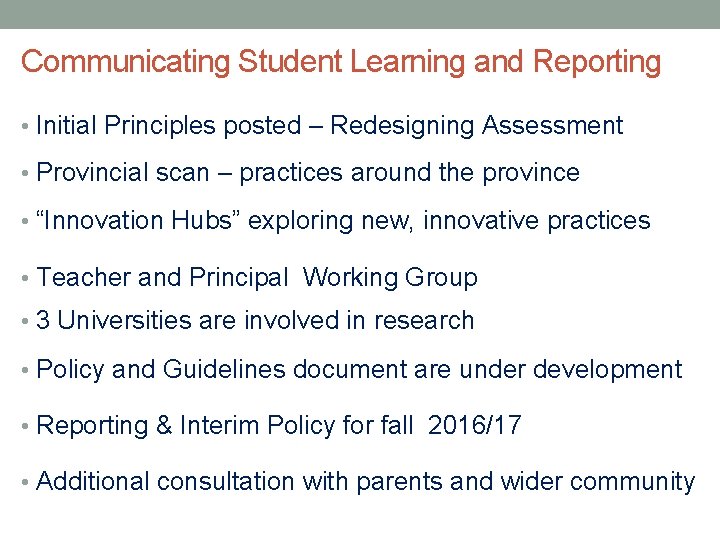
Communicating Student Learning and Reporting • Initial Principles posted – Redesigning Assessment • Provincial scan – practices around the province • “Innovation Hubs” exploring new, innovative practices • Teacher and Principal Working Group • 3 Universities are involved in research • Policy and Guidelines document are under development • Reporting & Interim Policy for fall 2016/17 • Additional consultation with parents and wider community
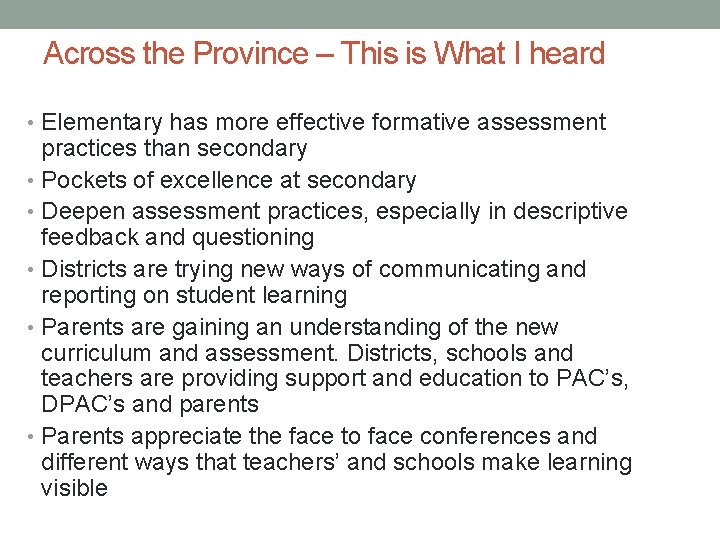
Across the Province – This is What I heard • Elementary has more effective formative assessment practices than secondary • Pockets of excellence at secondary • Deepen assessment practices, especially in descriptive feedback and questioning • Districts are trying new ways of communicating and reporting on student learning • Parents are gaining an understanding of the new curriculum and assessment. Districts, schools and teachers are providing support and education to PAC’s, DPAC’s and parents • Parents appreciate the face to face conferences and different ways that teachers’ and schools make learning visible
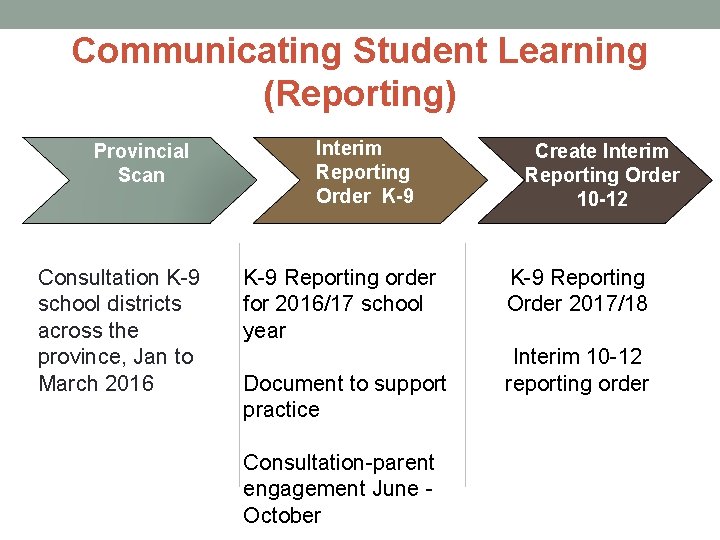
Communicating Student Learning (Reporting) Provincial Scan Consultation K-9 school districts across the province, Jan to March 2016 Interim Reporting Order K-9 Reporting order for 2016/17 school year Document to support practice Consultation-parent engagement June October Create Interim Reporting Order 10 -12 K-9 Reporting Order 2017/18 Interim 10 -12 reporting order
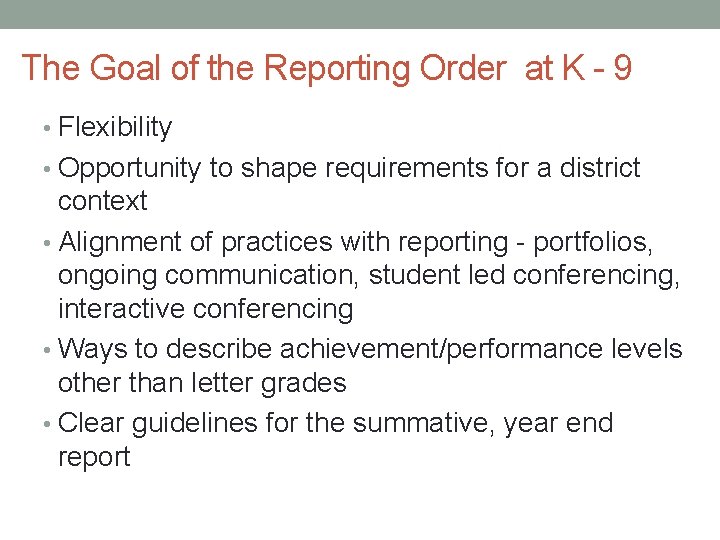
The Goal of the Reporting Order at K - 9 • Flexibility • Opportunity to shape requirements for a district context • Alignment of practices with reporting - portfolios, ongoing communication, student led conferencing, interactive conferencing • Ways to describe achievement/performance levels other than letter grades • Clear guidelines for the summative, year end report
Reporting to parents: • Clear, understandable language • Well informed about growth, progress, achievement – “no surprises” • Child’s learning is visible to the parent • Outlines the next steps, ways to support the development of the student • Outlines any specific interventions and significant supports • Provides a summary of the students learning experience
Taking Stock - Where is your school, District? • What do parents want? • How have you helped them understand different ways of understanding student learning? • How have you made “learning visible to parents”? • In our schools, how can we support the change process? • What are your next steps?