
Meeting the Needs of Newcomer Students 2018 B
Meeting the Needs of Newcomer Students 2018 B. E. L. I. E. F. Module 6 1
Section Questions ▪ Who are newcomer English learners? ▪ What are the unique needs of newcomers? ▪ How do we design programs to meet their needs? 2018 B. E. L. I. E. F. Module 6 2
Section Outcomes Participants will: ▪ Understand different typologies of newcomer English learners. ▪ Understand the unique needs of different newcomer students. ▪ Apply their understandings to designing effective programs for newcomers. 2018 B. E. L. I. E. F. Module 6 3
Section Question Who are newcomer English Learners? 2018 B. E. L. I. E. F. Module 6 4
Who are Newcomer English Learners? ▪ U. S. Department of Education newcomer Toolkit uses newcomer to “refer to any foreign -born students and their families who have recently arrived in the United States. ” ▪ Districts may limit the term to students who have arrived in the last few years, sometimes as little as one year. ▪ How is “newcomer” defined in your school? 2018 B. E. L. I. E. F. Module 6 5
Who are Newcomer English Learners? ▪ U. S. Department of Education Newcomer Toolkit uses newcomer to “refer to any foreign -born students and their families who have recently arrived in the United States. ” ▪ Districts may limit the term to students who have arrived in the last few years, sometimes as little as one year. How is “newcomer” defined in your school? 2018 B. E. L. I. E. F. Module 6 6
Immigration Status ▪ Voluntary Immigrants • • Citizens Visa holders ▪ Refugees • • • War Persecution Natural Disaster ▪ Undocumented/unauthorized • Unaccompanied minors 2018 B. E. L. I. E. F. Module 6 7
Educational Background ▪ Literate, with grade-level skills in their own language. ▪ Literate, partially schooled, literacy skills and some academic skills in home language. ▪ SIFE: Students with Interrupted or limited Formal Education experiences, resulting in below-grade level or no literacy in their native language. 8
Discuss - Who are your Newcomers? What trends are you seeing in your school’s newcomer population? Immigration Status: • Why are students coming to the U. S. ? Educational Background: • What is their school experience? • What skills do they bring?
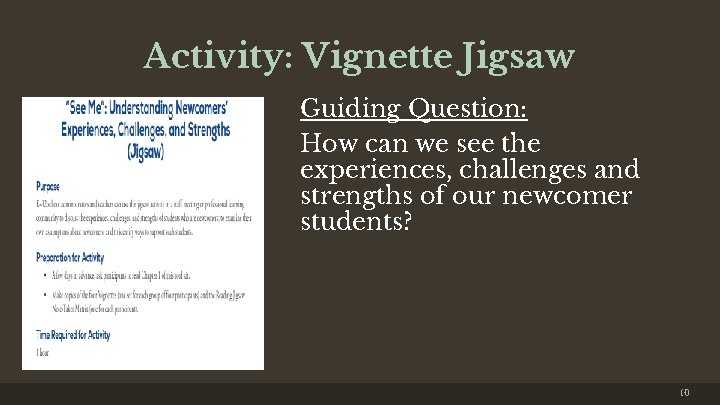
Activity: Vignette Jigsaw Guiding Question: How can we see the experiences, challenges and strengths of our newcomer students? 10

Section Question What are the unique needs of newcomer English Learners? 2018 B. E. L. I. E. F. Module 6 11
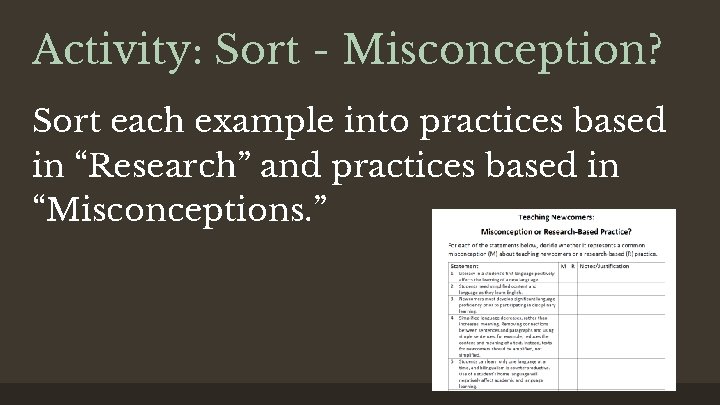
Activity: Sort - Misconception? Sort each example into practices based in “Research” and practices based in “Misconceptions. ”
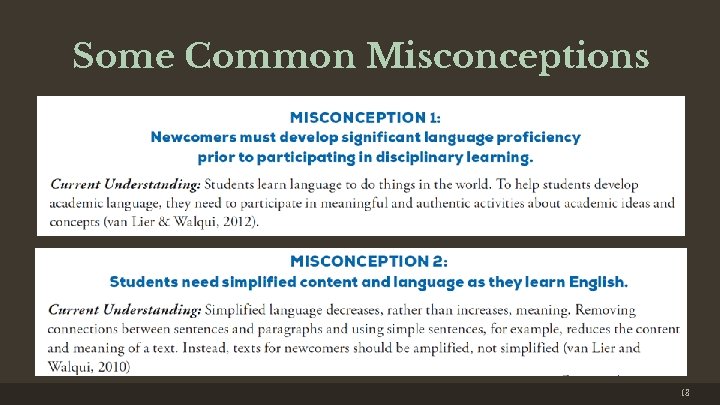
Some Common Misconceptions 13
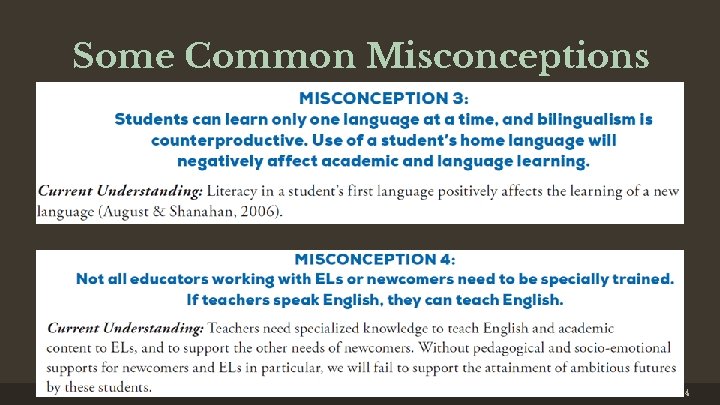
Some Common Misconceptions 14
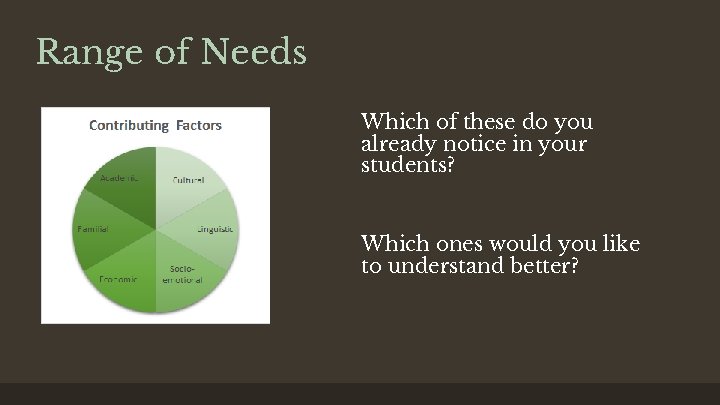
Range of Needs Which of these do you already notice in your students? Which ones would you like to understand better?
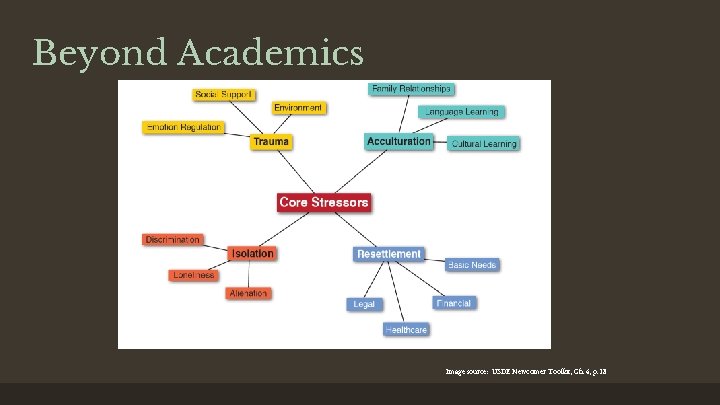
Beyond Academics Image source: USDE Newcomer Toolkit, Ch. 4, p. 13
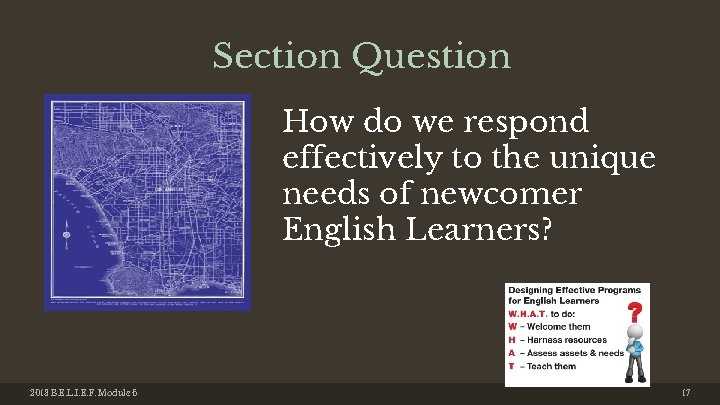
Section Question How do we respond effectively to the unique needs of newcomer English Learners? 2018 B. E. L. I. E. F. Module 6 17
CA EL Roadmap Policy "California is a state that welcomes newcomers and their families, and that addresses their linguistic diversity with a positive, additive orientation. Our schools need to reflect this orientation by affirming, welcoming and responding to a diverse range of student strengths, needs, and identities, and prepare graduates with the linguistic, academic and social skills and competencies needed for college, career and civic participation in a global, diverse and multilingual world. " https: //www. cde. ca. gov/sp/el/rm/elroadmappolicy. asp
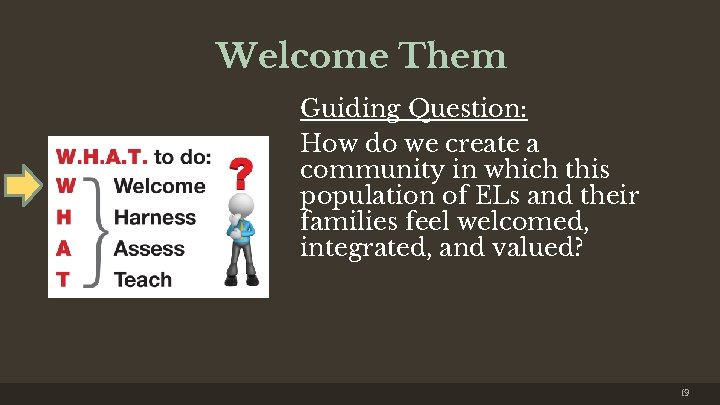
Welcome Them Guiding Question: How do we create a community in which this population of ELs and their families feel welcomed, integrated, and valued? 19
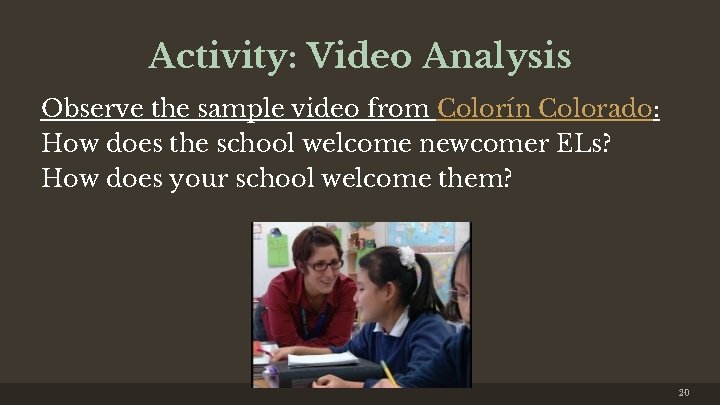
Activity: Video Analysis Observe the sample video from Colorín Colorado: How does the school welcome newcomer ELs? How does your school welcome them? 20
Inspiring Practice: Intake Protocols Considerations: 1. Where are the first contacts with newcomer families 2. 3. 4. 5. occurring? Who are the first district representatives making contact with newcomer families? What information is needed to gather from the families in order to determine the best placement for newcomers? What information is most important to relay to newcomer families on this first meeting? What interpretation services are available to families upon first contact? 21
Inspiring Practice: Newcomer Mentorship Programs Considerations: 1. Who could benefit from mentorship? a. Newcomer students b. Newcomer families 2. Who could serve as mentors? a. Peers: language/culture brokers, former newcomers, English-only peers, student leadership officers b. Community Members 3. How long should the mentorship relationship last? 4. How will the mentorship program be promoted, developed, sustained, and celebrated? 22
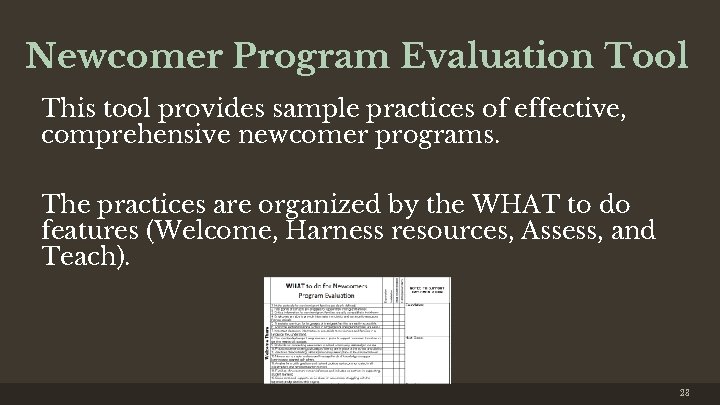
Newcomer Program Evaluation Tool This tool provides sample practices of effective, comprehensive newcomer programs. The practices are organized by the WHAT to do features (Welcome, Harness resources, Assess, and Teach). 23
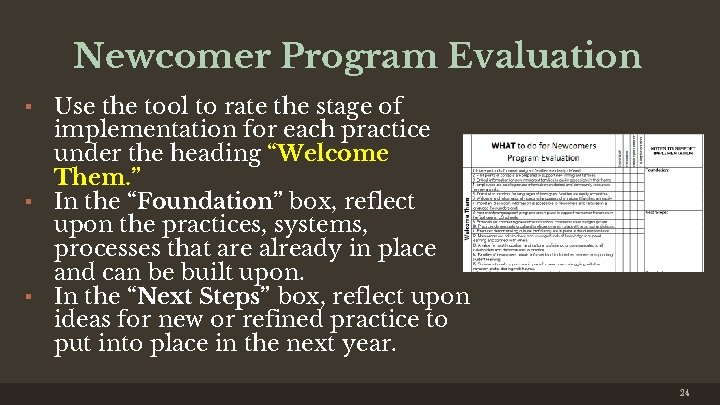
Newcomer Program Evaluation ▪ Use the tool to rate the stage of implementation for each practice under the heading “Welcome Them. ” ▪ In the “Foundation” box, reflect upon the practices, systems, processes that are already in place and can be built upon. ▪ In the “Next Steps” box, reflect upon ideas for new or refined practice to put into place in the next year. 24
Team Discussion Reflect on the Newcomer Program Evaluation: • What are your organization’s strengths in welcoming students? • What are some additional considerations you might implement? 25
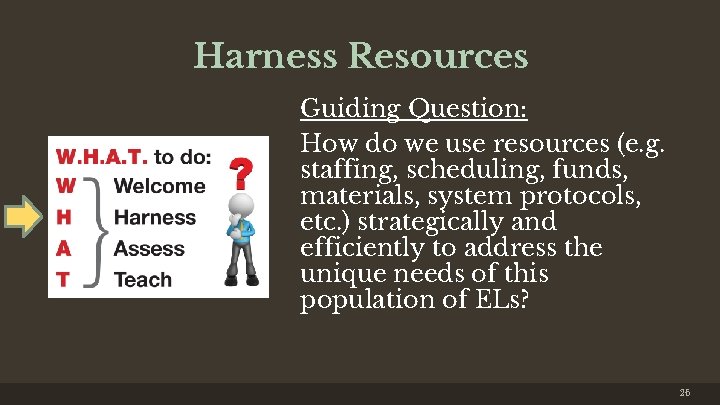
Harness Resources Guiding Question: How do we use resources (e. g. staffing, scheduling, funds, materials, system protocols, etc. ) strategically and efficiently to address the unique needs of this population of ELs? 26
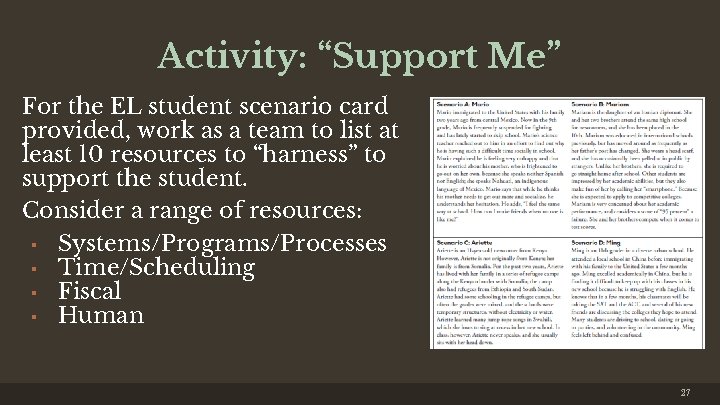
Activity: “Support Me” For the EL student scenario card provided, work as a team to list at least 10 resources to “harness” to support the student. Consider a range of resources: ▪ Systems/Programs/Processes ▪ Time/Scheduling ▪ Fiscal ▪ Human 27
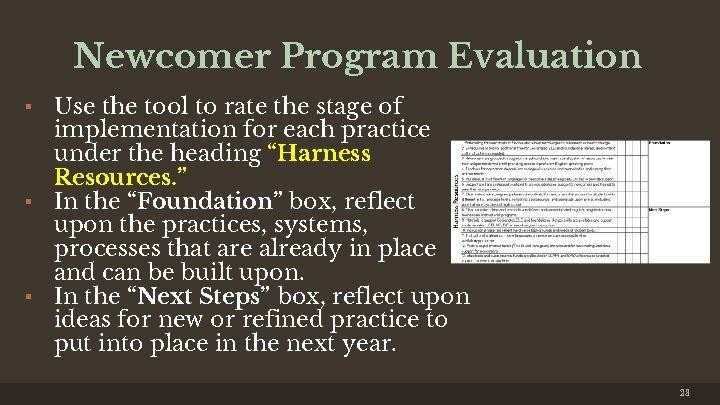
Newcomer Program Evaluation ▪ Use the tool to rate the stage of implementation for each practice under the heading “Harness Resources. ” ▪ In the “Foundation” box, reflect upon the practices, systems, processes that are already in place and can be built upon. ▪ In the “Next Steps” box, reflect upon ideas for new or refined practice to put into place in the next year. 28
Team Discussion Reflect on the Newcomer Program Evaluation: • What are your organization’s strengths in Harnessing Resources? • What are some additional considerations you might implement? 29
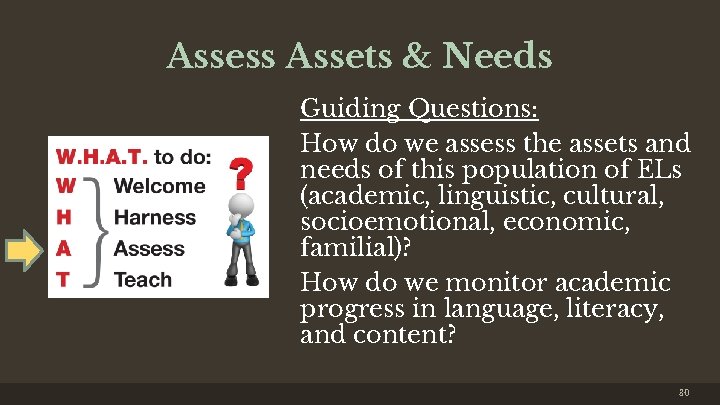
Assess Assets & Needs Guiding Questions: How do we assess the assets and needs of this population of ELs (academic, linguistic, cultural, socioemotional, economic, familial)? How do we monitor academic progress in language, literacy, and content? 30
Activity: Assessment Matching Match the possible assessment tools/practices to the goals below: 1. 2. 3. 4. 5. 6. English Language Proficiency & Literacy First Language Proficiency & Literacy Academic Content Knowledge Student Interests, Strengths, & Life Goals Cultural & Family Assets & Preferences Socio-emotional, health, & home life needs Reading Assessment Observation Student Writing ELPAC Photos/Drawings Others? Interviews Student Home Visit 31
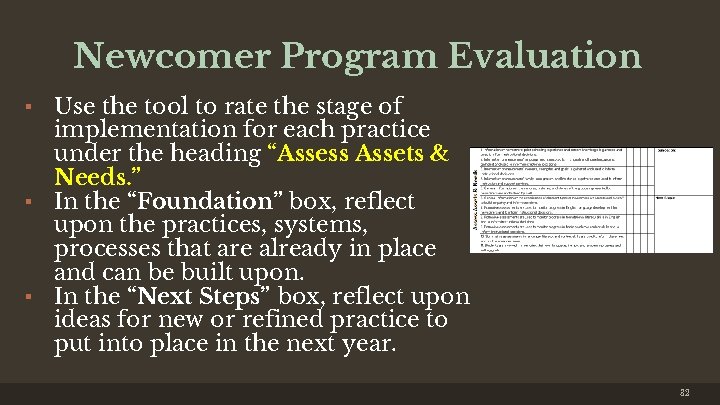
Newcomer Program Evaluation ▪ Use the tool to rate the stage of implementation for each practice under the heading “Assess Assets & Needs. ” ▪ In the “Foundation” box, reflect upon the practices, systems, processes that are already in place and can be built upon. ▪ In the “Next Steps” box, reflect upon ideas for new or refined practice to put into place in the next year. 32
Team Discussion Reflect on the Newcomer Program Evaluation: • What are your organization’s strengths in Assess Assets and Needs? • What are some additional considerations you might implement? 33
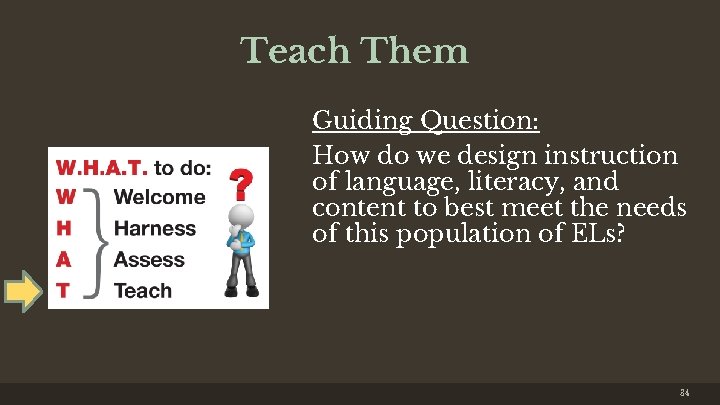
Teach Them Guiding Question: How do we design instruction of language, literacy, and content to best meet the needs of this population of ELs? 34
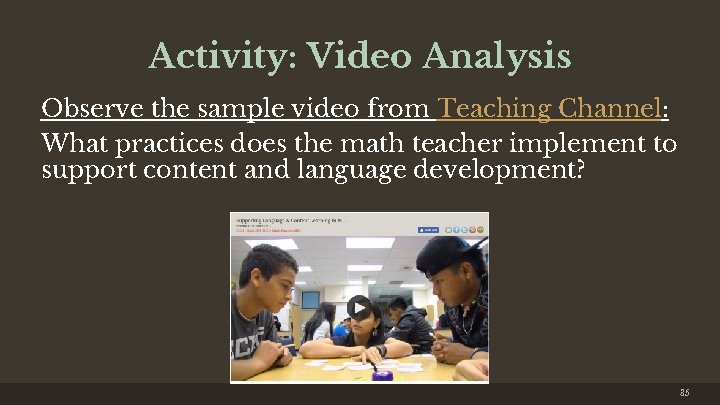
Activity: Video Analysis Observe the sample video from Teaching Channel: What practices does the math teacher implement to support content and language development? 35
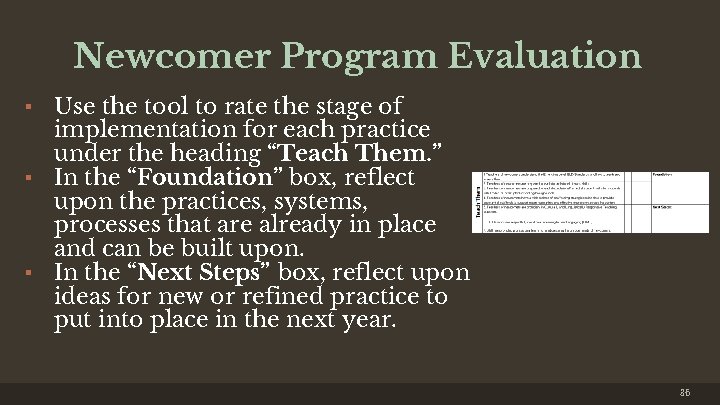
Newcomer Program Evaluation ▪ Use the tool to rate the stage of implementation for each practice under the heading “Teach Them. ” ▪ In the “Foundation” box, reflect upon the practices, systems, processes that are already in place and can be built upon. ▪ In the “Next Steps” box, reflect upon ideas for new or refined practice to put into place in the next year. 36
Team Discussion Reflect on the Newcomer Program Evaluation: • What are your organization’s strengths in Teach Them? • What are some additional considerations you might implement? 37
Extension and Application: Now What? Based on your Newcomer Program Evaluation reflection: ▪ Create a tool to communicate next steps to improve the newcomer program at your school or district. • Slideshow/Multimedia Presentation • Infographic • Poster • Video • Memo/Summary Page • Timeline 2018 B. E. L. I. E. F. Module 6 38
Section Reflection Outcomes ▪ ▪ ▪ Understand different typologies of newcomer English learners Understand the unique needs of different newcomer students Apply their understandings to designing effective programs for newcomers Activities, Strategies, or Tools I’ll Use ▪ ▪ ▪ ▪ ▪ 2018 B. E. L. I. E. F. Module 6 Thoughts/Reflection How will I use this new learning with my staff? Discussion: Who are your newcomers? Activity: Vignette Jigsaw Activity: Misconception Sort Activity: Welcoming Video Analysis Newcomer Program Evaluation Tool Activity: Support Me Activity: Assessment Matching Activity: Teaching Video Analysis Application: Next Steps 39
- Slides: 39