
Meet the philosophers Touching upon who they are
- Slides: 14
Meet the philosophers. . . Touching upon who they are and a couple of points from their set text to get us started. . .
Name Info Set text
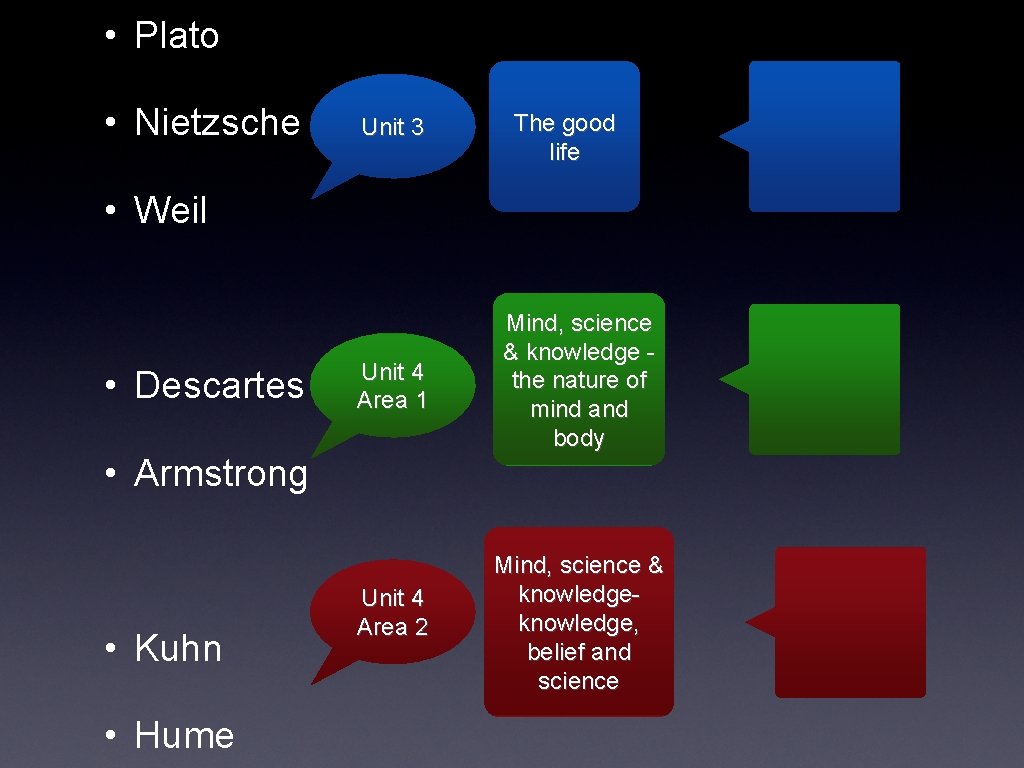
• Plato • Nietzsche Unit 3 The good life • Weil • Descartes Unit 4 Area 1 Mind, science & knowledge the nature of mind and body Unit 4 Area 2 Mind, science & knowledge, belief and science • Armstrong • Kuhn • Hume
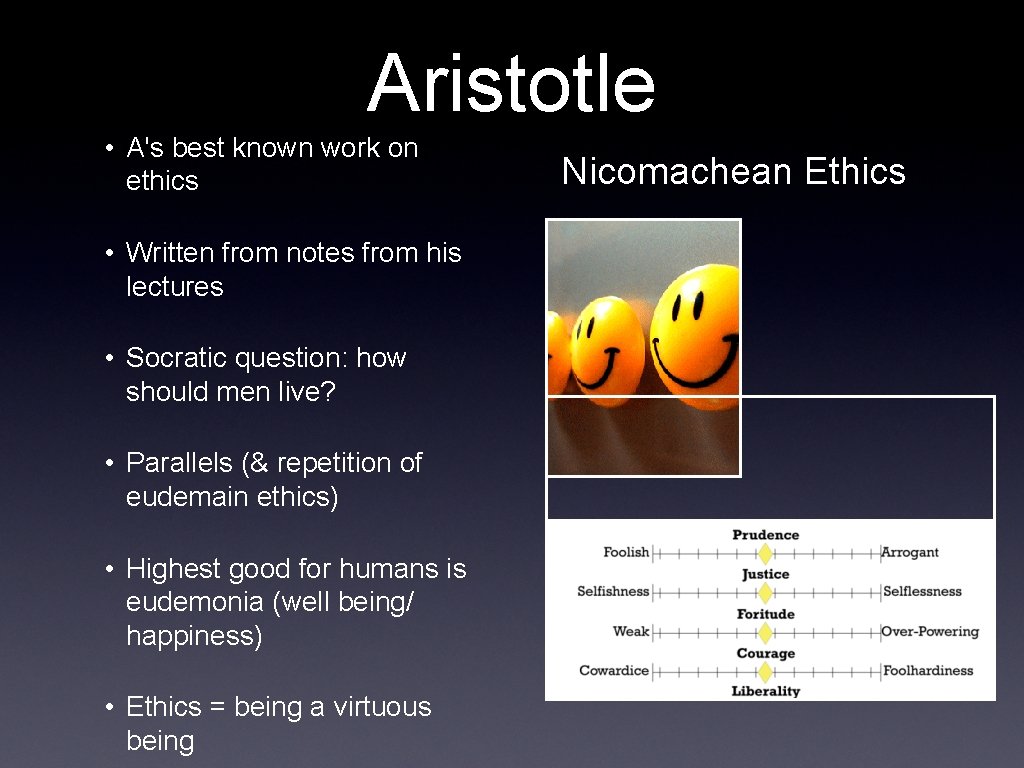
Aristotle • A's best known work on ethics • Written from notes from his lectures • Socratic question: how should men live? • Parallels (& repetition of eudemain ethics) • Highest good for humans is eudemonia (well being/ happiness) • Ethics = being a virtuous being Nicomachean Ethics
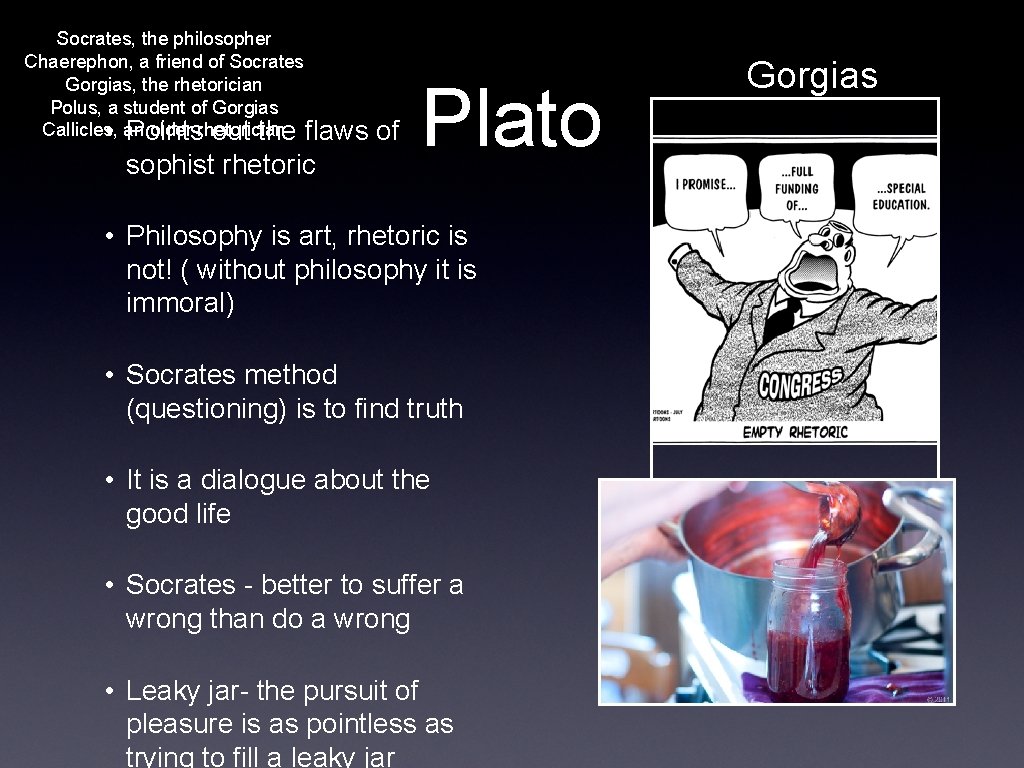
Socrates, the philosopher Chaerephon, a friend of Socrates Gorgias, the rhetorician Polus, a student of Gorgias Callicles, older rhetorician • an Points out the flaws sophist rhetoric of Plato • Philosophy is art, rhetoric is not! ( without philosophy it is immoral) • Socrates method (questioning) is to find truth • It is a dialogue about the good life • Socrates - better to suffer a wrong than do a wrong • Leaky jar- the pursuit of pleasure is as pointless as trying to fill a leaky jar Gorgias
Weil The need for Roots: a Prelude to a declaration of duties • Written during WW 2 while towards mankind she was working for the French resistance (nurses for the front lines) • It sets out to address the past and to set out a road map for the future of France after World War II. • She analyzes the spiritual and ethical milieu that led up to France’s defeat by the German army, and then addresses these issues with the prospect of eventual French victory (Wikipedia)
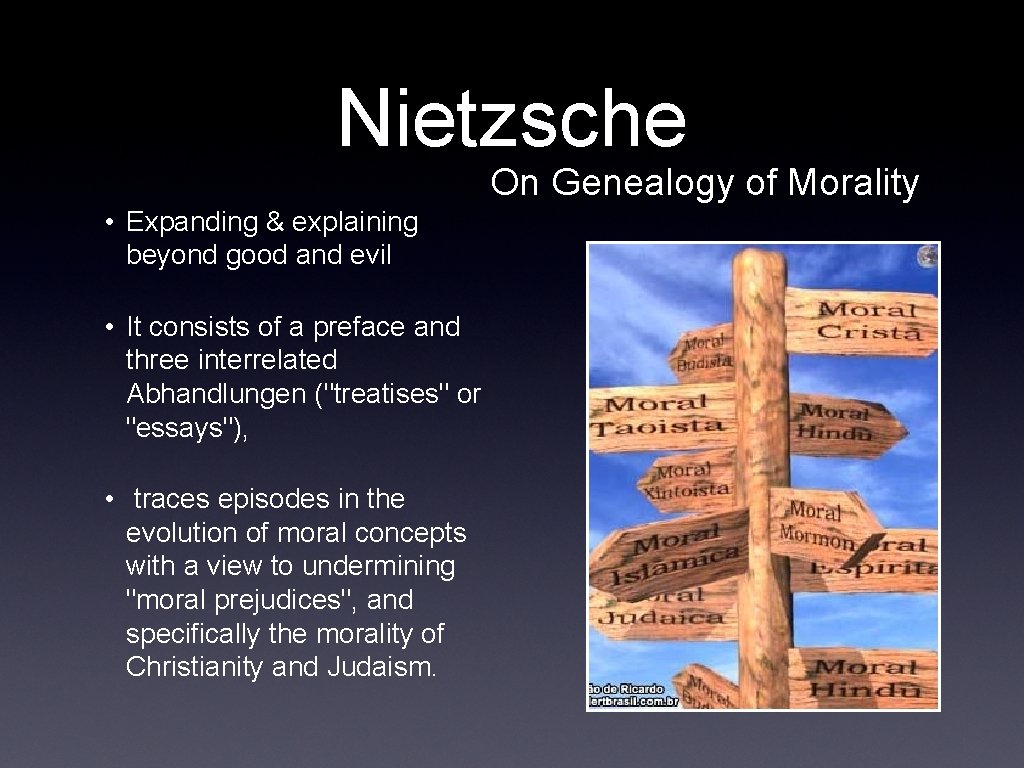
Nietzsche On Genealogy of Morality • Expanding & explaining beyond good and evil • It consists of a preface and three interrelated Abhandlungen ("treatises" or "essays"), • traces episodes in the evolution of moral concepts with a view to undermining "moral prejudices", and specifically the morality of Christianity and Judaism.
Descartes Meditations on first philosophy • subtitled In which the existence of God and the immortality of the soul are demonstrated • Discards belief in things that are not absolutely certain • 6 meditations = 6 days
Armstrong the nature of the mind and other essays • best clue we have to discovering the true nature of the human mind is through the findings of science • We can only ever seem to reach a consensus through science (scientists can reach agreements, philosophers et al can not!)
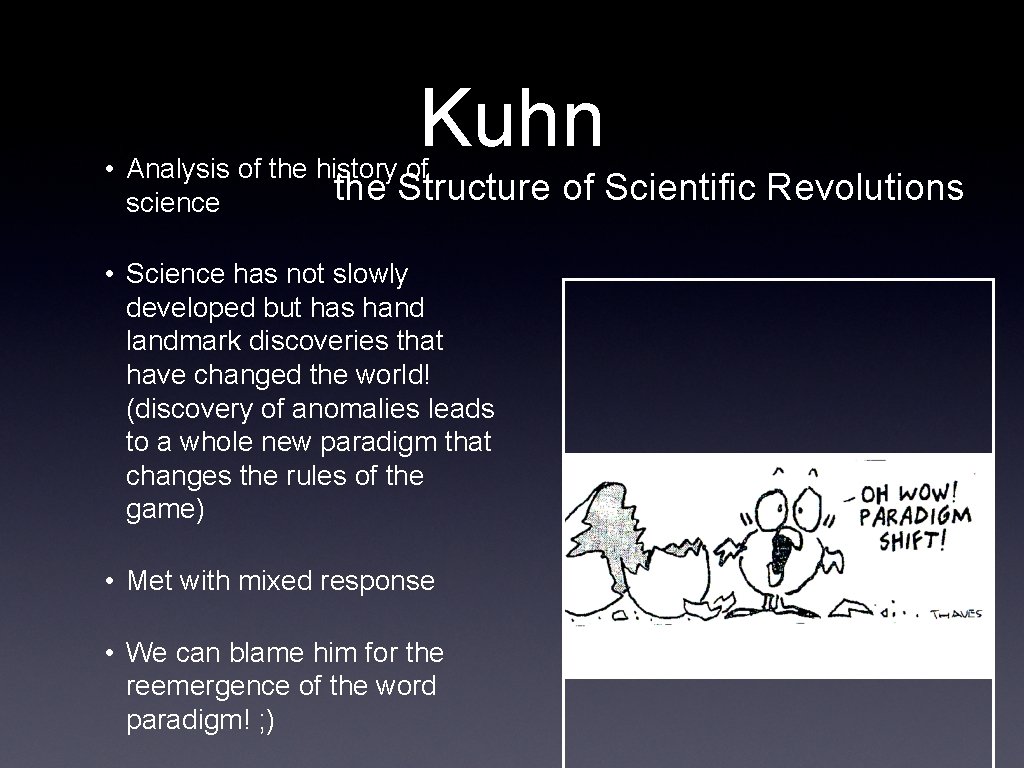
Kuhn • Analysis of the history of the Structure science • Science has not slowly developed but has hand landmark discoveries that have changed the world! (discovery of anomalies leads to a whole new paradigm that changes the rules of the game) • Met with mixed response • We can blame him for the reemergence of the word paradigm! ; ) of Scientific Revolutions
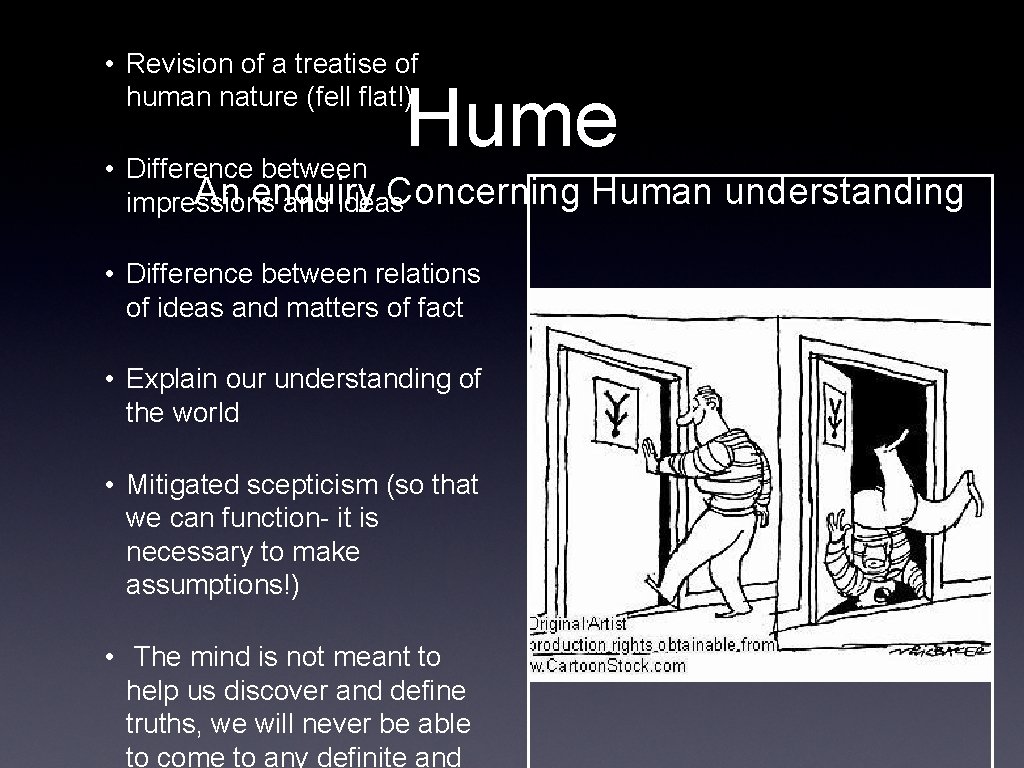
• Revision of a treatise of human nature (fell flat!) Hume • Difference between An enquiry Concerning impressions and ideas • Difference between relations of ideas and matters of fact • Explain our understanding of the world • Mitigated scepticism (so that we can function- it is necessary to make assumptions!) • The mind is not meant to help us discover and define truths, we will never be able to come to any definite and Human understanding
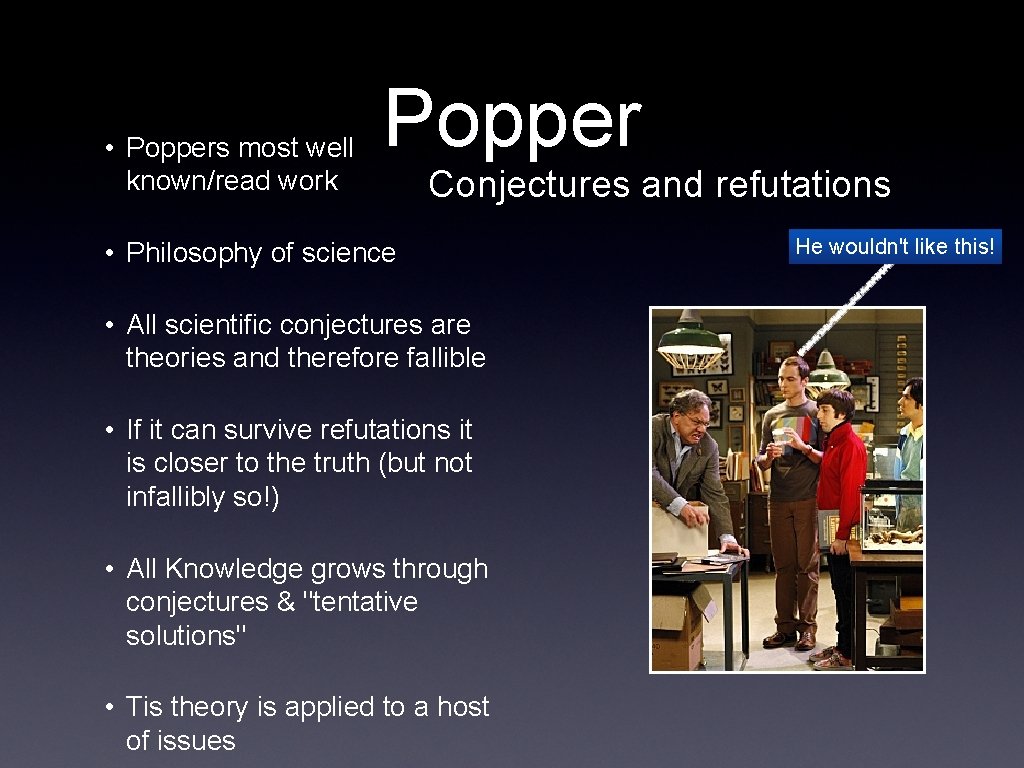
• Poppers most well known/read work Popper Conjectures and refutations • Philosophy of science • All scientific conjectures are theories and therefore fallible • If it can survive refutations it is closer to the truth (but not infallibly so!) • All Knowledge grows through conjectures & "tentative solutions" • Tis theory is applied to a host of issues He wouldn't like this!
Thats not my name!
Who am I?