
Meditation continued or extended thought reflection contemplation Rene

- Slides: 19
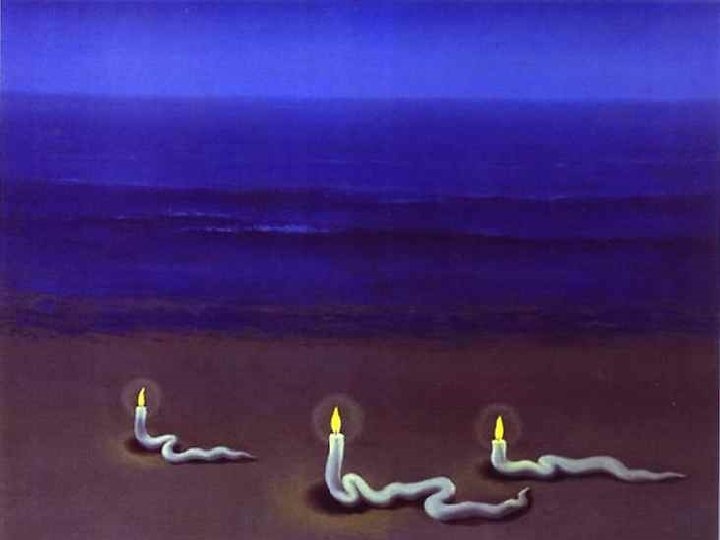
Meditation (continued or extended thought; reflection; contemplation) Rene Magritte 1937 • Magritte’s pieces are associated with Surrealism, which was a period in art where the paintings tried to confuse people by fusing reality with the imagination, forcing the viewer to contemplate the image. • Magritte signed up for the infantry in 1921, and served in Leopoldsburg, Austria, and Antwerp. The next year he was released. • • World War I 1914 – 1918 World War II 1939 – 1945.
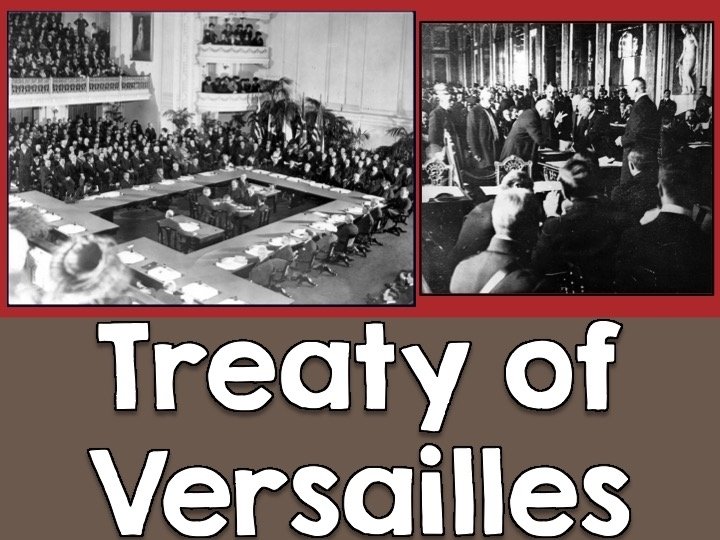
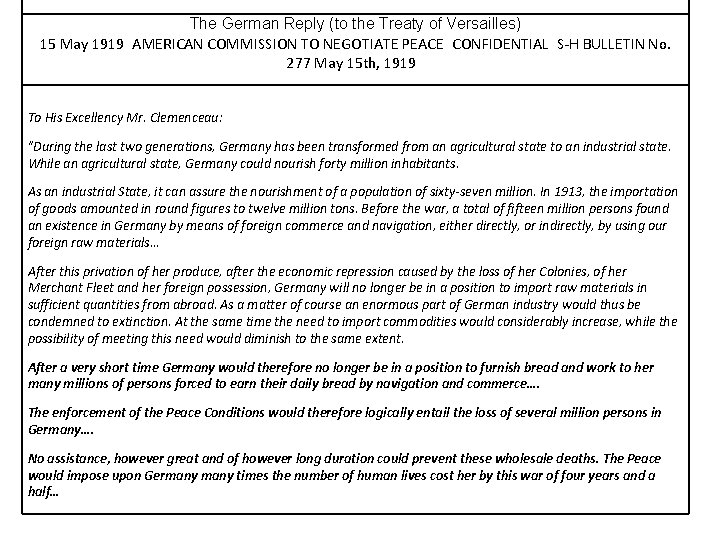
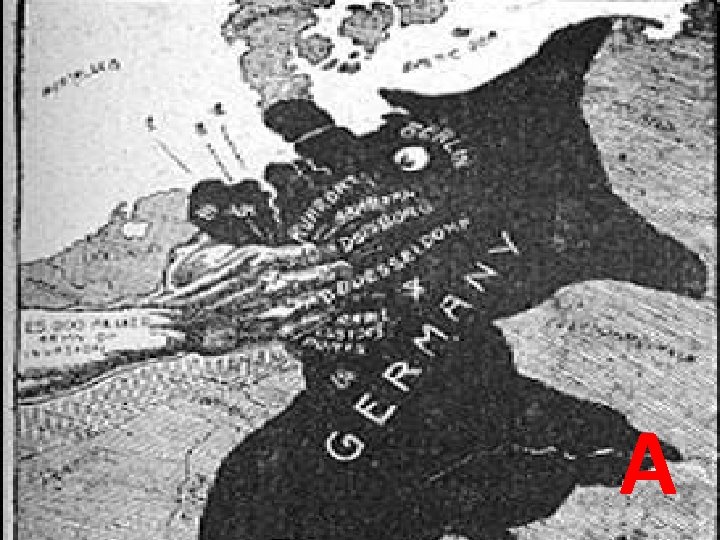
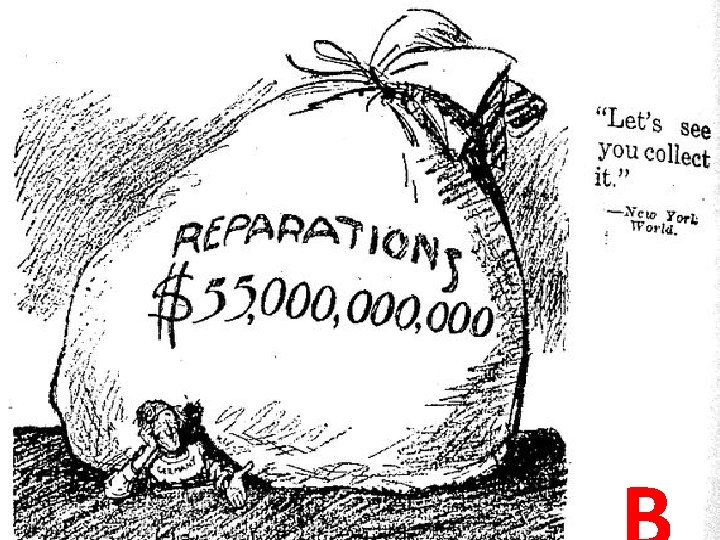
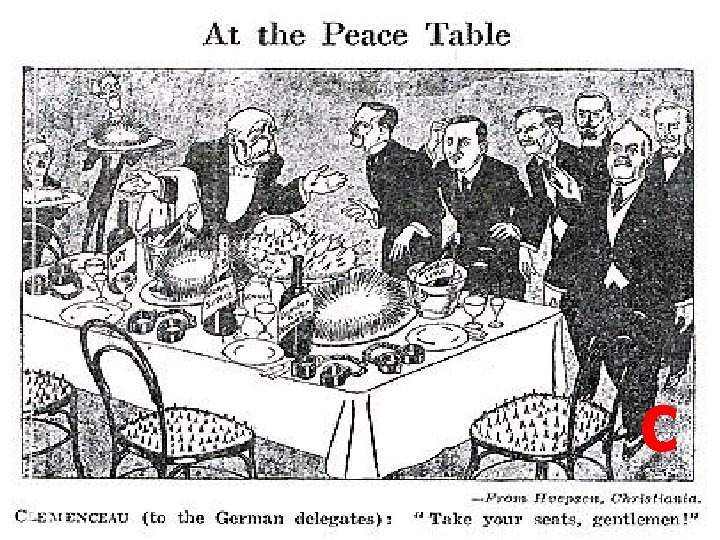
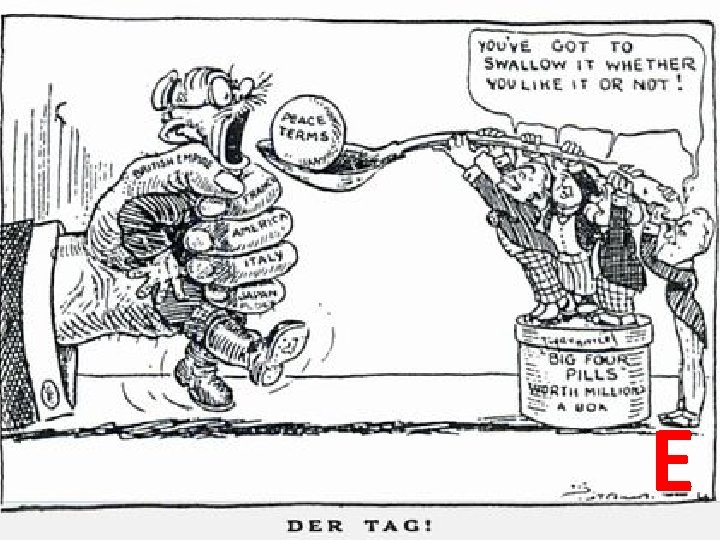
The German Reply (to the Treaty of Versailles) 15 May 1919 AMERICAN COMMISSION TO NEGOTIATE PEACE CONFIDENTIAL S-H BULLETIN No. 277 May 15 th, 1919 To His Excellency Mr. Clemenceau: "During the last two generations, Germany has been transformed from an agricultural state to an industrial state. While an agricultural state, Germany could nourish forty million inhabitants. As an industrial State, it can assure the nourishment of a population of sixty-seven million. In 1913, the importation of goods amounted in round figures to twelve million tons. Before the war, a total of fifteen million persons found an existence in Germany by means of foreign commerce and navigation, either directly, or indirectly, by using our foreign raw materials… After this privation of her produce, after the economic repression caused by the loss of her Colonies, of her Merchant Fleet and her foreign possession, Germany will no longer be in a position to import raw materials in sufficient quantities from abroad. As a matter of course an enormous part of German industry would thus be condemned to extinction. At the same time the need to import commodities would considerably increase, while the possibility of meeting this need would diminish to the same extent. After a very short time Germany would therefore no longer be in a position to furnish bread and work to her many millions of persons forced to earn their daily bread by navigation and commerce…. The enforcement of the Peace Conditions would therefore logically entail the loss of several million persons in Germany…. No assistance, however great and of however long duration could prevent these wholesale deaths. The Peace would impose upon Germany times the number of human lives cost her by this war of four years and a half…
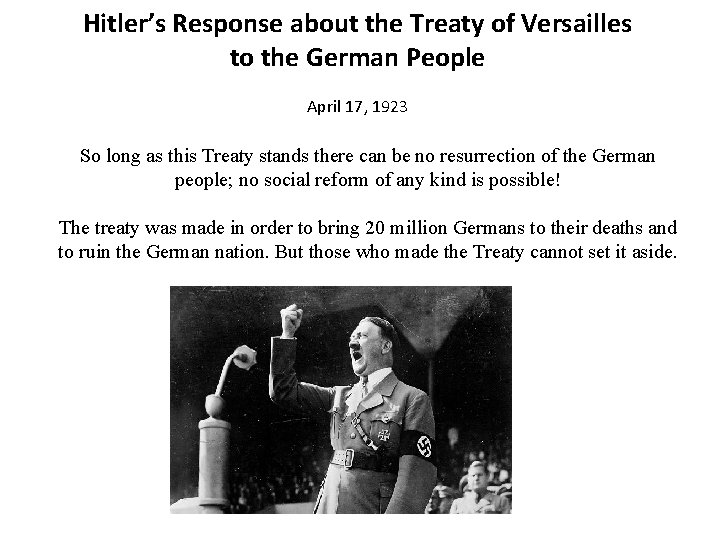
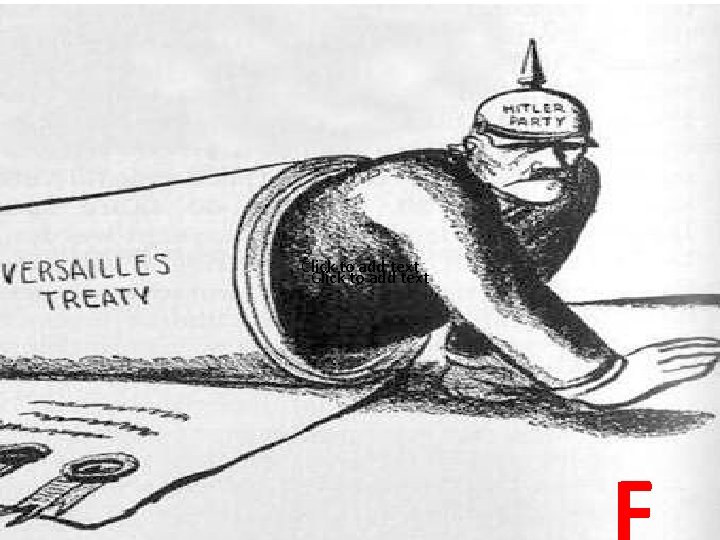
Hitler’s Response about the Treaty of Versailles to the German People April 17, 1923 So long as this Treaty stands there can be no resurrection of the German people; no social reform of any kind is possible! The treaty was made in order to bring 20 million Germans to their deaths and to ruin the German nation. But those who made the Treaty cannot set it aside.
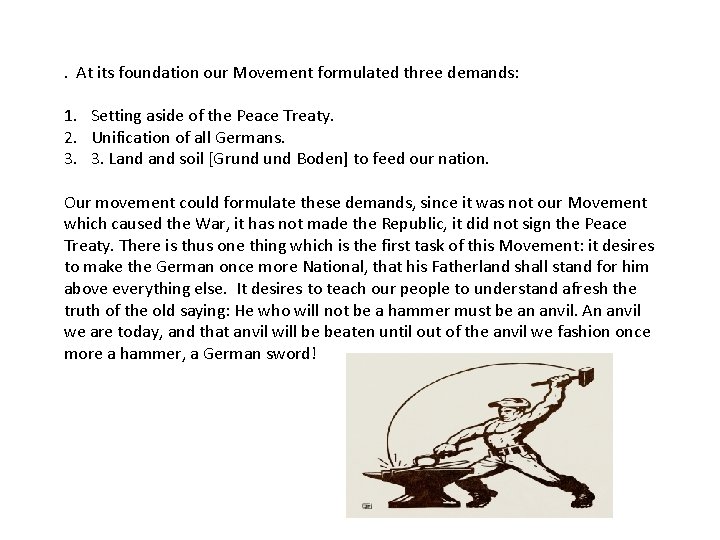
. At its foundation our Movement formulated three demands: 1. Setting aside of the Peace Treaty. 2. Unification of all Germans. 3. 3. Land soil [Grund Boden] to feed our nation. Our movement could formulate these demands, since it was not our Movement which caused the War, it has not made the Republic, it did not sign the Peace Treaty. There is thus one thing which is the first task of this Movement: it desires to make the German once more National, that his Fatherland shall stand for him above everything else. It desires to teach our people to understand afresh the truth of the old saying: He who will not be a hammer must be an anvil. An anvil we are today, and that anvil will be beaten until out of the anvil we fashion once more a hammer, a German sword!
A
c
D
E
Click to add text