
Medieval Times 450 1450 Social Classes Nobility Peasantry
Medieval Times 450 -1450
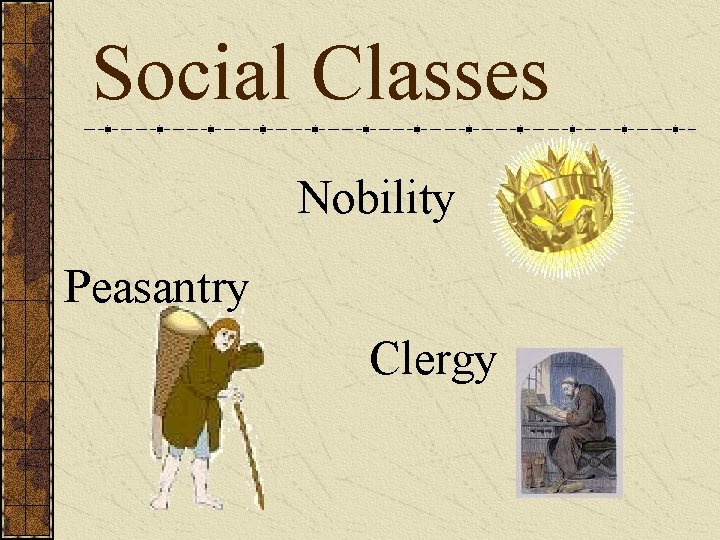
Social Classes Nobility Peasantry Clergy
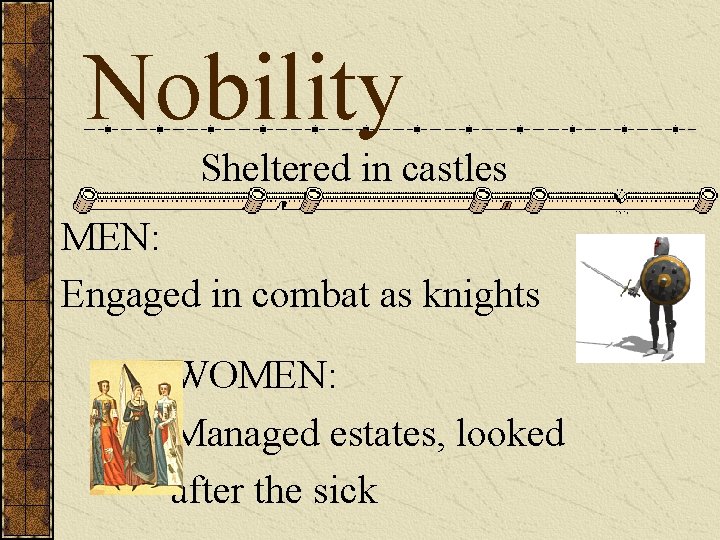
Nobility Sheltered in castles MEN: Engaged in combat as knights WOMEN: Managed estates, looked after the sick
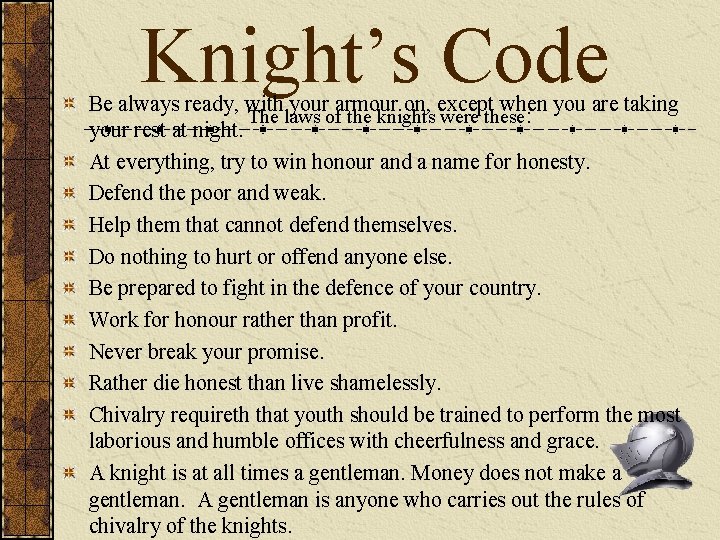
Knight’s Code Be always ready, with your armour on, except when you are taking The laws of the knights were these: your rest at night. At everything, try to win honour and a name for honesty. Defend the poor and weak. Help them that cannot defend themselves. Do nothing to hurt or offend anyone else. Be prepared to fight in the defence of your country. Work for honour rather than profit. Never break your promise. Rather die honest than live shamelessly. Chivalry requireth that youth should be trained to perform the most laborious and humble offices with cheerfulness and grace. A knight is at all times a gentleman. Money does not make a gentleman. A gentleman is anyone who carries out the rules of chivalry of the knights.
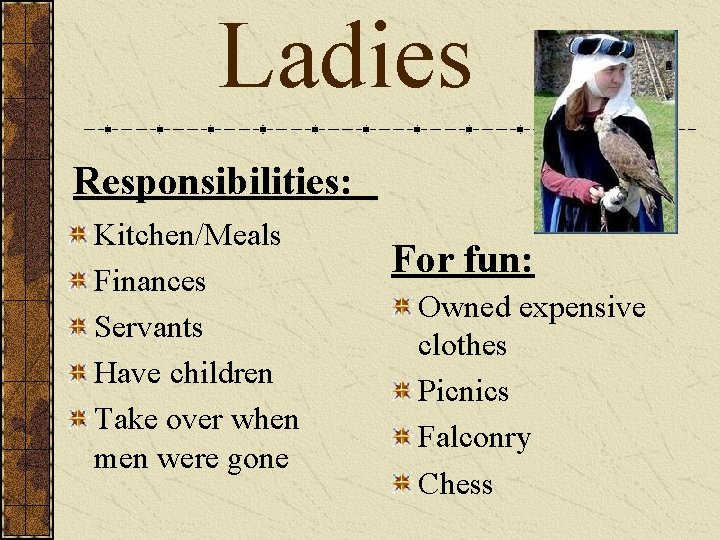
Ladies Responsibilities: Kitchen/Meals Finances Servants Have children Take over when men were gone For fun: Owned expensive clothes Picnics Falconry Chess
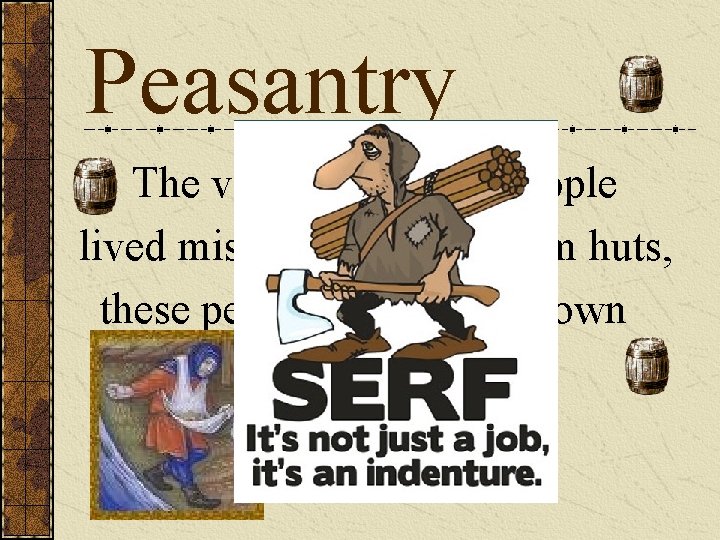
Peasantry The vast majority of people lived miserably in one-room huts, these people were also known as SERFS.
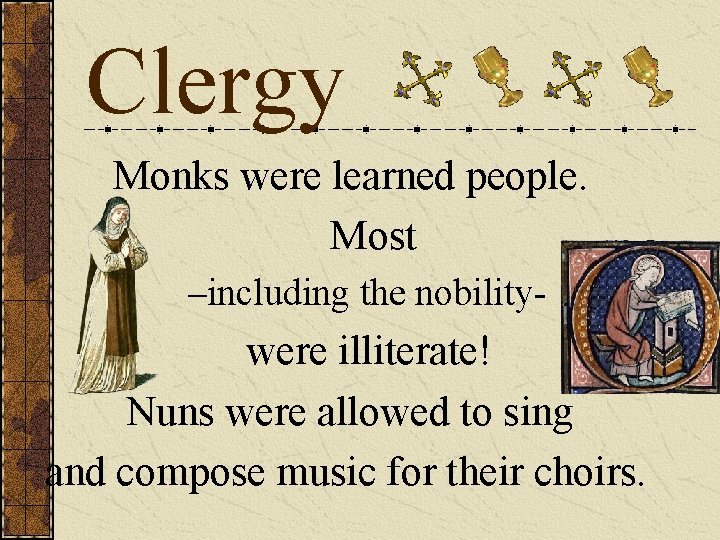
Clergy Monks were learned people. Most –including the nobility- were illiterate! Nuns were allowed to sing and compose music for their choirs.
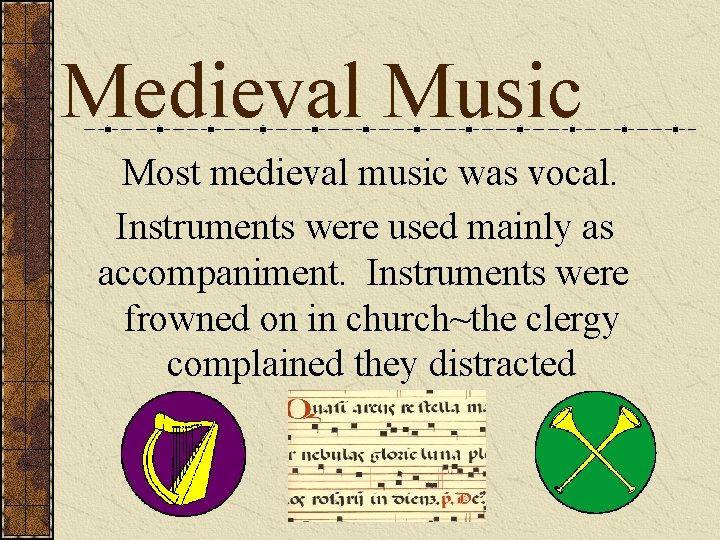
Medieval Music Most medieval music was vocal. Instruments were used mainly as accompaniment. Instruments were frowned on in church~the clergy complained they distracted worshipers.
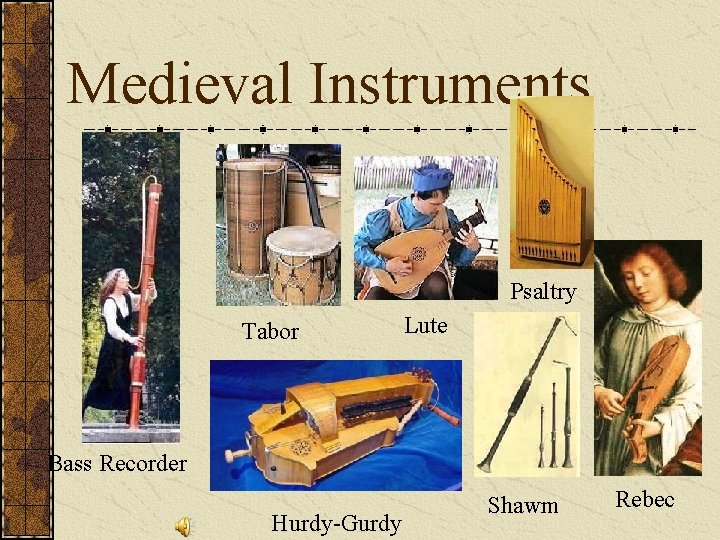
Medieval Instruments Psaltry Tabor Lute Bass Recorder Hurdy-Gurdy Shawm Rebec
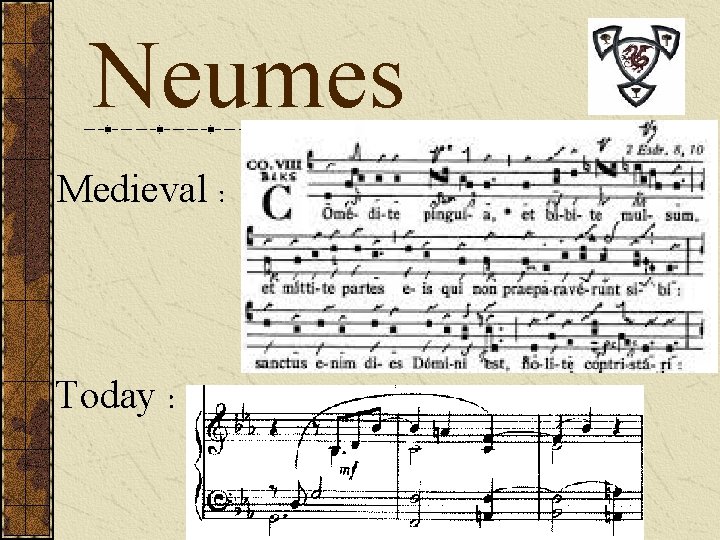
Neumes Medieval : Today :
Neumes and their modern equivalents, used in Medieval music notation Go here to see examples: http: //rickmk. com/Chant/index. html https : //watch, listen and follow an example HERE
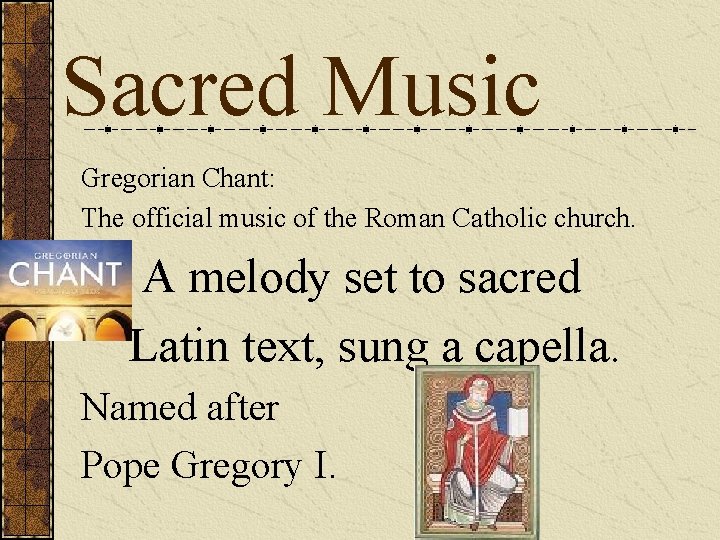
Sacred Music Gregorian Chant: The official music of the Roman Catholic church. A melody set to sacred Latin text, sung a capella. Named after Pope Gregory I.
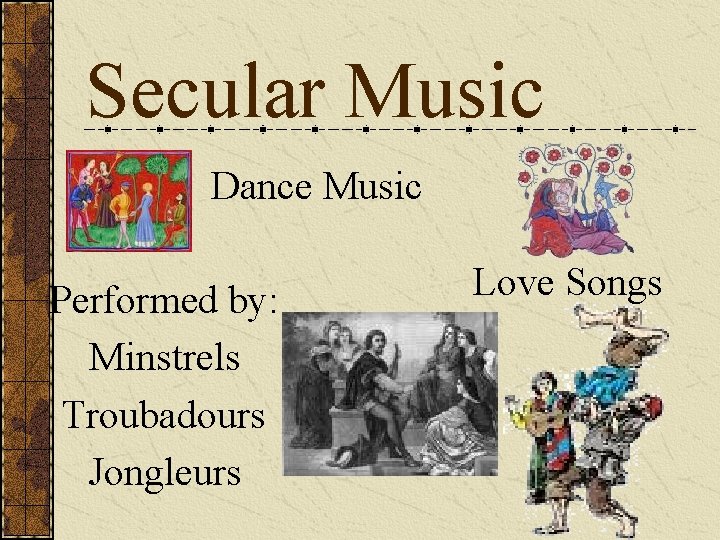
Secular Music Dance Music Performed by: Minstrels Troubadours Jongleurs Love Songs
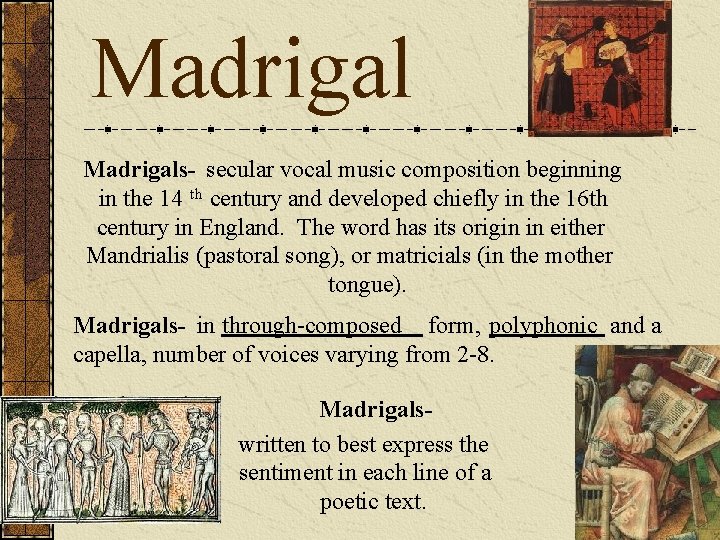
Madrigals- secular vocal music composition beginning in the 14 th century and developed chiefly in the 16 th century in England. The word has its origin in either Mandrialis (pastoral song), or matricials (in the mother tongue). Madrigals- in through-composed form, polyphonic and a capella, number of voices varying from 2 -8. Madrigalswritten to best express the sentiment in each line of a poetic text.
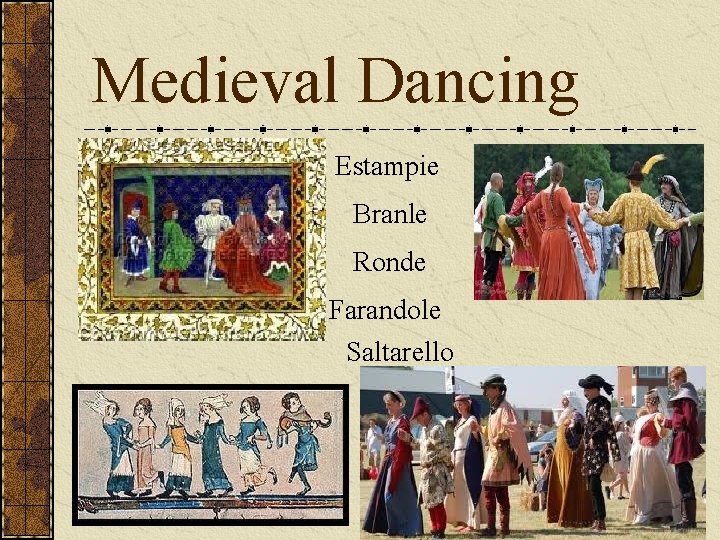
Medieval Dancing Estampie Branle Ronde Farandole Saltarello
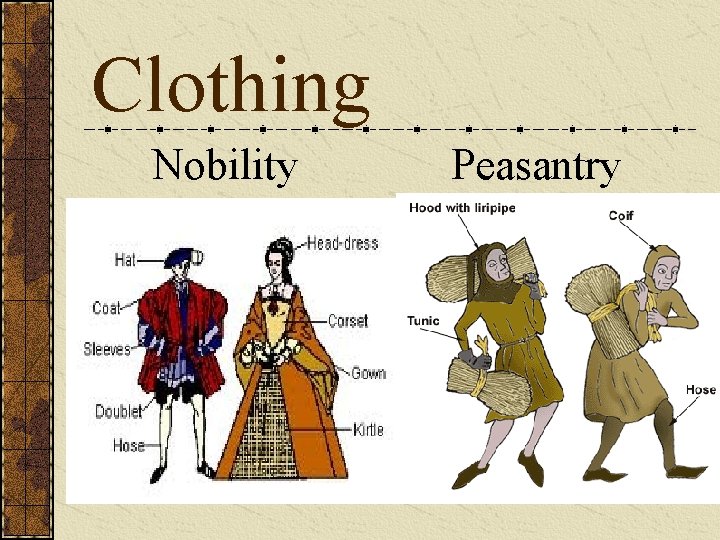
Clothing Nobility Peasantry
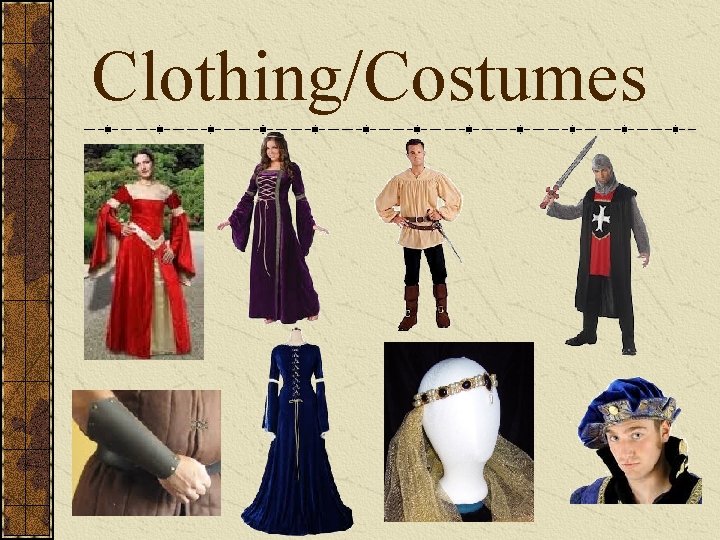
Clothing/Costumes
English Christmas Customs Wassail - A holiday drink from the Anglo-Saxon, “Wes-hal, ” means “be whole. ” Old wassail bowls were immense. It was the custom of the stewards upon entering the banquet hall to call out, “Wassail, Wassail”. It was served in the wassail bowl with toast floating on top. Hence, drinking the toast. Boar’s Head - Traditionally the heart of the Christmas feast. Mouth propped open with an apple, the head was brought in to fanfare and special carol. Its origin is Psalm 80, in which Satan is the “boar out of the wood. ” The head of the slain boar, paraded about the Great Hall, showed defeat of Satan by the newborn Christ child. The master of the house would take an oath upon it to perform a charitable deed, often others would follow suit. The Twelve Days of Christmas - Known liturgically as Epiphany, represents the traditional time of the Magi journey to worship the Christ child. The twelve days were a time of great feasting, celebration, singing, carols, and general merry making.
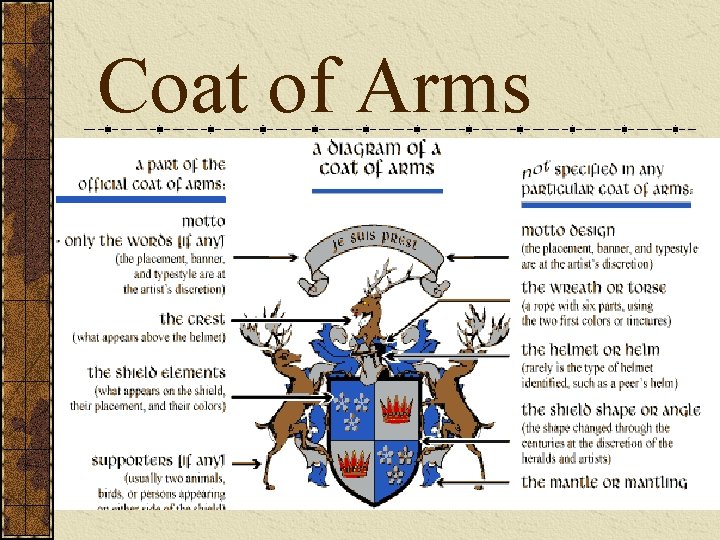
Coat of Arms
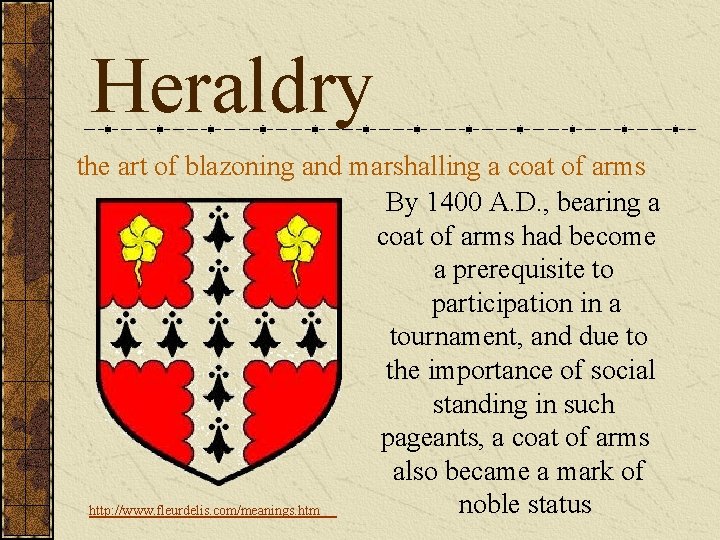
Heraldry the art of blazoning and marshalling a coat of arms By 1400 A. D. , bearing a coat of arms had become a prerequisite to participation in a tournament, and due to the importance of social standing in such pageants, a coat of arms also became a mark of noble status http: //www. fleurdelis. com/meanings. htm
- Slides: 20