
Medieval Teachings on the Eucharist Church History Unit
- Slides: 11
Medieval Teachings on the Eucharist Church History, Unit 3
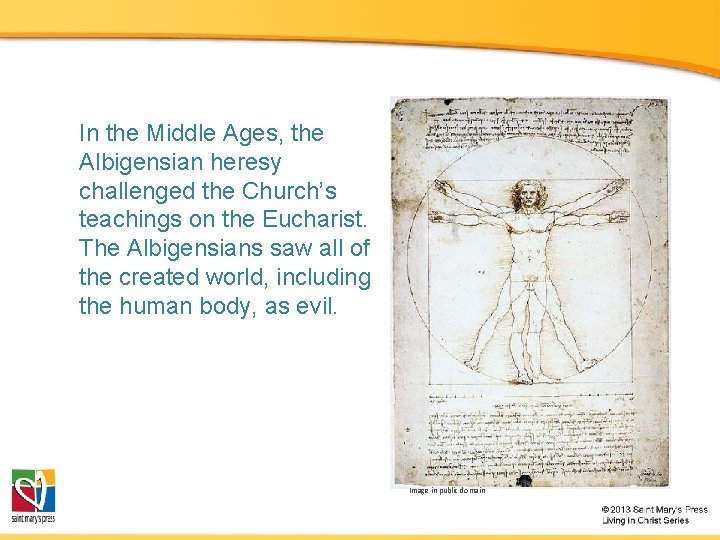
In the Middle Ages, the Albigensian heresy challenged the Church’s teachings on the Eucharist. The Albigensians saw all of the created world, including the human body, as evil. Image in public domain
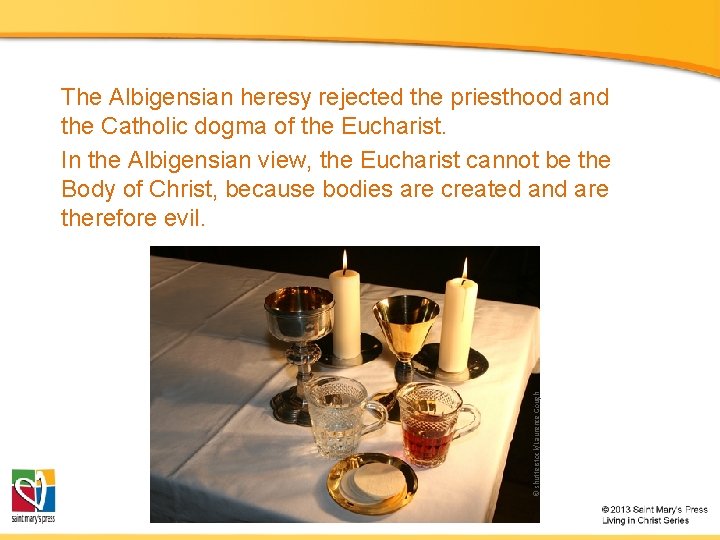
© shutterstock/Laurence Gough The Albigensian heresy rejected the priesthood and the Catholic dogma of the Eucharist. In the Albigensian view, the Eucharist cannot be the Body of Christ, because bodies are created and are therefore evil.
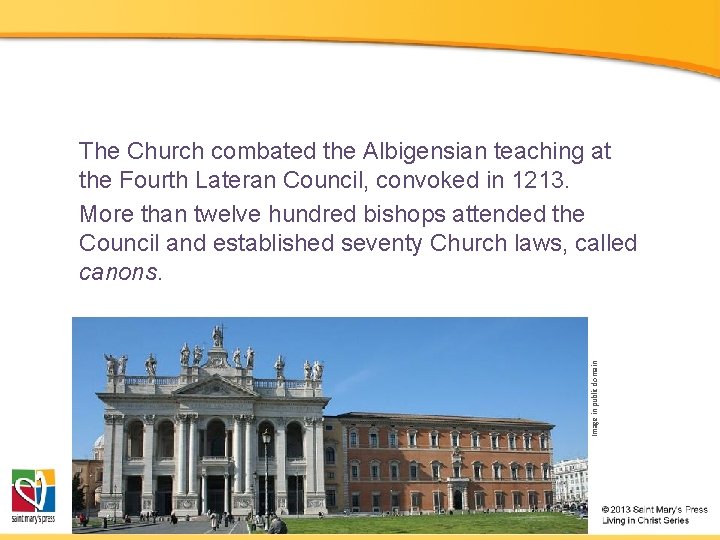
Image in public domain The Church combated the Albigensian teaching at the Fourth Lateran Council, convoked in 1213. More than twelve hundred bishops attended the Council and established seventy Church laws, called canons.
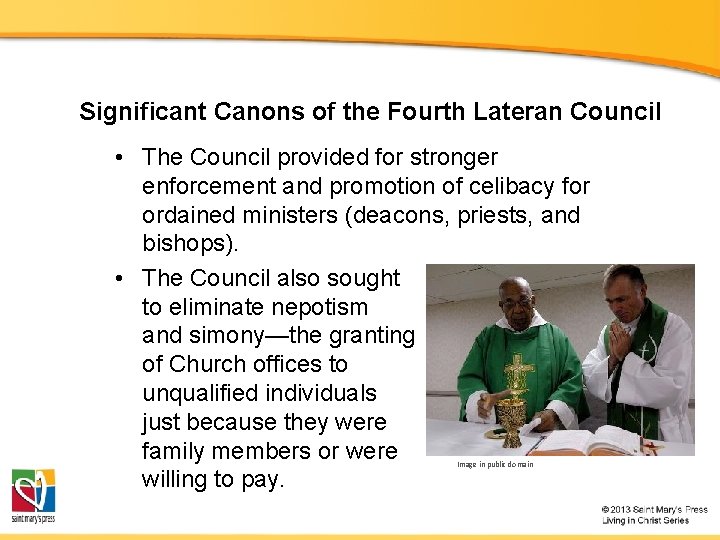
Significant Canons of the Fourth Lateran Council • The Council provided for stronger enforcement and promotion of celibacy for ordained ministers (deacons, priests, and bishops). • The Council also sought to eliminate nepotism and simony—the granting of Church offices to unqualified individuals just because they were family members or were willing to pay. Image in public domain
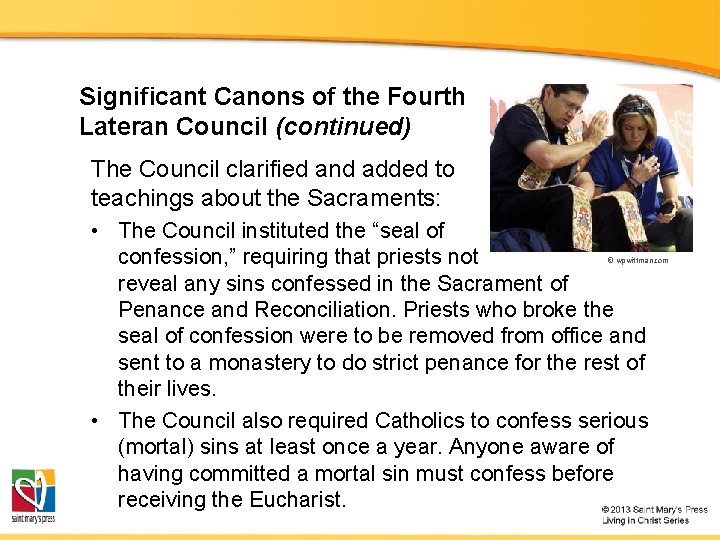
Significant Canons of the Fourth Lateran Council (continued) The Council clarified and added to teachings about the Sacraments: • The Council instituted the “seal of confession, ” requiring that priests not reveal any sins confessed in the Sacrament of Penance and Reconciliation. Priests who broke the seal of confession were to be removed from office and sent to a monastery to do strict penance for the rest of their lives. • The Council also required Catholics to confess serious (mortal) sins at least once a year. Anyone aware of having committed a mortal sin must confess before receiving the Eucharist. © wpwittman. com
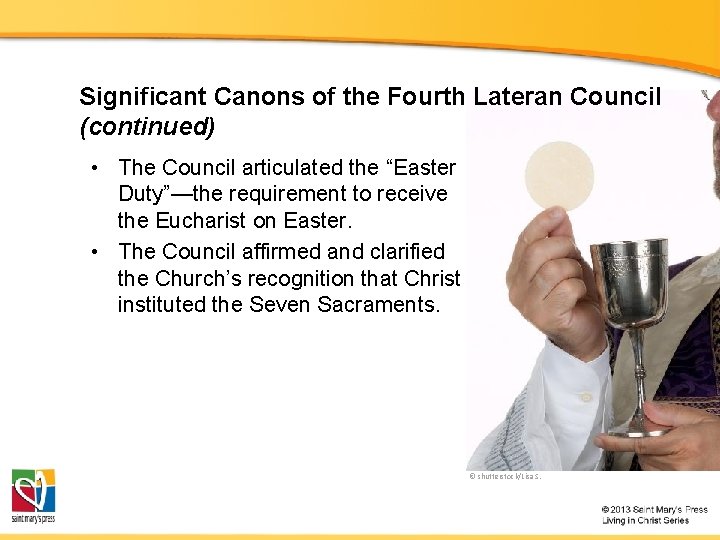
Significant Canons of the Fourth Lateran Council (continued) • The Council articulated the “Easter Duty”—the requirement to receive the Eucharist on Easter. • The Council affirmed and clarified the Church’s recognition that Christ instituted the Seven Sacraments. © shutterstock/Lisa S.
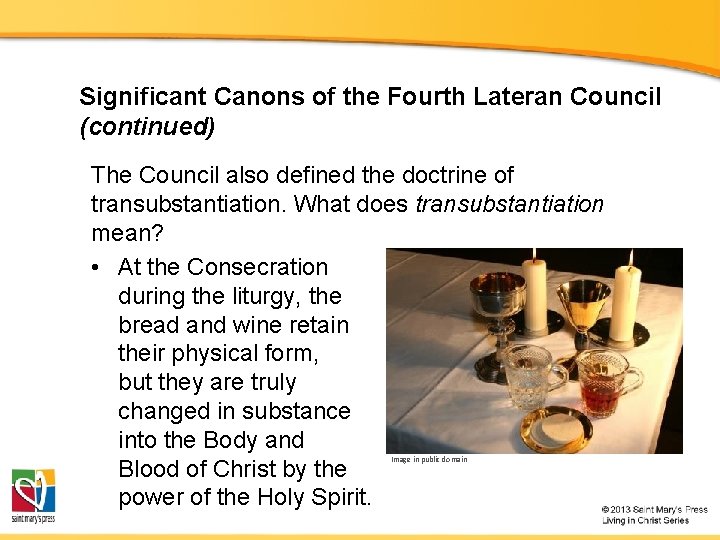
Significant Canons of the Fourth Lateran Council (continued) The Council also defined the doctrine of transubstantiation. What does transubstantiation mean? • At the Consecration during the liturgy, the bread and wine retain their physical form, but they are truly changed in substance into the Body and Blood of Christ by the power of the Holy Spirit. Image in public domain
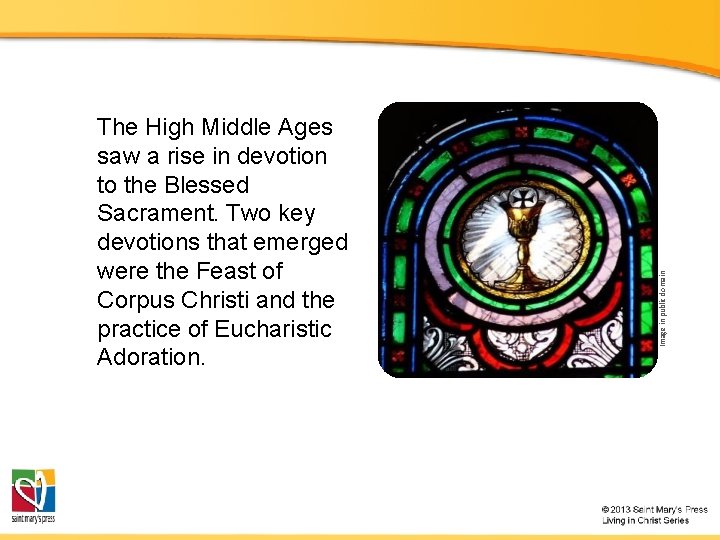
Image in public domain The High Middle Ages saw a rise in devotion to the Blessed Sacrament. Two key devotions that emerged were the Feast of Corpus Christi and the practice of Eucharistic Adoration.
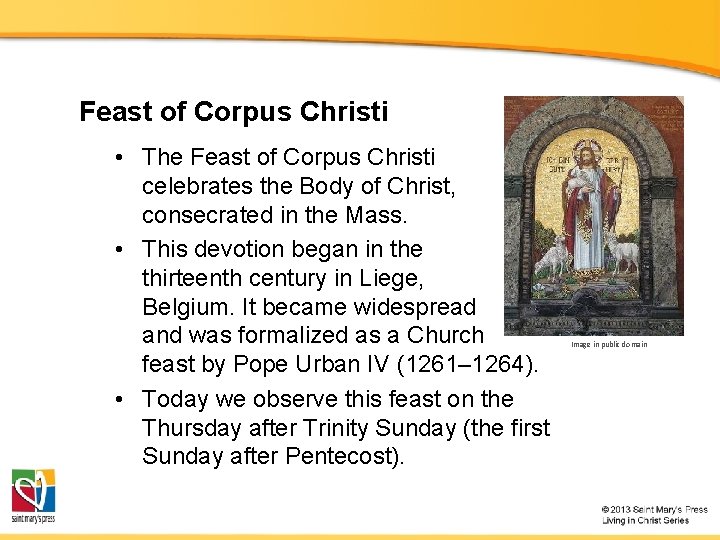
Feast of Corpus Christi • The Feast of Corpus Christi celebrates the Body of Christ, consecrated in the Mass. • This devotion began in the thirteenth century in Liege, Belgium. It became widespread and was formalized as a Church feast by Pope Urban IV (1261– 1264). • Today we observe this feast on the Thursday after Trinity Sunday (the first Sunday after Pentecost). Image in public domain
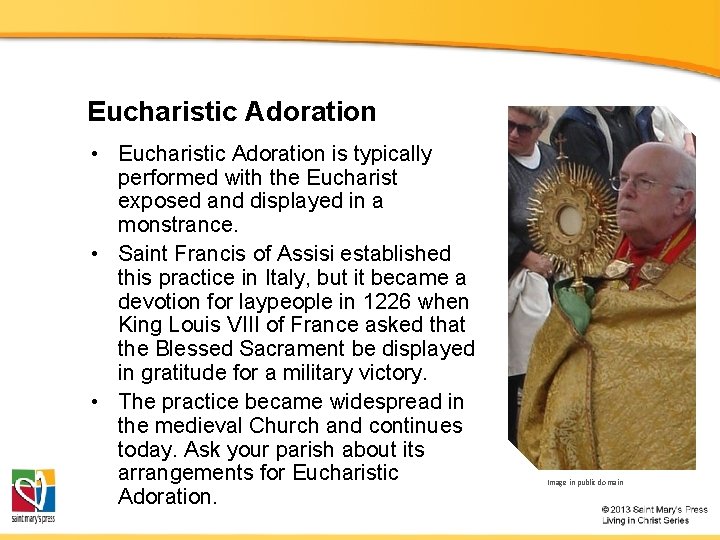
Eucharistic Adoration • Eucharistic Adoration is typically performed with the Eucharist exposed and displayed in a monstrance. • Saint Francis of Assisi established this practice in Italy, but it became a devotion for laypeople in 1226 when King Louis VIII of France asked that the Blessed Sacrament be displayed in gratitude for a military victory. • The practice became widespread in the medieval Church and continues today. Ask your parish about its arrangements for Eucharistic Adoration. Image in public domain