
Medieval Japanese Feudalism 1300s Essential Standards 6 C
- Slides: 20
Medieval Japanese Feudalism 1300’s
Essential Standards • 6. C. 1 Explain how the behaviors and practices of individuals and groups influenced societies, civilizations and regions.
Clarifying Objectives • 6. C. 1. 3 Summarize systems of social structure within various civilizations and societies over time (e. g. , Roman class structure, Indian caste system and feudal, matrilineal and patrilineal societies).
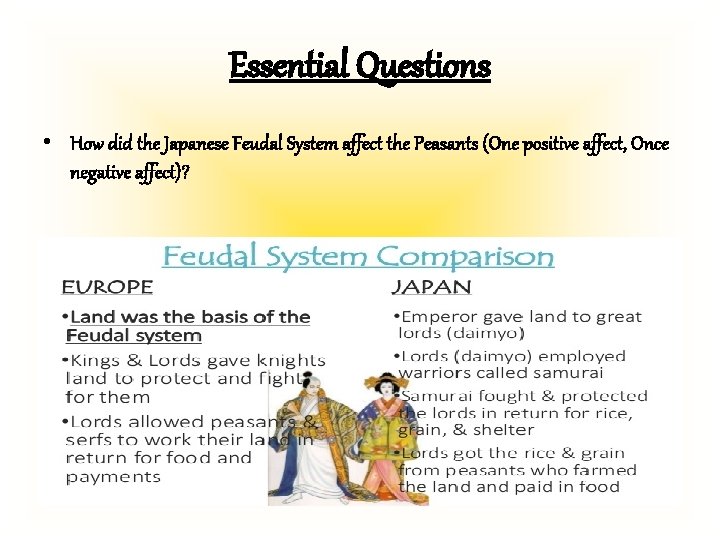
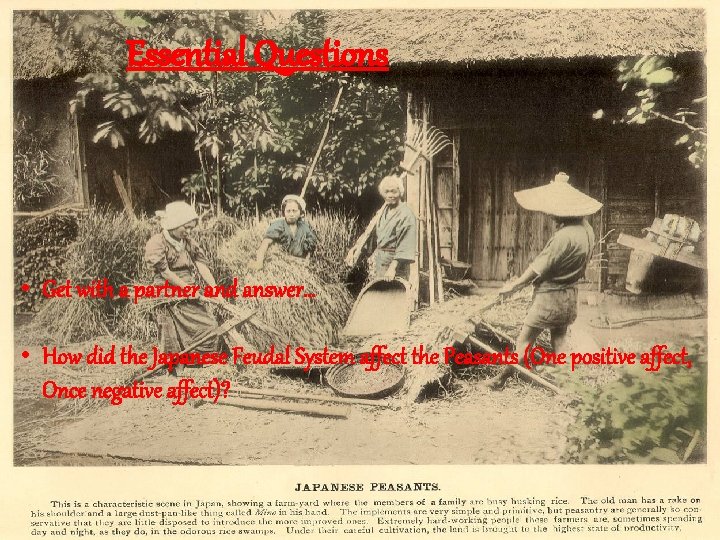
Essential Questions • How did the Japanese Feudal System affect the Peasants (One positive affect, Once negative affect)?
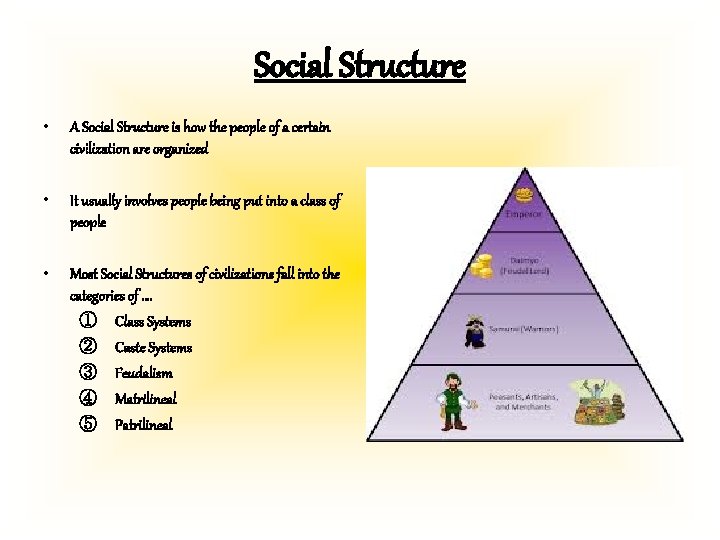
Social Structure • A Social Structure is how the people of a certain civilization are organized • It usually involves people being put into a class of people • Most Social Structures of civilizations fall into the categories of …. ① Class Systems ② Caste Systems ③ Feudalism ④ Matrilineal ⑤ Patrilineal
Medieval Japan Social Structure • Medieval Japan’s Social Structure was Feudalism • Feudalism is a Social System based on…. ① Land Ownership ② Loyalties ③ Different Classes
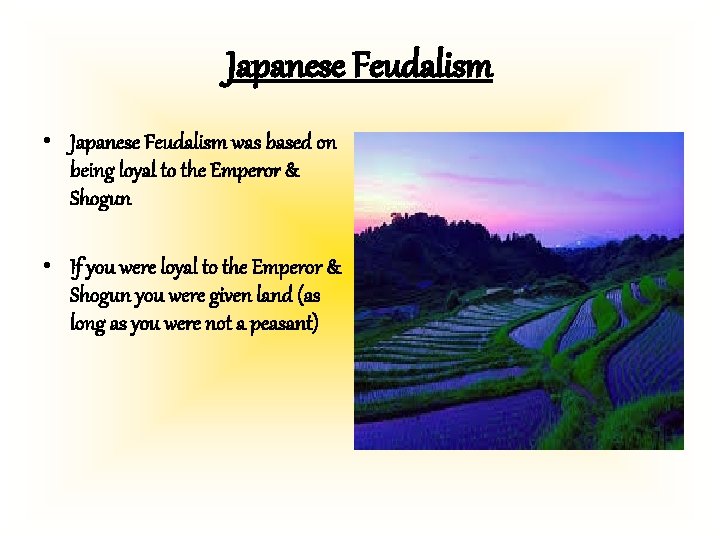
Japanese Feudalism • Japanese Feudalism was based on being loyal to the Emperor & Shogun • If you were loyal to the Emperor & Shogun you were given land (as long as you were not a peasant)
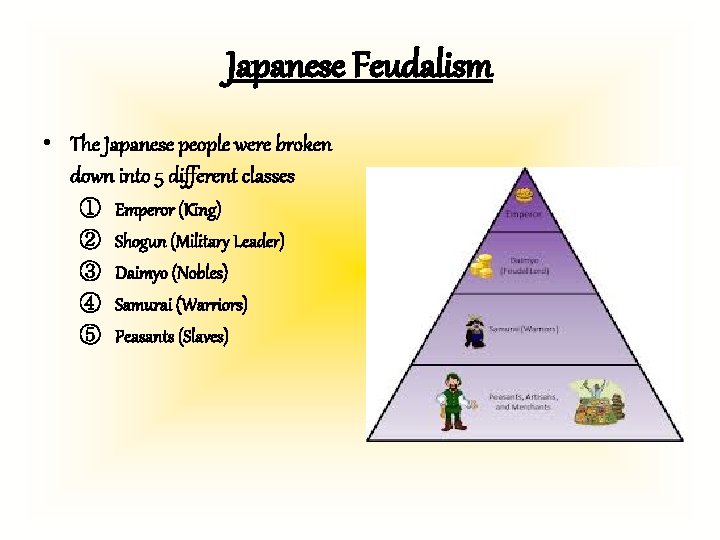
Japanese Feudalism • The Japanese people were broken down into 5 different classes ① ② ③ ④ ⑤ Emperor (King) Shogun (Military Leader) Daimyo (Nobles) Samurai (Warriors) Peasants (Slaves)
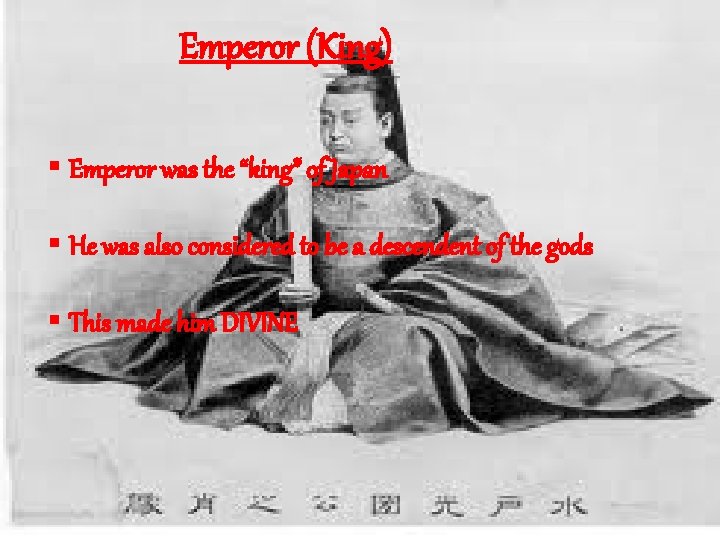
Emperor (King) § Emperor was the “king” of Japan § He was also considered to be a descendent of the gods § This made him DIVINE
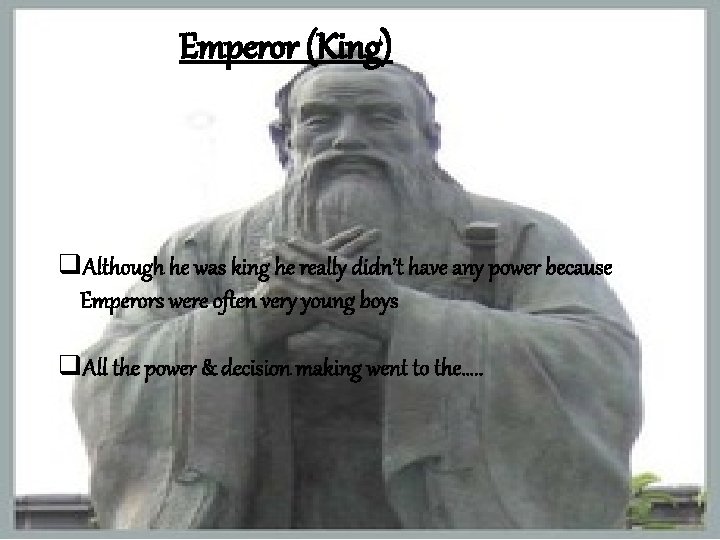
Emperor (King) q. Although he was king he really didn’t have any power because Emperors were often very young boys q. All the power & decision making went to the…. .
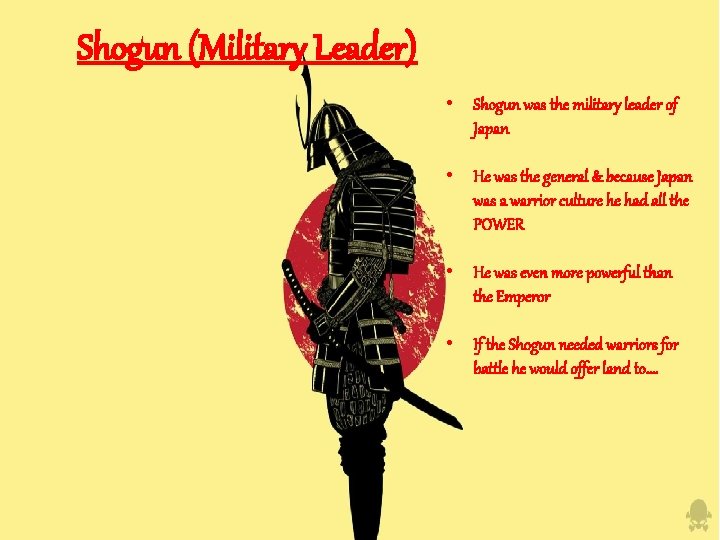
Shogun (Military Leader) • Shogun was the military leader of Japan • He was the general & because Japan was a warrior culture he had all the POWER • He was even more powerful than the Emperor • If the Shogun needed warriors for battle he would offer land to….
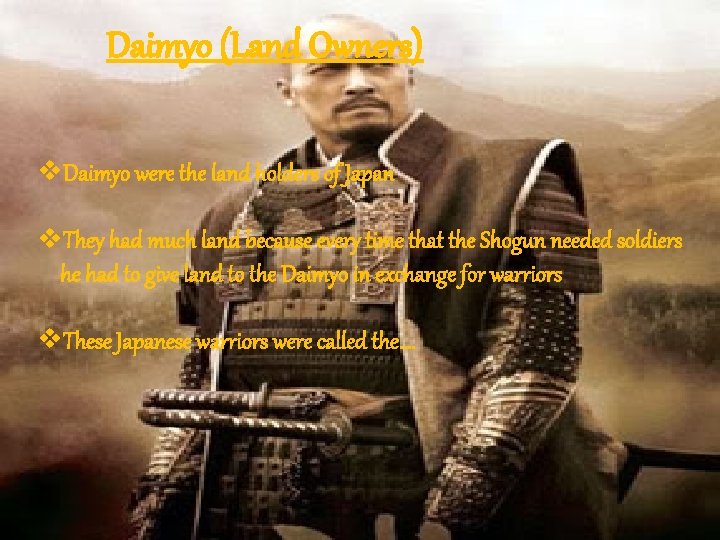
Daimyo (Land Owners) v. Daimyo were the land holders of Japan v. They had much land because every time that the Shogun needed soldiers he had to give land to the Daimyo in exchange for warriors v. These Japanese warriors were called the….
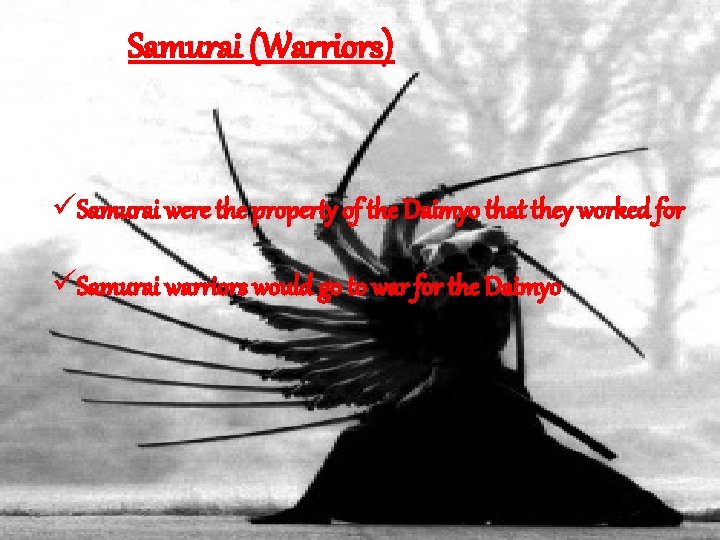
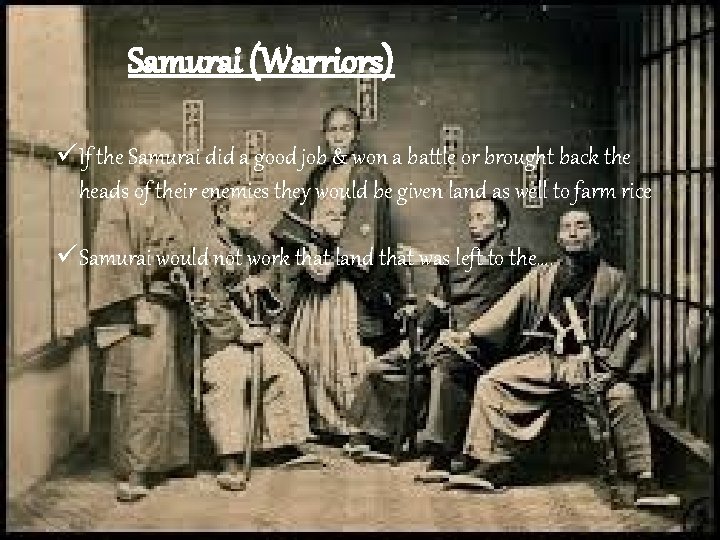
Samurai (Warriors) üSamurai were the property of the Daimyo that they worked for üSamurai warriors would go to war for the Daimyo
Samurai (Warriors) üIf the Samurai did a good job & won a battle or brought back the heads of their enemies they would be given land as well to farm rice üSamurai would not work that land that was left to the….
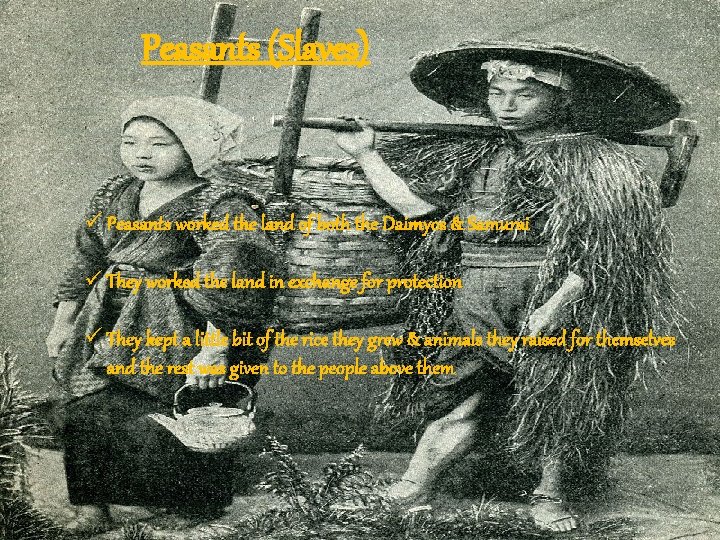
Peasants (Slaves) ü Peasants worked the land of both the Daimyos & Samurai ü They worked the land in exchange for protection ü They kept a little bit of the rice they grew & animals they raised for themselves and the rest was given to the people above them
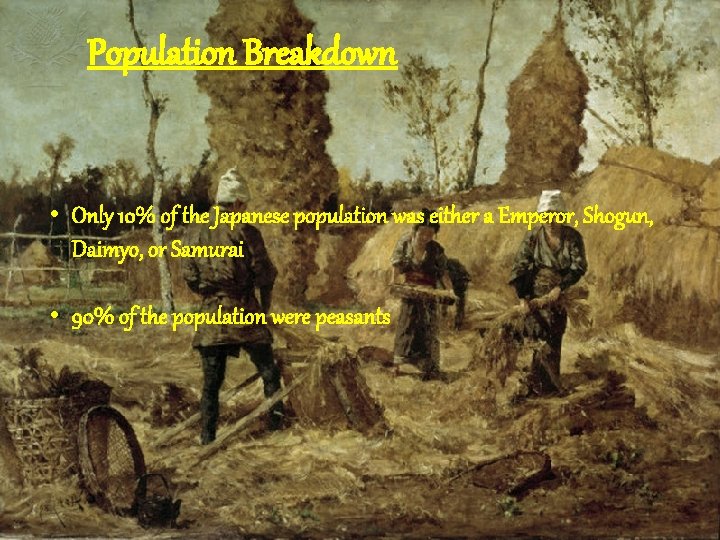
Population Breakdown • Only 10% of the Japanese population was either a Emperor, Shogun, Daimyo, or Samurai • 90% of the population were peasants
Essential Questions • Get with a partner and answer… • How did the Japanese Feudal System affect the Peasants (One positive affect, Once negative affect)?
Keys to Feudalism q. If you lived in Medieval Japan you would be broken down into one of 5 CLASSES q. You were LOYAL to the CLASS above you q. If you did well you were given LAND (unless you were a peasant)
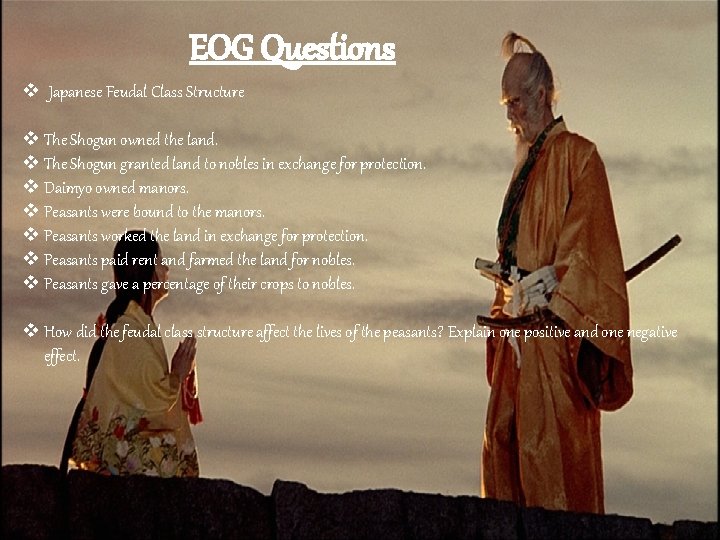
EOG Questions v Japanese Feudal Class Structure v The Shogun owned the land. v The Shogun granted land to nobles in exchange for protection. v Daimyo owned manors. v Peasants were bound to the manors. v Peasants worked the land in exchange for protection. v Peasants paid rent and farmed the land for nobles. v Peasants gave a percentage of their crops to nobles. v How did the feudal class structure affect the lives of the peasants? Explain one positive and one negative effect.
Important Points • 6. C. 1. 3 (Social Structure) Japan’s Social Structure was FEUDALISM • 6. C. 1. 3 (Social Structure) FEDUALISM was based on LAND & LOYALTY