
Medieval Inquisition II Primary Sources with Bernard Gui
Medieval Inquisition II Primary Sources with Bernard Gui and Jacques Fouriner 6 Feb. 2019
Announcements • Supplementary Bibliography updated today • Final Exam slot = Wed, 8 May, 3: 00 -6: 00 p. m. for oral presentations • Next Class: Spanish Inquisition 1 • 2 readings online • Sean = discussion-leader • Book Review Selections: • Take-aways from Mediev. Inq. I: • • Persuasion Coercion Heresy = treason Lay vs. ecclesiastical response Evolving definition(s) of heresy Ad abolendam (1147) Mendicant Orders (Dominicans, Franciscans) Major heresies (Cathars, Waldensians, Beguines)

Primary Sources in History • Definitions • Examples • Pros & Cons • The Five Ws Hieronymo Monte (Vicar) to Bishop of Bergamo, 29 Jan. 1559. From ACDF, Rome, GG 3 a (Michele Manilio)
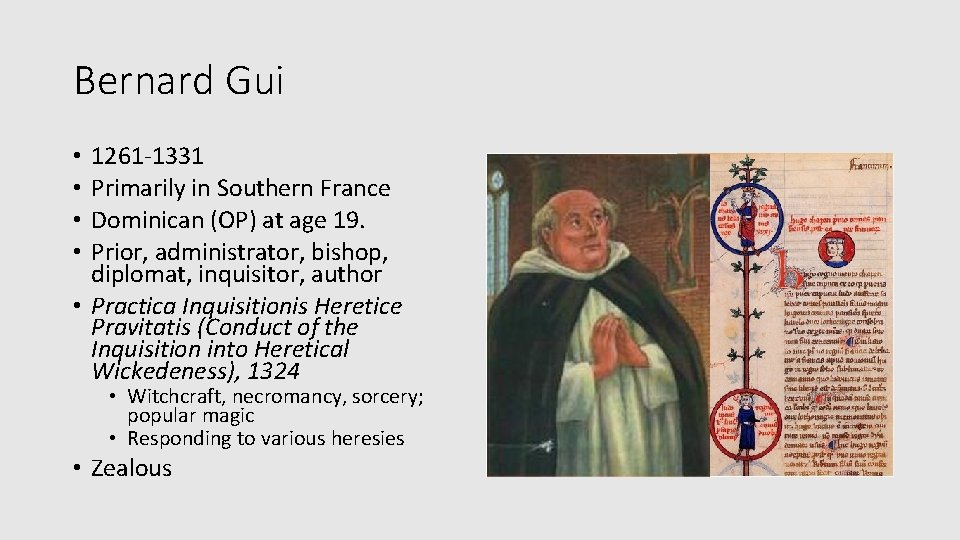
Bernard Gui 1261 -1331 Primarily in Southern France Dominican (OP) at age 19. Prior, administrator, bishop, diplomat, inquisitor, author • Practica Inquisitionis Heretice Pravitatis (Conduct of the Inquisition into Heretical Wickedeness), 1324 • • • Witchcraft, necromancy, sorcery; popular magic • Responding to various heresies • Zealous
Discussion of Bernard Gui • What do we learn of Beguines? • What is Gui’s thesis here?
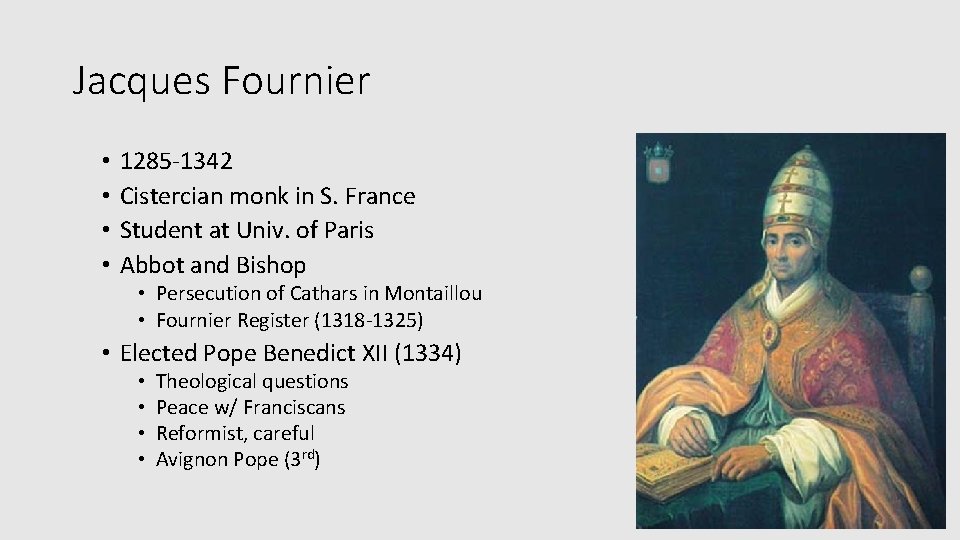
Jacques Fournier • • 1285 -1342 Cistercian monk in S. France Student at Univ. of Paris Abbot and Bishop • Persecution of Cathars in Montaillou • Fournier Register (1318 -1325) • Elected Pope Benedict XII (1334) • • Theological questions Peace w/ Franciscans Reformist, careful Avignon Pope (3 rd)
Discussion of Jacques Fournier • Divide into small groups for each confession read • Agnes, Arnaud, Barthelemy, Baruch, Navarre • Analyze the primary source (10 min. ) • What were they accused of? • What procedure (if any) did the Inquisitor follow? • What does your document reveal about the Inquisition and about medieval life?
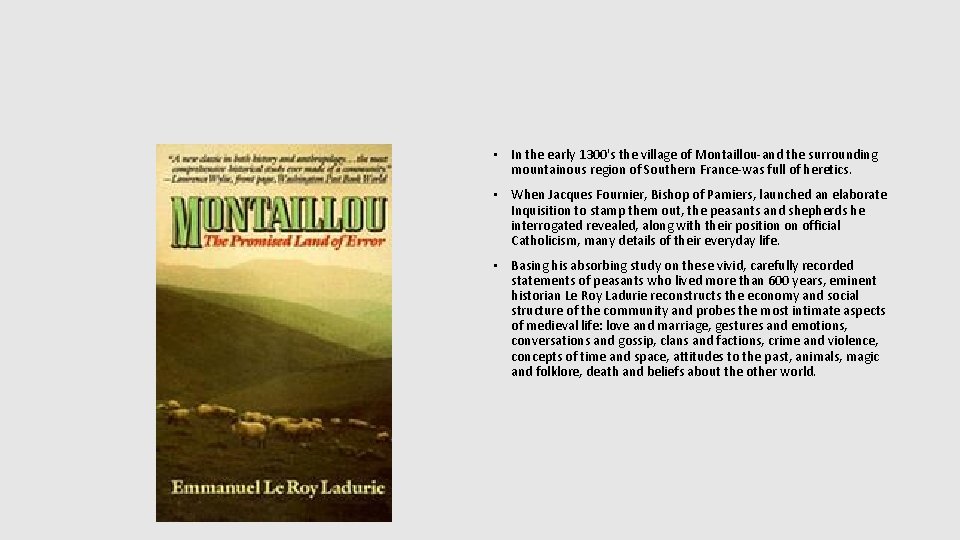
• In the early 1300's the village of Montaillou-and the surrounding mountainous region of Southern France-was full of heretics. • When Jacques Fournier, Bishop of Pamiers, launched an elaborate Inquisition to stamp them out, the peasants and shepherds he interrogated revealed, along with their position on official Catholicism, many details of their everyday life. • Basing his absorbing study on these vivid, carefully recorded statements of peasants who lived more than 600 years, eminent historian Le Roy Ladurie reconstructs the economy and social structure of the community and probes the most intimate aspects of medieval life: love and marriage, gestures and emotions, conversations and gossip, clans and factions, crime and violence, concepts of time and space, attitudes to the past, animals, magic and folklore, death and beliefs about the other world.
- Slides: 8