
Medieval Europe The Influences of The Roman Empire
- Slides: 25
Medieval Europe The Influences of The Roman Empire, Christianity, and Germanic tribes, and Feudalism
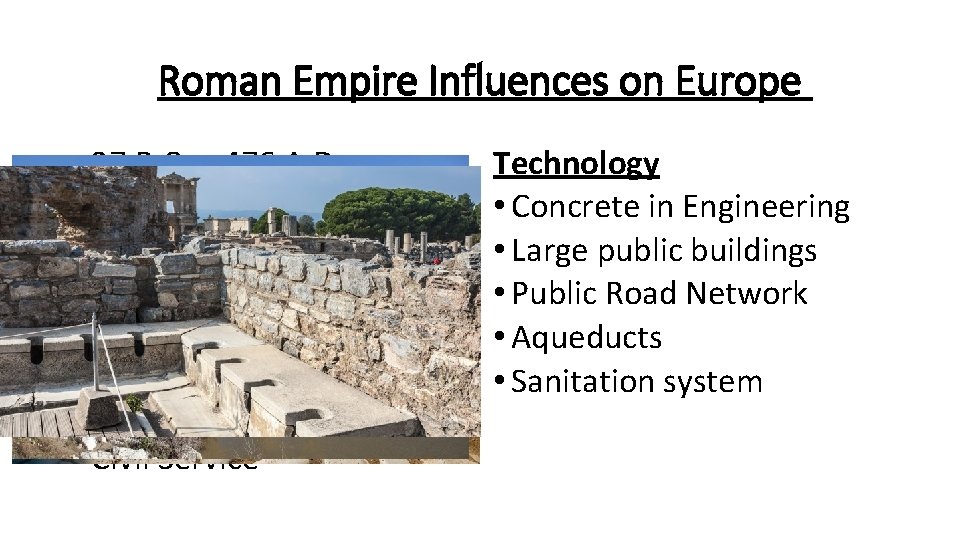
Roman Empire Influences on Europe • 27 B. C. – 476 A. D. Technology • Unites and provides • Concrete in Engineering central control for Europe. • Large public buildings • Public Road Network Government Legacies • Aqueducts • Legal System • Sanitation system • Republican Forms • Civil Service
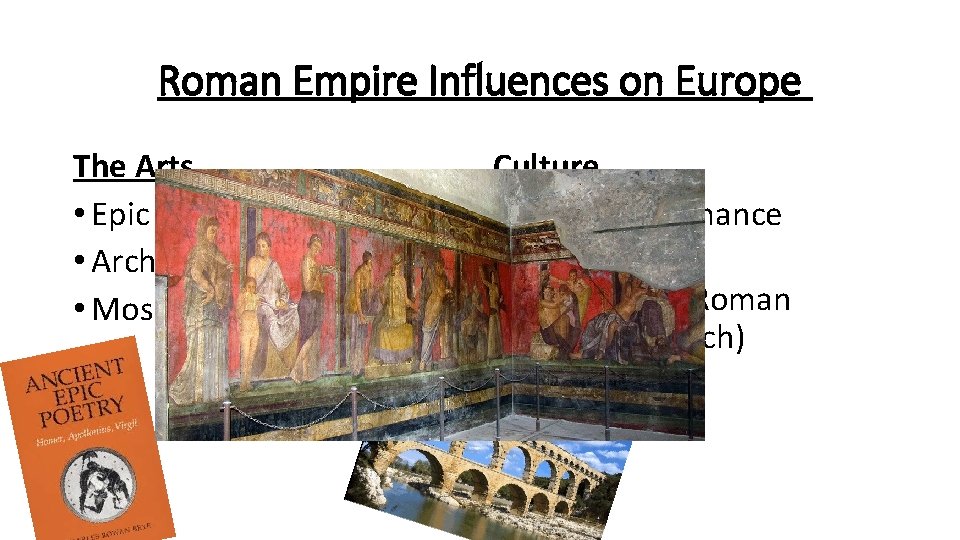
Roman Empire Influences on Europe The Arts • Epic Poetry • Arches and Domes • Mosaics and frescos Culture • Latin and Romance languages • Christianity (Roman Catholic Church)
Christianity – Key Beliefs You need Salvation • Needed because we are flawed (sin) • Afterlife – heaven, place for our souls • Path to Heaven? – rituals, sacrifices, laws, relationships with God (this is taken from Judaism) • New Path to Heaven? Sacrifice from God – Jesus – we must accept, new relationship • Open to all – lower class, poor, women…all
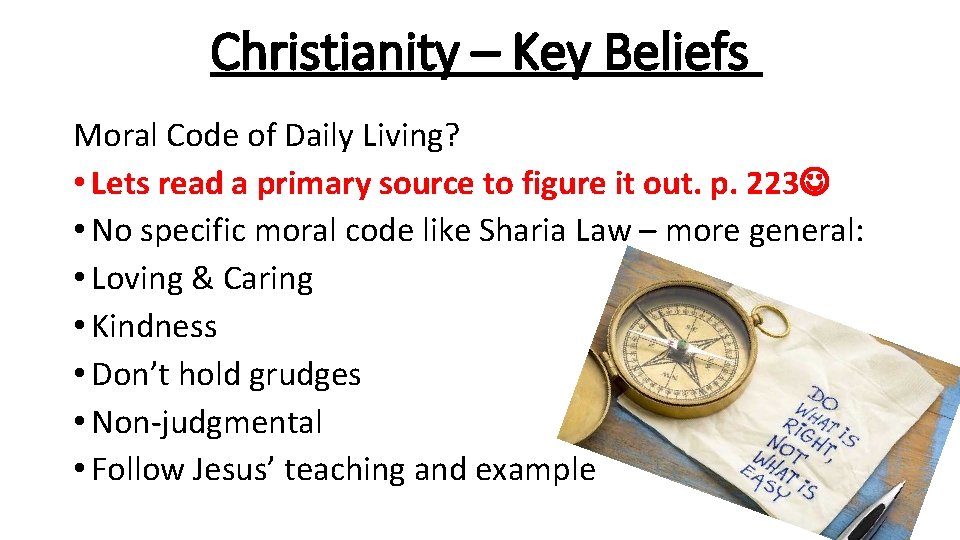
Christianity – Key Beliefs Moral Code of Daily Living? • Lets read a primary source to figure it out. p. 223 • No specific moral code like Sharia Law – more general: • Loving & Caring • Kindness • Don’t hold grudges • Non-judgmental • Follow Jesus’ teaching and example
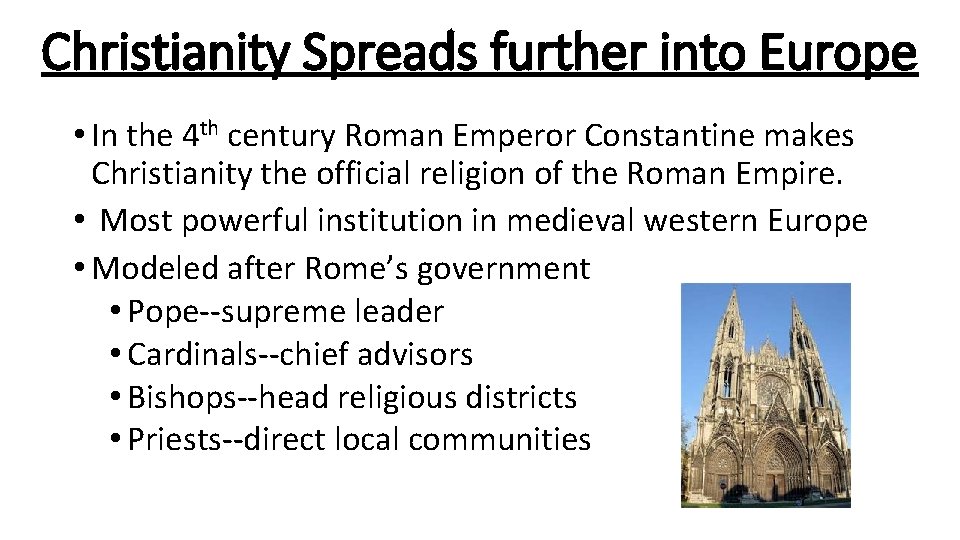
Christianity Spreads further into Europe • In the 4 th century Roman Emperor Constantine makes Christianity the official religion of the Roman Empire. • Most powerful institution in medieval western Europe • Modeled after Rome’s government • Pope--supreme leader • Cardinals--chief advisors • Bishops--head religious districts • Priests--direct local communities
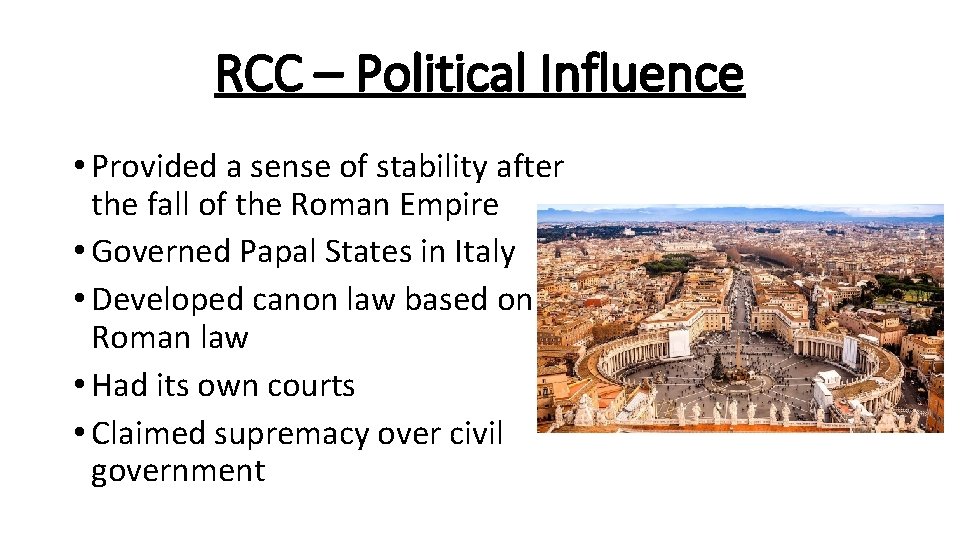
RCC – Political Influence • Provided a sense of stability after the fall of the Roman Empire • Governed Papal States in Italy • Developed canon law based on Roman law • Had its own courts • Claimed supremacy over civil government
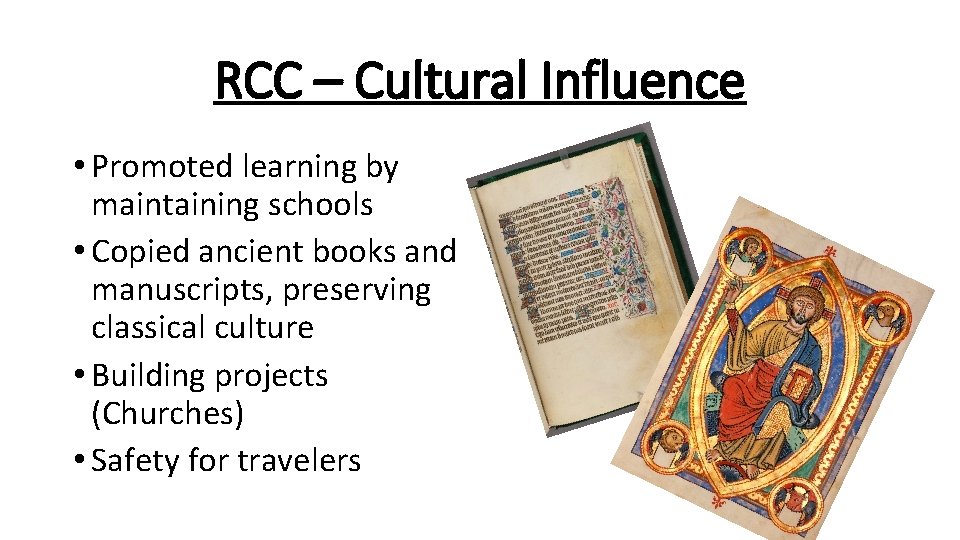
RCC – Cultural Influence • Promoted learning by maintaining schools • Copied ancient books and manuscripts, preserving classical culture • Building projects (Churches) • Safety for travelers
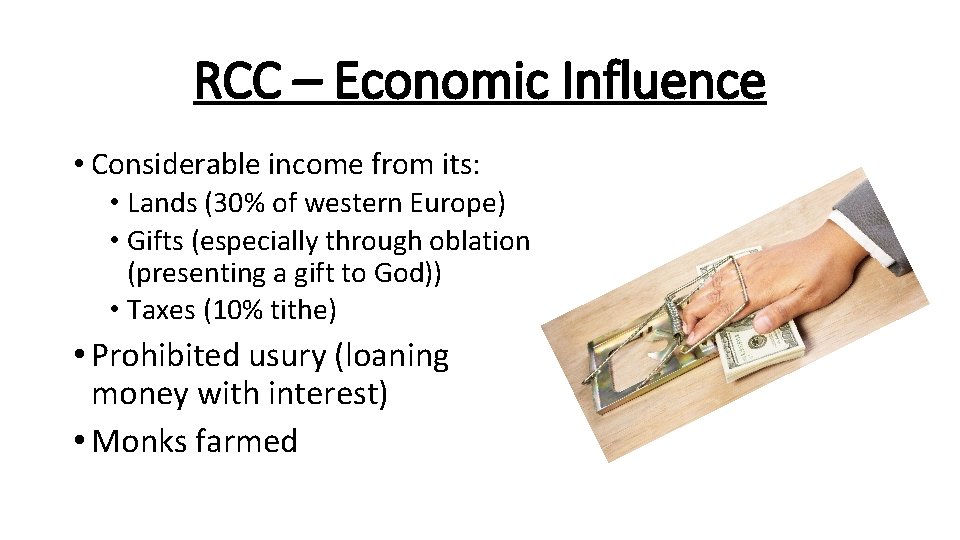
RCC – Economic Influence • Considerable income from its: • Lands (30% of western Europe) • Gifts (especially through oblation (presenting a gift to God)) • Taxes (10% tithe) • Prohibited usury (loaning money with interest) • Monks farmed
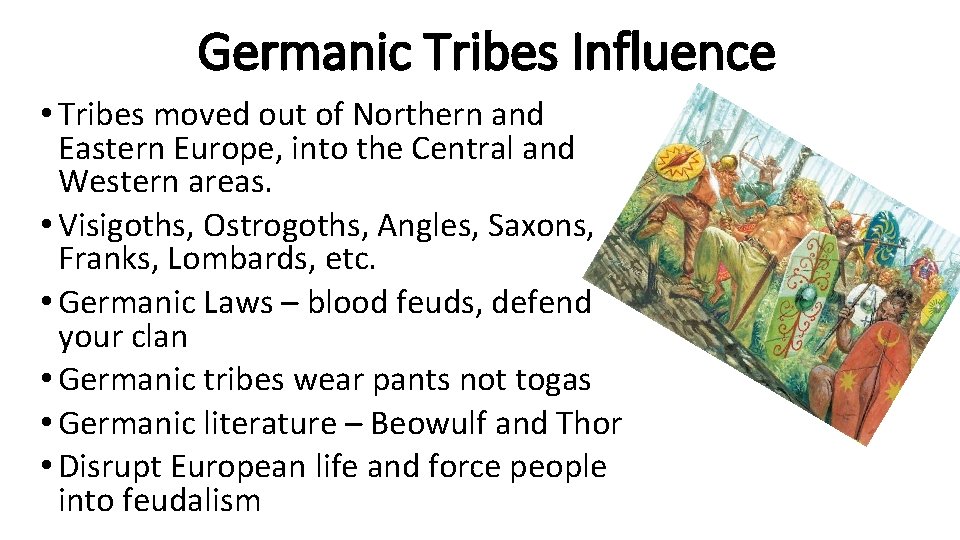
Germanic Tribes Influence • Tribes moved out of Northern and Eastern Europe, into the Central and Western areas. • Visigoths, Ostrogoths, Angles, Saxons, Franks, Lombards, etc. • Germanic Laws – blood feuds, defend your clan • Germanic tribes wear pants not togas • Germanic literature – Beowulf and Thor • Disrupt European life and force people into feudalism
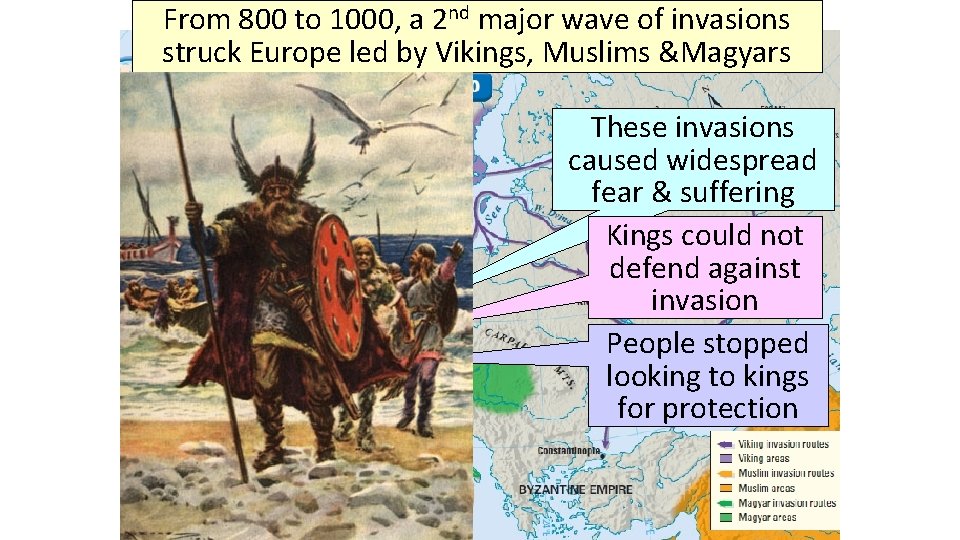
From 800 to 1000, a 2 nd major wave of invasions struck Europe led by Vikings, Muslims &Magyars • Text These invasions caused widespread fear & suffering Kings could not defend against invasion People stopped looking to kings for protection
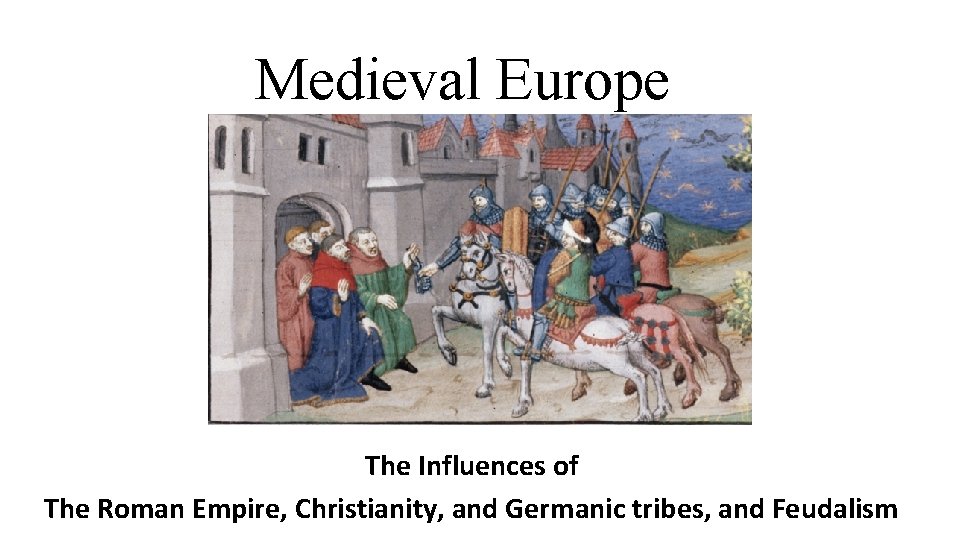
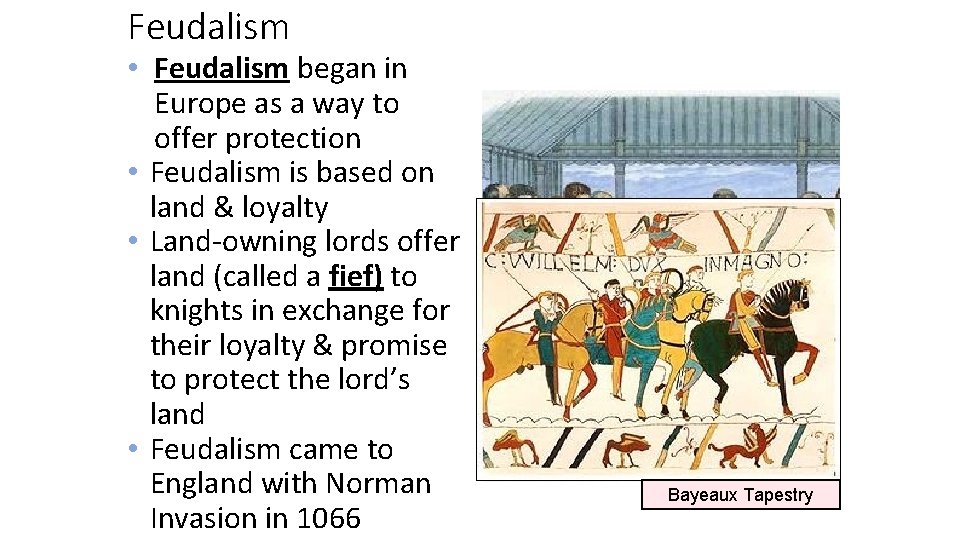
Feudalism • Feudalism began in Europe as a way to offer protection • Feudalism is based on land & loyalty • Land-owning lords offer land (called a fief) to knights in exchange for their loyalty & promise to protect the lord’s land • Feudalism came to England with Norman Invasion in 1066 Bayeaux Tapestry
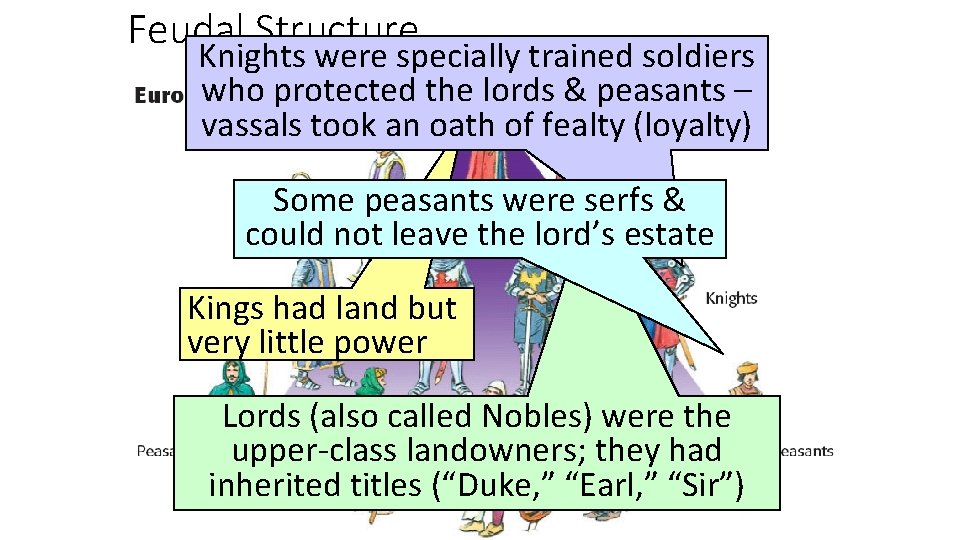
Feudal Structure Knights were specially trained soldiers who protected the lords & peasants – vassals took an oath of fealty (loyalty) Some peasants were serfs & could not leave the lord’s estate Kings had land but very little power Lords (also called Nobles) were the upper-class landowners; they had inherited titles (“Duke, ” “Earl, ” “Sir”)
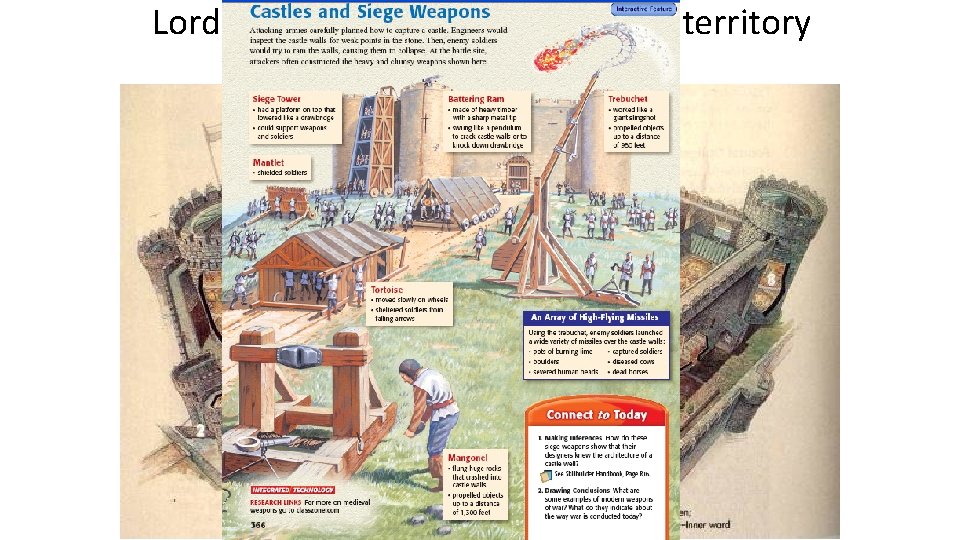
Lords built castles to protect their territory from outside invasions
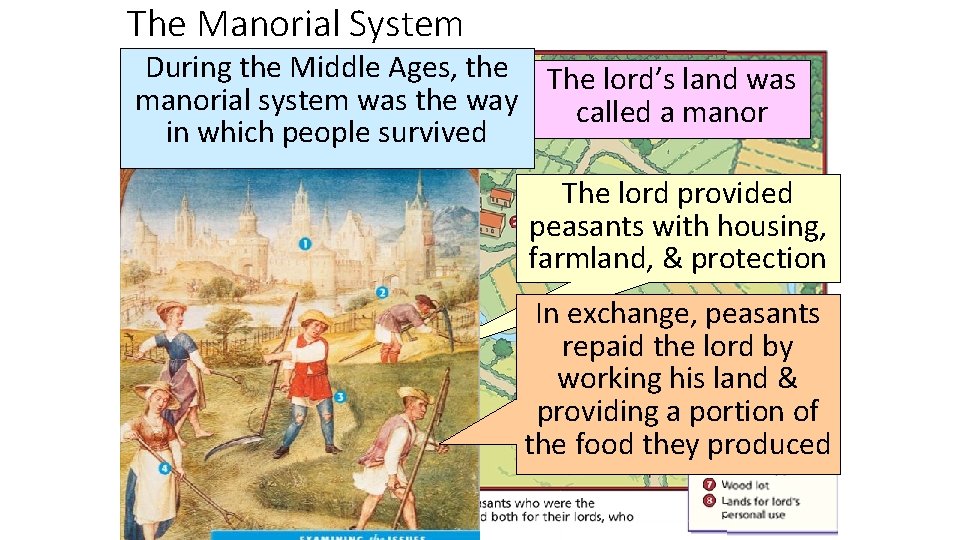
The Manorial System During the Middle Ages, the The lord’s land was manorial system was the way called a manor in which people survived The lord provided peasants with housing, farmland, & protection In exchange, peasants repaid the lord by working his land & providing a portion of the food they produced
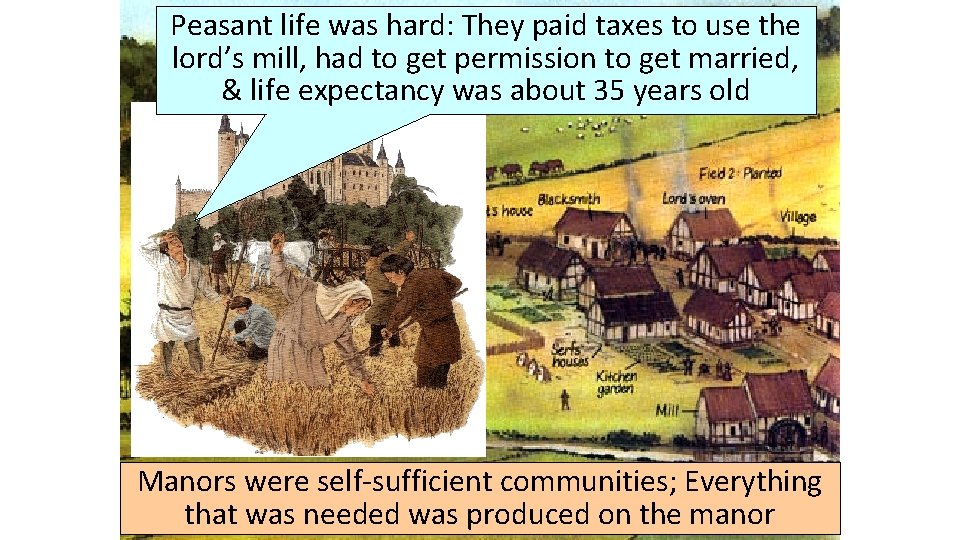
Peasant life was hard: They paid taxes to use the lord’s mill, had to get permission to get married, & life expectancy was about 35 years old Manors were self-sufficient communities; Everything that was needed was produced on the manor
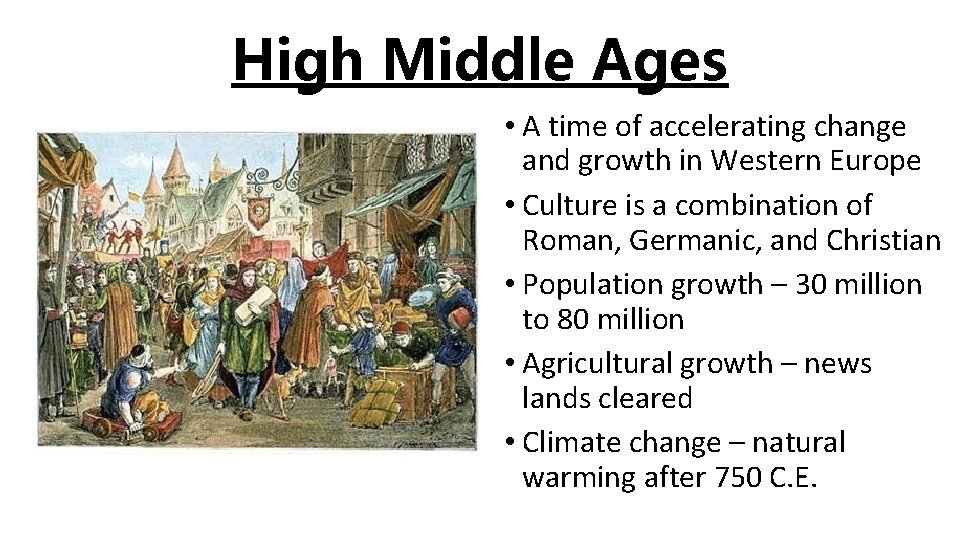
High Middle Ages • A time of accelerating change and growth in Western Europe • Culture is a combination of Roman, Germanic, and Christian • Population growth – 30 million to 80 million • Agricultural growth – news lands cleared • Climate change – natural warming after 750 C. E.
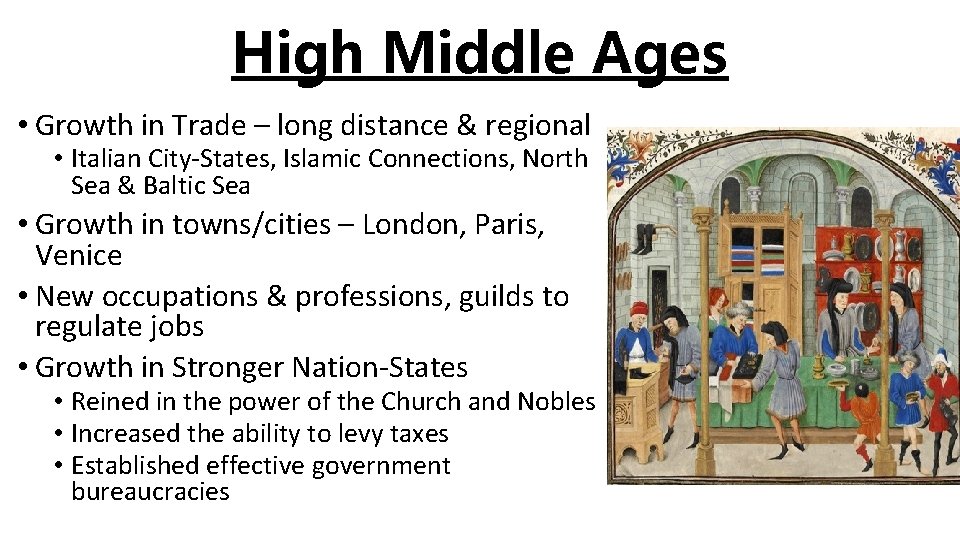
High Middle Ages • Growth in Trade – long distance & regional • Italian City-States, Islamic Connections, North Sea & Baltic Sea • Growth in towns/cities – London, Paris, Venice • New occupations & professions, guilds to regulate jobs • Growth in Stronger Nation-States • Reined in the power of the Church and Nobles • Increased the ability to levy taxes • Established effective government bureaucracies
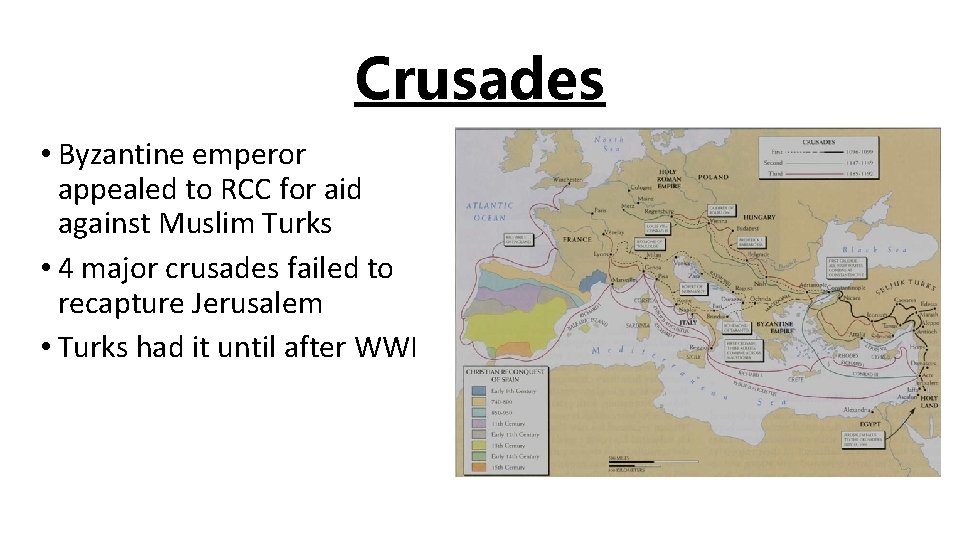
Crusades • Byzantine emperor appealed to RCC for aid against Muslim Turks • 4 major crusades failed to recapture Jerusalem • Turks had it until after WWI
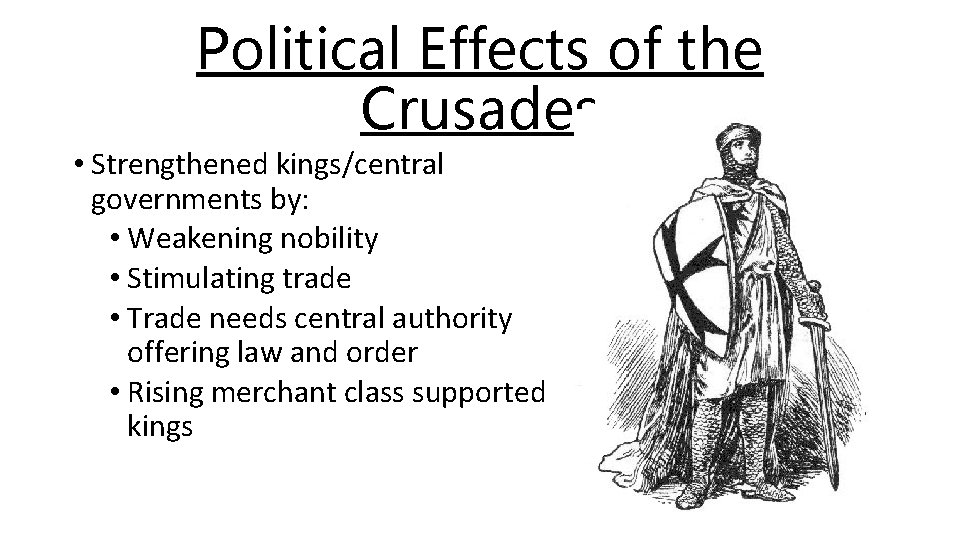
Political Effects of the Crusades • Strengthened kings/central governments by: • Weakening nobility • Stimulating trade • Trade needs central authority offering law and order • Rising merchant class supported kings
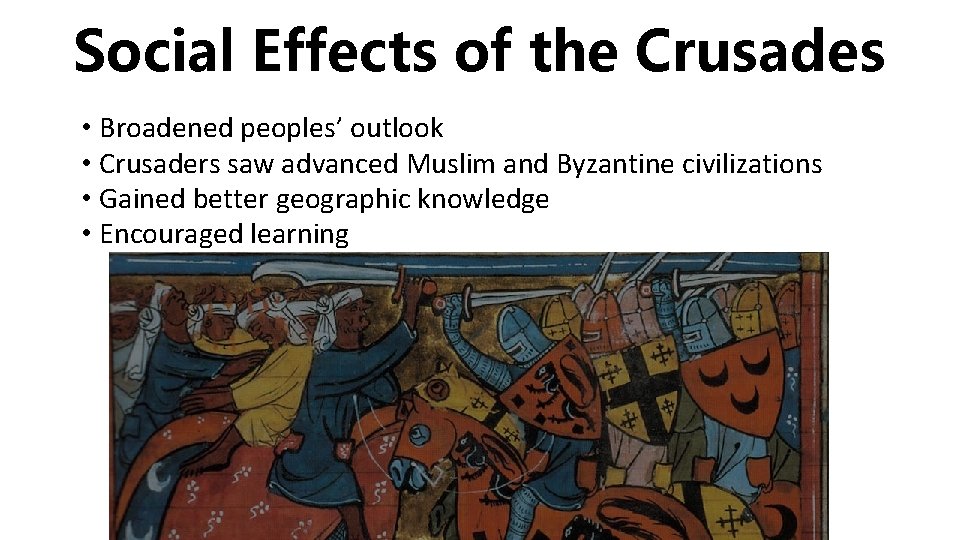
Social Effects of the Crusades • Broadened peoples’ outlook • Crusaders saw advanced Muslim and Byzantine civilizations • Gained better geographic knowledge • Encouraged learning
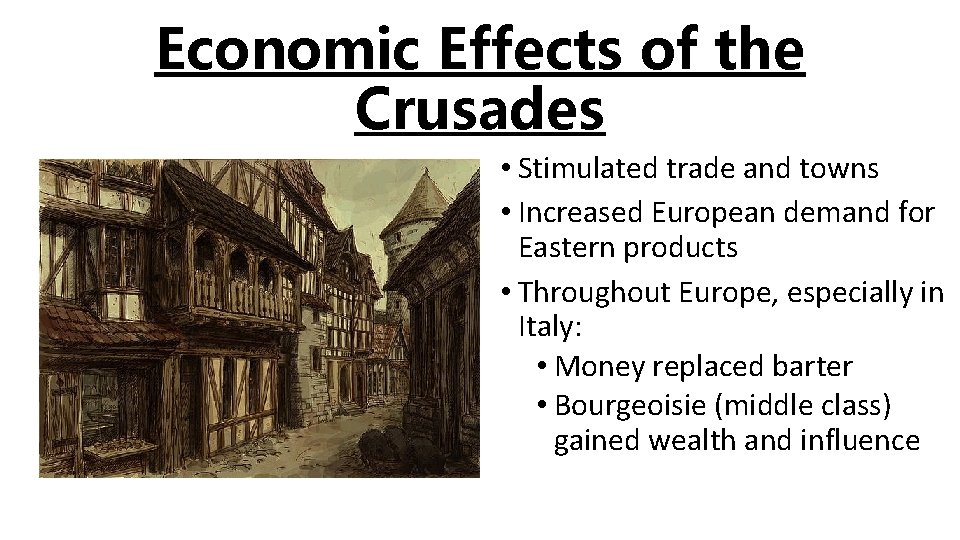
Economic Effects of the Crusades • Stimulated trade and towns • Increased European demand for Eastern products • Throughout Europe, especially in Italy: • Money replaced barter • Bourgeoisie (middle class) gained wealth and influence
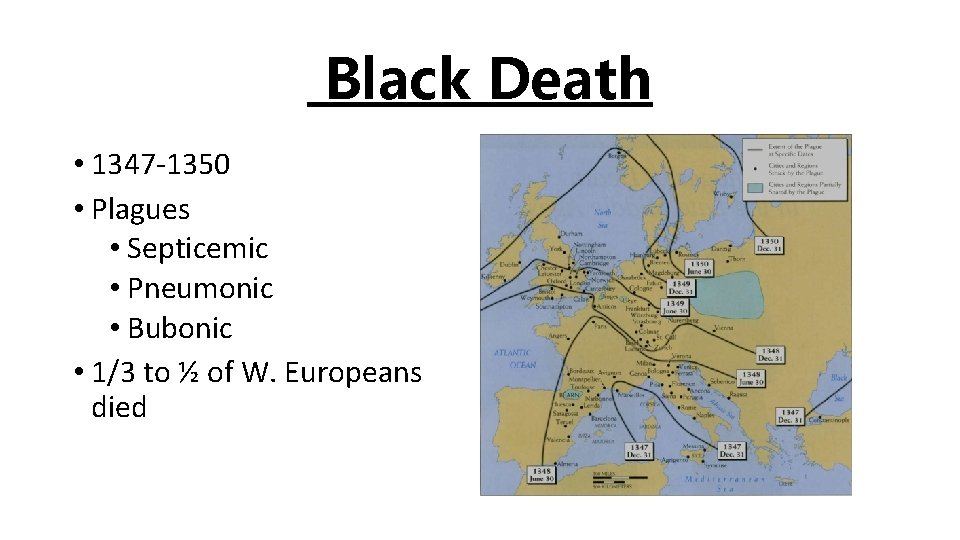
Black Death • 1347 -1350 • Plagues • Septicemic • Pneumonic • Bubonic • 1/3 to ½ of W. Europeans died
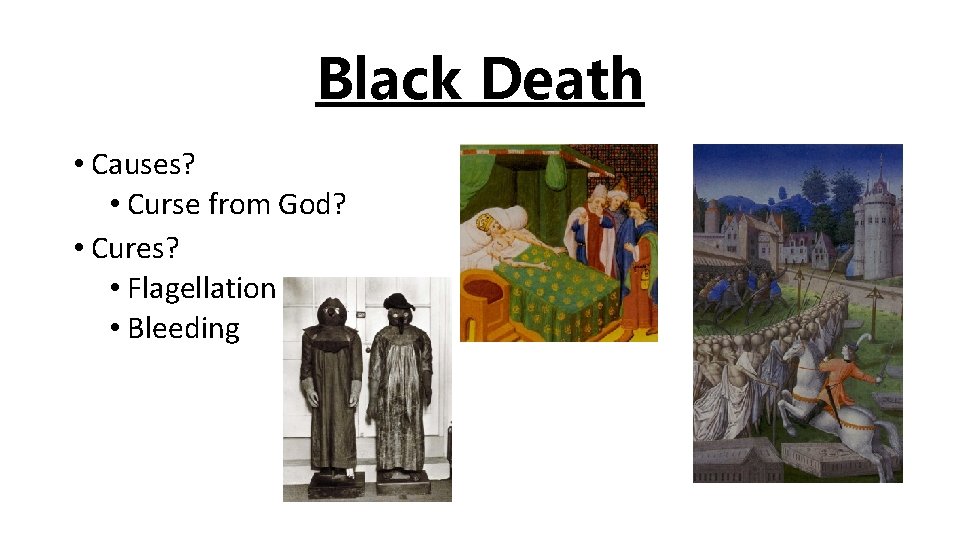
Black Death • Causes? • Curse from God? • Cures? • Flagellation • Bleeding
Consequences of the Black Death • Shortage of labor in Western Europe • Wages increase • Widespread Anti-Semitism • Urban areas and Artisans benefit • Power of Nobility declined • Cynicism toward the Church