
Medieval Europe 800 1300 The Highlights of Chapter
- Slides: 8
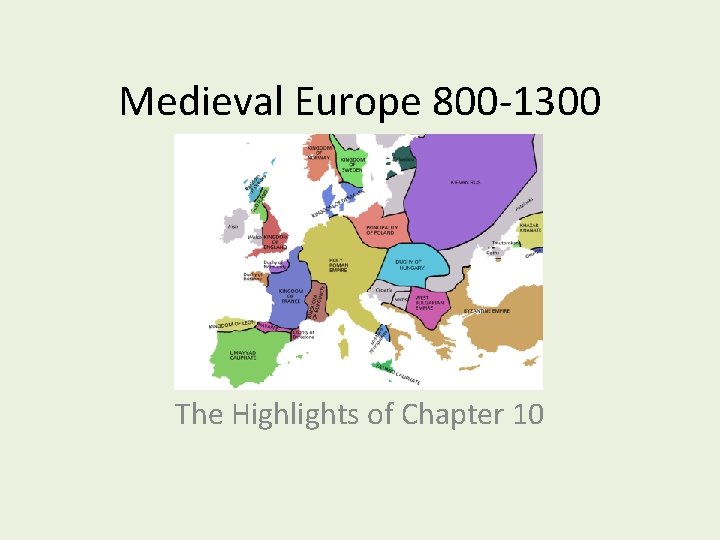
Medieval Europe 800 -1300 The Highlights of Chapter 10
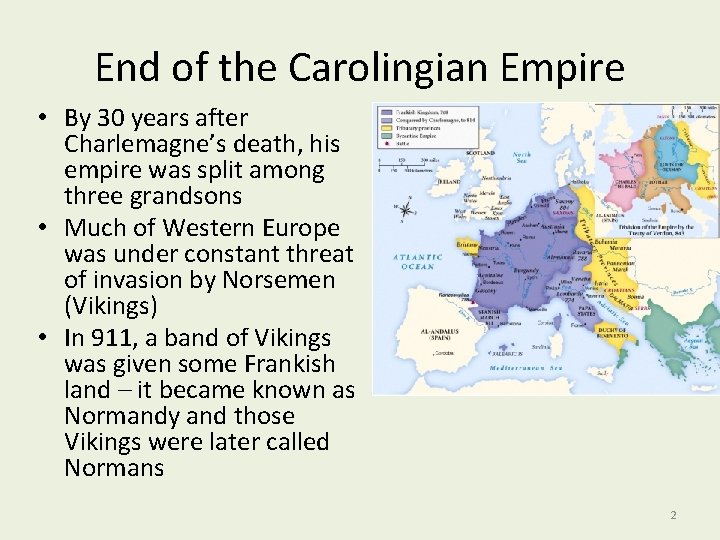
End of the Carolingian Empire • By 30 years after Charlemagne’s death, his empire was split among three grandsons • Much of Western Europe was under constant threat of invasion by Norsemen (Vikings) • In 911, a band of Vikings was given some Frankish land – it became known as Normandy and those Vikings were later called Normans 2
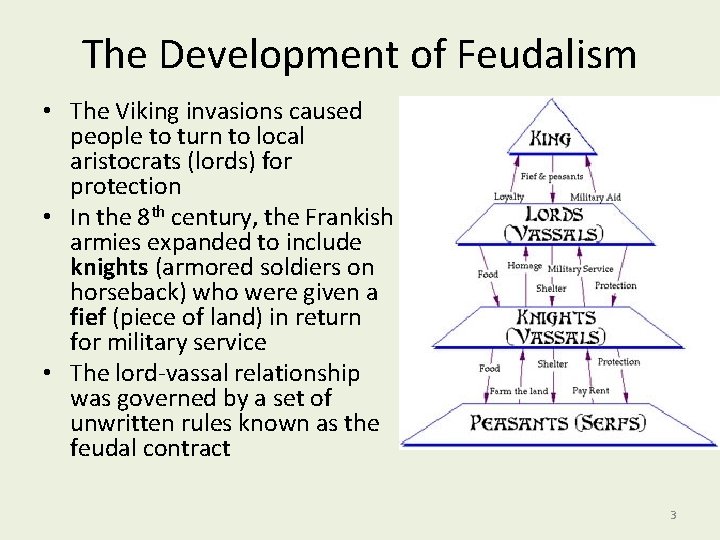
The Development of Feudalism • The Viking invasions caused people to turn to local aristocrats (lords) for protection • In the 8 th century, the Frankish armies expanded to include knights (armored soldiers on horseback) who were given a fief (piece of land) in return for military service • The lord-vassal relationship was governed by a set of unwritten rules known as the feudal contract 3
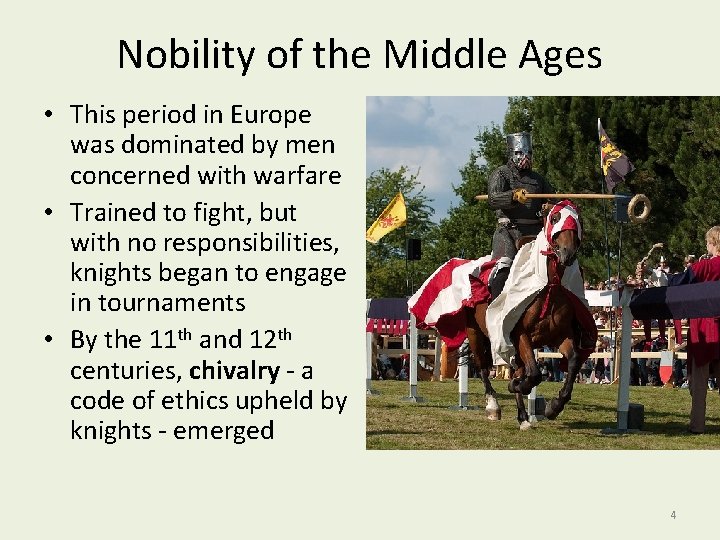
Nobility of the Middle Ages • This period in Europe was dominated by men concerned with warfare • Trained to fight, but with no responsibilities, knights began to engage in tournaments • By the 11 th and 12 th centuries, chivalry - a code of ethics upheld by knights - emerged 4
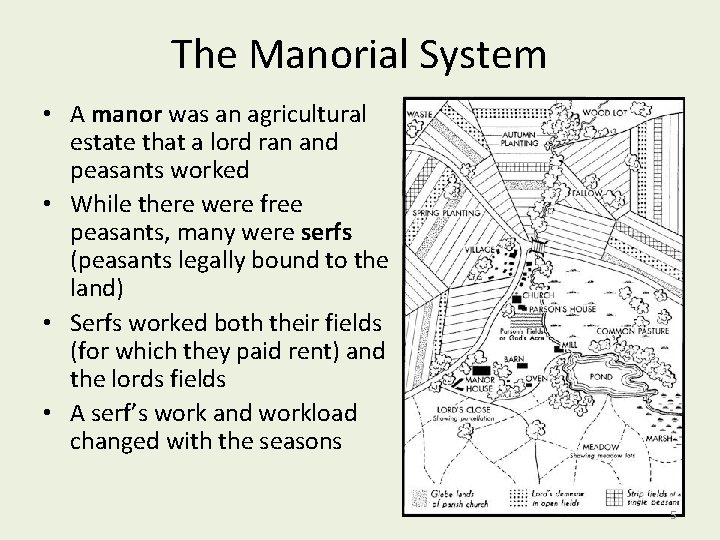
The Manorial System • A manor was an agricultural estate that a lord ran and peasants worked • While there were free peasants, many were serfs (peasants legally bound to the land) • Serfs worked both their fields (for which they paid rent) and the lords fields • A serf’s work and workload changed with the seasons 5
England in the High Middle Ages • On 10/14/1066, William of Normandy defeated the English King at the Battle of Hastings • King Henry II (ruled 1154 -1189) believed he could punish the clergy in the courts, when Archbishop of Canterbury Thomas Becket disagreed, four of Henry’s knights murdered Becket • In 1215, nobles rebelled against the rule of King John and forced him to accept the Magna Carta • Later in the 1200 s, Parliament was formed – Nobles and Church officials in the House of Lords – Knights and Townspeople in the House of Commons 6
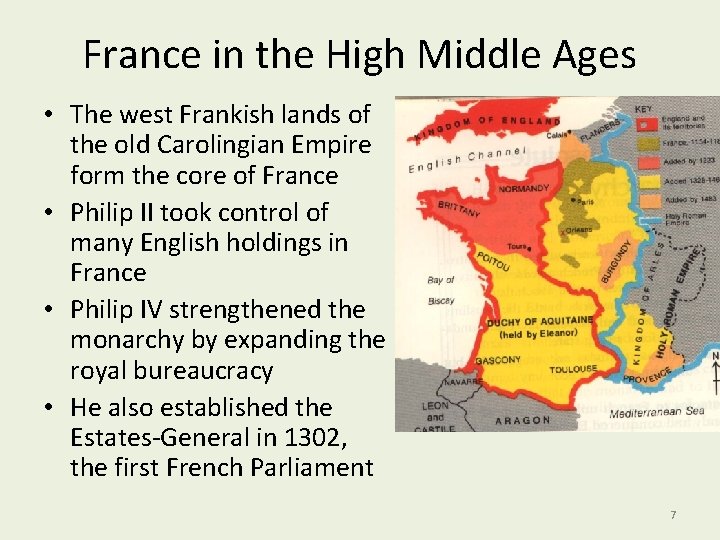
France in the High Middle Ages • The west Frankish lands of the old Carolingian Empire form the core of France • Philip II took control of many English holdings in France • Philip IV strengthened the monarchy by expanding the royal bureaucracy • He also established the Estates-General in 1302, the first French Parliament 7
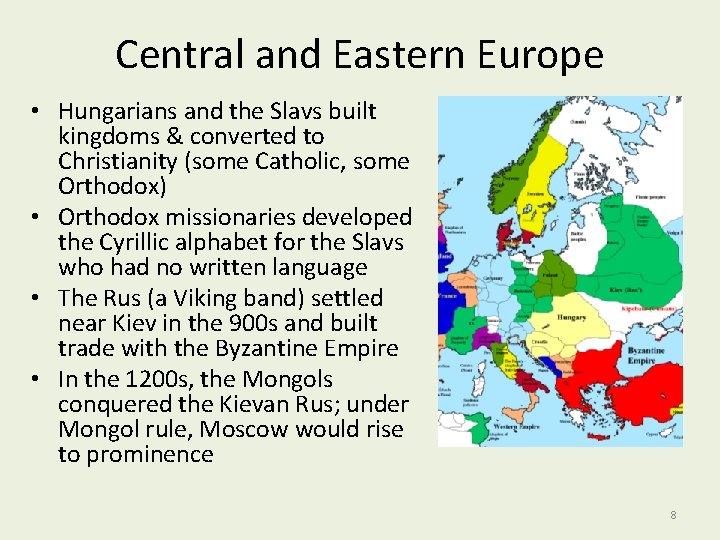
Central and Eastern Europe • Hungarians and the Slavs built kingdoms & converted to Christianity (some Catholic, some Orthodox) • Orthodox missionaries developed the Cyrillic alphabet for the Slavs who had no written language • The Rus (a Viking band) settled near Kiev in the 900 s and built trade with the Byzantine Empire • In the 1200 s, the Mongols conquered the Kievan Rus; under Mongol rule, Moscow would rise to prominence 8