
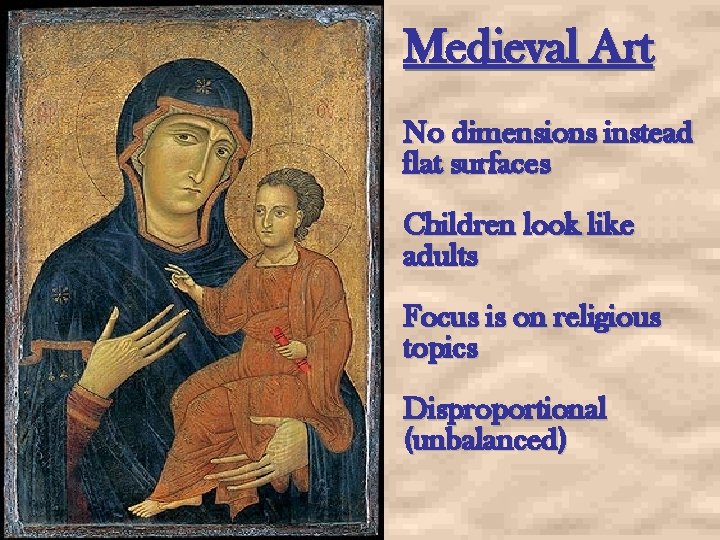
Medieval Art No dimensions instead flat surfaces Children
- Slides: 75
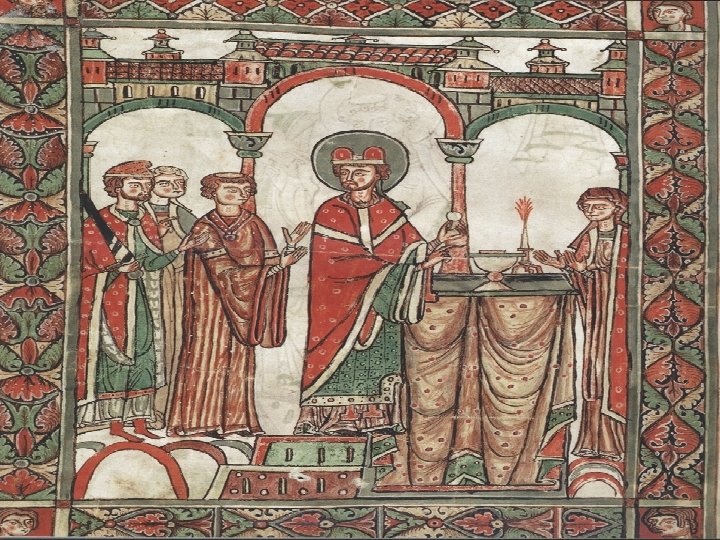
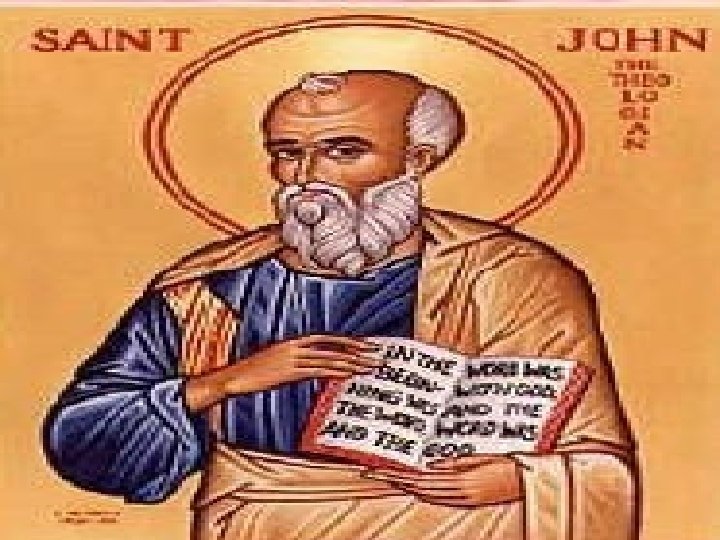
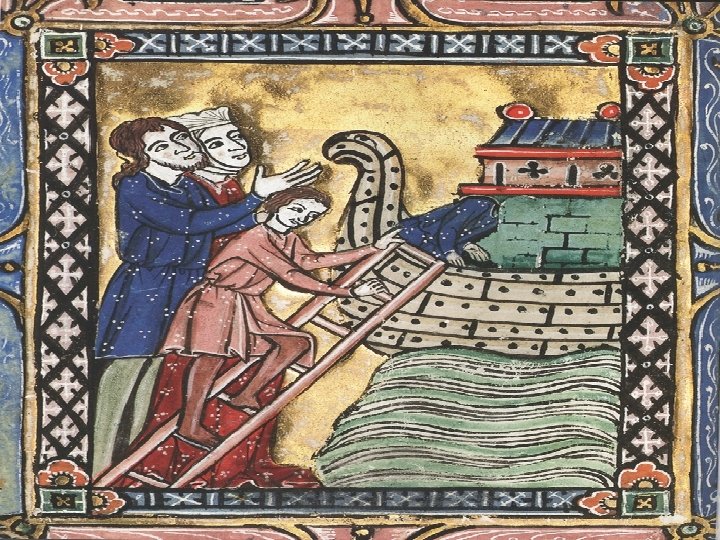
Medieval Art No dimensions instead flat surfaces Children look like adults Focus is on religious topics Disproportional (unbalanced)
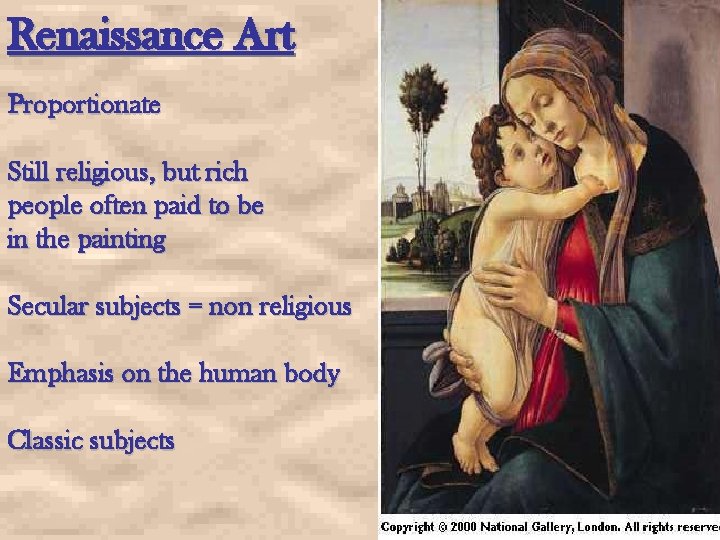
Renaissance Art Proportionate Still religious, but rich people often paid to be in the painting Secular subjects = non religious Emphasis on the human body Classic subjects
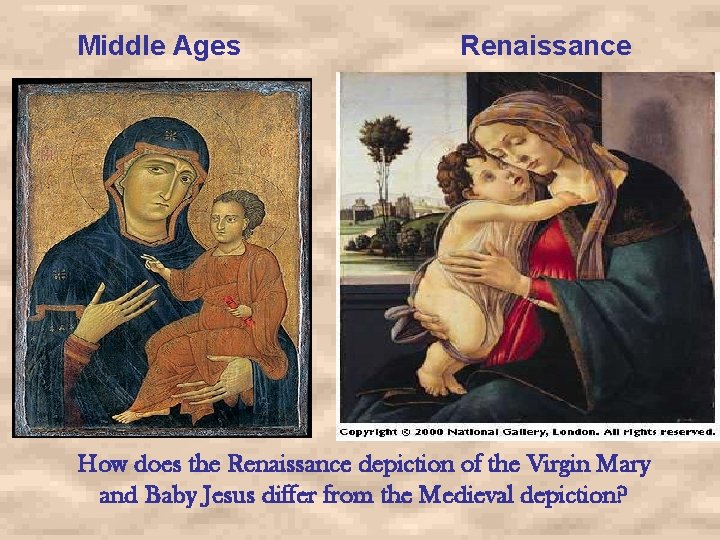
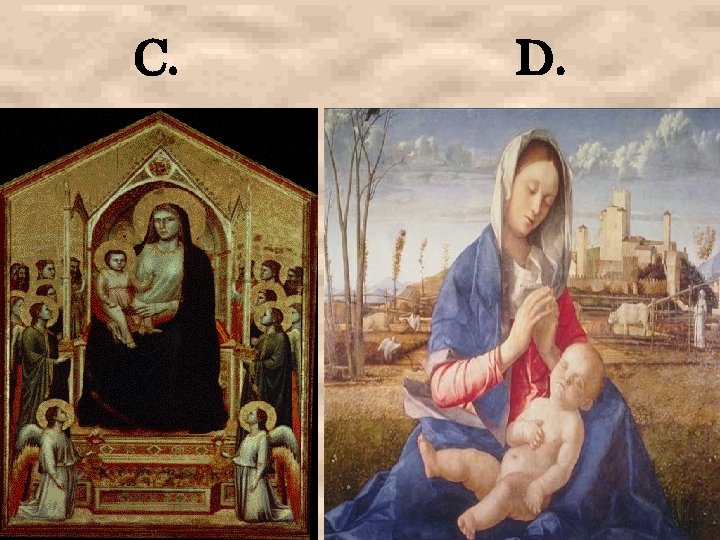
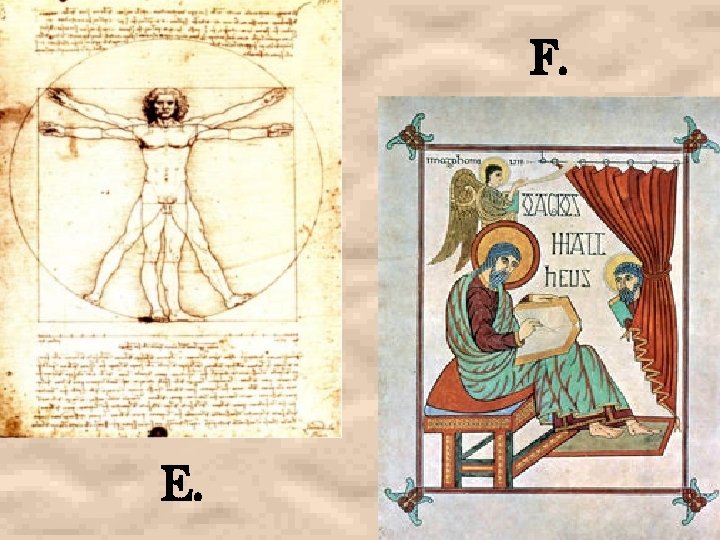
Middle Ages Renaissance How does the Renaissance depiction of the Virgin Mary and Baby Jesus differ from the Medieval depiction?
What Differences Did You Notice? Jesus really looks like a baby Proportionate to Mary looks human, not like an angel
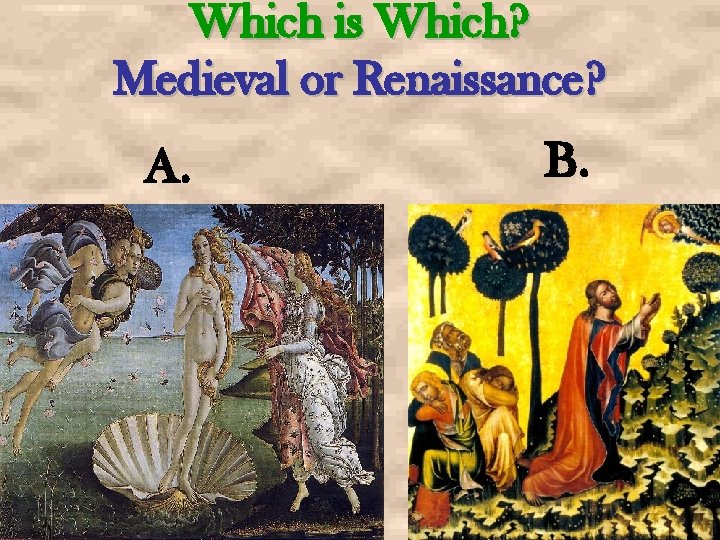
Which is Which? Medieval or Renaissance? A. B.
C. D.
F. E.
Renaissance Art and Patronage Italians were willing to spend a lot of money on art. * Art communicated social, political, and spiritual values. * Italian banking & international trade interests had the money. Public art in Florence was organized and supported by guilds. Therefore, the consumption of art was used as a form of competition for social & political status!
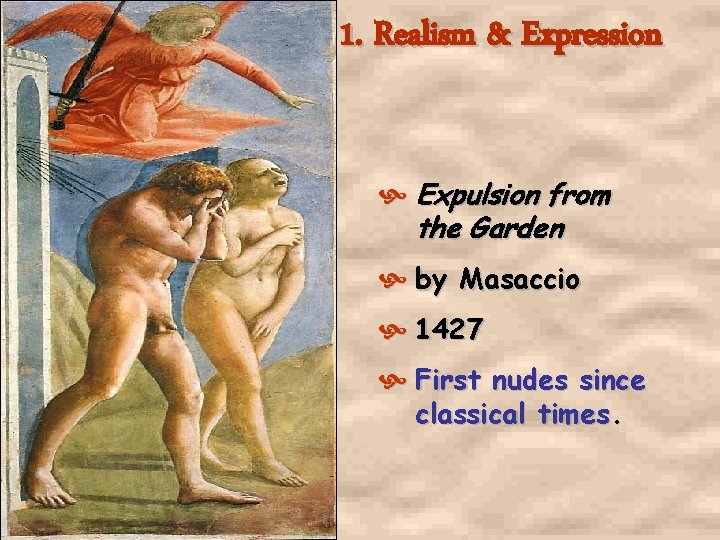
1. Realism & Expression Expulsion from the Garden by Masaccio 1427 First nudes since classical times.
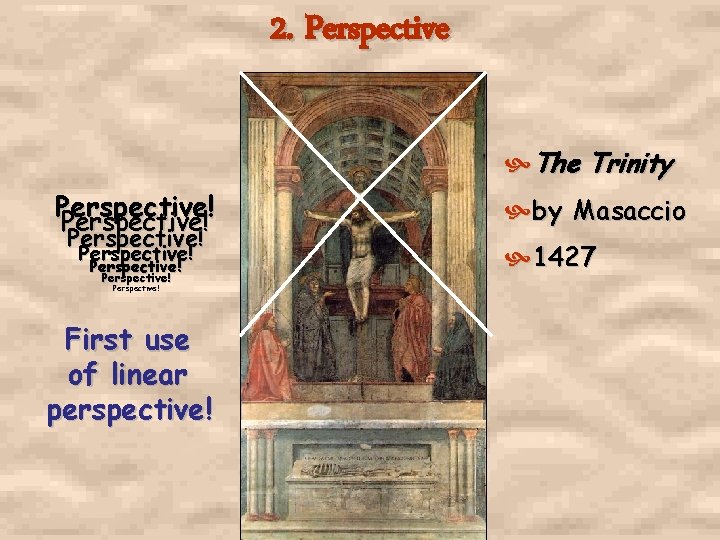
2. Perspective The Trinity Perspective! Perspective! First use of linear perspective! by Masaccio 1427
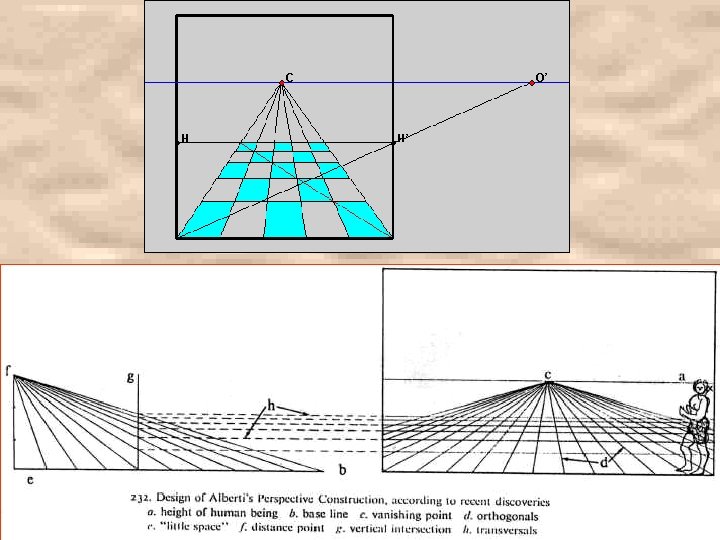
Perspective
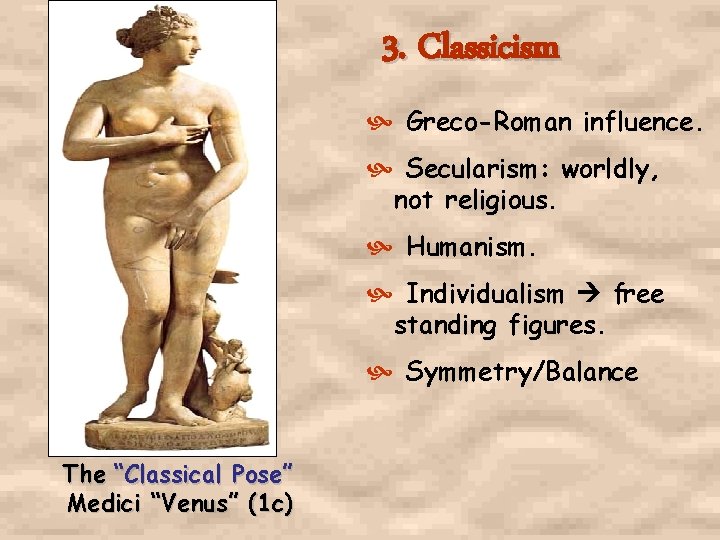
3. Classicism Greco-Roman influence. Secularism: worldly, not religious. Humanism. Individualism free standing figures. Symmetry/Balance The “Classical Pose” Medici “Venus” (1 c)
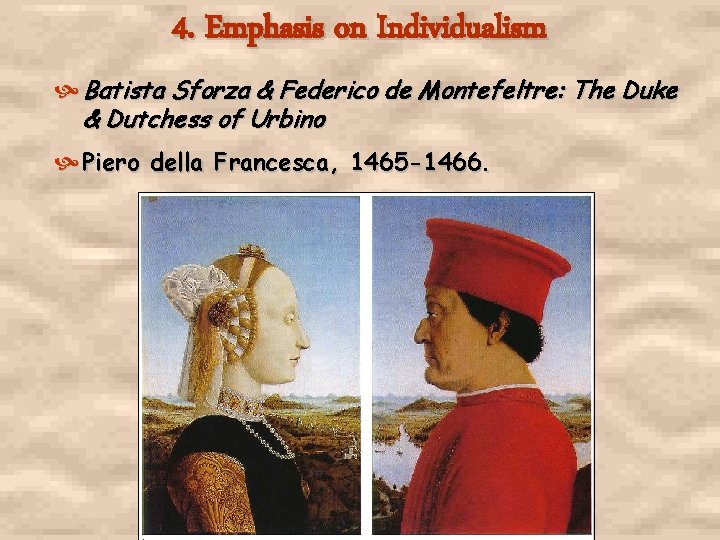
4. Emphasis on Individualism Batista Sforza & Federico de Montefeltre: The Duke & Dutchess of Urbino Piero della Francesca, 1465 -1466.
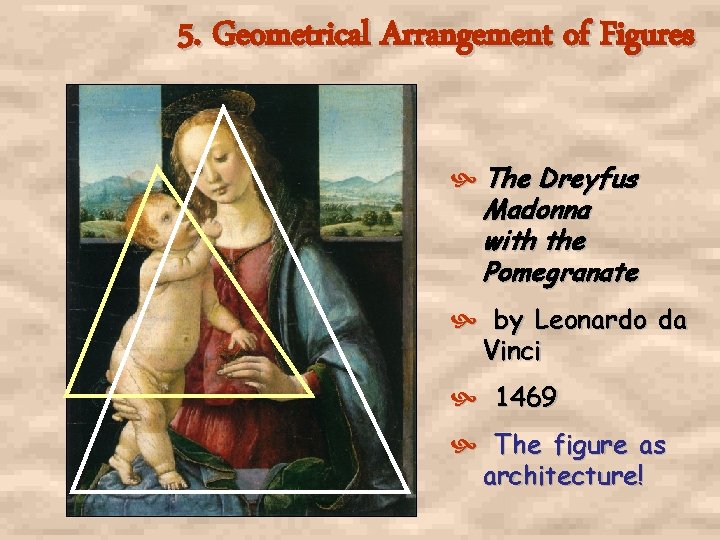
5. Geometrical Arrangement of Figures The Dreyfus Madonna with the Pomegranate by Leonardo da Vinci 1469 The figure as architecture!
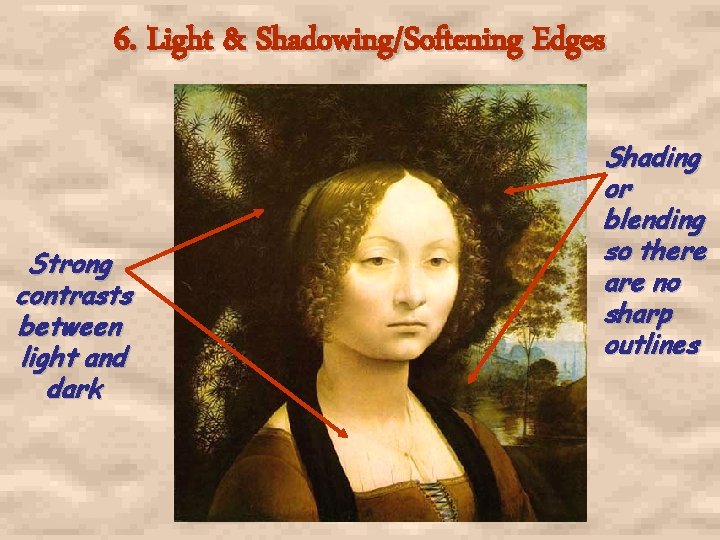
6. Light & Shadowing/Softening Edges Strong contrasts between light and dark Shading or blending so there are no sharp outlines
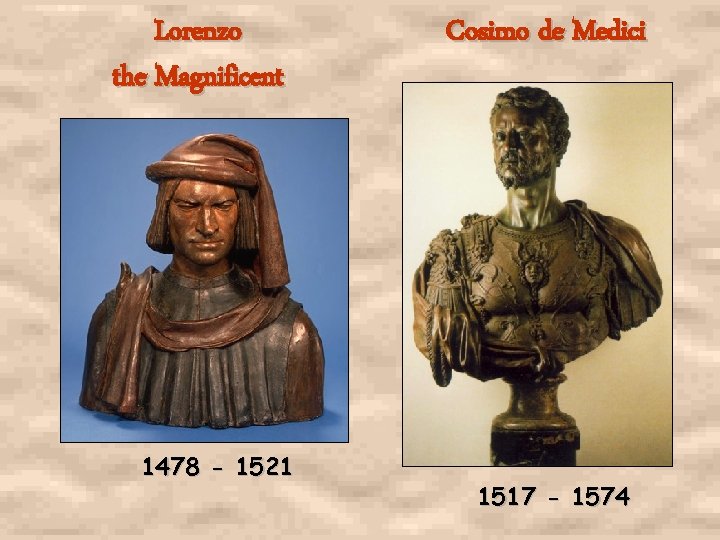
Lorenzo the Magnificent 1478 - 1521 Cosimo de Medici 1517 - 1574
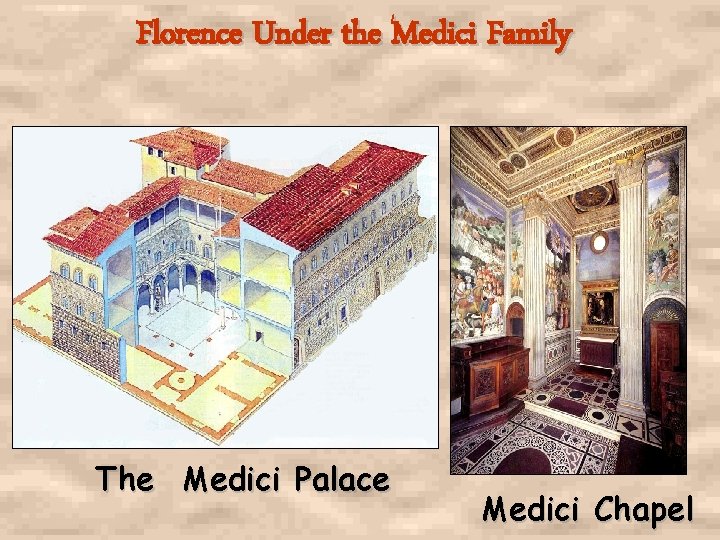
Florence Under the Medici Family The Medici Palace Medici Chapel
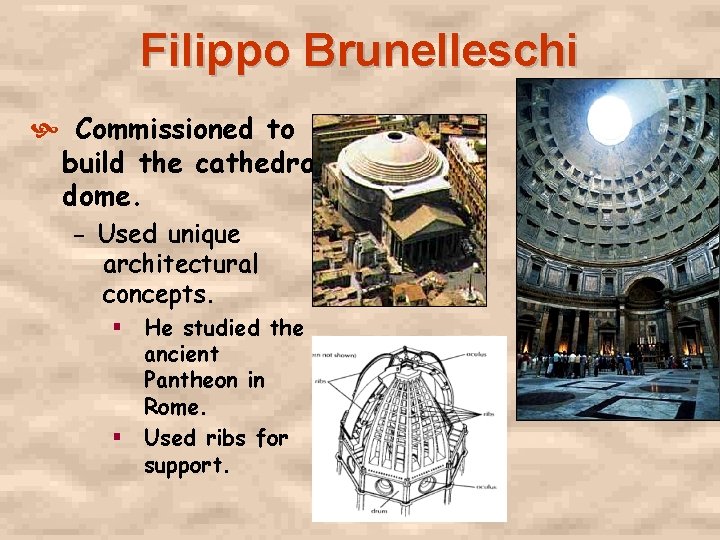
Filippo Brunelleschi Commissioned to build the cathedral dome. - Used unique architectural concepts. § He studied the ancient Pantheon in Rome. § Used ribs for support.
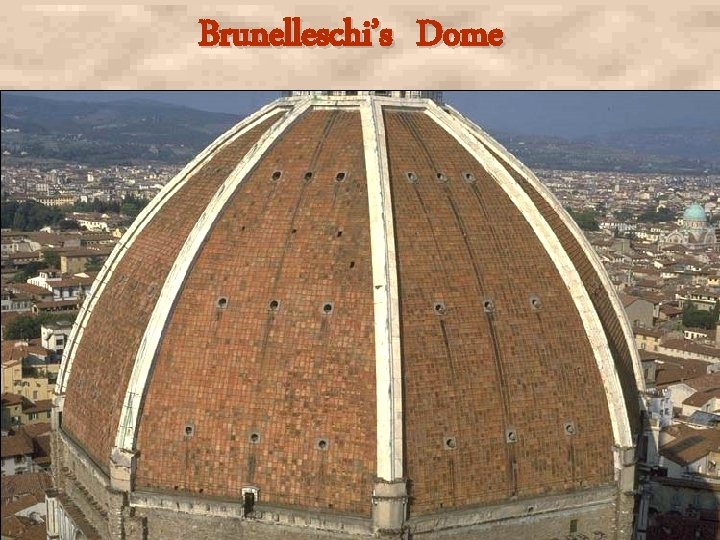
Brunelleschi’s Dome
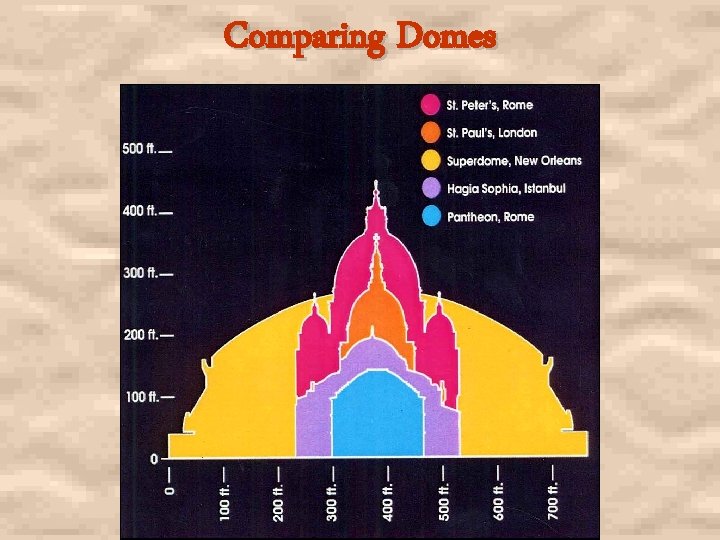
Comparing Domes
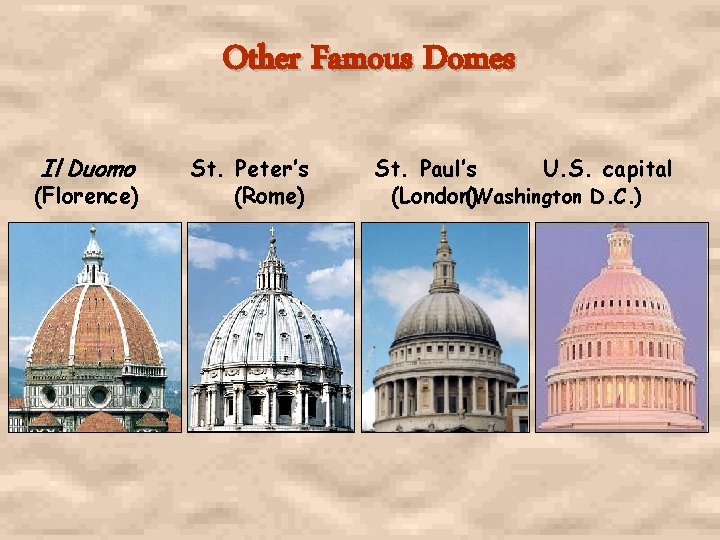
Other Famous Domes Il Duomo (Florence) St. Peter’s (Rome) St. Paul’s U. S. capital (London) (Washington D. C. )
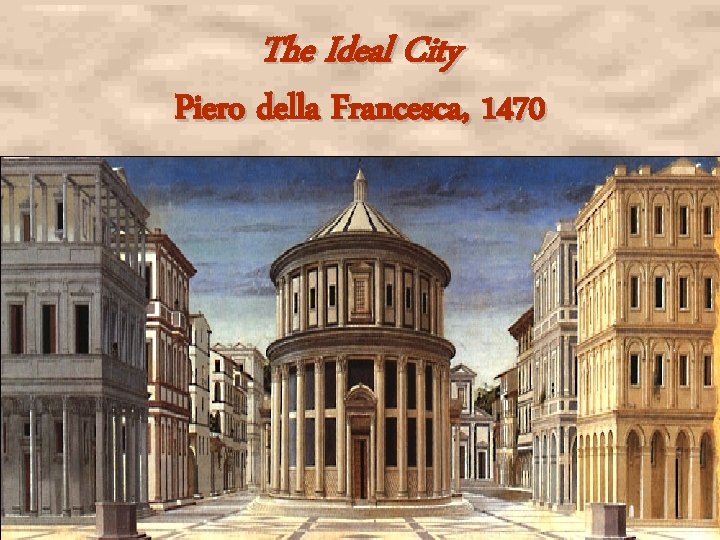
The Ideal City Piero della Francesca, 1470
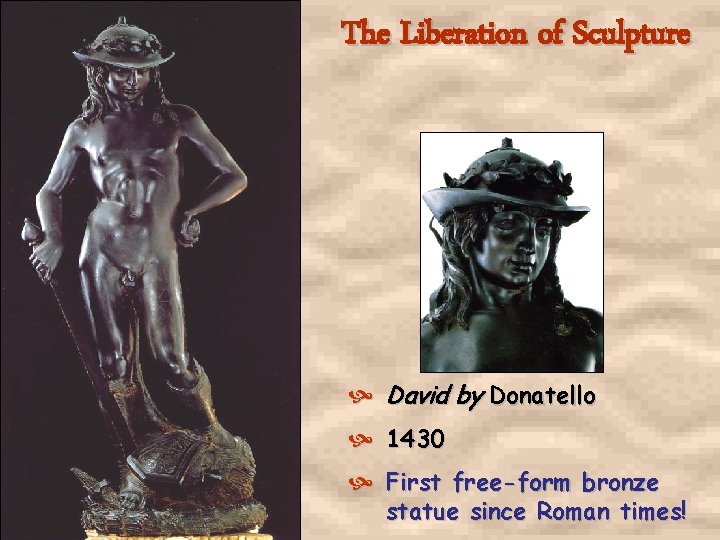
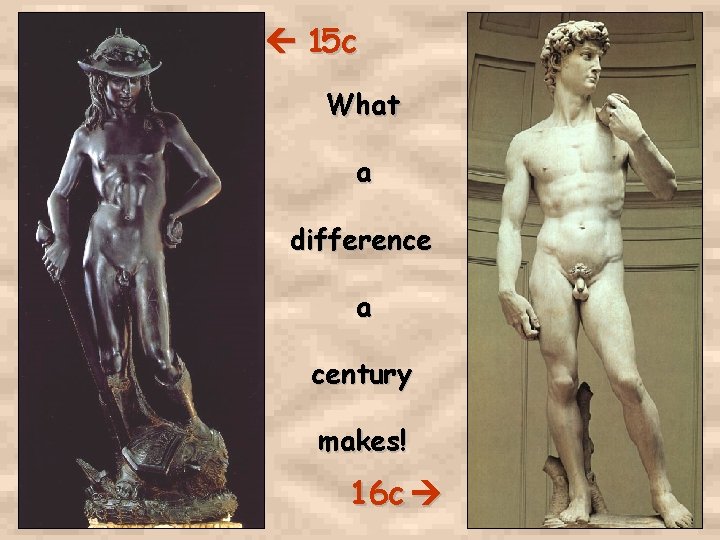
The Liberation of Sculpture David by Donatello 1430 First free-form bronze statue since Roman times!
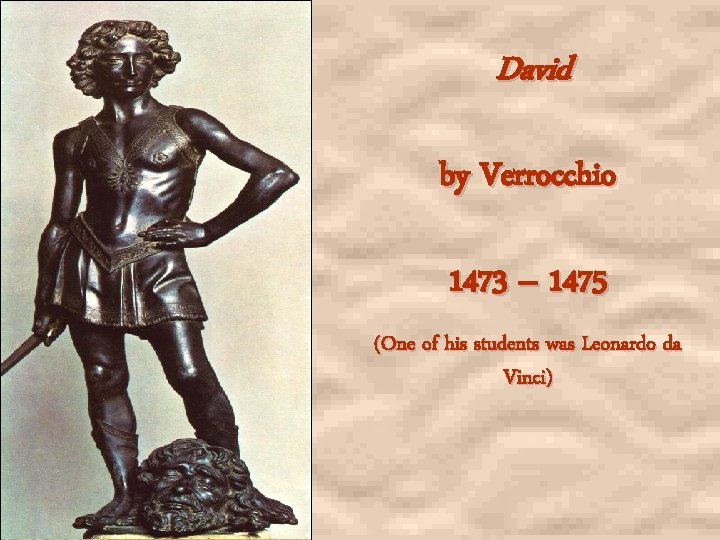
David by Verrocchio 1473 – 1475 (One of his students was Leonardo da Vinci)
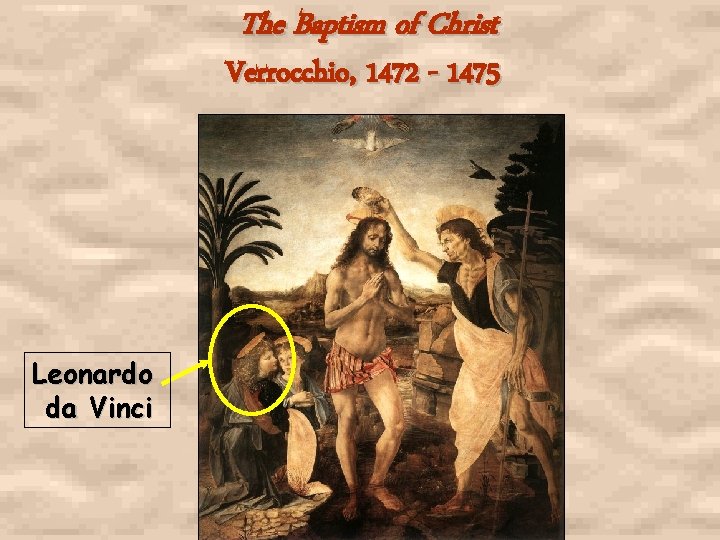
The Baptism of Christ Verrocchio, 1472 - 1475 Leonardo da Vinci
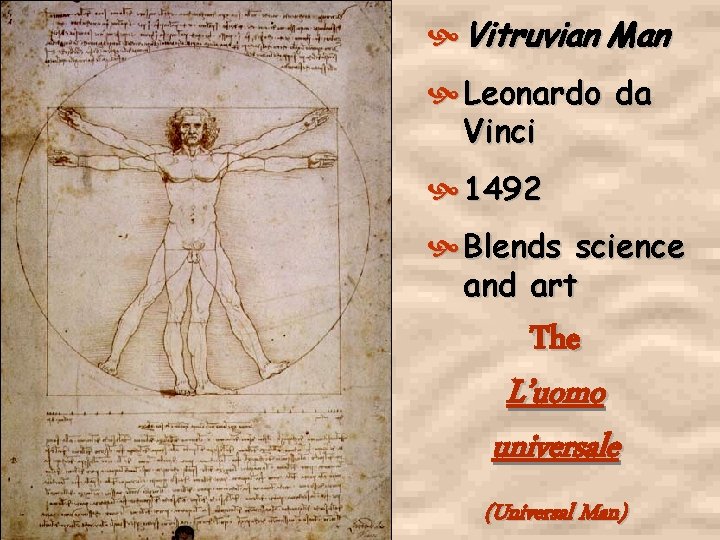
Vitruvian Man Leonardo da Vinci 1492 Blends science and art The L’uomo universale (Universal Man)
The Renaissance “Man” Has broad knowledge about many things in different fields. Deep knowledge/skill in one area. Able to link information from different areas/disciplines and create new knowledge. The Greek ideal of the “well-rounded man” was at the heart of Renaissance education.
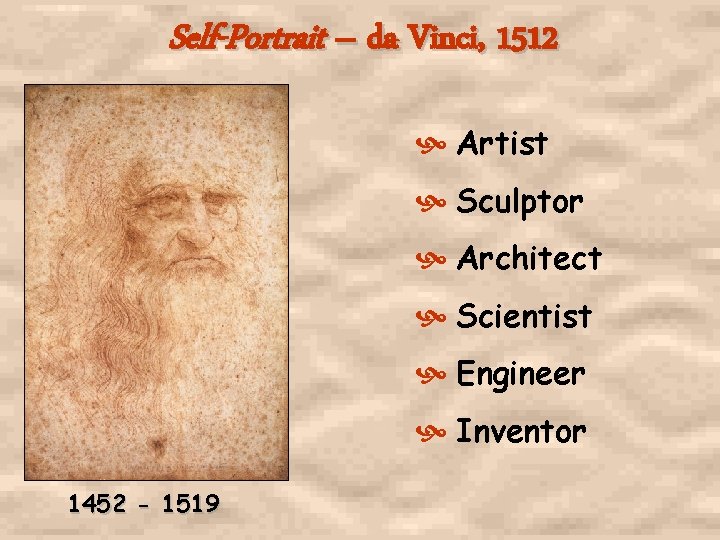
Self-Portrait – da Vinci, 1512 Artist Sculptor Architect Scientist Engineer Inventor 1452 - 1519
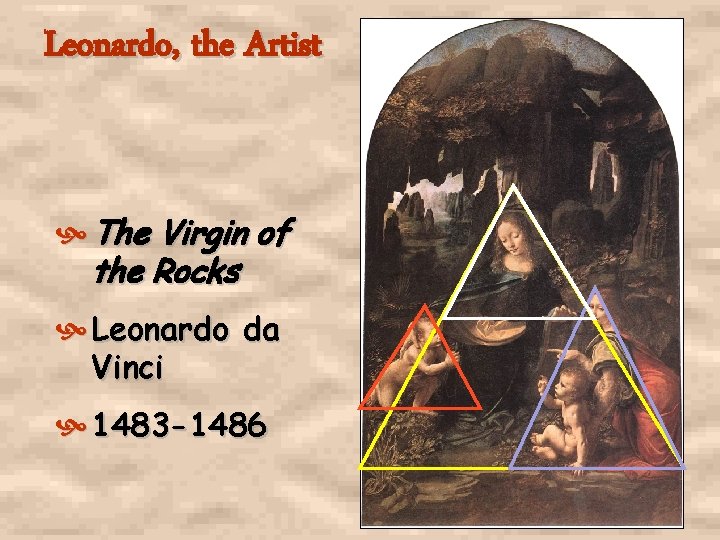
Leonardo, the Artist The Virgin of the Rocks Leonardo da Vinci 1483 -1486
Leonardo da Vinci Born in 1452 Painter, sculptor, inventor, botanist, musician, architect Dissected the human body to see how muscles and tendons worked Sketched submarines and airplane models before they were even invented
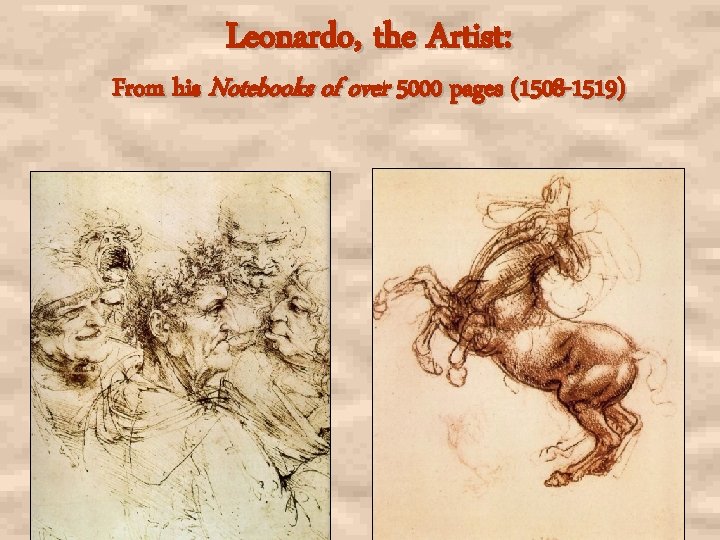
Leonardo, the Artist: From his Notebooks of over 5000 pages (1508 -1519)
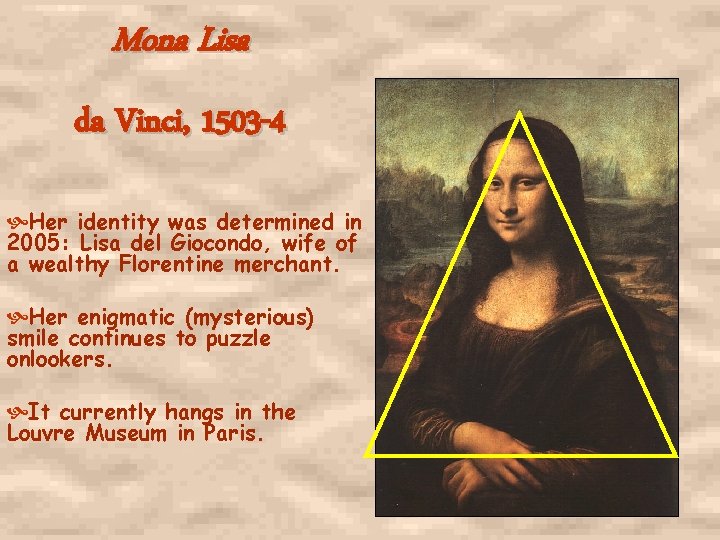
Mona Lisa da Vinci, 1503 -4 Her identity was determined in 2005: Lisa del Giocondo, wife of a wealthy Florentine merchant. Her enigmatic (mysterious) smile continues to puzzle onlookers. It currently hangs in the Louvre Museum in Paris.
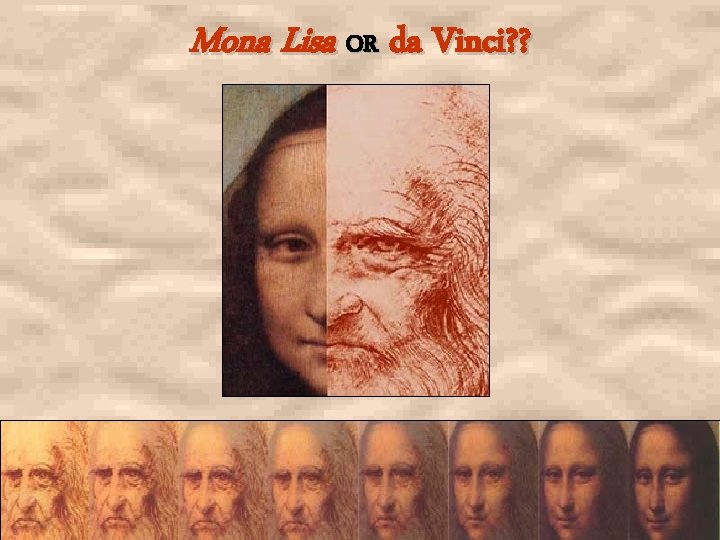
Mona Lisa OR da Vinci? ?
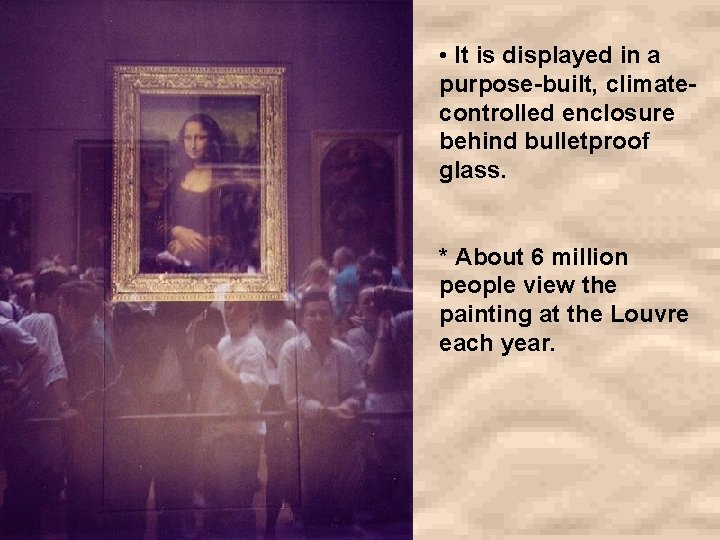
• It is displayed in a purpose-built, climatecontrolled enclosure behind bulletproof glass. * About 6 million people view the painting at the Louvre each year.
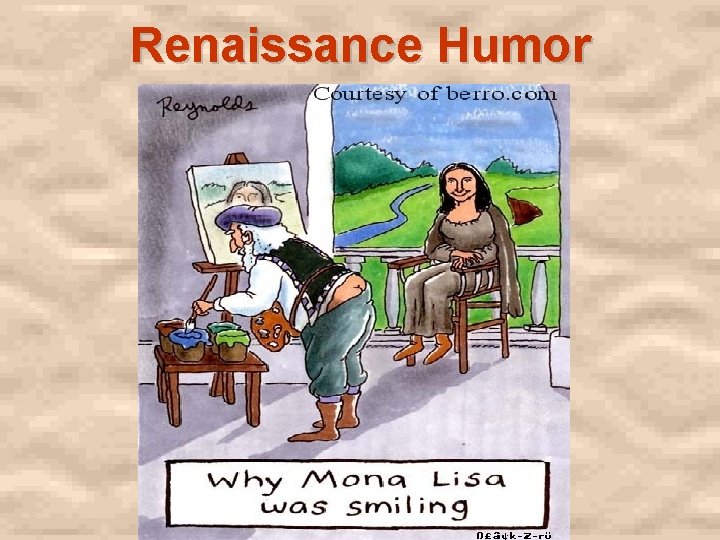
Renaissance Humor
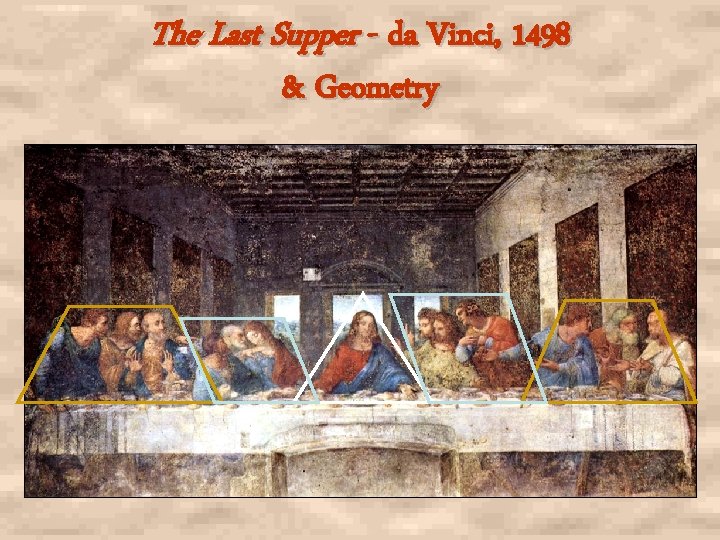
The Last Supper - da Vinci, 1498 & Geometry
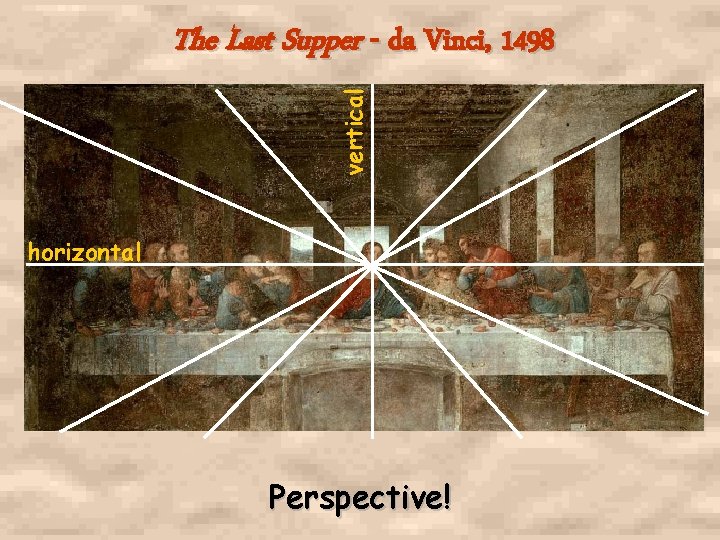
vertical The Last Supper - da Vinci, 1498 horizontal Perspective!
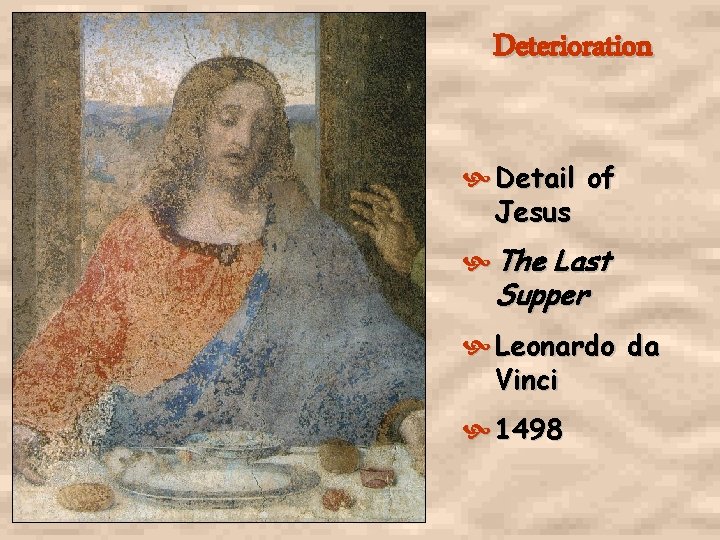
Deterioration Detail of Jesus The Last Supper Leonardo da Vinci 1498
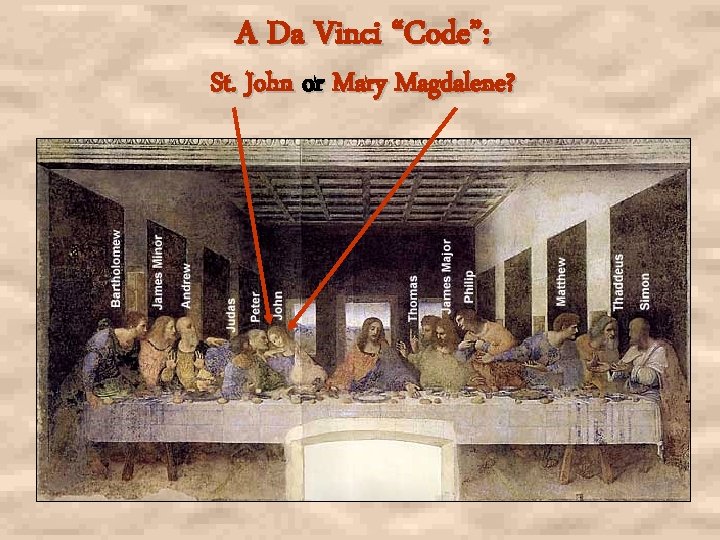
A Da Vinci “Code”: St. John or Mary Magdalene?
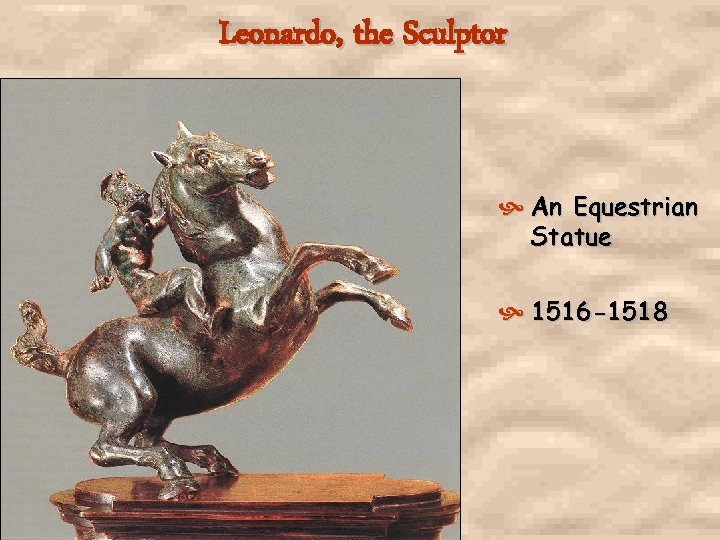
Leonardo, the Sculptor An Equestrian Statue 1516 -1518
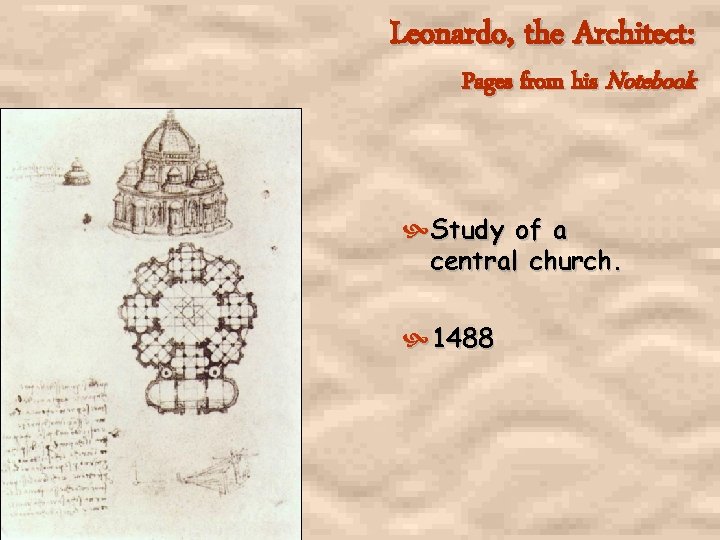
Leonardo, the Architect: Pages from his Notebook Study of a central church. 1488
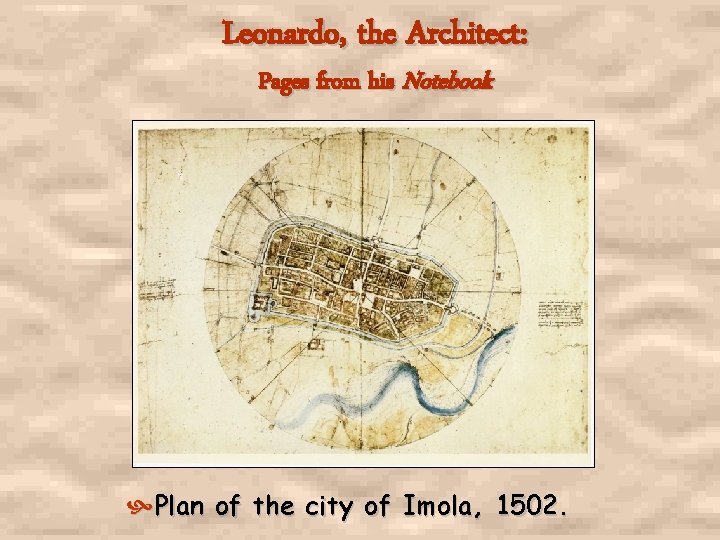
Leonardo, the Architect: Pages from his Notebook Plan of the city of Imola, 1502.
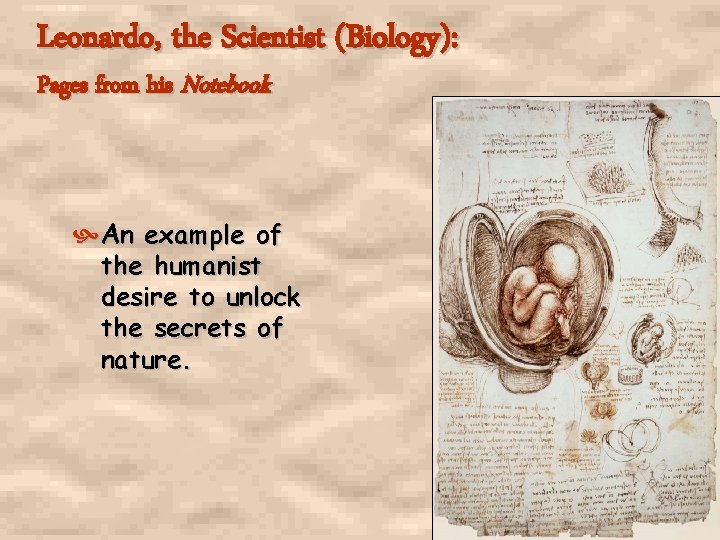
Leonardo, the Scientist (Biology): Pages from his Notebook An example of the humanist desire to unlock the secrets of nature.
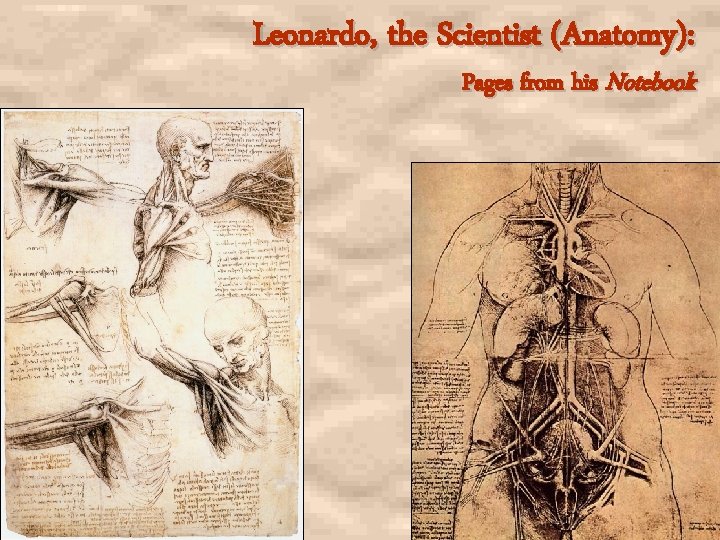
Leonardo, the Scientist (Anatomy): Pages from his Notebook
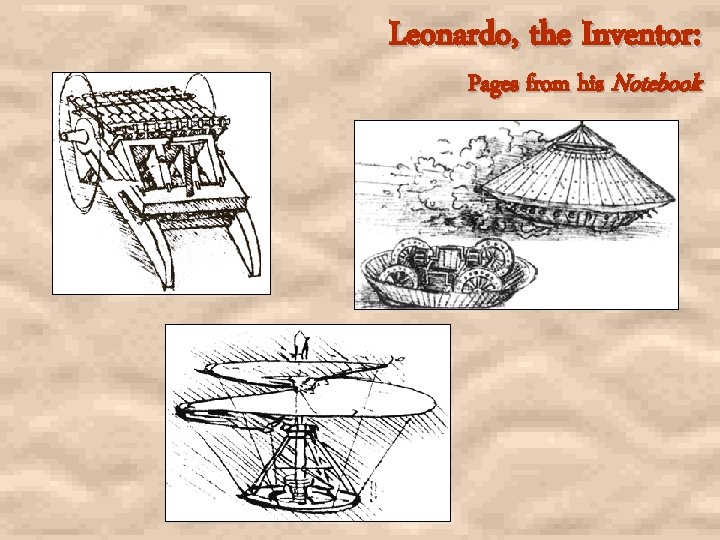
Leonardo, the Inventor: Pages from his Notebook
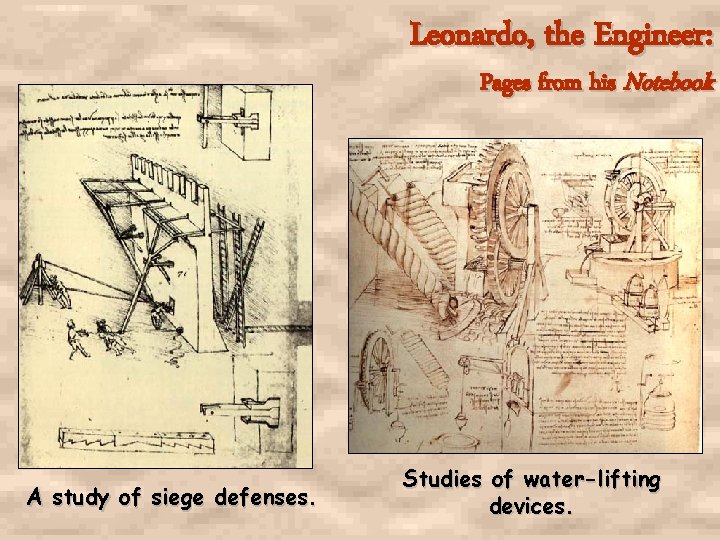
Leonardo, the Engineer: Pages from his Notebook A study of siege defenses. Studies of water-lifting devices.
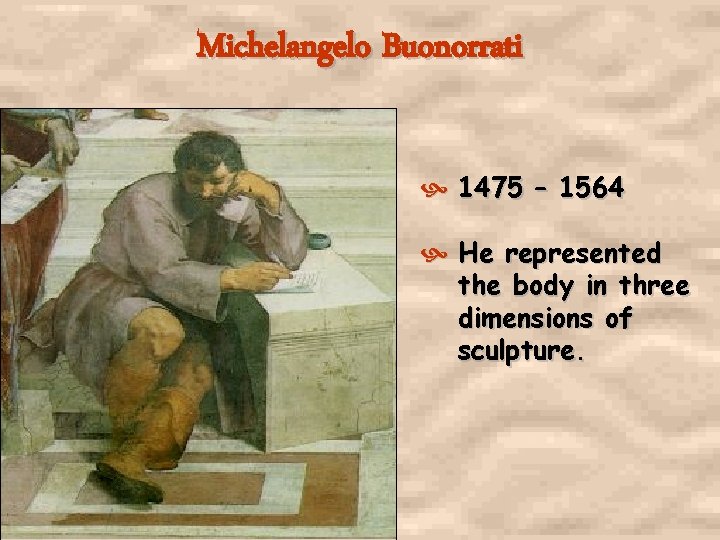
Michelangelo Buonorrati 1475 – 1564 He represented the body in three dimensions of sculpture.
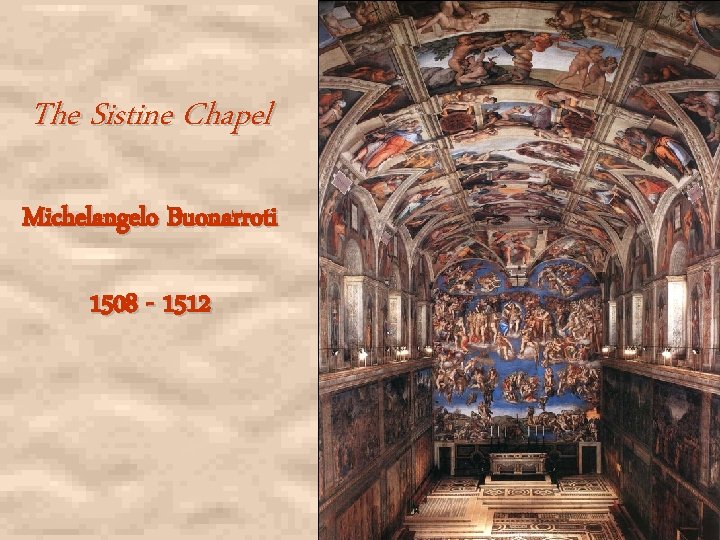
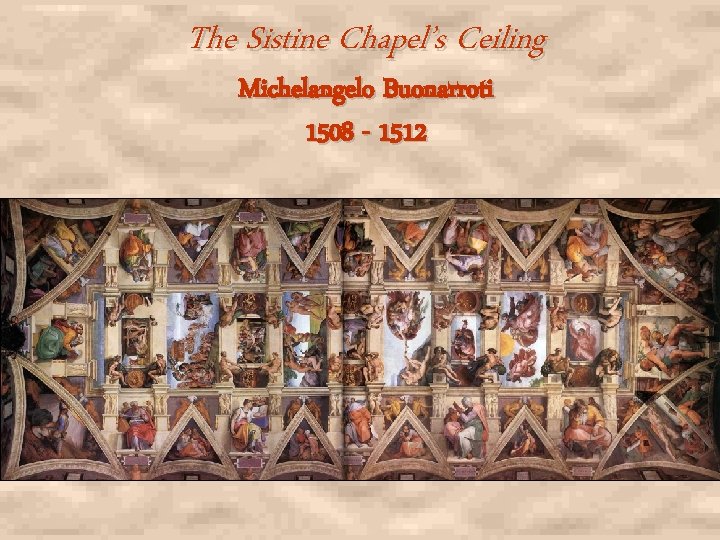
Michelangelo Sculptor, engineer, painter, architect, poet, architect Designed the dome for St. Peter’s Cathedral in Rome which served as a model when architects were designing the U. S. Capitol building Greatest achievement was his four year ordeal painting the Sistine Chapel in Rome
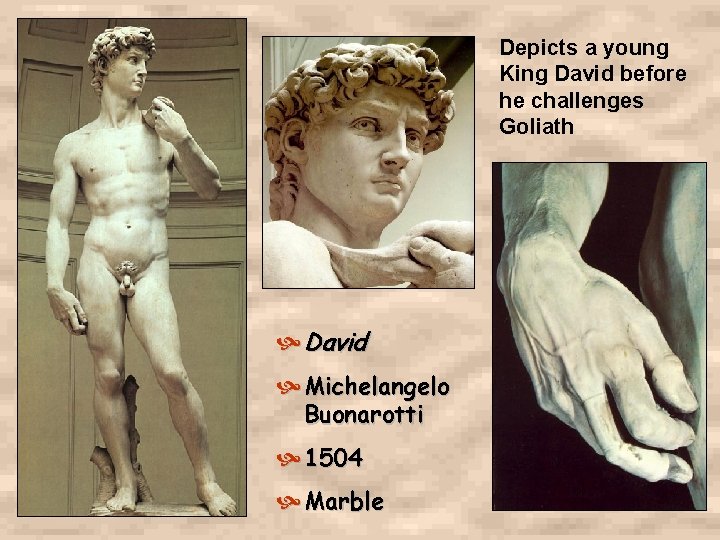
Depicts a young King David before he challenges Goliath David Michelangelo Buonarotti 1504 Marble
15 c What a difference a century makes! 16 c
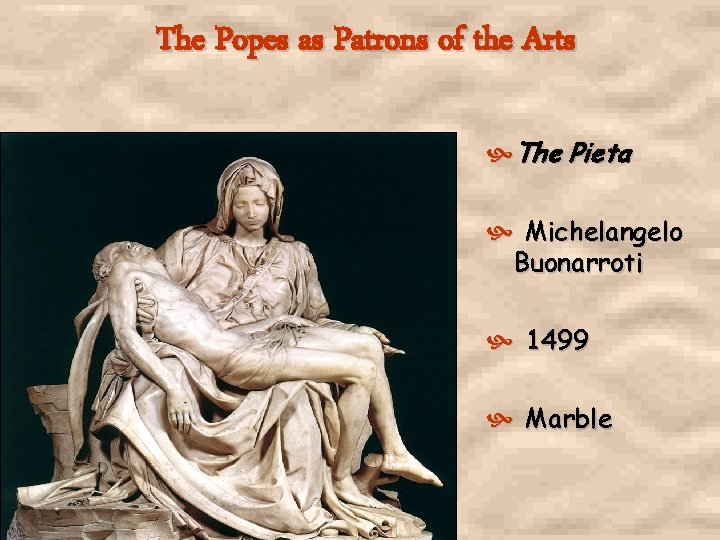
The Popes as Patrons of the Arts The Pieta Michelangelo Buonarroti 1499 Marble
The Sistine Chapel Michelangelo Buonarroti 1508 - 1512
The Sistine Chapel’s Ceiling Michelangelo Buonarroti 1508 - 1512
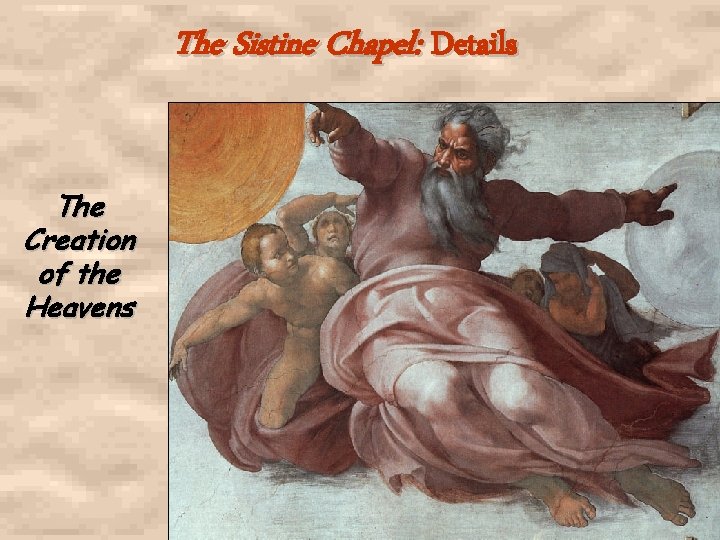
The Sistine Chapel: Details The Creation of the Heavens
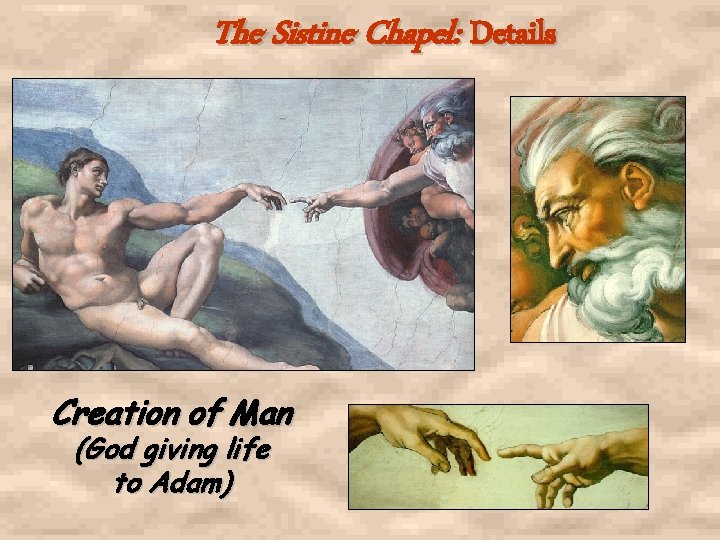
The Sistine Chapel: Details Creation of Man (God giving life to Adam)
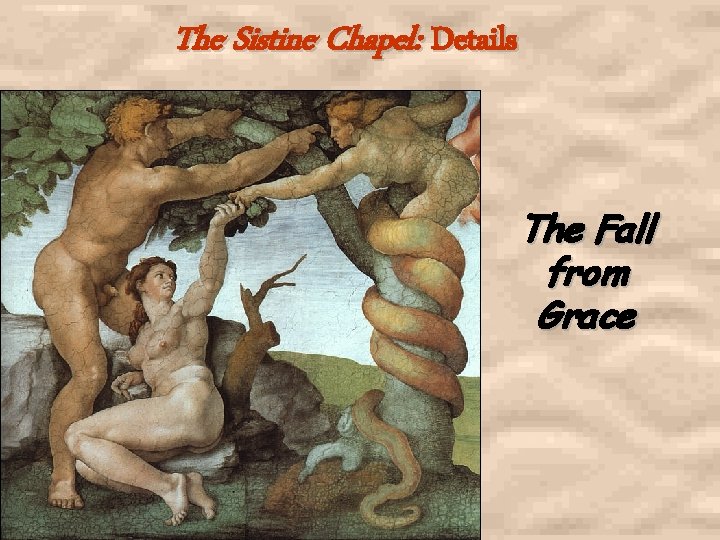
The Sistine Chapel: Details The Fall from Grace
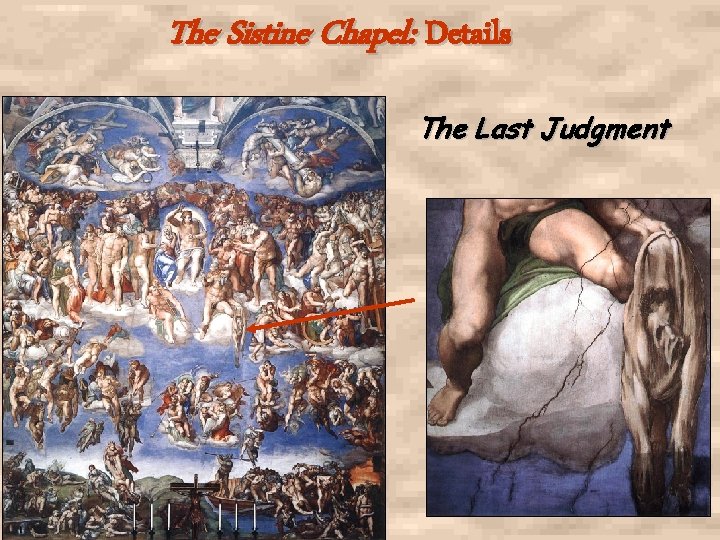
The Sistine Chapel: Details The Last Judgment
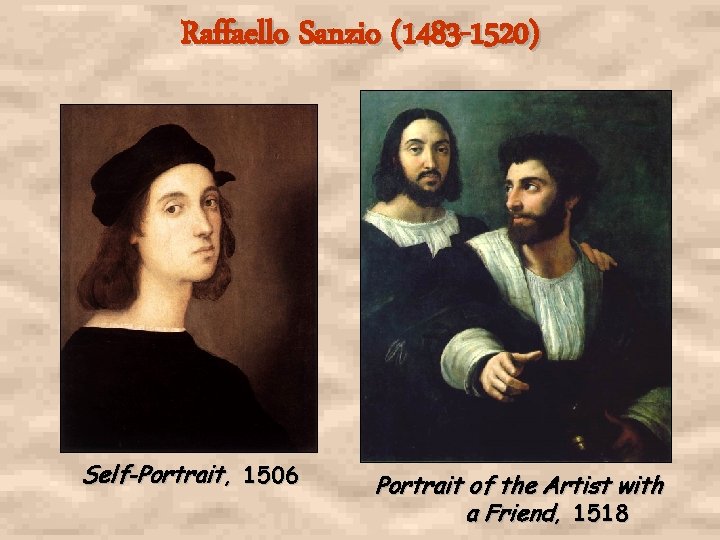
Raffaello Sanzio (1483 -1520) Self-Portrait, 1506 Portrait of the Artist with a Friend, 1518
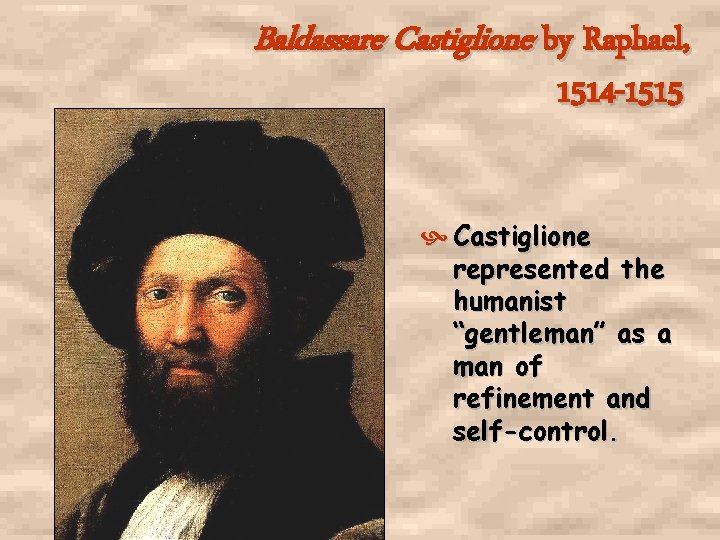
Baldassare Castiglione by Raphael, 1514 -1515 Castiglione represented the humanist “gentleman” as a man of refinement and self-control.
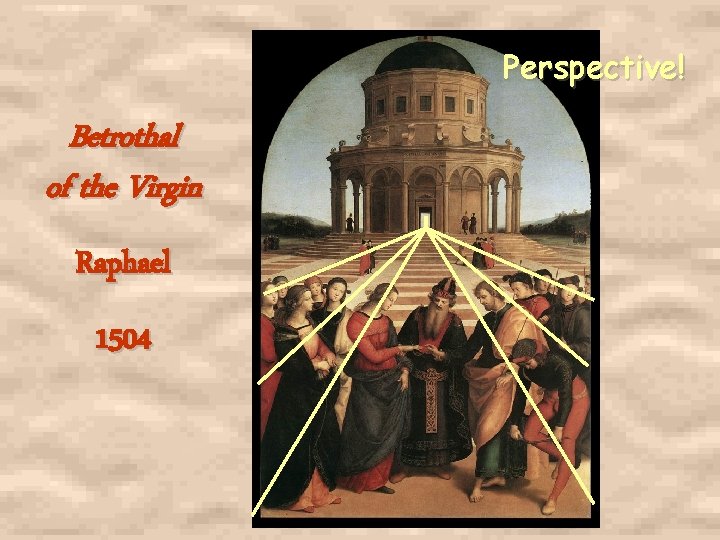
Perspective! Betrothal of the Virgin Raphael 1504
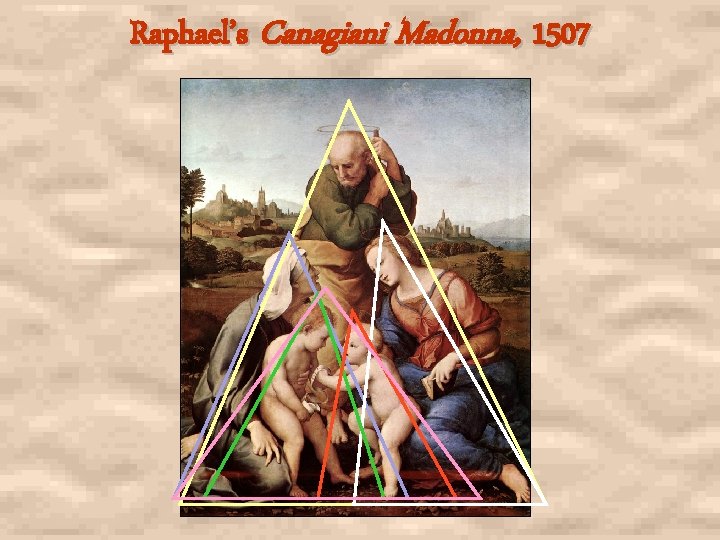
Raphael’s Canagiani Madonna, 1507
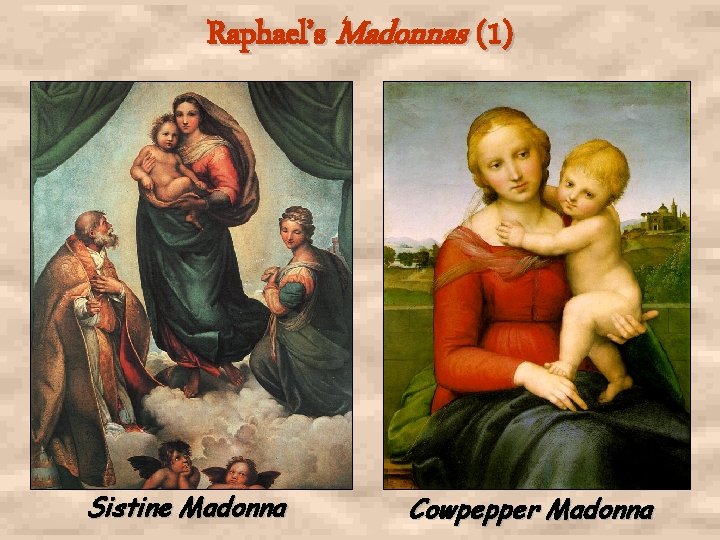
Raphael’s Madonnas (1) Sistine Madonna Cowpepper Madonna
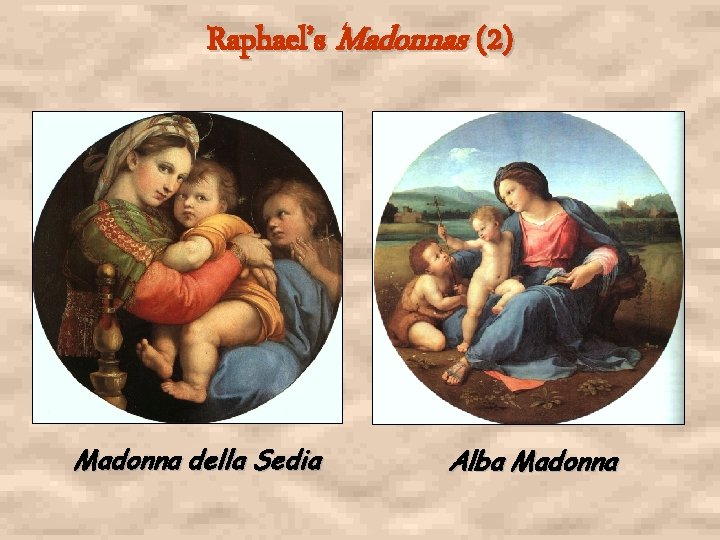
Raphael’s Madonnas (2) Madonna della Sedia Alba Madonna
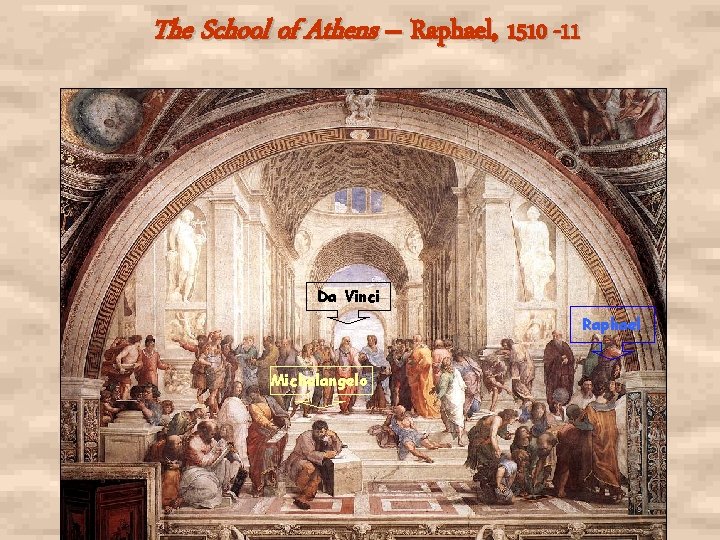
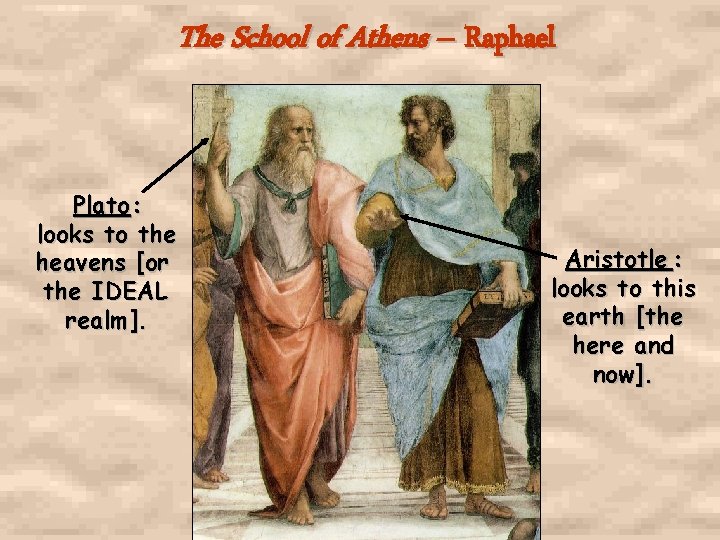
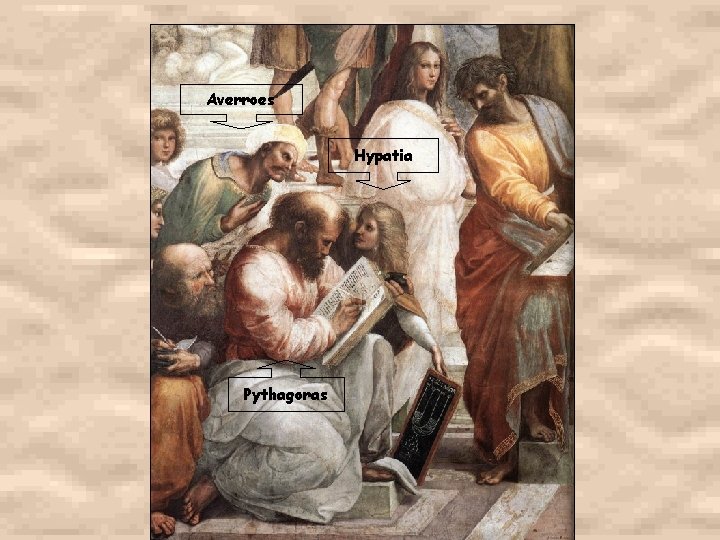
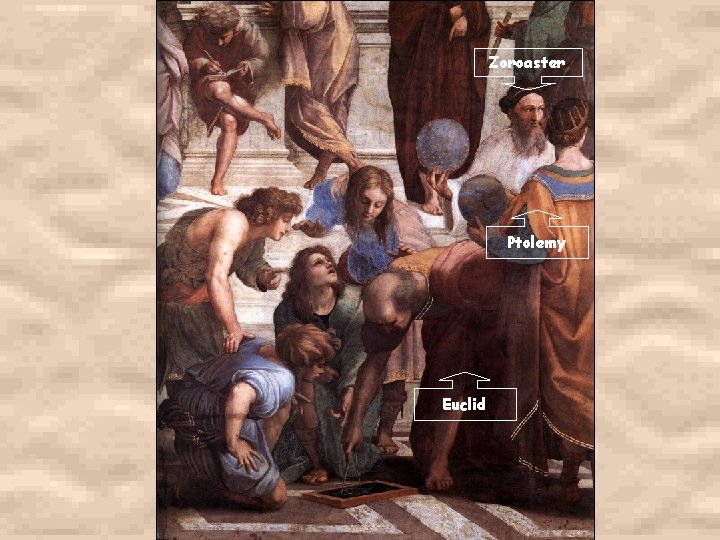
The School of Athens – Raphael, 1510 -11 One point perspective. All of the important Greek philosophers and thinkers are included all of the great personalities of the Seven Liberal Arts! A great variety of poses. Located in the papal apartments’ library. Raphael worked on this commission simultaneously as Michelangelo was doing the Sistine Chapel. No Christian themes here.
The School of Athens – Raphael, 1510 -11 Da Vinci Raphael Michelangelo
The School of Athens – Raphael Plato : looks to the heavens [or the IDEAL realm]. Aristotle : looks to this earth [the here and now].
Averroes Hypatia Pythagoras
Zoroaster Ptolemy Euclid