
MedicationAssisted Treatment MAT of Opioid Dependence Christina M
- Slides: 64
Medication-Assisted Treatment (MAT) of Opioid Dependence Christina M. Delos Reyes, MD Chief Clinical Officer, ADAMHS Board of Cuyahoga County Medical Consultant, Center for Evidence-Based Practices at Case OJACC 25 th Annual Conference Columbus, Ohio October 13 -14, 2011 1
Learning Objectives n Following this presentation, participants will be able to: • List three different types of MAT (medicationassisted treatment) for opioid dependence • Describe the mechanism of action and the proper dosing for three different types of MAT for opioid dependence. • Review common barriers to using MAT in a variety of treatment settings. • Develop a plan to overcome barriers to using MAT 2 in a particular treatment setting.
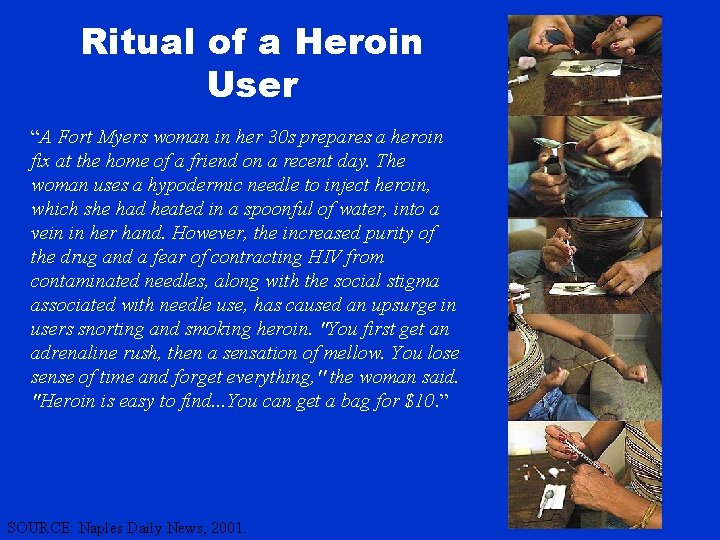
Ritual of a Heroin User “A Fort Myers woman in her 30 s prepares a heroin fix at the home of a friend on a recent day. The woman uses a hypodermic needle to inject heroin, which she had heated in a spoonful of water, into a vein in her hand. However, the increased purity of the drug and a fear of contracting HIV from contaminated needles, along with the social stigma associated with needle use, has caused an upsurge in users snorting and smoking heroin. "You first get an adrenaline rush, then a sensation of mellow. You lose sense of time and forget everything, '' the woman said. "Heroin is easy to find. . . You can get a bag for $10. ” 3 SOURCE: Naples Daily News, 2001.
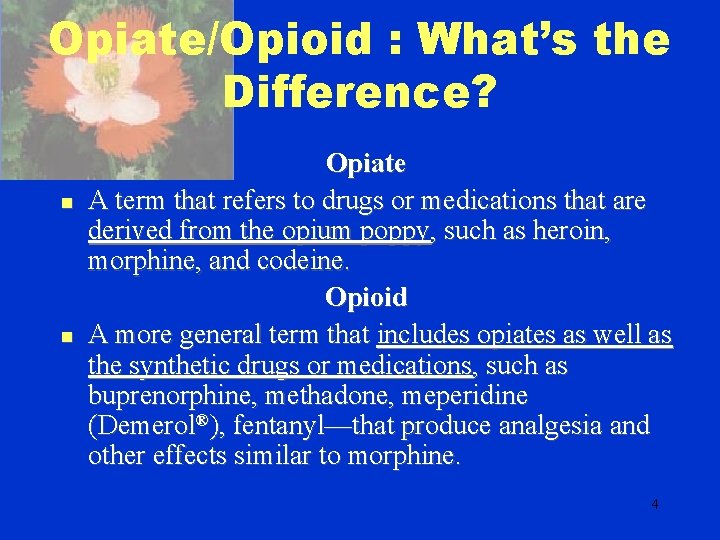
Opiate/Opioid : What’s the Difference? n n Opiate A term that refers to drugs or medications that are derived from the opium poppy, such as heroin, morphine, and codeine. Opioid A more general term that includes opiates as well as the synthetic drugs or medications, such as buprenorphine, methadone, meperidine (Demerol®), fentanyl—that produce analgesia and other effects similar to morphine. 4
Basic Opioid Facts Description: Opium-derived, or synthetics which relieve pain, produce morphine-like addiction, and relieve withdrawal from opioids Medical Uses: Pain relief, cough suppression, diarrhea Methods of Use: Intravenously injected, smoked, snorted, or orally administered 5
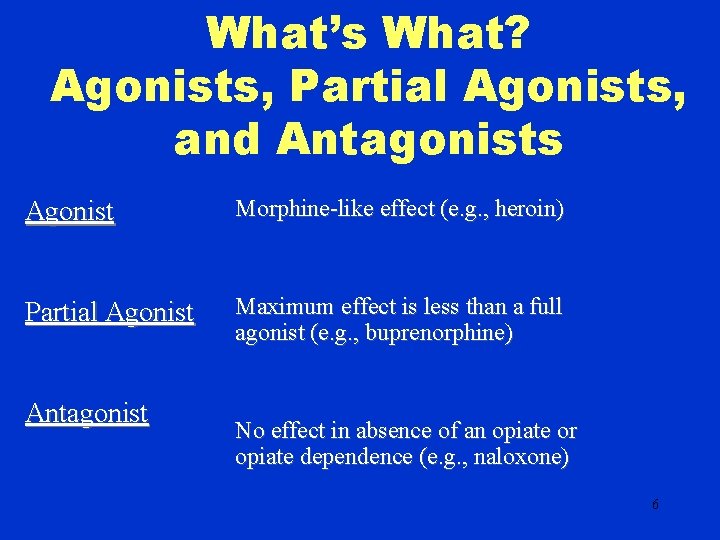
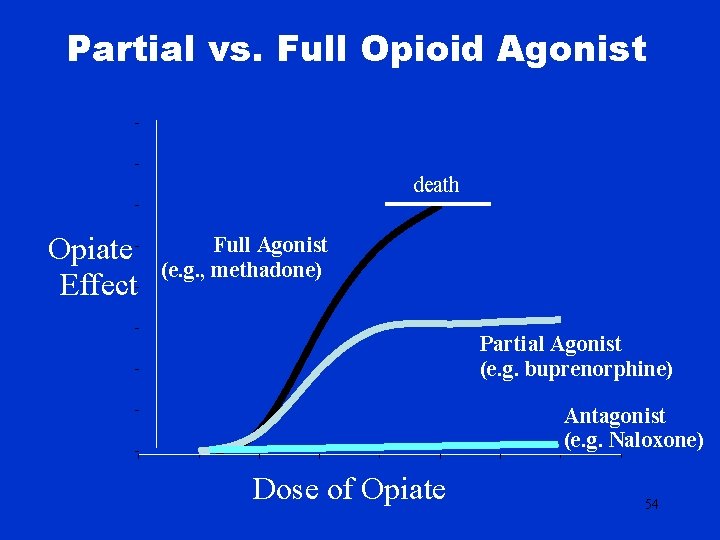
What’s What? Agonists, Partial Agonists, and Antagonists Agonist Morphine-like effect (e. g. , heroin) Partial Agonist Maximum effect is less than a full agonist (e. g. , buprenorphine) Antagonist No effect in absence of an opiate or opiate dependence (e. g. , naloxone) 6
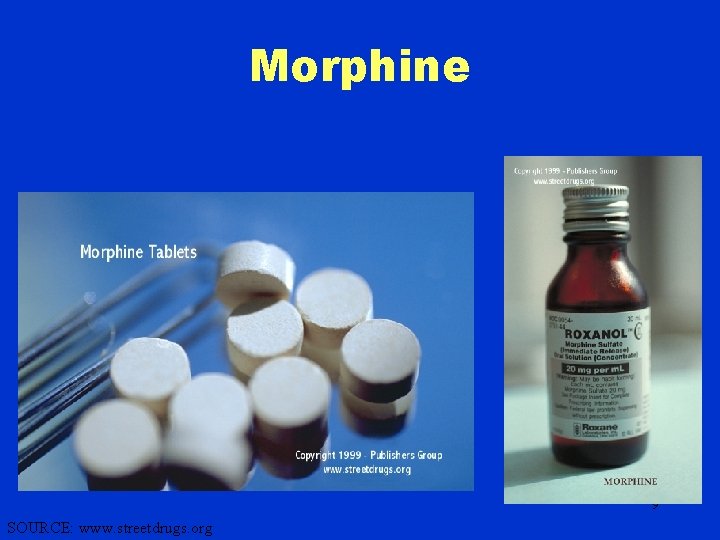
Opioid Agonists n Natural derivatives of opium poppy - Opium - Morphine - Codeine 7
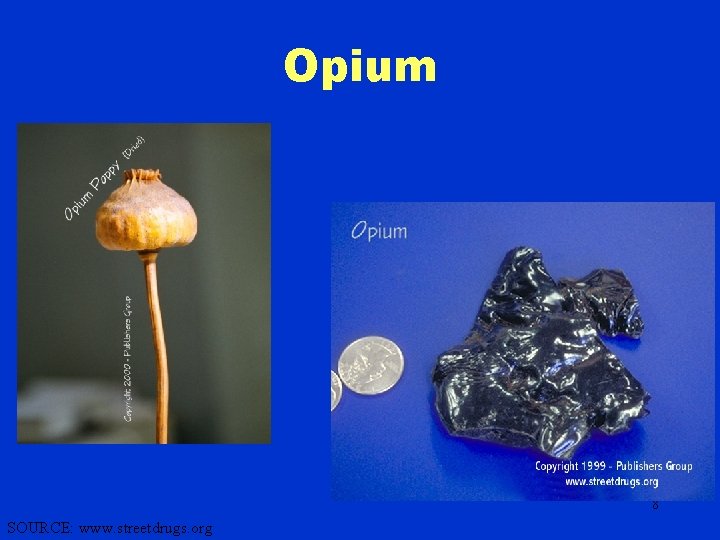
Opium 8 SOURCE: www. streetdrugs. org
Morphine 9 SOURCE: www. streetdrugs. org
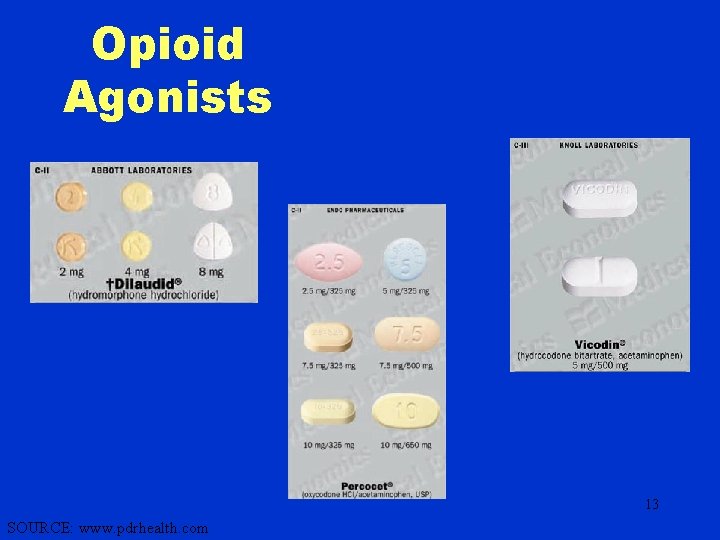
Opioid Agonists n Semisynthetics: Derived from chemicals in opium - Diacetylmorphine – Heroin - Hydromorphone – Dilaudid® - Oxycodone – Percodan®, Percocet® - Hydrocodone – Vicodin® 10
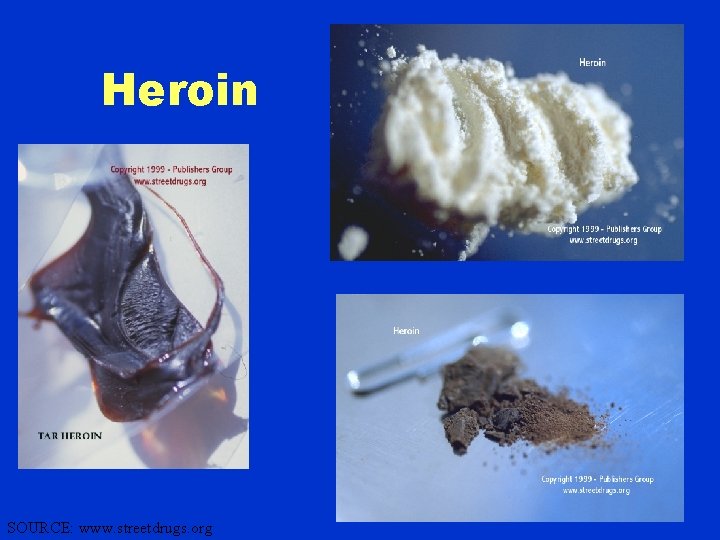
Heroin 11 SOURCE: www. streetdrugs. org
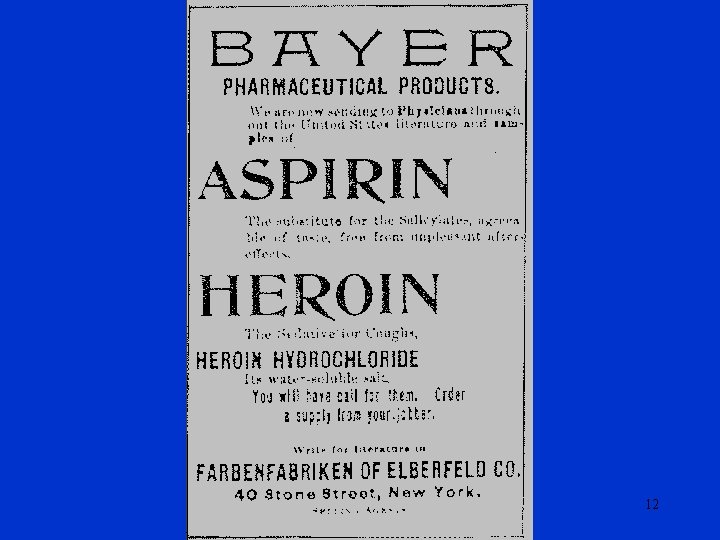
12
Opioid Agonists 13 SOURCE: www. pdrhealth. com
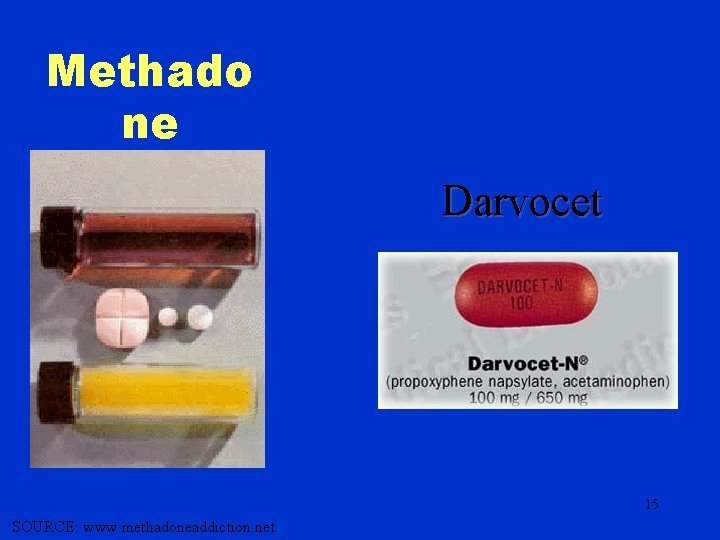
Opioid Agonists n Synthetics - Propoxyphene – Darvon®, Darvocet® - Meperidine – Demerol® - Fentanyl citrate – Fentanyl® - Methadone – Dolophine® - Levo-alpha-acetylmethadol – ORLAAM® 14
Methado ne Darvocet 15 SOURCE: www. methadoneaddiction. net
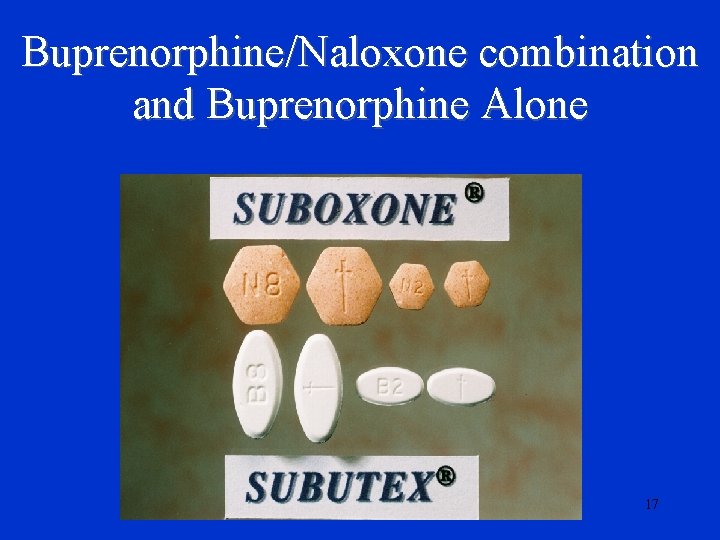
Opioid Partial Agonists n n Buprenorphine – Buprenex®, Suboxone®, Subutex® Pentazocine – Talwin® 16
Buprenorphine/Naloxone combination and Buprenorphine Alone 17
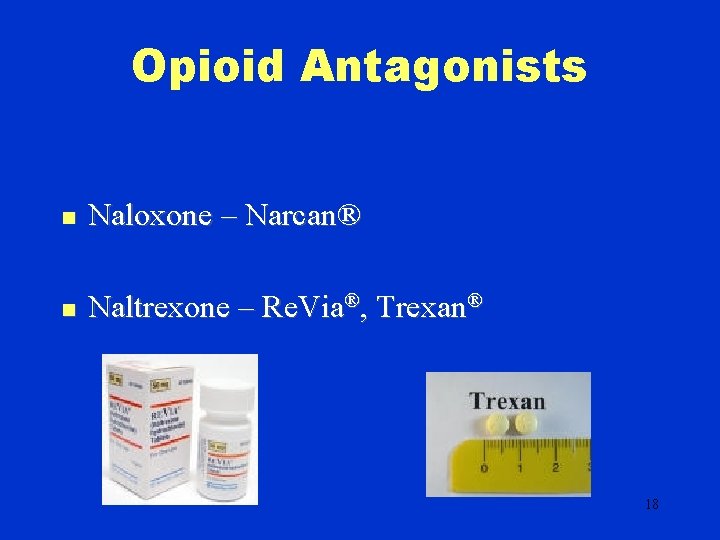
Opioid Antagonists n Naloxone – Narcan® n Naltrexone – Re. Via®, Trexan® 18
Opioids and the Brain: Pharmacology and Half-Life 19
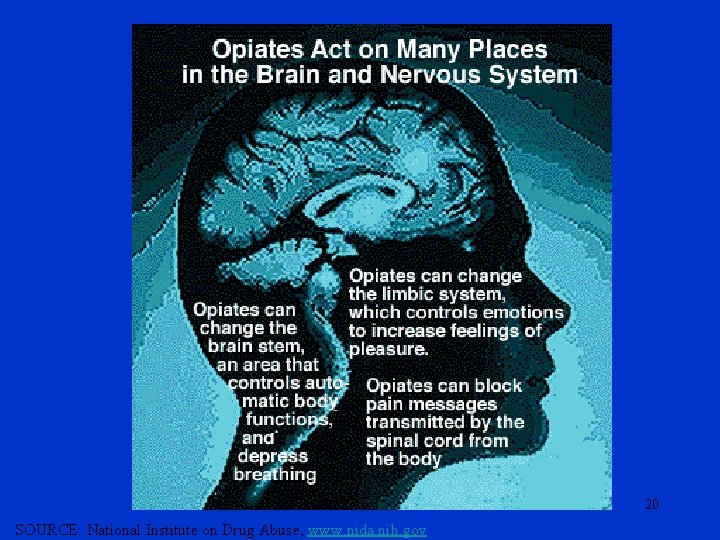
20 SOURCE: National Institute on Drug Abuse, www. nida. nih. gov.
Terminology Receptor: specific cell binding site or molecule: a molecule, group, or site that is in a cell or on a cell surface and binds with a specific molecule, antigen, hormone, or antibody 21
Opioid Agonists: Pharmacology n n Stimulate opioid receptors in central nervous system & gastrointestinal tract Analgesia – pain relief (somatic & psychological) n Antitussive action – cough suppression n Euphoria, stuperousness, “nodding” n Respiratory depression 22
Opioid Agonists: Pharmacology n n n Pupillary constriction (miosis) Constipation Histamine release (itching, bronchial constriction) Reduced gonadotropin secretion Tolerance, cross-tolerance Withdrawal: acute & protracted 23
What is the Definition of “Half-Life? ” The time it takes for half a given amount of a substance such as a drug to be removed from living tissue through natural biological activity 24
Duration of Action • • Two factors determine the duration of action of the medication: Half-life - time it takes to metabolize half the drug. In general, the longer the half-life, the longer the duration of action. Receptor affinity or strength of the bond between the substance and the receptor medications that bind strongly to the receptor may have very long action even though the half -life may be quite short. 25
Opioid Antagonist Half. Lives n Naloxone – 15 -30 minutes n Naltrexone – 24 -72 hours 26
Opioid Agonist Half-Lives n Heroin, codeine, morphine – 2 -4 hours n Methadone – 24 hours n LAAM – 48 -72 hours 27
Opioid Partial Agonist Half-Lives n Buprenorphine – 4 -6 hours (however, duration of action very long due to high receptor affinity) n Pentazocine – 2 -4 hours 28
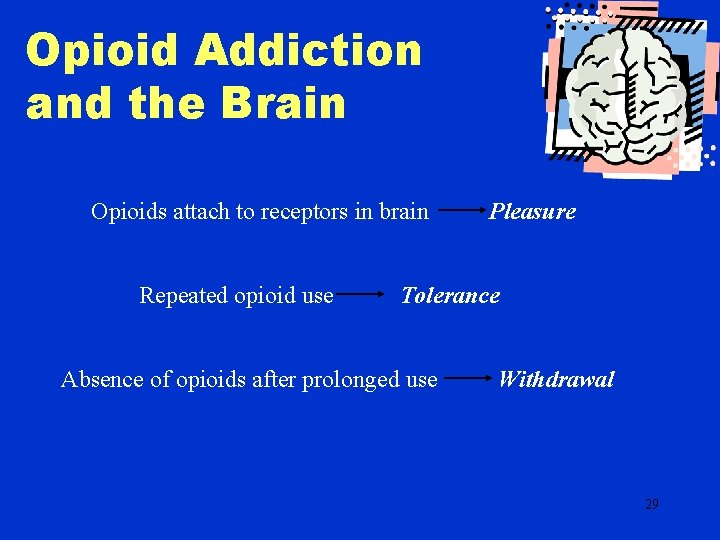
Opioid Addiction and the Brain Opioids attach to receptors in brain Repeated opioid use Pleasure Tolerance Absence of opioids after prolonged use Withdrawal 29
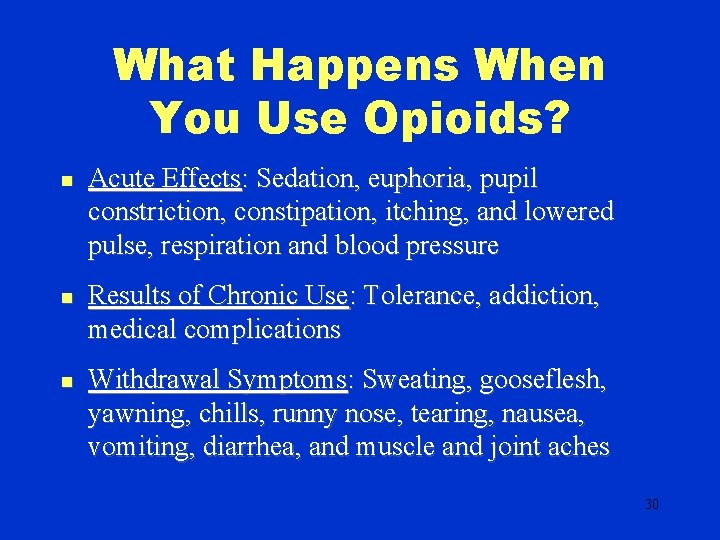
What Happens When You Use Opioids? n n n Acute Effects: Sedation, euphoria, pupil constriction, constipation, itching, and lowered pulse, respiration and blood pressure Results of Chronic Use: Tolerance, addiction, medical complications Withdrawal Symptoms: Sweating, gooseflesh, yawning, chills, runny nose, tearing, nausea, vomiting, diarrhea, and muscle and joint aches 30
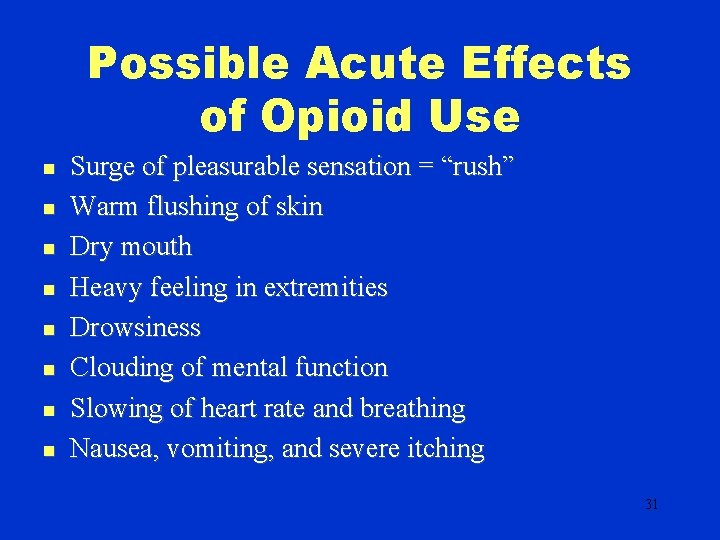
Possible Acute Effects of Opioid Use n n n n Surge of pleasurable sensation = “rush” Warm flushing of skin Dry mouth Heavy feeling in extremities Drowsiness Clouding of mental function Slowing of heart rate and breathing Nausea, vomiting, and severe itching 31
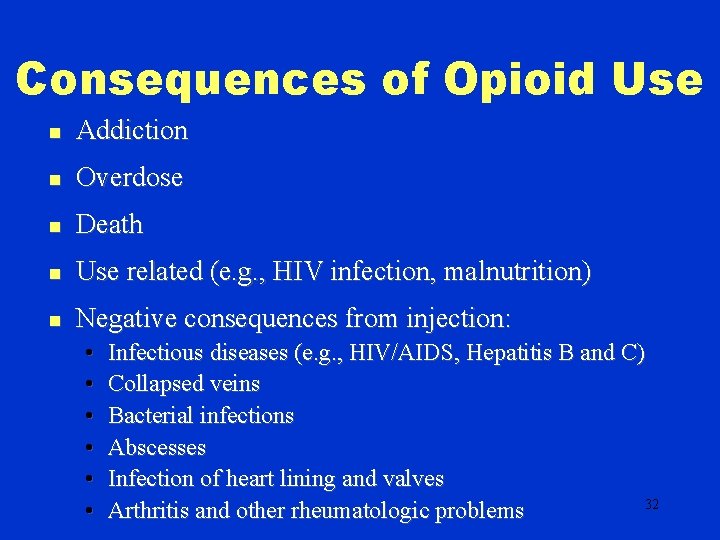
Consequences of Opioid Use n Addiction n Overdose n Death n Use related (e. g. , HIV infection, malnutrition) n Negative consequences from injection: • • • Infectious diseases (e. g. , HIV/AIDS, Hepatitis B and C) Collapsed veins Bacterial infections Abscesses Infection of heart lining and valves 32 Arthritis and other rheumatologic problems
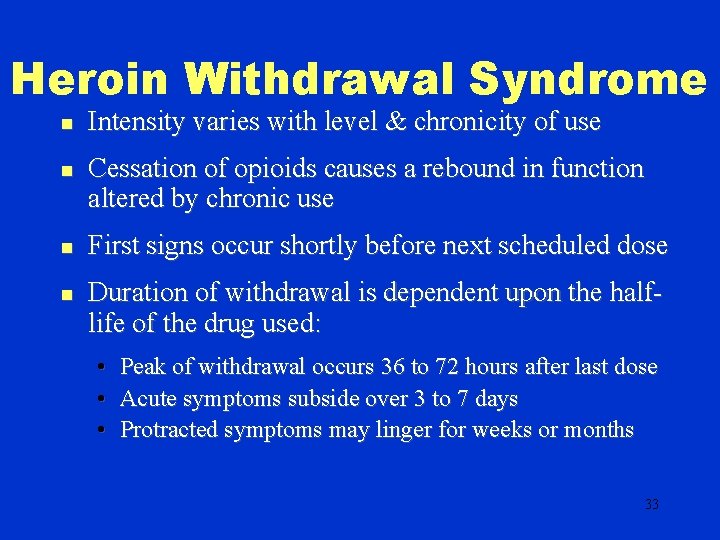
Heroin Withdrawal Syndrome n n Intensity varies with level & chronicity of use Cessation of opioids causes a rebound in function altered by chronic use First signs occur shortly before next scheduled dose Duration of withdrawal is dependent upon the halflife of the drug used: • Peak of withdrawal occurs 36 to 72 hours after last dose • Acute symptoms subside over 3 to 7 days • Protracted symptoms may linger for weeks or months 33
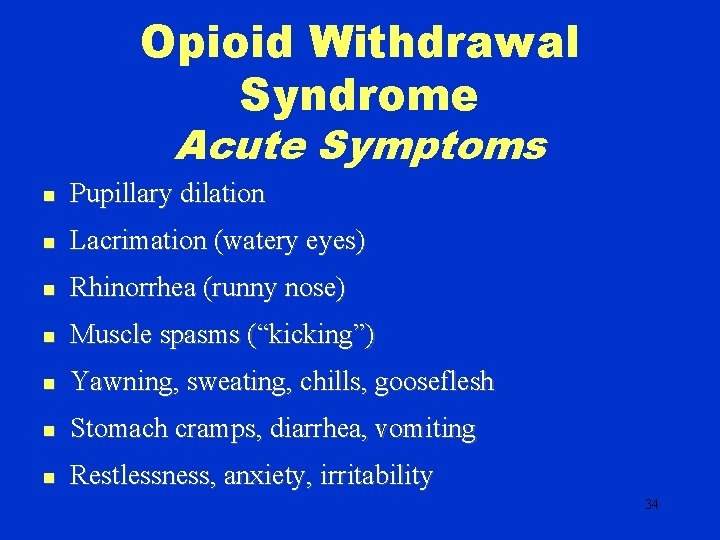
Opioid Withdrawal Syndrome Acute Symptoms n Pupillary dilation n Lacrimation (watery eyes) n Rhinorrhea (runny nose) n Muscle spasms (“kicking”) n Yawning, sweating, chills, gooseflesh n Stomach cramps, diarrhea, vomiting n Restlessness, anxiety, irritability 34
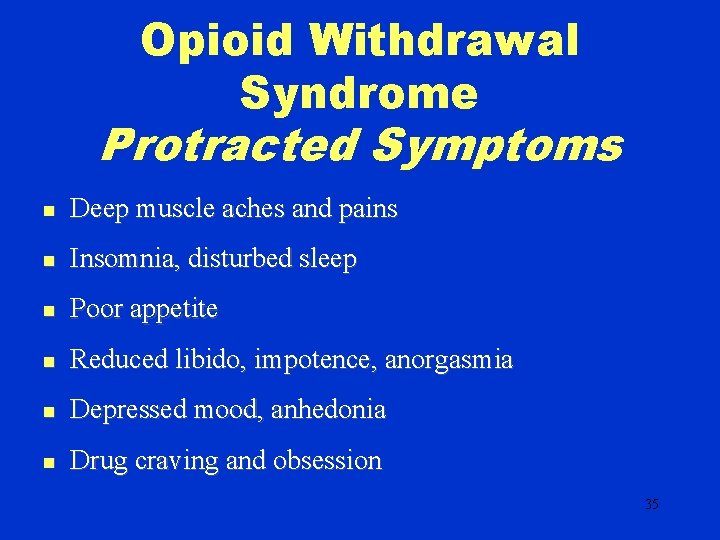
Opioid Withdrawal Syndrome Protracted Symptoms n Deep muscle aches and pains n Insomnia, disturbed sleep n Poor appetite n Reduced libido, impotence, anorgasmia n Depressed mood, anhedonia n Drug craving and obsession 35
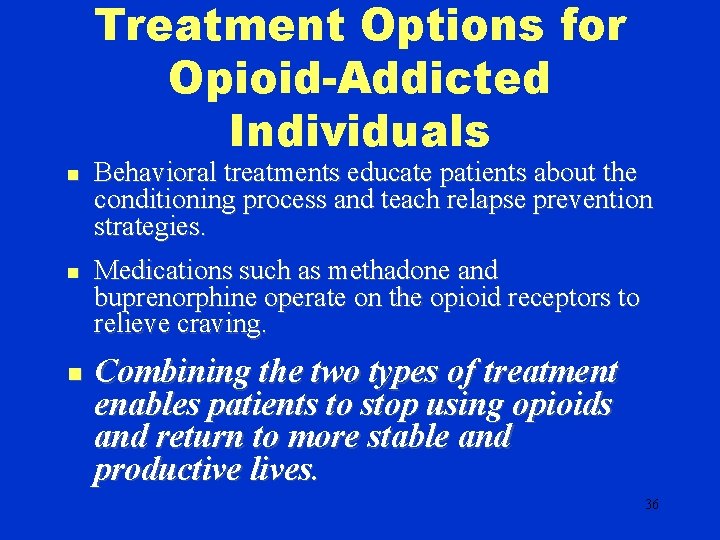
Treatment Options for Opioid-Addicted Individuals n n n Behavioral treatments educate patients about the conditioning process and teach relapse prevention strategies. Medications such as methadone and buprenorphine operate on the opioid receptors to relieve craving. Combining the two types of treatment enables patients to stop using opioids and return to more stable and productive lives. 36
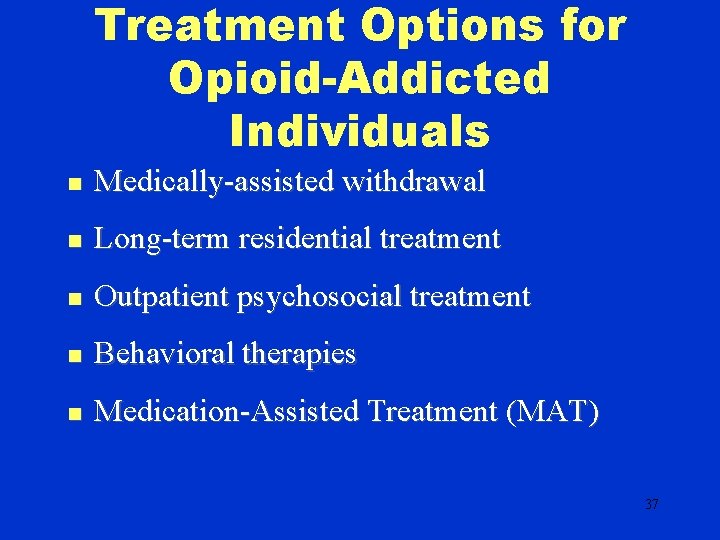
Treatment Options for Opioid-Addicted Individuals n Medically-assisted withdrawal n Long-term residential treatment n Outpatient psychosocial treatment n Behavioral therapies n Medication-Assisted Treatment (MAT) 37
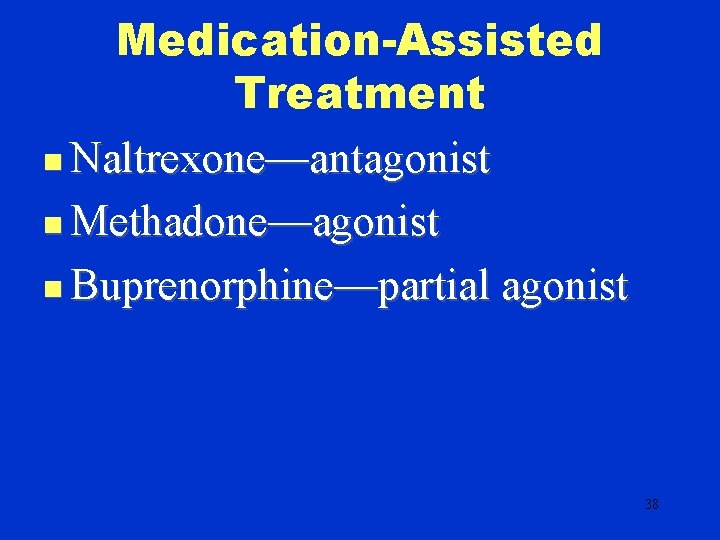
Medication-Assisted Treatment n Naltrexone—antagonist n Methadone—agonist n Buprenorphine—partial agonist 38
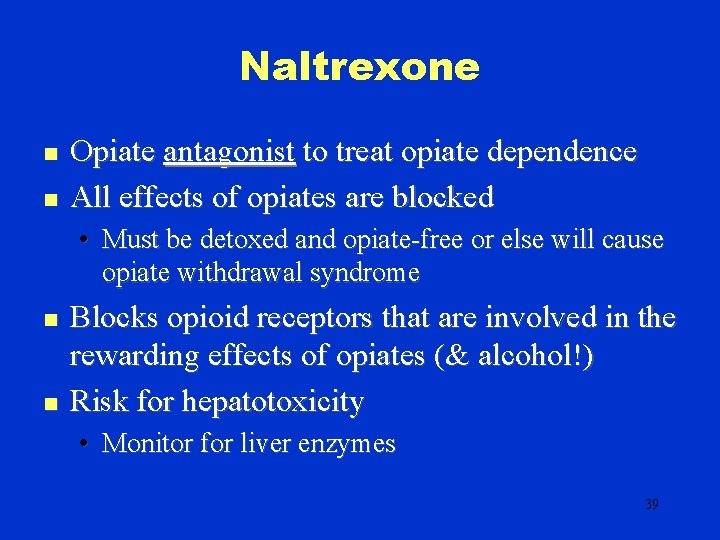
Naltrexone n n Opiate antagonist to treat opiate dependence All effects of opiates are blocked • Must be detoxed and opiate-free or else will cause opiate withdrawal syndrome n n Blocks opioid receptors that are involved in the rewarding effects of opiates (& alcohol!) Risk for hepatotoxicity • Monitor for liver enzymes 39
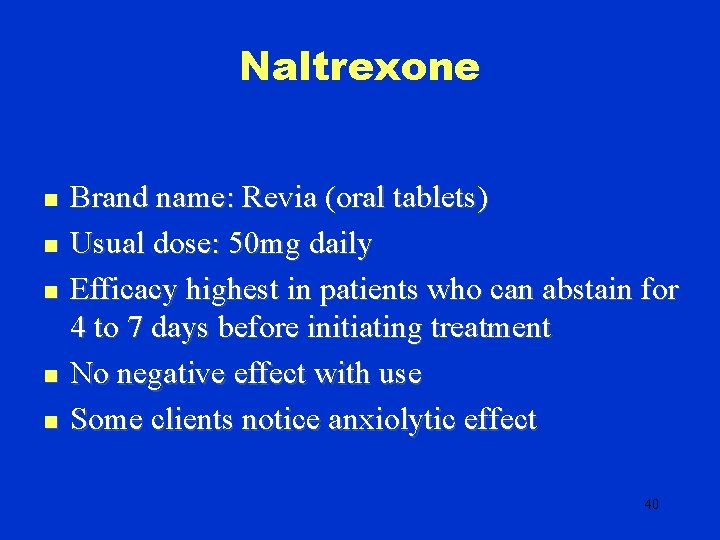
Naltrexone n n n Brand name: Revia (oral tablets) Usual dose: 50 mg daily Efficacy highest in patients who can abstain for 4 to 7 days before initiating treatment No negative effect with use Some clients notice anxiolytic effect 40
Long- Acting Naltrexone n n n Brand name is Vivitrol Approved for alcoholism in 2006 Approved for opiate dependence Oct 2010 Given monthly, 380 mg appears to have increased efficacy versus 190 mg May have increased efficacy for men vs. women, and those abstinent when medication is initiated vs. those still drinking 41
Long- Acting Naltrexone n n Discontinuation rate- 14% in patients on 380 mg a month, 7% in patients on 190 mg a month and placebo. Most common side effects: nausea, injection site reaction, headache. LFTs remained stable throughout the medication trial 42
Naltrexone: Recent Research n n n 2005: Cuts the relapse risk during first 90 days by 36% (28% relapse rate on oral naltrexone vs. 43% relapse rate on placebo) 2005: injectable naltrexone resulted in a 25% reduction in proportion of heavy drinking days vs. placebo Overall: helps to curb consumption in patients with multiple “slips” but less effective in maintaining abstinence 43
Naltrexone n n Non-compliance is the main barrier to success Most useful for highly motivated patients w/ external circumstances • Impaired professionals, parolees, probationers, etc 44
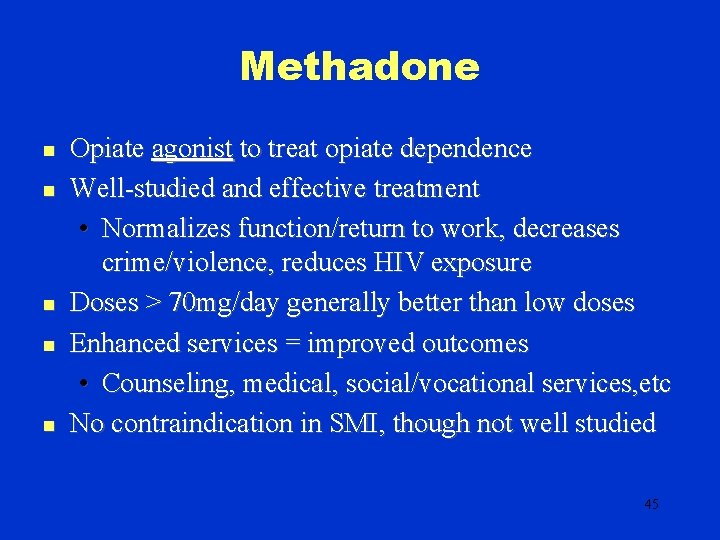
Methadone n n n Opiate agonist to treat opiate dependence Well-studied and effective treatment • Normalizes function/return to work, decreases crime/violence, reduces HIV exposure Doses > 70 mg/day generally better than low doses Enhanced services = improved outcomes • Counseling, medical, social/vocational services, etc No contraindication in SMI, though not well studied 45
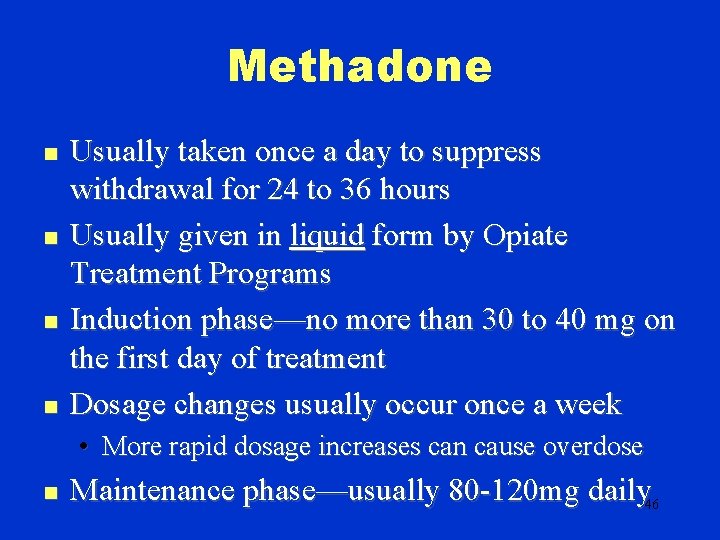
Methadone n n Usually taken once a day to suppress withdrawal for 24 to 36 hours Usually given in liquid form by Opiate Treatment Programs Induction phase—no more than 30 to 40 mg on the first day of treatment Dosage changes usually occur once a week • More rapid dosage increases can cause overdose n Maintenance phase—usually 80 -120 mg daily 46
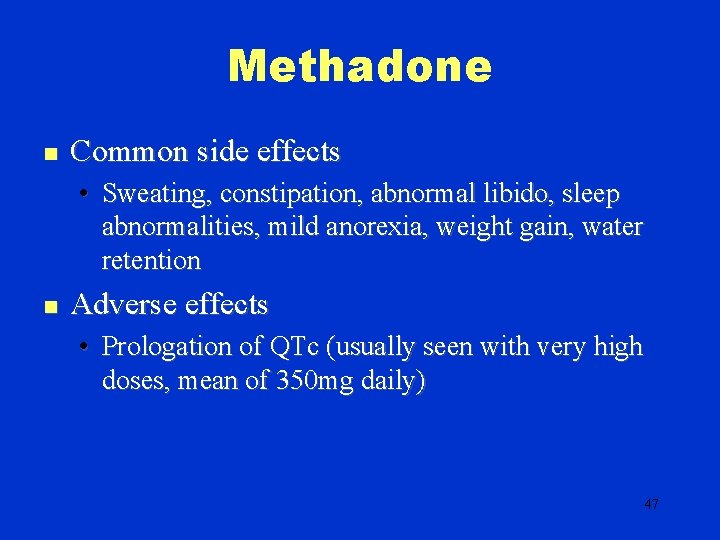
Methadone n Common side effects • Sweating, constipation, abnormal libido, sleep abnormalities, mild anorexia, weight gain, water retention n Adverse effects • Prologation of QTc (usually seen with very high doses, mean of 350 mg daily) 47
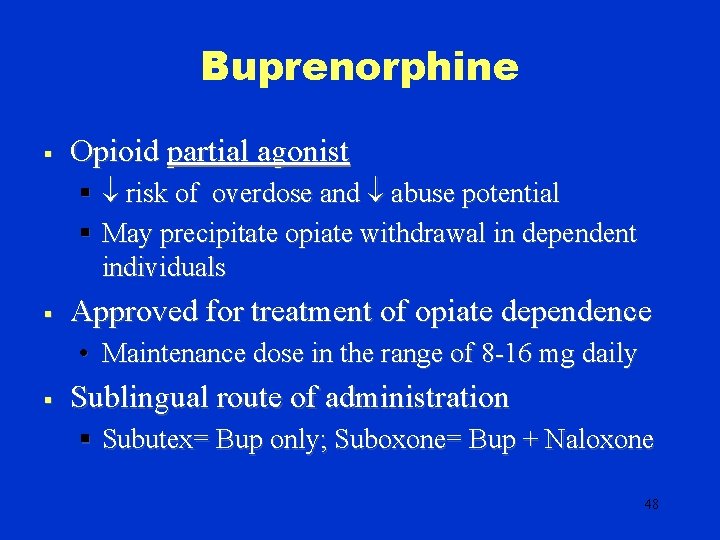
Buprenorphine § Opioid partial agonist § risk of overdose and abuse potential § May precipitate opiate withdrawal in dependent individuals § Approved for treatment of opiate dependence • Maintenance dose in the range of 8 -16 mg daily § Sublingual route of administration § Subutex= Bup only; Suboxone= Bup + Naloxone 48
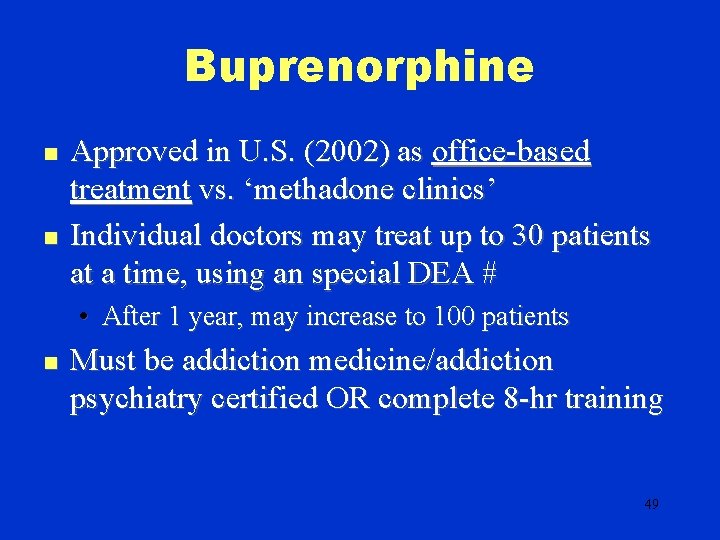
Buprenorphine n n Approved in U. S. (2002) as office-based treatment vs. ‘methadone clinics’ Individual doctors may treat up to 30 patients at a time, using an special DEA # • After 1 year, may increase to 100 patients n Must be addiction medicine/addiction psychiatry certified OR complete 8 -hr training 49
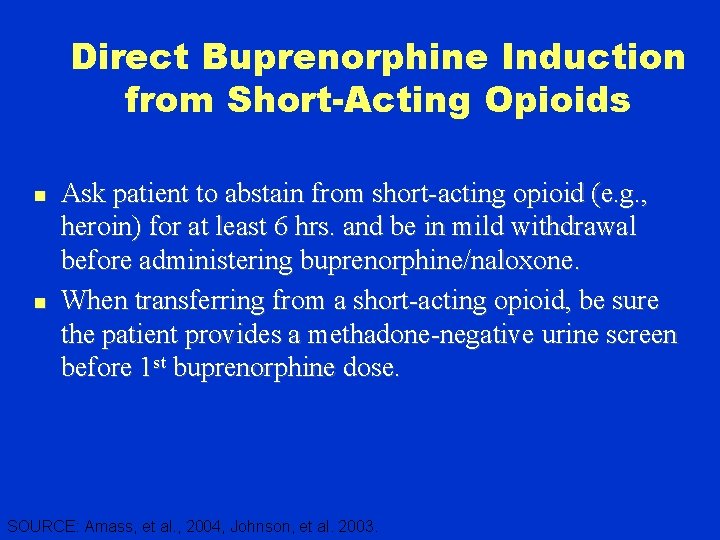
Direct Buprenorphine Induction from Short-Acting Opioids n n Ask patient to abstain from short-acting opioid (e. g. , heroin) for at least 6 hrs. and be in mild withdrawal before administering buprenorphine/naloxone. When transferring from a short-acting opioid, be sure the patient provides a methadone-negative urine screen before 1 st buprenorphine dose. SOURCE: Amass, et al. , 2004, Johnson, et al. 2003.
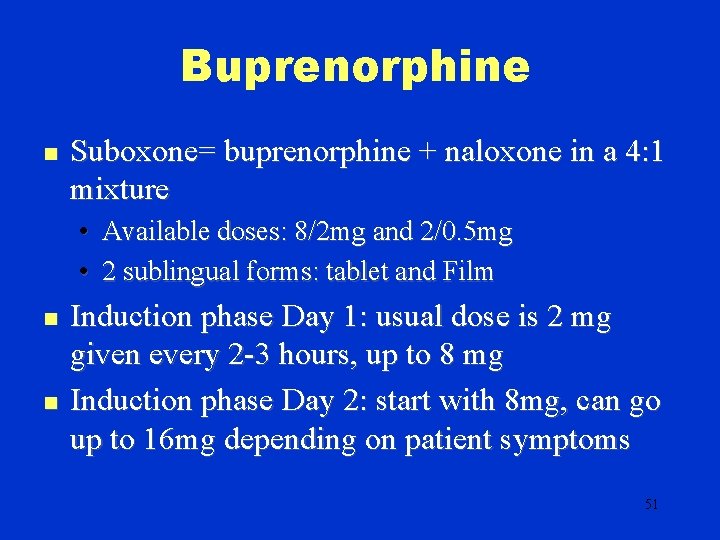
Buprenorphine n Suboxone= buprenorphine + naloxone in a 4: 1 mixture • Available doses: 8/2 mg and 2/0. 5 mg • 2 sublingual forms: tablet and Film n n Induction phase Day 1: usual dose is 2 mg given every 2 -3 hours, up to 8 mg Induction phase Day 2: start with 8 mg, can go up to 16 mg depending on patient symptoms 51
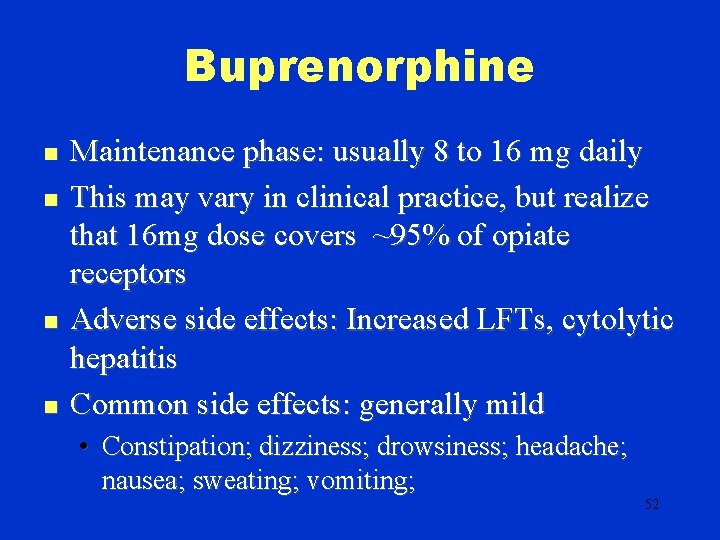
Buprenorphine n n Maintenance phase: usually 8 to 16 mg daily This may vary in clinical practice, but realize that 16 mg dose covers ~95% of opiate receptors Adverse side effects: Increased LFTs, cytolytic hepatitis Common side effects: generally mild • Constipation; dizziness; drowsiness; headache; nausea; sweating; vomiting; 52
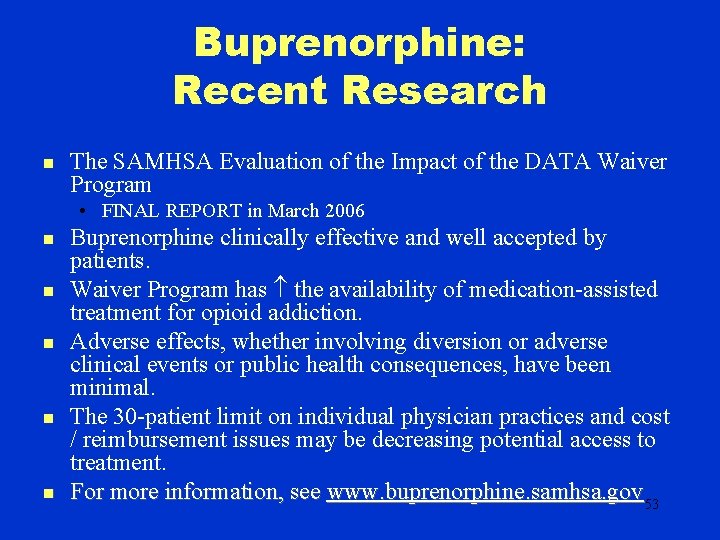
Buprenorphine: Recent Research n The SAMHSA Evaluation of the Impact of the DATA Waiver Program • FINAL REPORT in March 2006 n n n Buprenorphine clinically effective and well accepted by patients. Waiver Program has the availability of medication-assisted treatment for opioid addiction. Adverse effects, whether involving diversion or adverse clinical events or public health consequences, have been minimal. The 30 -patient limit on individual physician practices and cost / reimbursement issues may be decreasing potential access to treatment. For more information, see www. buprenorphine. samhsa. gov 53
Partial vs. Full Opioid Agonist death Opiate Effect Full Agonist (e. g. , methadone) Partial Agonist (e. g. buprenorphine) Antagonist (e. g. Naloxone) Dose of Opiate 54
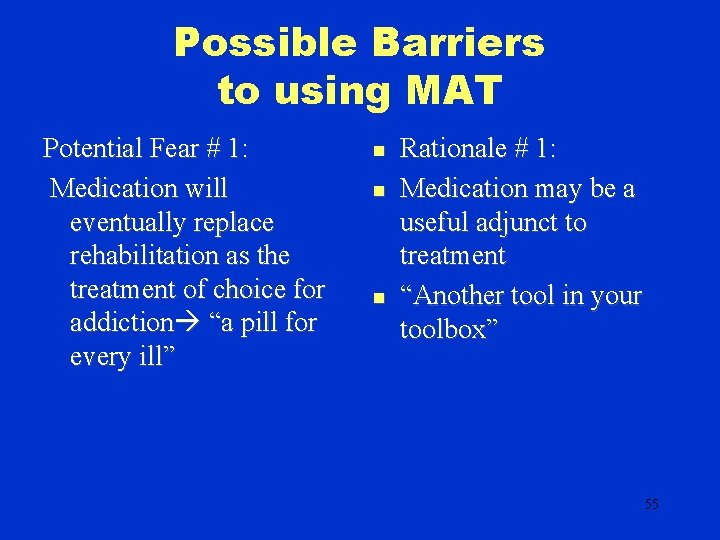
Possible Barriers to using MAT Potential Fear # 1: Medication will eventually replace rehabilitation as the treatment of choice for addiction “a pill for every ill” n n n Rationale # 1: Medication may be a useful adjunct to treatment “Another tool in your toolbox” 55
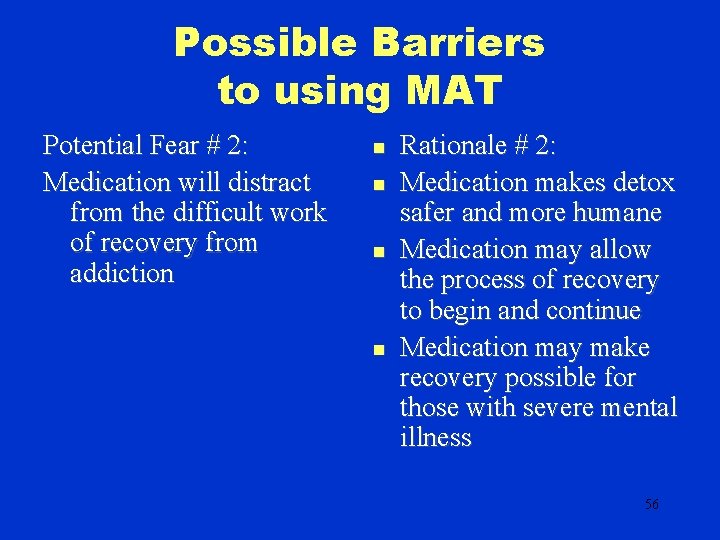
Possible Barriers to using MAT Potential Fear # 2: Medication will distract from the difficult work of recovery from addiction n n Rationale # 2: Medication makes detox safer and more humane Medication may allow the process of recovery to begin and continue Medication may make recovery possible for those with severe mental illness 56
Possible Barriers to using MAT Potential Fear # 3: Medication will perpetuate an existing addiction Potential Fear # 4: Medication will cause new addictions n n Rationale # 3: Physical dependence to medication may occur, but addictive behavior should decrease Rationale # 4: New addictions to medications are a risk, but the actual incidence is quite low 57
Other Barriers to MAT? n Financial • MAT may be very expensive and many still do not have insurance n Regulatory n n Until very recently, doctor visits for MAT were not covered by ODADAS Logistical • Usual treatment settings may not be set up to provide MAT n Others? 58
Medications only work if… n n …they are getting “from the bottle to the bloodstream” How to help clients with the idea of starting meds? • “that will mean I am really sick…” OR “I don’t need a crutch…” n How to help clients with the idea of staying on meds? • “I feel fine, I don’t need it anymore” OR “if I take meds, then I am not really sober”
Some Lessons from Motivational Interviewing n n n What are the client’s goals? How does medication fit (or not fit) with those goals? What are the pros and cons of the medications? Use of reflective listening What is the patient willing to do right now? What are the patient’s fears about medication?
Overcoming Barriers to MAT n n Small group discussion Large group discussion 61
Hope for Recovery n n People with addictive disorders often lack experiences of success and have lost hope Medications in conjunction with other interventions can increase hope for a better life • Reduced symptoms of withdrawal • Reduced symptoms of craving • Support for long-term sobriety 62
Resources n n n “BUPRENORPHINE TREATMENT: A TRAINING FOR MULTIDISCIPLINARY ADDICTION PROFESSIONALS” • http: //www. nida. nih. gov/blending/buptreatment. html NIDA Methadone Research Web Guide http: //international. drugabuse. gov/collaboration/P DFs/Methadone. Research. Web. Guide. pdf Mid-America Addiction Technology Transfer Center. Psychotherapeutic Medications 2011: What Every Counselor Should Know. http: //www. mattc. org 63
Contact Information Christina M. Delos Reyes, MD Chief Clinical Officer ADAMHS Board of Cuyahoga County Phone: 216 -241 -3400 x 728 Fax: 216 -241 -0805 delosreyes@adamhscc. org Center for Evidence-Based Practices at Case www. centerforebp. case. edu