
MEDICATION COMPLIANCE Following Your Treatment Plan Your recovery



- Slides: 46
MEDICATION COMPLIANCE Following Your Treatment Plan
Your recovery depends on how you take care of yourself when you leave the hospital Taking your medication is an important part of your treatment. 2
What is compliance? � � � The act of complying to a desire, demand, or proposal To conform, submit or adapt as required or requested This definition sounds quite rigid � � Instead, think of adherence, a term that is being used more and more It refers to sticking with a mutually agreed upon plan – not submitting to demands 3
Not taking your medication can lead to a setback. 4
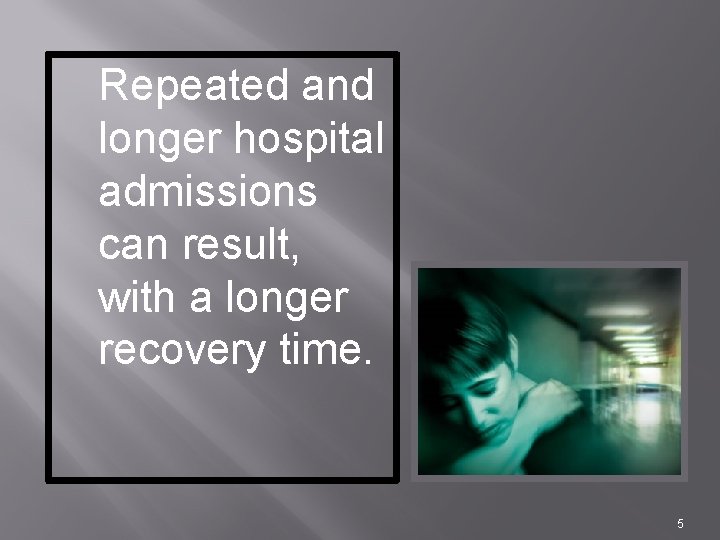
Repeated and longer hospital admissions can result, with a longer recovery time. 5
What is Noncompliance? � � � Refusing or failing to comply Not following or not adapting actions to a rule or to a need. The term "noncompliance" is often used when patients don’t take prescribed medication or follow their course of therapy 6
Why is noncompliance an issue? � � We know that patients have the right to choose what to do. That’s why your health care provider tries to make a plan that works for you. Often, when patients do not follow the plan, the outcomes are very poor. There is a higher rate of noncompliance with people who have psychiatric illnesses. 7
Types of Noncompliance 8
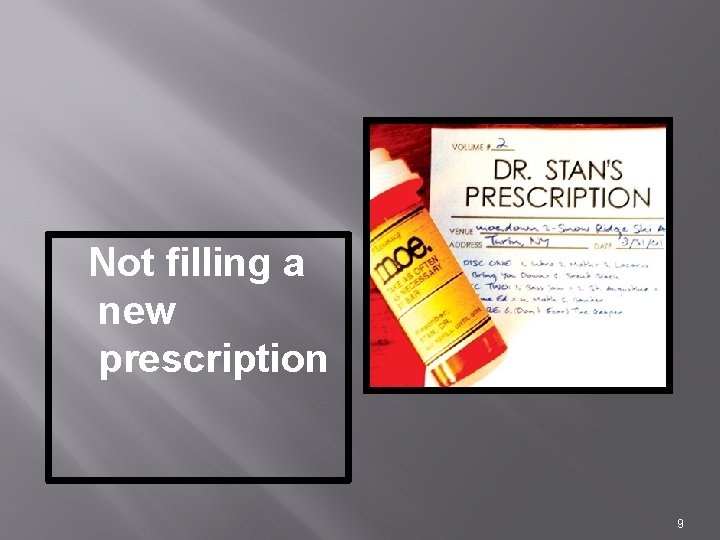
Not filling a new prescription 9
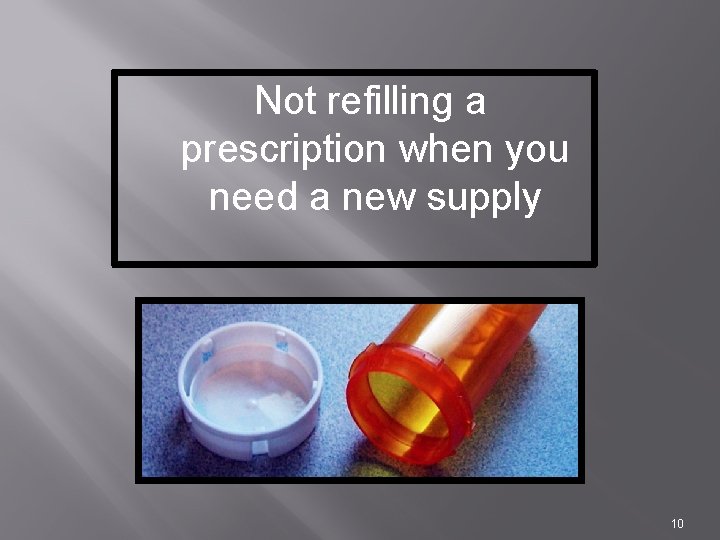
Not refilling a prescription when you need a new supply 10
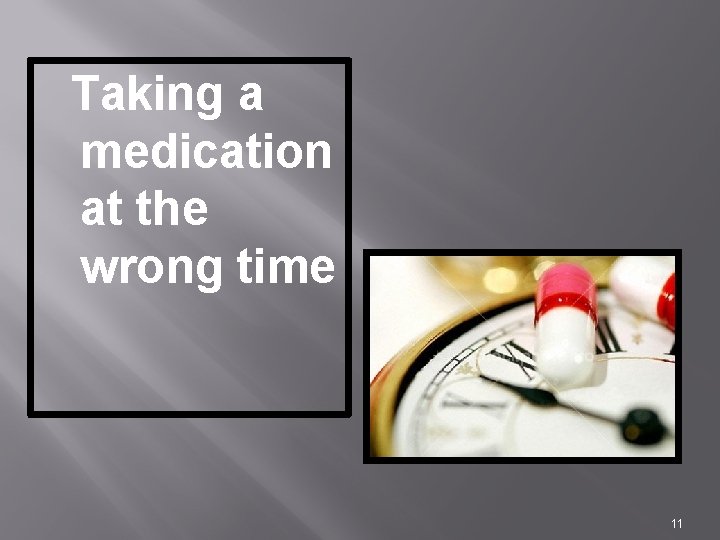
Taking a medication at the wrong time 11
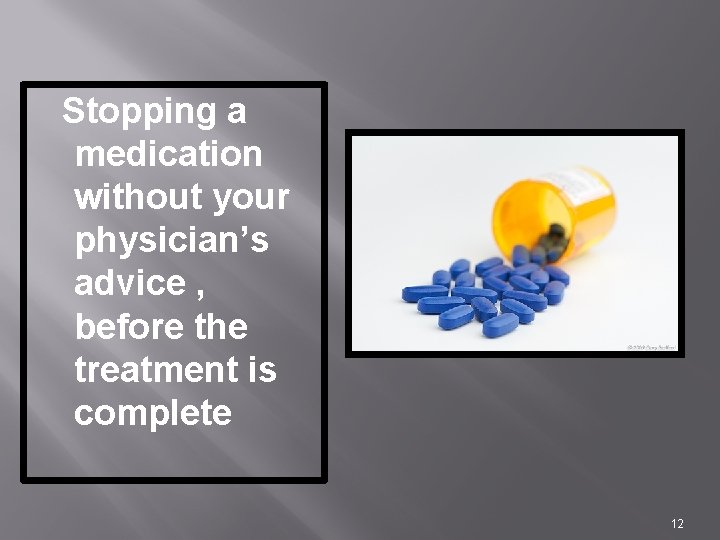
Stopping a medication without your physician’s advice , before the treatment is complete 12
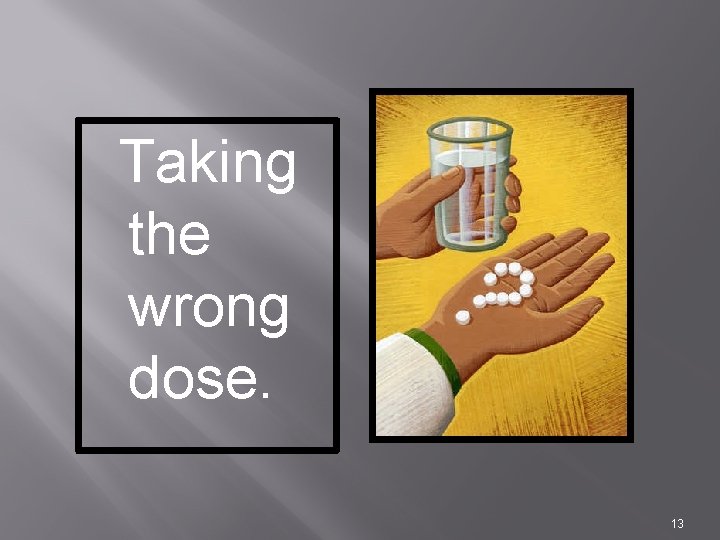
Taking the wrong dose. 13
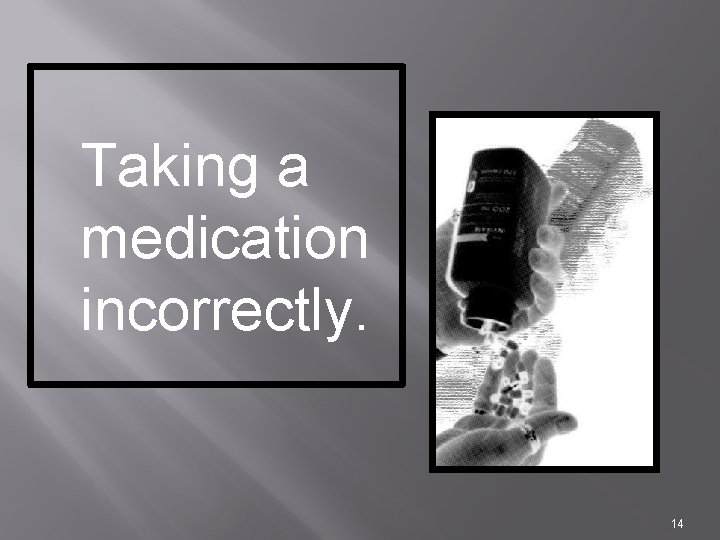
Taking a medication incorrectly. 14
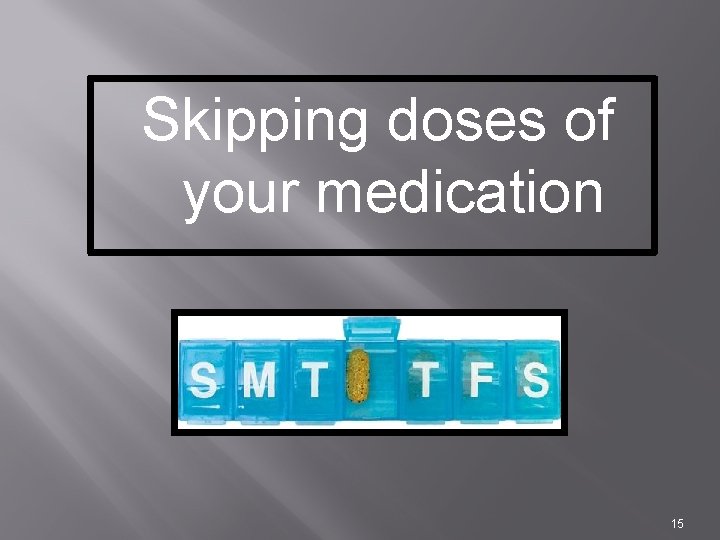
Skipping doses of your medication 15
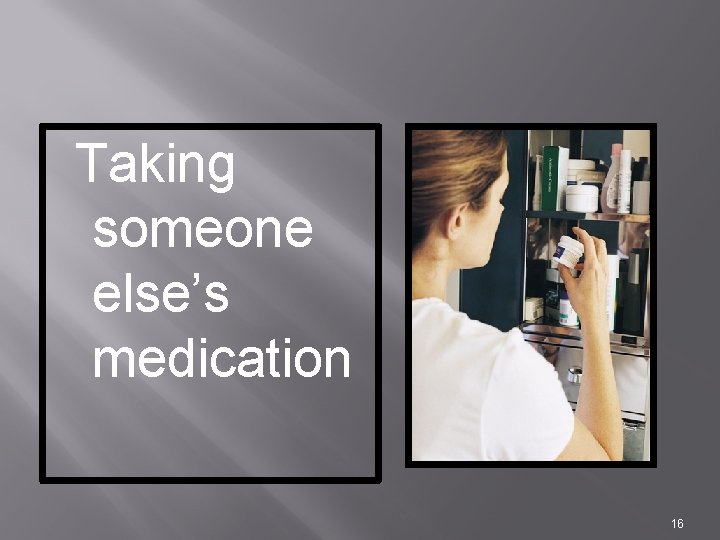
Taking someone else’s medication 16
Prescription medications are not available over-the-counter for good reasons. � They require close supervision by a healthcare provider for: �Allergies �Serious side effects �Drug interactions �Possible interactions with your health conditions, etc. � 17
Why do some people stop taking their medications? 18
� They may believe that they aren’t sick and don’t need the medication. 19
� They may think they no longer need the medication when they start to feel better and some symptoms go away. 20
They may want to stop taking medication because of side effects. 21
� They may forget to take the medication � It is hard to keep track of the amounts, and times for medications. � And there may be a lot of different medications to take. 22
� It is even harder to remember to take medications if you are having trouble concentrating. 23
Drinking alcohol and/or using drugs can cause many negative effects and drug interactions. Skipping medications in order to use recreational drugs or alcohol can also cause serious problems. 24
Another barrier to medication compliance is, you may not be able to afford the medication. 25
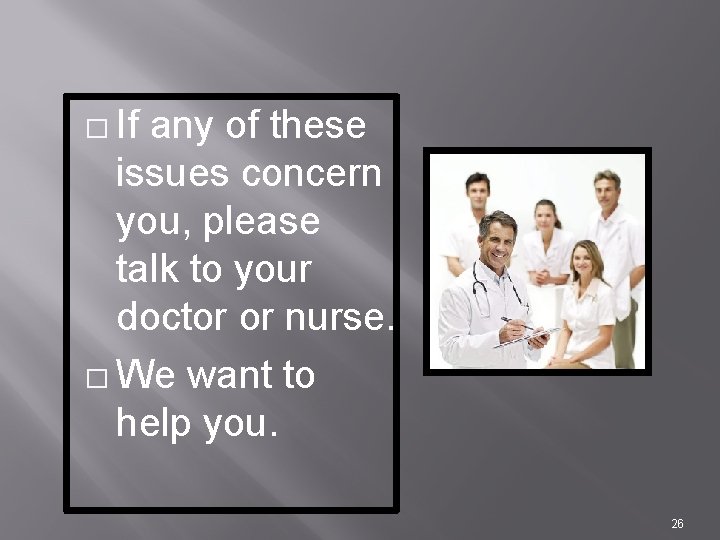
� If any of these issues concern you, please talk to your doctor or nurse. � We want to help you. 26
Tips to Help You Take Your Medication 27
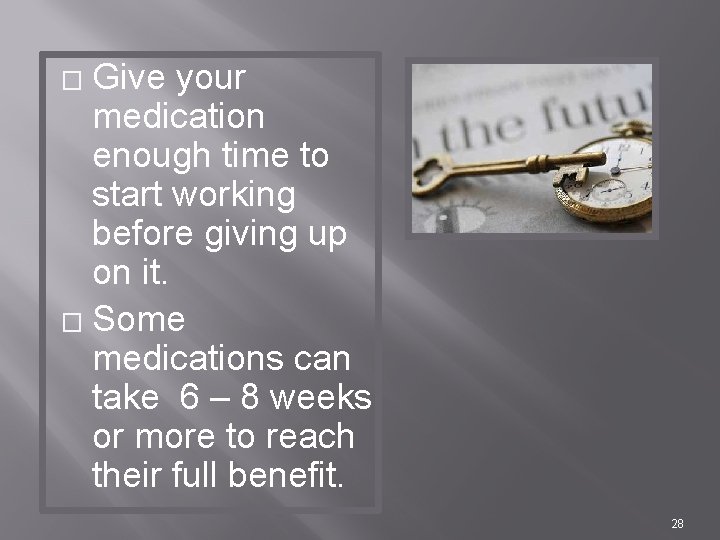
Give your medication enough time to start working before giving up on it. � Some medications can take 6 – 8 weeks or more to reach their full benefit. � 28
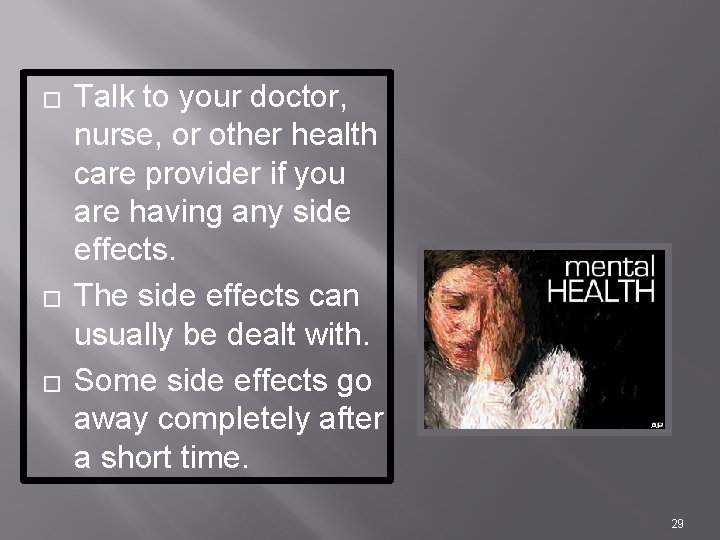
� � � Talk to your doctor, nurse, or other health care provider if you are having any side effects. The side effects can usually be dealt with. Some side effects go away completely after a short time. 29
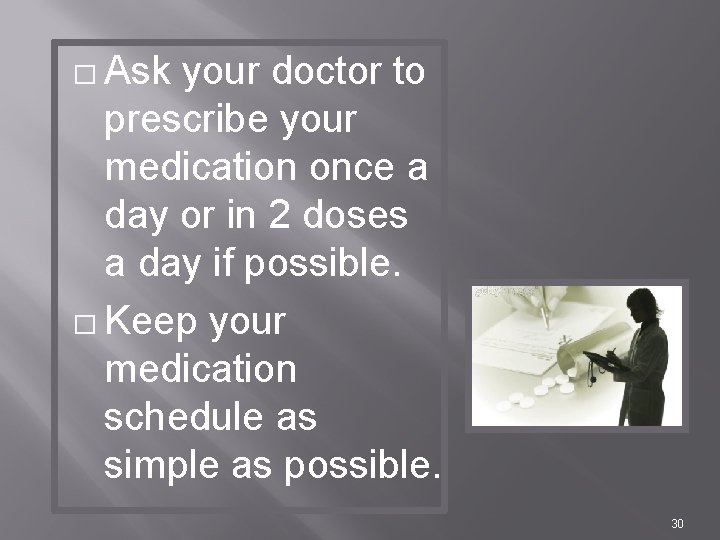
� Ask your doctor to prescribe your medication once a day or in 2 doses a day if possible. � Keep your medication schedule as simple as possible. 30
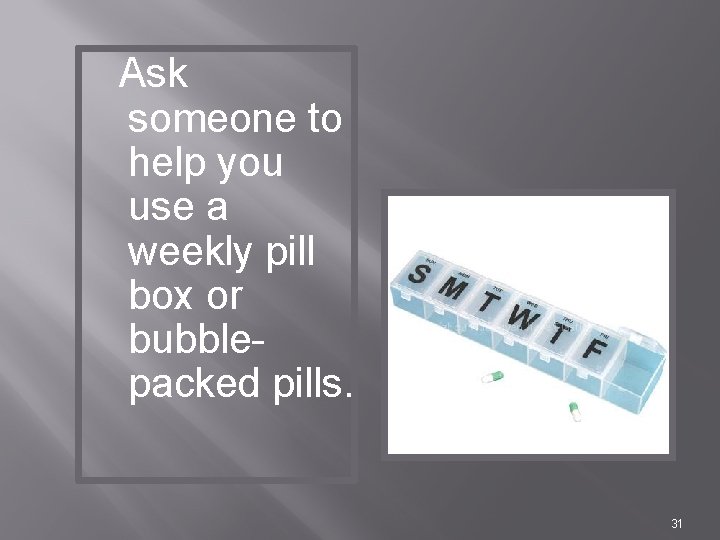
Ask someone to help you use a weekly pill box or bubblepacked pills. 31
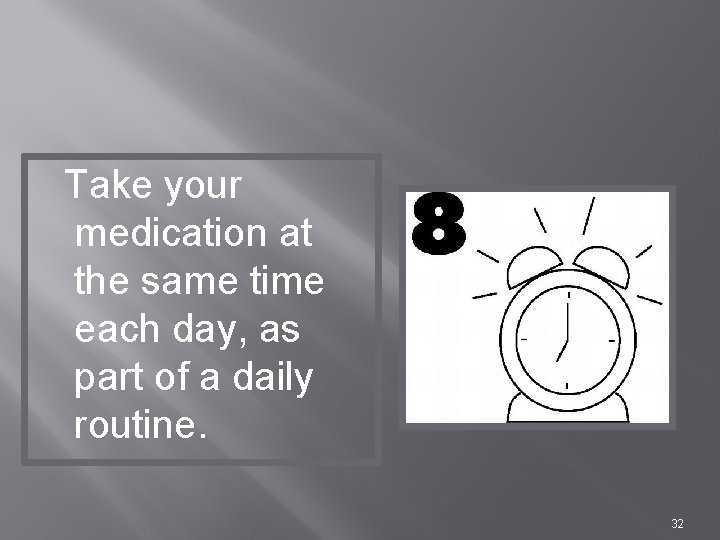
Take your medication at the same time each day, as part of a daily routine. 32
� Try to imagine the benefits of being well and staying out of the hospital. � Think of those benefits when taking your medications. 33
�Reward yourself for taking your medication. 34
Tips for Medication Compliance: 35
Educate Before You Medicate. � � The first and most important step is to educate yourself about your medications, the conditions they were prescribed to treat, their expected effects, and possible side effects. Ask your nurse, health care provider or pharmacist about your medications. 36
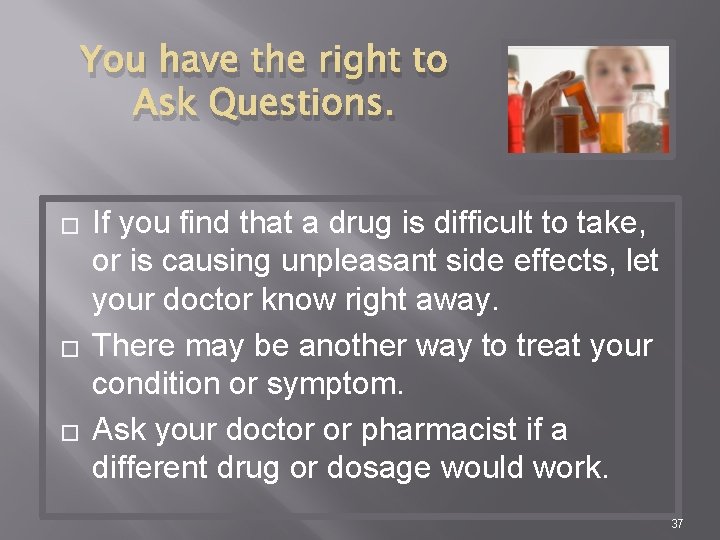
You have the right to Ask Questions. � � � If you find that a drug is difficult to take, or is causing unpleasant side effects, let your doctor know right away. There may be another way to treat your condition or symptom. Ask your doctor or pharmacist if a different drug or dosage would work. 37
Build a Partnership. Work towards a partnership with your physician so that he or she understands your treatment goals and can recommend the best options for you. 38
Find Out About Financial Assistance � � � You may qualify for financial help to pay for your prescriptions. A recent survey showed that many adults don’t fill their prescriptions, or they cut back on doses because of cost. Social workers can assist you with financial questions and concerns. 39
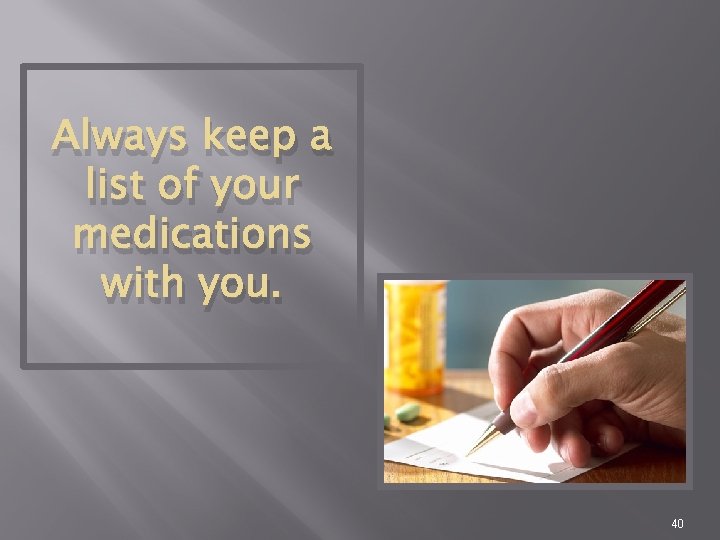
Always keep a list of your medications with you. 40
Follow these simple tips to help you take your medications correctly. � � Step 1 WRITE DOWN ALL OF THE MEDICATIONS THAT YOU TAKE. WRITE DOWN WHICH DAYS THAT YOU TAKE THEM, AND THE AMOUNT THAT YOU ARE SUPPOSED TO TAKE. PLACE THE WRITTEN REMINDER ON YOUR REFRIGERATOR OR SOMEWHERE THAT YOU PASS BY ON A DAILY BASIS. 41
� � � Step 2 TAKE MEDICATION WITH YOUR MEALS. (Unless it is supposed to be taken on an empty stomach. ) USE EATING OR SOME OTHER DAILY ROUTINE AS A WAY TO REMEMBER TO TAKE YOUR MEDICATION. (Like brushing your teeth, shaving, or other daily activities, it can become a habit. ) 42
� � Step 3 BUY A CONTAINER THAT HAS THE DAYS OF THE WEEK SO THAT YOU KNOW WHICH MEDICATION YOU NEED TO TAKE ON WHICH DAYS. PUT THE PILLS INSIDE THE COMPARTMENT OF THE DAY THAT YOU TAKE THEM. KEEP THE CONTAINER ON YOUR BATHROOM SINK OR SOMEWHERE THAT YOU WILL SEE IT IN PLAIN SIGHT. 43
� � Step 4 WRITE A NOTE TO KEEP NEXT TO YOUR CLOCK ON YOUR BEDSTAND. KEEP IT SHORT BY WRITING "TAKE PILLS. " THE NOTE WILL REMIND YOU TO TAKE YOUR BEDTIME MEDICATION, IF YOU FORGOT. OR, KEEP THE BEDTIME MEDICATION NEAR YOUR BEDSTAND AS A REMINDER. (Only if there are no children who could get into them. ) 44
� � Step 5 IF NEEDED, ASK YOUR FAMILY OR FRIENDS TO HELP YOU REMEMBER YOUR MEDICATION. TAKING YOUR MEDICATION IS IMPORTANT FOR YOUR QUALITY OF LIFE AND TO HELP CONTROL YOUR HEALTH. USE THESE HELPFUL TIPS SO THAT YOU WON'T GO ANOTHER DAY FORGETTING YOUR MEDICATION. 45
References � � Retrieved 10 -18 -10 from http: //www. ehow. com/how_2156289_remembermedication. html Developed in 2010 by Shari Cavadini RN and Edited by Mary Knutson RN. Revised 4 -24 -15. 46