
Medicares Annual Wellness Visit A Framework for Quality




- Slides: 41
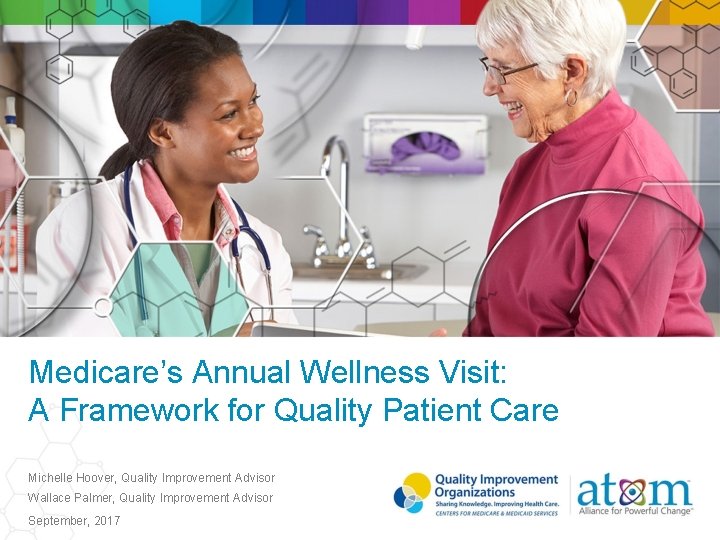
Medicare’s Annual Wellness Visit: A Framework for Quality Patient Care Michelle Hoover, Quality Improvement Advisor Wallace Palmer, Quality Improvement Advisor September, 2017
Objectives Explore the changing landscape of healthcare as the focus shifts from fee for service models into new quality based payment models Define the Annual Wellness Visit and understand its value and importance in primary care Understand the opportunity the Annual Wellness Visit presents to address age related issues, and monitor complex chronic conditions 2
Objectives (cont. ) Discuss ways to maximize the use of the Annual Wellness Visit to achieve goals aimed at improving population health, reducing inpatient admissions, and quality reporting requirements Review Quality Improvement Organization tasks and how they correlate with the Annual Wellness Visit 3
“Diseases can rarely be eliminated through early diagnosis or good treatment, but prevention can eliminate disease. ” -Dr. Denis Parsons Burkitt http: //img. picturequotes. com/2/274/273707/diseases-can-rarely-be-eliminatedthrough-early-diagnosis-or-good-treatment-but-prevention-can-quote-1. jpg 4
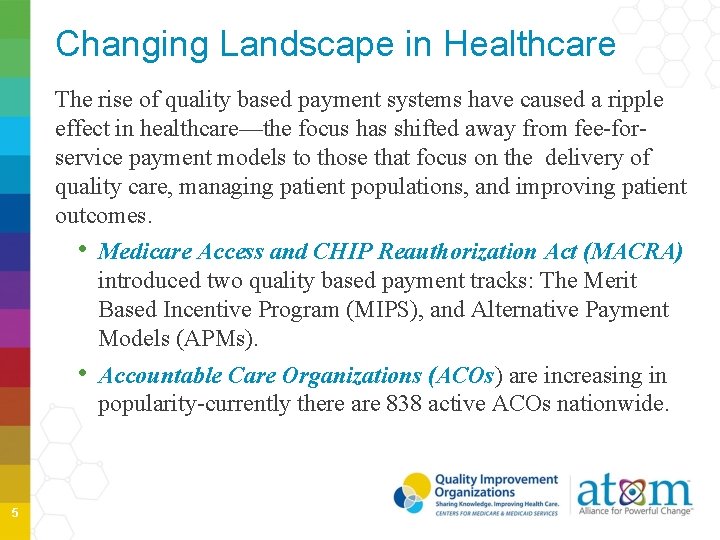
Changing Landscape in Healthcare The rise of quality based payment systems have caused a ripple effect in healthcare—the focus has shifted away from fee-forservice payment models to those that focus on the delivery of quality care, managing patient populations, and improving patient outcomes. • Medicare Access and CHIP Reauthorization Act (MACRA) introduced two quality based payment tracks: The Merit Based Incentive Program (MIPS), and Alternative Payment Models (APMs). • Accountable Care Organizations (ACOs) are increasing in popularity-currently there are 838 active ACOs nationwide. 5
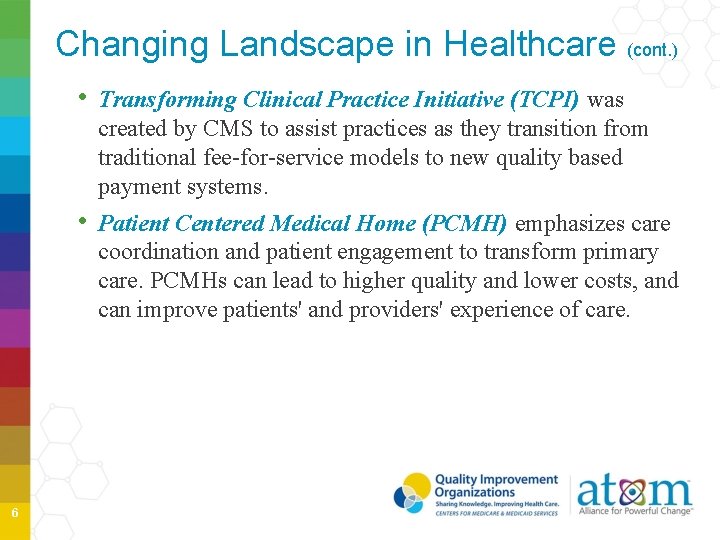
Changing Landscape in Healthcare (cont. ) • Transforming Clinical Practice Initiative (TCPI) was created by CMS to assist practices as they transition from traditional fee-for-service models to new quality based payment systems. • Patient Centered Medical Home (PCMH) emphasizes care coordination and patient engagement to transform primary care. PCMHs can lead to higher quality and lower costs, and can improve patients' and providers' experience of care. 6
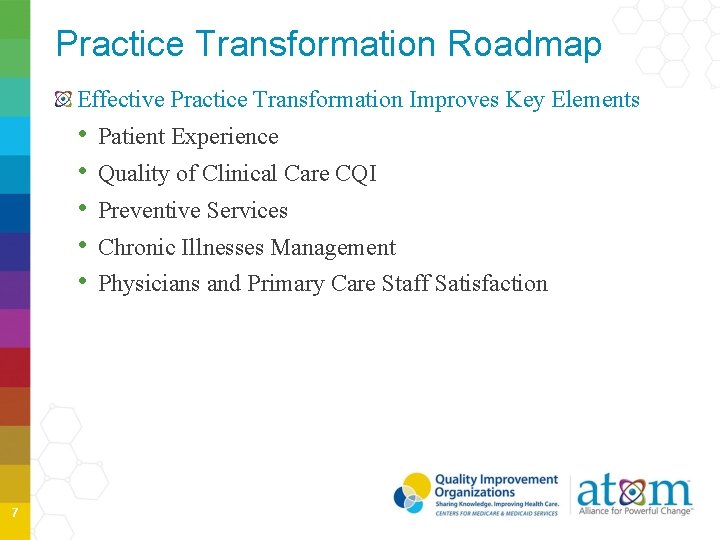
Practice Transformation Roadmap Effective Practice Transformation Improves Key Elements • • • 7 Patient Experience Quality of Clinical Care CQI Preventive Services Chronic Illnesses Management Physicians and Primary Care Staff Satisfaction
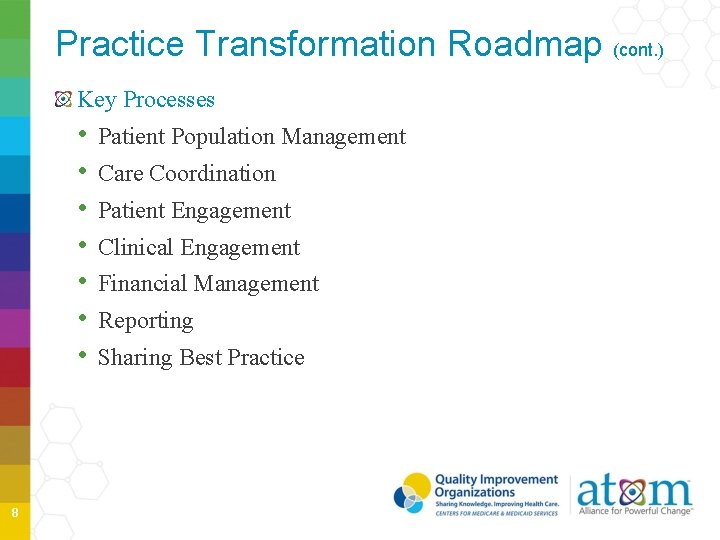
Practice Transformation Roadmap (cont. ) Key Processes • • 8 Patient Population Management Care Coordination Patient Engagement Clinical Engagement Financial Management Reporting Sharing Best Practice
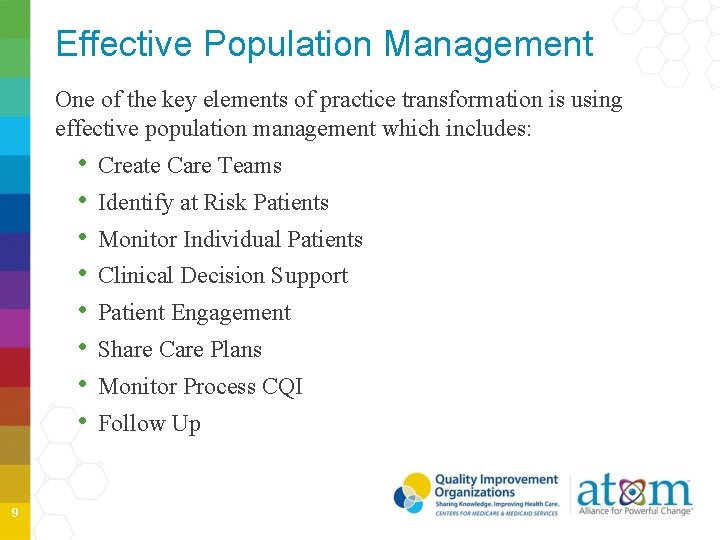
Effective Population Management One of the key elements of practice transformation is using effective population management which includes: • • 9 Create Care Teams Identify at Risk Patients Monitor Individual Patients Clinical Decision Support Patient Engagement Share Care Plans Monitor Process CQI Follow Up
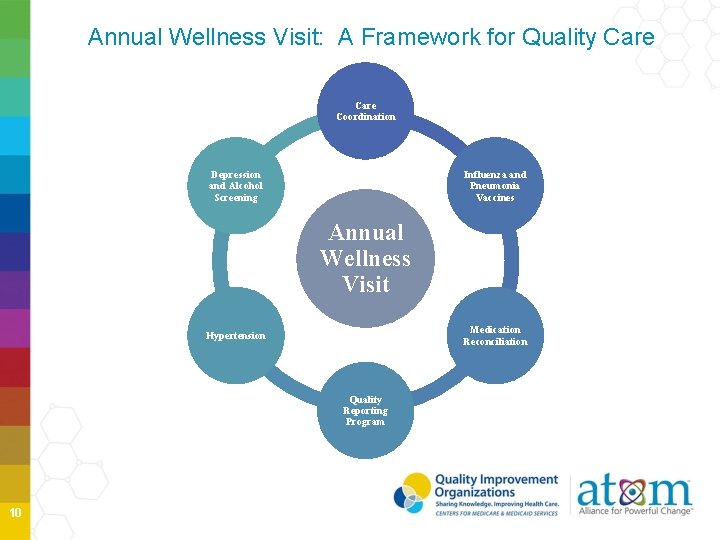
Annual Wellness Visit: A Framework for Quality Care Coordination Depression and Alcohol Screening Influenza and Pneumonia Vaccines Annual Wellness Visit Medication Reconciliation Hypertension Quality Reporting Program 10
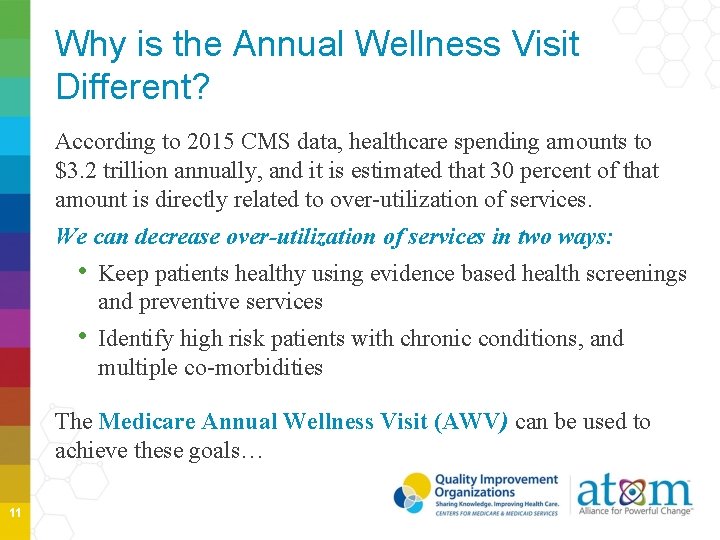
Why is the Annual Wellness Visit Different? According to 2015 CMS data, healthcare spending amounts to $3. 2 trillion annually, and it is estimated that 30 percent of that amount is directly related to over-utilization of services. We can decrease over-utilization of services in two ways: • Keep patients healthy using evidence based health screenings and preventive services • Identify high risk patients with chronic conditions, and multiple co-morbidities The Medicare Annual Wellness Visit (AWV) can be used to achieve these goals… 11
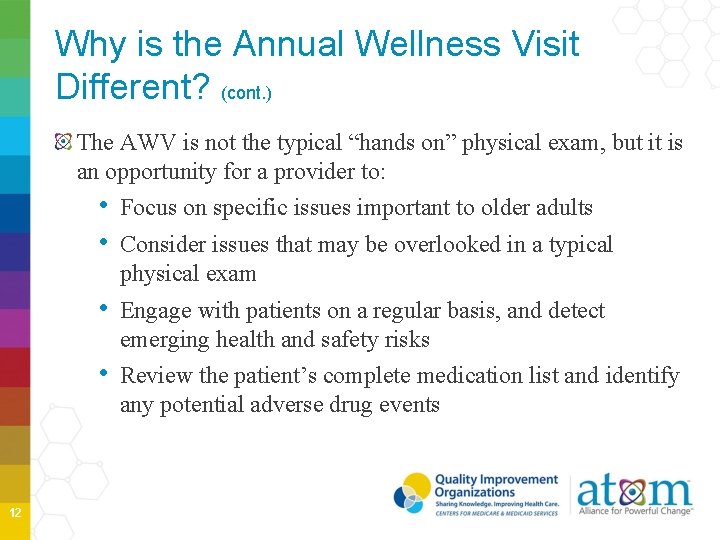
Why is the Annual Wellness Visit Different? (cont. ) The AWV is not the typical “hands on” physical exam, but it is an opportunity for a provider to: • Focus on specific issues important to older adults • Consider issues that may be overlooked in a typical physical exam • Engage with patients on a regular basis, and detect emerging health and safety risks • Review the patient’s complete medication list and identify any potential adverse drug events 12
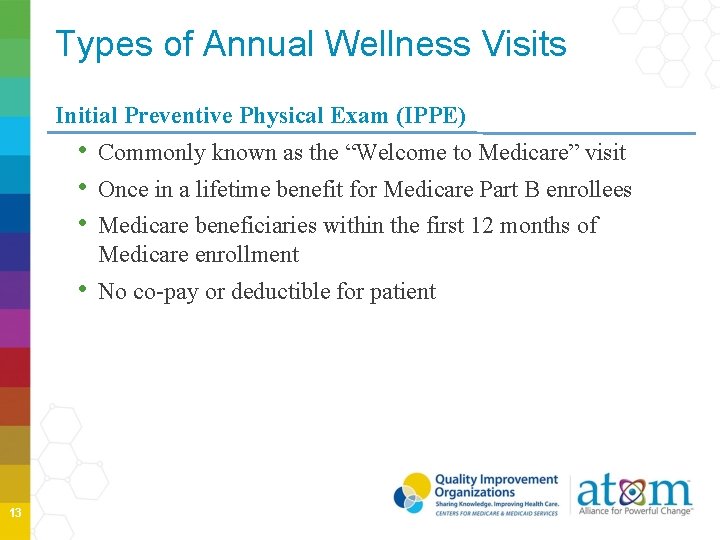
Types of Annual Wellness Visits Initial Preventive Physical Exam (IPPE) • Commonly known as the “Welcome to Medicare” visit • Once in a lifetime benefit for Medicare Part B enrollees • Medicare beneficiaries within the first 12 months of Medicare enrollment • No co-pay or deductible for patient 13
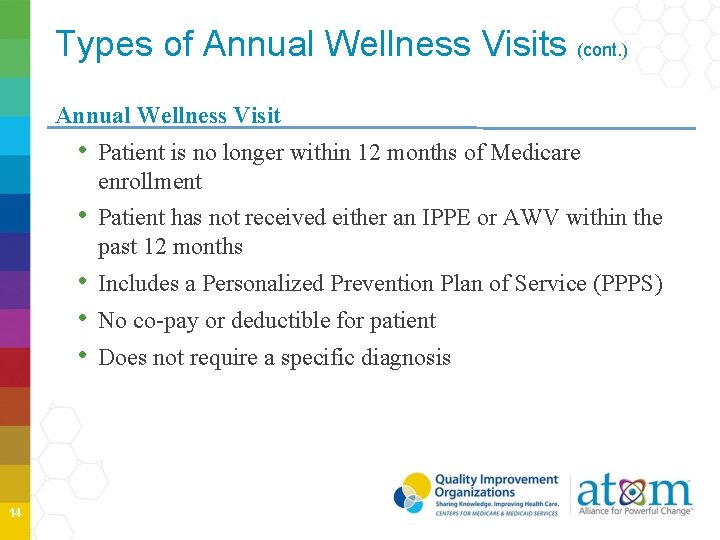
Types of Annual Wellness Visits (cont. ) Annual Wellness Visit • Patient is no longer within 12 months of Medicare enrollment • Patient has not received either an IPPE or AWV within the past 12 months • Includes a Personalized Prevention Plan of Service (PPPS) • No co-pay or deductible for patient • Does not require a specific diagnosis 14
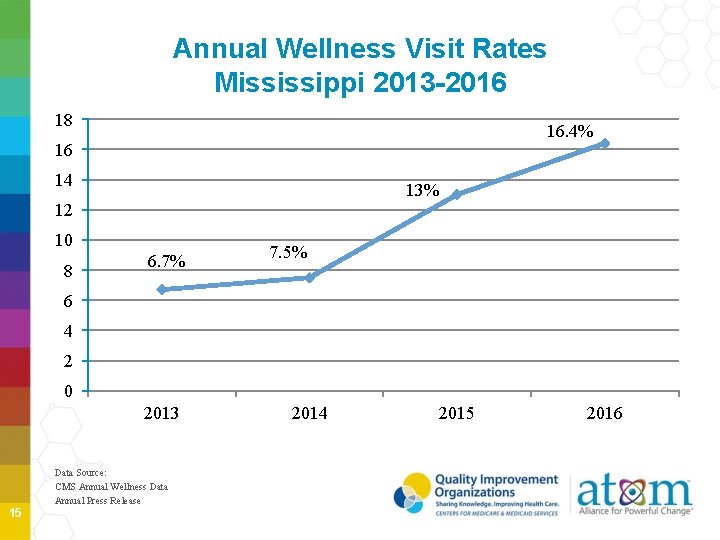
Annual Wellness Visit Rates Mississippi 2013 -2016 18 16. 4% 16 14 13% 12 10 8 6. 7% 7. 5% 6 4 2 0 2013 15 Data Source: CMS Annual Wellness Data Annual Press Release 2014 2015 2016
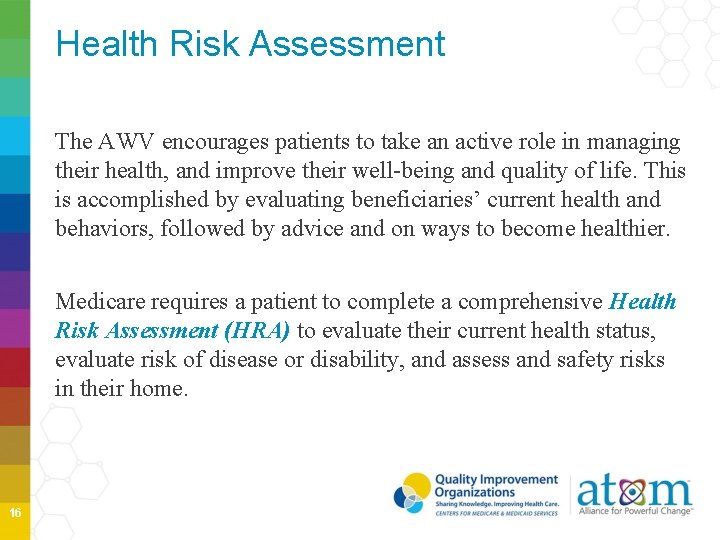
Health Risk Assessment The AWV encourages patients to take an active role in managing their health, and improve their well-being and quality of life. This is accomplished by evaluating beneficiaries’ current health and behaviors, followed by advice and on ways to become healthier. Medicare requires a patient to complete a comprehensive Health Risk Assessment (HRA) to evaluate their current health status, evaluate risk of disease or disability, and assess and safety risks in their home. 16
Health Risk Assessment (cont. ) Medicare does not require a specific HRA form, but the document must meet the following requirements: • • 17 Demographic data Self-assessment of health status Psychosocial and Behavioral Risks Activities of Daily Living (ADL) – dressing, bathing, walking, shopping, medication management, housekeeping
Minimum Requirements of the AWV Other minimum requirements of the AWV include: • Vitals such as height, weight, blood pressure, and BMI • List of current providers and medical equipment suppliers • Document the patient’s medical history and family medical history • Evaluate the patient for potential risk factors for depression • Review the patient’s functional ability and safety including screening for fall risk, home safety and hearing impairment 18
Minimum Requirements of the AWV (cont. ) Other minimum requirements of the AWV include: • Screen the patient for any cognitive impairment the patient might have • Screen for potential substance misuse such as alcohol, tobacco, or narcotics • Establish a written screening schedule, such as a checklist for the next 5 -10 years as needed • Provide personalized health advice to the patient and make appropriate referrals to health education or preventive counseling services 19
Benefits of the Annual Wellness Visit Patient Benefits • • 20 No co-pay Annual comprehensive preventive evaluation Reduce risk of chronic disease Add years to the patient’s lifespan Prevent accidents at home Keep patients out of the hospital Delay long term care
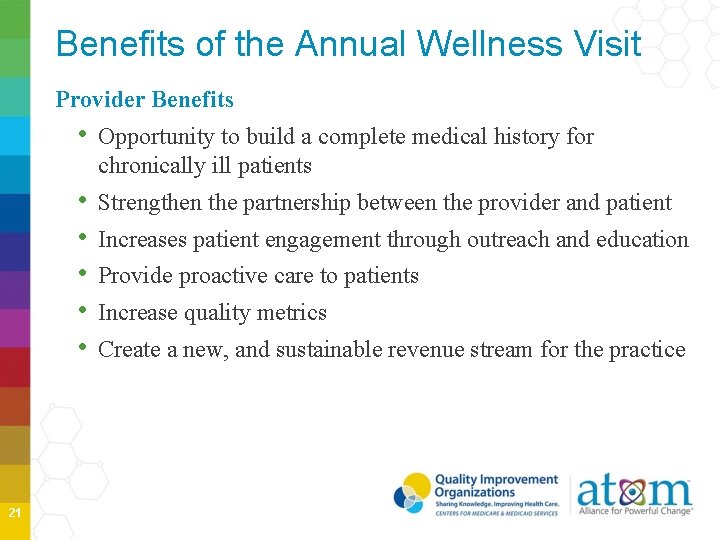
Benefits of the Annual Wellness Visit Provider Benefits • Opportunity to build a complete medical history for chronically ill patients • • • 21 Strengthen the partnership between the provider and patient Increases patient engagement through outreach and education Provide proactive care to patients Increase quality metrics Create a new, and sustainable revenue stream for the practice
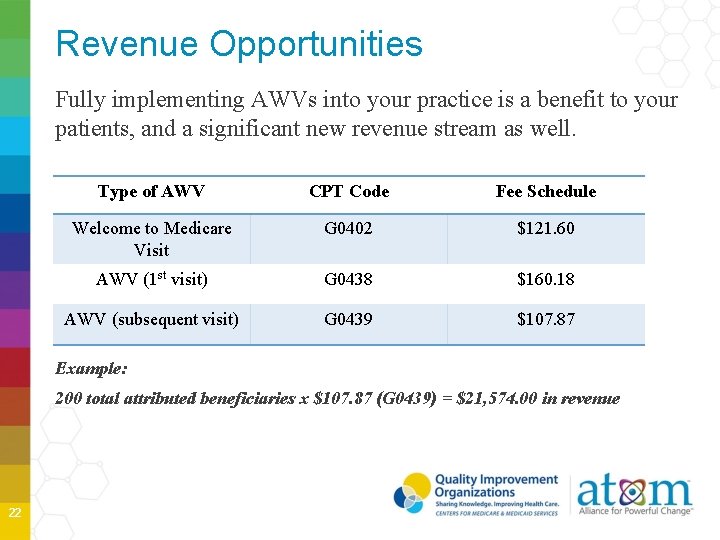
Revenue Opportunities Fully implementing AWVs into your practice is a benefit to your patients, and a significant new revenue stream as well. Type of AWV CPT Code Fee Schedule Welcome to Medicare Visit G 0402 $121. 60 AWV (1 st visit) G 0438 $160. 18 AWV (subsequent visit) G 0439 $107. 87 Example: 200 total attributed beneficiaries x $107. 87 (G 0439) = $21, 574. 00 in revenue 22
“We are living longer, but we are living sicker, at the end of the day no one paying for healthcare can afford to continue to pay this much money to treat diseases that really should not have happened in the first place. ” -Dr. Reed Tuckson, Senior Medical Advisor, United Health Foundation http: //www. ibtimes. com/us-health-rankings-2015 -data-show-costs-preventable -diseases-hospitalizations-2218257 23
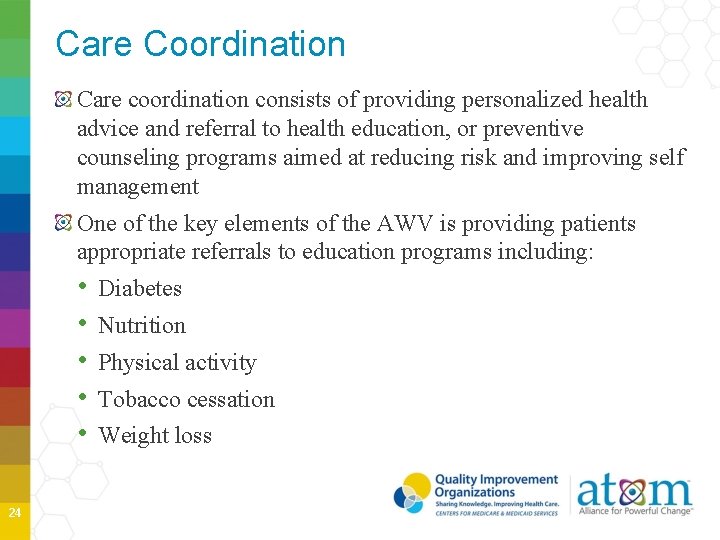
Care Coordination Care coordination consists of providing personalized health advice and referral to health education, or preventive counseling programs aimed at reducing risk and improving self management One of the key elements of the AWV is providing patients appropriate referrals to education programs including: • • • 24 Diabetes Nutrition Physical activity Tobacco cessation Weight loss
Hypertension Screening for hypertension, and spotting common risk factors for hypertension can be the “first line” of defense against this “silent killer”. 75 Million Americans with Hypertension Only half have their hypertension under control Hypertension costs the nation $46 million per year Hypertension causes 360, 000 deaths per year 7 out of 10 patients having their 1 st heart attack have hypertension 8 out of 10 patients having their first stroke have hypertension Hypertension is chronic, and has serious consequences End Stage Renal Disease 25 Chronic Heart Failure
Screening for Smoking Risks In Mississippi, 11 percent of senior citizens are reported smokers, but this rate does not include “hidden” smokers or smokeless tobacco users. Nationwide, cigarette smoking leads to 480, 000 deaths annually and an additional 8. 6 million have a chronic smoking related illness Smoking causes significant damage to nearly every organ and causes diseases such as: • Heart disease • COPD • Cancer • Stroke • Cognitive decline 26
Diabetes The risk of developing diabetes increases with age, and the consequences are often catastrophic. Seniors with diabetes have higher rates of: • Premature death • Hypertension • Cognitive impairment • Falls • Depression Proper management is critical to detect the onset of diabetes, and manage the progression of the disease. The AWV covers preventive screenings for diabetes and diabetes self management training for patients. 27
Medication Reconciliation Do you know every prescription and OTC medication your patient is taking? Do you know if they are taking vitamins and herbal supplements that may have an impact on their health? • Medication errors occur in 1 out of every 5 doses prescribed to patients • Adverse drug events result in more than 100, 000 deaths per year • Adverse drug events cost Americans $2 billion a year in medical expenses • Dangerous drug interactions account for 50 percent of ED visits for seniors 28
Medication Reconciliation (cont. ) The AWV is the ideal opportunity to review your patient’s complete medication list. Encourage your patients to bring in the medications they are currently taking, including ones prescribed by other providers. Review your patient’s medication use for adherence, high risk medications, and appropriate dosages. 29
Depression has a significant impact on the physical, mental and cognitive function of older adults. Depression is common among patients who are frequently hospitalized, or coping with several chronic illnesses. Depression is often undiagnosed, or misdiagnosed because many older adults experience symptoms such as low motivation, lack of energy, or worsening of chronic diseases. Diabetic patients may have higher glucose levels, or a patient with arthritis may experience more pain than usual. 30
Depression (cont. ) Currently, 14. 8 percent of Mississippi’s Medicare population has been diagnosed with depression. Another 8. 2 percent of Mississippi's Medicare population has been diagnosed with “frequent mental distress” which means they have reported 14 or more days of depression in the past month. Combining these rates shows that 24 percent, almost a quarter of our senior citizens are coping with depression. 31
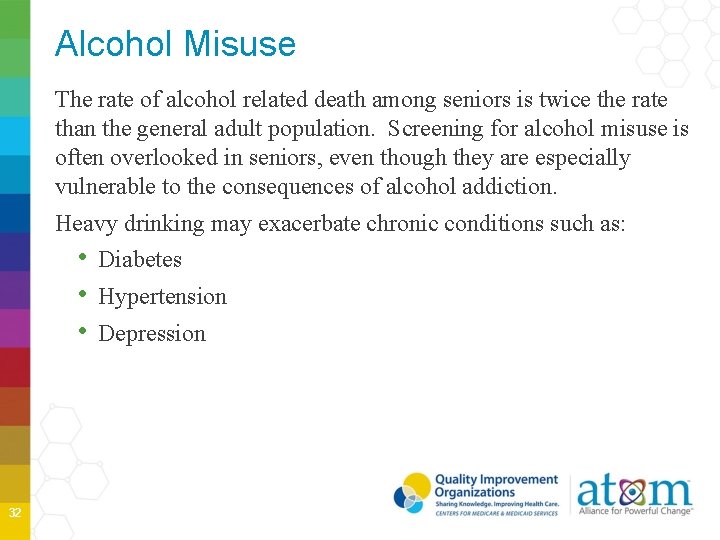
Alcohol Misuse The rate of alcohol related death among seniors is twice the rate than the general adult population. Screening for alcohol misuse is often overlooked in seniors, even though they are especially vulnerable to the consequences of alcohol addiction. Heavy drinking may exacerbate chronic conditions such as: • Diabetes • Hypertension • Depression 32
Alcohol Misuse (cont. ) The rate of alcohol related death among seniors is twice the rate than the general adult population. Screening for alcohol misuse is often overlooked in seniors, even though they are especially vulnerable to the consequences of alcohol addiction. Heavy drinking may exacerbate chronic conditions such as: • Diabetes • Hypertension • Depression 33
Influenza and Pneumonia Immunizations A recent study found a healthcare provider's recommendation is the strongest factor in influencing an patient’s decision to become vaccinated. The AWV is in essence, a patient engagement tool that allows a provider the time to discuss the benefits of influenza and pneumonia vaccinations. Influenza Vaccination 34 Pneumonia Vaccination • 57% increase in hospitalization risk for older adults • Annually, 900, 000 adults will contact pneumonia, and 5 -7% will die • 71 -85% of flu-related deaths occur in adults over 65 • One PPSV 23 dose protects 75% of adults over 65 • Influenza vaccines prevented 2. 5 million medical visits during the 2015 -2016 flu season • One PCV 13 dose protects 50 -85% of adults over 65
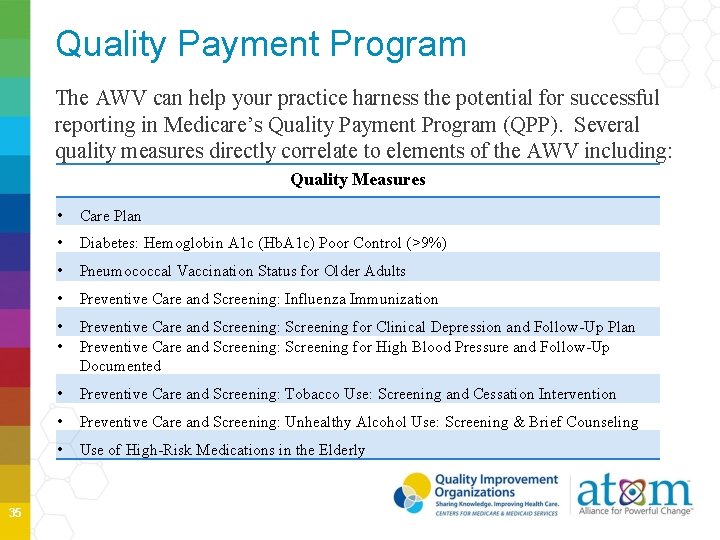
Quality Payment Program The AWV can help your practice harness the potential for successful reporting in Medicare’s Quality Payment Program (QPP). Several quality measures directly correlate to elements of the AWV including: Quality Measures 35 • Care Plan • Diabetes: Hemoglobin A 1 c (Hb. A 1 c) Poor Control (>9%) • Pneumococcal Vaccination Status for Older Adults • Preventive Care and Screening: Influenza Immunization • • Preventive Care and Screening: Screening for Clinical Depression and Follow-Up Plan Preventive Care and Screening: Screening for High Blood Pressure and Follow-Up Documented • Preventive Care and Screening: Tobacco Use: Screening and Cessation Intervention • Preventive Care and Screening: Unhealthy Alcohol Use: Screening & Brief Counseling • Use of High-Risk Medications in the Elderly
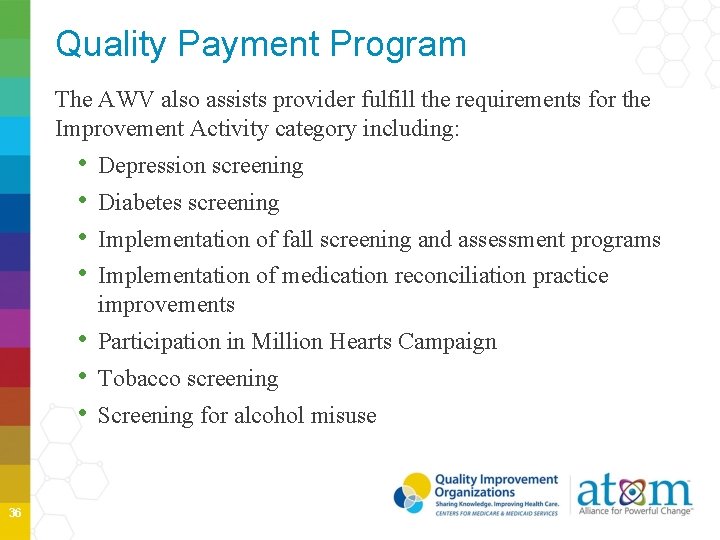
Quality Payment Program The AWV also assists provider fulfill the requirements for the Improvement Activity category including: • • Depression screening Diabetes screening Implementation of fall screening and assessment programs Implementation of medication reconciliation practice improvements • Participation in Million Hearts Campaign • Tobacco screening • Screening for alcohol misuse 36
“Treatment without prevention is simply unsustainable. ” -Bill Gates 37
Questions? 38
Contact Us Michelle Hoover, RHIA, CCS Michelle. Hoover@area-g. hcqis. org 601 -957 -1575 ext. 225 Wallace Palmer Wallace. Palmer@area-g. hcqis. org 601 -957 -1575 ext. 202 Ramona Drake, RHIA Ramona. Drake@area-g. hcqis. org 601 -957 -1575 ext. 231 39
References The ABC’s of the Annual Wellness Visit https: //www. cms. gov/Outreach-and-Education/Medicare-Learning-Network. MLN/MLNProducts/downloads/AWV_Chart_ICN 905706. pdf Centers for Medicare and Medicaid Services-National Health Expenditure Data https: //www. cms. gov/Research-Statistics-Data-and-Systems/Statistics-Trends-and. Reports/National. Health. Expend. Data/NHE-Fact-Sheet. html US Health Rankings: 2015 Data Show Costs Of Preventable Diseases, Hospitalizations http: //www. ibtimes. com/us-health-rankings-2015 -data-show-costs-preventable-diseaseshospitalizations-2218257 Overuse Accounts for Up to 30% of Healthcare Spending http: //www. medscape. com/viewarticle/757527 America’s Health Ranking Senior Report 2017 https: //assets. americashealthrankings. org/app/uploads/ahr 2017_seniorreport. pdf 40
References Million Hearts Https: //millionhearts. hhs. gov/tools-protocols/hiding-plain-sight/index. html Factors That Boost Vaccination Rates Among the Elderly http: //www. clinicaladvisor. com/aapa-2017 -annual-meeting/boosting-vaccination-ratesamong-the-elderly/article/662550/ Lowering the Burden of Adult Disease, One Shot at a Time http: //www. beckershospitalreview. com/whitepapers/current-whitepapers. html Medication Reconciliation Opportunities and the Medicare AWV http: //www. physicianspractice. com/blog/medication-reconciliation-opportunities-andmedicare-awv 41