
Medicare Prescription Drugs Improvement and Modernization Act of
- Slides: 14
Medicare Prescription Drugs Improvement and Modernization Act of 2003: What Do Employers Think? Robert S. Galvin, MD Medicare Prescription Drug Congress February 26, 2004
What The Bill Isn’t Perfect 2
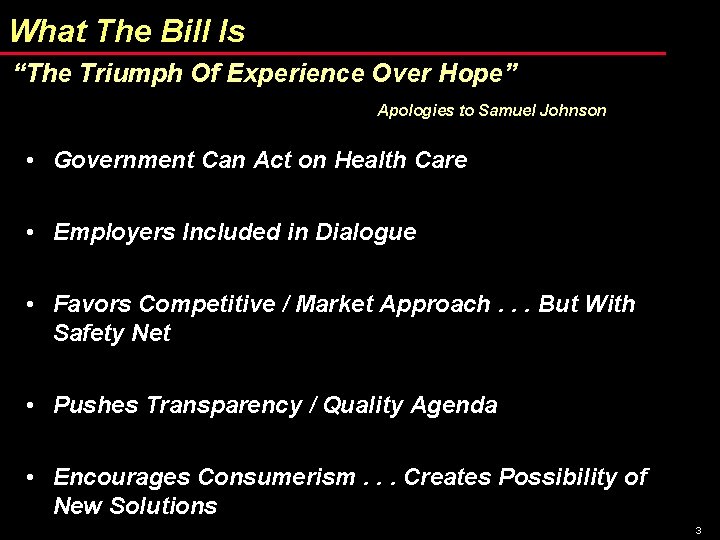
What The Bill Is “The Triumph Of Experience Over Hope” Apologies to Samuel Johnson • Government Can Act on Health Care • Employers Included in Dialogue • Favors Competitive / Market Approach. . . But With Safety Net • Pushes Transparency / Quality Agenda • Encourages Consumerism. . . Creates Possibility of New Solutions 3
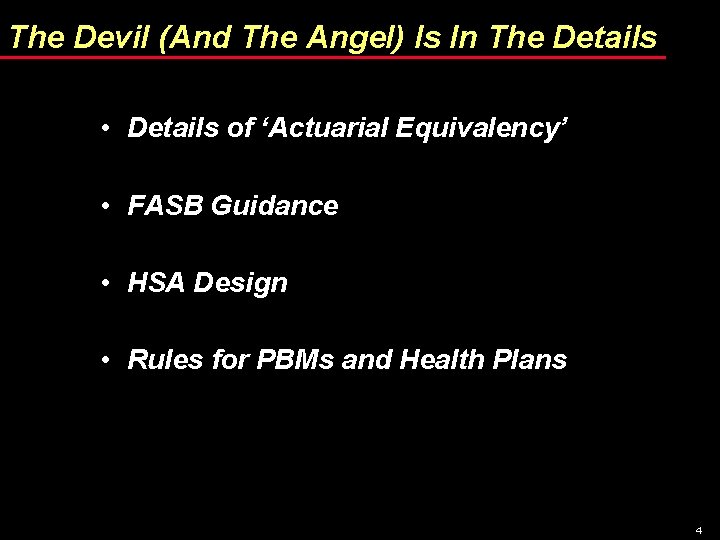
The Devil (And The Angel) Is In The Details • Details of ‘Actuarial Equivalency’ • FASB Guidance • HSA Design • Rules for PBMs and Health Plans 4
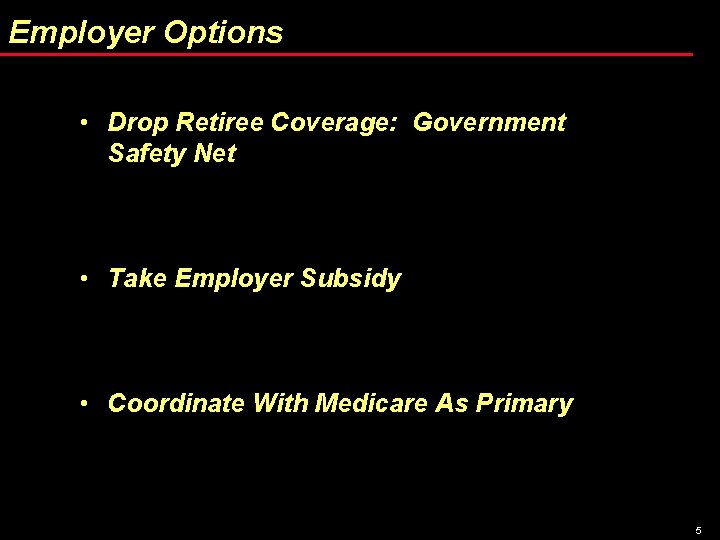
Employer Options • Drop Retiree Coverage: Government Safety Net • Take Employer Subsidy • Coordinate With Medicare As Primary 5
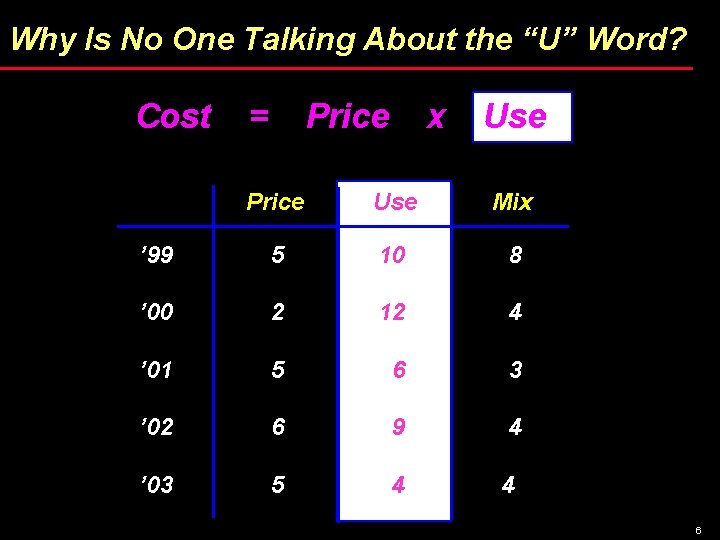
Why Is No One Talking About the “U” Word? Cost = Price x Use Price Use Mix ’ 99 5 10 8 ’ 00 2 12 4 ’ 01 5 6 3 ’ 02 6 9 4 ’ 03 5 4 4 6
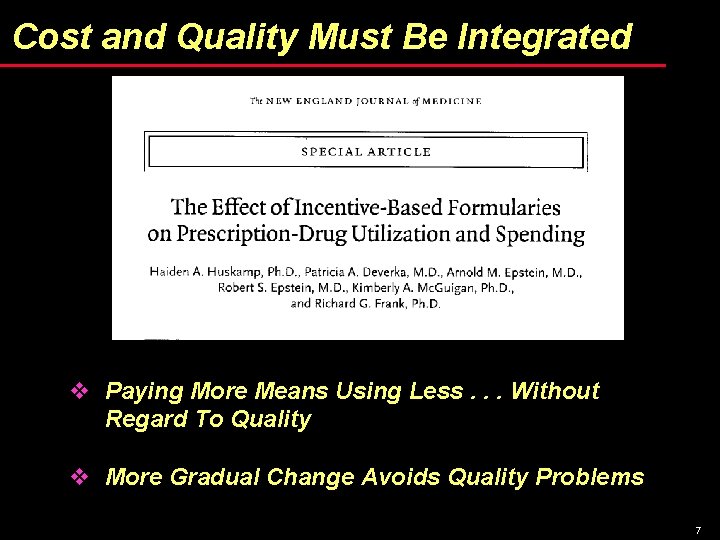
Cost and Quality Must Be Integrated v Paying More Means Using Less. . . Without Regard To Quality v More Gradual Change Avoids Quality Problems 7
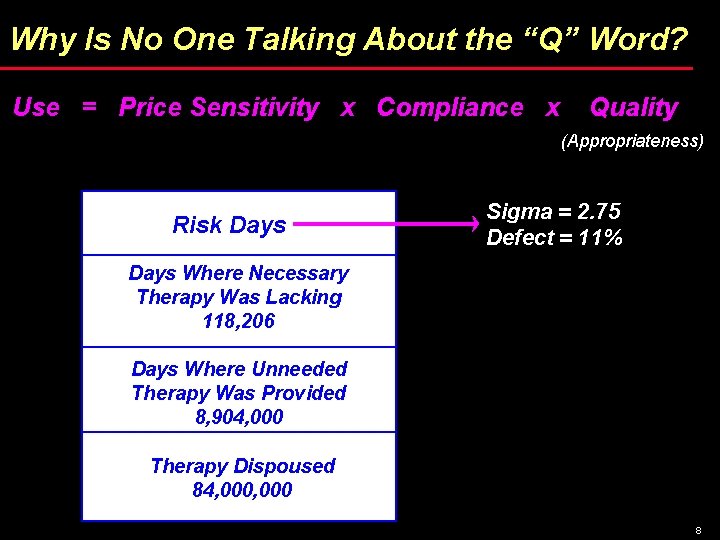
Why Is No One Talking About the “Q” Word? Use = Price Sensitivity x Compliance x Quality (Appropriateness) Risk Days Sigma = 2. 75 Defect = 11% Days Where Necessary Therapy Was Lacking 118, 206 Days Where Unneeded Therapy Was Provided 8, 904, 000 Therapy Dispoused 84, 000 8
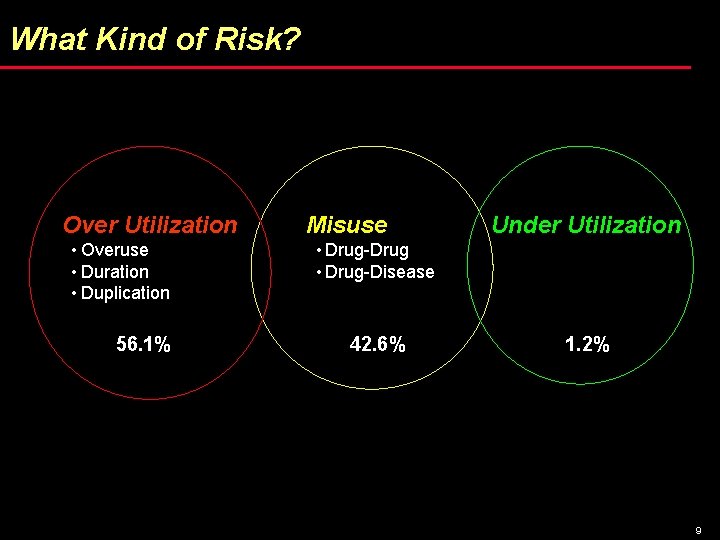
What Kind of Risk? Over Utilization • Overuse • Duration • Duplication 56. 1% Misuse Under Utilization • Drug-Drug • Drug-Disease 42. 6% 1. 2% 9
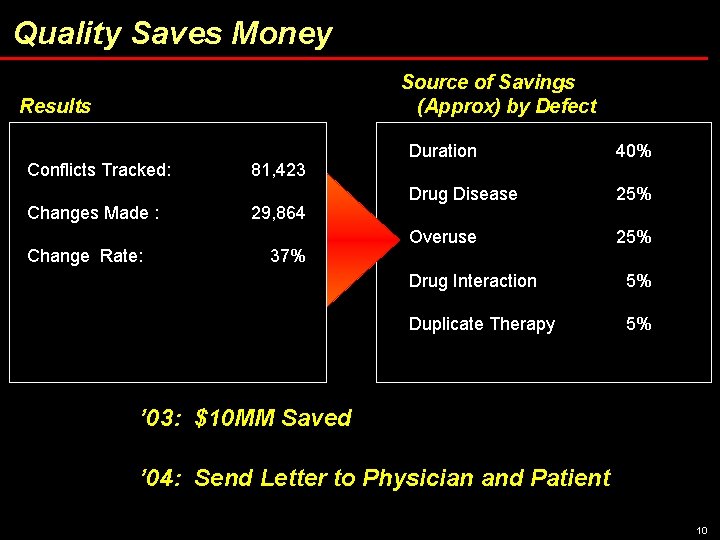
Quality Saves Money Source of Savings (Approx) by Defect Results Conflicts Tracked: Changes Made : Change Rate: 81, 423 29, 864 37% Duration 40% Drug Disease 25% Overuse 25% Drug Interaction 5% Duplicate Therapy 5% ’ 03: $10 MM Saved ’ 04: Send Letter to Physician and Patient 10
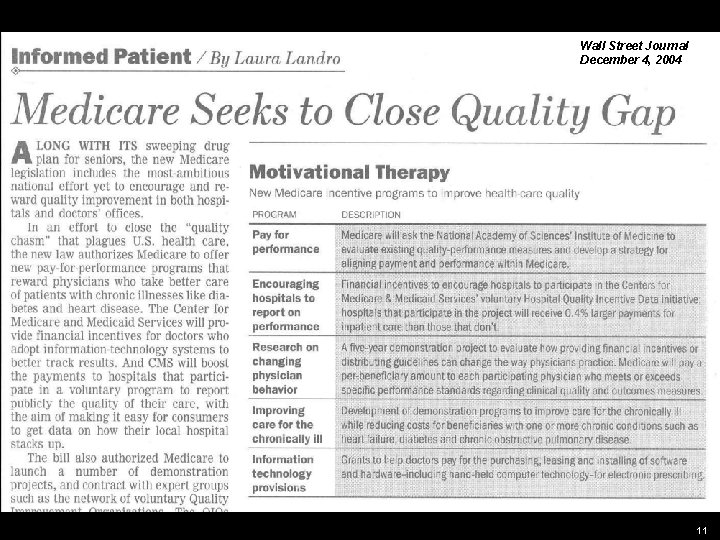
Wall Street Journal December 4, 2004 11
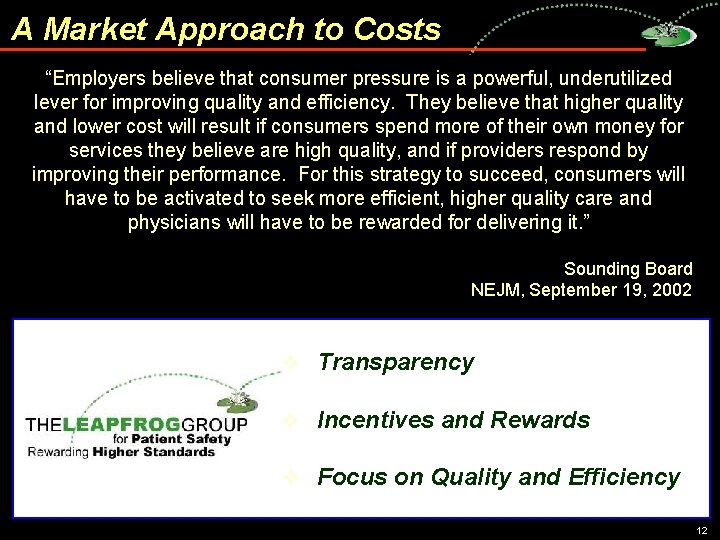
A Market Approach to Costs “Employers believe that consumer pressure is a powerful, underutilized lever for improving quality and efficiency. They believe that higher quality and lower cost will result if consumers spend more of their own money for services they believe are high quality, and if providers respond by improving their performance. For this strategy to succeed, consumers will have to be activated to seek more efficient, higher quality care and physicians will have to be rewarded for delivering it. ” Sounding Board NEJM, September 19, 2002 v Transparency v Incentives and Rewards v Focus on Quality and Efficiency 12
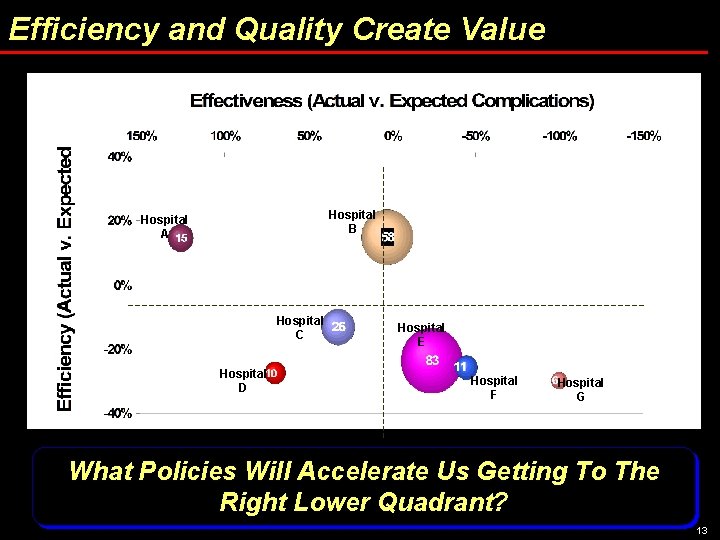
Efficiency and Quality Create Value Hospital B Hospital A Hospital C Hospital D Hospital E Hospital F Hospital G What Policies Will Accelerate Us Getting To The Right Lower Quadrant? 13
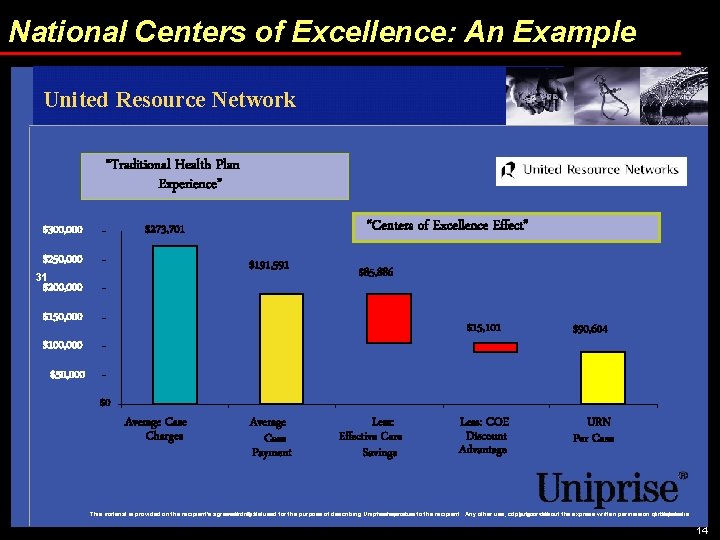
National Centers of Excellence: An Example United Resource Network “Traditional Health Plan Experience” “Centers of Excellence Effect” $273, 701 $300, 000 $250, 000 $191, 591 31 $200, 000 $85, 886 $150, 000 $100, 000 $15, 101 $90, 604 Less: COE Discount Advantage URN Per Case $50, 000 $0 Average Case Charges Average Case Payment Less: Effective Care Savings This material is provided on the recipient's agreement will only that beitused for the purpose of describing Uniprise's cts or services produ to the recipient. Any other use, copying tribution orwithout dis the express written permission ofprohibited. Uniprise is 14