
Medicare Chronic Care Management Building an Interprofessional Medical
Medicare Chronic Care Management Building an Inter-professional Medical Home Team to Improve Care Coordination for High-Risk Seniors Shaylee Peckens, MD, PCMH CCE West Virginia University Gregory Castelli, Pharm. D Department of Family Medicine Karen Fitzpatrick, MD, PCMH CCE Rachelle Peklinsky, A. P. R. N.
Pre-assessment What is your practice’s current state of CCM? • Not existent, I am here to learn • In the planning stages, I need ideas • Active CCM service, I am here to show far superior we are If in planning or active stage, who are the members of your team?
Session Objectives By the end of this session, active participants will be able to: 1. Define CMS requirements for care delivery and billing of new CMS Chronic Care Management (CCM) Codes 2. Discuss establishment of an interprofessional team for CCM 3. Identify how care coordination services can improve population health and quality
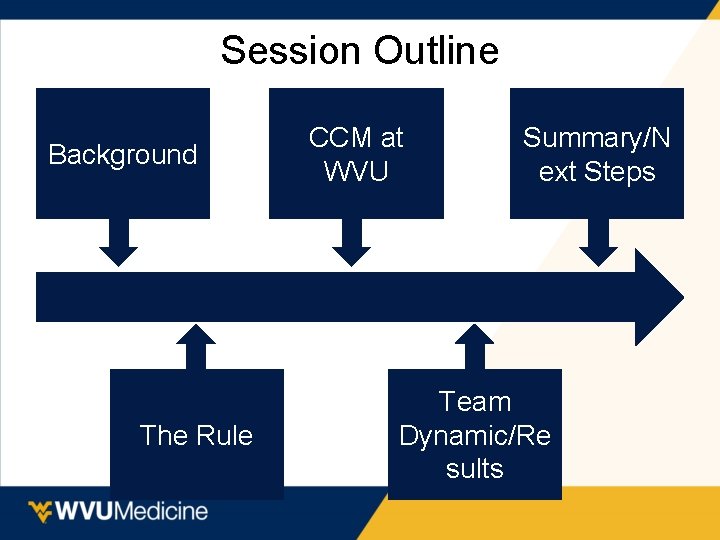
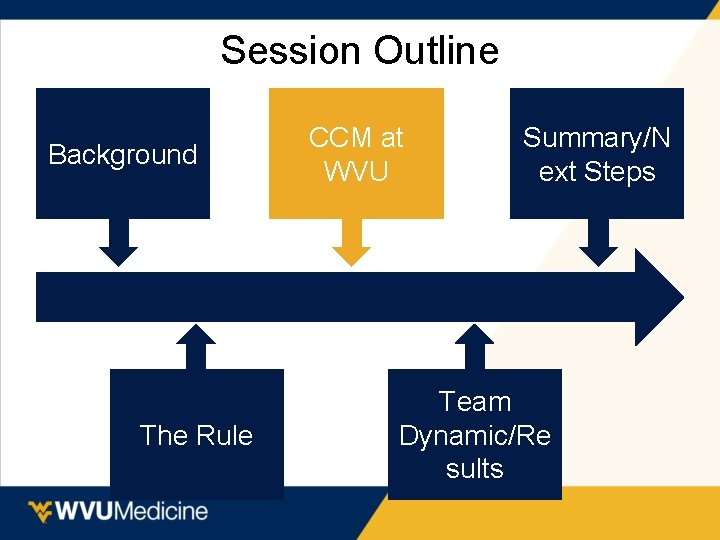
Session Outline Background The Rule CCM at WVU Summary/N ext Steps Team Dynamic/Re sults
Session Outline Background The Rule CCM at WVU Summary/N ext Steps Team Dynamic/Re sults
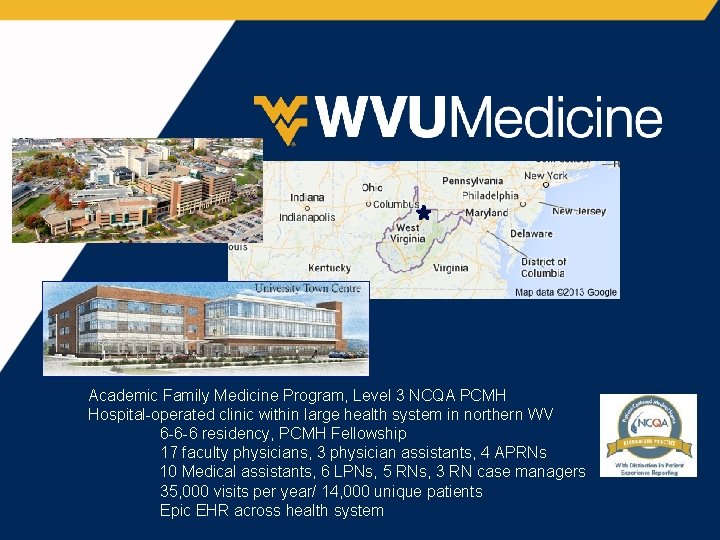
Academic Family Medicine Program, Level 3 NCQA PCMH Hospital-operated clinic within large health system in northern WV 6 -6 -6 residency, PCMH Fellowship 17 faculty physicians, 3 physician assistants, 4 APRNs 10 Medical assistants, 6 LPNs, 5 RNs, 3 RN case managers 35, 000 visits per year/ 14, 000 unique patients Epic EHR across health system
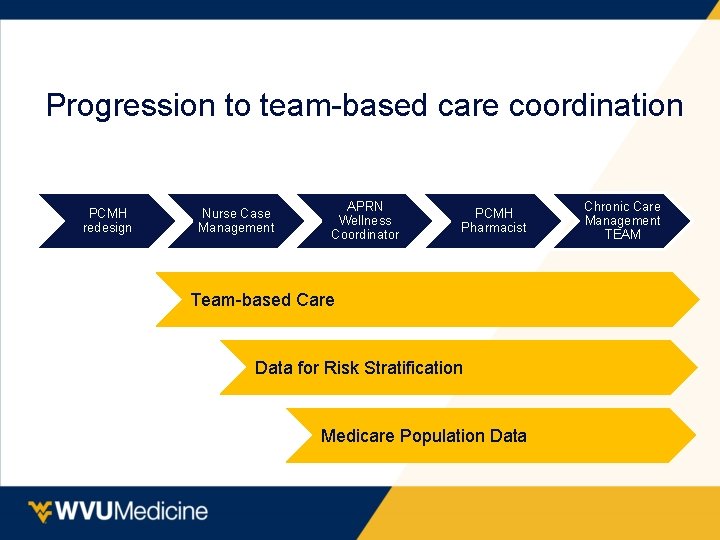
Progression to team-based care coordination PCMH redesign Nurse Case Management APRN Wellness Coordinator PCMH Pharmacist Team-based Care Data for Risk Stratification Medicare Population Data Chronic Care Management TEAM
Session Outline Background The Rule CCM at WVU Summary/N ext Steps Team Dynamic/Re sults
Why now? • Patient’s with multiple medical conditions, limited functional status, and psychosocial needs account for a disproportionate share of health care cost and utilization. • The Centers for Medicare and Medicaid Services (CMS) recognized care management as one of the critical components of primary care that contributes to better patient care and reduced spending.
Chronic Care Management • Medicare began reimbursing for chronic care management (CCM) services January 1, 2015 • Separate payment for non face-to face care management/ care coordination
CPT code 99490 • 20 minutes of non-face-to-face care coordination services per calendar month by “clinical staff” for eligible patients
Eligible patients • Medicare beneficiaries who have two or more chronic conditions
Billing Providers • Physicians • Other Qualified Healthcare Professionals (QHP) • • Nurse practitioners Physician assistants Clinical nurse specialist Certified Nurse Midwives
Clinical Staff Member • Under the supervision of a physician or other qualified health care professional • “Incident to” exception (general supervision)
Billing • Cannot overlap with: • • Transitional Care Management (TCM) Hospice Skilled nursing Other care management services • Once per calendar month • Only one provider
Enrollment • Discuss at comprehensive face to face visit with billing provider visit (AWV, IPE, TCM, 99215) • • • Explain CCM services Document discussion in EHR/visit note Explain payment for CCM How to revoke services One practitioner per month can bill EHR communication and sharing of medical information with team (all requirements for the informed consent)
Consent • Written consent does NOT have to be signed at that visit • Signed by BILLING practitioner • Only obtained once
Scope of Services • Communication with the patient during care transitions • Coordination of care with other treating health professionals • Comprehensive electronic care plan • Medication management • Improved access to care
Session Outline Background The Rule CCM at WVU Summary/N ext Steps Team Dynamic/Re sults
Team-Based Care Coordination The Primary Care Provider • Two Nurse Case Managers • APRN & Wellness Coordinator • Clinical Pharmacist • CCM Physician Leaders • Ancillary CCM team members • • Clinical Dietitian Social Worker Triage Nurse Billing Specialist
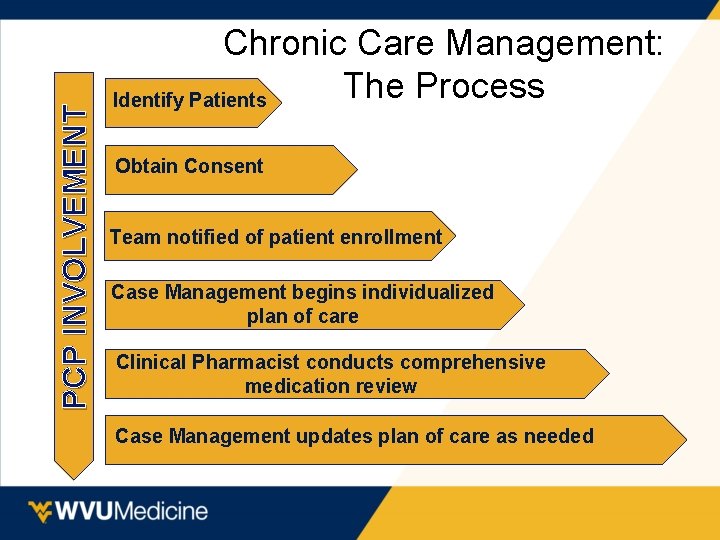
PCP INVOLVEMENT Chronic Care Management: The Process Identify Patients Obtain Consent Team notified of patient enrollment Case Management begins individualized plan of care Clinical Pharmacist conducts comprehensive medication review Case Management updates plan of care as needed
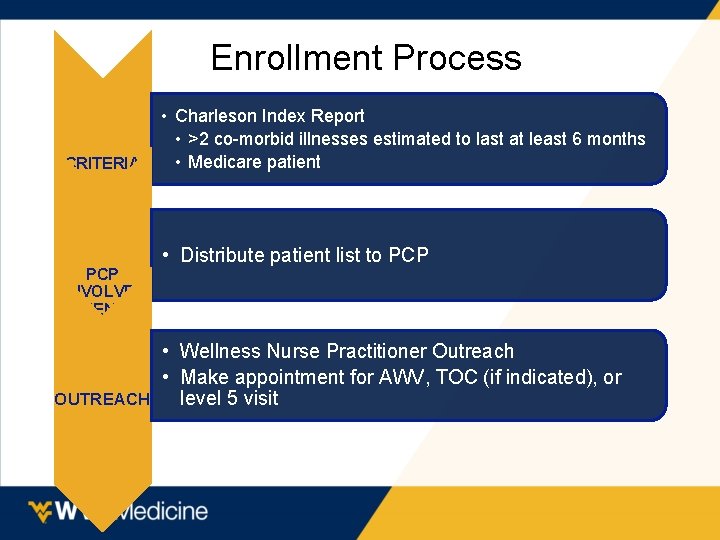
Enrollment Process CRITERIA PCP INVOLVEMENT • Charleson Index Report • >2 co-morbid illnesses estimated to last at least 6 months • Medicare patient • Distribute patient list to PCP • Wellness Nurse Practitioner Outreach • Make appointment for AWV, TOC (if indicated), or OUTREACH level 5 visit
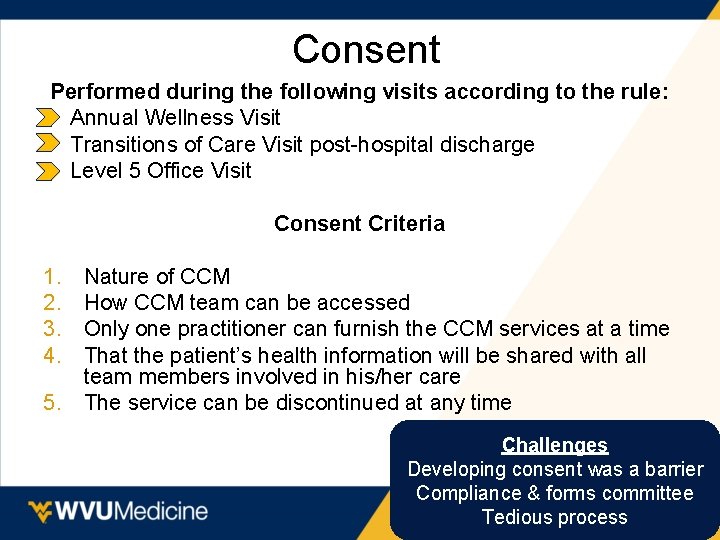
Consent Performed during the following visits according to the rule: • Annual Wellness Visit • Transitions of Care Visit post-hospital discharge • Level 5 Office Visit Consent Criteria 1. 2. 3. 4. Nature of CCM How CCM team can be accessed Only one practitioner can furnish the CCM services at a time That the patient’s health information will be shared with all team members involved in his/her care 5. The service can be discontinued at any time Challenges Developing consent was a barrier Compliance & forms committee Tedious process
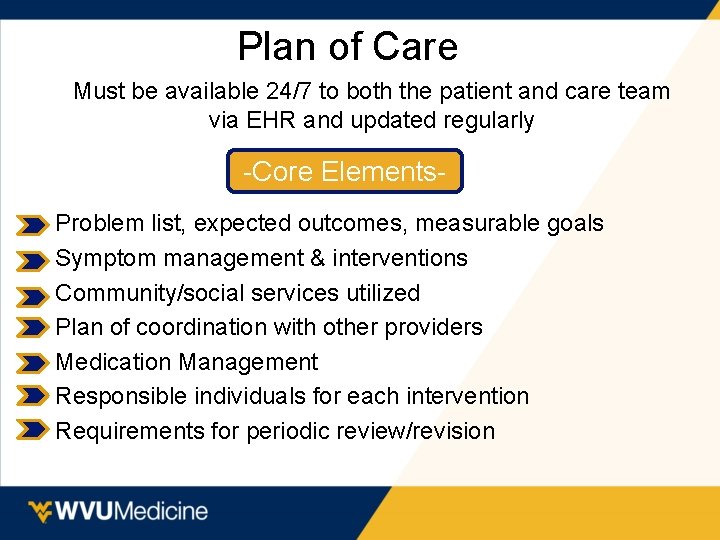
Plan of Care Must be available 24/7 to both the patient and care team via EHR and updated regularly -Core Elements. Problem list, expected outcomes, measurable goals Symptom management & interventions Community/social services utilized Plan of coordination with other providers Medication Management Responsible individuals for each intervention Requirements for periodic review/revision
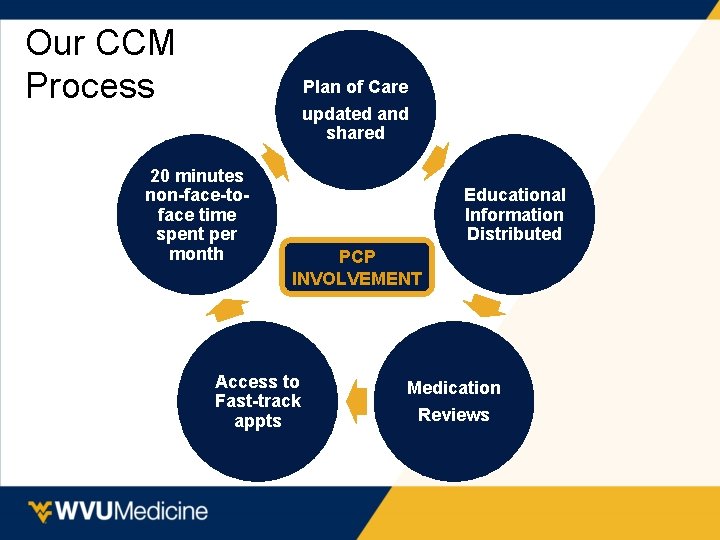
Our CCM Process Plan of Care updated and shared 20 minutes non-face-toface time spent per month Educational Information Distributed PCP INVOLVEMENT Access to Fast-track appts Medication Reviews
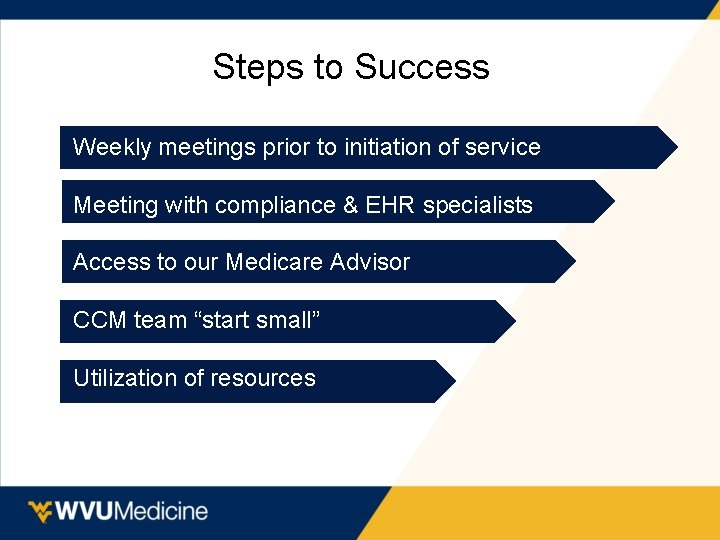
Steps to Success Weekly meetings prior to initiation of service Meeting with compliance & EHR specialists Access to our Medicare Advisor CCM team “start small” Utilization of resources
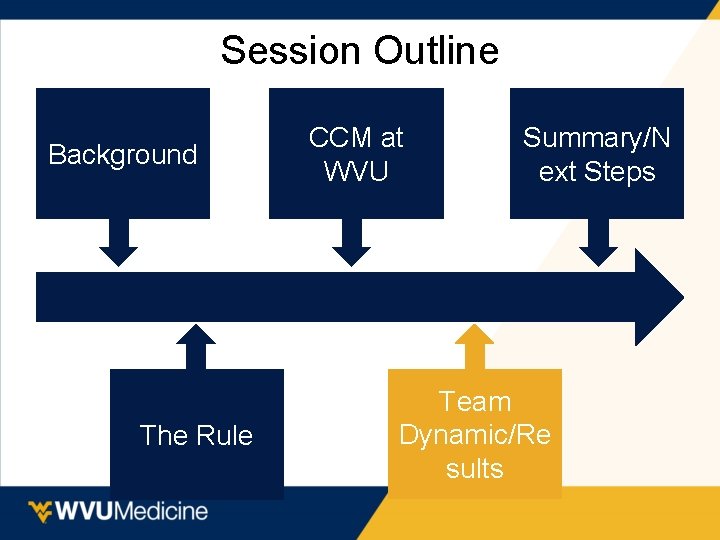
Session Outline Background The Rule CCM at WVU Summary/N ext Steps Team Dynamic/Re sults
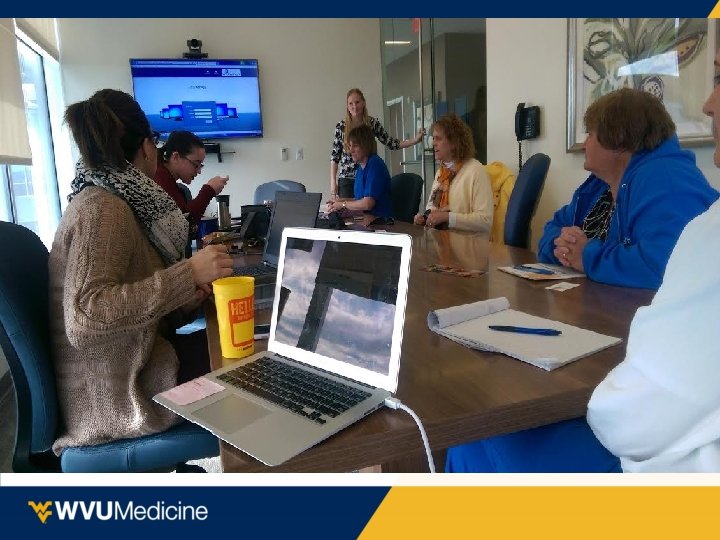
Weekly Team Meeting • Team meets for 1 hour weekly • Goal is to coordinate patient care and CCM service • Tools: • • Access to EHR Projector Spreadsheet Coffee/lunch
Weekly Team Meeting ü Review care plans for the list of patients ü Discuss any patient issues ü Identify new enrollees ü Ensure proper charge capture ü Discuss scholarship
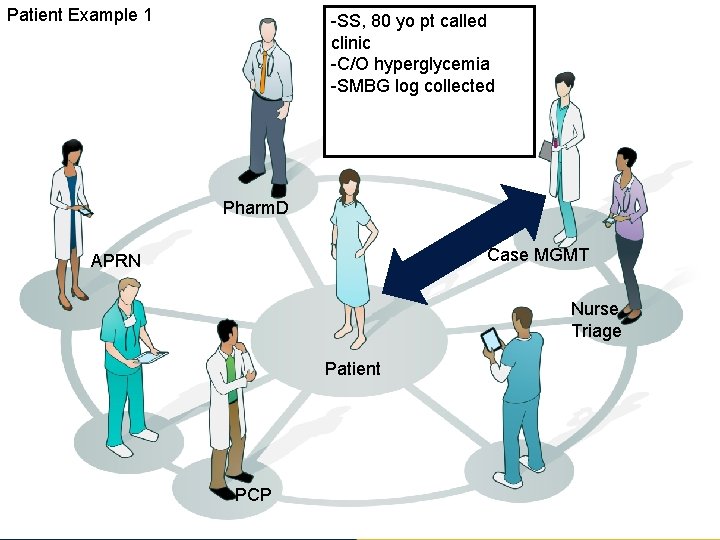
Patient Example 1 -SS, 80 yo pt called clinic -C/O hyperglycemia -SMBG log collected Pharm. D Case MGMT APRN Nurse Triage Patient PCP
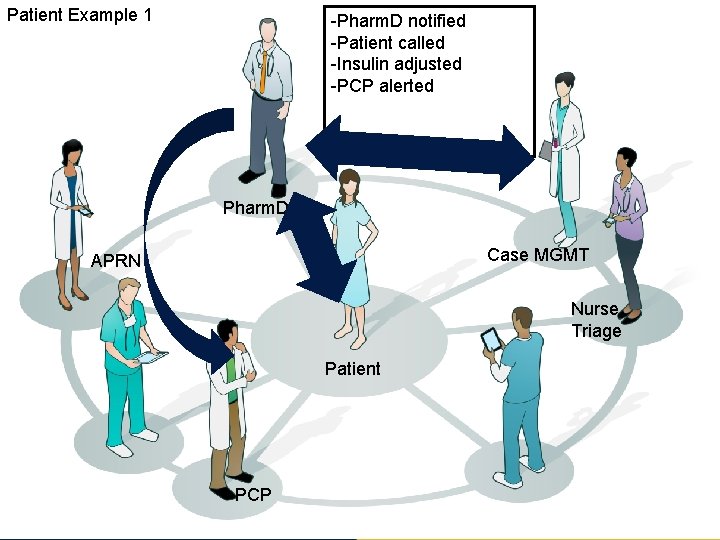
Patient Example 1 -Pharm. D notified -Patient called -Insulin adjusted -PCP alerted Pharm. D Case MGMT APRN Nurse Triage Patient PCP
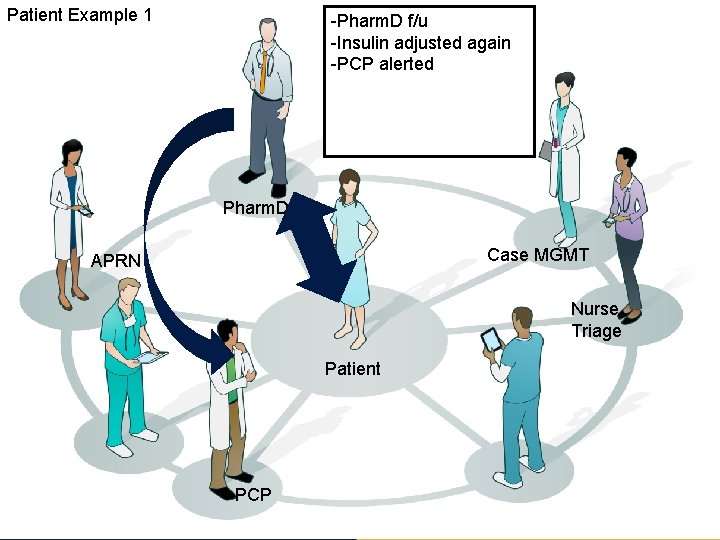
Patient Example 1 -Pharm. D f/u -Insulin adjusted again -PCP alerted Pharm. D Case MGMT APRN Nurse Triage Patient PCP
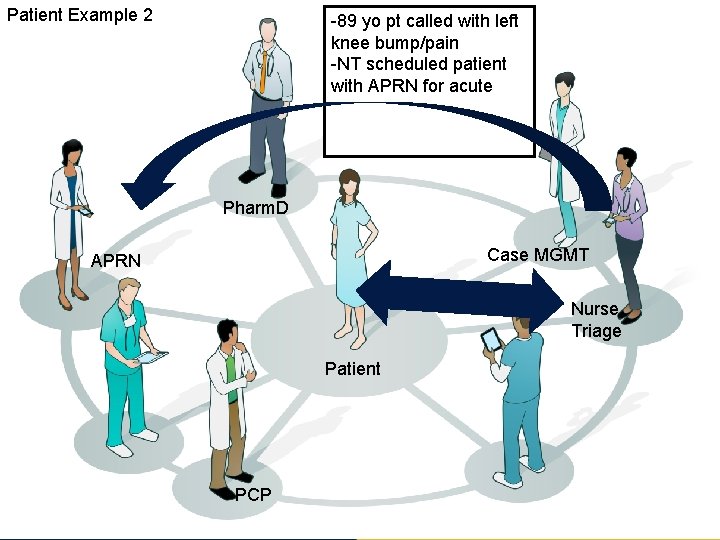
Patient Example 2 -89 yo pt called with left knee bump/pain -NT scheduled patient with APRN for acute Pharm. D Case MGMT APRN Nurse Triage Patient PCP
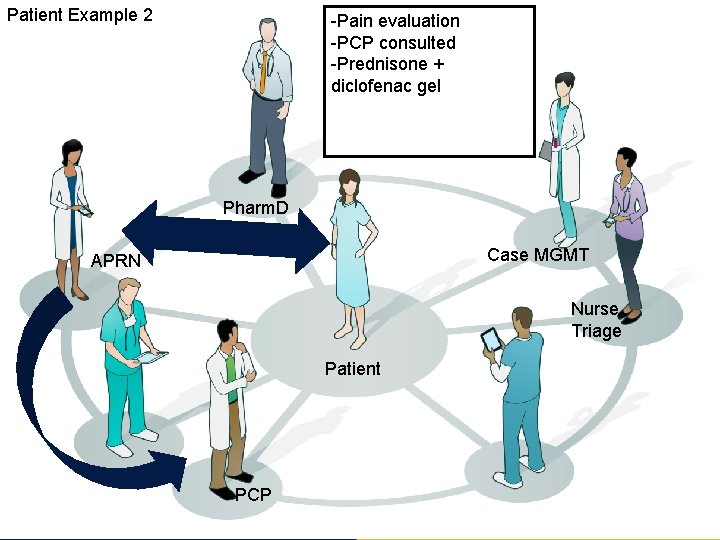
Patient Example 2 -Pain evaluation -PCP consulted -Prednisone + diclofenac gel Pharm. D Case MGMT APRN Nurse Triage Patient PCP
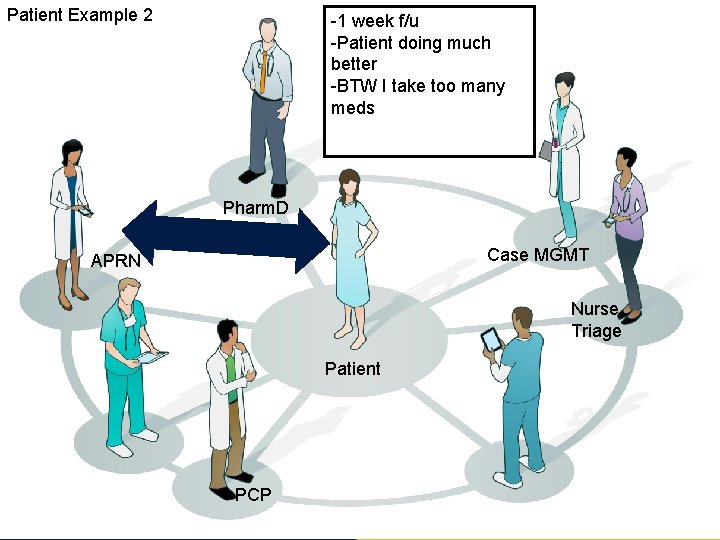
Patient Example 2 -1 week f/u -Patient doing much better -BTW I take too many meds Pharm. D Case MGMT APRN Nurse Triage Patient PCP
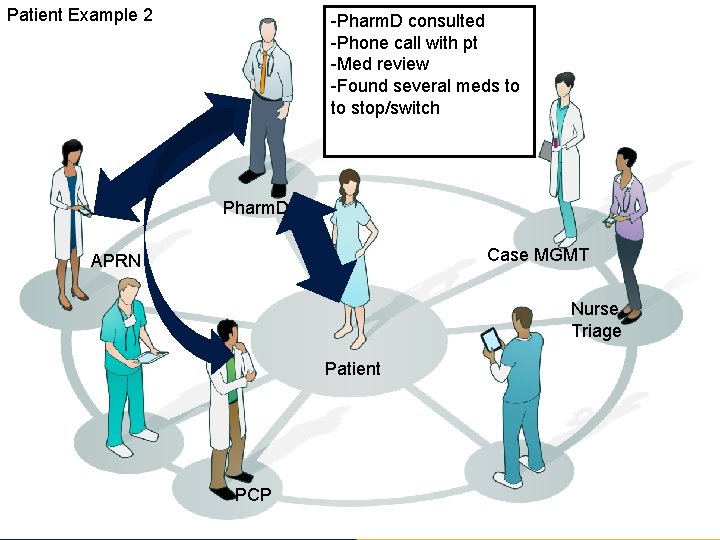
Patient Example 2 -Pharm. D consulted -Phone call with pt -Med review -Found several meds to to stop/switch Pharm. D Case MGMT APRN Nurse Triage Patient PCP
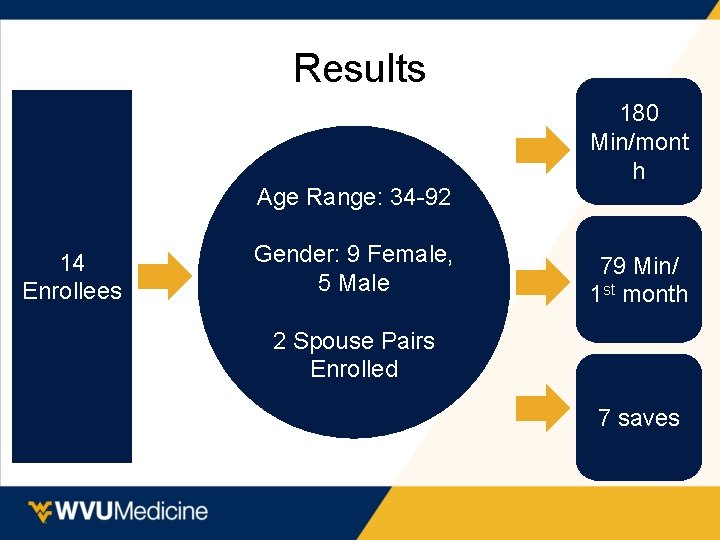
Results Age Range: 34 -92 14 Enrollees Gender: 9 Female, 5 Male 180 Min/mont h 79 Min/ 1 st month 2 Spouse Pairs Enrolled 7 saves
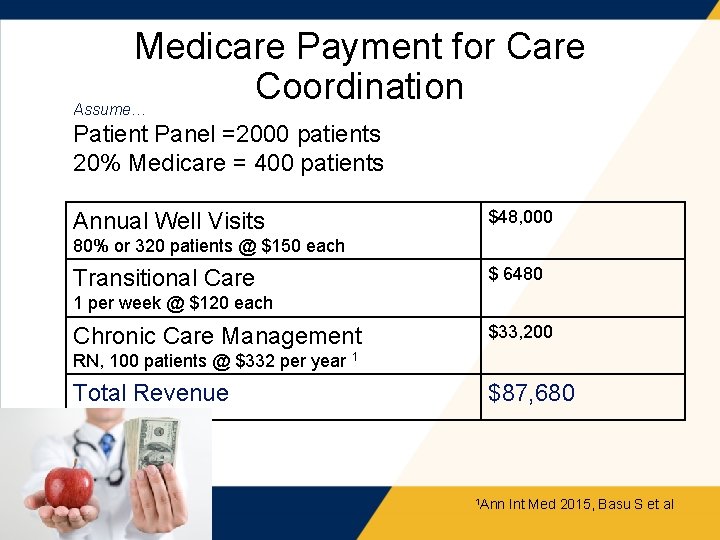
Medicare Payment for Care Coordination Assume… Patient Panel =2000 patients 20% Medicare = 400 patients Annual Well Visits $48, 000 80% or 320 patients @ $150 each Transitional Care $ 6480 1 per week @ $120 each Chronic Care Management $33, 200 RN, 100 patients @ $332 per year 1 Total Revenue $87, 680 1 Ann Int Med 2015, Basu S et al
Session Outline Background The Rule CCM at WVU Summary/N ext Steps Team Dynamic/Re sults
Summary • To provide the patient with a well-organized, proactive team connected to a trusted primary care provider to provide more effective care coordination and self-care support • May be used as a means for reimbursement for services already provided • Family Medicine at WVU has created a service and is the leader/expert of CCM for WVU Medicine
Discussion • How could you implement this into your practice? • What are common problems among your potential CCM patient panel? • What team members will you need? • What are potential barriers you will need to overcome?
Feedback Please take the time to provide feedback using the online form.
References • http: //www. pyapc. com/white-paper-details-new-medicare-paymentchronic-care-management/ • http: //www. cms. gov/Outreach-and-Education/Medicare-Learning. Network. MLN/MLNProducts/Downloads/Chronic. Care. Management. pdf • Please also see the STFM CPI 2015 digital resource library for supporting documents- (consent, informational handout, sample care plan, CMS FAQ’s)
- Slides: 44