
Medical Virology Pathogenesis of viral infection Dr Sameer
- Slides: 30
Medical Virology Pathogenesis of viral infection Dr. Sameer Naji, MB, BCh, Ph. D (UK) Dean Assistant Head of Basic Medical Sciences Dept. Faculty of Medicine The Hashemite University
Pathogenesis of viral infection
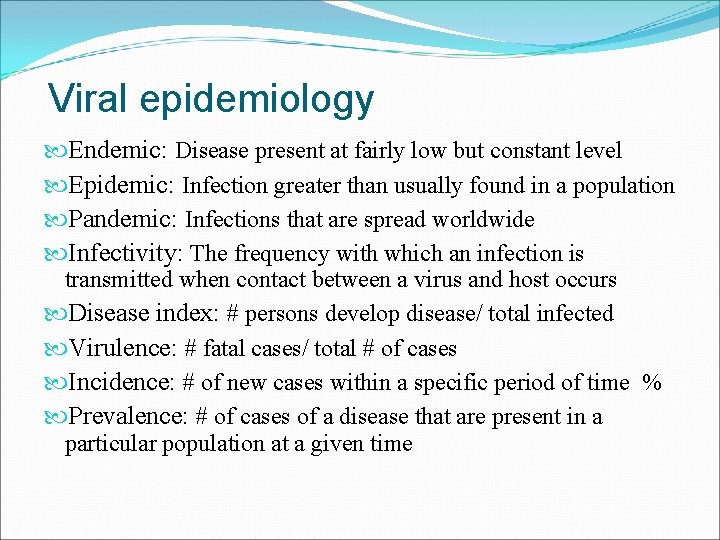
Viral epidemiology Endemic: Disease present at fairly low but constant level Epidemic: Infection greater than usually found in a population Pandemic: Infections that are spread worldwide Infectivity: The frequency with which an infection is transmitted when contact between a virus and host occurs Disease index: # persons develop disease/ total infected Virulence: # fatal cases/ total # of cases Incidence: # of new cases within a specific period of time % Prevalence: # of cases of a disease that are present in a particular population at a given time
What does a pathogen have to do? Infect (infest) a host Reproduce (replicate) itself Ensure that its progeny are transmitted to another host
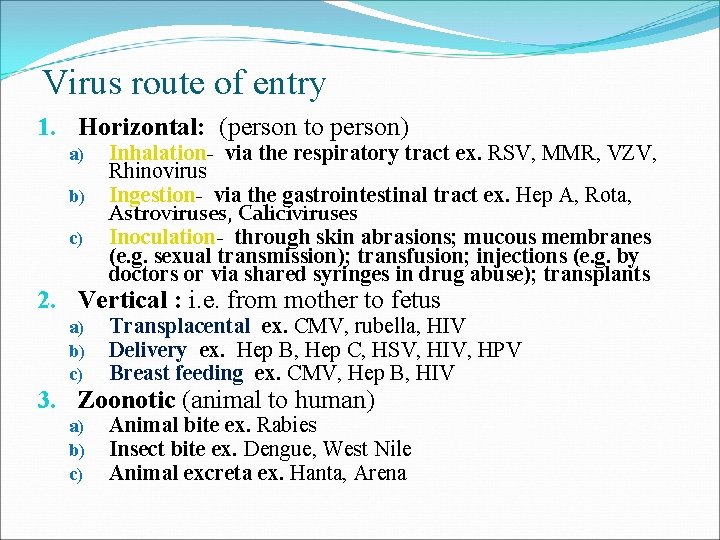
Virus route of entry 1. Horizontal: (person to person) a) b) c) Inhalation- via the respiratory tract ex. RSV, MMR, VZV, Rhinovirus Ingestion- via the gastrointestinal tract ex. Hep A, Rota, Astroviruses, Caliciviruses Inoculation- through skin abrasions; mucous membranes (e. g. sexual transmission); transfusion; injections (e. g. by doctors or via shared syringes in drug abuse); transplants 2. Vertical : i. e. from mother to fetus a) b) c) Transplacental ex. CMV, rubella, HIV Delivery ex. Hep B, Hep C, HSV, HIV, HPV Breast feeding ex. CMV, Hep B, HIV 3. Zoonotic (animal to human) a) b) c) Animal bite ex. Rabies Insect bite ex. Dengue, West Nile Animal excreta ex. Hanta, Arena
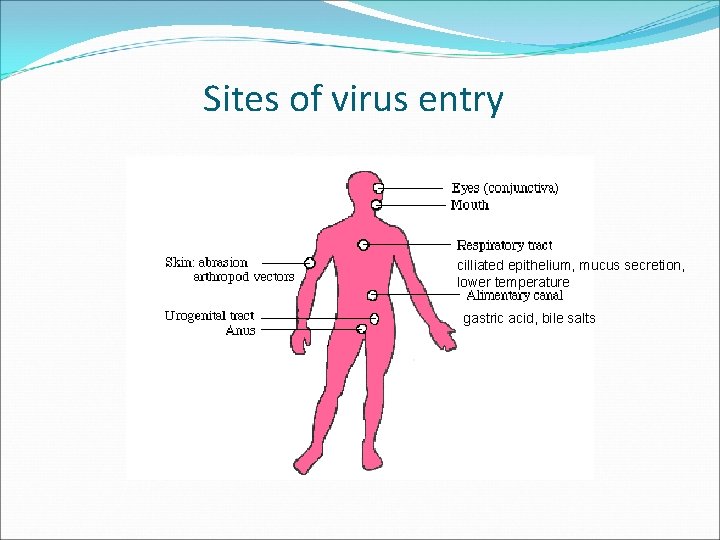
Sites of virus entry cilliated epithelium, mucus secretion, lower temperature gastric acid, bile salts
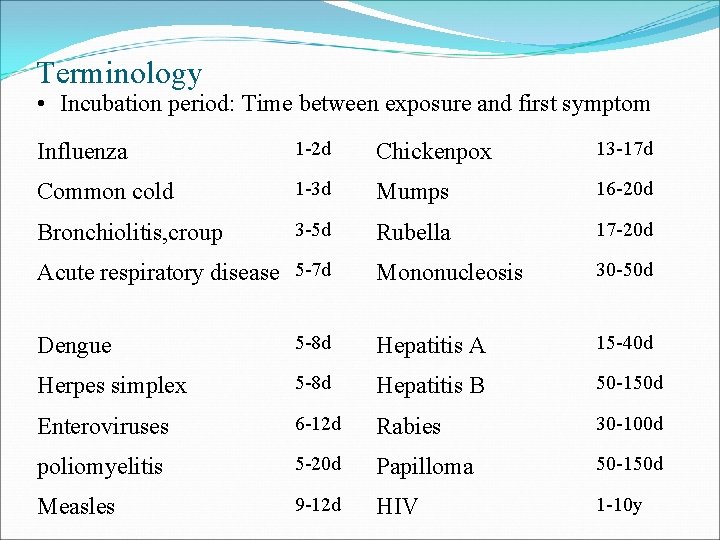
Terminology • Incubation period: Time between exposure and first symptom Influenza 1 -2 d Chickenpox 13 -17 d Common cold 1 -3 d Mumps 16 -20 d Bronchiolitis, croup 3 -5 d Rubella 17 -20 d Mononucleosis 30 -50 d Acute respiratory disease 5 -7 d Dengue 5 -8 d Hepatitis A 15 -40 d Herpes simplex 5 -8 d Hepatitis B 50 -150 d Enteroviruses 6 -12 d Rabies 30 -100 d poliomyelitis 5 -20 d Papilloma 50 -150 d Measles 9 -12 d HIV 1 -10 y
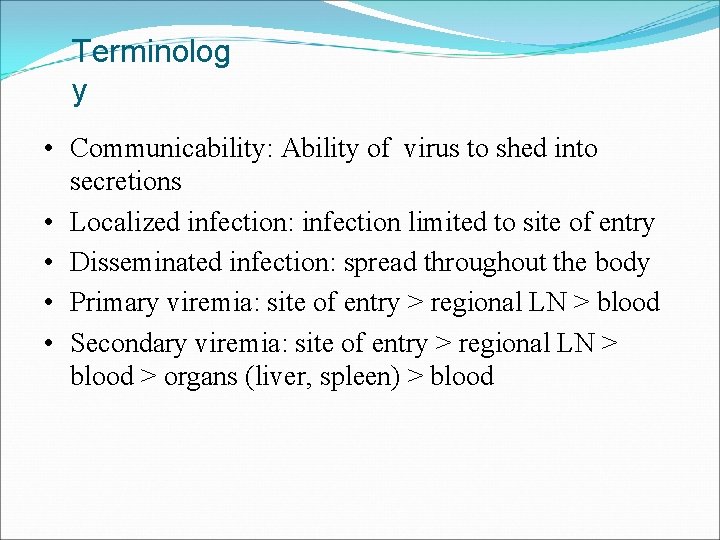
Terminolog y • Communicability: Ability of virus to shed into secretions • Localized infection: infection limited to site of entry • Disseminated infection: spread throughout the body • Primary viremia: site of entry > regional LN > blood • Secondary viremia: site of entry > regional LN > blood > organs (liver, spleen) > blood
Primary Replication Having gained entry to a potential host, the virus must initiate an infection by entering a susceptible cell. This frequently determines whether the infection will remain localized at the site of entry or spread to become a systemic infection
Secondary Replication Occurs in systemic infections when a virus reaches other tissues in which it is capable of replication, e. g. Poliovirus (gut epithelium - neurons in brain & spinal cord) or Lentiviruses (macrophages - CNS + many other tissues). If a virus can be prevented from reaching tissues where secondary replication can occur, generally no disease results.
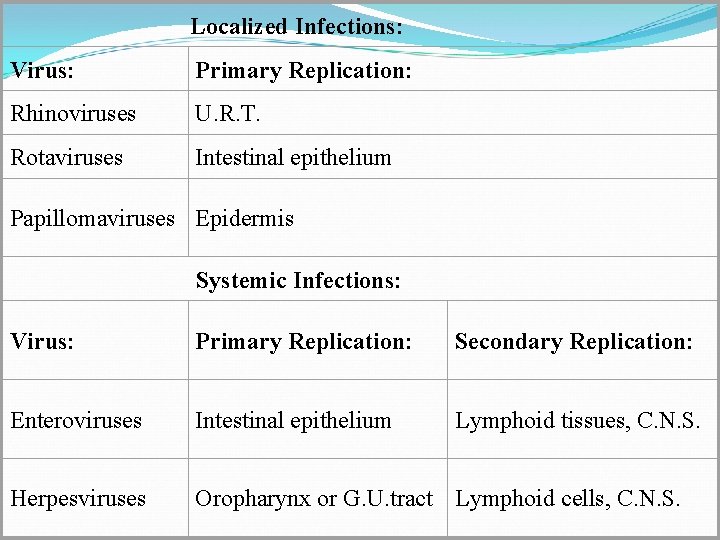
Localized Infections: Virus: Primary Replication: Rhinoviruses U. R. T. Rotaviruses Intestinal epithelium Papillomaviruses Epidermis Systemic Infections: Virus: Primary Replication: Secondary Replication: Enteroviruses Intestinal epithelium Lymphoid tissues, C. N. S. Herpesviruses Oropharynx or G. U. tract Lymphoid cells, C. N. S.
Spread Throughout the Host Apart from direct cell-cell contact, there are 2 main mechanisms for spread throughout the host: via the bloodstream via the nervous system
Via the bloodstream Virus may get into the bloodstream by direct inoculation - e. g. Arthropod vectors, blood transfusion or I. V. drug abuse. The virus may travel free in the plasma (Togaviruses, Enteroviruses), or in association with red cells (Orbiviruses), platelets (HSV), lymphocytes (EBV, CMV) or monocytes (Lentiviruses). Primary viraemia usually proceeds and is necessary for spread to the blood stream, followed by more generalized, higher titre secondary viraemia as the virus reaches other target tissues or replicates directly in blood cells
Via the nervous system spread to nervous system is preceded by primary viraemia. In some cases, spread occurs directly by contact with neurons at the primary site of infection, in other cases via the bloodstream. Once in peripheral nerves, the virus can spread to the CNS by axonal transport along neurons (classic - HSV). Viruses can cross synaptic junctions since these frequently contain virus receptors, allowing the virus to jump from one cell to another
Virulence and cytopathogenicity Virulence: the ability of the virus to cause disease in infected cell Persistent infection Latent infection, lysogeny Chronic infection Permissive cells allow production of virions and/or transformation Virulent viruses Kill target cell and cause disease (productive response) Nonpermissive cells permits cell transformation only Abortive infection no virus replication, early viral proteins cause cell death Cytopathic effect
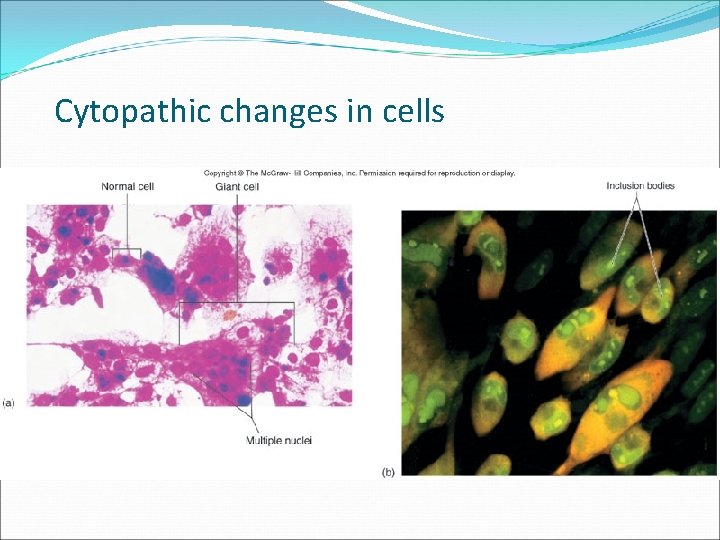
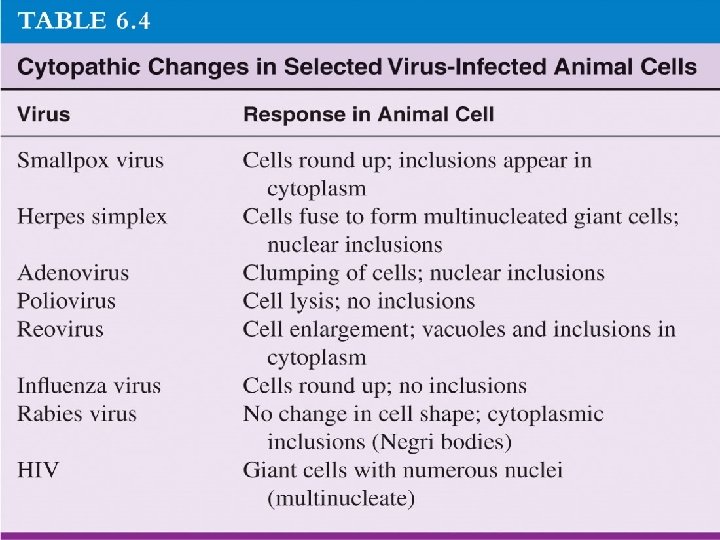
Cytopathic effects Virus-induced damage to cells 1. 2. 3. 4. 5. 6. 7. 8. Changes in size & shape Cytoplasmic inclusion bodies Nuclear inclusion bodies Cells fuse to form multinucleated cells Cell lysis Alter DNA Transform cells into cancerous cells Virokines and viroreceptors: DNA viruses; cell proliferate and avoid host defenses
Cytopathic changes in cells
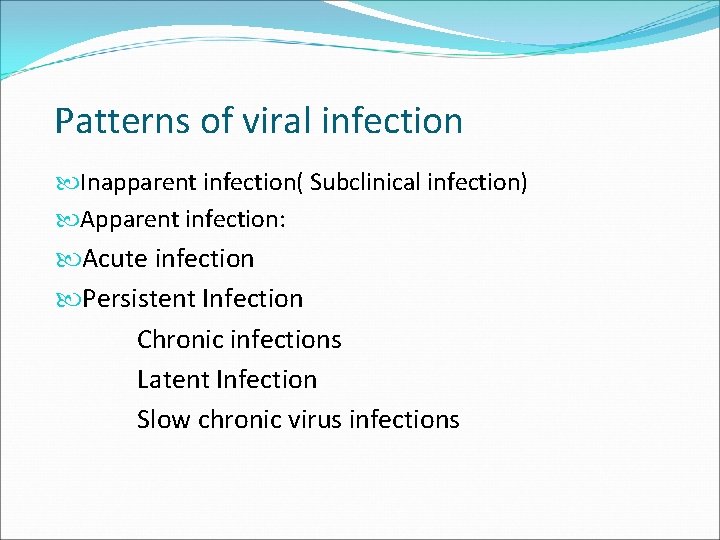
Patterns of viral infection Inapparent infection( Subclinical infection) Apparent infection: Acute infection Persistent Infection Chronic infections Latent Infection Slow chronic virus infections
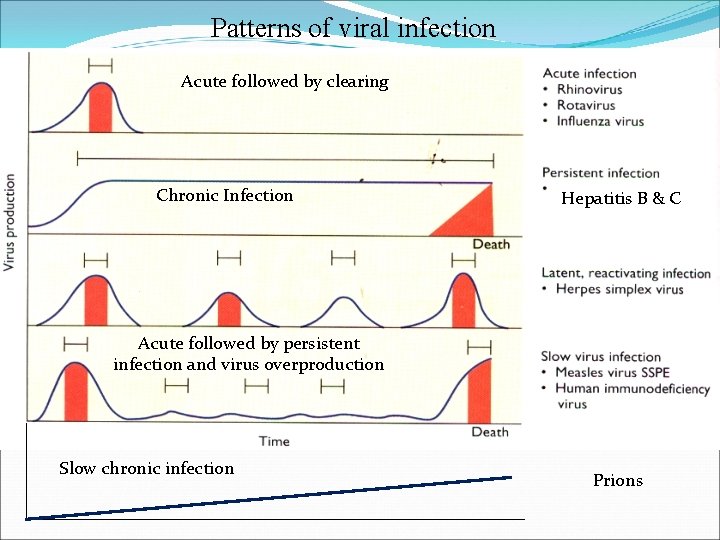
Patterns of viral infection Acute followed by clearing Chronic Infection Hepatitis B & C Acute followed by persistent infection and virus overproduction Slow chronic infection Prions
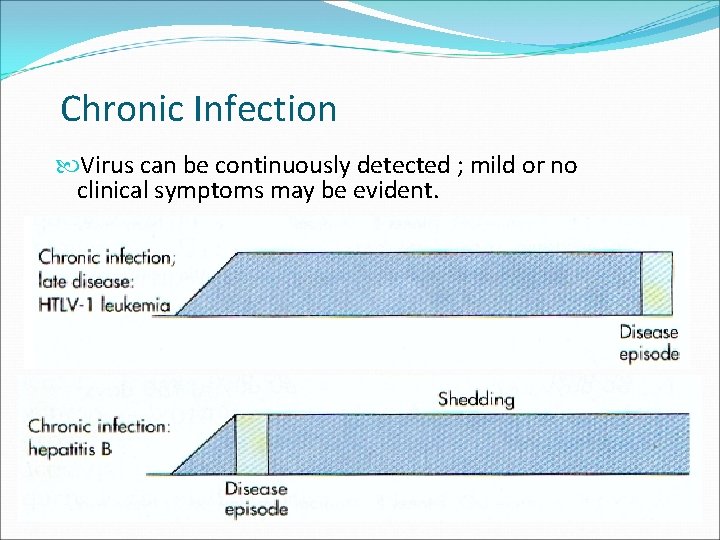
Chronic Infection Virus can be continuously detected ; mild or no clinical symptoms may be evident.
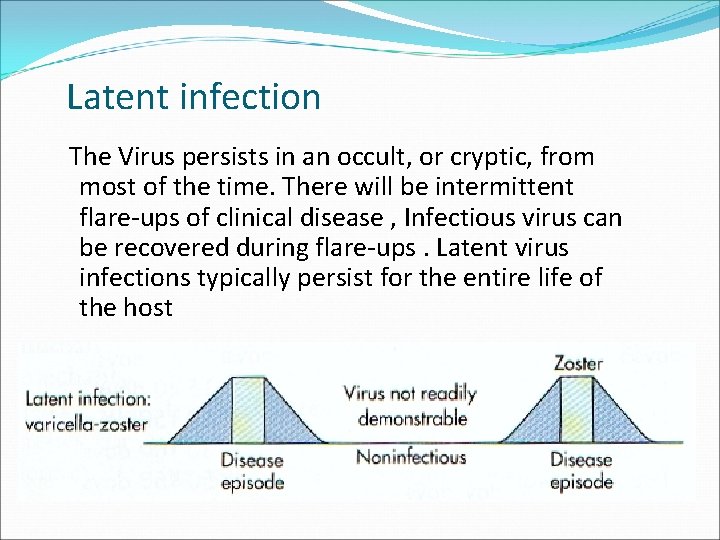
Latent infection The Virus persists in an occult, or cryptic, from most of the time. There will be intermittent flare-ups of clinical disease , Infectious virus can be recovered during flare-ups. Latent virus infections typically persist for the entire life of the host
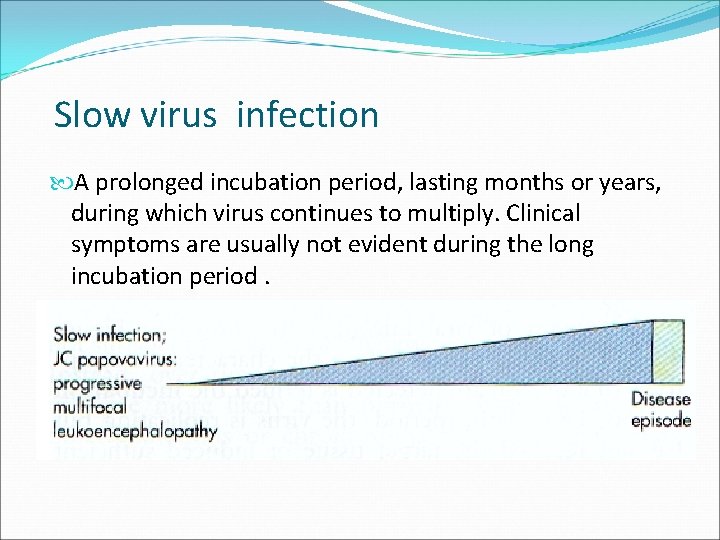
Slow virus infection A prolonged incubation period, lasting months or years, during which virus continues to multiply. Clinical symptoms are usually not evident during the long incubation period.
Overall fate of the cell The cell dies in cytocidal infections this may be acute (when infection is brief and selflimiting) or chronic (drawn out, only a few cells infected while the rest proliferate)-Cytocidal effect The cell lives in persistent infections this may be productive or nonproductive (refers to whether or not virions are produced) or it may alternate between the two by way of latency and reactivation - Steady state infection
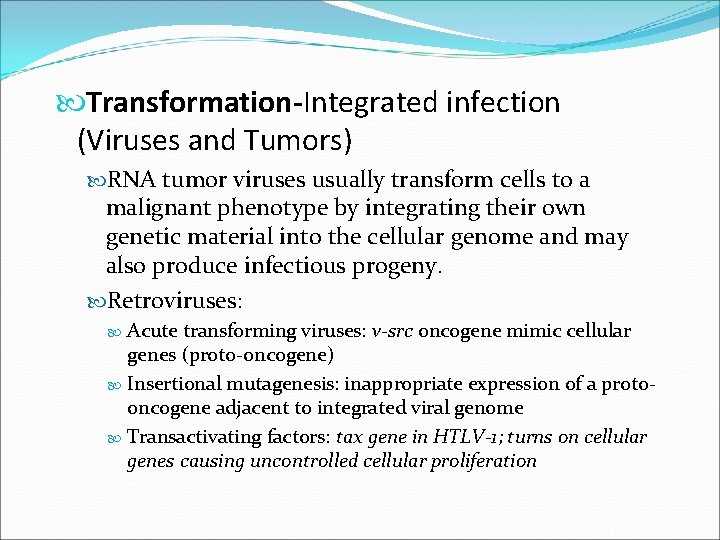
Transformation-Integrated infection (Viruses and Tumors) RNA tumor viruses usually transform cells to a malignant phenotype by integrating their own genetic material into the cellular genome and may also produce infectious progeny. Retroviruses: Acute transforming viruses: v-src oncogene mimic cellular genes (proto-oncogene) Insertional mutagenesis: inappropriate expression of a protooncogene adjacent to integrated viral genome Transactivating factors: tax gene in HTLV-1; turns on cellular genes causing uncontrolled cellular proliferation
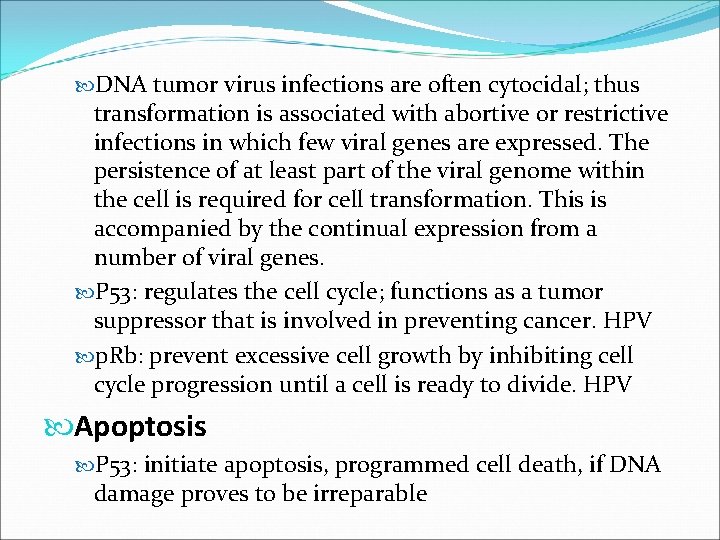
DNA tumor virus infections are often cytocidal; thus transformation is associated with abortive or restrictive infections in which few viral genes are expressed. The persistence of at least part of the viral genome within the cell is required for cell transformation. This is accompanied by the continual expression from a number of viral genes. P 53: regulates the cell cycle; functions as a tumor suppressor that is involved in preventing cancer. HPV p. Rb: prevent excessive cell growth by inhibiting cell cycle progression until a cell is ready to divide. HPV Apoptosis P 53: initiate apoptosis, programmed cell death, if DNA damage proves to be irreparable
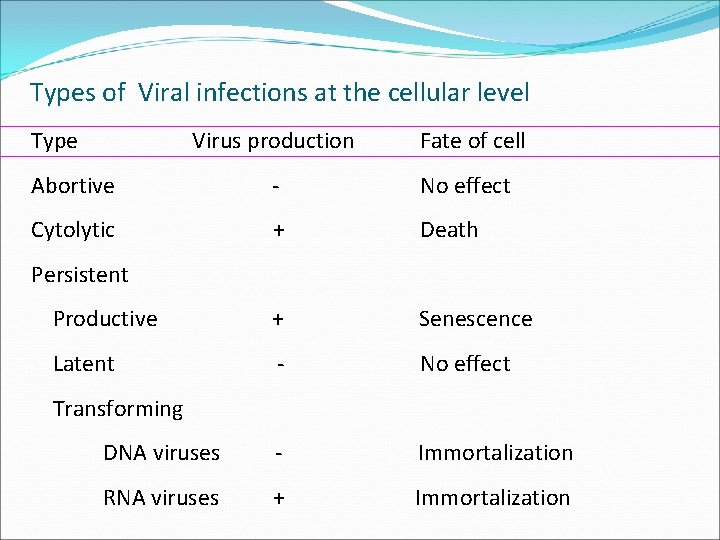
Types of Viral infections at the cellular level Type Virus production Fate of cell Abortive - No effect Cytolytic + Death Productive + Senescence Latent - No effect DNA viruses - Immortalization RNA viruses + Immortalization Persistent Transforming
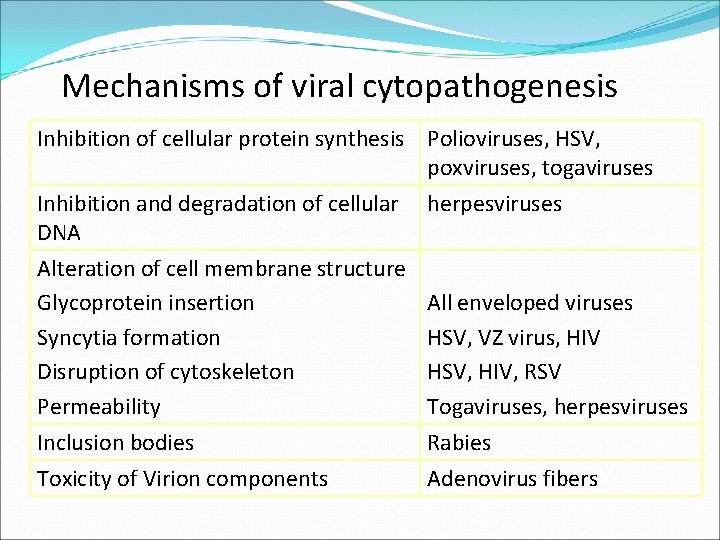
Mechanisms of viral cytopathogenesis Inhibition of cellular protein synthesis Polioviruses, HSV, poxviruses, togaviruses Inhibition and degradation of cellular herpesviruses DNA Alteration of cell membrane structure Glycoprotein insertion All enveloped viruses Syncytia formation HSV, VZ virus, HIV Disruption of cytoskeleton HSV, HIV, RSV Permeability Togaviruses, herpesviruses Inclusion bodies Rabies Toxicity of Virion components Adenovirus fibers
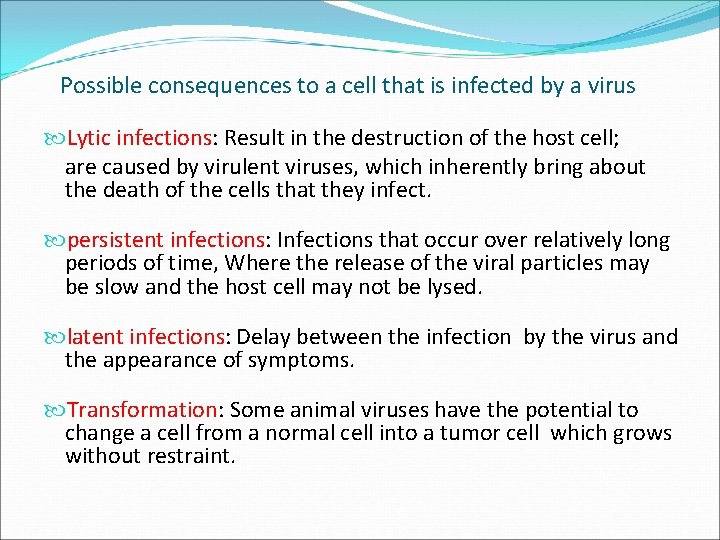
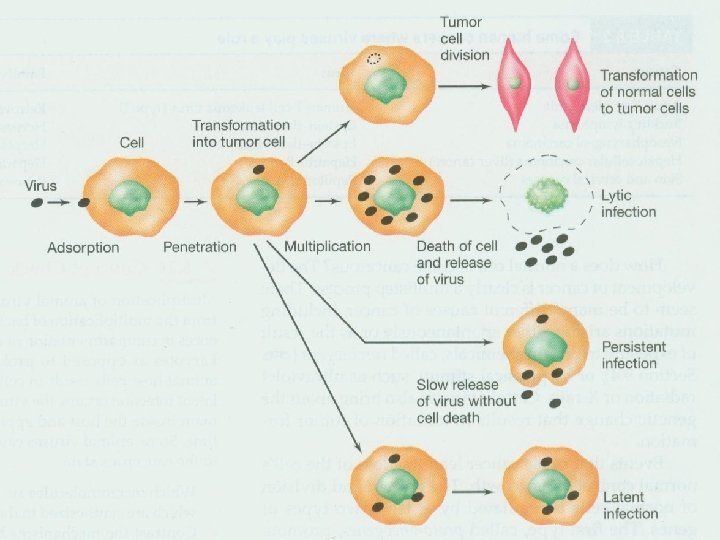
Possible consequences to a cell that is infected by a virus Lytic infections: Result in the destruction of the host cell; are caused by virulent viruses, which inherently bring about the death of the cells that they infect. persistent infections: Infections that occur over relatively long periods of time, Where the release of the viral particles may be slow and the host cell may not be lysed. latent infections: Delay between the infection by the virus and the appearance of symptoms. Transformation: Some animal viruses have the potential to change a cell from a normal cell into a tumor cell which grows without restraint.
30