
Medical Terminology The language of anatomy and physiology




- Slides: 10
Medical Terminology The language of anatomy and physiology
10 Words vs. 10 Word Parts
It’s Greek to Me • Most words are derived from a combination of Latin and Greek – Latin is a “dead” language no population actively uses – Greek is the language medicine began in
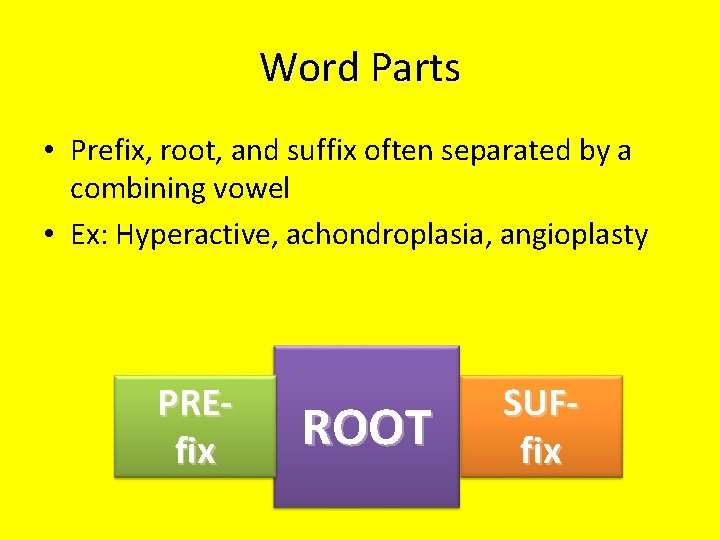
Word Parts • Prefix, root, and suffix often separated by a combining vowel • Ex: Hyperactive, achondroplasia, angioplasty PREfix ROOT SUFfix
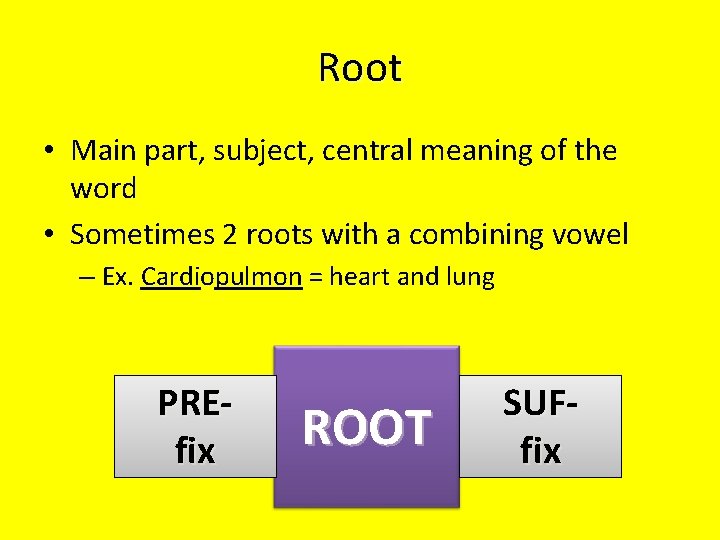
Root • Main part, subject, central meaning of the word • Sometimes 2 roots with a combining vowel – Ex. Cardiopulmon = heart and lung PREfix ROOT SUFfix
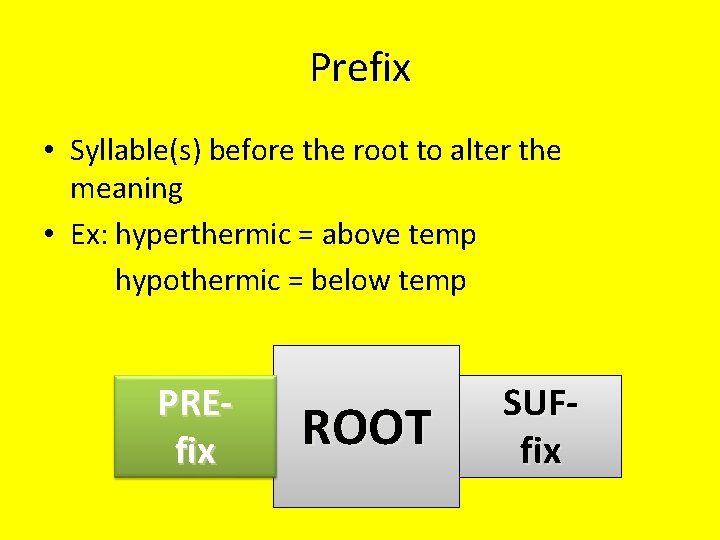
Prefix • Syllable(s) before the root to alter the meaning • Ex: hyperthermic = above temp hypothermic = below temp PREfix ROOT SUFfix
Suffix • Syllable(s) at the end of a root to alter the meaning • Ex: -osis = condition of -itis = inflamation of PREfix ROOT SUFfix
Plural Forms (not to be confused with “pleural” forms!) • English = most forms just add “-s” or “-es” • Latin/Greek = many forms
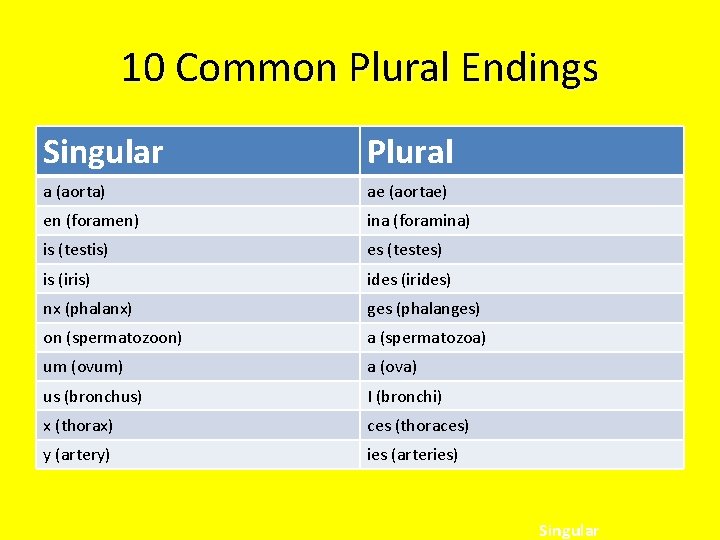
10 Common Plural Endings Singular Plural a (aorta) ae (aortae) en (foramen) ina (foramina) is (testis) es (testes) is (iris) ides (irides) nx (phalanx) ges (phalanges) on (spermatozoon) a (spermatozoa) um (ovum) a (ova) us (bronchus) I (bronchi) x (thorax) ces (thoraces) y (artery) ies (arteries) Singular
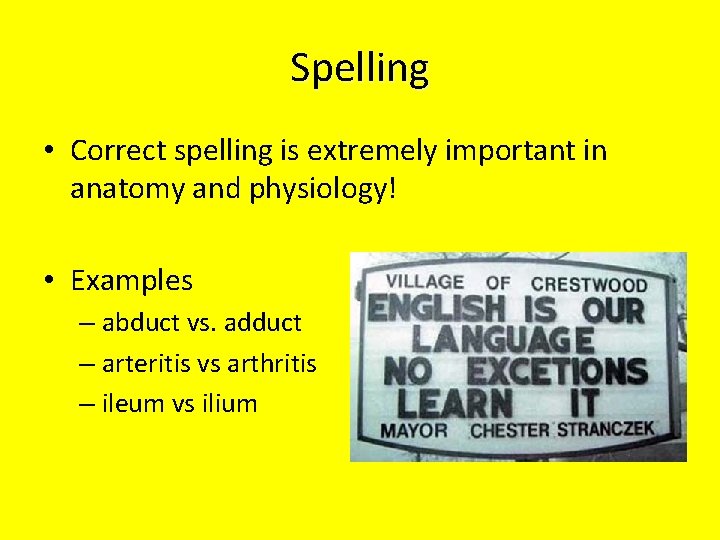
Spelling • Correct spelling is extremely important in anatomy and physiology! • Examples – abduct vs. adduct – arteritis vs arthritis – ileum vs ilium