
MEDICAL MATH CHAPTER 11 PG 280 Importance of

- Slides: 26
MEDICAL MATH CHAPTER 11 PG. 280
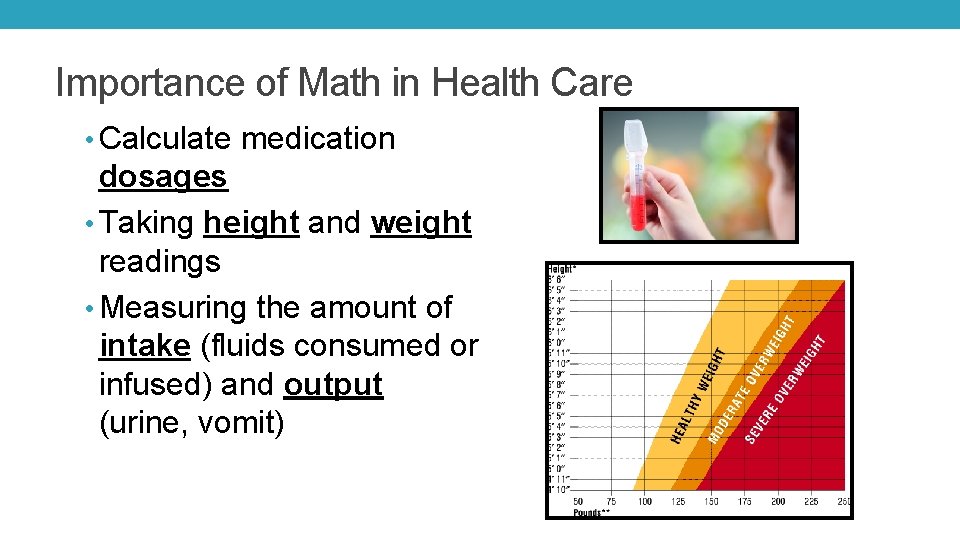
Importance of Math in Health Care • Calculate medication dosages • Taking height and weight readings • Measuring the amount of intake (fluids consumed or infused) and output (urine, vomit)
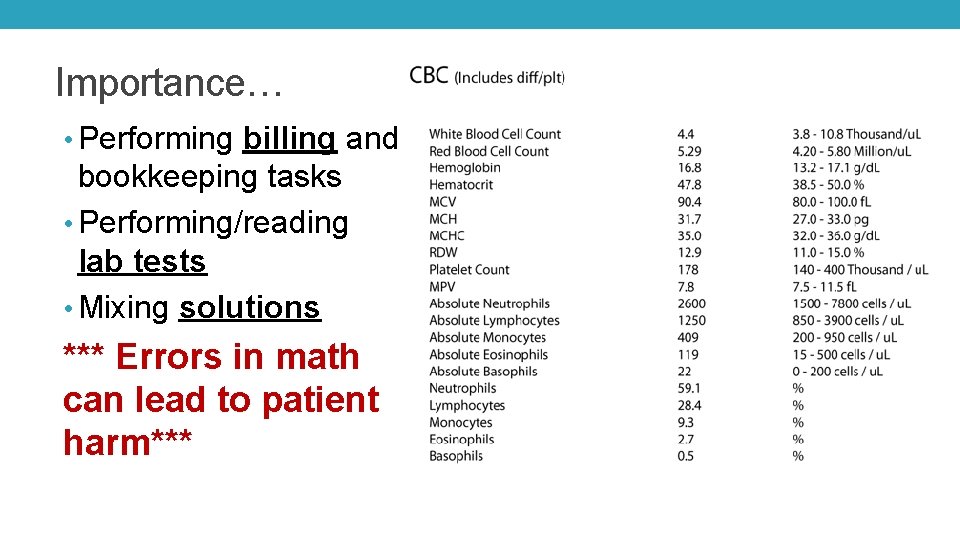
Importance… • Performing billing and bookkeeping tasks • Performing/reading lab tests • Mixing solutions *** Errors in math can lead to patient harm***
Math Anxiety/Avoidance/Phobia • A feeling of fear and/or intimidation when confronted with math. • It is an emotional reaction to math that is based on a past unpleasant experience that harms learning. • Good News! You CAN overcome math anxiety!
Overcoming Math Anxiety • Identify what you know and what you need to learn • Don’t procrastinate! Procrastination increases anxiety! • Use positive self-talk. “I will keep trying” not “I can’t do this” • Take breaks as needed. It will clear your mind. • Break down complex problems into smaller parts. • Accept that there are no secrets and no shortcuts to learning math. It takes practice, patience, and participation to succeed.
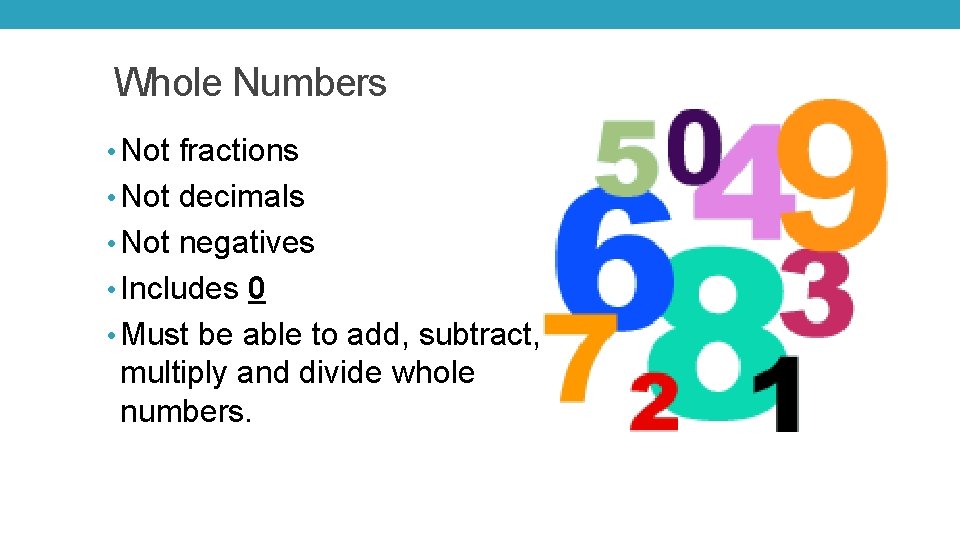
Whole Numbers • Not fractions • Not decimals • Not negatives • Includes 0 • Must be able to add, subtract, multiply and divide whole numbers.
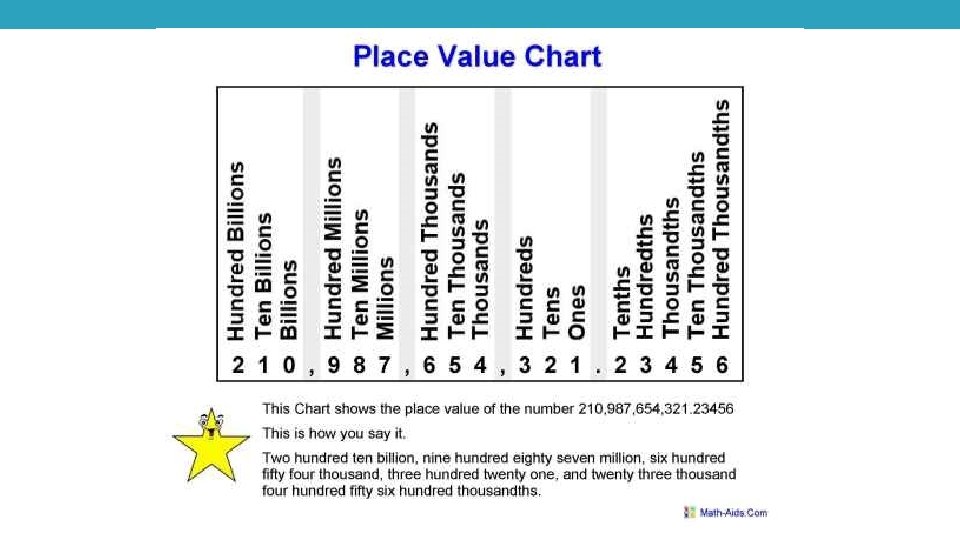
Decimals • One way to express a part of a number • Expressed in units of 10 • In Healthcare, JCAHO (Joint Commission on the Accreditation of Healthcare Organizations) requires… • Never use a trailing zero! Example: 1. 0 can be misread 10 if the decimal point is missed • Always use a leading zero! Example: . 1 can be misread as 1, so write 0. 1 instead.
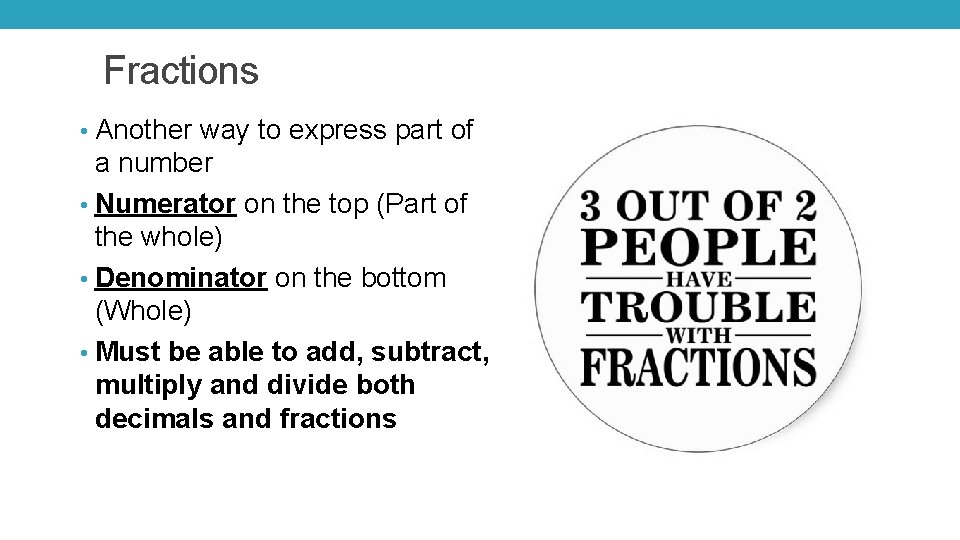
Fractions • Another way to express part of a number • Numerator on the top (Part of the whole) • Denominator on the bottom (Whole) • Must be able to add, subtract, multiply and divide both decimals and fractions
Rules for fractions http: //www. slideshare. net/sondrateer/fractions-1196964 • Rule for Addition of Fractions • Make sure that the fractions being added have the same denominator. If they do not, find the LCD for the fractions and put each in its equivalent form. Then, simply add the numerators of the fractions (the denominator stays the same). • Rule for Subtraction of Fractions • Make sure that the fractions being subtracted have the same denominator. If they do not, find the LCD for the fractions and put each in its equivalent form. Then, simply subtract the numerators of the fractions (the denominator stays the same). • Rule for Multiplication of Fractions • Multiply the numerators together and then multiply the denominators together. Simplify the result. • Rule for Division of Fractions • Take the reciprocal of the second fraction, or bottom fraction, and multiply. (Taking the reciprocal of a fraction means to flip it over. )
Work space to add/subtract/multiply/divide fractions
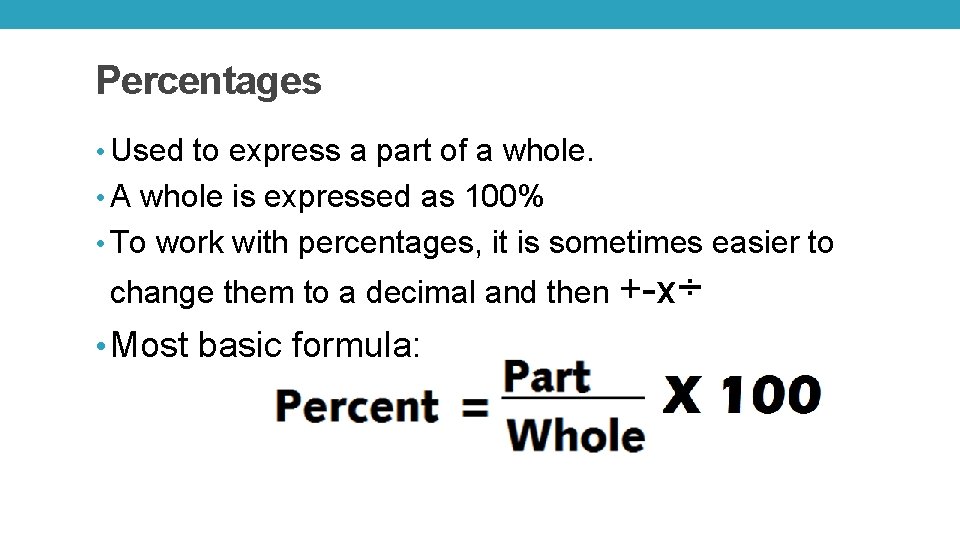
Percentages • Used to express a part of a whole. • A whole is expressed as 100% • To work with percentages, it is sometimes easier to change them to a decimal and then +-x÷ • Most basic formula:
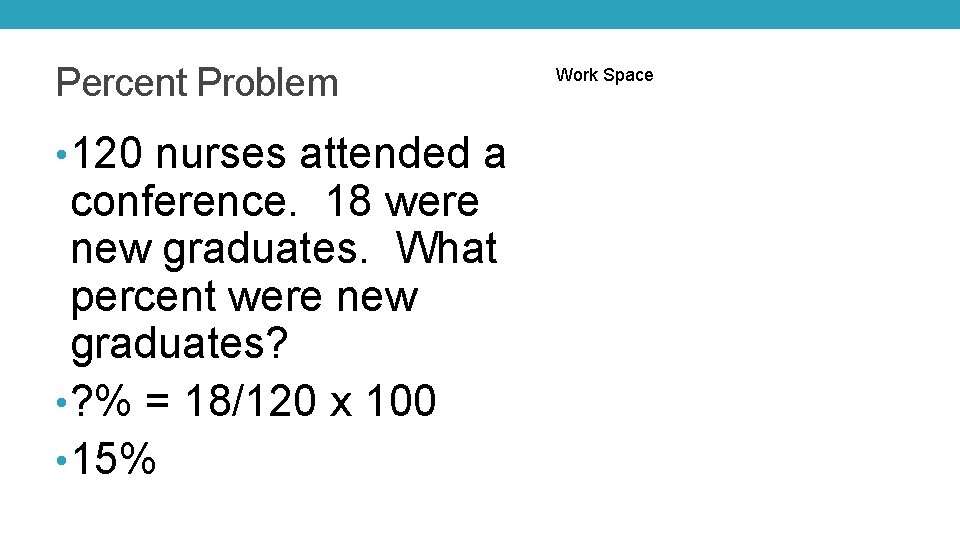
Percent Problem • 120 nurses attended a conference. 18 were new graduates. What percent were new graduates? • ? % = 18/120 x 100 • 15% Work Space
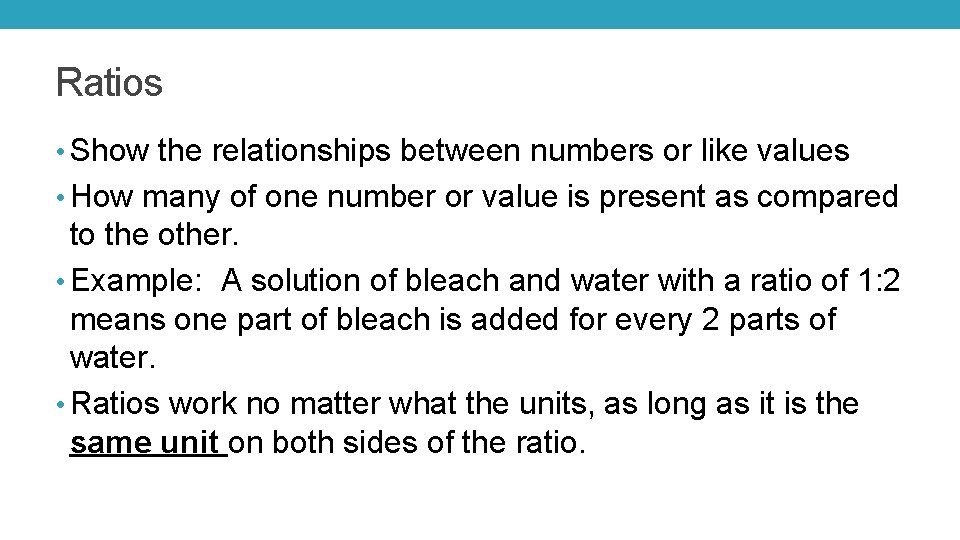
Ratios • Show the relationships between numbers or like values • How many of one number or value is present as compared to the other. • Example: A solution of bleach and water with a ratio of 1: 2 means one part of bleach is added for every 2 parts of water. • Ratios work no matter what the units, as long as it is the same unit on both sides of the ratio.
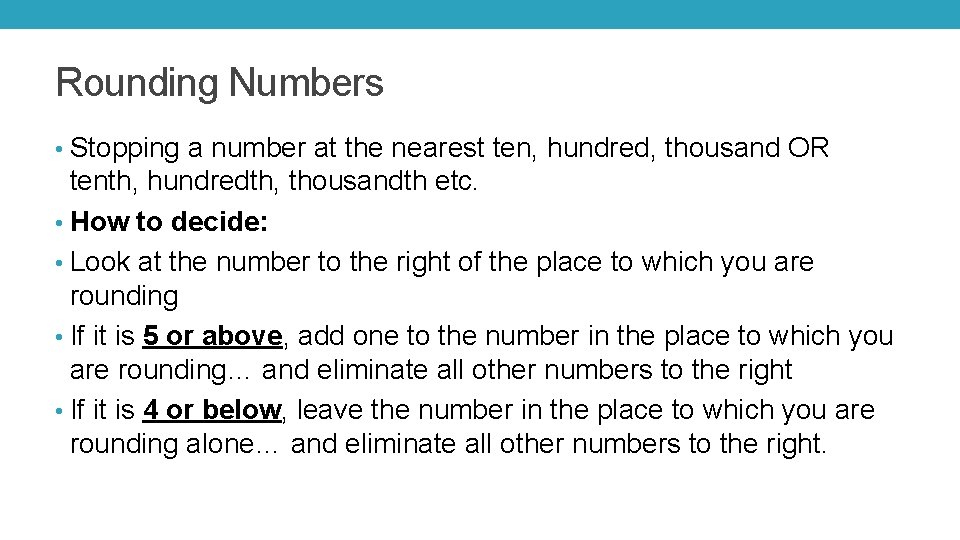
Rounding Numbers • Stopping a number at the nearest ten, hundred, thousand OR tenth, hundredth, thousandth etc. • How to decide: • Look at the number to the right of the place to which you are rounding • If it is 5 or above, add one to the number in the place to which you are rounding… and eliminate all other numbers to the right • If it is 4 or below, leave the number in the place to which you are rounding alone… and eliminate all other numbers to the right.
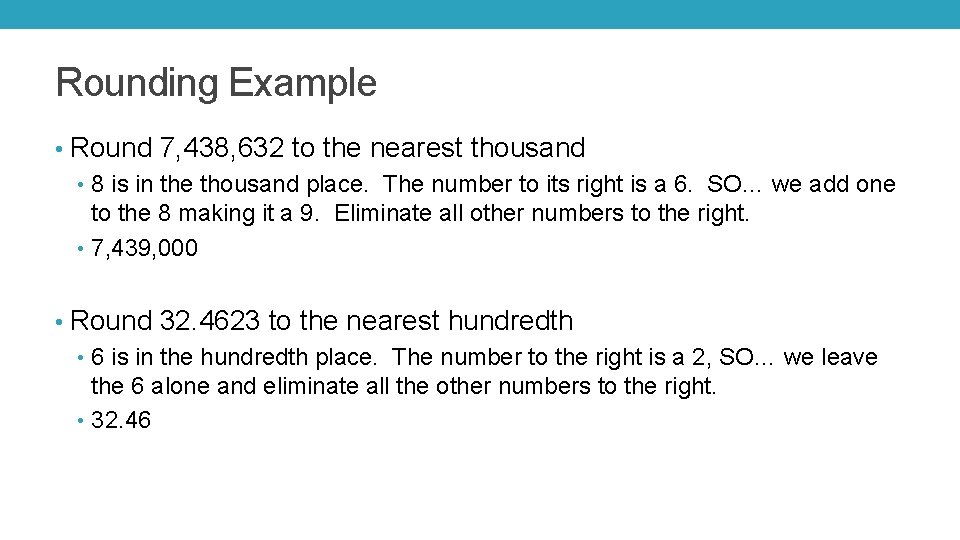
Rounding Example • Round 7, 438, 632 to the nearest thousand • 8 is in the thousand place. The number to its right is a 6. SO… we add one to the 8 making it a 9. Eliminate all other numbers to the right. • 7, 439, 000 • Round 32. 4623 to the nearest hundredth • 6 is in the hundredth place. The number to the right is a 2, SO… we leave the 6 alone and eliminate all the other numbers to the right. • 32. 46
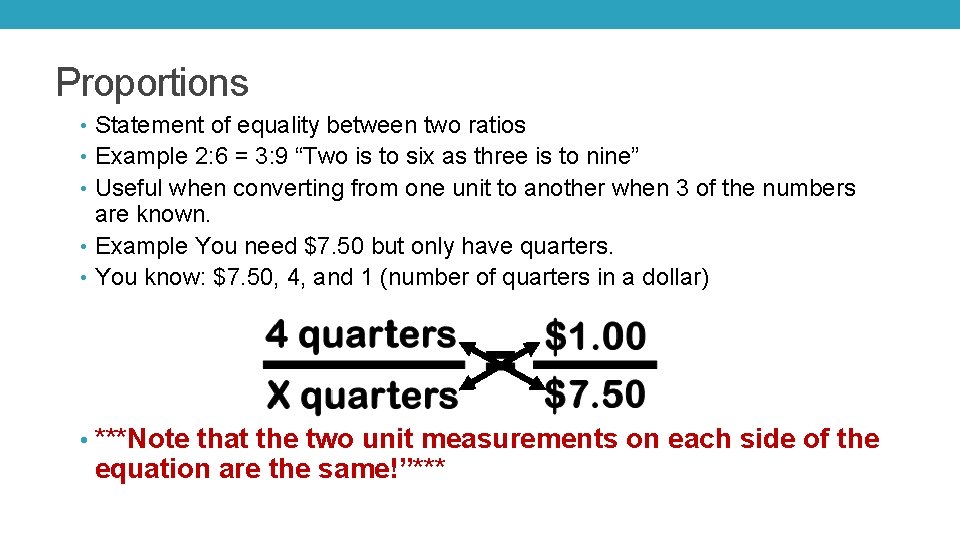
Proportions • Statement of equality between two ratios • Example 2: 6 = 3: 9 “Two is to six as three is to nine” • Useful when converting from one unit to another when 3 of the numbers are known. • Example You need $7. 50 but only have quarters. • You know: $7. 50, 4, and 1 (number of quarters in a dollar) • ***Note that the two unit measurements on each side of the equation are the same!”***
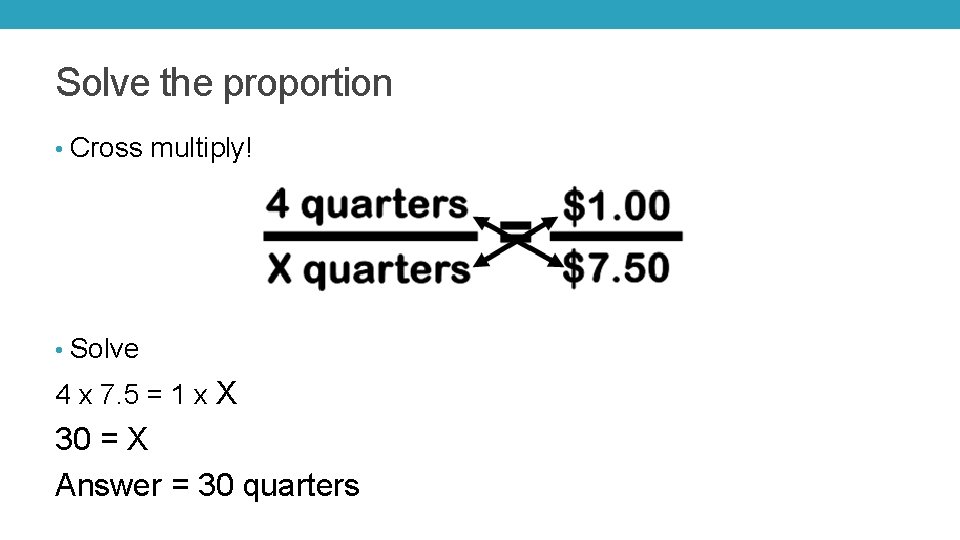
Solve the proportion • Cross multiply! • Solve 4 x 7. 5 = 1 x X 30 = X Answer = 30 quarters
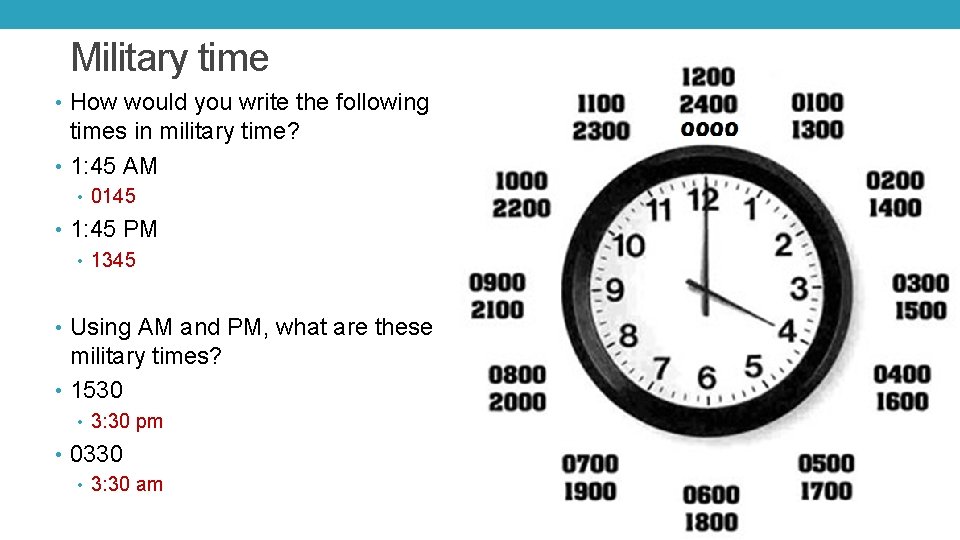
Military Time • Used in healthcare to avoid the confusion created by a. m. and p. m. • Uses the 24 hour clock • Time is always expressed with four digits (0030, 0200, 1200, 1730) • a. m. hours are the same as traditional time (1 a. m. is 0100, 5: 30 a. m. is 0530 hours • To convert p. m. hours, just add 1200. (1: 00 p. m. is 1200 + 0100 = 1300 hours) • 0000 or 2400 = Midnight (ending or beginning of the day) • 1200 = Noon (middle of the day)
Military time • How would you write the following times in military time? • 1: 45 AM • 0145 • 1: 45 PM • 1345 • Using AM and PM, what are these military times? • 1530 • 3: 30 pm • 0330 • 3: 30 am
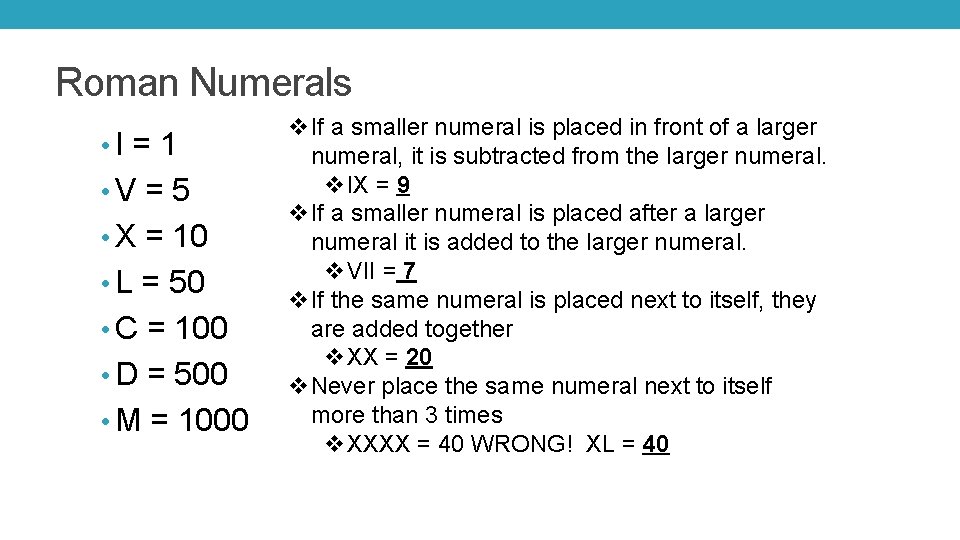
Roman Numerals • I = 1 • V = 5 • X = 10 • L = 50 • C = 100 • D = 500 • M = 1000 v. If a smaller numeral is placed in front of a larger numeral, it is subtracted from the larger numeral. v. IX = 9 v. If a smaller numeral is placed after a larger numeral it is added to the larger numeral. v. VII = 7 v. If the same numeral is placed next to itself, they are added together v. XX = 20 v. Never place the same numeral next to itself more than 3 times v. XXXX = 40 WRONG! XL = 40
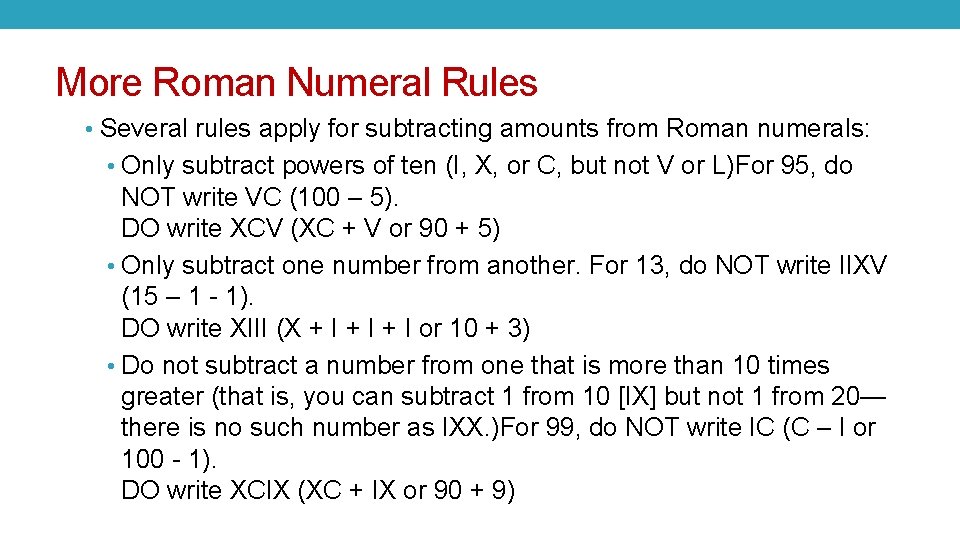
More Roman Numeral Rules • Several rules apply for subtracting amounts from Roman numerals: • Only subtract powers of ten (I, X, or C, but not V or L)For 95, do NOT write VC (100 – 5). DO write XCV (XC + V or 90 + 5) • Only subtract one number from another. For 13, do NOT write IIXV (15 – 1 - 1). DO write XIII (X + I + I or 10 + 3) • Do not subtract a number from one that is more than 10 times greater (that is, you can subtract 1 from 10 [IX] but not 1 from 20— there is no such number as IXX. )For 99, do NOT write IC (C – I or 100 - 1). DO write XCIX (XC + IX or 90 + 9)
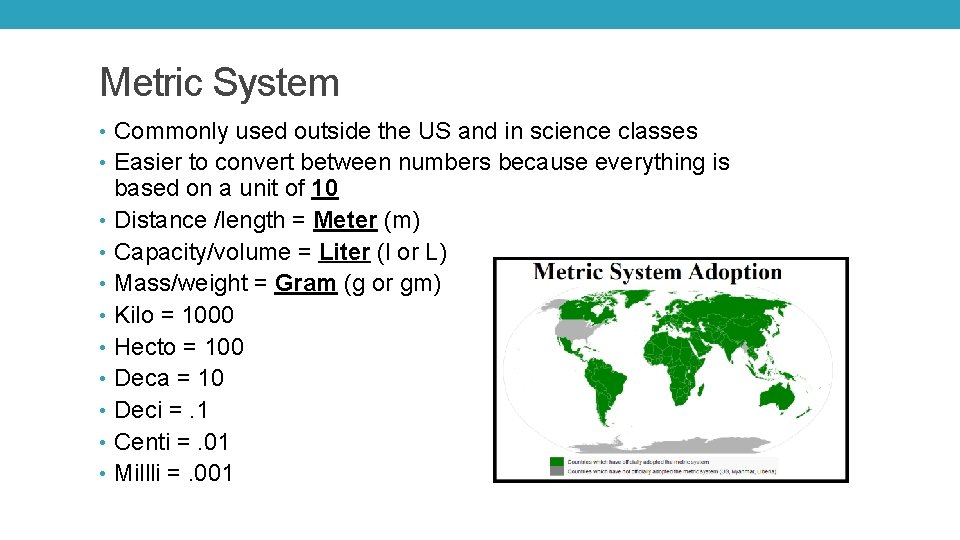
Metric System • Commonly used outside the US and in science classes • Easier to convert between numbers because everything is based on a unit of 10 • Distance /length = Meter (m) • Capacity/volume = Liter (l or L) • Mass/weight = Gram (g or gm) • Kilo = 1000 • Hecto = 100 • Deca = 10 • Deci =. 1 • Centi =. 01 • Millli =. 001
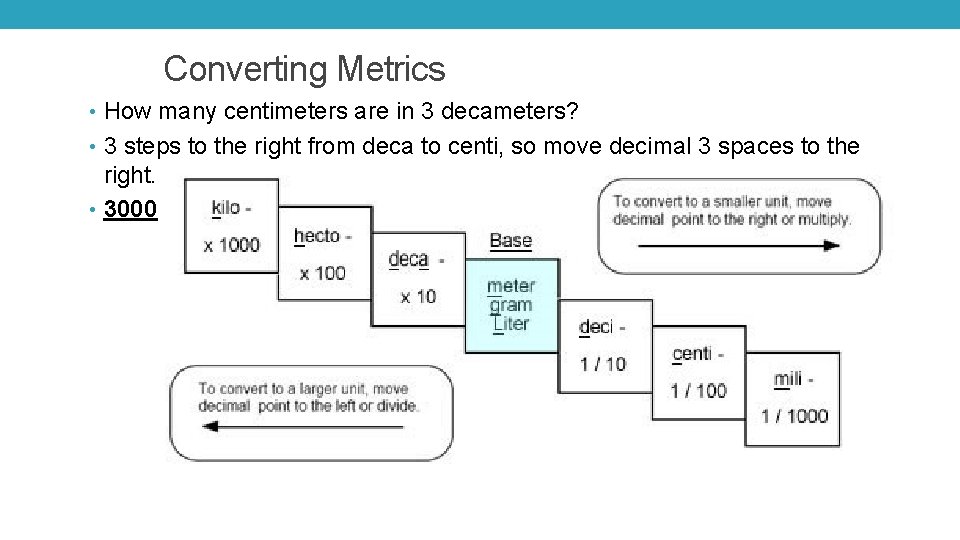
Converting Metrics • How many centimeters are in 3 decameters? • 3 steps to the right from deca to centi, so move decimal 3 spaces to the right. • 3000
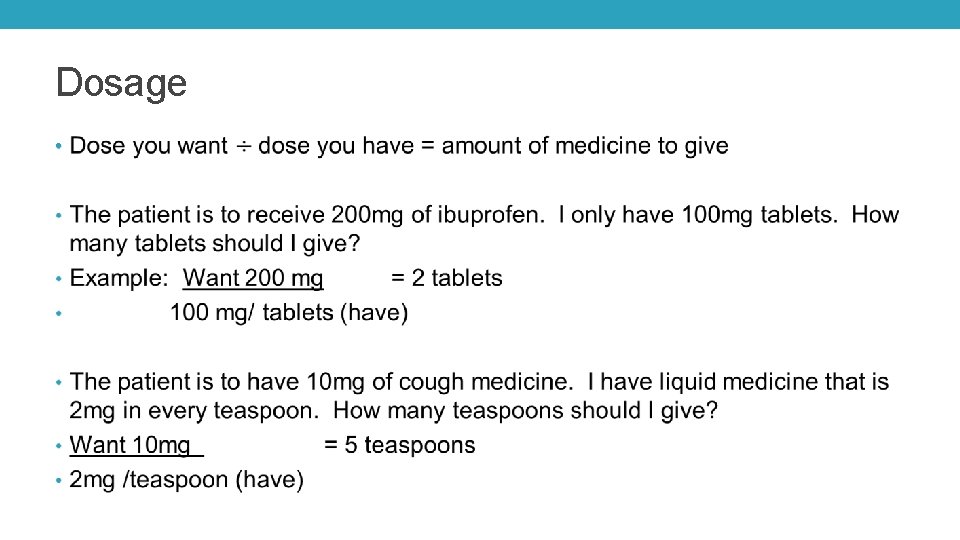
Dosage •