
MEDICAL LAW AND ETHICS Dr V Siju Associate




- Slides: 11
MEDICAL LAW AND ETHICS Dr. V. Siju Associate professor; Dept of Forensic Medicine and Toxicology
Rights and Privileges of Registered Medical Practitioners: 1. Right to practice medicine. 2. Right to choose a patient. 3. Right to dispense medicines. 4. Right to possess and supply dangerous drugs to his patients. 5. Right to add title, descriptions etc to the name. 6. Right to recovery of fees. 7. Right to appointment to public and local hospitals. 8. Right to issue medical certificates. 9. Right to give evidence as an expert. 10. Exemption from serving as a juror at an inquest.
Duties of Medical Practitioners: 1. Duty to Exercise a Reasonable Degree of Skill and Knowledge 2. Duties with regard to Attendance and Examination 3. Duty to Furnish Proper and Suitable Medicines 4. Duty to give Instructions 5. Duty to control and warn 6. Duty to third parties 7. Duty towards children and adults incapable of taking care of themselves
8. Duty to inform patient of risks 9. Duty with regard to poisons 10. Duty to notify certain diseases 11. Duties with regards to operations 12. Duties under Geneva Conventions 13. Duties with regard to consultations 14. Duty in connection with X ray 15. Professional secracy
Privileged communication: 1. Infectious diseases 2. Venereal diseases 3. Servants and Employees 4. Notifiable diseases 5. Suspected crime 6. Patient’s own Interest 7. Self interest 8. Negligence suit 9. Courts of law
Indian medical Council: Functions: 1. Medical Register 2. Medical Education: Standards of postgraduate medical education. 3. Recognition of Foreign Medical Qualifications 4. Appeal against Disciplinary Action 5. Warning Notice
State Medical Councils: Functions: 1. Medical Register 2. Disciplinary control 3. Warning notice Erasure of Name: Penal erasure: the professional death sentence
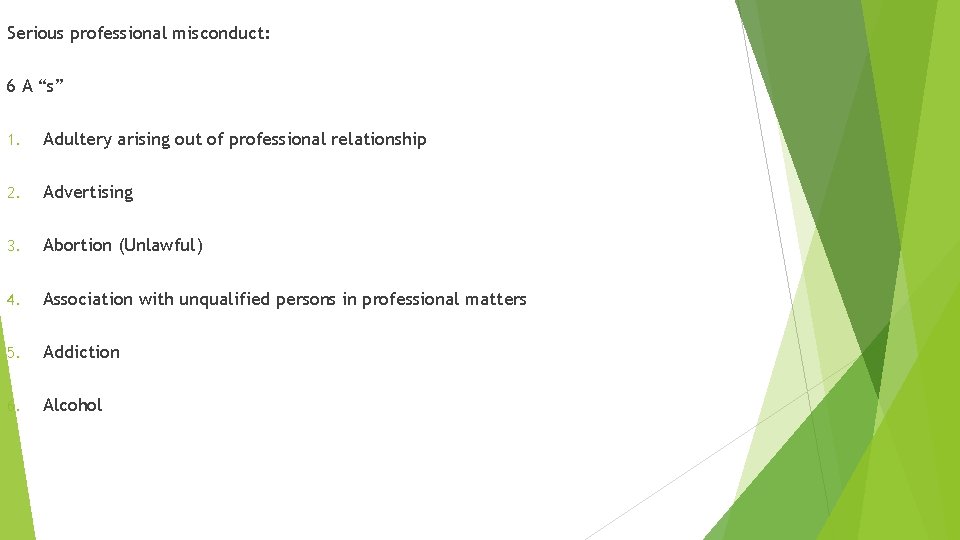
Serious professional misconduct: 6 A “s” 1. Adultery arising out of professional relationship 2. Advertising 3. Abortion (Unlawful) 4. Association with unqualified persons in professional matters 5. Addiction 6. Alcohol
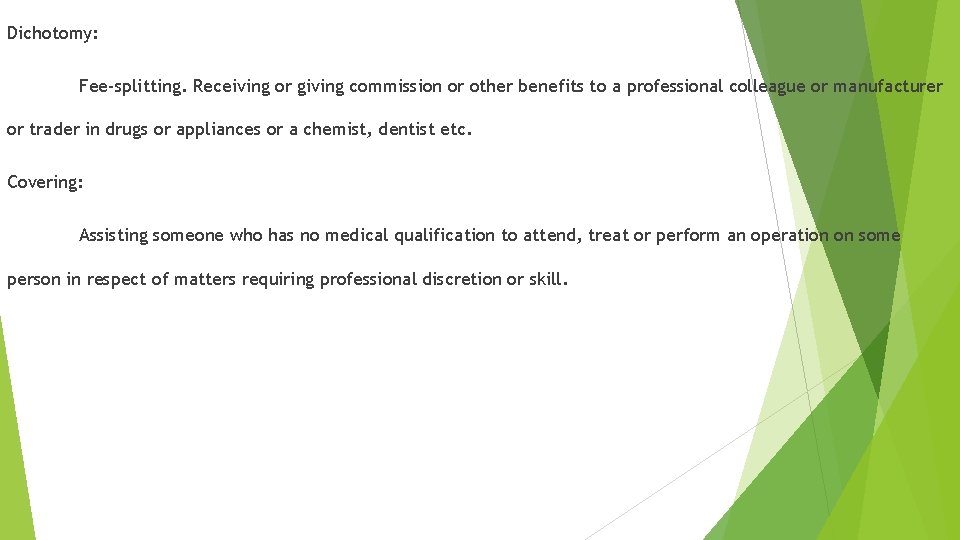
Dichotomy: Fee-splitting. Receiving or giving commission or other benefits to a professional colleague or manufacturer or trader in drugs or appliances or a chemist, dentist etc. Covering: Assisting someone who has no medical qualification to attend, treat or perform an operation on some person in respect of matters requiring professional discretion or skill.
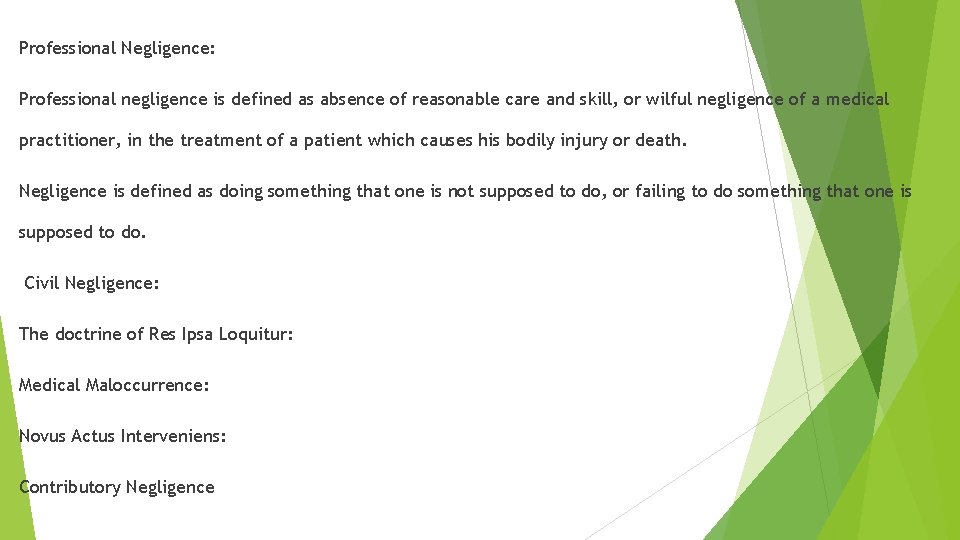
Professional Negligence: Professional negligence is defined as absence of reasonable care and skill, or wilful negligence of a medical practitioner, in the treatment of a patient which causes his bodily injury or death. Negligence is defined as doing something that one is not supposed to do, or failing to do something that one is supposed to do. Civil Negligence: The doctrine of Res Ipsa Loquitur: Medical Maloccurrence: Novus Actus Interveniens: Contributory Negligence
Criminal Negligence: Corporate Negligence Therapeutic misadventure Vicarious liability Products liability