
Medical Informatics Shmuel Rotenstreich Friedman Medical Informatics is


![Temporal Abstraction • • Many clinical tasks require a great deal of [time-oriented] patient](https://slidetodoc.com/presentation_image_h/bbc31ac9e171e6d5204509f5660546b9/image-54.jpg "Temporal Abstraction • • Many clinical tasks require a great deal of [time-oriented] patient")
![Temporal Abstraction: A Bone-Marrow Transplantation Example PAZ protocol BMT Expected CGVHD M[0] Platelet counts](https://slidetodoc.com/presentation_image_h/bbc31ac9e171e6d5204509f5660546b9/image-58.jpg "Temporal Abstraction: A Bone-Marrow Transplantation Example PAZ protocol BMT Expected CGVHD M[0] Platelet counts")
- Slides: 62
Medical Informatics Shmuel Rotenstreich
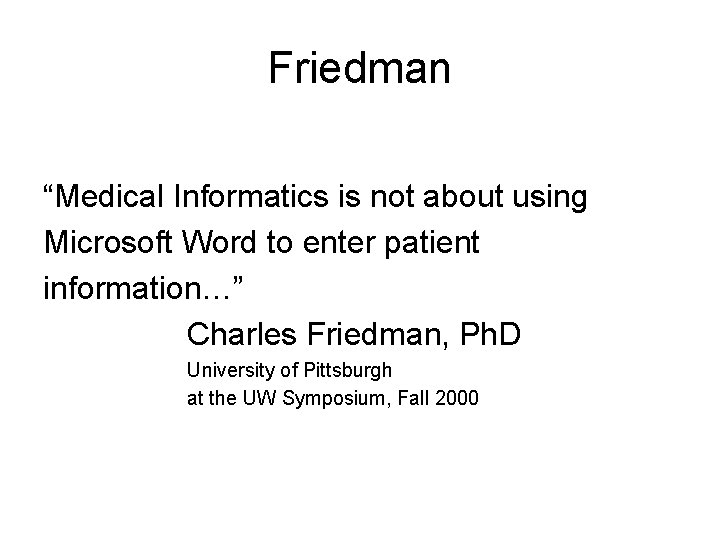
Friedman “Medical Informatics is not about using Microsoft Word to enter patient information…” Charles Friedman, Ph. D University of Pittsburgh at the UW Symposium, Fall 2000
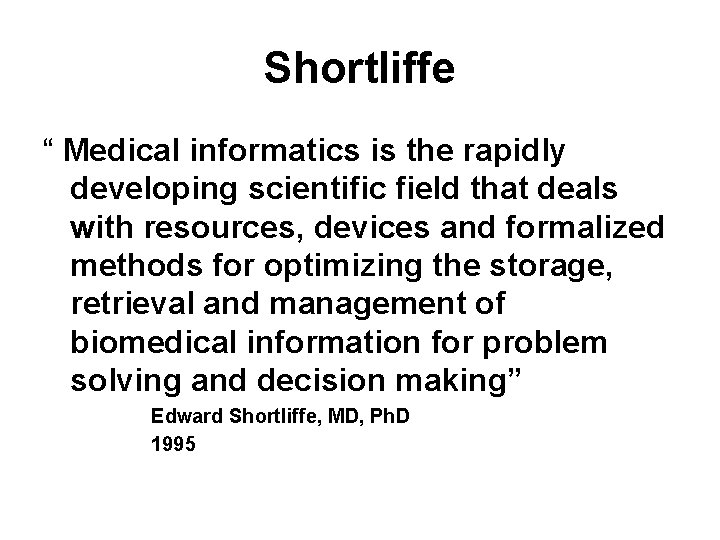
Shortliffe “ Medical informatics is the rapidly developing scientific field that deals with resources, devices and formalized methods for optimizing the storage, retrieval and management of biomedical information for problem solving and decision making” Edward Shortliffe, MD, Ph. D 1995
Computers in Medicine • Information central to biomedical research and clinical practice • Type – integrated information-management environments – affect on practice of medicine and biomedical • Method – – medical computing medical informatics clinical informatics bioinformatics
Value • Value of medical-informatics and informatics applications • Computers and the Internet in biomedical computing • Relation among – – – medical informatics clinical practice biomedical engineering molecular biology decision support
Difference • information in clinical medicine and “regular” information • Changes in computer technology and change in medical care and finance • Integration of medical computing into clinical practice and “regular” computing integration
Areas • • • Medical Decision making Probabilistic medical reasoning Patient care and monitoring systems Computer aided surgery Electronic patient records Clinical decision support Standards in medical informatics Imaging Image management systems Telemedicine
Medical Informatics • Medical Education • Patient Data Collection and Recording • Clinical Information Retrieval • Medical Knowledge Retrieval • Medical Decision Making
Medical Informatics is Multidisciplinary • Applies methodologies developed in multiple areas of science to different tasks • Often gives rise to new, more general methodologies that enrich these scientific disciplines
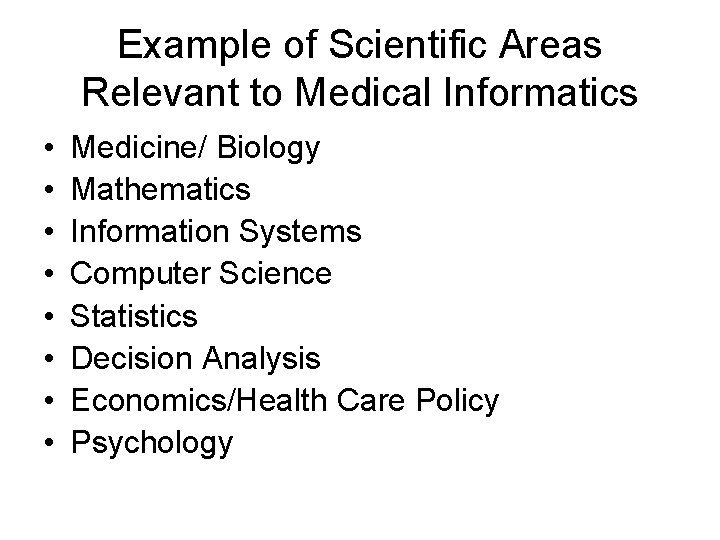
Example of Scientific Areas Relevant to Medical Informatics • • Medicine/ Biology Mathematics Information Systems Computer Science Statistics Decision Analysis Economics/Health Care Policy Psychology
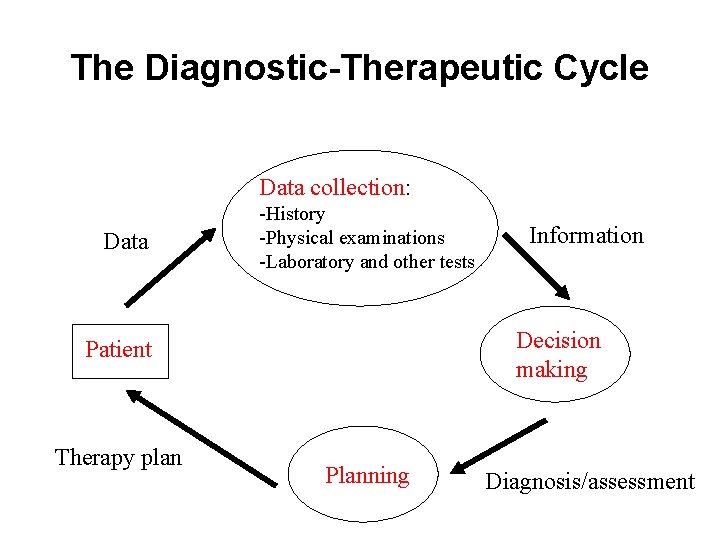
The Diagnostic-Therapeutic Cycle Data collection: Data -History -Physical examinations -Laboratory and other tests Decision making Patient Therapy plan Information Planning Diagnosis/assessment
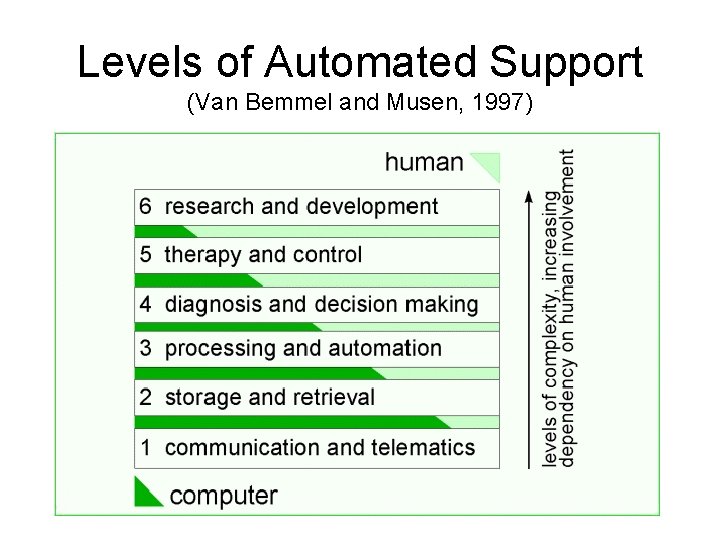
Levels of Automated Support (Van Bemmel and Musen, 1997)
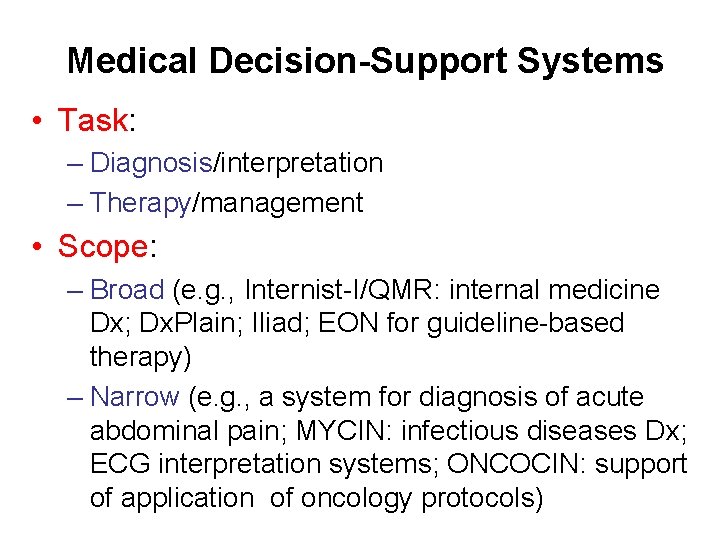
Medical Decision-Support Systems • Task: – Diagnosis/interpretation – Therapy/management • Scope: – Broad (e. g. , Internist-I/QMR: internal medicine Dx; Dx. Plain; Iliad; EON for guideline-based therapy) – Narrow (e. g. , a system for diagnosis of acute abdominal pain; MYCIN: infectious diseases Dx; ECG interpretation systems; ONCOCIN: support of application of oncology protocols)
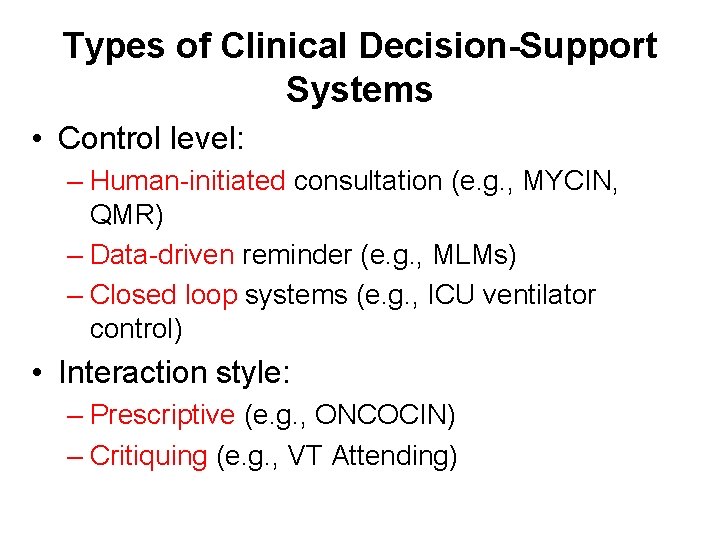
Types of Clinical Decision-Support Systems • Control level: – Human-initiated consultation (e. g. , MYCIN, QMR) – Data-driven reminder (e. g. , MLMs) – Closed loop systems (e. g. , ICU ventilator control) • Interaction style: – Prescriptive (e. g. , ONCOCIN) – Critiquing (e. g. , VT Attending)
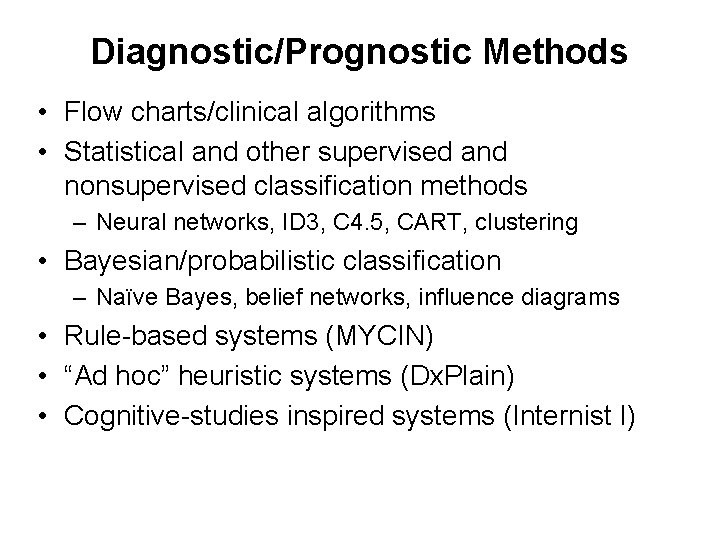
Diagnostic/Prognostic Methods • Flow charts/clinical algorithms • Statistical and other supervised and nonsupervised classification methods – Neural networks, ID 3, C 4. 5, CART, clustering • Bayesian/probabilistic classification – Naïve Bayes, belief networks, influence diagrams • Rule-based systems (MYCIN) • “Ad hoc” heuristic systems (Dx. Plain) • Cognitive-studies inspired systems (Internist I)
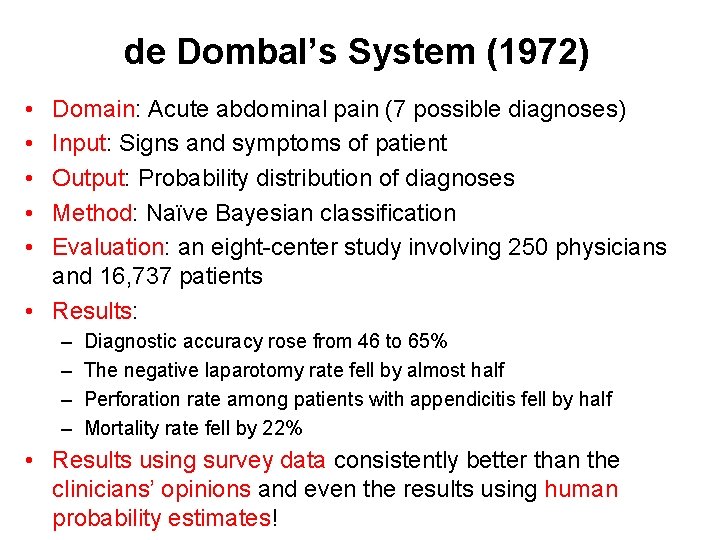
de Dombal’s System (1972) • • • Domain: Acute abdominal pain (7 possible diagnoses) Input: Signs and symptoms of patient Output: Probability distribution of diagnoses Method: Naïve Bayesian classification Evaluation: an eight-center study involving 250 physicians and 16, 737 patients • Results: – – Diagnostic accuracy rose from 46 to 65% The negative laparotomy rate fell by almost half Perforation rate among patients with appendicitis fell by half Mortality rate fell by 22% • Results using survey data consistently better than the clinicians’ opinions and even the results using human probability estimates!
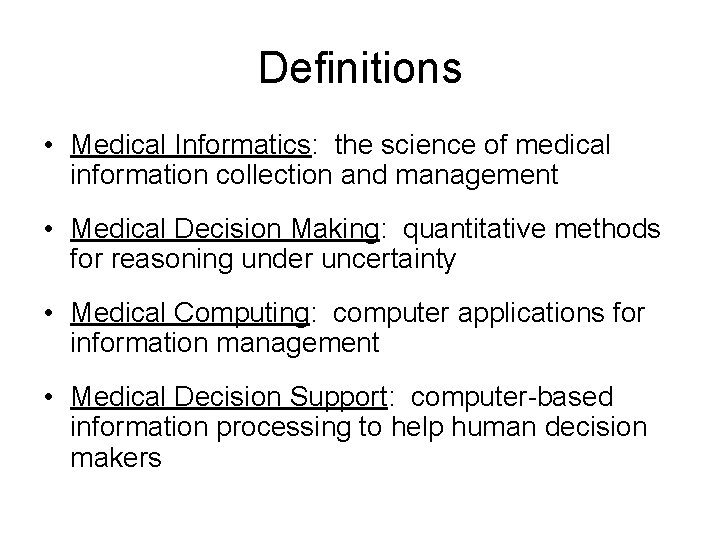
Definitions • Medical Informatics: the science of medical information collection and management • Medical Decision Making: quantitative methods for reasoning under uncertainty • Medical Computing: computer applications for information management • Medical Decision Support: computer-based information processing to help human decision makers
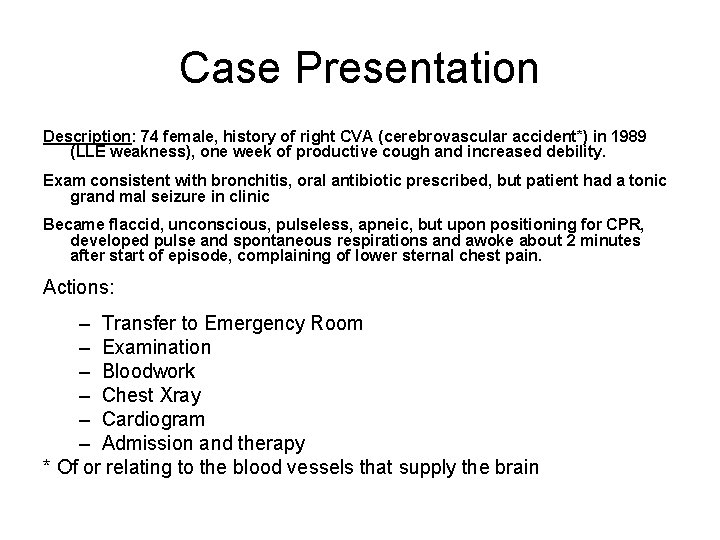
Case Presentation Description: 74 female, history of right CVA (cerebrovascular accident*) in 1989 (LLE weakness), one week of productive cough and increased debility. Exam consistent with bronchitis, oral antibiotic prescribed, but patient had a tonic grand mal seizure in clinic Became flaccid, unconscious, pulseless, apneic, but upon positioning for CPR, developed pulse and spontaneous respirations and awoke about 2 minutes after start of episode, complaining of lower sternal chest pain. Actions: – Transfer to Emergency Room – Examination – Bloodwork – Chest Xray – Cardiogram – Admission and therapy * Of or relating to the blood vessels that supply the brain
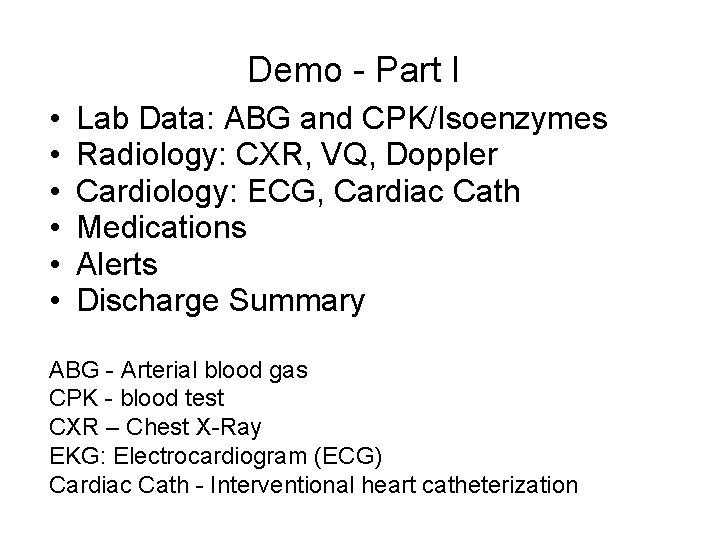
Demo - Part I • • • Lab Data: ABG and CPK/Isoenzymes Radiology: CXR, VQ, Doppler Cardiology: ECG, Cardiac Cath Medications Alerts Discharge Summary ABG - Arterial blood gas CPK - blood test CXR – Chest X-Ray EKG: Electrocardiogram (ECG) Cardiac Cath - Interventional heart catheterization
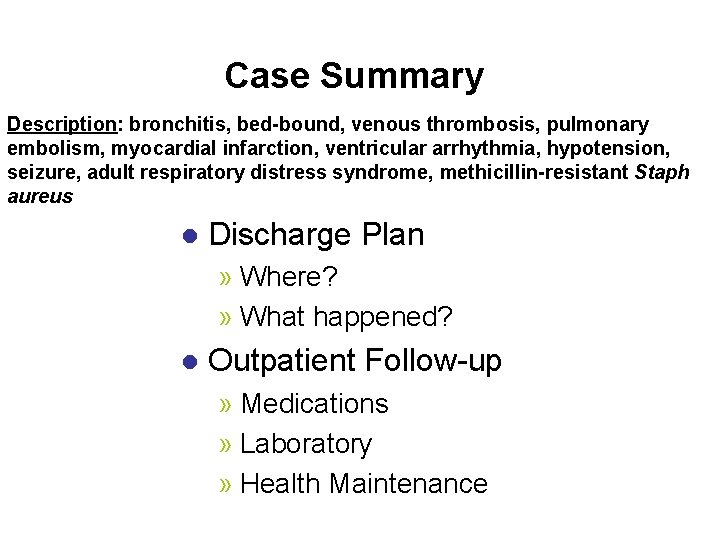
Case Summary Description: bronchitis, bed-bound, venous thrombosis, pulmonary embolism, myocardial infarction, ventricular arrhythmia, hypotension, seizure, adult respiratory distress syndrome, methicillin-resistant Staph aureus l Discharge Plan » Where? » What happened? l Outpatient Follow-up » Medications » Laboratory » Health Maintenance
Demo - Part II • Demographic Information • Additional Hospitalizations? • More Discharge Summaries? • Recent Lab Results • Outpatient Notes
How Did We Do It? • Information Science • Standards • Integration
Ambulatory Care • Aka Primary Care, Office Medicine… • Roles (information specific): – Patient – Scheduling, Registration – Nursing, Triage – Physician – Ancillary Services • Radiology
Patient • • Able to request an appointment! Check meds! Self reported SF-36 functional Insurance Information!
Clinic Receptionist • • • Appointment scheduling Check-in Insurance Information Billing Follow-up visit
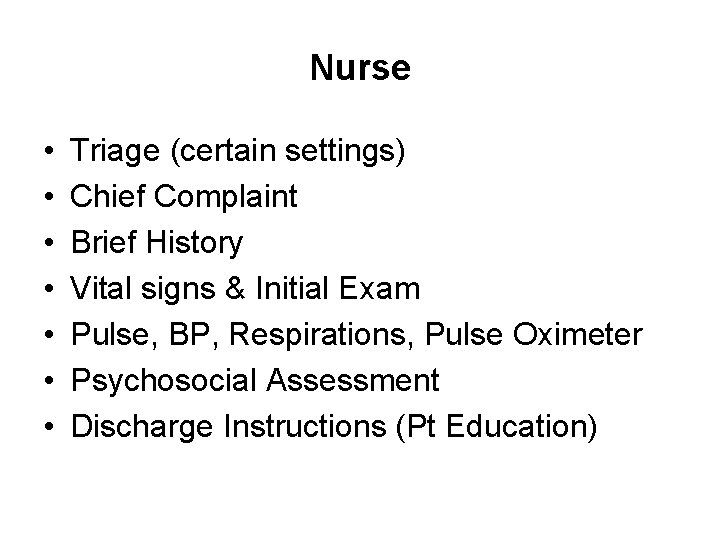
Nurse • • Triage (certain settings) Chief Complaint Brief History Vital signs & Initial Exam Pulse, BP, Respirations, Pulse Oximeter Psychosocial Assessment Discharge Instructions (Pt Education)
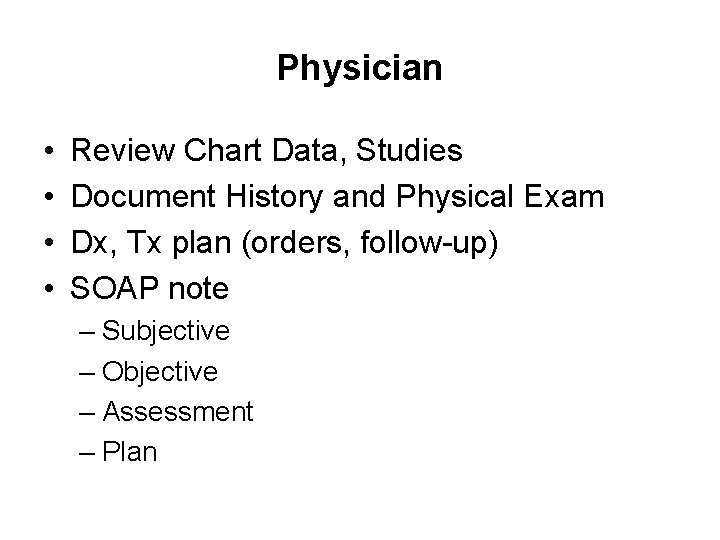
Physician • • Review Chart Data, Studies Document History and Physical Exam Dx, Tx plan (orders, follow-up) SOAP note – Subjective – Objective – Assessment – Plan
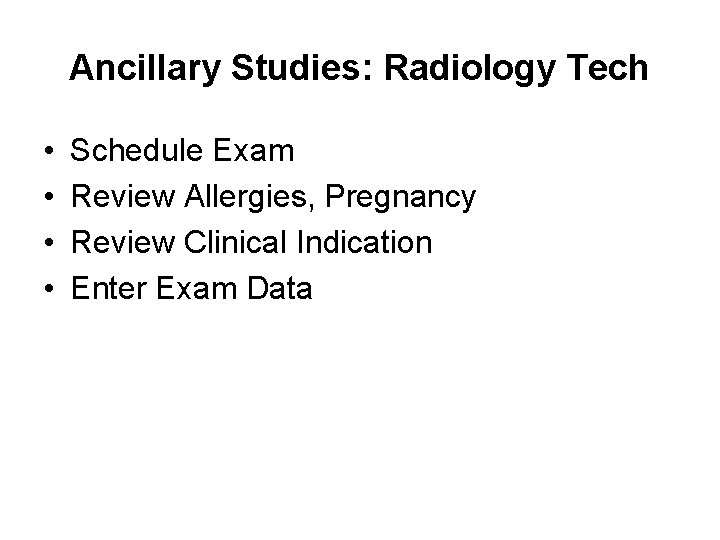
Ancillary Studies: Radiology Tech • • Schedule Exam Review Allergies, Pregnancy Review Clinical Indication Enter Exam Data
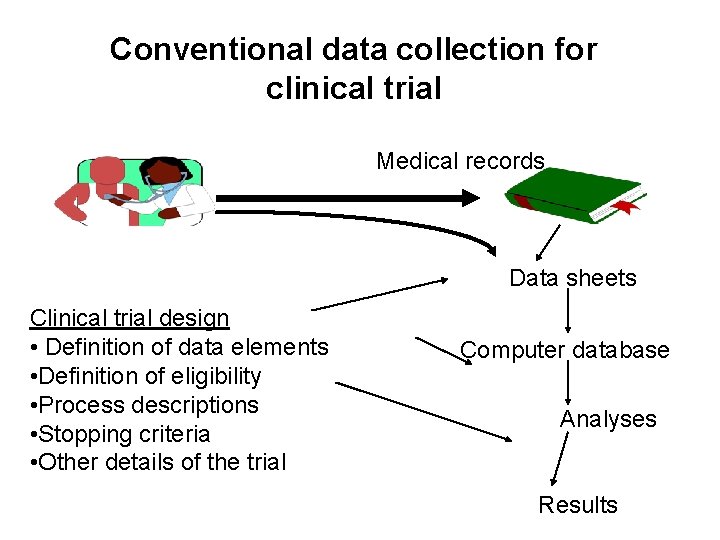
Conventional data collection for clinical trial Medical records Data sheets Clinical trial design • Definition of data elements • Definition of eligibility • Process descriptions • Stopping criteria • Other details of the trial Computer database Analyses Results
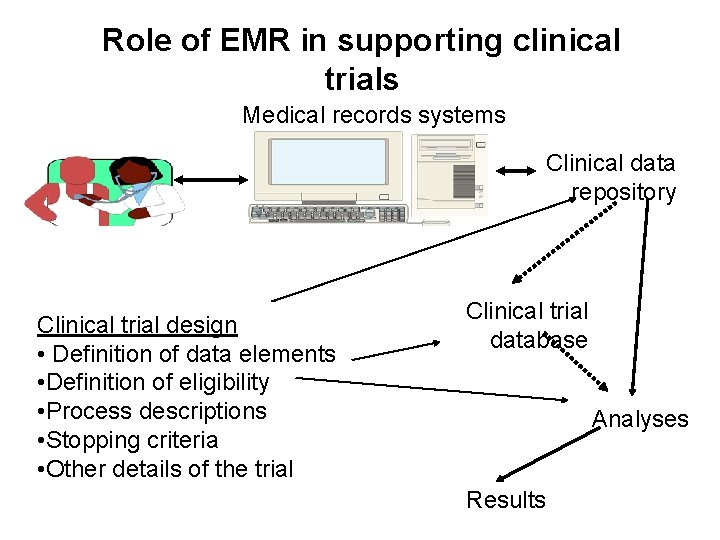
Role of EMR in supporting clinical trials Medical records systems Clinical data repository Clinical trial design • Definition of data elements • Definition of eligibility • Process descriptions • Stopping criteria • Other details of the trial Clinical trial database Analyses Results
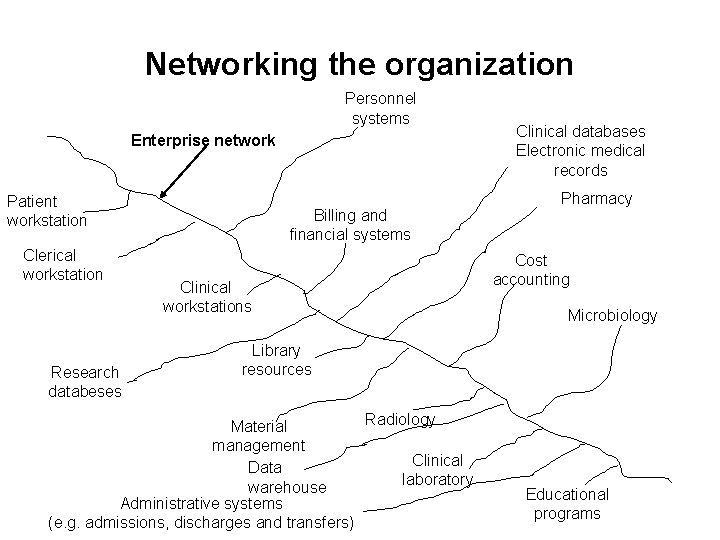
Networking the organization Personnel systems Enterprise network Patient workstation Clerical workstation Research databeses Billing and financial systems Clinical workstations Clinical databases Electronic medical records Pharmacy Cost accounting Microbiology Library resources Radiology Material management Clinical Data laboratory warehouse Administrative systems (e. g. admissions, discharges and transfers) Educational programs
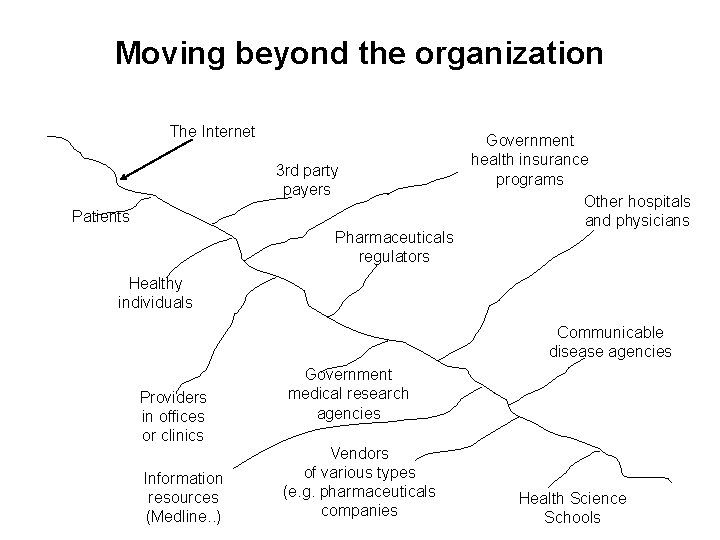
Moving beyond the organization The Internet 3 rd party payers Patients Pharmaceuticals regulators Government health insurance programs Other hospitals and physicians Healthy individuals Communicable disease agencies Providers in offices or clinics Information resources (Medline. . ) Government medical research agencies Vendors of various types (e. g. pharmaceuticals companies Health Science Schools
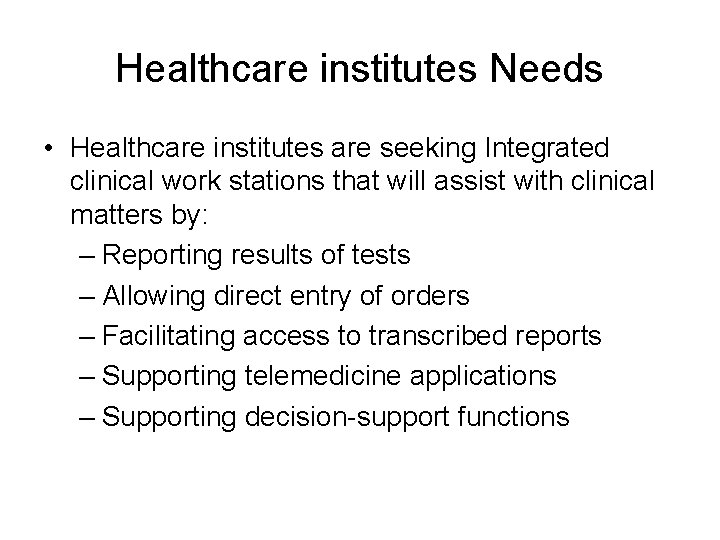
Healthcare institutes Needs • Healthcare institutes are seeking Integrated clinical work stations that will assist with clinical matters by: – Reporting results of tests – Allowing direct entry of orders – Facilitating access to transcribed reports – Supporting telemedicine applications – Supporting decision-support functions
The Heart of the Evolving Clinical Workstation • • • Electronic Confidential Secure Acceptable to clinicians and patients. Integrated with non-patient-specific information
Bioinformatics vs. Clinical • Bioinformatics - The study of how information is represented and transmitted in biological systems, starting at the molecular level. • Clinical informatics deals with the management of information related to the delivery of health care • Bioinformatics focuses on the management of information related to the underlying basic biological sciences.
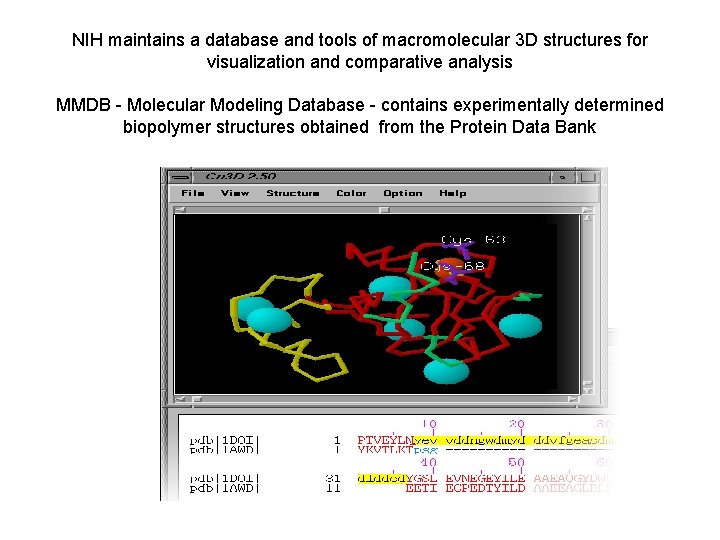
NIH maintains a database and tools of macromolecular 3 D structures for visualization and comparative analysis MMDB - Molecular Modeling Database - contains experimentally determined biopolymer structures obtained from the Protein Data Bank
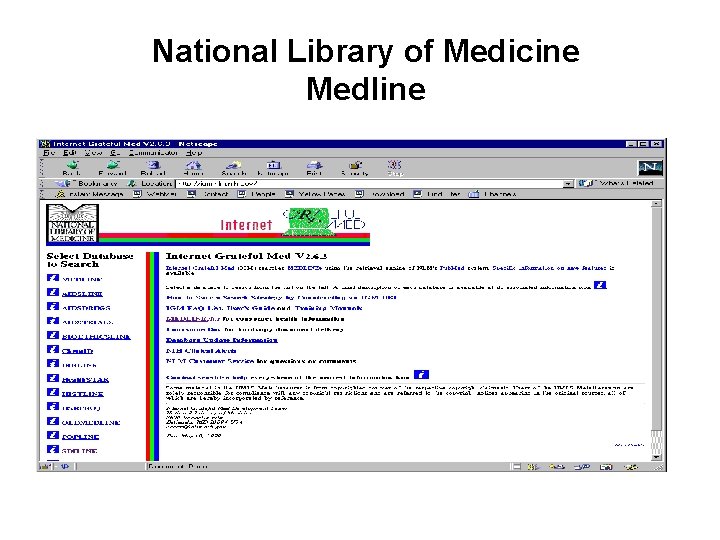
National Library of Medicine Medline
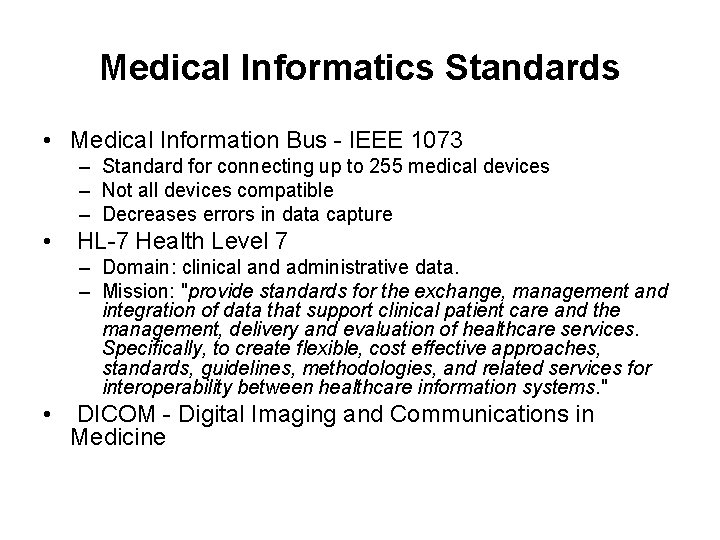
Medical Informatics Standards • Medical Information Bus - IEEE 1073 – Standard for connecting up to 255 medical devices – Not all devices compatible – Decreases errors in data capture • HL-7 Health Level 7 – Domain: clinical and administrative data. – Mission: "provide standards for the exchange, management and integration of data that support clinical patient care and the management, delivery and evaluation of healthcare services. Specifically, to create flexible, cost effective approaches, standards, guidelines, methodologies, and related services for interoperability between healthcare information systems. " • DICOM - Digital Imaging and Communications in Medicine
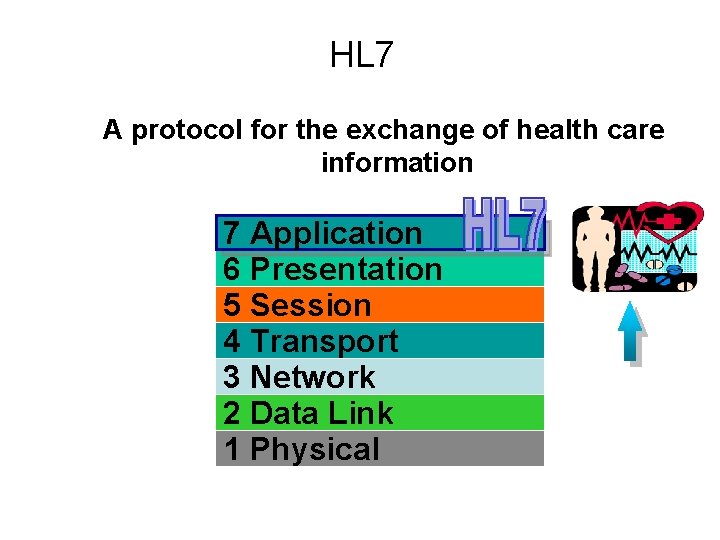
HL 7 A protocol for the exchange of health care information 7 Application 6 Presentation 5 Session 4 Transport 3 Network 2 Data Link 1 Physical
Medical Information Bus IEEE 1073 • Standard for medical device communication • A family of standards for providing interconnection and interoperability of medical devices and computerized healthcare information systems. • Medical devices include a broad range of clinical monitoring, diagnostic, therapeutic equipment • Computerized healthcare information systems include broad range of clinical data management systems, patient care systems and hospital information systems
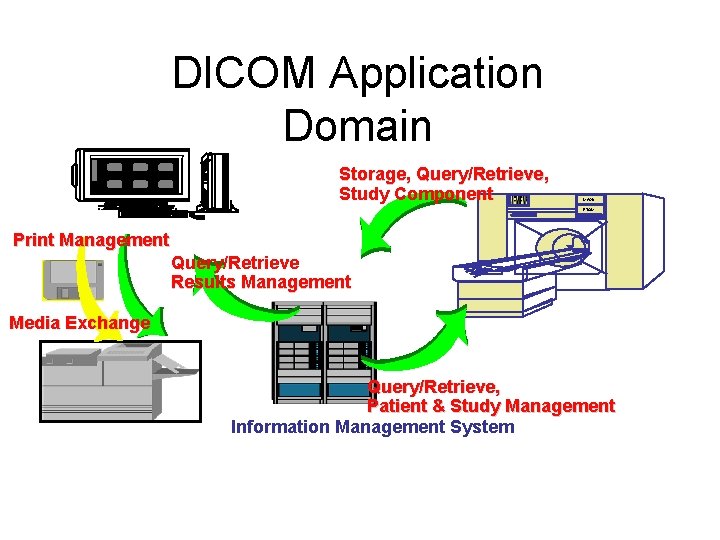
THE DICOM STANDARD • applicable to a networked environment. • applicable to an off-line media environment. • specifies how devices claiming conformance to the Standard react to commands and data being exchanged. • specifies levels of conformance
DICOM Application Domain Lite. Box Storage, Query/Retrieve, Study Component MAGN ETOM Print Management Query/Retrieve Results Management Media Exchange Query/Retrieve, Patient & Study Management Information Management System
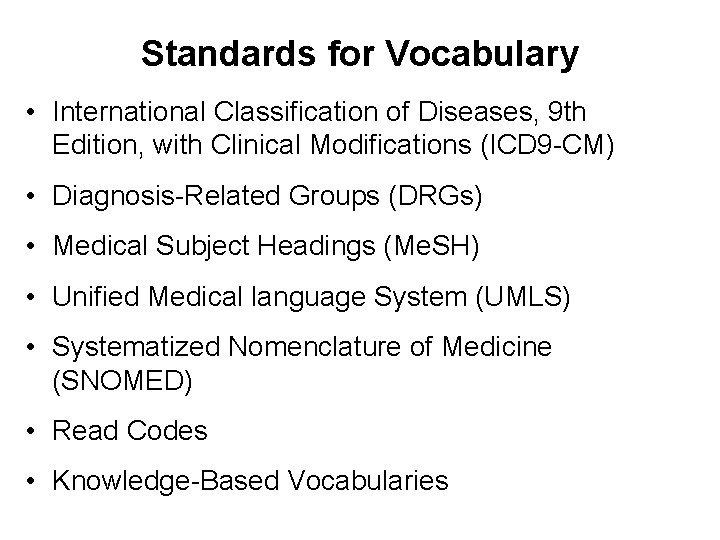
Standards for Vocabulary • International Classification of Diseases, 9 th Edition, with Clinical Modifications (ICD 9 -CM) • Diagnosis-Related Groups (DRGs) • Medical Subject Headings (Me. SH) • Unified Medical language System (UMLS) • Systematized Nomenclature of Medicine (SNOMED) • Read Codes • Knowledge-Based Vocabularies
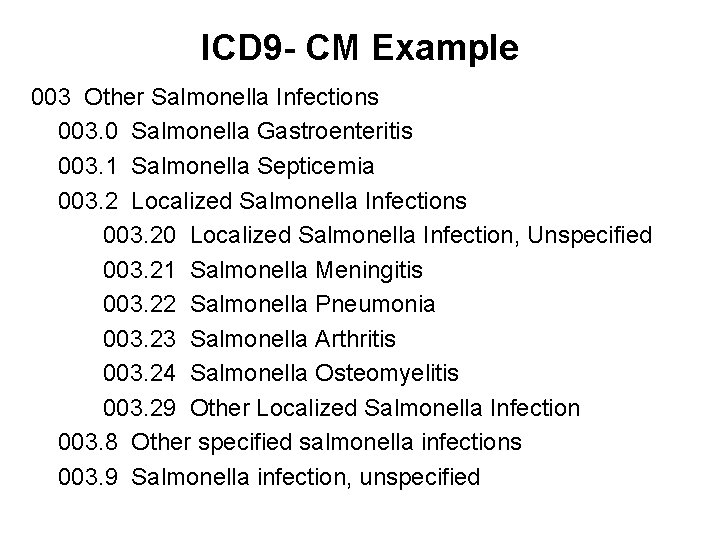
ICD 9 - CM Example 003 Other Salmonella Infections 003. 0 Salmonella Gastroenteritis 003. 1 Salmonella Septicemia 003. 2 Localized Salmonella Infections 003. 20 Localized Salmonella Infection, Unspecified 003. 21 Salmonella Meningitis 003. 22 Salmonella Pneumonia 003. 23 Salmonella Arthritis 003. 24 Salmonella Osteomyelitis 003. 29 Other Localized Salmonella Infection 003. 8 Other specified salmonella infections 003. 9 Salmonella infection, unspecified
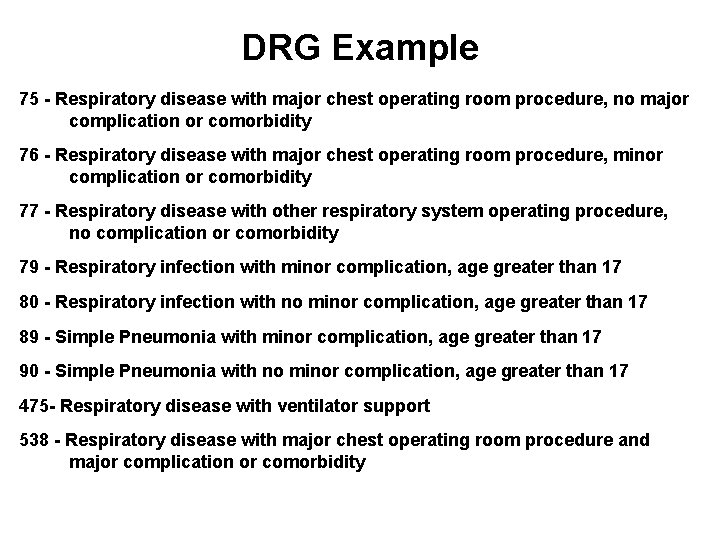
DRG Example 75 - Respiratory disease with major chest operating room procedure, no major complication or comorbidity 76 - Respiratory disease with major chest operating room procedure, minor complication or comorbidity 77 - Respiratory disease with other respiratory system operating procedure, no complication or comorbidity 79 - Respiratory infection with minor complication, age greater than 17 80 - Respiratory infection with no minor complication, age greater than 17 89 - Simple Pneumonia with minor complication, age greater than 17 90 - Simple Pneumonia with no minor complication, age greater than 17 475 - Respiratory disease with ventilator support 538 - Respiratory disease with major chest operating room procedure and major complication or comorbidity
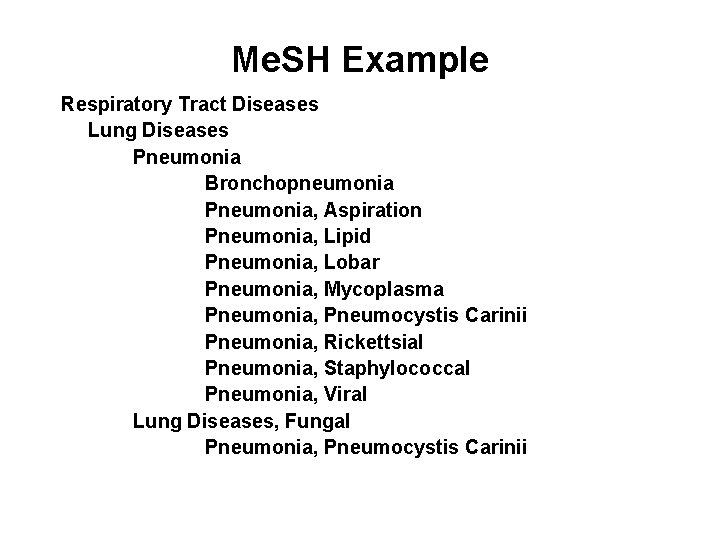
Me. SH Example Respiratory Tract Diseases Lung Diseases Pneumonia Bronchopneumonia Pneumonia, Aspiration Pneumonia, Lipid Pneumonia, Lobar Pneumonia, Mycoplasma Pneumonia, Pneumocystis Carinii Pneumonia, Rickettsial Pneumonia, Staphylococcal Pneumonia, Viral Lung Diseases, Fungal Pneumonia, Pneumocystis Carinii
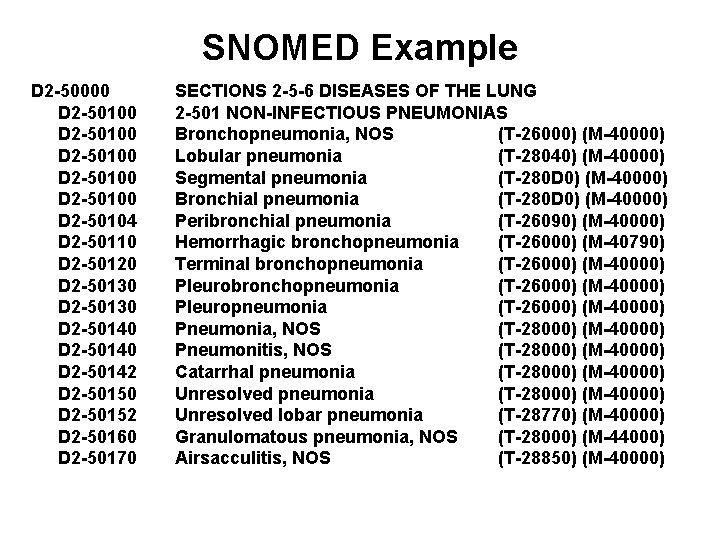
SNOMED Example D 2 -50000 D 2 -50100 D 2 -50104 D 2 -50110 D 2 -50120 D 2 -50130 D 2 -50140 D 2 -50142 D 2 -50150 D 2 -50152 D 2 -50160 D 2 -50170 SECTIONS 2 -5 -6 DISEASES OF THE LUNG 2 -501 NON-INFECTIOUS PNEUMONIAS Bronchopneumonia, NOS (T-26000) (M-40000) Lobular pneumonia (T-28040) (M-40000) Segmental pneumonia (T-280 D 0) (M-40000) Bronchial pneumonia (T-280 D 0) (M-40000) Peribronchial pneumonia (T-26090) (M-40000) Hemorrhagic bronchopneumonia (T-26000) (M-40790) Terminal bronchopneumonia (T-26000) (M-40000) Pleuropneumonia (T-26000) (M-40000) Pneumonia, NOS (T-28000) (M-40000) Pneumonitis, NOS (T-28000) (M-40000) Catarrhal pneumonia (T-28000) (M-40000) Unresolved lobar pneumonia (T-28770) (M-40000) Granulomatous pneumonia, NOS (T-28000) (M-44000) Airsacculitis, NOS (T-28850) (M-40000)
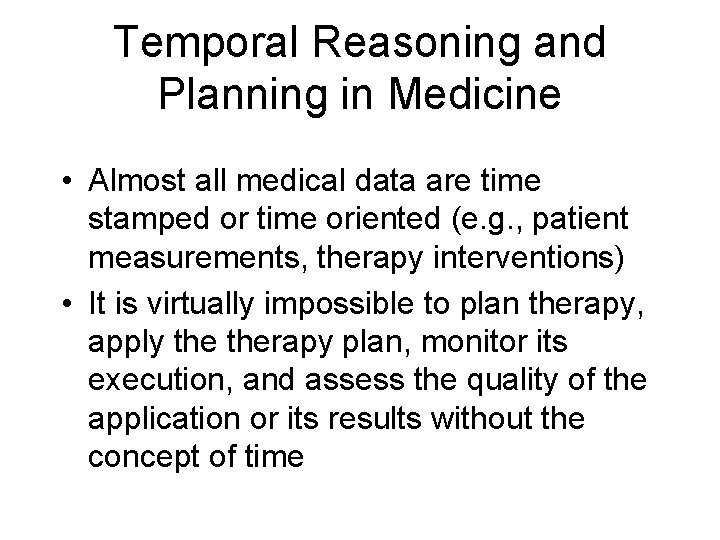
Temporal Reasoning and Planning in Medicine • Almost all medical data are time stamped or time oriented (e. g. , patient measurements, therapy interventions) • It is virtually impossible to plan therapy, apply therapy plan, monitor its execution, and assess the quality of the application or its results without the concept of time
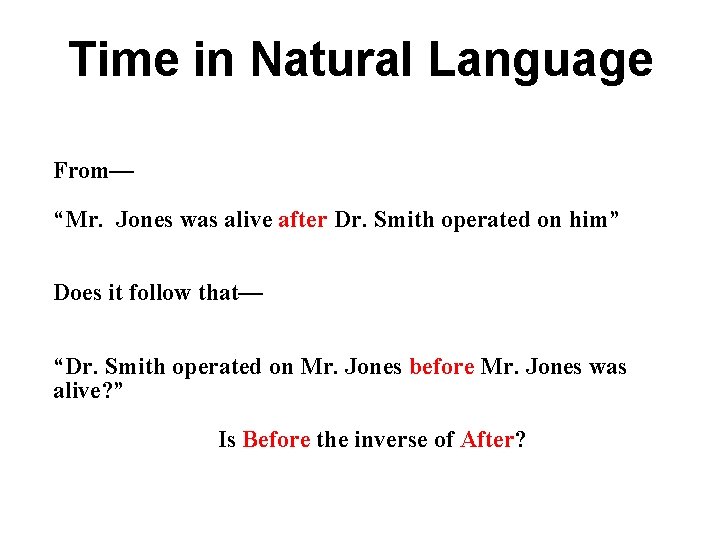
Time in Natural Language From— “Mr. Jones was alive after Dr. Smith operated on him” Does it follow that— “Dr. Smith operated on Mr. Jones before Mr. Jones was alive? ” Is Before the inverse of After?
Understanding a Narrative • List all, find at least one, or prove the impossibility of a legal scenario for the following statements: – John had a headache after the treatment – While receiving treatment, John read a paper – before the headache, John experienced a visual aura • One legitimate scenario (among many) is: – “John read the paper from the very beginning of the treatment until some point before its end; after reading the paper, he experienced a visual aura that started during treatment and ended after it; then he had a headache. ” Aura Headache Treatment Paper
Monitoring Determine if an oncology patient’s record indicates a second episode that has been lasting for more than 3 weeks, of Grade II bone-marrow toxicity (as derived from the results of several different types of blood tests), due to a specific chemotherapy drug.
Planning and Execution If the patient develops sever anemia for more than 2 weeks, reduce the chemotherapy dose by 25% for the next 3 weeks and in parallel monitor the hemoglobin level every day.
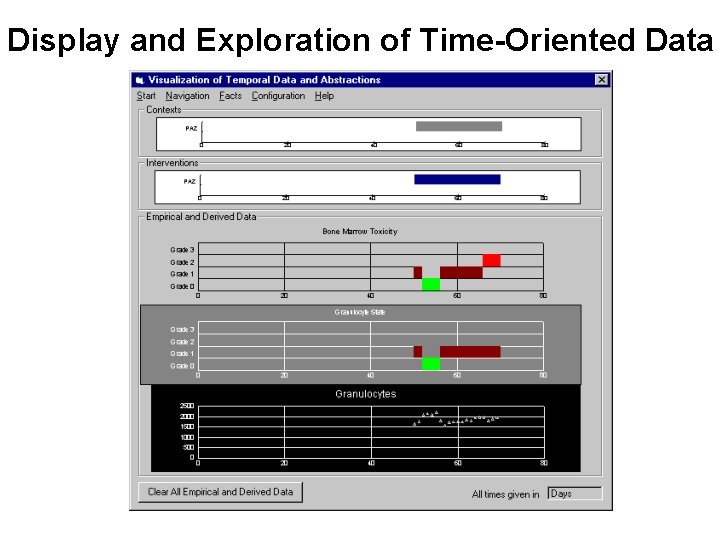
Display and Exploration of Time-Oriented Data
Temporal Abstraction • • Many clinical tasks require a great deal of [time-oriented] patient data of multiple types to be measured and captured for interpretation, often using electronic media. This is particularly true in the management of patients with chronic conditions. Diagnostic or therapeutic decisions depend on context sensitive interpretation of these data. Most stored data include a time stamp at which a particular datum is valid. Temporal trends and patterns in clinical data add significant insights to static analysis. Thus it is desirable automatically to create abstractions (short, informative, and context-sensitive interpretations*) of time-oriented clinical data, and to be able to answer queries about these abstractions. The provision of this capability would benefit both a physician and a decision support tool (e. g. , for patient management, quality assessment and clinical research). To be of optimum use, a summary should not only use time points such as dates when data were collected; it should also be capable of aggregating significant features over intervals of time.
Temporal Abstraction • Clinical tasks require time-oriented patient data of multiple types to be measured and captured for interpretation. – Particularly true in the management of patients with chronic conditions. • Diagnostic or therapeutic decisions depend on context sensitive interpretation of these data. • Most stored data include a time stamp at which a particular datum is valid. • Temporal trends and patterns in clinical data add significant insights to static analysis. • Desirable automatically create abstractions (short, informative, and context-sensitive interpretations*) of time-oriented clinical data, and to be able to answer queries about these abstractions. • The provision of this capability would benefit both a physician and a decision support tool (e. g. , for patient management, quality assessment and clinical research). • Of optimum use, a summary should not only use time points such as dates when data were collected; it should also be capable of aggregating significant features over intervals of time.
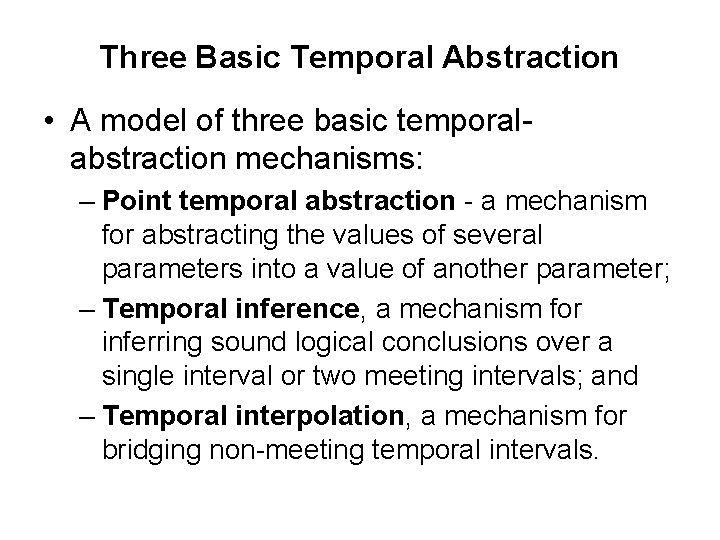
Three Basic Temporal Abstraction • A model of three basic temporalabstraction mechanisms: – Point temporal abstraction - a mechanism for abstracting the values of several parameters into a value of another parameter; – Temporal inference, a mechanism for inferring sound logical conclusions over a single interval or two meeting intervals; and – Temporal interpolation, a mechanism for bridging non-meeting temporal intervals.
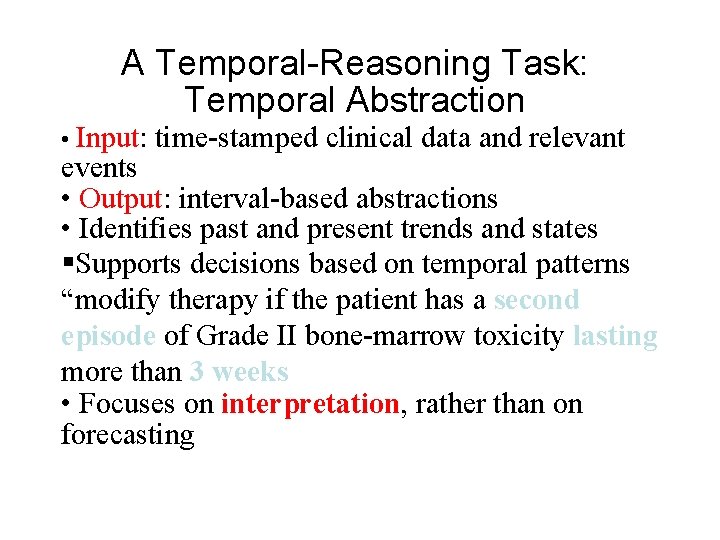
A Temporal-Reasoning Task: Temporal Abstraction • Input: time-stamped clinical data and relevant events • Output: interval-based abstractions • Identifies past and present trends and states §Supports decisions based on temporal patterns “modify therapy if the patient has a second episode of Grade II bone-marrow toxicity lasting more than 3 weeks • Focuses on interpretation, rather than on forecasting
Temporal Abstraction: A Bone-Marrow Transplantation Example PAZ protocol BMT Expected CGVHD M[0] Platelet counts ( • ) D D • • 150 K D • D D • • M[1]M[2]M[3] M[1] D • 100 K 0 50 100 . D D D • • • 200 Time (days) D • M[0] D • Granulocyte counts (D) D D • • 2000 1000 400
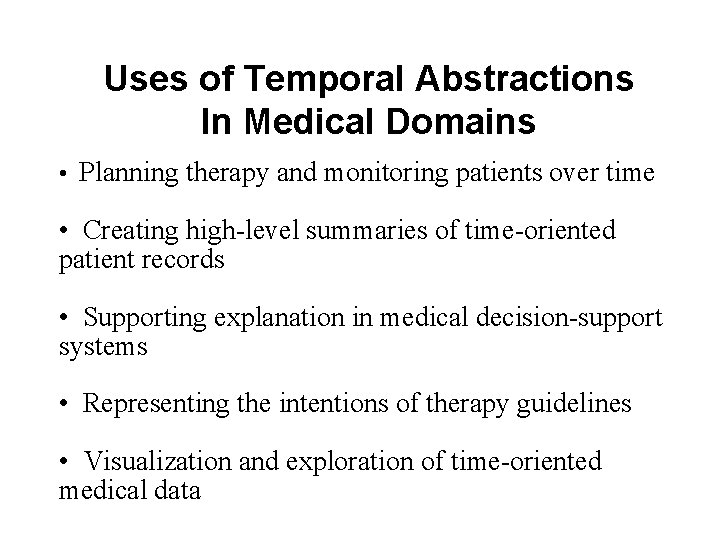
Uses of Temporal Abstractions In Medical Domains • Planning therapy and monitoring patients over time • Creating high-level summaries of time-oriented patient records • Supporting explanation in medical decision-support systems • Representing the intentions of therapy guidelines • Visualization and exploration of time-oriented medical data
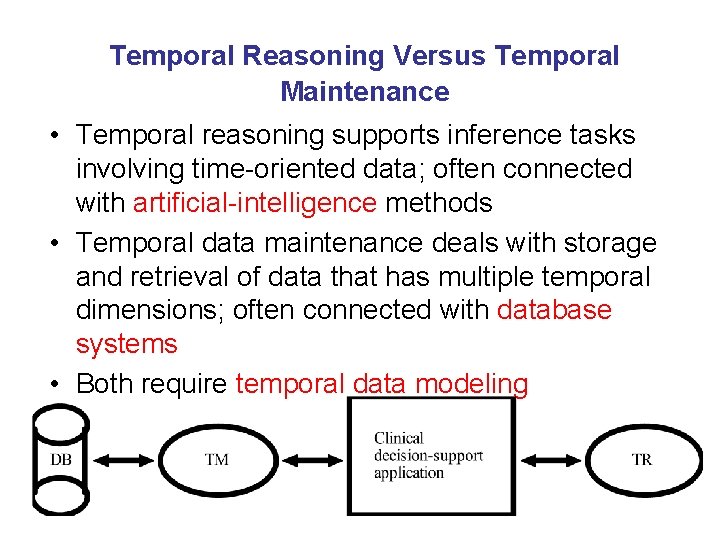
Temporal Reasoning Versus Temporal Maintenance • Temporal reasoning supports inference tasks involving time-oriented data; often connected with artificial-intelligence methods • Temporal data maintenance deals with storage and retrieval of data that has multiple temporal dimensions; often connected with database systems • Both require temporal data modeling
Medical Image Processing • Input: X-Ray, CT-scan, MRI, PET, etc. • Tasks: – Correction of multiple artifacts – Registration: Superimposition to enhance visualization – Segmentation: Decomposition into semantically meaningful regions
Conclusion • Multidisciplinary research, development, and application – inspired by and benefits underlying core scientific/engineering areas • Medical Decision support systems: – Tasks: Diagnosis, therapy – Mode: Human initiated, data driven, closed loop – Interaction style: Prescriptive, critiquing • Multiple diagnostic/therapeutic methodologies