
Medical Emergencies continued Chapter 31 in Torres Assignment
- Slides: 26
Medical Emergencies continued…. . Chapter 31 in Torres ¢ Assignment: Fill in the blank and multiple choice in Chapter 31. ¢ Test on medical emergencies ¢ Review signs, symptoms, and treatments for all medical emergencies in M. D. A text. ¢
Introduction A medical emergency is _________________________________.
Preventing an Emergency ¢ Know Your Patient! l Have open communication l Have an updated medical history
Emergency Preparedness ¢ Assigned Roles l Front Desk Staff 1. 2. 3. l Clinical Staff 1. 2. 3.
Emergency Preparednesscont’d ¢ Dentist 1. 2. ¢ ¢ ¢ Routine Drills l Training with mock emergency l Learn each other’s roles Emergency Telephone Numbers l 911 l Local police l Local fire station l Emergency medical service Where should emergency numbers be located within the office? ______________
Recognizing a Medical Emergency ¢ Symptom: Definel Examples: l ¢ Sign: Definel Examples: l
Emergency Care Standards ¢ Every member of the dental team must be current in: 1. 2. 3.
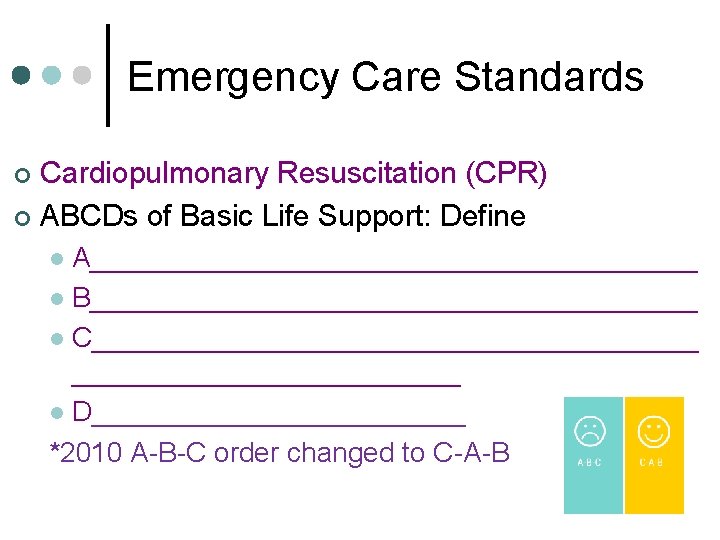
Emergency Care Standards Cardiopulmonary Resuscitation (CPR) ¢ ABCDs of Basic Life Support: Define ¢ A____________________ l B____________________ l C____________________ l D____________ *2010 A-B-C order changed to C-A-B l
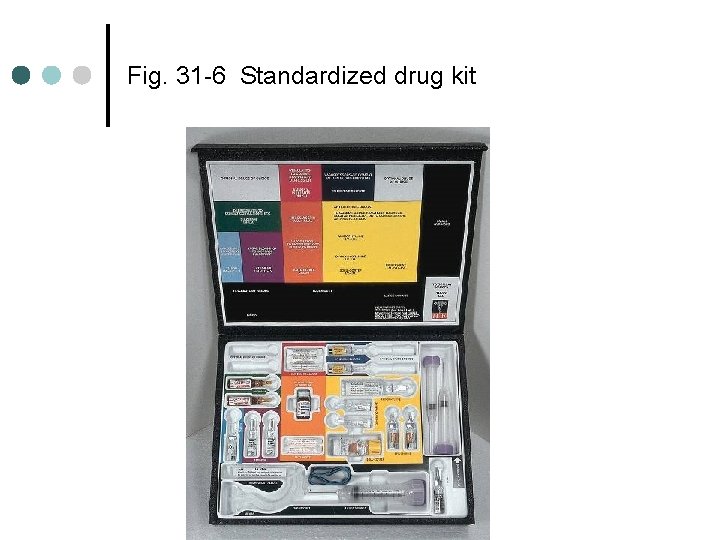
Fig. 31 -6 Standardized drug kit
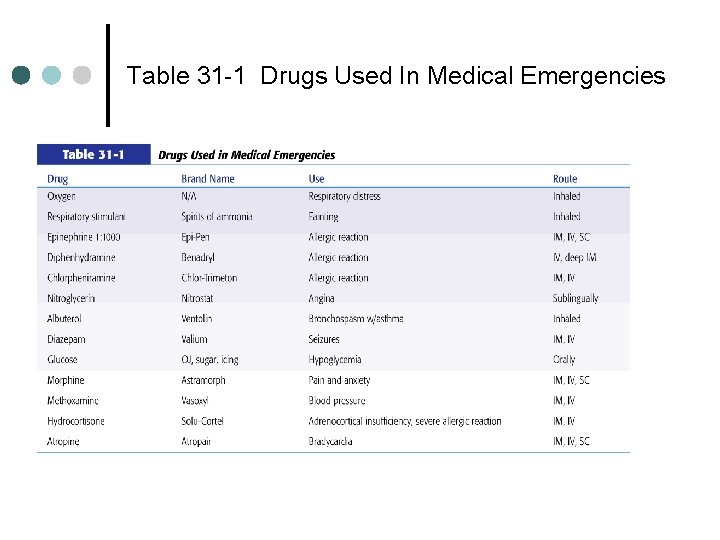
Table 31 -1 Drugs Used In Medical Emergencies
Emergency Responses ¢ Physical Changes Unconsciousness l Altered consciousness l Respiratory distress l Convulsions l Chest pain l
Medical Emergencies ¢ ¢ ¢ Oxygen is always in a _____ cylinder or tank and is always safe to administer to the unconscious patient. All cells that make up the body require O 2 and nutrients. Anytime there is a lack of either, the body will go into _______. Examples: l l l l Heart attack Loss of blood Stroke Respiratory disorders (asthma) Diabetes (hyper- and hypoglycemia) Postural hypotension Allergic reaction (anaphylactic shock) Septic (infection) Note: aseptic means without infection
Common Medical Emergencies ¢ Syncope: A reduced blood flow to the brain causing the patient to lose consciousness. (fainting) l Psychologic factors: 1. 2. 3. l Physiologic factors: 1. 2. 3. 4. ¢ Treatment: 1. 2. 3.
Common Medical Emergencies ¢ ¢ Postural Hypotension: _______________________________________________________ Treatment: 1. 2. ¢ ¢ Acute Myocardial Infarction: Commonly referred to as a_________; the muscles of the heart are damaged because sufficient oxygen is not able to reach them. Treatment: 1. 2.
Cardiac Emergencies ¢ Angina. Pectoris: ______________________. l Pain from angina usually lasts __ to __ minutes. l Angina pain is relieved or eased promptly by the administration of a commonly prescribed drug, ___________. ¢ Treatment: 1. 2. 3.
Cerebrovascular Accident Stroke: ________________________________. ¢ Predisposing Diseases that can lead to a stroke. 1. 2. 3. ¢
Breathing Problems Hyperventilation: _______________________________________. The patient will usually remain conscious. Commonly caused by__________, etc. ) ¢ Treatment: ¢ l ¢ Have pt. breathe into______or ________, or place oxygen mask over their face, without turning oxygen on. Bronchial Asthma: Attacks of sudden onset, during which the patient's airway narrows, causing difficulty in breathing as well as coughing and a wheezing sound. l Causes: 1. 2. 3.
Allergic Reactions ¢ Allergy: An altered state of reactivity in body tissues in response to specific antigens. (foods, drugs, venom) l Antigen: l Antibodies: ¢ Localized Allergic Response: Slow to develop with mild symptoms such as itching, erythema, and hives. ¢ Anaphylaxis: _________________________. Symptoms include: __________, _________ Pt. May have a shortness of breath or loss of breath due to swelling of the larynx & obstruction of the airway. Skin will turn a bluish color. Treatment: ¢ ¢ 1. 2. 3. 4. What can these patients do to let others know of their conditions
Epileptic Seizures ¢ A neurologic disorder characterized by recurrent episodes of seizures. l Petit Mal Seizure: ___________________________________________________ l Grand Mal Seizure: ___________________________________________________ • Phase 1: ___________ • Phase 2: ___________ • Phase 3: ___________ • Phase 4: ___________ l Treatment: 1. 2. 3. 4.
Diabetes Mellitus ¢ Define diabetes: ¢ Hyperglycemia: An abnormal _____in the glucose (sugar) level in the blood resulting in: l _____________________ Signs: 1)_____, 2)______, & 3) _______________ ¢
Diabetes Mellitus ¢ ¢ ¢ Hypoglycemia: An abnormal ______in the glucose level in the blood due to: l __________________________ Hypoglycemia may progress into___________. The patient may become unconscious due to too much insulin and not enough food. Signs: 1) ____), 2)______, 3)_____, 4)_____, 5) _______------ may have a wet, sticky skin Patient should be reminded to eat before dental appointment. Treatment: l __________________________________________________ See diagram 31 -11
Additional medical emergencies: ¢ Cardiogenic shock-________ l ¢ Patient has severe pain. Treatment: Sit pt. Upright l Administer 100% oxygen l Call their physician l
Additional medical emergencies: ¢ ¢ ¢ Pulmonary arrest- patient is not breathing. Treatment: l Call 911 l Begin artificial ventilation Drug addictionl How do you handle patients seeking prescription pain medications?
Additional medical emergencies: ¢ ¢ Hemorrhage. These patients usually require many blood transfusions, are at high risk for AIDS. Special care is required prior to treatment. Treatment: l Clotting time assessment l Replacement of blood factors missing l Prophylactic antibiotic therapy l Should have hepatitis B vaccine
Coagulant- an agent that promotes the clotting of blood ¢ Hemostatic drugs (clotting aids): l l Gelfoam- sponge placed in the alveolar socket Oxycel- placed dry into the socket Surgicel- guaze square placed into the socket Tannic acid- found in tea. Wet tea bag, place in 2 x 2 gauze and bite firmly
Documentation of an Emergency ¢ Full documentation of an emergency is essential. l Include in the patient record: • • • 1. 2. 3. 4. 5. 6.