
Medical Devices Health Technology Assessment Dr Anastasia Chalkidou
- Slides: 29
Medical Devices Health Technology Assessment Dr Anastasia Chalkidou Senior Health Technology Assessor
Outline of the presentation Medical technologies vs. drugs HTA process for medical devices Examples Evidence cycle Discussion
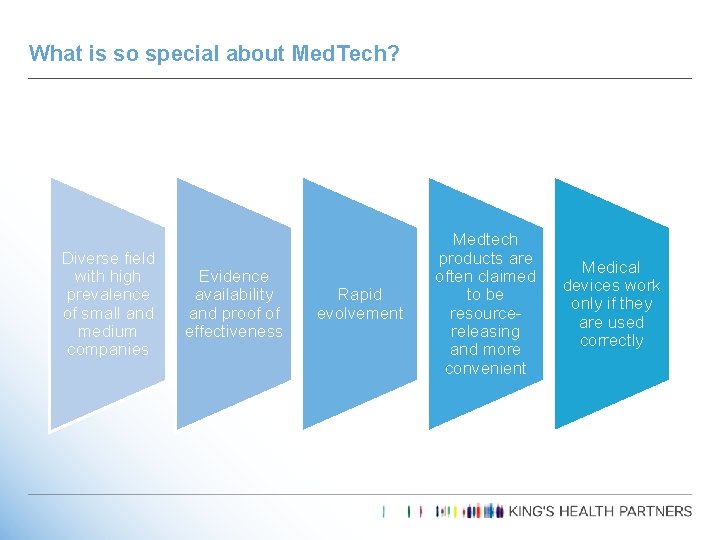
What is so special about Med. Tech? Diverse field with high prevalence of small and medium companies Evidence availability and proof of effectiveness Rapid evolvement Medtech products are often claimed to be resourcereleasing and more convenient Medical devices work only if they are used correctly
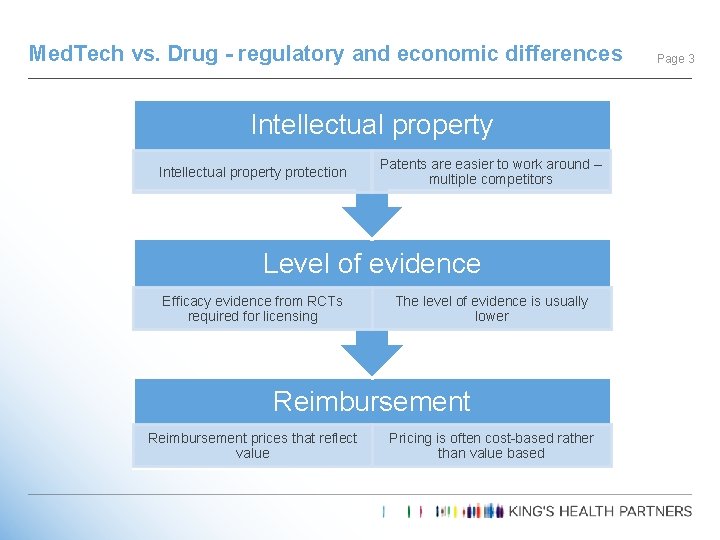
Med. Tech vs. Drug - regulatory and economic differences Intellectual property protection Patents are easier to work around – multiple competitors Level of evidence Efficacy evidence from RCTs required for licensing The level of evidence is usually lower Reimbursement prices that reflect value Pricing is often cost-based rather than value based Page 3
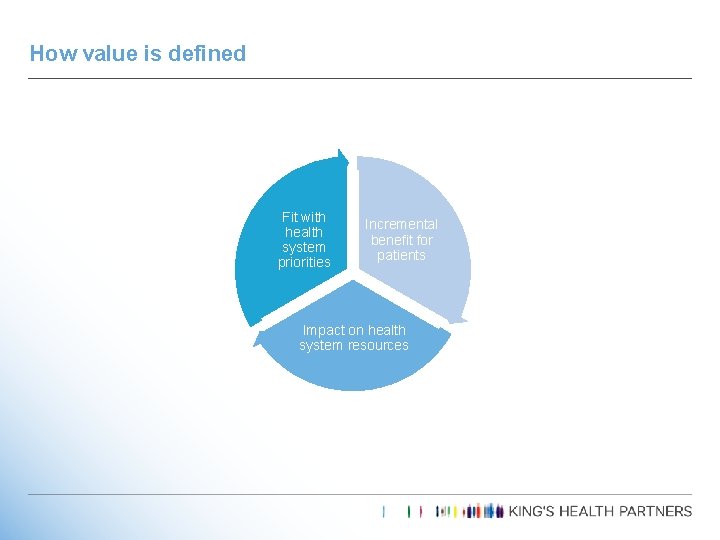
How value is defined Fit with health system priorities Incremental benefit for patients Impact on health system resources
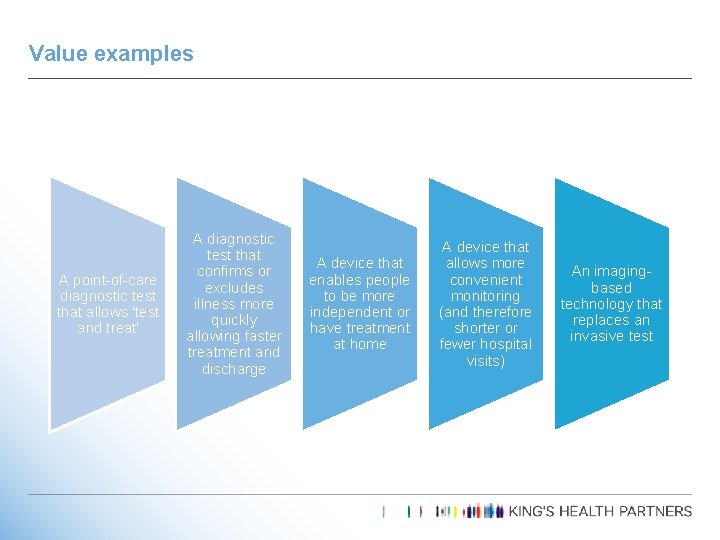
Value examples A point-of-care diagnostic test that allows 'test and treat' A diagnostic test that confirms or excludes illness more quickly allowing faster treatment and discharge A device that enables people to be more independent or have treatment at home A device that allows more convenient monitoring (and therefore shorter or fewer hospital visits) An imagingbased technology that replaces an invasive test
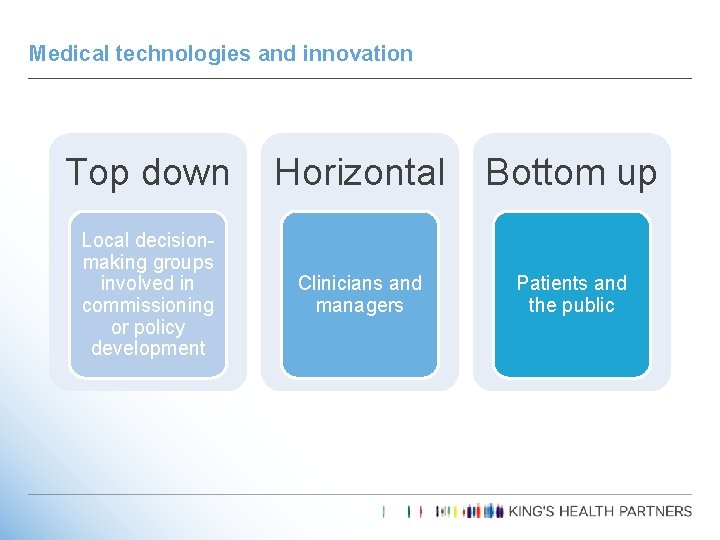
Medical technologies and innovation Top down Horizontal Bottom up Local decisionmaking groups involved in commissioning or policy development Clinicians and managers Patients and the public
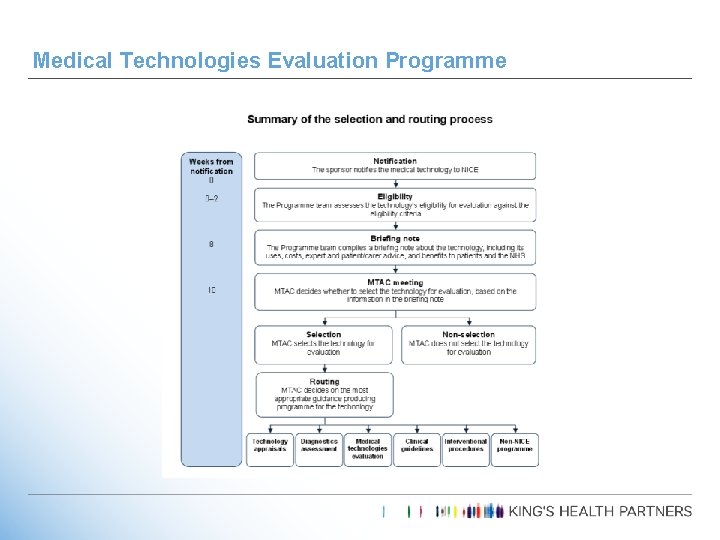
Medical Technologies Evaluation Programme
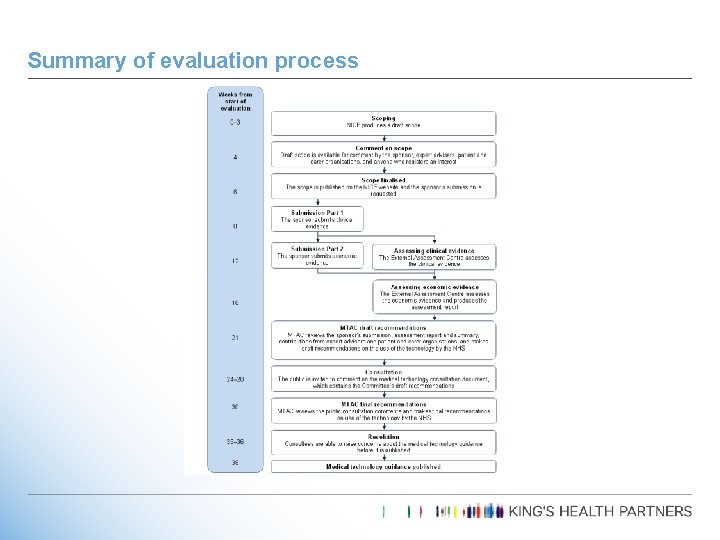
Summary of evaluation process
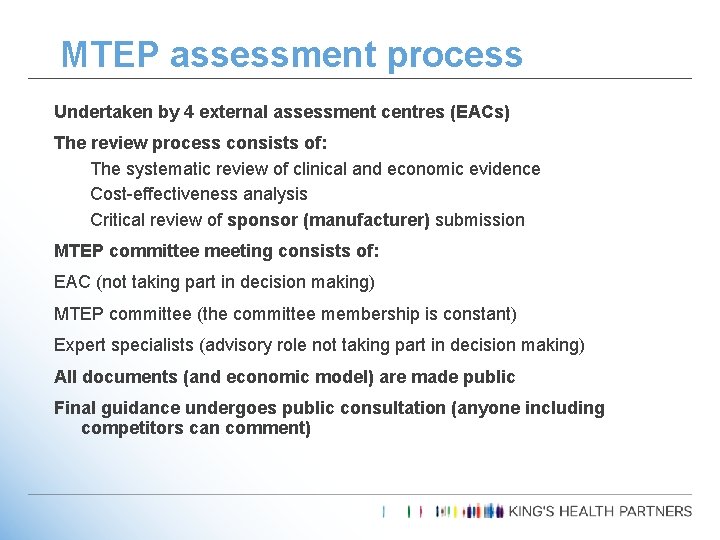
MTEP assessment process Undertaken by 4 external assessment centres (EACs) The review process consists of: The systematic review of clinical and economic evidence Cost-effectiveness analysis Critical review of sponsor (manufacturer) submission MTEP committee meeting consists of: EAC (not taking part in decision making) MTEP committee (the committee membership is constant) Expert specialists (advisory role not taking part in decision making) All documents (and economic model) are made public Final guidance undergoes public consultation (anyone including competitors can comment)
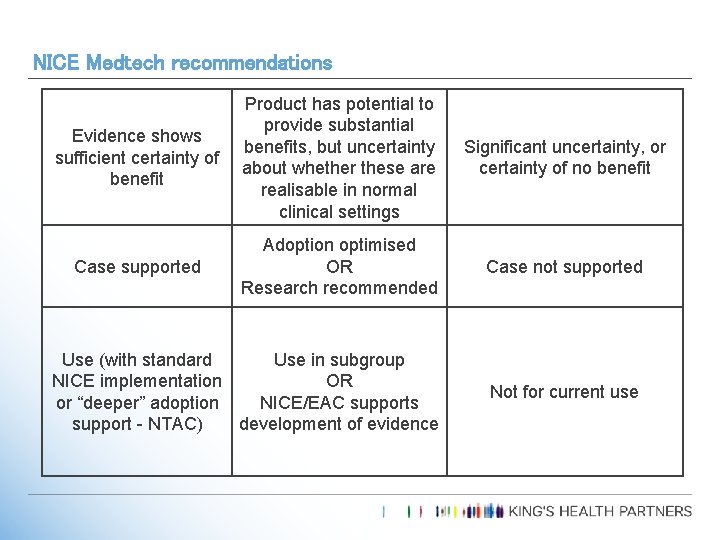
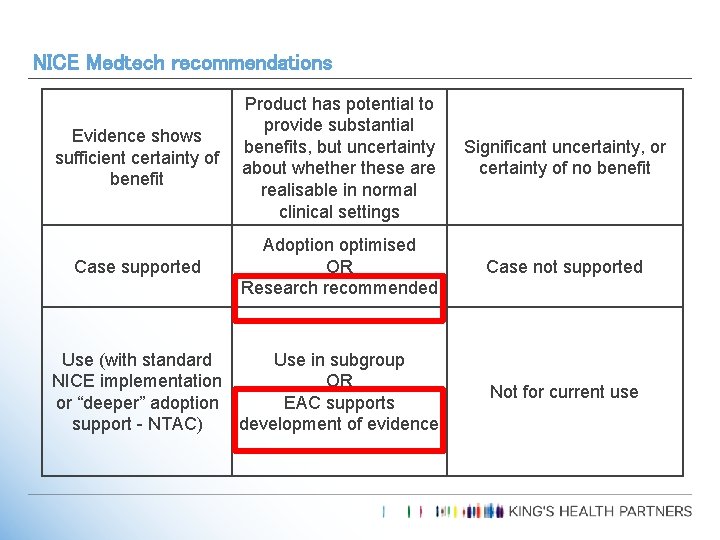
NICE Medtech recommendations Evidence shows sufficient certainty of benefit Product has potential to provide substantial benefits, but uncertainty about whether these are realisable in normal clinical settings Significant uncertainty, or certainty of no benefit Case supported Adoption optimised OR Research recommended Case not supported Use (with standard Use in subgroup NICE implementation OR or “deeper” adoption NICE/EAC supports support - NTAC) development of evidence Not for current use
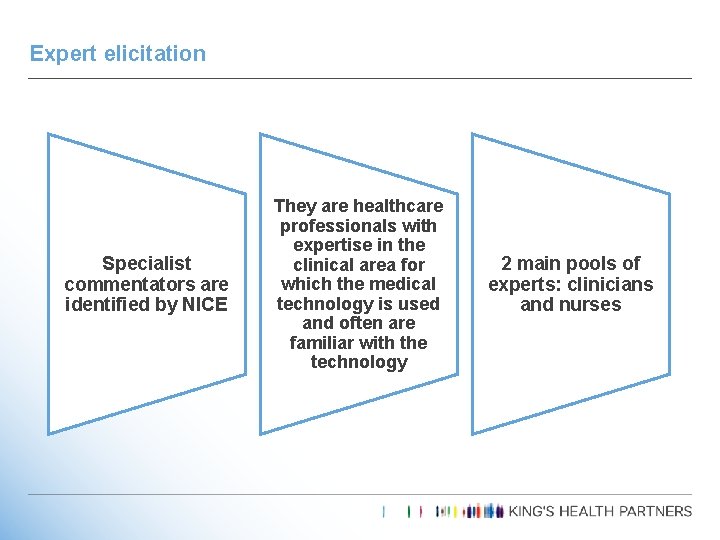
Expert elicitation Specialist commentators are identified by NICE They are healthcare professionals with expertise in the clinical area for which the medical technology is used and often are familiar with the technology 2 main pools of experts: clinicians and nurses
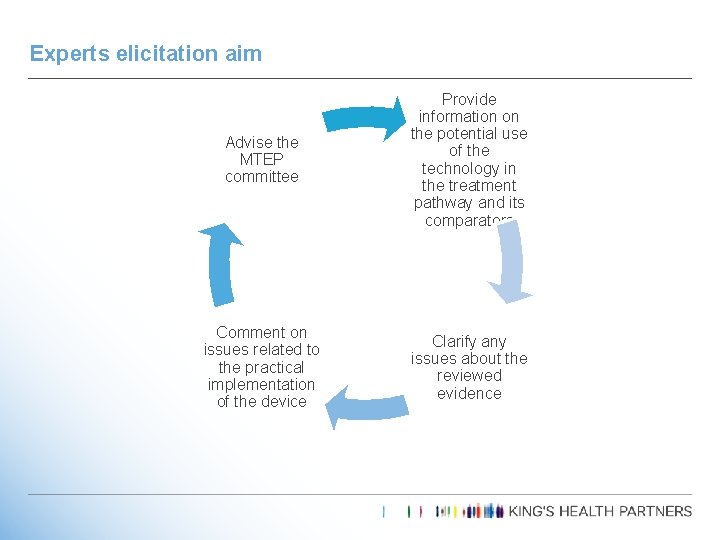
Experts elicitation aim Advise the MTEP committee Provide information on the potential use of the technology in the treatment pathway and its comparators Comment on issues related to the practical implementation of the device Clarify any issues about the reviewed evidence
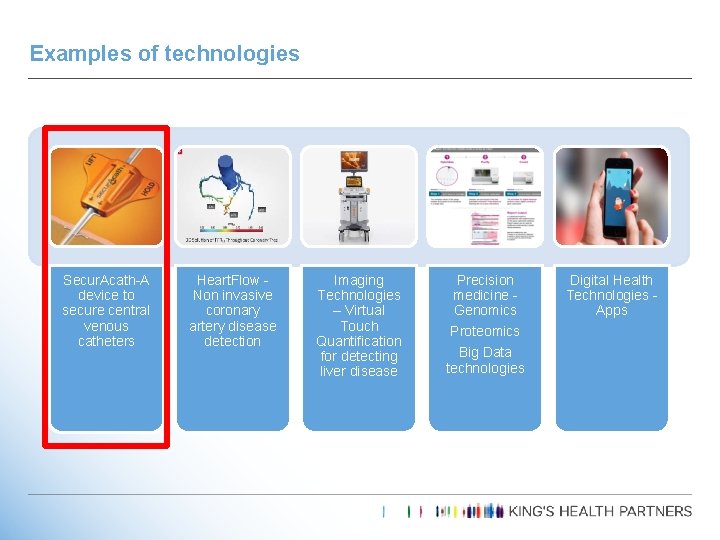
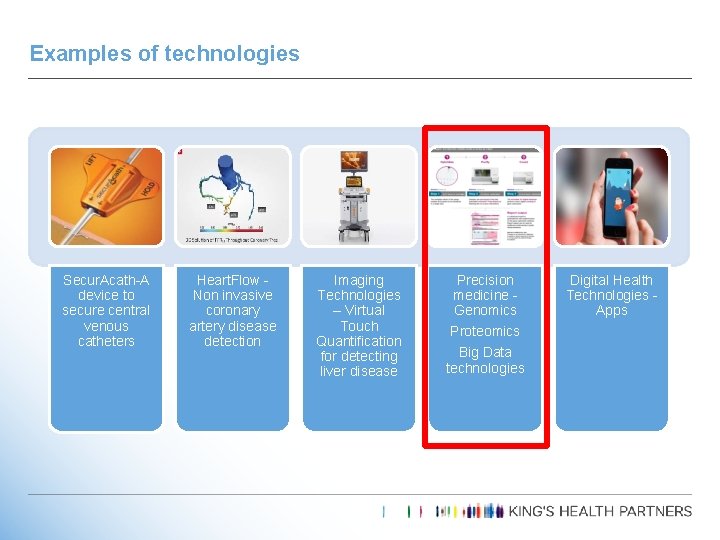
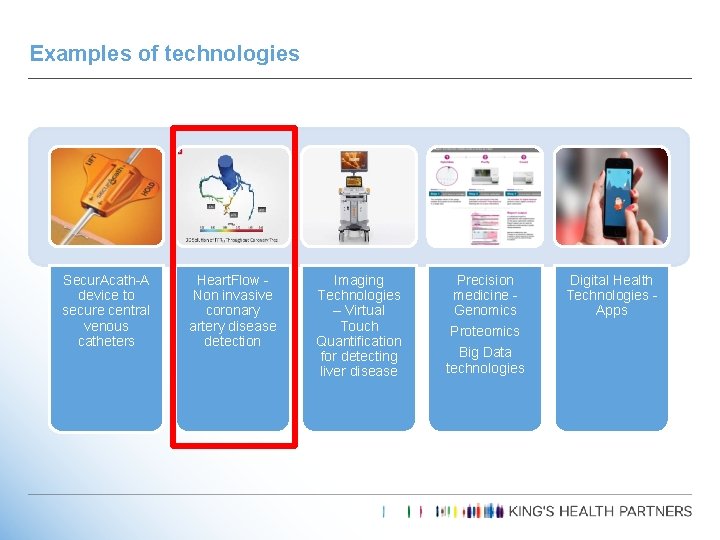
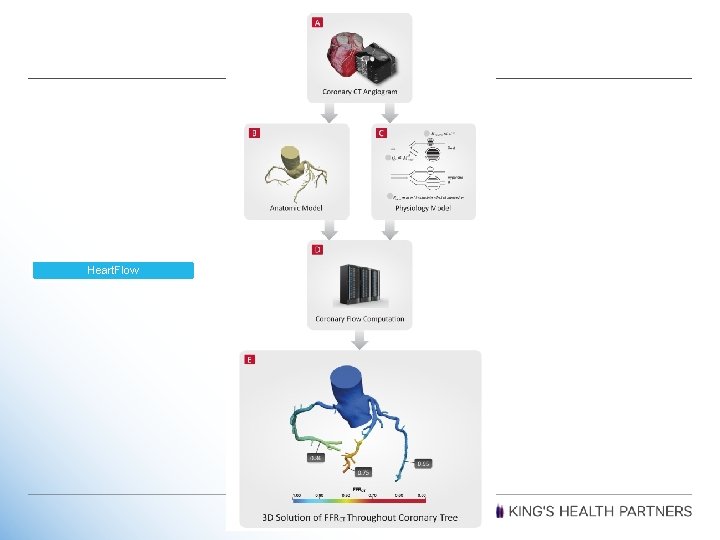
Examples of technologies Secur. Acath-A device to secure central venous catheters Heart. Flow Non invasive coronary artery disease detection Imaging Technologies – Virtual Touch Quantification for detecting liver disease Precision medicine Genomics Proteomics Big Data technologies Digital Health Technologies Apps
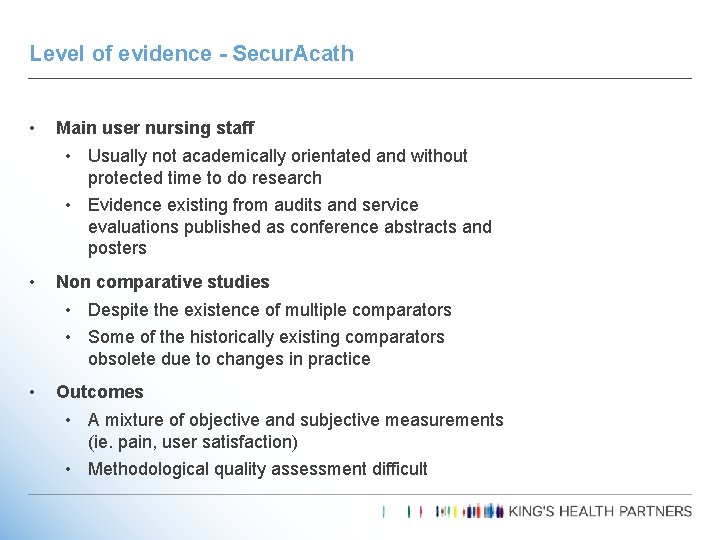
Level of evidence - Secur. Acath • Main user nursing staff • Usually not academically orientated and without protected time to do research • Evidence existing from audits and service evaluations published as conference abstracts and posters • Non comparative studies • Despite the existence of multiple comparators • Some of the historically existing comparators obsolete due to changes in practice • Outcomes • A mixture of objective and subjective measurements (ie. pain, user satisfaction) • Methodological quality assessment difficult
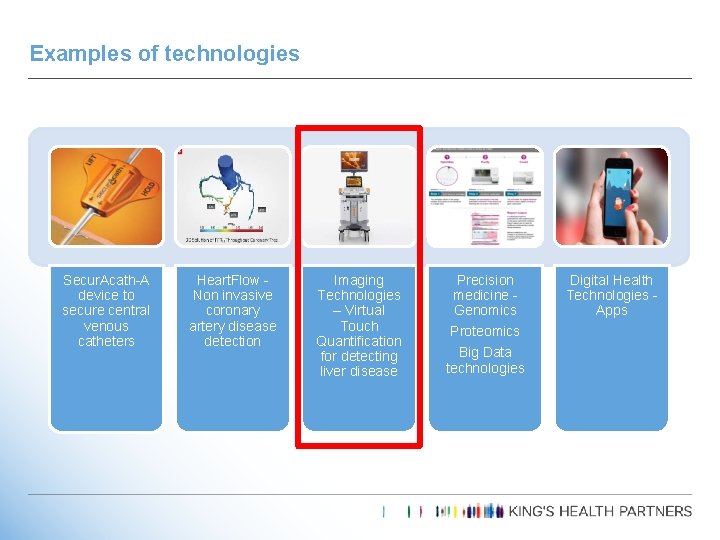
Examples of technologies Secur. Acath-A device to secure central venous catheters Heart. Flow Non invasive coronary artery disease detection Imaging Technologies – Virtual Touch Quantification for detecting liver disease Precision medicine Genomics Proteomics Big Data technologies Digital Health Technologies Apps
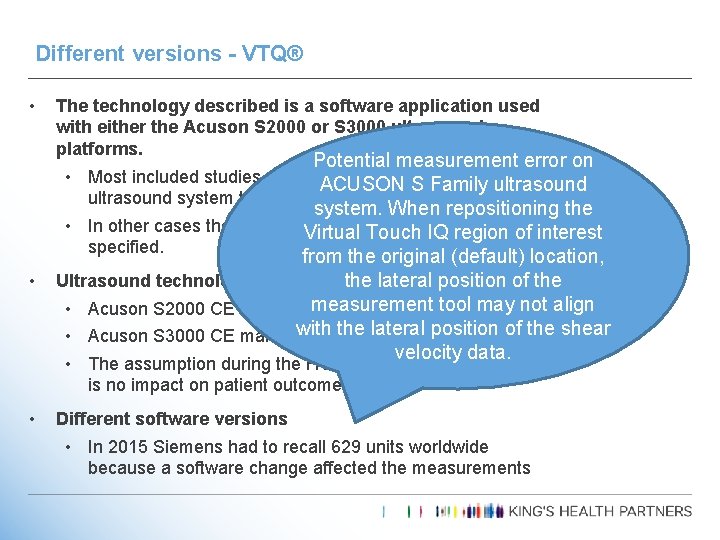
Different versions - VTQ® • • The technology described is a software application used with either the Acuson S 2000 or S 3000 ultrasound platforms. Potential measurement error on • Most included studies used the Siemens S Acuson ACUSON Family. S 2000 ultrasound system to perform VTQ® imaging. system. When repositioning the • In other cases the ultrasound platform used. IQ was not of interest Virtual Touch region specified. from the original (default) location, Ultrasound technologies at least 5 the years apart lateral position of the measurement • Acuson S 2000 CE marked February 2008. tool may not align the lateral • Acuson S 3000 CE markedwith November 2012. position of the shear velocity data. • The assumption during the HTA process was that there is no impact on patient outcomes • Different software versions • In 2015 Siemens had to recall 629 units worldwide because a software change affected the measurements
Examples of technologies Secur. Acath-A device to secure central venous catheters Heart. Flow Non invasive coronary artery disease detection Imaging Technologies – Virtual Touch Quantification for detecting liver disease Precision medicine Genomics Proteomics Big Data technologies Digital Health Technologies Apps
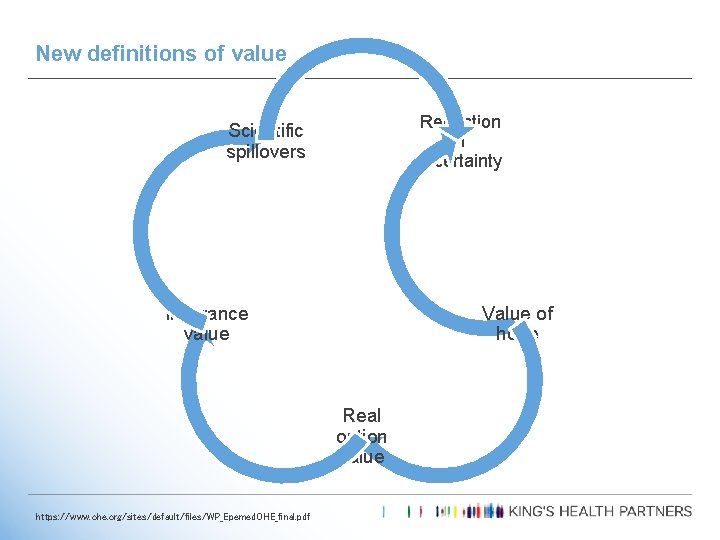
New definitions of value Reduction in uncertainty Scientific spillovers Insurance value Value of hope Real option value https: //www. ohe. org/sites/default/files/WP_Epemed. OHE_final. pdf
Examples of technologies Secur. Acath-A device to secure central venous catheters Heart. Flow Non invasive coronary artery disease detection Imaging Technologies – Virtual Touch Quantification for detecting liver disease Precision medicine Genomics Proteomics Big Data technologies Digital Health Technologies Apps
Heart. Flow
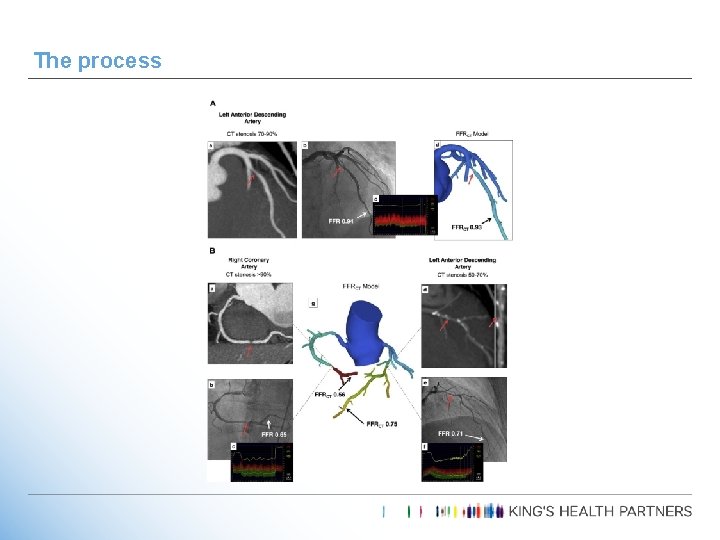
The process
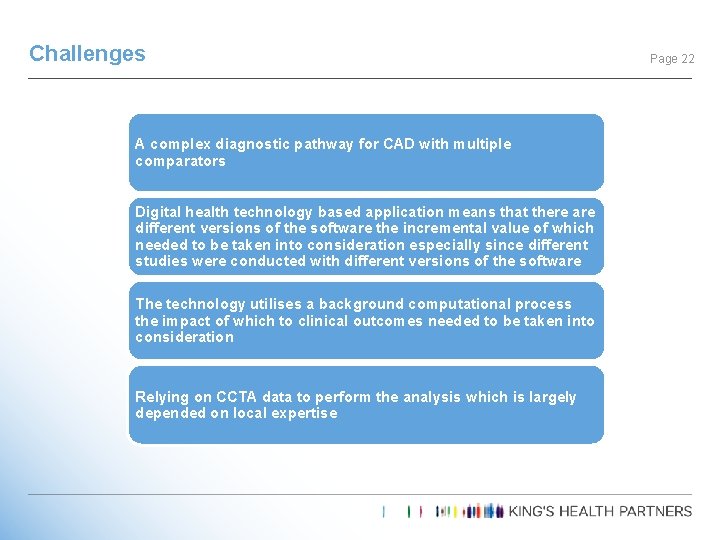
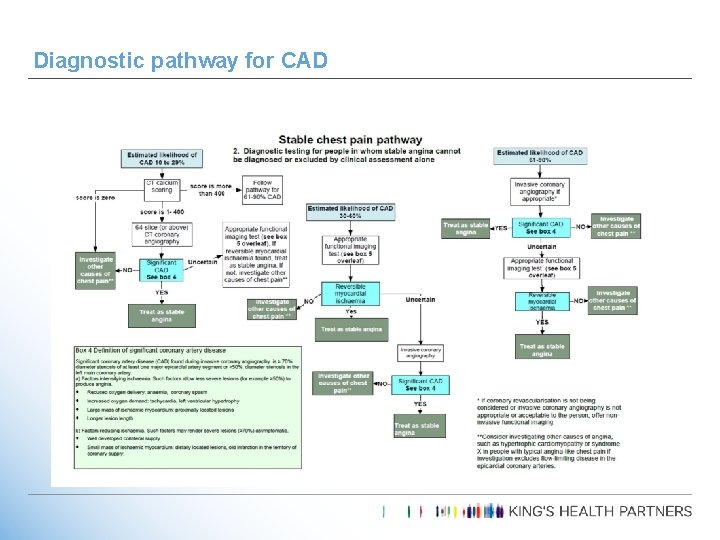
Challenges A complex diagnostic pathway for CAD with multiple comparators Digital health technology based application means that there are different versions of the software the incremental value of which needed to be taken into consideration especially since different studies were conducted with different versions of the software The technology utilises a background computational process the impact of which to clinical outcomes needed to be taken into consideration Relying on CCTA data to perform the analysis which is largely depended on local expertise Page 22
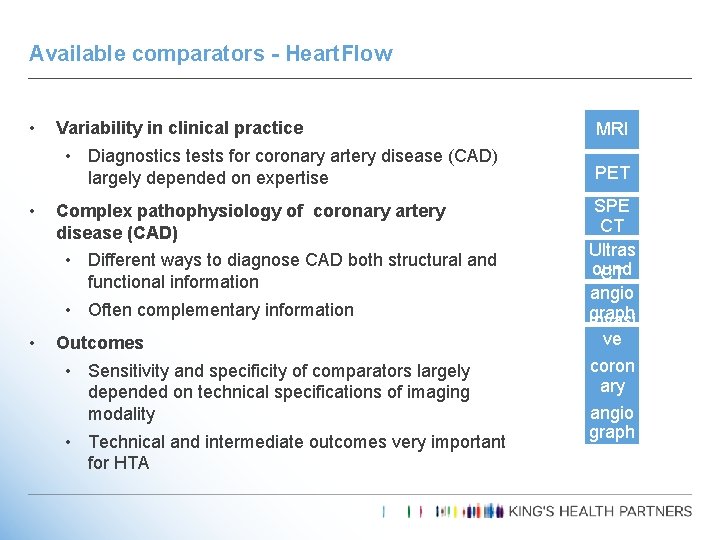
Available comparators - Heart. Flow • Variability in clinical practice • Diagnostics tests for coronary artery disease (CAD) largely depended on expertise • Complex pathophysiology of coronary artery disease (CAD) • Different ways to diagnose CAD both structural and functional information • Often complementary information • Outcomes • Sensitivity and specificity of comparators largely depended on technical specifications of imaging modality • Technical and intermediate outcomes very important for HTA MRI PET SPE CT Ultras ound CT angio graph Invasi y ve coron ary angio graph y
Diagnostic pathway for CAD
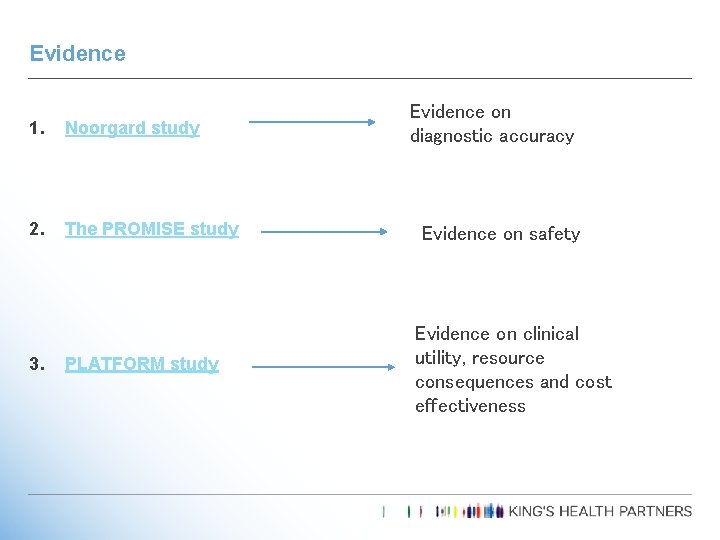
Evidence 1. Noorgard study 2. The PROMISE study 3. PLATFORM study Evidence on diagnostic accuracy Evidence on safety Evidence on clinical utility, resource consequences and cost effectiveness
Final decision 1. 1 The case for adopting Heart. Flow FFRCT for estimating fractional flow reserve from coronary CT angiography (CCTA) is supported by the evidence. The technology is non-invasive and safe, and has a high level of diagnostic accuracy. 1. 2 Heart. Flow FFRCT should be considered as an option for patients with stable, recent onset chest pain who are offered CCTA as part of the NICE pathway on chest pain. Using Heart. Flow FFRCT may avoid the need for invasive coronary angiography and revascularisation. For correct use, Heart. Flow FFRCTrequires access to 64‑slice (or above) CCTA facilities. 1. 3 Based on the current evidence and assuming there is access to appropriate CCTA facilities, using Heart. Flow FFRCT may lead to cost savings of £ 214 per patient. By adopting this technology, the NHS in England may save a minimum of £ 9. 1 million by 2022 through avoiding invasive investigation and treatment. https: //www. nice. org. uk/guidance/mtg 32/chapter/1 -Recommendations
NICE Medtech recommendations Evidence shows sufficient certainty of benefit Product has potential to provide substantial benefits, but uncertainty about whether these are realisable in normal clinical settings Significant uncertainty, or certainty of no benefit Case supported Adoption optimised OR Research recommended Case not supported Use (with standard Use in subgroup NICE implementation OR or “deeper” adoption EAC supports support - NTAC) development of evidence Not for current use
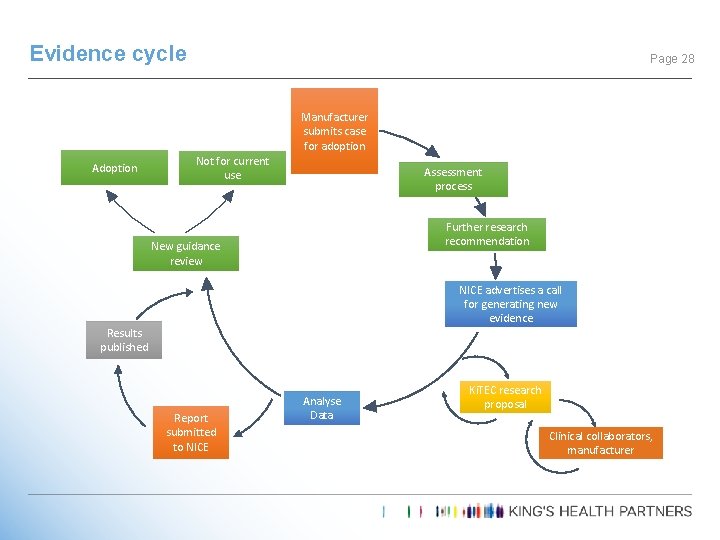
Evidence cycle Page 28 Manufacturer submits case for adoption Adoption Not for current use Assessment process Further research recommendation New guidance review NICE advertises a call for generating new evidence Results published Report submitted to NICE Analyse Data Ki. TEC research proposal Clinical collaborators, manufacturer