
Medical biology Cytology Lec 2 09 25 05032021

Medical biology Cytology Lec 2 ﻡ 09: 25 05/03/2021 BY FARAH E. ISMAEEL 1
Cell membrane transport Cell membrane or plasma membrane is selectively permeable membrane also regarded as differentially permeable membrane or semi permeable membrane, because is allow some molecules pass through it while prevent other molecule from passing. ﻡ 09: 25 05/03/2021 BY FARAH E. ISMAEEL 2

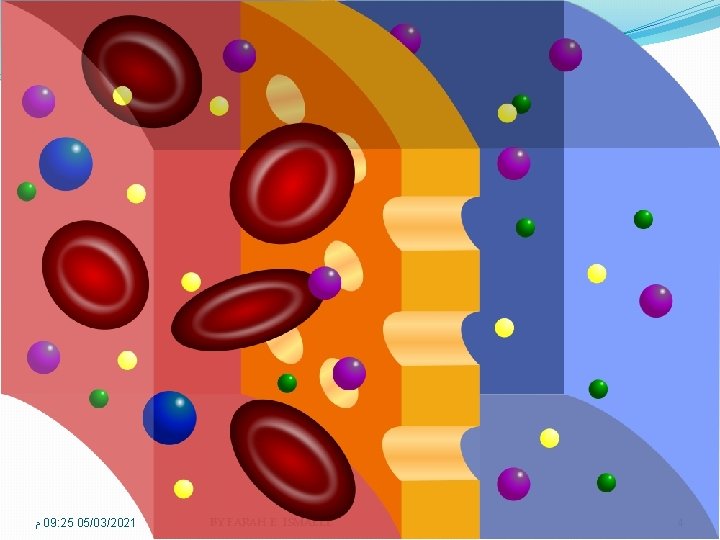
�Permeable molecules to the cell membrane include: small hydrophobic molecule like O 2, CO 2, N 2 and benzene. And small uncharged polar molecules like water, glycerol and ethanol. �Non permeable molecules to the cell membrane include: large uncharged polar molecules like sugar, amino acids. And Ions like H+, Na+, K+, Cl¯, Ca++, Mg++, HCO 3¯ ﻡ 09: 25 05/03/2021 BY FARAH E. ISMAEEL 3
ﻡ 09: 25 05/03/2021 BY FARAH E. ISMAEEL 4
Molecules cross the plasma membrane in 2 ways: �Passive ways: no energy used. Include: 1. simple diffusion. 2. channel diffusion. 3. facilitated diffusion. �Active ways: use energy. Include: 1. active transport. 2. endocytosis 3. exocytosis. ﻡ 09: 25 05/03/2021 BY FARAH E. ISMAEEL 5

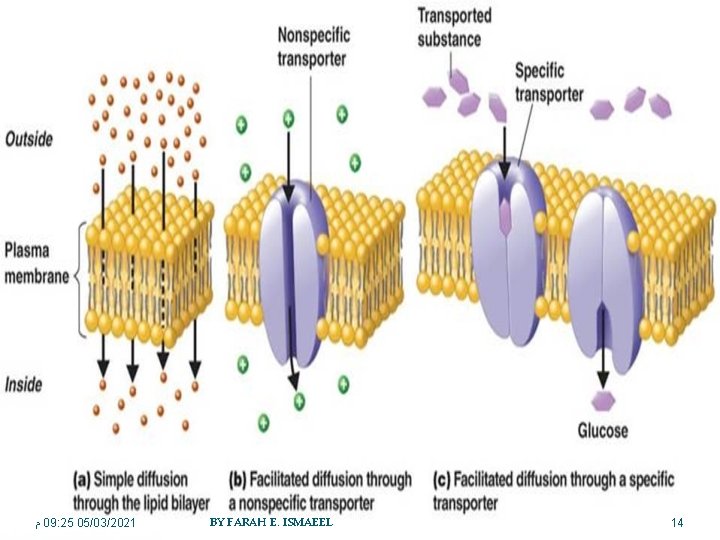
Simple diffusion The movement of molecules from higher concentration to lower concentration, until they are distributed equally for examples water, gases, glycerol, ethanol diffuse simply through the plasma membrane ﻡ 09: 25 05/03/2021 BY FARAH E. ISMAEEL 6
ﻡ 09: 25 05/03/2021 BY FARAH E. ISMAEEL 7
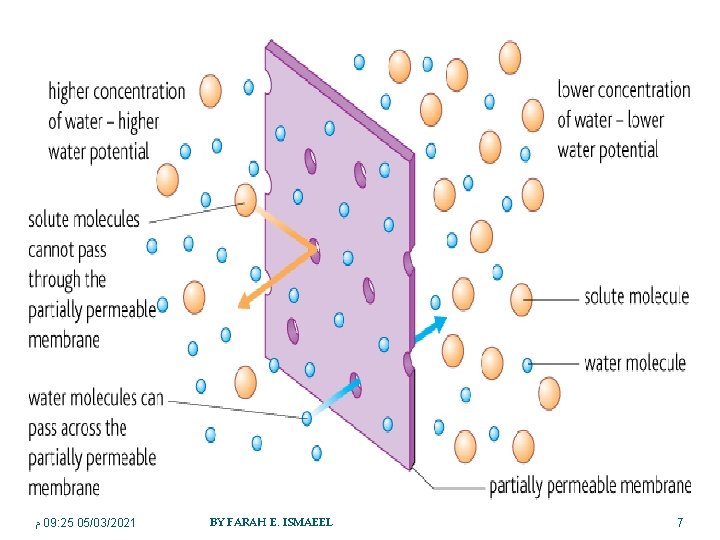
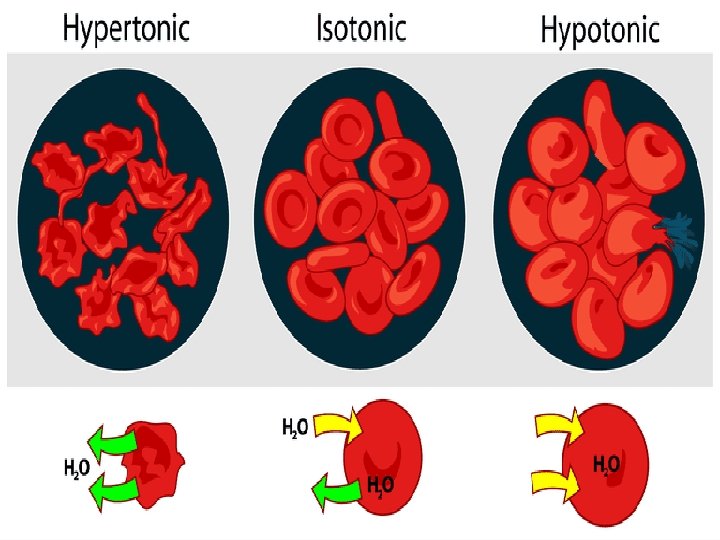
osmosis �the movement of water molecules water through semi-permeable membrane from a solution with a low solute concentration to a solution with a higher solute concentration until there is an equal solute concentration on both sides of the membrane. ﻡ 09: 25 05/03/2021 BY FARAH E. ISMAEEL 8
ﻡ 09: 25 05/03/2021 BY FARAH E. ISMAEEL 9

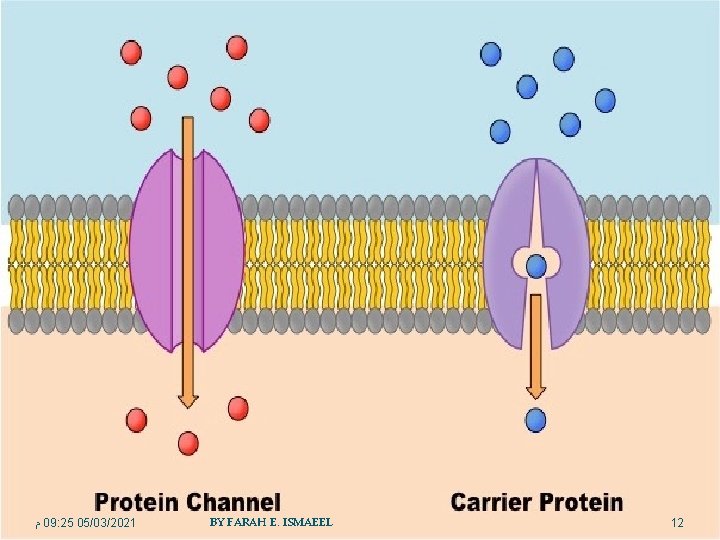
Channel diffusion This type of passive transport system also don’t use energy, used for movement of Ions (H- or Cl-) required only channel protein. ﻡ 09: 25 05/03/2021 BY FARAH E. ISMAEEL 10
Facilitated diffusion Another type of passive transport system doesn’t use energy but required a carrier protein assist the movement of glucose or amino acids. Each protein carrier, sometimes called a transporter, binds only to a particular molecule, such as glucose. ﻡ 09: 25 05/03/2021 BY FARAH E. ISMAEEL 11
ﻡ 09: 25 05/03/2021 BY FARAH E. ISMAEEL 12
Medical application On simple diffusion Type 2 diabetes mellitus results when cells lack a sufficient number of glucose transporters. ﻡ 09: 25 05/03/2021 BY FARAH E. ISMAEEL 13
ﻡ 09: 25 05/03/2021 BY FARAH E. ISMAEEL 14
Active ways energy used ﻡ 09: 25 05/03/2021 BY FARAH E. ISMAEEL 15
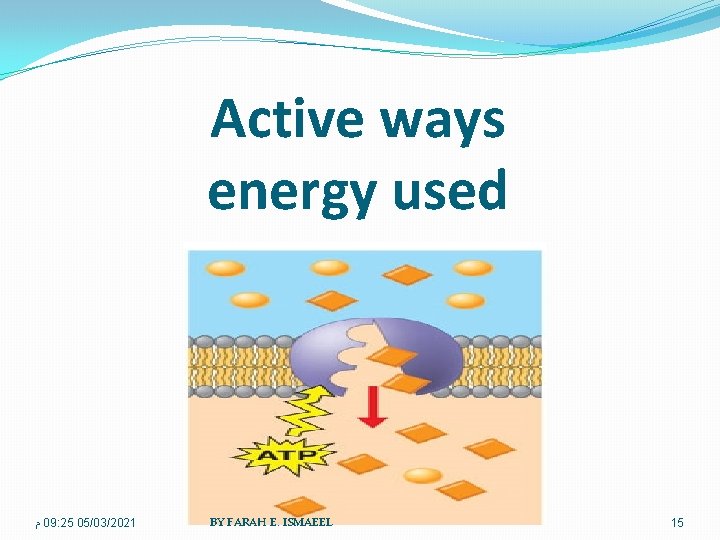
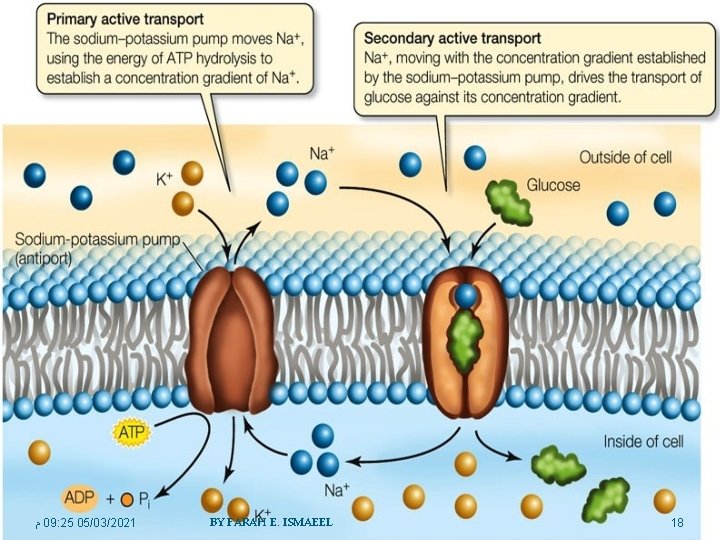
Active transport �molecules and ions can be transported across cell membrane against their concentration gradient if the appropriate transport proteins and a source of energy (ATP) are available. �Proteins involved in active transport often are called pumps ﻡ 09: 25 05/03/2021 BY FARAH E. ISMAEEL 16

Examples on active transport water pump uses energy to move water against the force of gravity; energy is used to move substances against their concentration gradients. Sodium-Potassium Pump – is transport protein (pump) in the plasma membrane that moves sodium ions (Na+) out of and potassium ions (K+) into animal cells; important in nerve and muscle cells. ﻡ 09: 25 05/03/2021 BY FARAH E. ISMAEEL 17
ﻡ 09: 25 05/03/2021 BY FARAH E. ISMAEEL 18
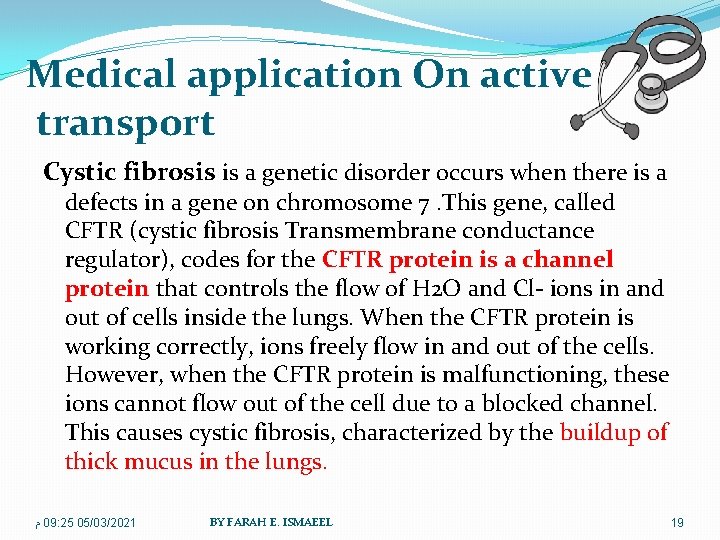
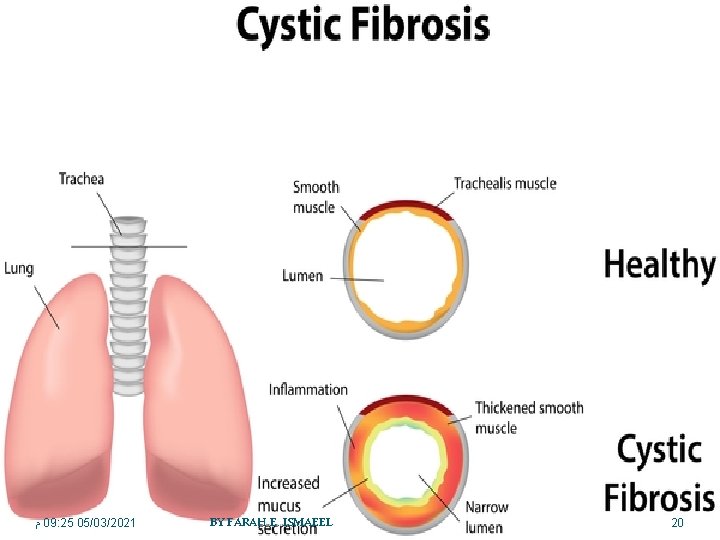
Medical application On active transport Cystic fibrosis is a genetic disorder occurs when there is a defects in a gene on chromosome 7. This gene, called CFTR (cystic fibrosis Transmembrane conductance regulator), codes for the CFTR protein is a channel protein that controls the flow of H 2 O and Cl- ions in and out of cells inside the lungs. When the CFTR protein is working correctly, ions freely flow in and out of the cells. However, when the CFTR protein is malfunctioning, these ions cannot flow out of the cell due to a blocked channel. This causes cystic fibrosis, characterized by the buildup of thick mucus in the lungs. ﻡ 09: 25 05/03/2021 BY FARAH E. ISMAEEL 19
ﻡ 09: 25 05/03/2021 BY FARAH E. ISMAEEL 20
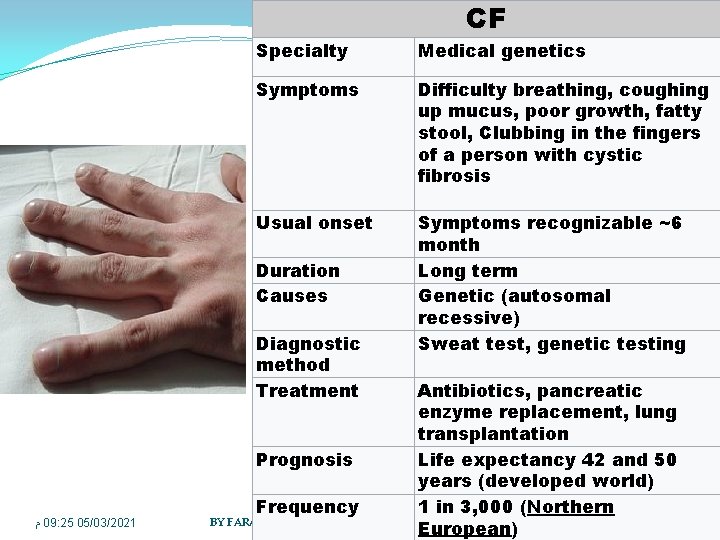
Specialty Medical genetics Symptoms Difficulty breathing, coughing up mucus, poor growth, fatty stool, Clubbing in the fingers of a person with cystic fibrosis Usual onset Symptoms recognizable ~6 month Long term Genetic (autosomal recessive) Sweat test, genetic testing Duration Causes Diagnostic method Treatment Prognosis ﻡ 09: 25 05/03/2021 CF Frequency BY FARAH E. ISMAEEL Antibiotics, pancreatic enzyme replacement, lung transplantation Life expectancy 42 and 50 years (developed world) 1 in 3, 000 (Northern 21 European)
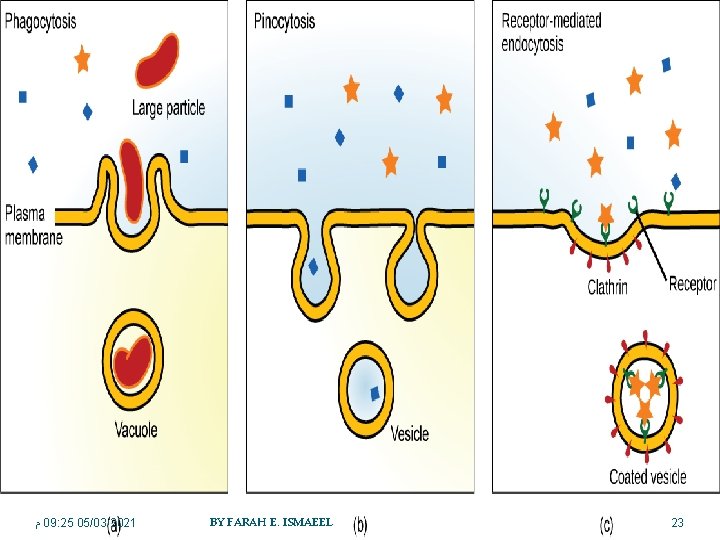
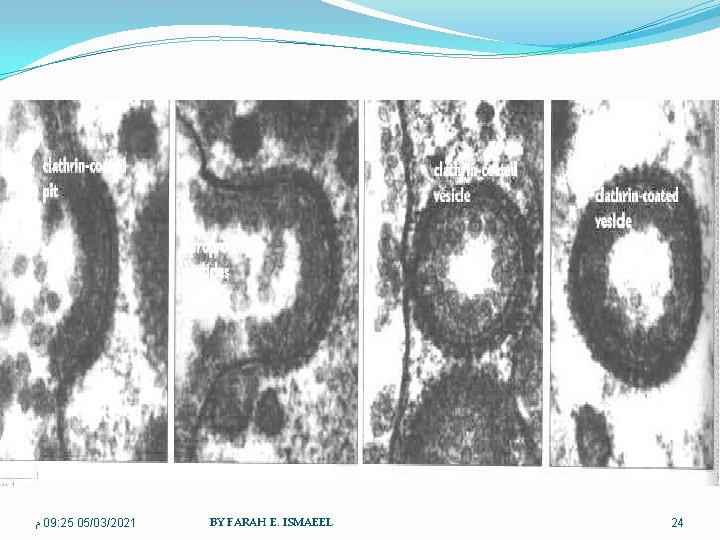
Endocytosis � Uptake process of molecules and transport it across cell membrane into the cell interior by vesicle formation, a portion of the plasma membrane invaginates to envelop the substance, and then the membrane pinches off to form an intracellular vesicle. �There are three methods of endocytosis: 1. Phagocytosis 2. Pinocytosis 3. Receptor- mediated endocytosis ﻡ 09: 25 05/03/2021 BY FARAH E. ISMAEEL 22
ﻡ 09: 25 05/03/2021 BY FARAH E. ISMAEEL 23
ﻡ 09: 25 05/03/2021 BY FARAH E. ISMAEEL 24
Medical application On endocytosis �An inherited form of cardiovascular disease occurs when cells fail to take up a combined lipoprotein and cholesterol molecule from the blood by receptormediated endocytosis. �Also one type of dwarfism are caused by nonfunctioning growth hormone receptors, In this condition the gland produce the hormone, but the target cells cannot respond because they lack normal receptors. ﻡ 09: 25 05/03/2021 BY FARAH E. ISMAEEL 25
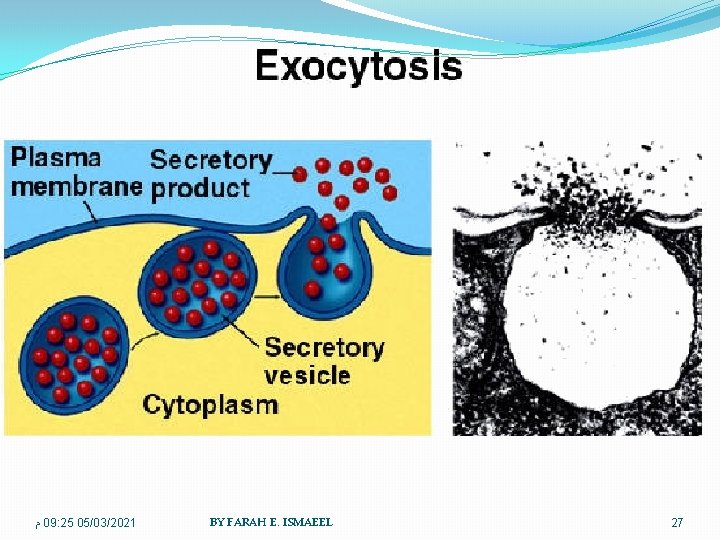
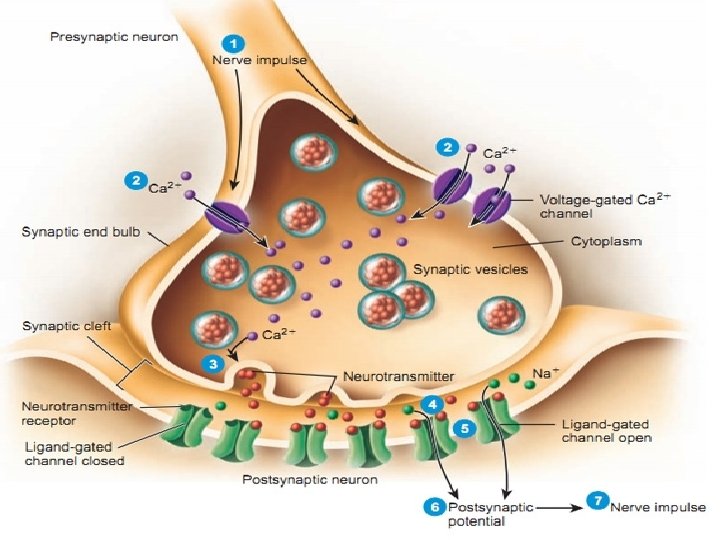
Exocytosis Release process of material from the cell. During exocytosis vesicles often formed by Golgi apparatus and carrying a specific molecule fused with plasma membrane and secretion occurs. e. g. release of insulin molecules from beta cells. ﻡ 09: 25 05/03/2021 BY FARAH E. ISMAEEL 26
ﻡ 09: 25 05/03/2021 BY FARAH E. ISMAEEL 27
ﻡ 09: 25 05/03/2021 BY FARAH E. ISMAEEL 28

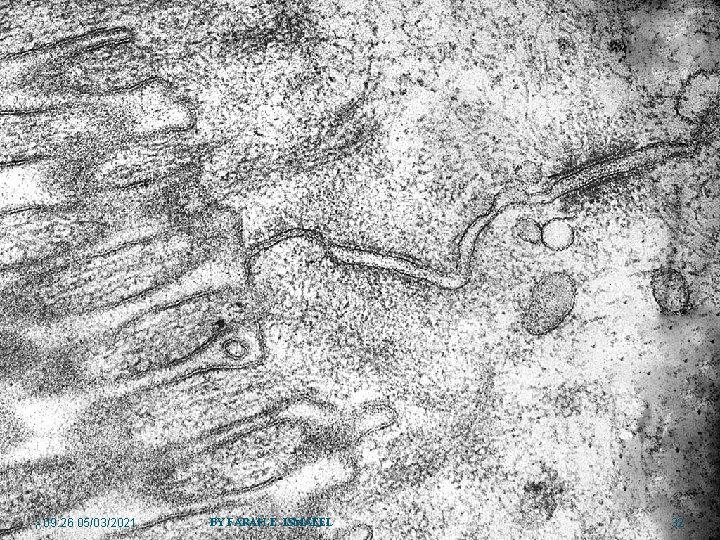
Cell membrane specialization The lateral parts of the cell membrane can show several specializations that form "intercellular junctions" ﻡ 09: 26 05/03/2021 BY FARAH E. ISMAEEL 29
Functions of intercellular junctions 1. Sites of adhesion between adjacent cells. 2. Prevent the flow of materials through the intercellular compartment. 3. Help in the intercellular communication. ﻡ 09: 26 05/03/2021 BY FARAH E. ISMAEEL 30
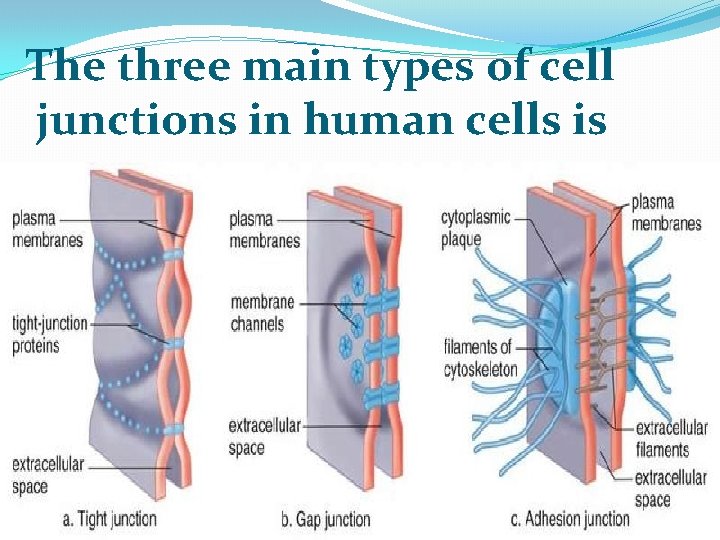
The three main types of cell junctions in human cells is
ﻡ 09: 26 05/03/2021 BY FARAH E. ISMAEEL 32
Functions of plasma membrane 1. Protect a cell by acting as a barrier between cell contents and surrounding environment. 2. Regulate the movement of substances in and out of a cell. It allows the passage of substance selectively in order to maintain a constant cell environment a phenomenon called homeostasis. 3. Connect cells together in specific way by cell junctions and pass on information to neighboring cell, so that the activities of tissue and organs are coordinated. 4. Serve as the attachment surface for many extracellular structures. ﻡ 09: 26 05/03/2021 BY FARAH E. ISMAEEL 33
NEXT LUCTURE CYTOPLASM ﻡ 09: 26 05/03/2021 BY FARAH E. ISMAEEL 34

THANK YOU ﻡ 09: 26 05/03/2021 BY FARAH E. ISMAEEL 35
- Slides: 35