
Medical biology cytology LEC 1 INTRODUCTION AND CELL
Medical biology cytology LEC 1. INTRODUCTION AND CELL MEMBRANE Saturday, October 27, 2018 lecturer Farah E. Ismaeel 1
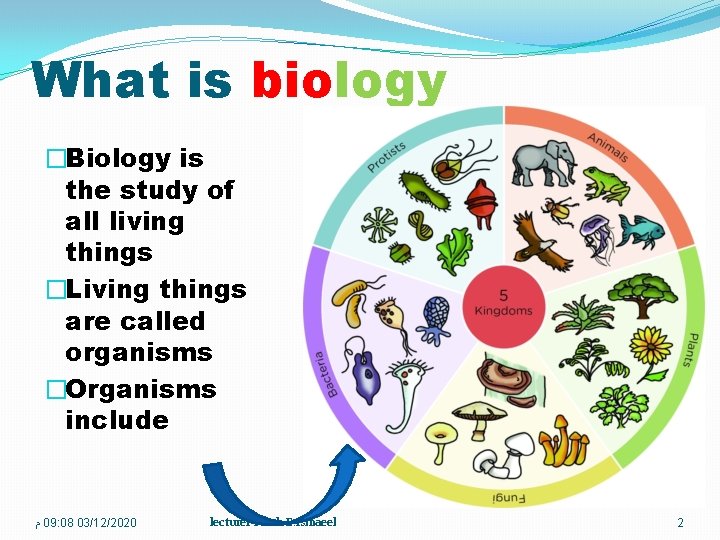
What is biology �Biology is the study of all living things �Living things are called organisms �Organisms include ﻡ 09: 08 03/12/2020 lecturer Farah E. Ismaeel 2
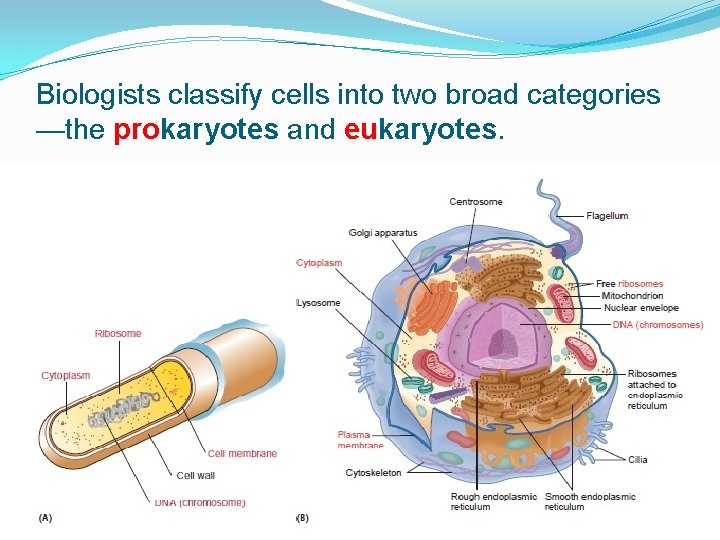
Biologists classify cells into two broad categories —the prokaryotes and eukaryotes. ﻡ 09: 08 03/12/2020 lecturer Farah E. Ismaeel 3

What is organism �organism mean living system �All organisms are capable of 1) Response to stimuli. 2) Reproduction, growth and development 3) Maintenance of homeostasis as a stable whole 4) Acquire materials and energy from the environment 5) Have an evolutionary history and are adapted to a way of life. 6) They have levels of organization lecturer Farah E. Ismaeel ﻡ 09: 08 03/12/2020 4

Response to stimuli ﻡ 09: 08 03/12/2020 lecturer Farah E. Ismaeel 5

Reproduction, growth and development ﻡ 09: 08 03/12/2020 lecturer Farah E. Ismaeel 6
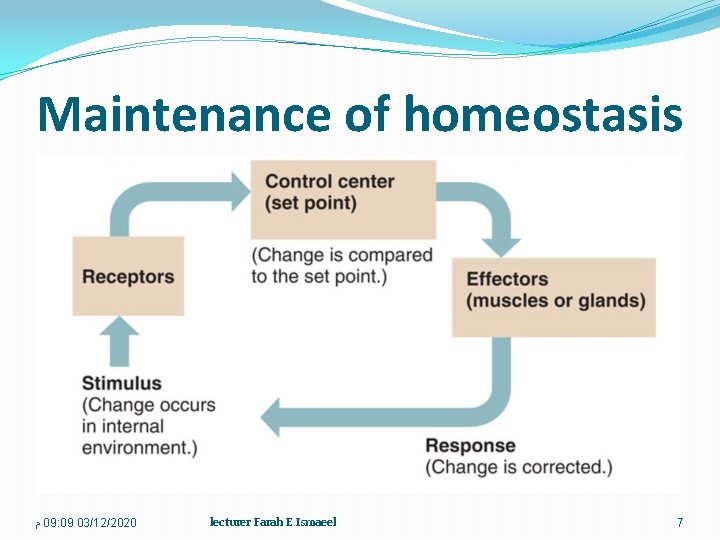
Maintenance of homeostasis ﻡ 09: 09 03/12/2020 lecturer Farah E. Ismaeel 7
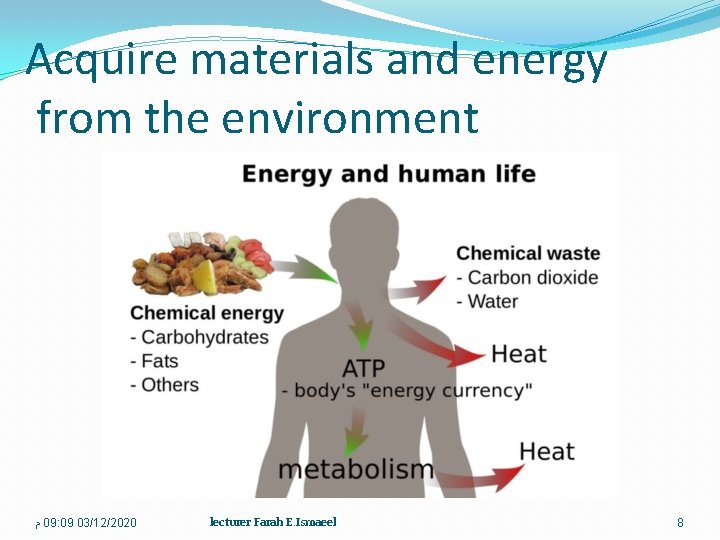
Acquire materials and energy from the environment ﻡ 09: 09 03/12/2020 lecturer Farah E. Ismaeel 8
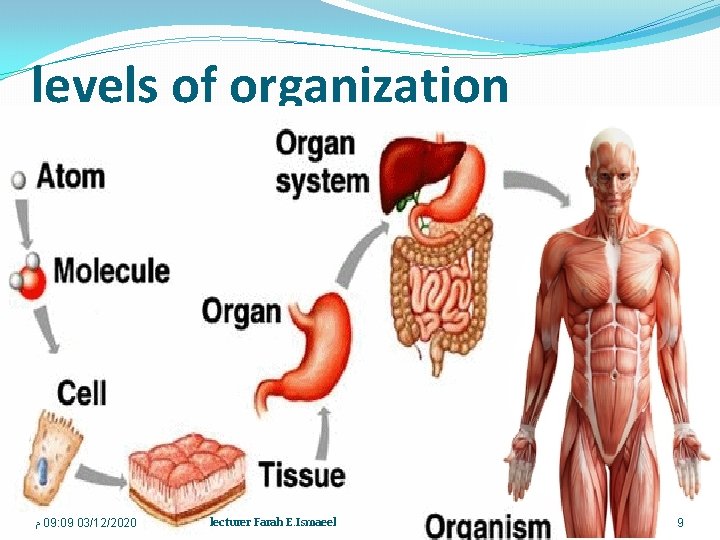
levels of organization ﻡ 09: 09 03/12/2020 lecturer Farah E. Ismaeel 9

ﻡ 09: 09 03/12/2020 lecturer Farah E. Ismaeel 10
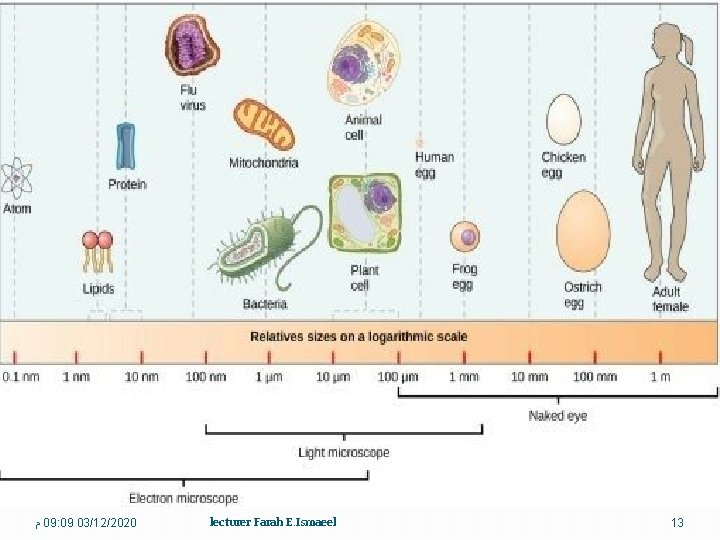
What is the cell �Cell is a smallest basic structural and functional unit of all living organisms that maintain proper homeostasis of the body. �The science that studies the microscopic appearance of cells known as cytology ﻡ 09: 09 03/12/2020 lecturer Farah E. Ismaeel 11
ﻡ 09: 09 03/12/2020 lecturer Farah E. Ismaeel 12
ﻡ 09: 09 03/12/2020 lecturer Farah E. Ismaeel 13
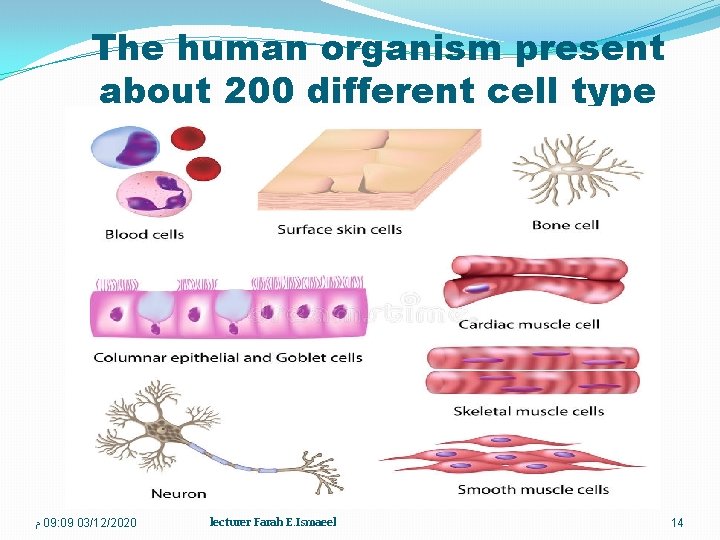
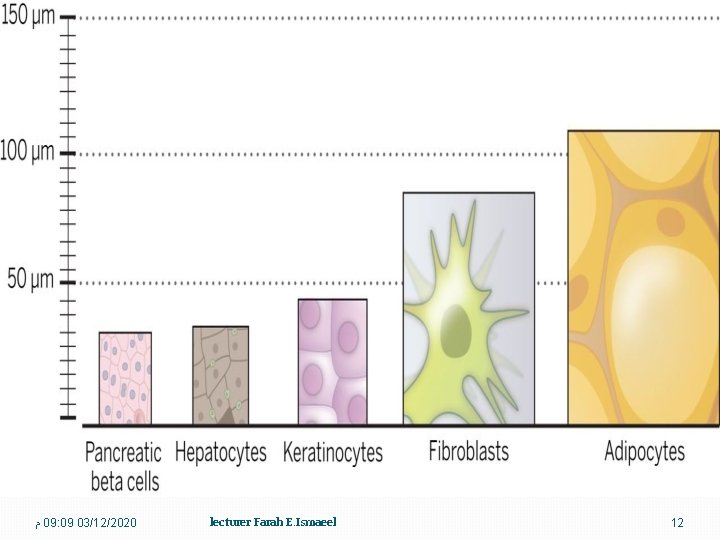
The human organism present about 200 different cell type ﻡ 09: 09 03/12/2020 lecturer Farah E. Ismaeel 14

In general the basic human cell component are: 1. Plasma membrane (plasmalemma). 2. Cytoplasm: that include cytosol, cell organelles and inclusions. 3. Nucleus. ﻡ 09: 09 03/12/2020 lecturer Farah E. Ismaeel 15

TEM Of Human cell structure ﻡ 09: 09 03/12/2020 lecturer Farah E. Ismaeel 16
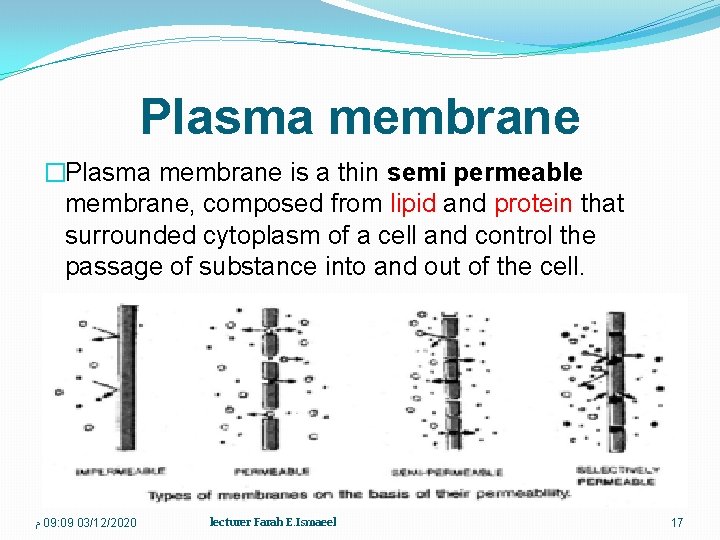
Plasma membrane �Plasma membrane is a thin semi permeable membrane, composed from lipid and protein that surrounded cytoplasm of a cell and control the passage of substance into and out of the cell. ﻡ 09: 09 03/12/2020 lecturer Farah E. Ismaeel 17
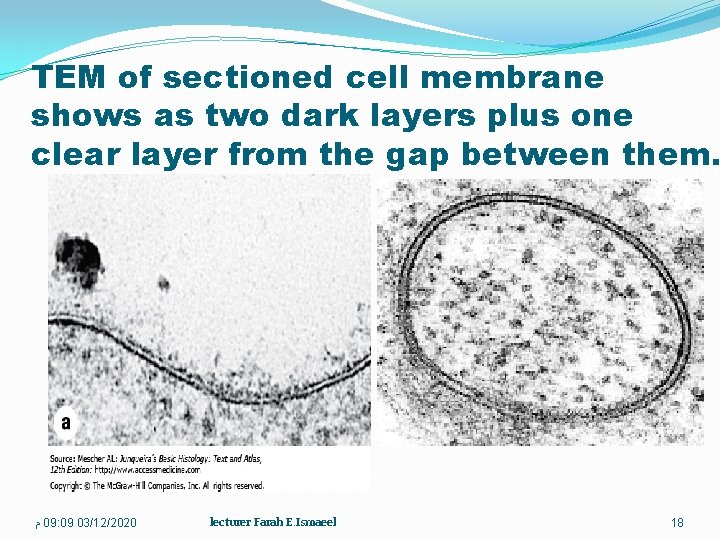
TEM of sectioned cell membrane shows as two dark layers plus one clear layer from the gap between them. ﻡ 09: 09 03/12/2020 lecturer Farah E. Ismaeel 18
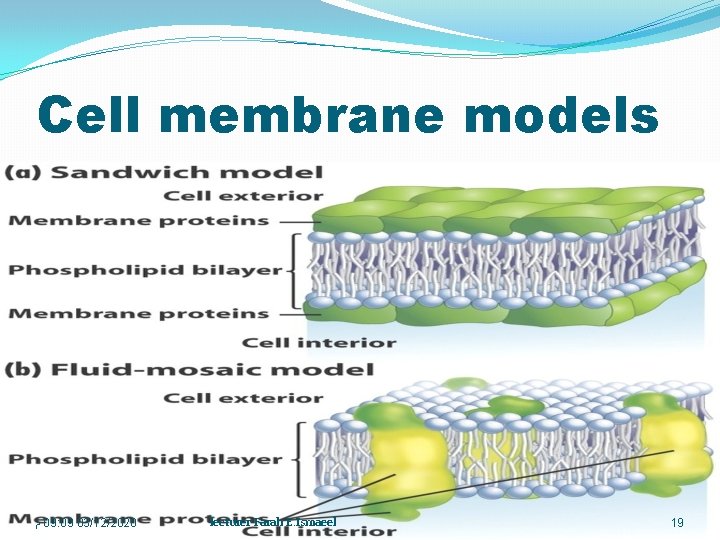
Cell membrane models ﻡ 09: 09 03/12/2020 lecturer Farah E. Ismaeel 19
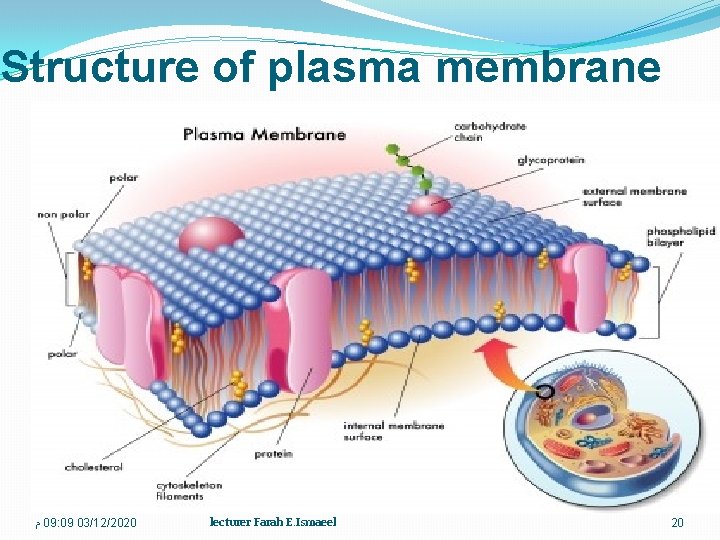
Structure of plasma membrane ﻡ 09: 09 03/12/2020 lecturer Farah E. Ismaeel 20
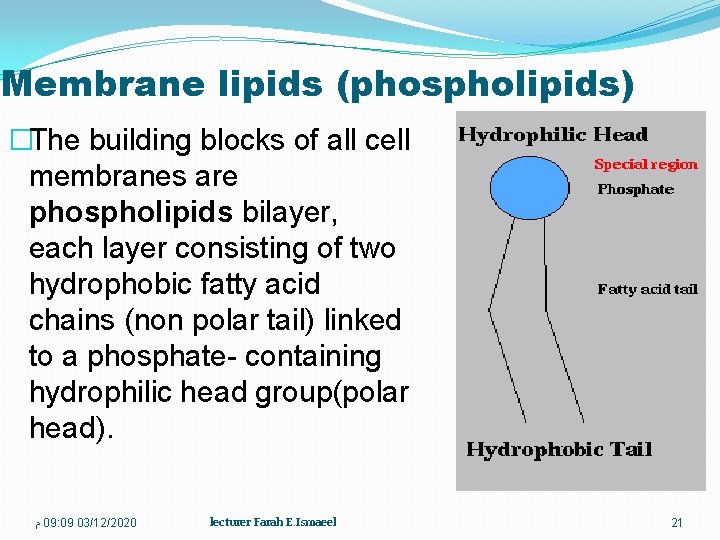
Membrane lipids (phospholipids) �The building blocks of all cell membranes are phospholipids bilayer, each layer consisting of two hydrophobic fatty acid chains (non polar tail) linked to a phosphate- containing hydrophilic head group(polar head). ﻡ 09: 09 03/12/2020 lecturer Farah E. Ismaeel 21
Membrane lipids (cholesterol) �Reduces the permeability of the membrane to the most biological molecules. �Have important role in Stability of cell membrane and make it more rigid �Regulate the fluidity of phospholipids bilayer. ﻡ 09: 09 03/12/2020 lecturer Farah E. Ismaeel 22
Membrane proteins 1. Integral proteins 2. Peripheral proteins �large protein molecules � embedded directly within the lipid bilayer �small protein molecules �not inserted into the lipid bilayer but are associated with the membrane indirectly �loosely attached �closely attached protein. ﻡ 09: 09 03/12/2020 lecturer Farah E. Ismaeel 23
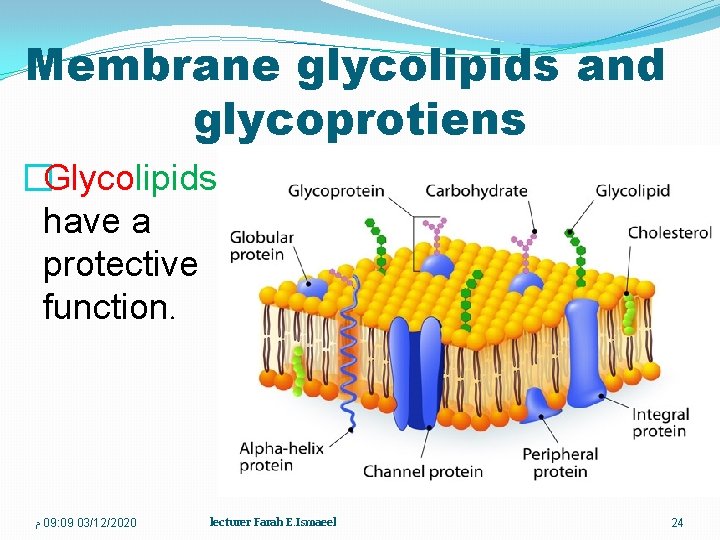
Membrane glycolipids and glycoprotiens �Glycolipids have a protective function. ﻡ 09: 09 03/12/2020 lecturer Farah E. Ismaeel 24
Membrane glycolipids and glycoprotiens Glycoprotein (glycocalyx) �Is delicate fuzzy cell coat �Composed of carbohydrate molecules that are attached to the integral proteins of the cell membrane and project from the external cell surface. �Have an important role in cell recognition, cell to cell attachment or adhesions and act as receptor or binding sites for different protein hormones. �Cell coat present on special type of cell and don’t present on others make some cell effect with virus, bacteria, hormones and drugs. ﻡ 09: 09 03/12/2020 lecturer Farah E. Ismaeel 25
Why the HBV infect only liver cells and don’t infect other cells? ﻡ 09: 09 03/12/2020 lecturer Farah E. Ismaeel 26
NEXT LECTURE Cell membrane transport, specializations and functions ﻡ 09: 09 03/12/2020 lecturer Farah E. Ismaeel 27

ﻡ 09: 09 03/12/2020 lecturer Farah E. Ismaeel 28
- Slides: 28