
Medical and homeland security gammaray imaging with semiconductor



- Slides: 47
Medical and homeland security gammaray imaging with semiconductor Compton Cameras John Simpson Daresbury Laboratory john. simpson@stfc. ac. uk
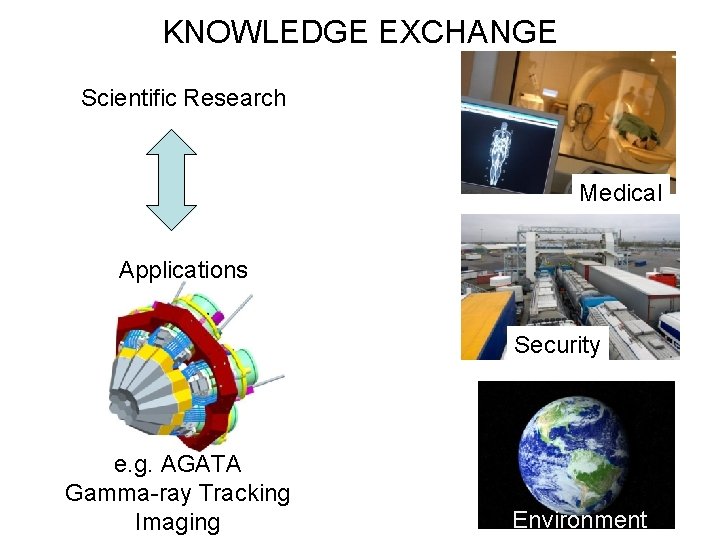
KNOWLEDGE EXCHANGE Scientific Research Medical Applications Security e. g. AGATA Gamma-ray Tracking Imaging Environment
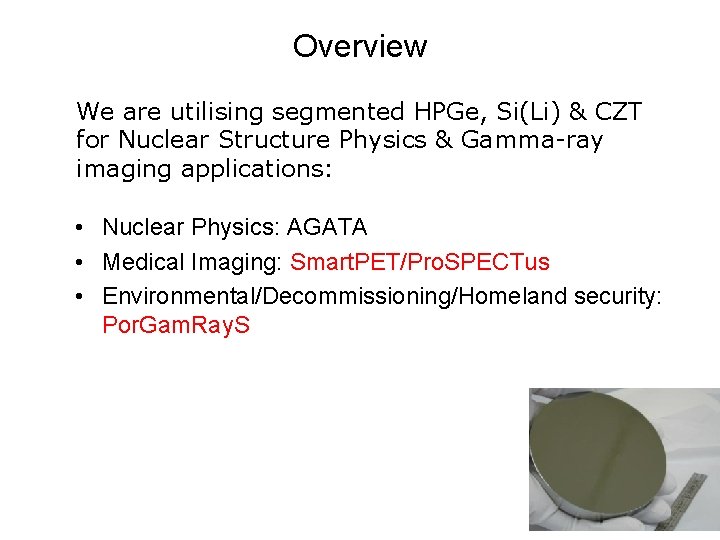
Overview We are utilising segmented HPGe, Si(Li) & CZT for Nuclear Structure Physics & Gamma-ray imaging applications: • Nuclear Physics: AGATA • Medical Imaging: Smart. PET/Pro. SPECTus • Environmental/Decommissioning/Homeland security: Por. Gam. Ray. S
Medical Imaging Application PET
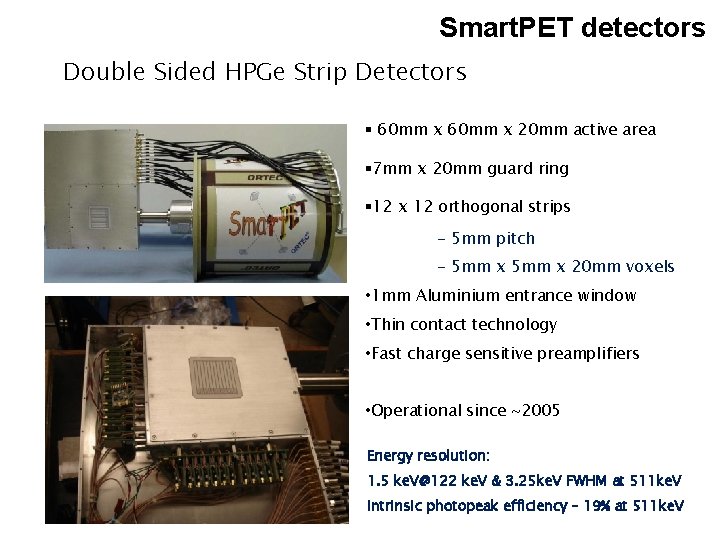
Smart. PET detectors Double Sided HPGe Strip Detectors § 60 mm x 20 mm active area § 7 mm x 20 mm guard ring § 12 x 12 orthogonal strips - 5 mm pitch - 5 mm x 20 mm voxels • 1 mm Aluminium entrance window • Thin contact technology • Fast charge sensitive preamplifiers • Operational since ~2005 Energy resolution: 1. 5 ke. V@122 ke. V & 3. 25 ke. V FWHM at 511 ke. V Intrinsic photopeak efficiency – 19% at 511 ke. V
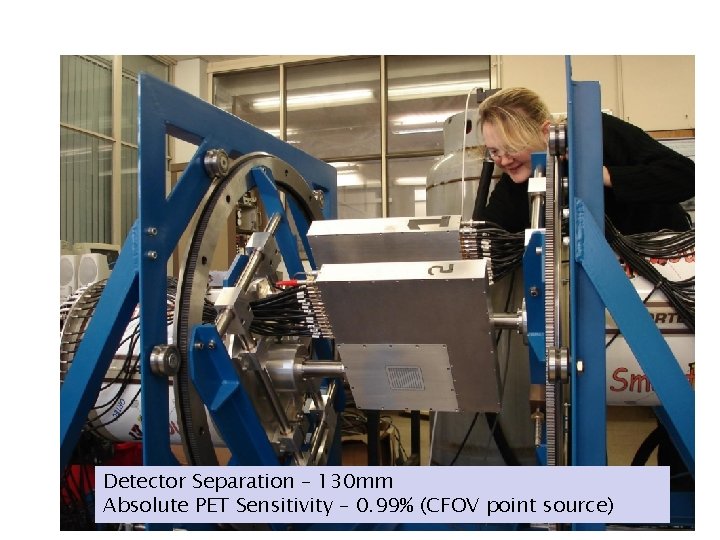
The Smart. PET System Detector Separation – 130 mm Absolute PET Sensitivity – 0. 99% (CFOV point source)
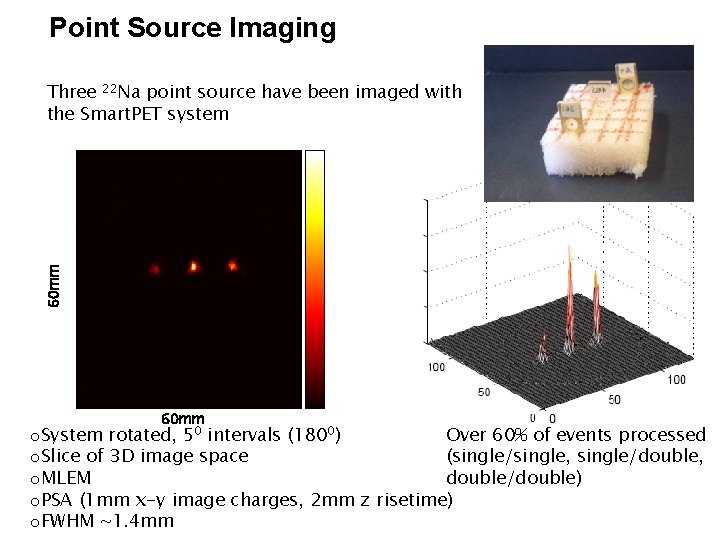
Point Source Imaging 60 mm Three 22 Na point source have been imaged with the Smart. PET system 60 mm o. System rotated, 50 intervals (1800) Over 60% of events processed o. Slice of 3 D image space (single/single, single/double, o. MLEM double/double) o. PSA (1 mm x-y image charges, 2 mm z risetime) o. FWHM ~1. 4 mm
Some Observations §The Smart. PET system has been used to image point-like and distribute sources §The reconstructed spatial resolution is limited by physical constraints §Parametric PSA techniques improve the achievable spatial resolution §In principle, “all” events can be used for image reconstruction
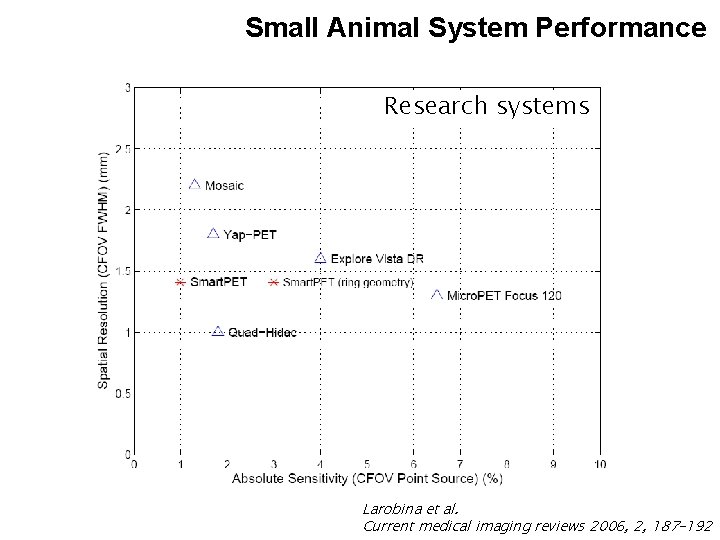
Small Animal System Performance Research systems Larobina et al. Current medical imaging reviews 2006, 2, 187 -192
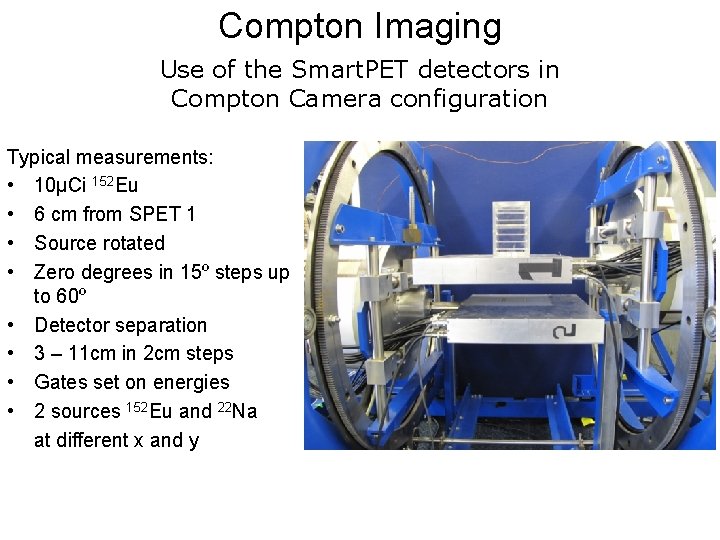
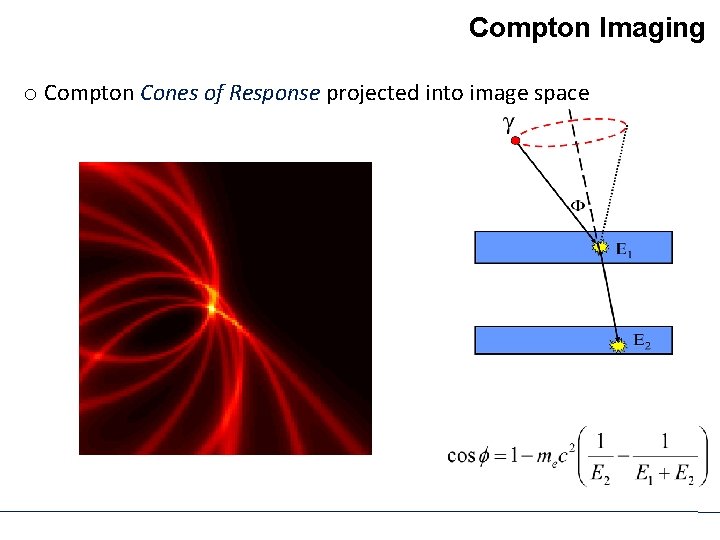
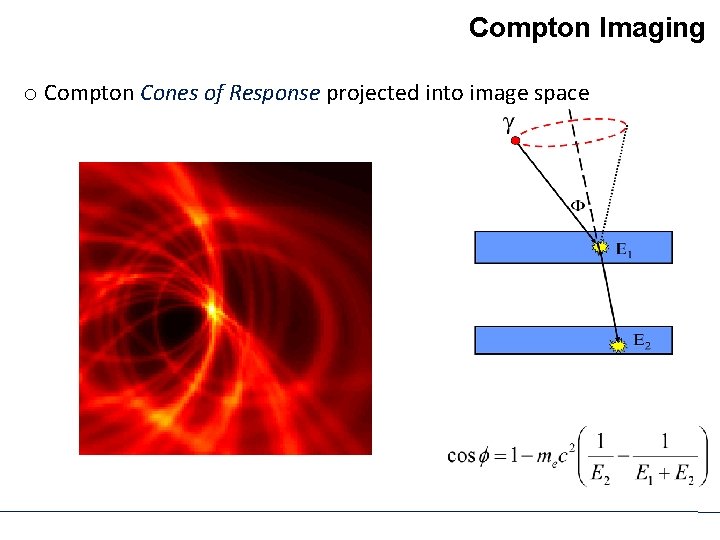
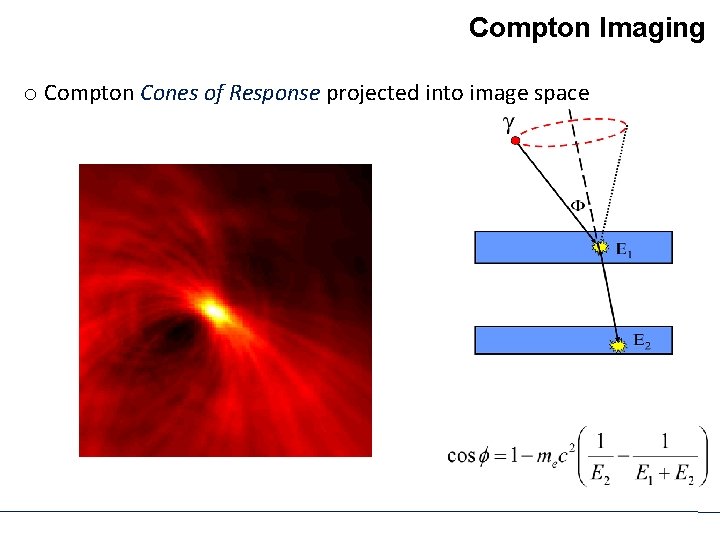
Compton Imaging Use of the Smart. PET detectors in Compton Camera configuration Typical measurements: • 10μCi 152 Eu • 6 cm from SPET 1 • Source rotated • Zero degrees in 15º steps up to 60º • Detector separation • 3 – 11 cm in 2 cm steps • Gates set on energies • 2 sources 152 Eu and 22 Na at different x and y
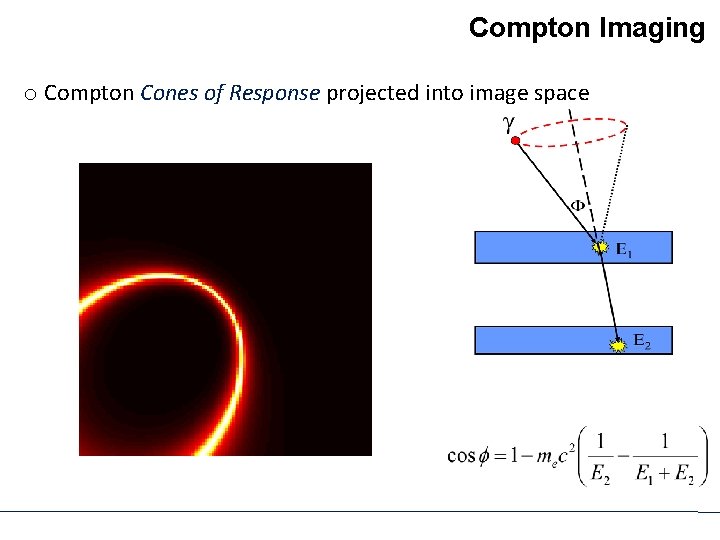
Compton Imaging o Compton Cones of Response projected into image space
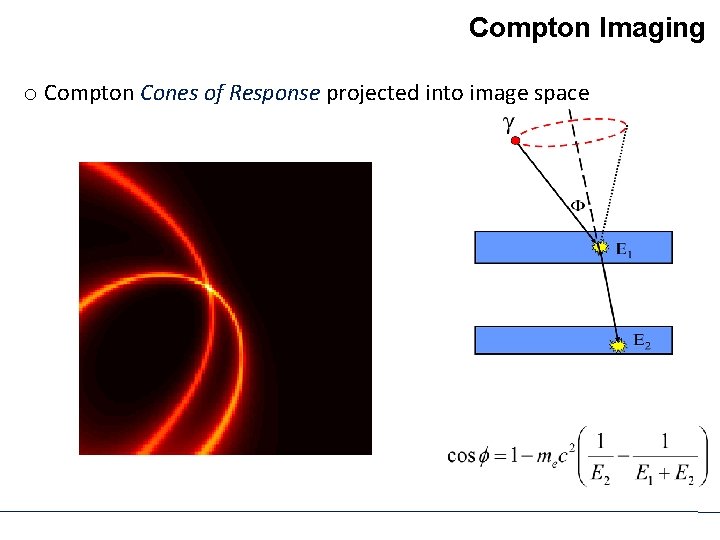
Compton Imaging o Compton Cones of Response projected into image space
Compton Imaging o Compton Cones of Response projected into image space
Compton Imaging o Compton Cones of Response projected into image space
Compton Imaging o Compton Cones of Response projected into image space
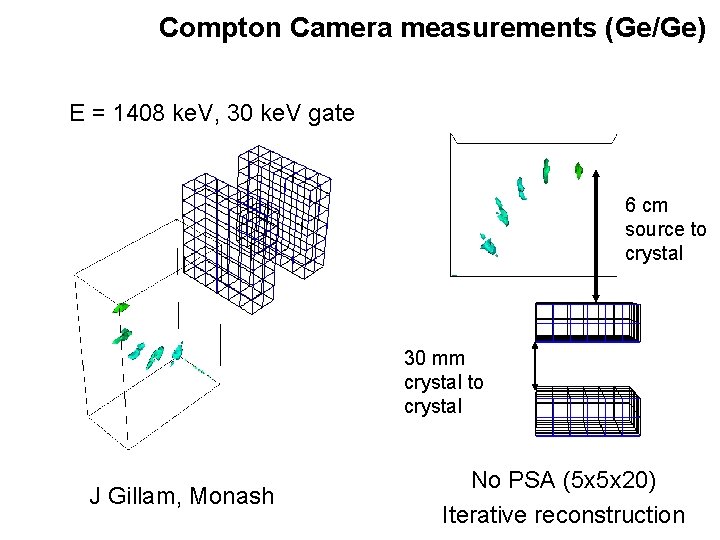
Compton Camera measurements (Ge/Ge) E = 1408 ke. V, 30 ke. V gate 6 cm source to crystal 30 mm crystal to crystal J Gillam, Monash No PSA (5 x 5 x 20) Iterative reconstruction
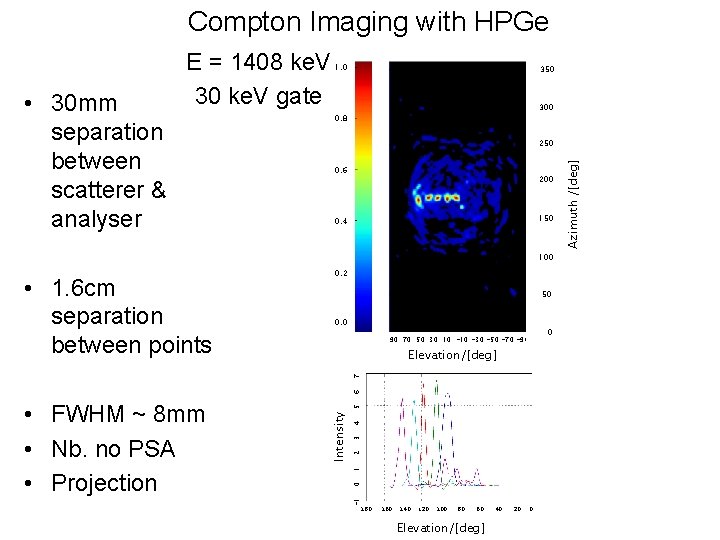
Compton Imaging with HPGe E = 1408 ke. V 30 ke. V gate • 30 mm separation between scatterer & analyser 1. 0 350 300 0. 8 0. 6 200 150 0. 4 100 0. 2 • 1. 6 cm separation between points Elevation/[deg] 50 0. 0 90 70 50 30 10 -10 -30 -50 -70 -90 Elevation/[deg] 6 6 7 7 8 300 5 4 3 1 2 Intensity 5 4 3 2 0 1 -1 0 -1 Intensity • FWHM ~ 8 mm • Nb. no PSA • Projection 180 160 140 120 100 80 60 Elevation/[deg] 40 20 o 180 160 140 120 100 80 60 Elevation/[deg] 40 20 0 0 Azimuth /[deg] 250
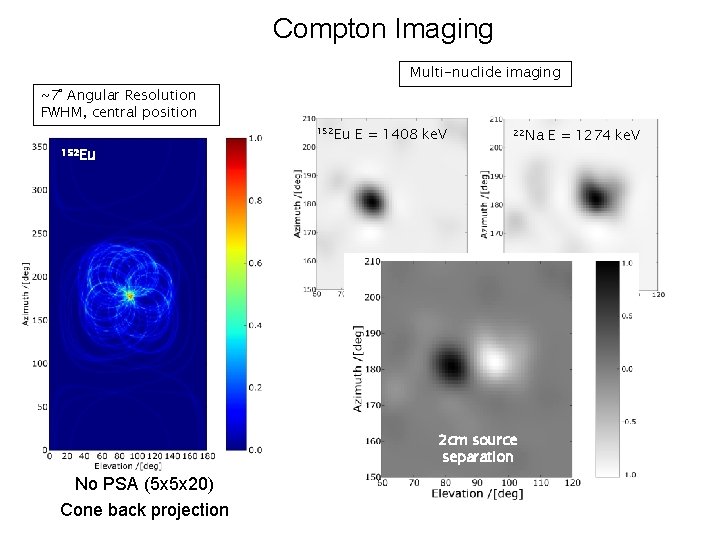
Compton Imaging Multi-nuclide imaging ~7º Angular Resolution FWHM, central position 152 Eu E = 1408 ke. V 22 Na 2 cm source separation No PSA (5 x 5 x 20) Cone back projection E = 1274 ke. V
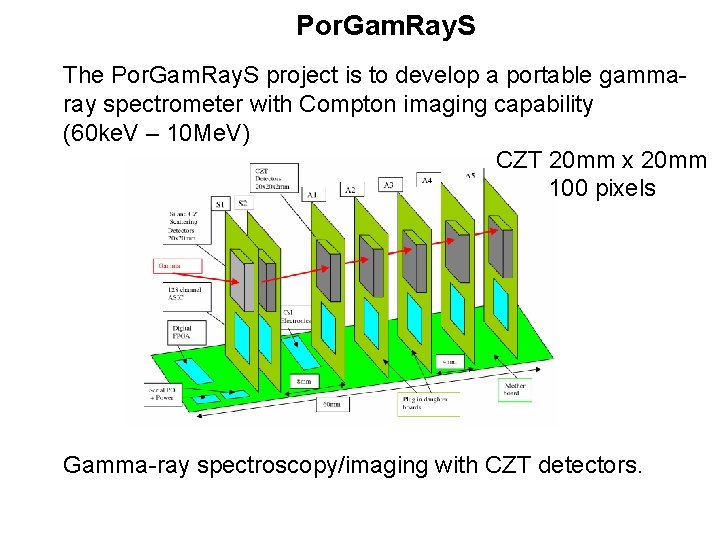
Por. Gam. Ray. S The Por. Gam. Ray. S project is to develop a portable gammaray spectrometer with Compton imaging capability (60 ke. V – 10 Me. V) CZT 20 mm x 20 mm 100 pixels Gamma-ray spectroscopy/imaging with CZT detectors.
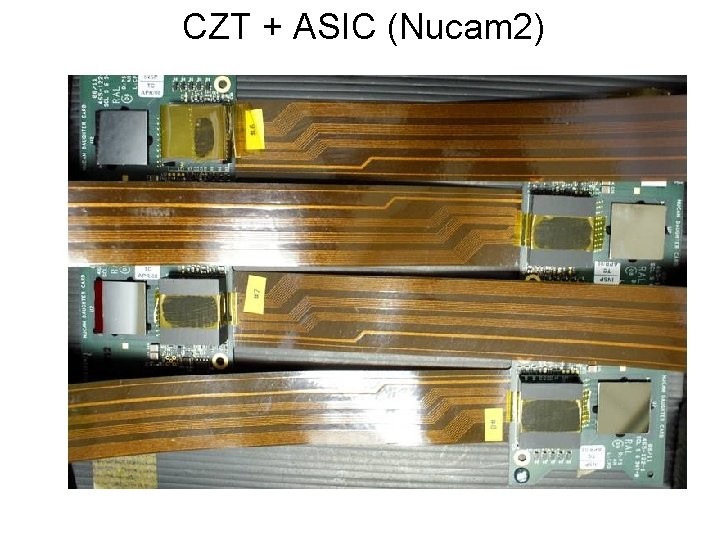
CZT + ASIC (Nucam 2) 4 CZT detectors bonded to daughter boards by RAL
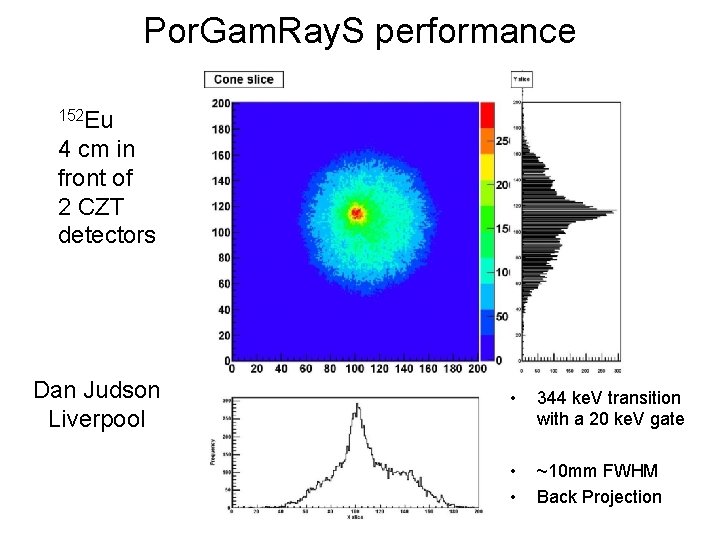
Por. Gam. Ray. S performance 152 Eu 4 cm in front of 2 CZT detectors Dan Judson Liverpool • 344 ke. V transition with a 20 ke. V gate • • ~10 mm FWHM Back Projection
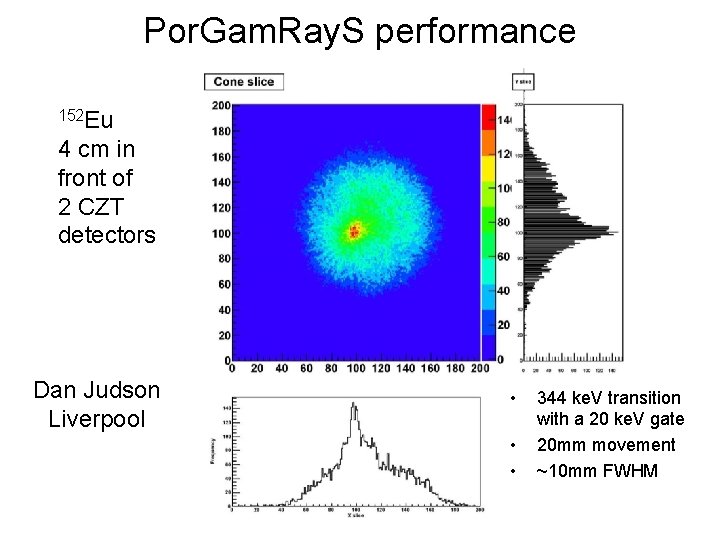
Por. Gam. Ray. S performance 152 Eu 4 cm in front of 2 CZT detectors Dan Judson Liverpool • • • 344 ke. V transition • 344 with a 20 ke. Vtransition gate with a 20 ke. V gate 40 mm move • 20 mm movement 20 mm FWHM • ~10 mm FWHM
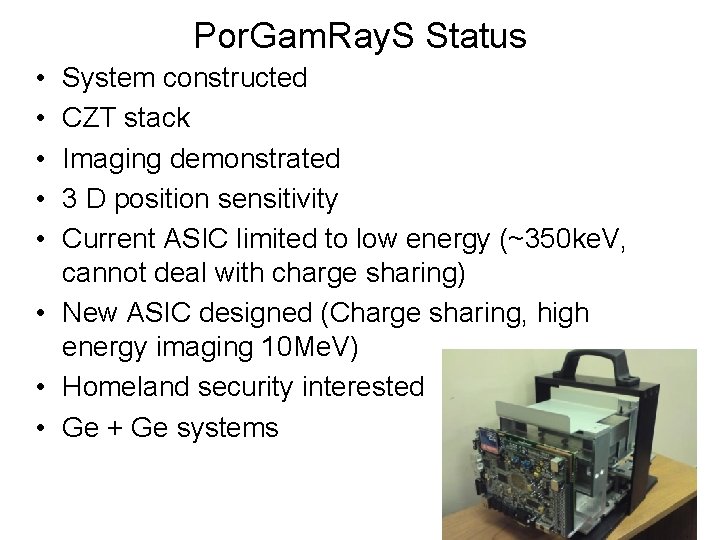
Por. Gam. Ray. S Status • • • System constructed CZT stack Imaging demonstrated 3 D position sensitivity Current ASIC limited to low energy (~350 ke. V, cannot deal with charge sharing) • New ASIC designed (Charge sharing, high energy imaging 10 Me. V) • Homeland security interested • Ge + Ge systems
Pro. SPECTus Next generation Single Photon Emission Computed Tomography
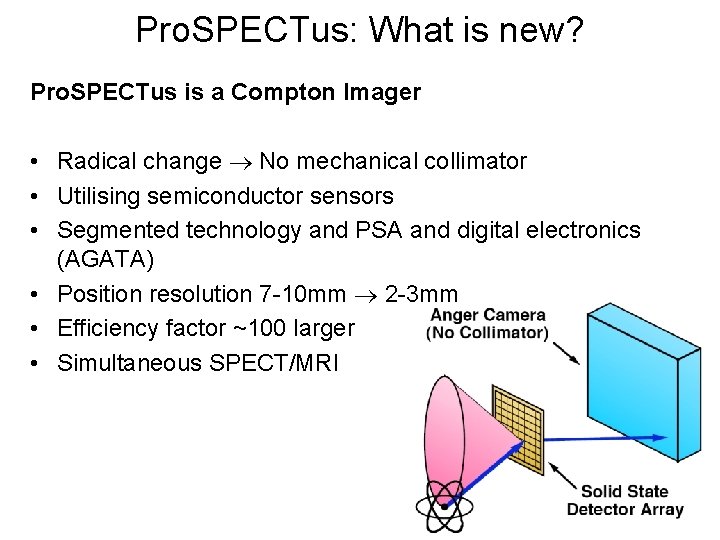
Pro. SPECTus: What is new? Pro. SPECTus is a Compton Imager • Radical change No mechanical collimator • Utilising semiconductor sensors • Segmented technology and PSA and digital electronics (AGATA) • Position resolution 7 -10 mm 2 -3 mm • Efficiency factor ~100 larger • Simultaneous SPECT/MRI
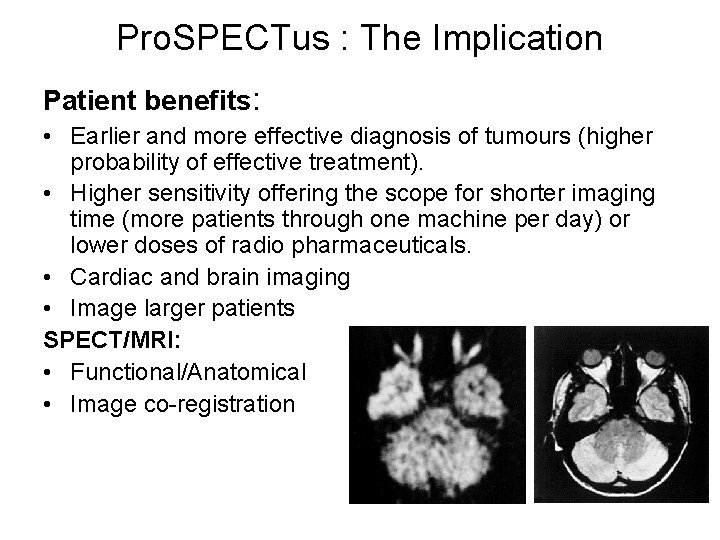
Pro. SPECTus : The Implication Patient benefits: • Earlier and more effective diagnosis of tumours (higher probability of effective treatment). • Higher sensitivity offering the scope for shorter imaging time (more patients through one machine per day) or lower doses of radio pharmaceuticals. • Cardiac and brain imaging • Image larger patients SPECT/MRI: • Functional/Anatomical • Image co-registration
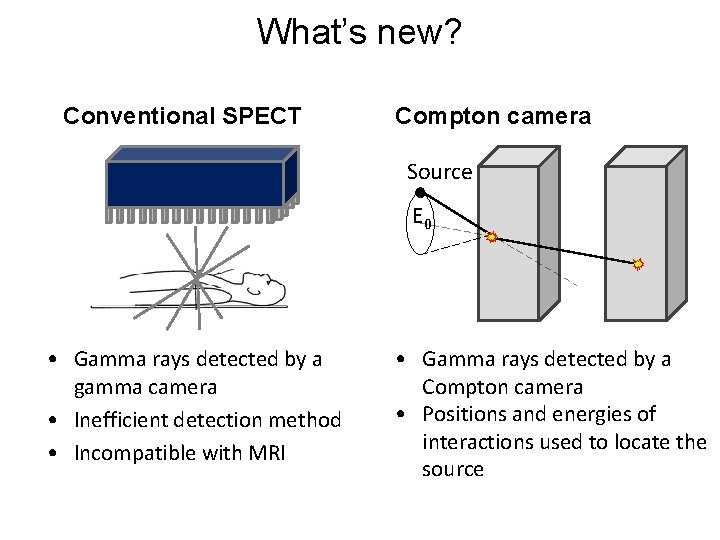
What’s new? Conventional SPECT Compton camera Source E 0 • Gamma rays detected by a gamma camera • Inefficient detection method • Incompatible with MRI • Gamma rays detected by a Compton camera • Positions and energies of interactions used to locate the source
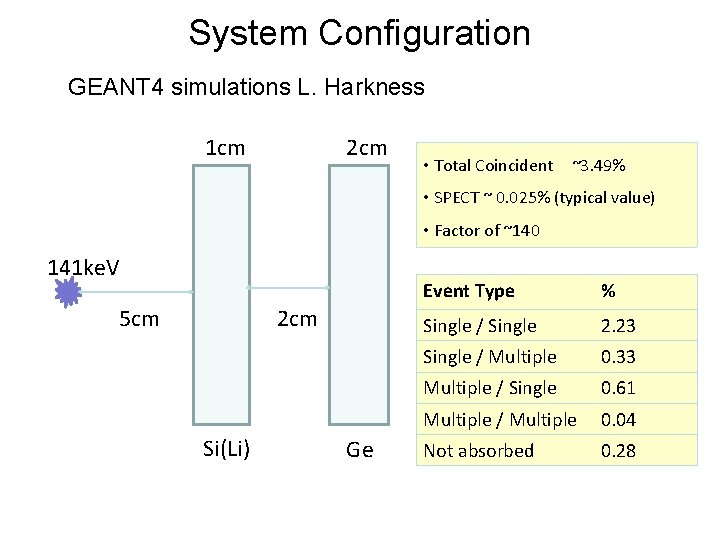
System Configuration GEANT 4 simulations L. Harkness 1 cm 2 cm • Total Coincident ~3. 49% • SPECT ~ 0. 025% (typical value) • Factor of ~140 141 ke. V 5 cm 2 cm Si(Li) Ge Event Type % Single / Single 2. 23 Single / Multiple 0. 33 Multiple / Single 0. 61 Multiple / Multiple 0. 04 Not absorbed 0. 28
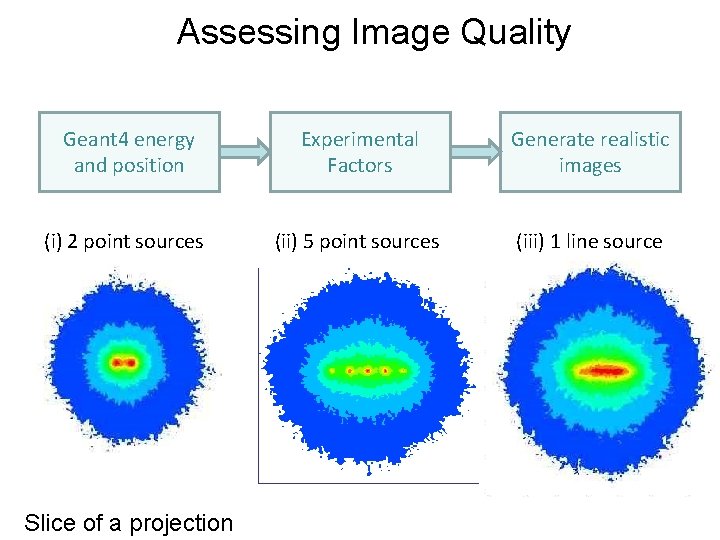
Assessing Image Quality Geant 4 energy and position Experimental Factors Generate realistic images (i) 2 point sources (ii) 5 point sources (iii) 1 line source Slice of a projection
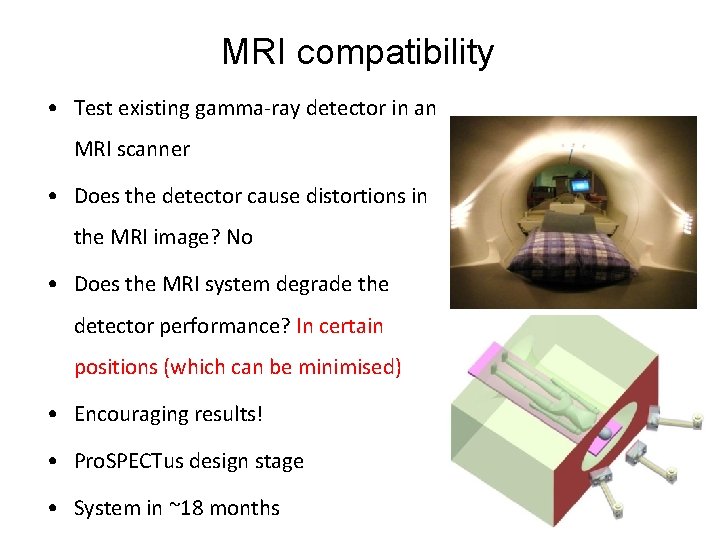
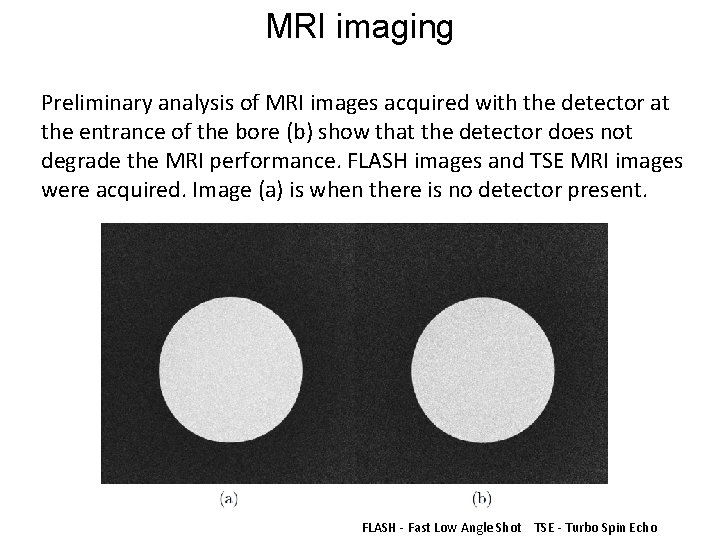
MRI compatibility • Test existing gamma-ray detector in an MRI scanner • Does the detector cause distortions in the MRI image? No • Does the MRI system degrade the detector performance? In certain positions (which can be minimised) • Encouraging results! • Pro. SPECTus design stage • System in ~18 months
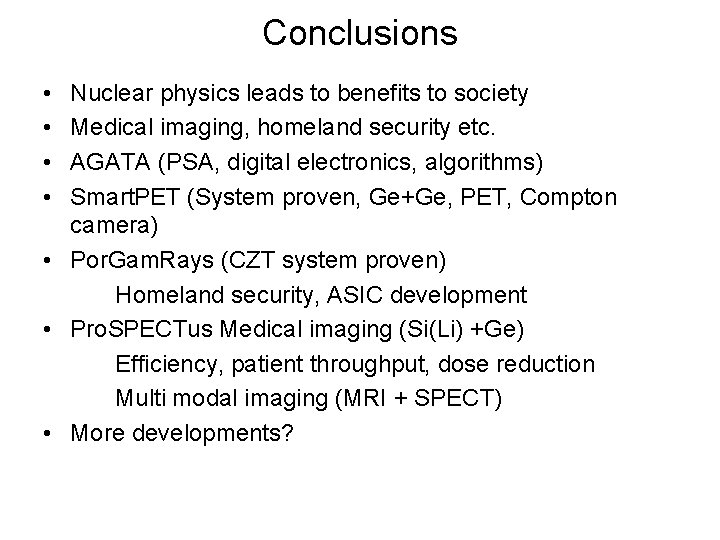
Conclusions • • Nuclear physics leads to benefits to society Medical imaging, homeland security etc. AGATA (PSA, digital electronics, algorithms) Smart. PET (System proven, Ge+Ge, PET, Compton camera) • Por. Gam. Rays (CZT system proven) Homeland security, ASIC development • Pro. SPECTus Medical imaging (Si(Li) +Ge) Efficiency, patient throughput, dose reduction Multi modal imaging (MRI + SPECT) • More developments?
Credit’s Several Projects, large collaboration: STFC Daresbury Laboratory, Daresbury, WA 4 4 AD, UK Department of Physics, University of Liverpool, L 69 7 ZE, UK MARIARC, University of Liverpool, Department of Physics and Astronomy, University of Manchester, UK UK Industries Funding agencies UK STFC, EPSRC, MRC Many people have made significant contributions Lots of UK Ph. D’s and Post Docs Laura Harkness University of Liverpool 2010 Shell and Institute of Physics Very Early career Woman Physicist of the Year
Boston, A. J. , M. R. Dimmock, et al. (2009). "Performance of an AGATA asymmetric detector. " NIM 604(1 -2): 48 -52. Boston, A. J. , M. R. Dimmock, et al. (2009). "Status and Performance of an AGATA asymmetric detector. " Nuclear Physics and Applications 1109: 38 -43. Cooper, R. J. , A. J. Boston, et al. (2009). "Positron Emission Tomography imaging with the Smart. PET system. " NIM 606(3): 523 -532. Dimmock, M. R. , A. J. Boston, et al. (2009). "Characterisation Results From an AGATA Prototype Detector. " IEEE TNS 56(3): 1593 -1599. Dimmock, M. R. , A. J. Boston, et al. (2009). "Validation of Pulse Shape Simulations for an AGATA Prototype Detector. " IEEE TNS 56(4): 24152425. Harkness, L. J. , A. J. Boston, et al. (2009). "Optimisation of a dual head semiconductor Compton camera using Geant 4. " NIM 604(1 -2): 351 -354. Harkness, L. J. , A. J. Boston, et al. (2009). "Design Considerations Of A Compton Camera For Low Energy Medical Imaging. " International Conference on Applications of Nuclear Techniques 1194: 90 -95. Oxley, D. C. , A. J. Boston, et al. (2009). "Quantifying the limitations of small animal positron emission tomography. " NIM 604(1 -2): 343 -346. Oxley, D. C. , A. J. Boston, et al. (2009). "A Semiconductor-Based Positron Emission Tomography System. " International Conference on Applications of Nuclear Techniques 1194: 96 -100. Boston, A. J. , M. R. Dimmock, et al. (2008). "Performance of an AGATA asymmetric detector. " Nuclear Physics and Astrophysics 1072: 130 -135. Cooper, R. J. , A. J. Boston, et al. (2008). "Charge collection performance of a segmented planar high-purity germanium detector. " NIM 595(2): 401 -409. Dimmock, M. R. , A. J. Boston, et al. (2007). "Results from the Characterisation of Advanced Gamma Tracking Array Prototype detectors and their consequences for the next generation nuclear physics spectrometer - art. no. 670613. " Hard X-Ray and Gamma-Ray Detector Physics Ix 6706: 70613 -70613. Boston, H. C. , Boston, A. J. , et al. , Orthogonal strip HPGe planar Smart. PET detectors in Compton configuration. NIM, 2007. 580(2): p. 929 -933. Boston, H. C. , Boston, A. J. , et al. , Characterisation of the Smart. PET planar germanium detectors. NIM, 2007. 579(1): p. 104 -107. Cooper, R. J. , Boston, A. J. , et al. , Smart. PET: Applying HPGe and pulse shape analysis to small-animal PET. NIM, 2007. 579(1): p. 313 -317. Farahmand, M. , Boston, A. J. , et al. , Detection of explosive substances by tomographic inspection using neutron and gamma-ray spectroscopy. Nuclear Instruments & Methods In Physics Research Section B-Beam Interactions With Materials And Atoms, 2007. 261(1 -2): p. 396 -400. Boston, A. J. , et al. , Gamma-ray tracking: Characterisation of the AGATA symmetric prototype detectors. Nuclear Instruments & Methods In Physics Research Section B-Beam Interactions With Materials And Atoms, 2007. 261(1 -2): p. 1098 -1102. Boston, A. J. , et al. , Proceedings of the 7 th International Conference on Position-Sensitive Detectors - University of Liverpool, UK, September 9 -13, 2005 - Editorial. NIM, 2007. 573(1 -2): p. VII-VII. Beveridge, T. E. , Boston, A. J. , et al. , Multiple occupancy considerations for the Smart. PET imaging system. NIM, 2007. 573(1 -2): p. 68 -71. Cooper, R. J. , Boston, A. J. , et al. , Position sensitivity of the first Smart. PET HPGe detector. NIM, 2007. 573(1 -2): p. 72 -75. Gillam, J. E. , Boston, A. J. , et al. , Effect of position resolution on Lo. R discrimination for a dual-head Compton camera. NIM, 2007. 573(1 -2): p. 7679. Scraggs, D. , Boston, A. J. , et al. , Signal analysis and processing for Smart. PET. NIM, 2007. 573(1 -2): p. 95 -98. Nelson, L. , Boston, A. J. , et al. , Characterisation of an AGATA symmetric prototype detector. NIM, 2007. 573(1 -2): p. 153 -156.
Thanks
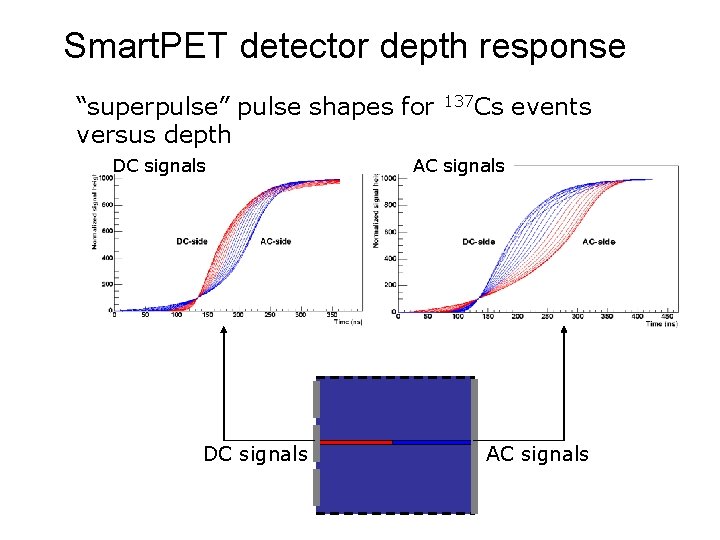
Smart. PET detector depth response “superpulse” pulse shapes for versus depth DC signals 137 Cs events AC signals
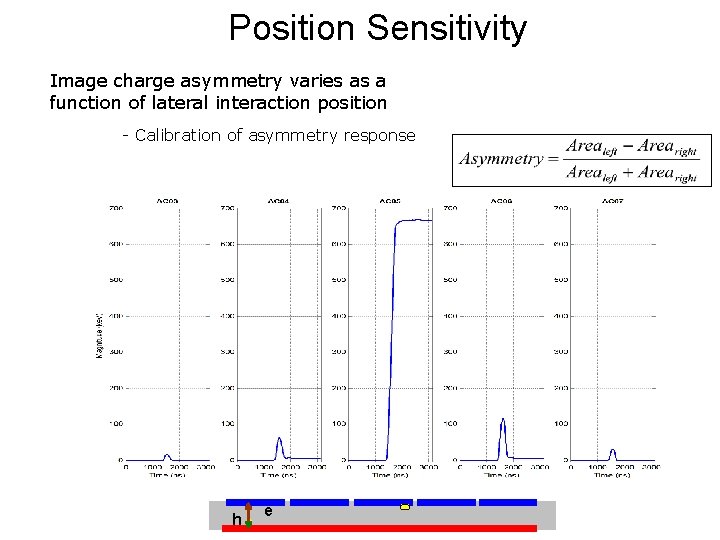
Position Sensitivity Image charge asymmetry varies as a function of lateral interaction position - Calibration of asymmetry response h e
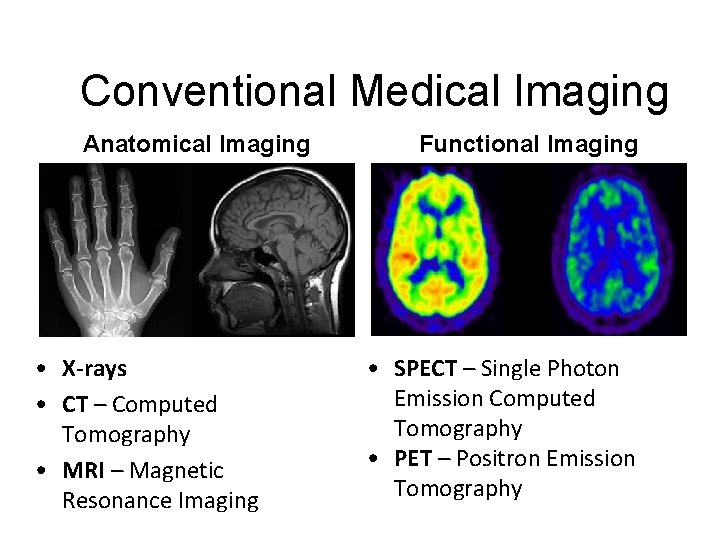
Conventional Medical Imaging Anatomical Imaging • X-rays • CT – Computed Tomography • MRI – Magnetic Resonance Imaging Functional Imaging • SPECT – Single Photon Emission Computed Tomography • PET – Positron Emission Tomography
MRI imaging Preliminary analysis of MRI images acquired with the detector at the entrance of the bore (b) show that the detector does not degrade the MRI performance. FLASH images and TSE MRI images were acquired. Image (a) is when there is no detector present. FLASH - Fast Low Angle Shot TSE - Turbo Spin Echo
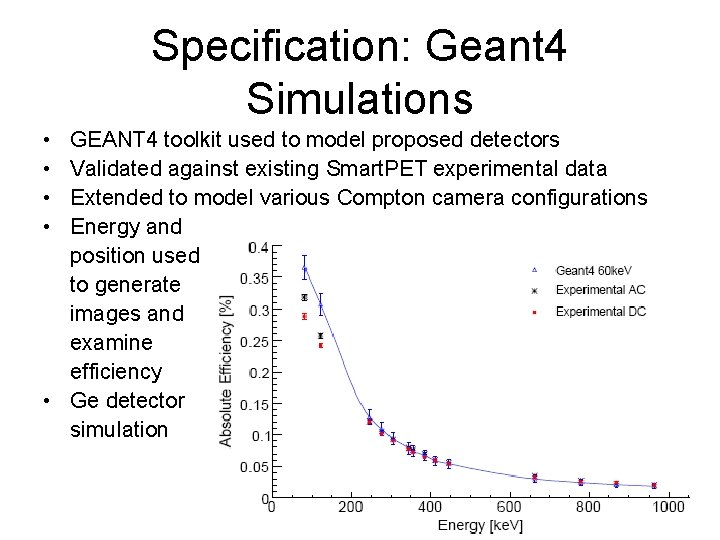
Specification: Geant 4 Simulations • • GEANT 4 toolkit used to model proposed detectors Validated against existing Smart. PET experimental data Extended to model various Compton camera configurations Energy and position used to generate images and examine efficiency • Ge detector simulation
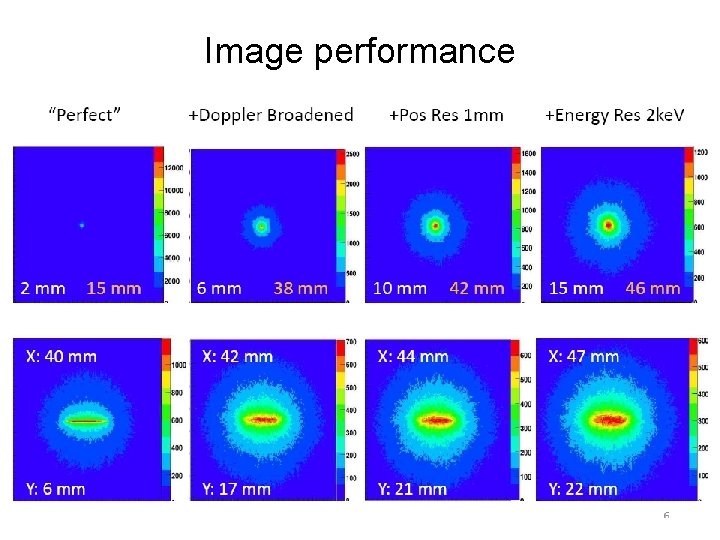
Image performance
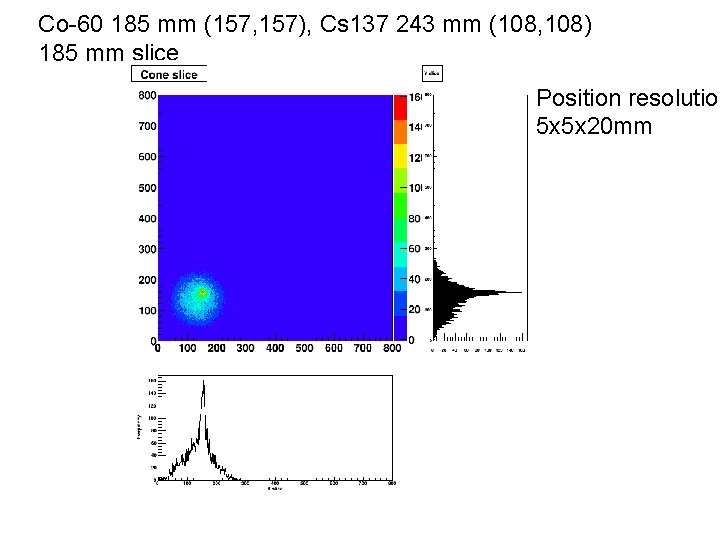
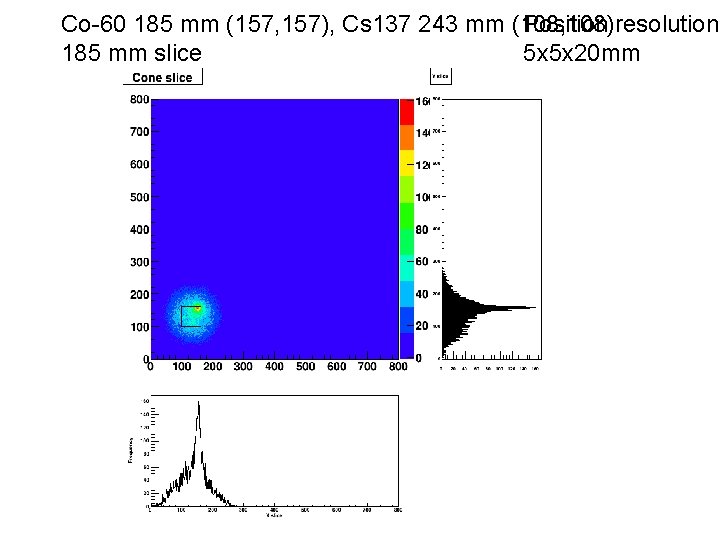
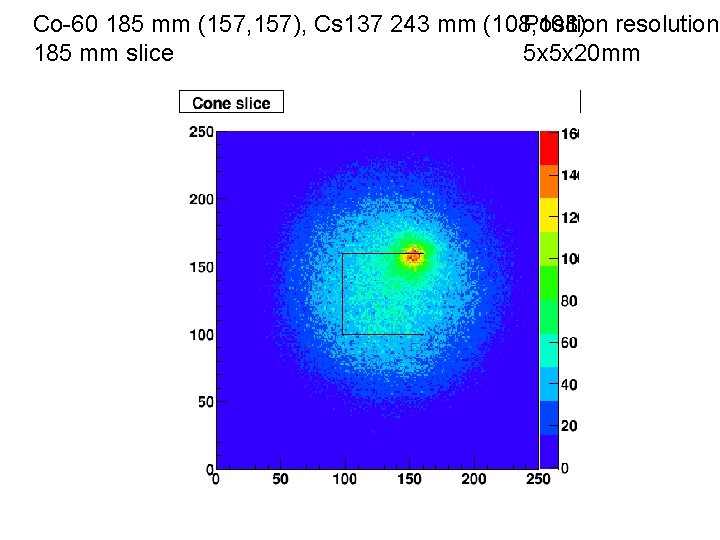
Co-60 185 mm (157, 157), Cs 137 243 mm (108, 108) 185 mm slice Position resolution 5 x 5 x 20 mm
Co-60 185 mm (157, 157), Cs 137 243 mm (108, 108) Position resolution 185 mm slice 5 x 5 x 20 mm
Co-60 185 mm (157, 157), Cs 137 243 mm (108, 108) Position resolution 185 mm slice 5 x 5 x 20 mm
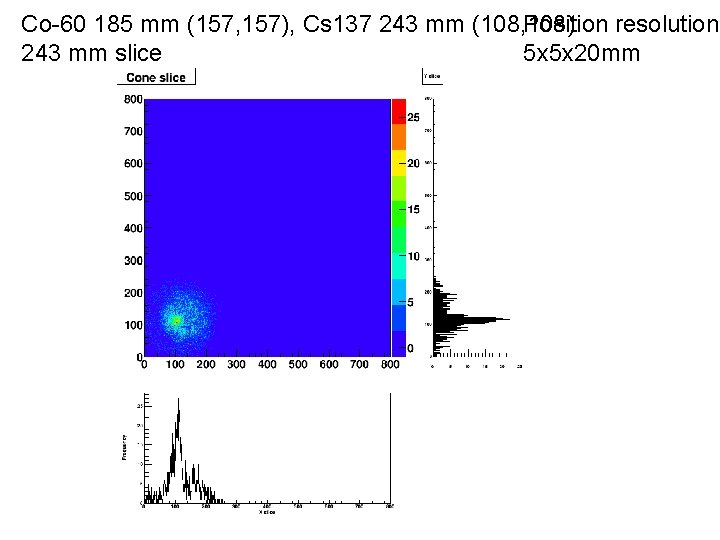
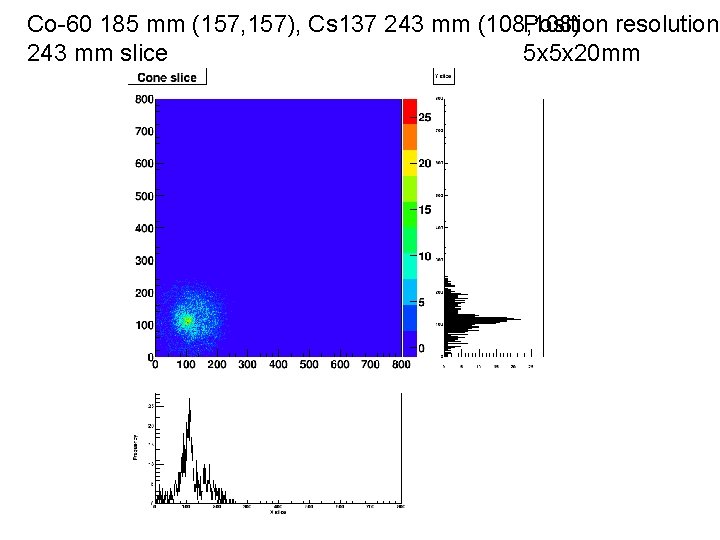
Co-60 185 mm (157, 157), Cs 137 243 mm (108, 108) Position resolution 243 mm slice 5 x 5 x 20 mm
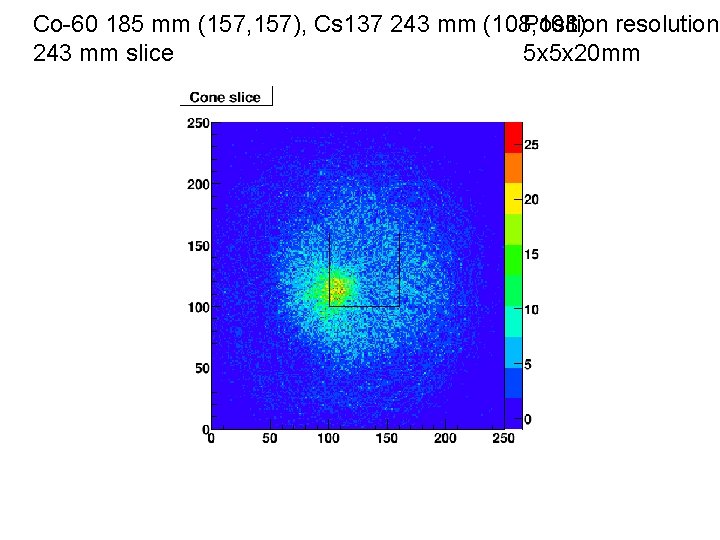
Co-60 185 mm (157, 157), Cs 137 243 mm (108, 108) Position resolution 243 mm slice 5 x 5 x 20 mm
Co-60 185 mm (157, 157), Cs 137 243 mm (108, 108) Position resolution 243 mm slice 5 x 5 x 20 mm