
Media Literacy in Higher Education University students of
- Slides: 12
Media Literacy in Higher Education: University students of Advertising and Public Relations at the University of Alicante and their You. Tube Experience Dolores Alemany, Alejandra Hernández, Concepción Campillo University of Alicante Department of Communication and Social Psychology Dolores. Alemany@ua. es, Alejandra. Hernandez@ua. es, Concepcion. Campillo@ua. es
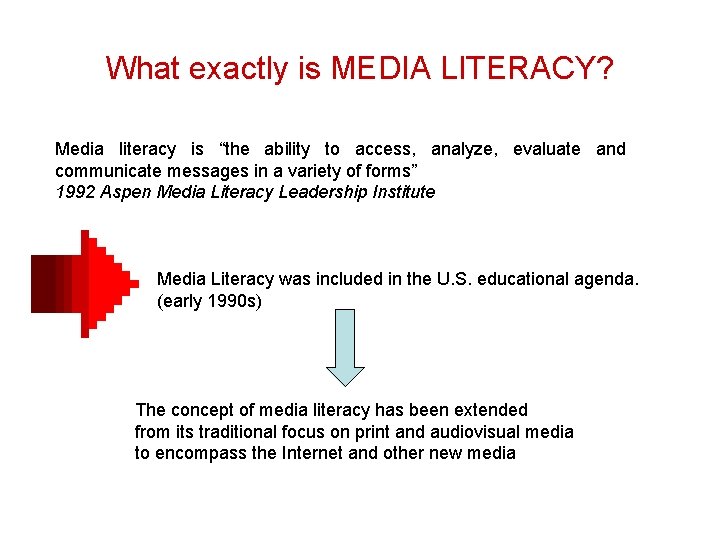
What exactly is MEDIA LITERACY? Media literacy is “the ability to access, analyze, evaluate and communicate messages in a variety of forms” 1992 Aspen Media Literacy Leadership Institute Media Literacy was included in the U. S. educational agenda. (early 1990 s) The concept of media literacy has been extended from its traditional focus on print and audiovisual media to encompass the Internet and other new media
Teaching about the media should be distinguished from teaching with media When teaching about the media, the medium and the message are both examined We can analyze and criticize advertising and promotional culture effectively from the same media techniques, which are attractive for students and familiar to them.
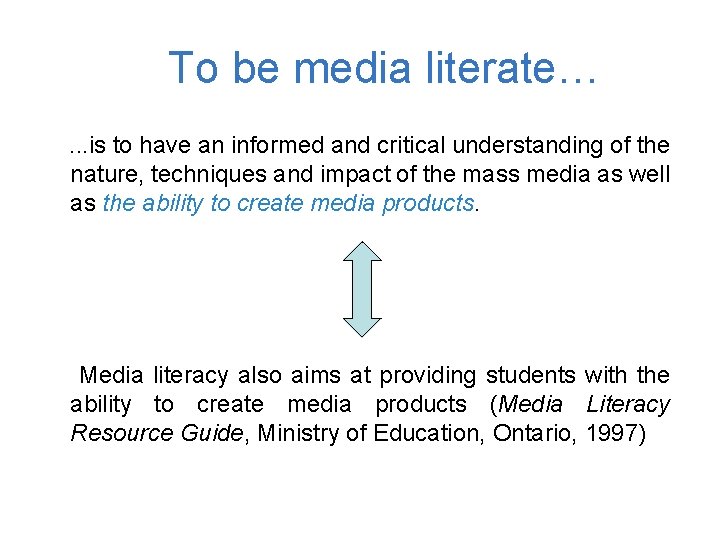
To be media literate…. . . is to have an informed and critical understanding of the nature, techniques and impact of the mass media as well as the ability to create media products. Media literacy also aims at providing students with the ability to create media products (Media Literacy Resource Guide, Ministry of Education, Ontario, 1997)
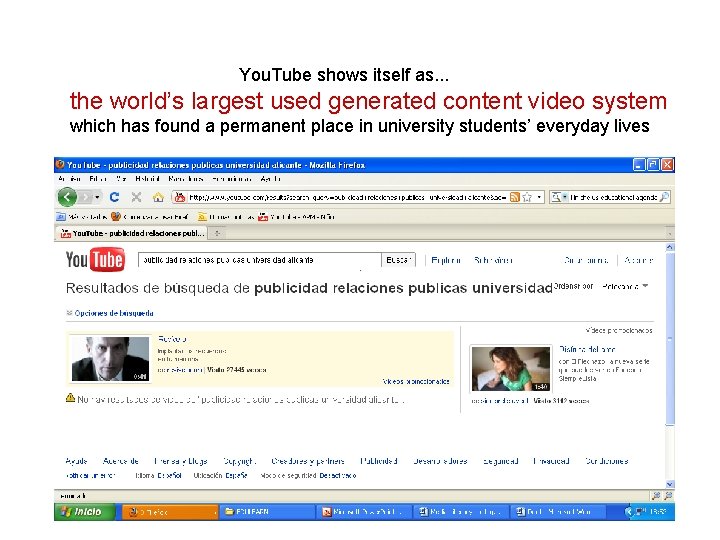
You. Tube shows itself as. . . the world’s largest used generated content video system which has found a permanent place in university students’ everyday lives
What do professors think about new technologies and possible educational uses of You. Tube? A questionnaire was produced with the help of Google. Docs. • Do you think new technologies help you create more open, flexible and participative contexts for teaching and learning processes? 97% of the interviewed professors answered YES • 83% of them agreed with the statement that You. Tube helps energize/dynamize their classrooms.
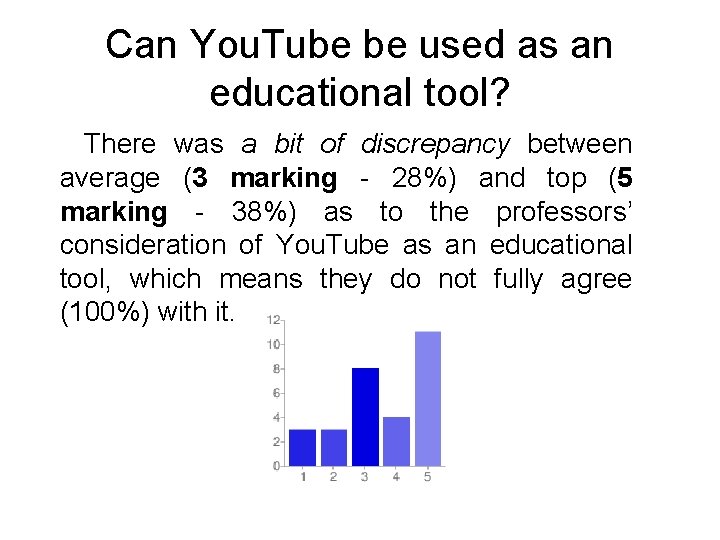
Can You. Tube be used as an educational tool? There was a bit of discrepancy between average (3 marking - 28%) and top (5 marking - 38%) as to the professors’ consideration of You. Tube as an educational tool, which means they do not fully agree (100%) with it.
University Students’ You. Tube habits (and expectations) • Another Googledocs questionnaire was produced and distributed online to students. • 56% of the students were less than 22 years old • 66% watch You. Tube every day (within that percentage, 27% said that they watched You. Tube several times during the same day)
University Students’ You. Tube habits (and expectations) • A lot of university students these days expect information to be presented in a flashy, entertaining way. • They are used to uploading material (74% said they had ever uploaded some You. Tube material). Within this percentage, 29% were not videos related to academic purposes.
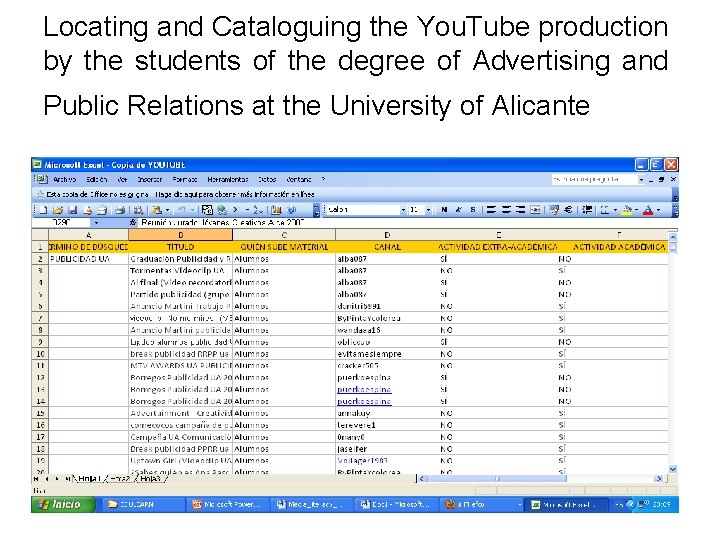
Locating and Cataloguing the You. Tube production by the students of the degree of Advertising and Public Relations at the University of Alicante
Locating and Cataloguing the You. Tube production by the students of the degree of Advertising and Public Relations at the University of Alicante • 344 You. Tube pieces have been uploaded by students of this degree (just one video by a professor and two videos by professionals) • The keywords used to search for the audiovisual creations were the following: Publicidad UA, Creatividad UA, Realización UA, Narrativa UA and Relaciones Públicas UA • The oldest video uploaded by students dates back to 23 rd November 2006. • From the 344 You. Tube videos registered for our study, 290 were part of strictly academic tasks set by teachers of different subjects of the degree. • One of the finest You. Tube pieces they elaborated was a lipdub with interactive ending shot last 26 th November 2010 depicting the fictional world of TV advert characters a student of advertising meets
Some final reflections • You. Tube offers many opportunities for promotion. Getting You. Tube traffic should become core content for students in the degree of Advertising and Public Relations to understand present communication strategies of both private companies and public institutions. • Improving the standards and quality of educational audiovisual material generated in the classrooms is part of media literacy good practice in higher education contexts. • The importance of sharing this material so as not to lose their locations in You. Tube became of paramount interest as the research developed. Short term actions should be taken to protect this particular audiovisual patrimony.