
Media Figure 1 16 Bacterial colonies on agar

Media!
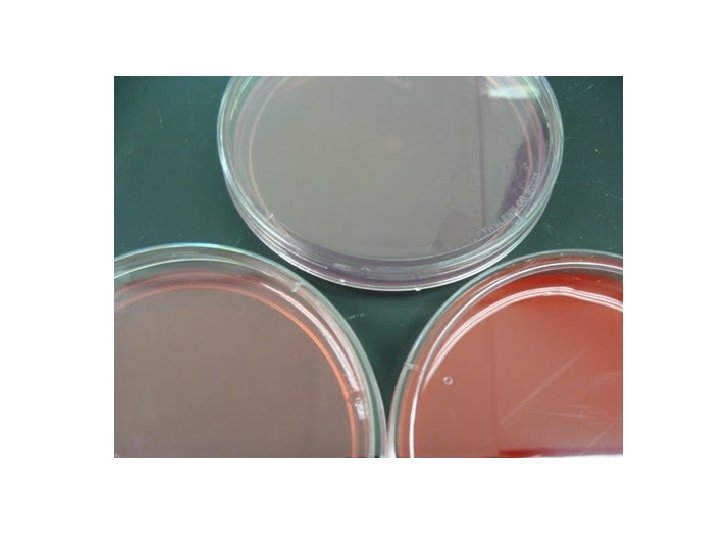
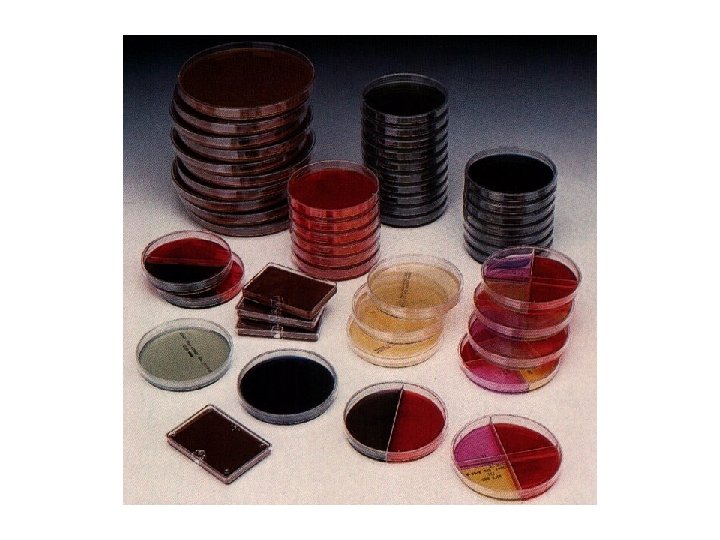

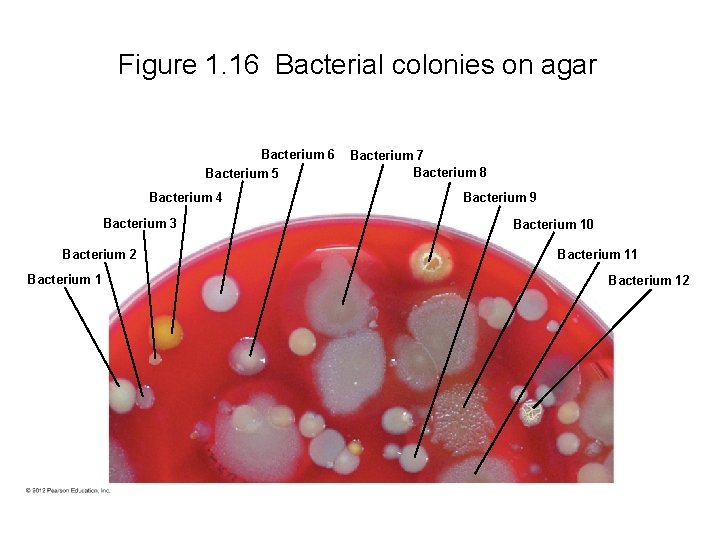
Figure 1. 16 Bacterial colonies on agar Bacterium 6 Bacterium 5 Bacterium 4 Bacterium 3 Bacterium 2 Bacterium 1 Bacterium 7 Bacterium 8 Bacterium 9 Bacterium 10 Bacterium 11 Bacterium 12
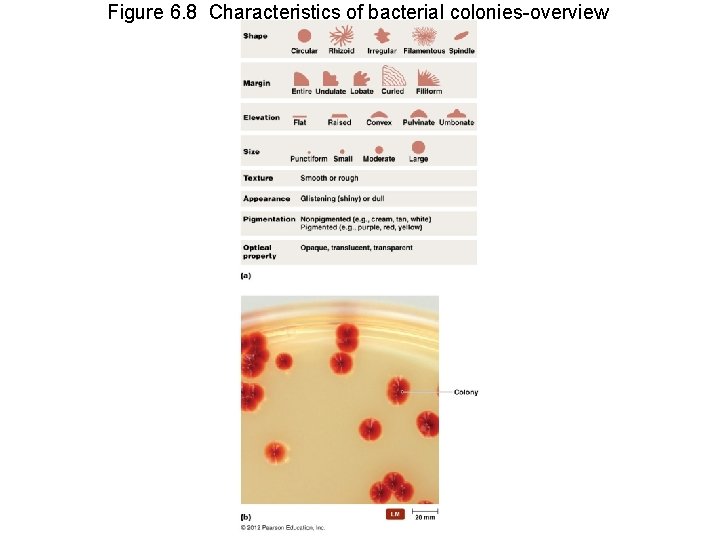
Figure 6. 8 Characteristics of bacterial colonies-overview
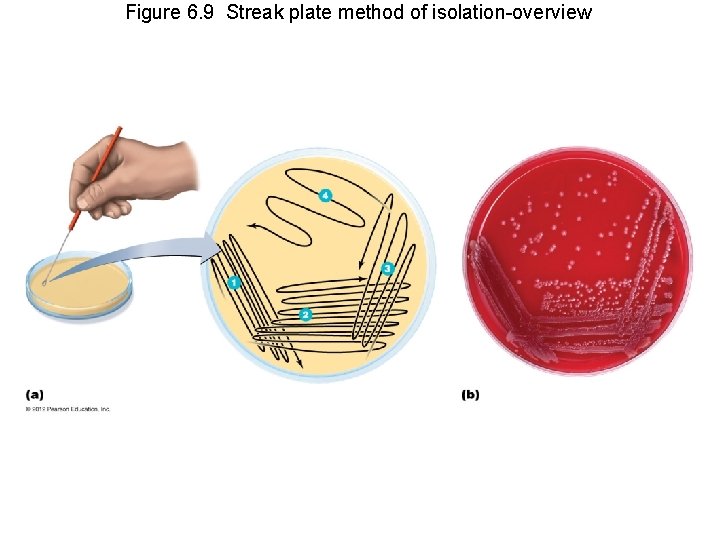
Figure 6. 9 Streak plate method of isolation-overview
Culturing Microorganisms • Culture Media – Majority of prokaryotes have not been grown in culture medium – Six types of general culture media • • • Defined media Complex media Selective media Differential media Anaerobic media Transport media © 2012 Pearson Education Inc.
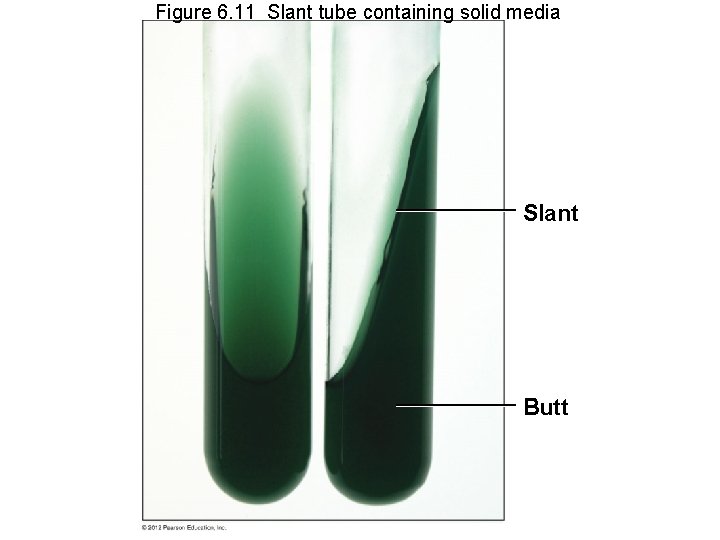
Figure 6. 11 Slant tube containing solid media Slant Butt
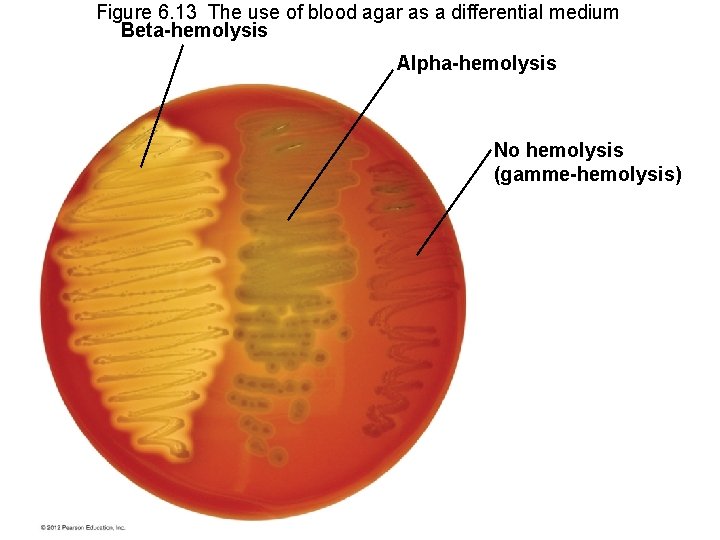
Figure 6. 13 The use of blood agar as a differential medium Beta-hemolysis Alpha-hemolysis No hemolysis (gamme-hemolysis)
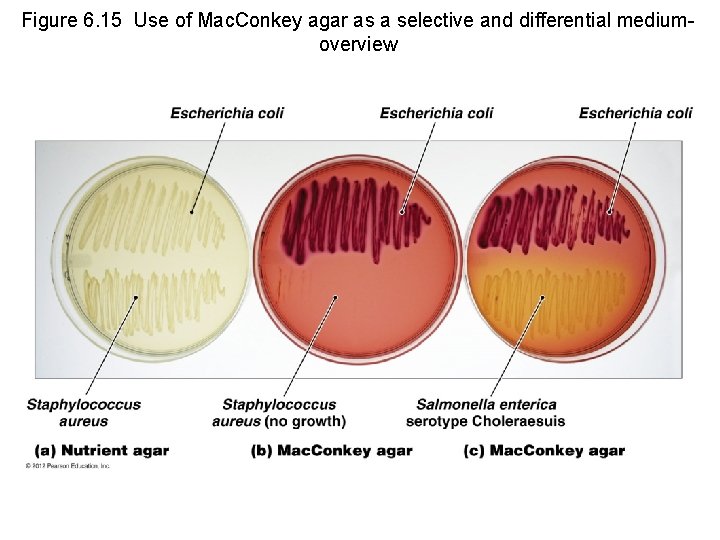
Figure 6. 15 Use of Mac. Conkey agar as a selective and differential mediumoverview
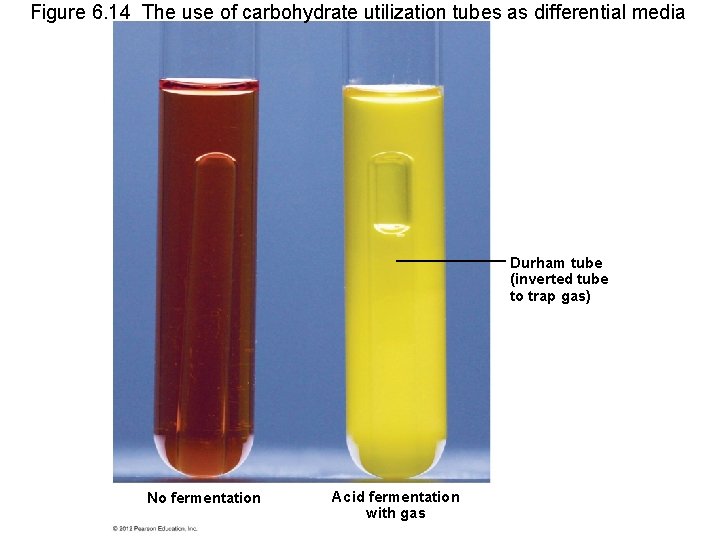
Figure 6. 14 The use of carbohydrate utilization tubes as differential media Durham tube (inverted tube to trap gas) No fermentation Acid fermentation with gas
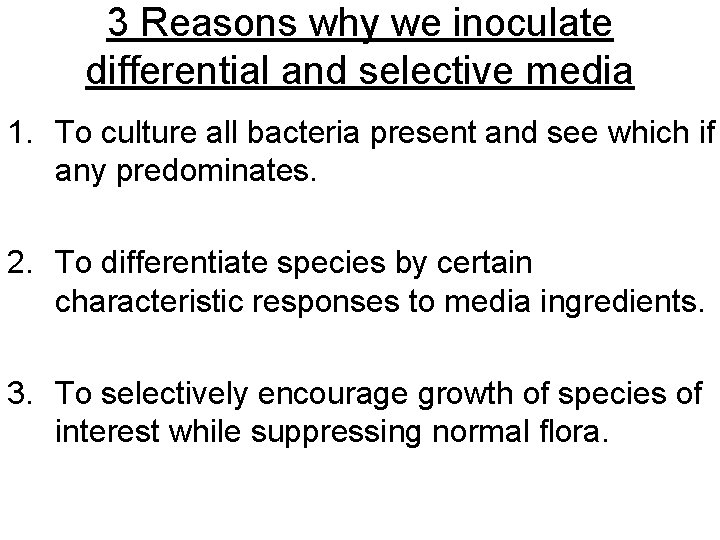
3 Reasons why we inoculate differential and selective media 1. To culture all bacteria present and see which if any predominates. 2. To differentiate species by certain characteristic responses to media ingredients. 3. To selectively encourage growth of species of interest while suppressing normal flora.
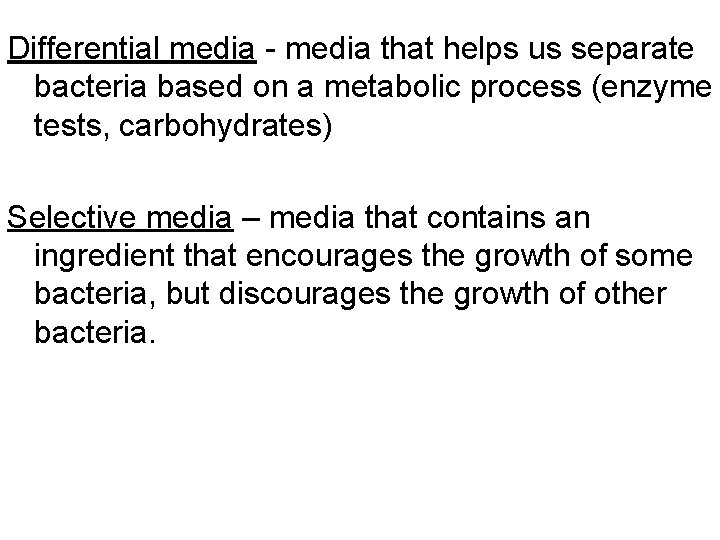
Differential media - media that helps us separate bacteria based on a metabolic process (enzyme tests, carbohydrates) Selective media – media that contains an ingredient that encourages the growth of some bacteria, but discourages the growth of other bacteria.
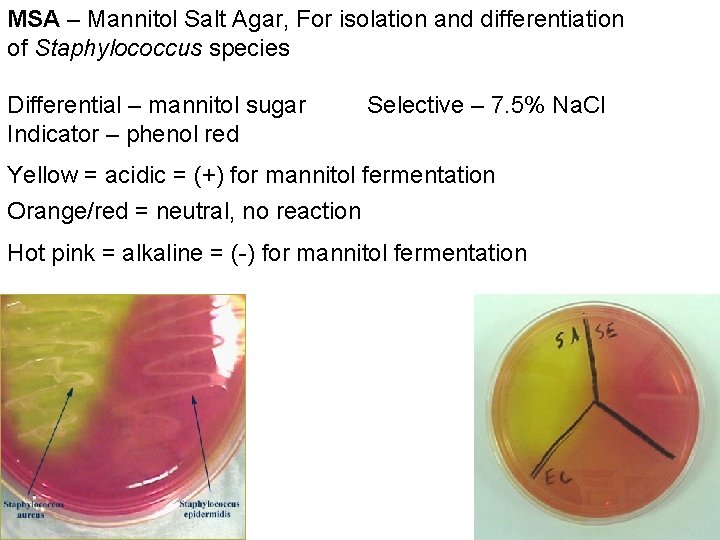
MSA – Mannitol Salt Agar, For isolation and differentiation of Staphylococcus species Differential – mannitol sugar Indicator – phenol red Selective – 7. 5% Na. Cl Yellow = acidic = (+) for mannitol fermentation Orange/red = neutral, no reaction Hot pink = alkaline = (-) for mannitol fermentation
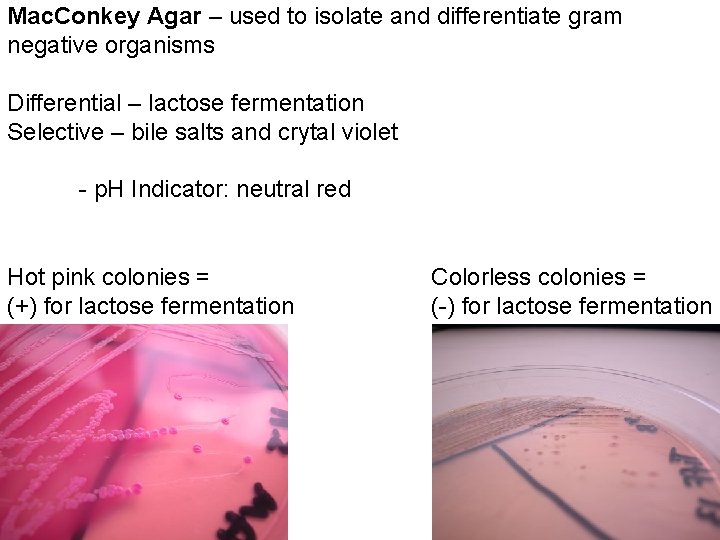
Mac. Conkey Agar – used to isolate and differentiate gram negative organisms Differential – lactose fermentation Selective – bile salts and crytal violet - p. H Indicator: neutral red Hot pink colonies = (+) for lactose fermentation Colorless colonies = (-) for lactose fermentation
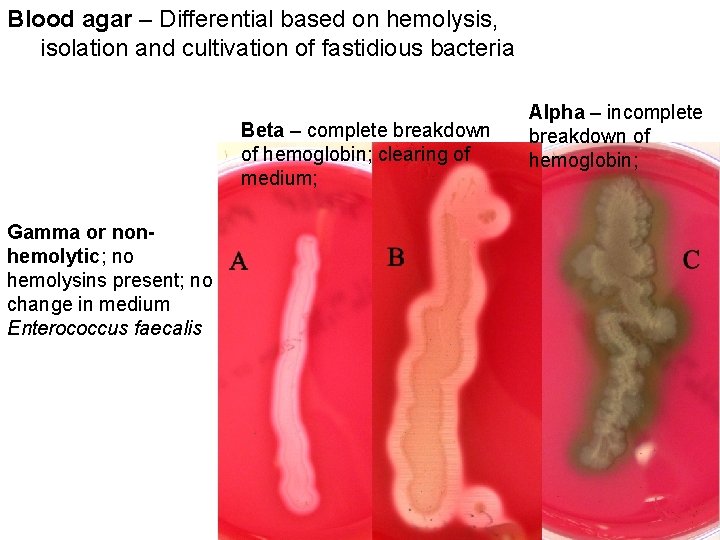
Blood agar – Differential based on hemolysis, isolation and cultivation of fastidious bacteria Beta – complete breakdown of hemoglobin; clearing of medium; Gamma or nonhemolytic; no hemolysins present; no change in medium Enterococcus faecalis Alpha – incomplete breakdown of hemoglobin;
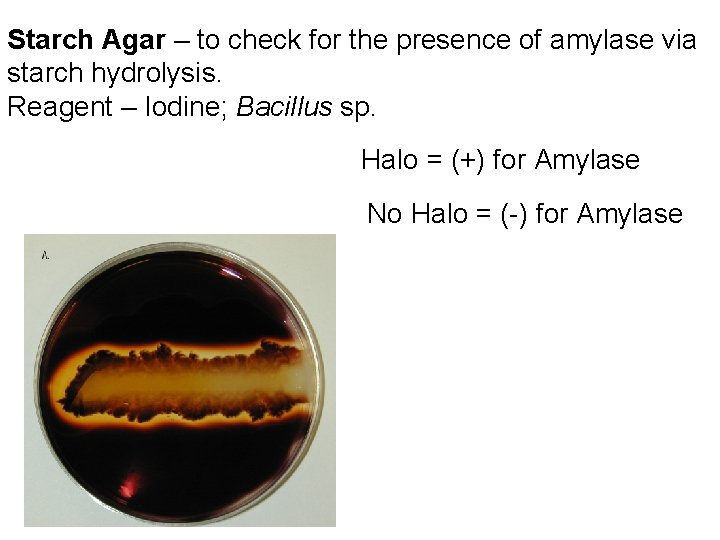
Starch Agar – to check for the presence of amylase via starch hydrolysis. Reagent – Iodine; Bacillus sp. Halo = (+) for Amylase No Halo = (-) for Amylase
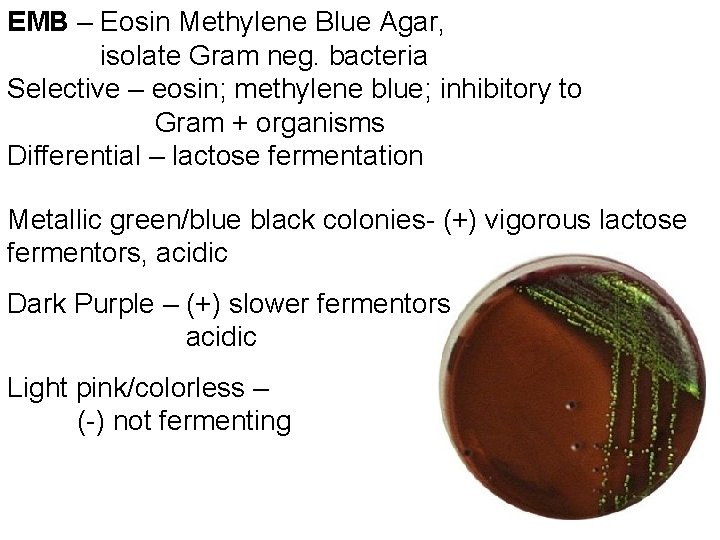
EMB – Eosin Methylene Blue Agar, isolate Gram neg. bacteria Selective – eosin; methylene blue; inhibitory to Gram + organisms Differential – lactose fermentation Metallic green/blue black colonies- (+) vigorous lactose fermentors, acidic Dark Purple – (+) slower fermentors acidic Light pink/colorless – (-) not fermenting
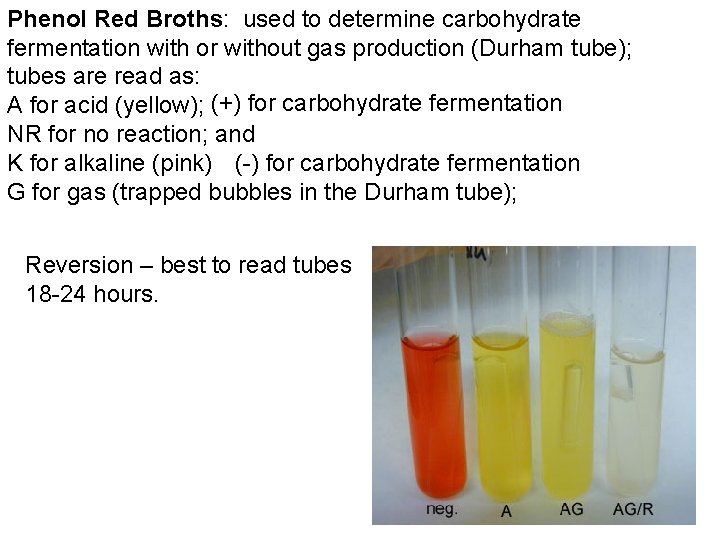
Phenol Red Broths: used to determine carbohydrate fermentation with or without gas production (Durham tube); tubes are read as: A for acid (yellow); (+) for carbohydrate fermentation NR for no reaction; and K for alkaline (pink) (-) for carbohydrate fermentation G for gas (trapped bubbles in the Durham tube); Reversion – best to read tubes 18 -24 hours.
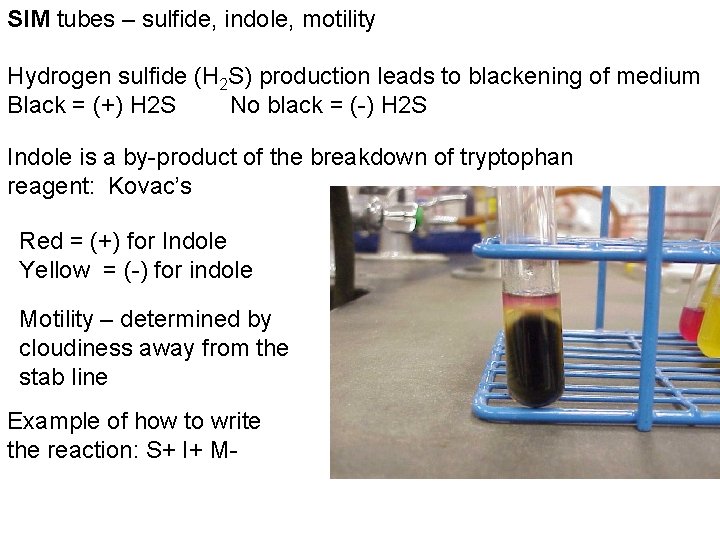
SIM tubes – sulfide, indole, motility Hydrogen sulfide (H 2 S) production leads to blackening of medium Black = (+) H 2 S No black = (-) H 2 S Indole is a by-product of the breakdown of tryptophan reagent: Kovac’s Red = (+) for Indole Yellow = (-) for indole Motility – determined by cloudiness away from the stab line Example of how to write the reaction: S+ I+ M-
- Slides: 21