
Med Biquitous Emerging Virtual Patient Architecture Valerie Smothers
® Med. Biquitous’ Emerging Virtual Patient Architecture • Valerie Smothers Deputy Director Med. Biquitous • Prepared for the Johns Hopkins Division of Health Sciences Informatics • February 16, 2007
Disclosure • I have no relevant financial relationships to disclose. ®
Learning Objectives By the end of this session, you will be able to: • Articulate the need for virtual patients • Compare existing approaches to virtual patients • Describe components of the Med. Biquitous Virtual Patient Architecture ®
Quandry • How do you teach clinical reasoning and protect patient safety? • Let the student watch attendings and residents and listen to lectures • Have an attending closely monitor student interaction with a patient and provide feedback • Do small group exercises that explore certain cases or types of cases and how to handle them • Use tools that simulate the clinical environment ®
Simulating the Clinical Environment • Can be expensive and time consuming to develop these tools • Often home grown and disconnected from other learning systems Need a way to share resources and integrate with external resources and systems ®
Med. Biquitous Mission To advance healthcare education through technology standards that promote professional competence, collaboration, and better patient care. Non-profit, member-driven, standards development organization ®
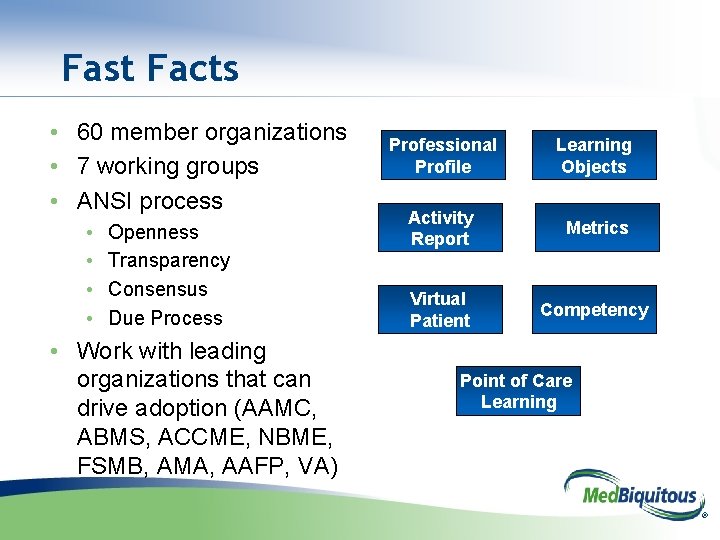
Fast Facts • 60 member organizations • 7 working groups • ANSI process • • Openness Transparency Consensus Due Process • Work with leading organizations that can drive adoption (AAMC, ABMS, ACCME, NBME, FSMB, AMA, AAFP, VA) Professional Profile Learning Objects Activity Report Metrics Virtual Patient Competency Point of Care Learning ®
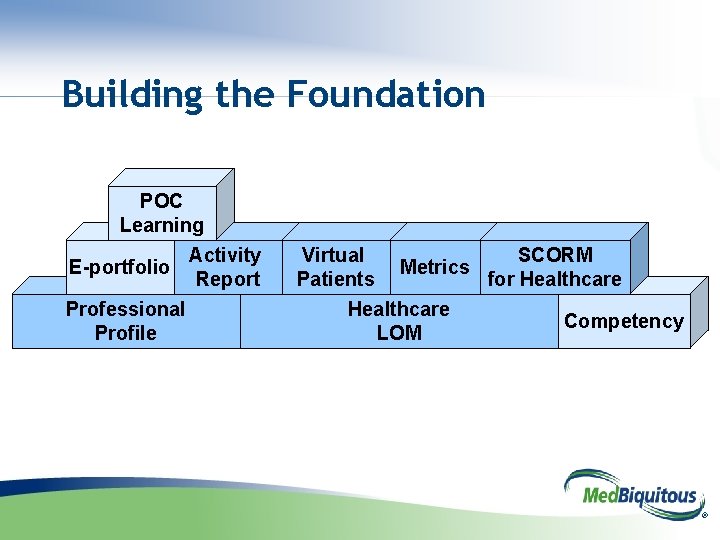
Building the Foundation POC Learning E-portfolio Professional Profile Activity Report Virtual Patients Metrics Healthcare LOM SCORM for Healthcare Competency ®
Med. Biquitous Goals • Better tracking and evaluation of professional education and certification activities • Easier discovery of relevant education and information resources when and where needed • Interoperability and sharing of high quality online education • Coordination and tracking of competence assessment data ®

Virtual Patients • Interactive computer programs that simulate real life clinical scenarios Some examples: • Sarah Jane, St. George’s University of London (narrative, node based) http: //labyrinth. mvm. ed. ac. uk • Web SP, Karolinska Institute (linear w/data) http: //websp. lime. ki. se ®
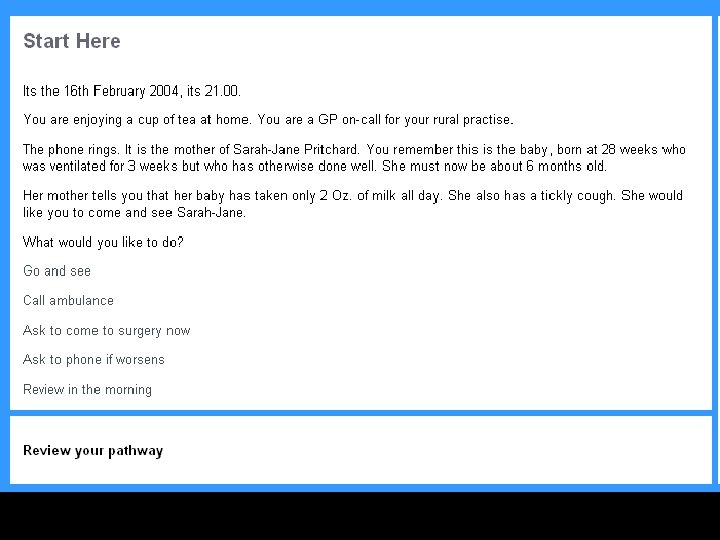
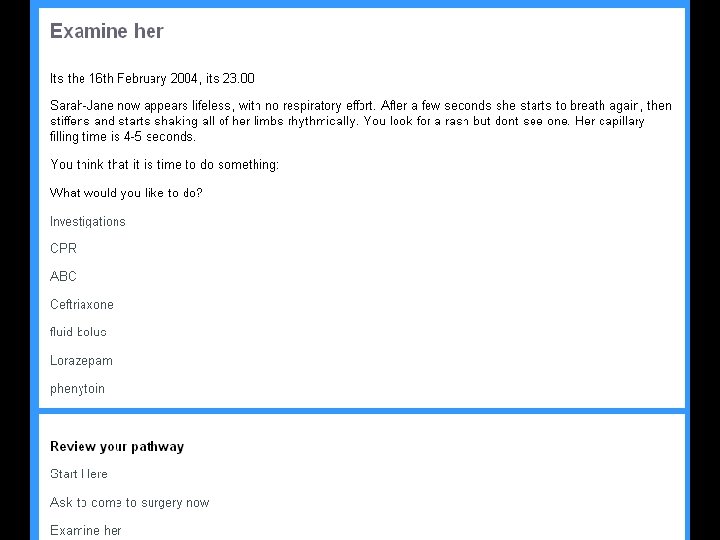

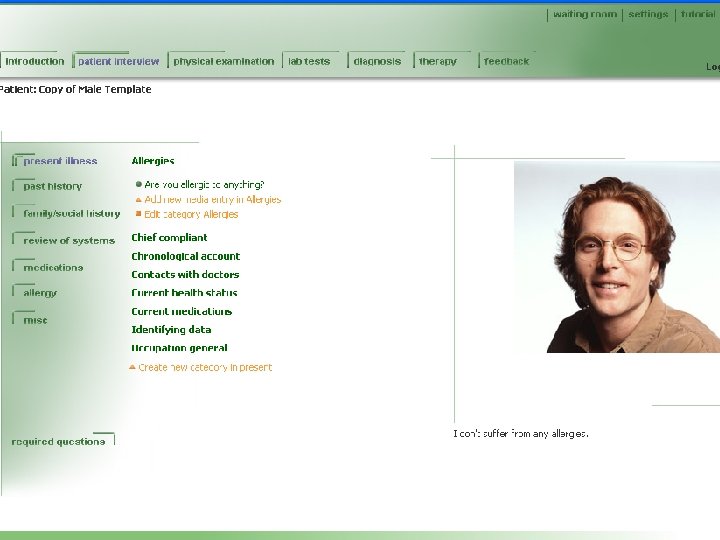
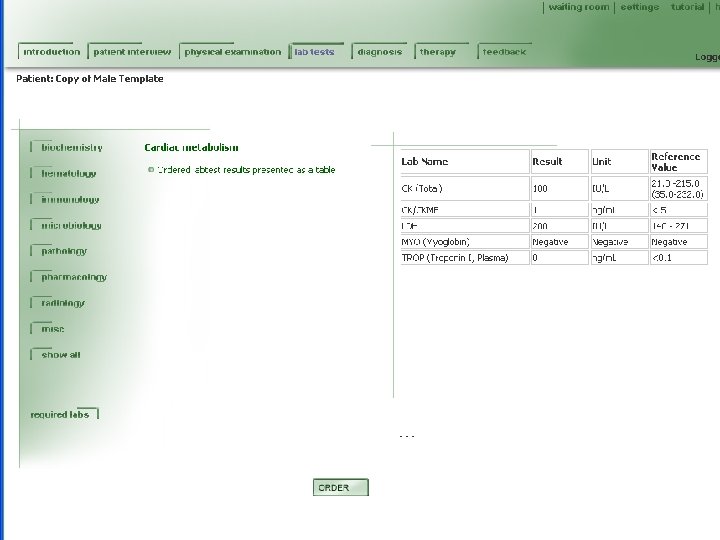
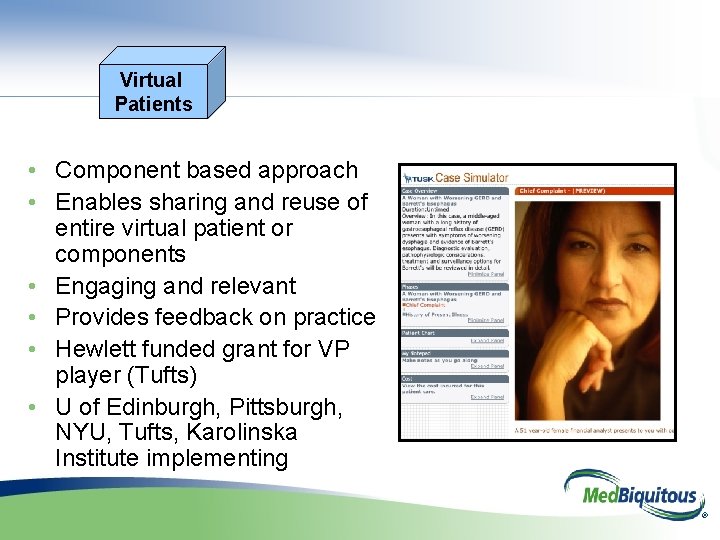
Virtual Patients • Component based approach • Enables sharing and reuse of entire virtual patient or components • Engaging and relevant • Provides feedback on practice • Hewlett funded grant for VP player (Tufts) • U of Edinburgh, Pittsburgh, NYU, Tufts, Karolinska Institute implementing ®
Med. Biquitous Virtual Patient Working Group • • • • Susan Albright, Tufts University Chris Candler, M. D. , Association of American Medical Colleges David Davies, Ph. D. , IVIMEDS Parvati Dev, Stanford University Shona Dippie, HEAL Rachel Ellaway, Ph. D. , University of Edinburgh Uno Fors, D. D. S. , Ph. D. , Karolinska Institute Robert Galbraith, M. D. , National Board of Medical Examiners Michael Hagen, M. D. , American Board of Family Medicine Grace Huang, M. D. , Harvard University Carol Kamin, University of Colorado Joy Leffler, WE MOVE Ross Martin, M. D. , Pfizer • • • • J. B. Mc. Gee, M. D. , University of Pittsburgh Sandra Mc. Intyre, M. Ed. , HEAL Yanko Michea, M. D. , University of Connecticut Dick Moberg, Moberg Research Kitty O'Meara, Oregon Health and Science University Beth Powell, Centers for Disease Control Dan Rehak, Ph. D. , Carnegie Mellon University Kathie Rose, National Board of Medical Examiners Kevin Souza, University of California, San Francisco Hemal Thakore, M. D. , University College, Dublin Greg Thompson, M. D. , Medantic Marc Triola, M. D. , New York University Nabil Zary, Karolinska Institute ®
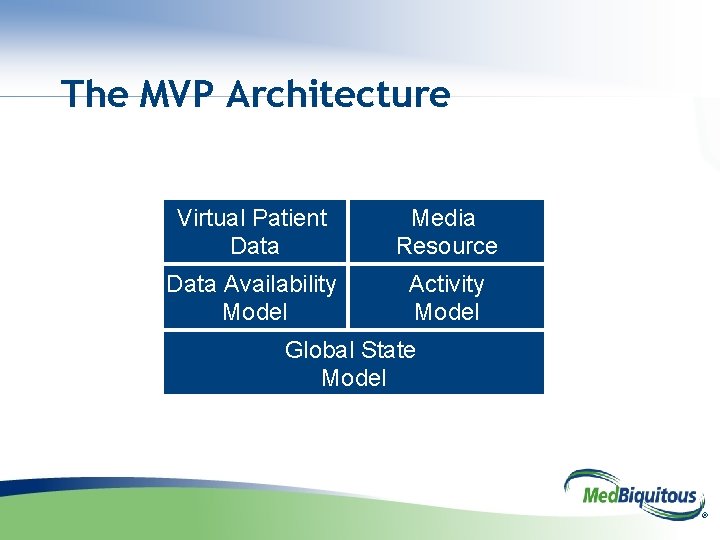
The MVP Architecture Virtual Patient Data Media Resource Data Availability Model Activity Model Global State Model ®
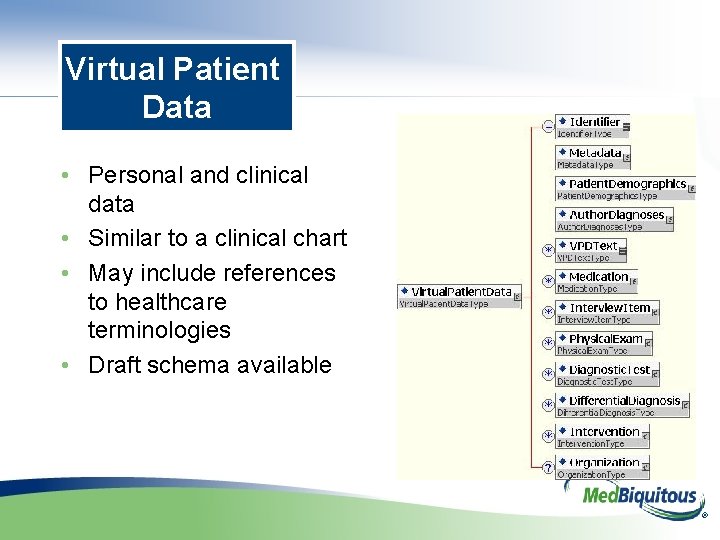
Virtual Patient Data • Personal and clinical data • Similar to a clinical chart • May include references to healthcare terminologies • Draft schema available ®
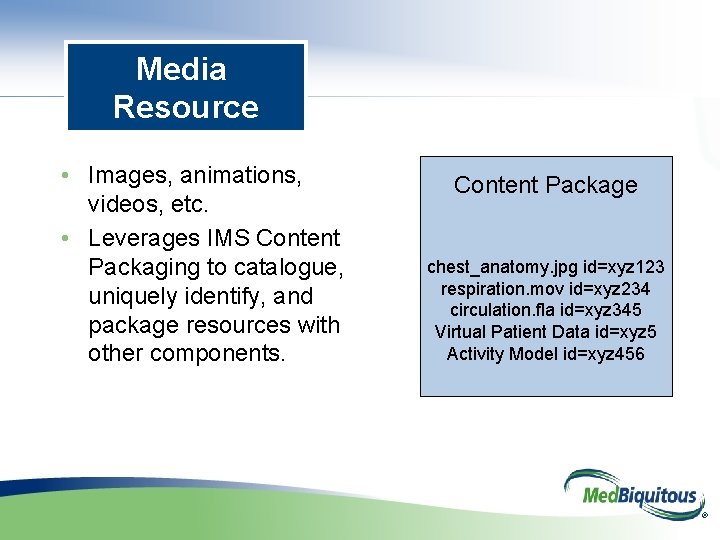
Media Resource • Images, animations, videos, etc. • Leverages IMS Content Packaging to catalogue, uniquely identify, and package resources with other components. Content Package chest_anatomy. jpg id=xyz 123 respiration. mov id=xyz 234 circulation. fla id=xyz 345 Virtual Patient Data id=xyz 5 Activity Model id=xyz 456 ®
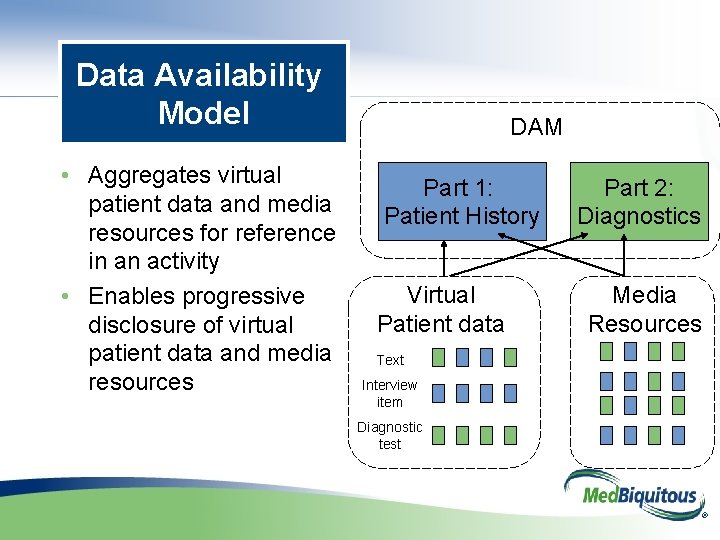
Data Availability Model • Aggregates virtual patient data and media resources for reference in an activity • Enables progressive disclosure of virtual patient data and media resources DAM Part 1: Patient History Virtual Patient data Part 2: Diagnostics Media Resources Text Interview item Diagnostic test ®
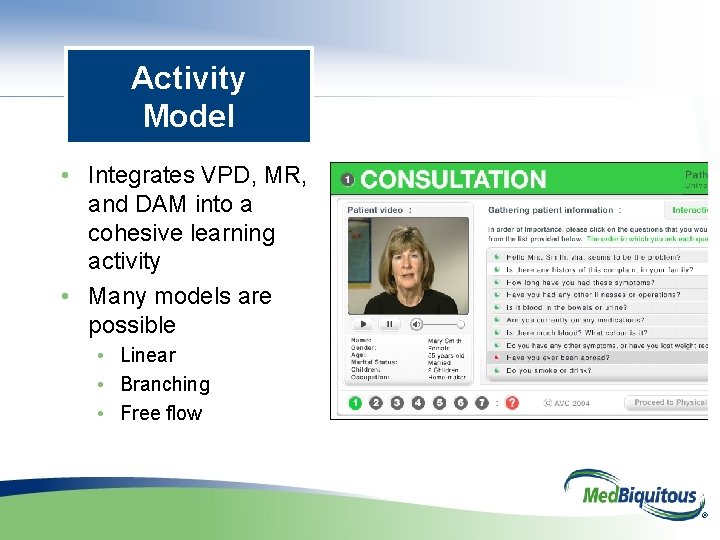
Activity Model • Integrates VPD, MR, and DAM into a cohesive learning activity • Many models are possible • Linear • Branching • Free flow ®
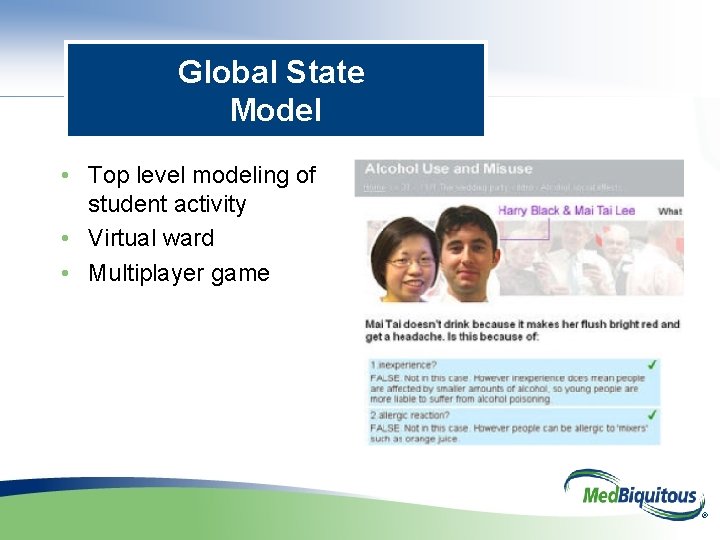
Global State Model • Top level modeling of student activity • Virtual ward • Multiplayer game ®
What’s the benefit? • Facilitate the exchange and reuse of virtual patients across institutions • Promote a more engaging (and safe) way to learn and assess • Expose students to conditions they may not see in the hospital ®
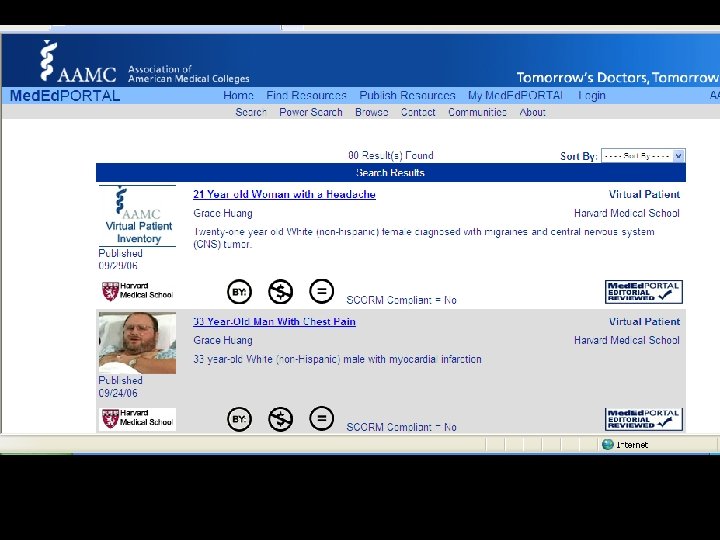
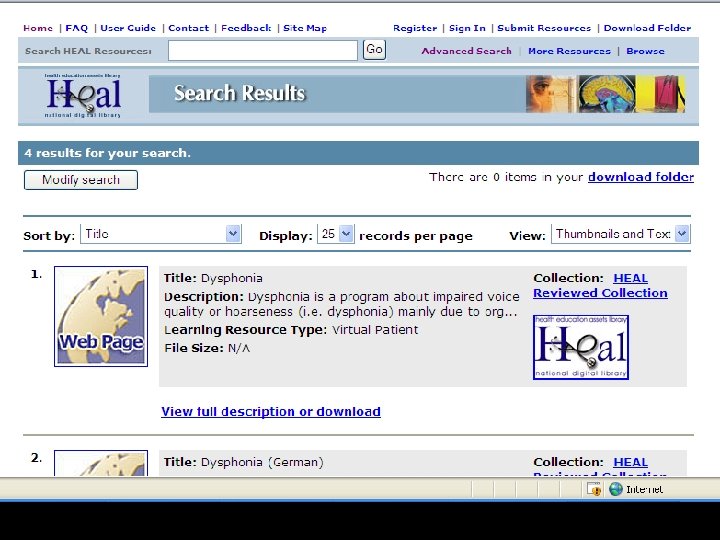
What do you see as opportunities for leveraging virtual patients? ®
Working Group Participation • Teleconferences every 6 weeks • Groupware to facilitate collaboration • Contact me for more information valerie. smothers@medbiq. org ®
- Slides: 28