
Mechanisms of Sodium and Water Retention in Heart



- Slides: 31
Mechanisms of Sodium and Water Retention in Heart Failure Chronic Decrease in Cardiac Output Or Decrease in Peripheral Vascular Resistance Increased Cardiac Filling Pressures Decrease Fullness of The Arterial Circulation Water Retention V 2 Receptors Stimulation Increased Sodium and Water Retention Resistance to Natriuretic Peptides Failure to Escape From Aldosterone Baroreceptor Desensitization Decreased Renal Perfusion Pressure Renal Vasoconstriction Nonosmotic AVP Release Increased SNS Activity Increased RAAS Activity Decreased GFR Increased Water and Sodium Reabsorption in the Proximal Tubule Reduced Distal Delivery of Sodium Adapted from Schrier RW: J Am Coll Cardiol 2006; 47: 1 -8
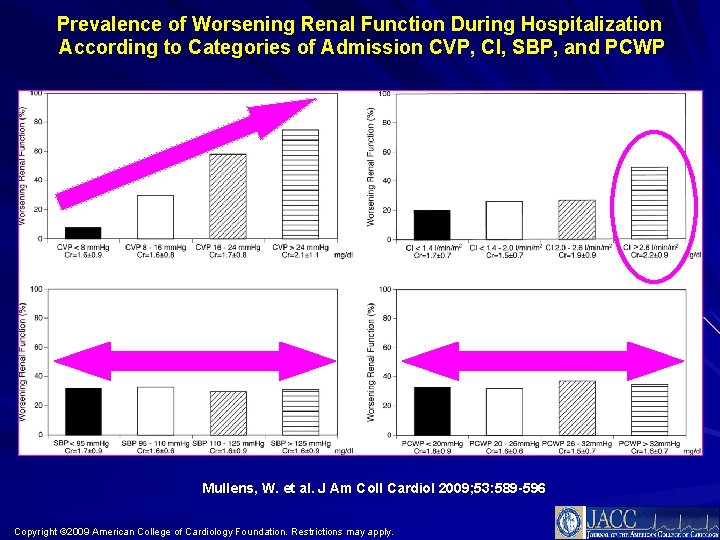
Prevalence of Worsening Renal Function During Hospitalization According to Categories of Admission CVP, CI, SBP, and PCWP Mullens, W. et al. J Am Coll Cardiol 2009; 53: 589 -596 Copyright © 2009 American College of Cardiology Foundation. Restrictions may apply.
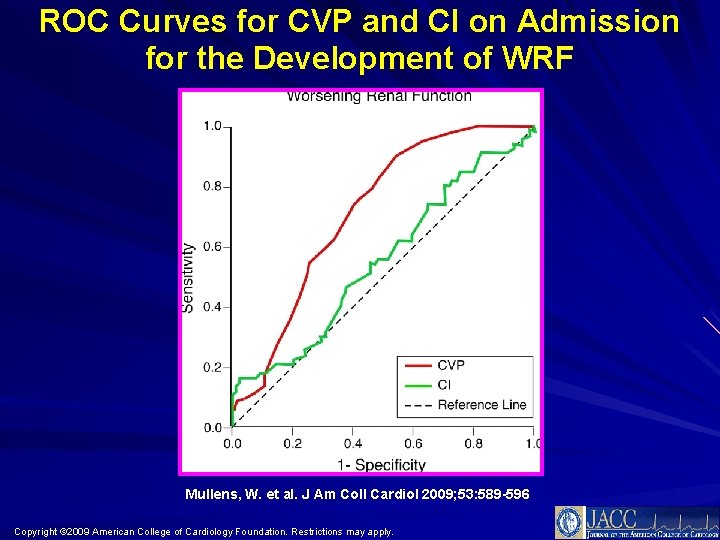
ROC Curves for CVP and CI on Admission for the Development of WRF Mullens, W. et al. J Am Coll Cardiol 2009; 53: 589 -596 Copyright © 2009 American College of Cardiology Foundation. Restrictions may apply.
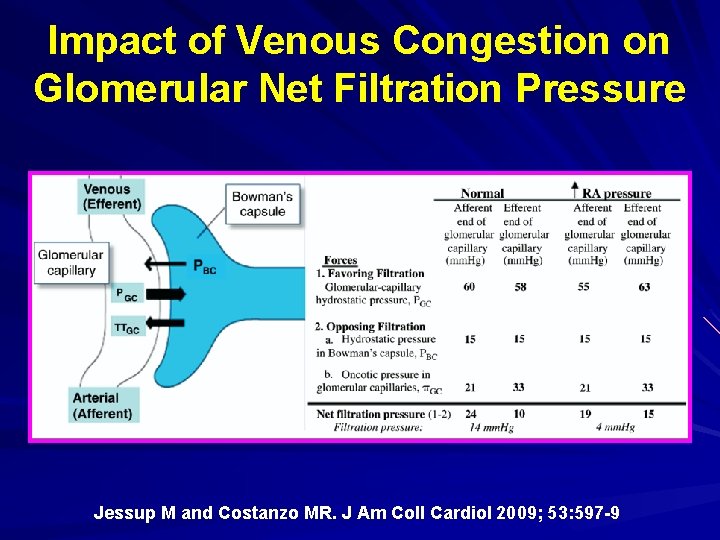
Impact of Venous Congestion on Glomerular Net Filtration Pressure Jessup M and Costanzo MR. J Am Coll Cardiol 2009; 53: 597 -9
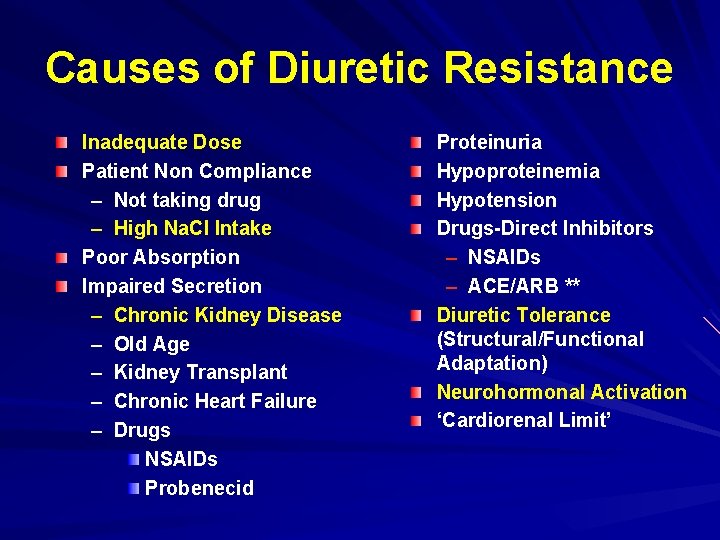
Causes of Diuretic Resistance Inadequate Dose Patient Non Compliance – Not taking drug – High Na. Cl Intake Poor Absorption Impaired Secretion – Chronic Kidney Disease – Old Age – Kidney Transplant – Chronic Heart Failure – Drugs NSAIDs Probenecid Proteinuria Hypoproteinemia Hypotension Drugs-Direct Inhibitors – NSAIDs – ACE/ARB ** Diuretic Tolerance (Structural/Functional Adaptation) Neurohormonal Activation ‘Cardiorenal Limit’
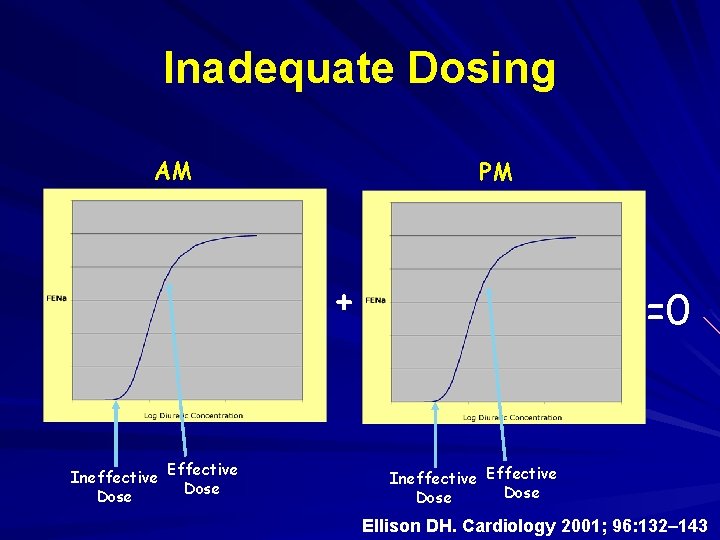
Inadequate Dosing AM PM + Ineffective Effective Dose =0 Ineffective Effective Dose Ellison DH. Cardiology 2001; 96: 132– 143
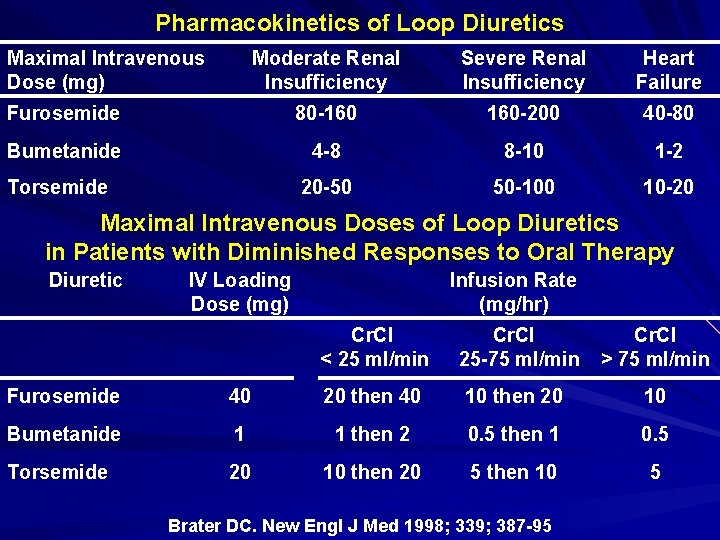
Pharmacokinetics of Loop Diuretics Maximal Intravenous Dose (mg) Moderate Renal Insufficiency Severe Renal Insufficiency Heart Failure Furosemide 80 -160 160 -200 40 -80 Bumetanide 4 -8 8 -10 1 -2 20 -50 50 -100 10 -20 Torsemide Maximal Intravenous Doses of Loop Diuretics in Patients with Diminished Responses to Oral Therapy Diuretic IV Loading Dose (mg) Infusion Rate (mg/hr) Cr. Cl < 25 ml/min Cr. Cl 25 -75 ml/min Cr. Cl > 75 ml/min Furosemide 40 20 then 40 10 then 20 10 Bumetanide 1 1 then 2 0. 5 then 1 0. 5 Torsemide 20 10 then 20 5 then 10 5 Brater DC. New Engl J Med 1998; 339; 387 -95
Urinary Na excretion, mmol/6 hours Excessive Dietary Sodium Intake =0 = ECF Reduction => Dietary Na Intake tic ure n’ i D o t ‘Pos etenti R Na LD LD LD Time, 6 hour periods LD Wilcox CS, Mitch WE, Kelly RA, Skorecki K, Meyer TW, Friedman PA, Souney PF. J Lab Clin Med. 1983 Sep; 102(3): 450 -8.
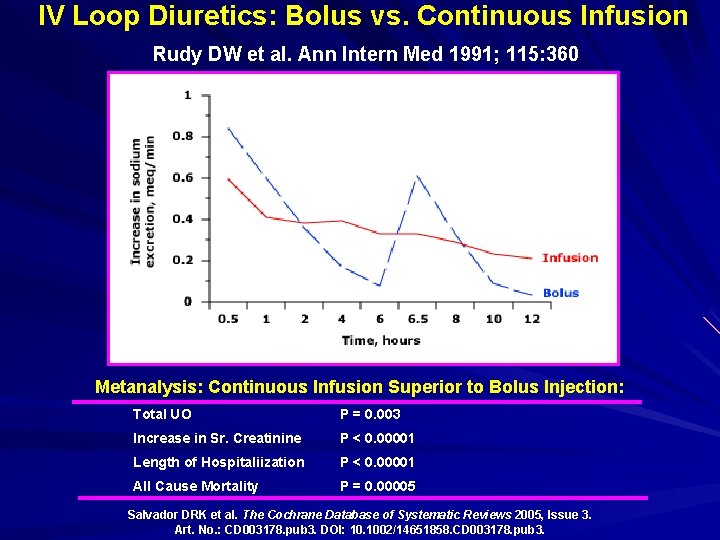
IV Loop Diuretics: Bolus vs. Continuous Infusion Rudy DW et al. Ann Intern Med 1991; 115: 360 Metanalysis: Continuous Infusion Superior to Bolus Injection: Total UO P = 0. 003 Increase in Sr. Creatinine P < 0. 00001 Length of Hospitaliization P < 0. 00001 All Cause Mortality P = 0. 00005 Salvador DRK et al. The Cochrane Database of Systematic Reviews 2005, Issue 3. Art. No. : CD 003178. pub 3. DOI: 10. 1002/14651858. CD 003178. pub 3.
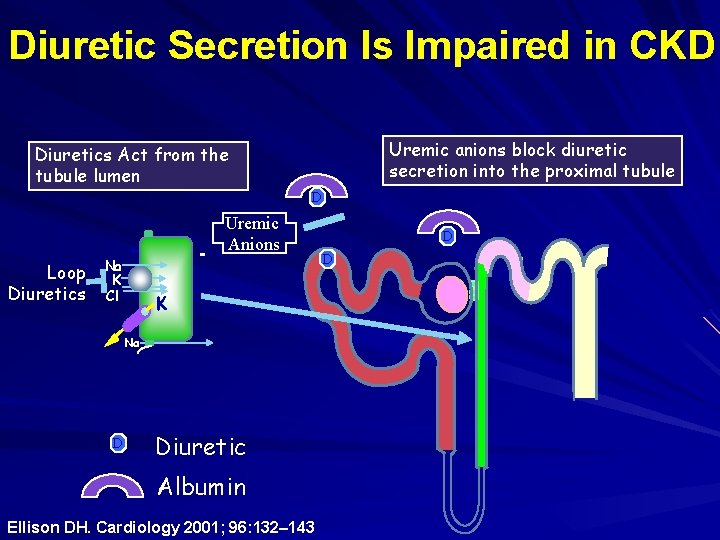
Diuretic Secretion Is Impaired in CKD Uremic anions block diuretic secretion into the proximal tubule Diuretics Act from the tubule lumen D Loop Diuretics Na K Cl + - Uremic Anions K Na D Diuretic Albumin Ellison DH. Cardiology 2001; 96: 132– 143 D D
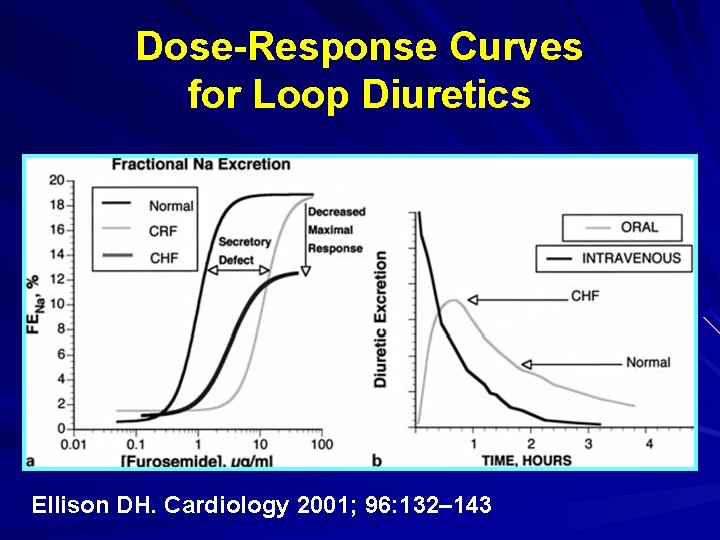
Dose-Response Curves for Loop Diuretics Ellison DH. Cardiology 2001; 96: 132– 143
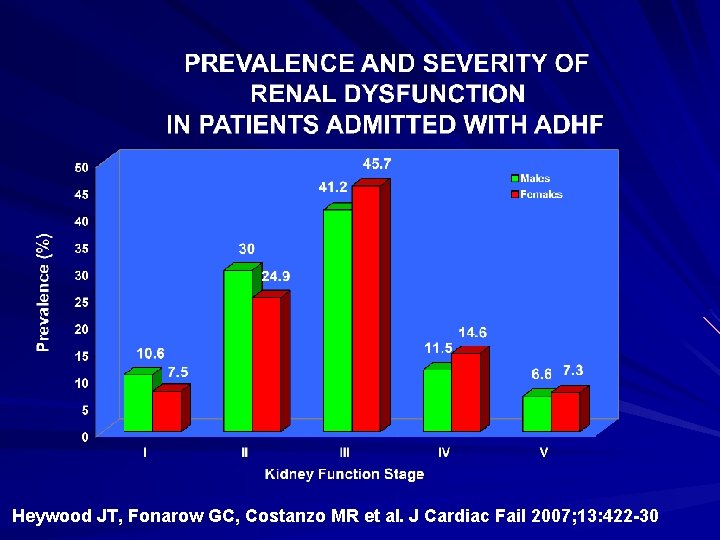
Heywood JT, Fonarow GC, Costanzo MR et al. J Cardiac Fail 2007; 13: 422 -30
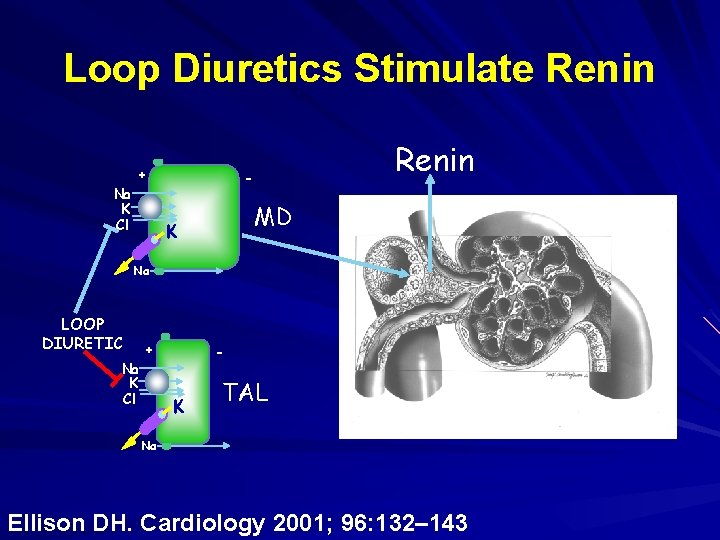
Loop Diuretics Stimulate Renin + Na K Cl Renin - MD K Na LOOP DIURETIC + Na K Cl - K TAL Na Ellison DH. Cardiology 2001; 96: 132– 143
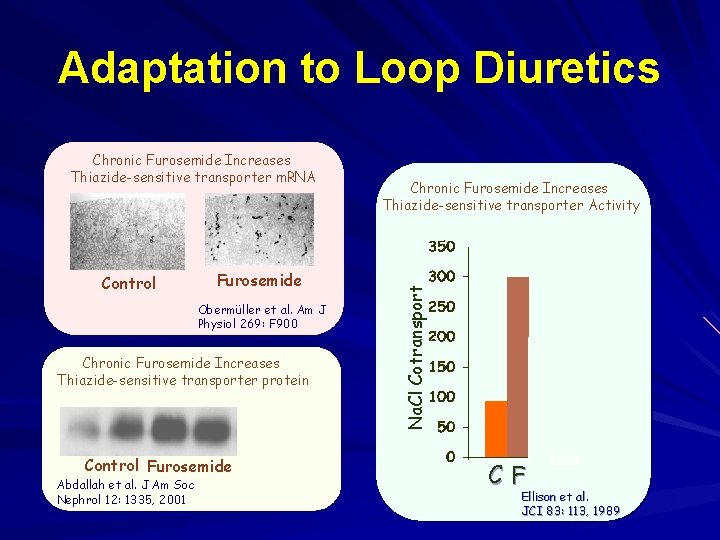
Adaptation to Loop Diuretics Control Furosemide Obermüller et al. Am J Physiol 269: F 900 Chronic Furosemide Increases Thiazide-sensitive transporter protein Control Furosemide Furo + Spiro Abdallah et al. J Am Soc Nephrol 12: 1335, 2001 Chronic Furosemide Increases Thiazide-sensitive transporter Activity Na. Cl Cotransport Chronic Furosemide Increases Thiazide-sensitive transporter m. RNA C F +S Ellison et al. JCI 83: 113, 1989
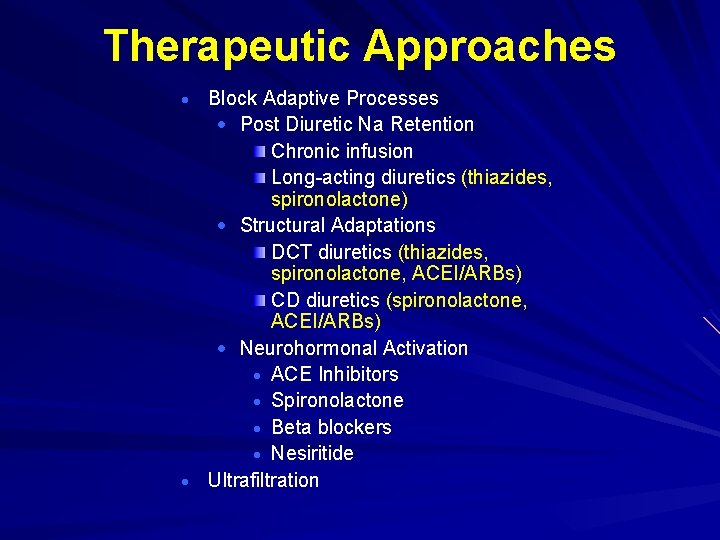
Therapeutic Approaches Block Adaptive Processes Post Diuretic Na Retention Chronic infusion Long-acting diuretics (thiazides, spironolactone) Structural Adaptations DCT diuretics (thiazides, spironolactone, ACEI/ARBs) CD diuretics (spironolactone, ACEI/ARBs) Neurohormonal Activation ACE Inhibitors Spironolactone Beta blockers Nesiritide Ultrafiltration
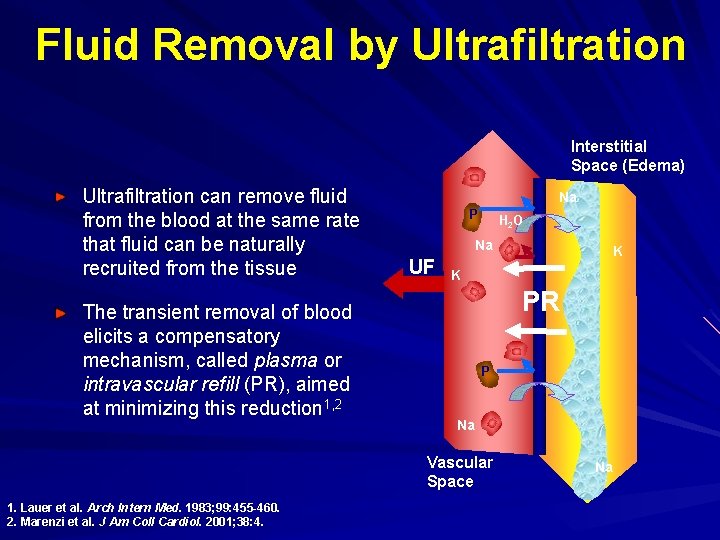
Fluid Removal by Ultrafiltration Interstitial Space (Edema) Ultrafiltration can remove fluid from the blood at the same rate that fluid can be naturally recruited from the tissue The transient removal of blood elicits a compensatory mechanism, called plasma or intravascular refill (PR), aimed at minimizing this reduction 1, 2 Na P H 2 O Na UF K PR P Na Vascular Space 1. Lauer et al. Arch Intern Med. 1983; 99: 455 -460. 2. Marenzi et al. J Am Coll Cardiol. 2001; 38: 4. K Na
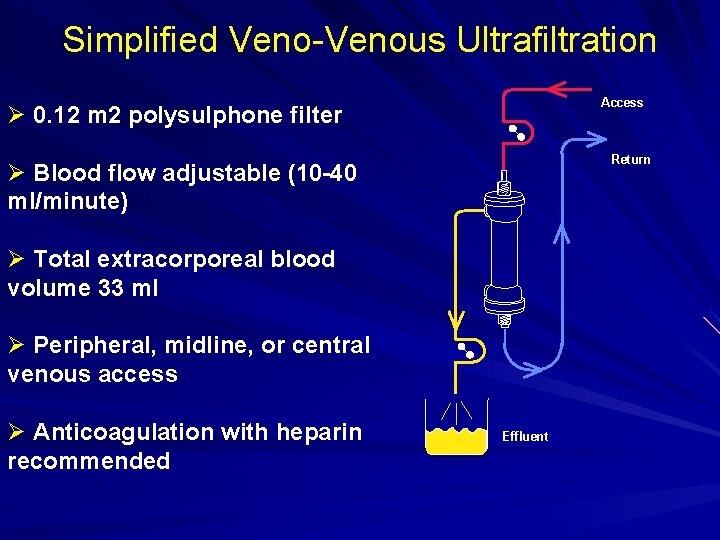
Simplified Veno-Venous Ultrafiltration Access Ø 0. 12 m 2 polysulphone filter Return Ø Blood flow adjustable (10 -40 ml/minute) Ø Total extracorporeal blood volume 33 ml Ø Peripheral, midline, or central venous access Ø Anticoagulation with heparin recommended Effluent
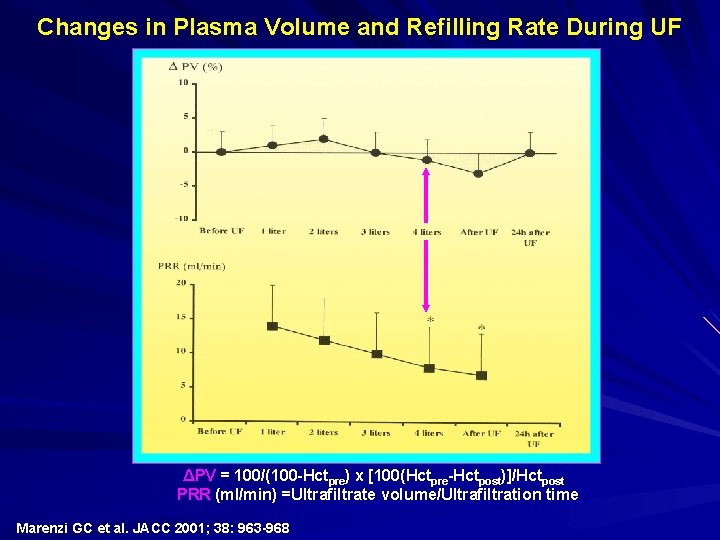
Changes in Plasma Volume and Refilling Rate During UF ΔPV = 100/(100 -Hctpre) x [100(Hctpre-Hctpost)]/Hctpost PRR (ml/min) =Ultrafiltrate volume/Ultrafiltration time Marenzi GC et al. JACC 2001; 38: 963 -968
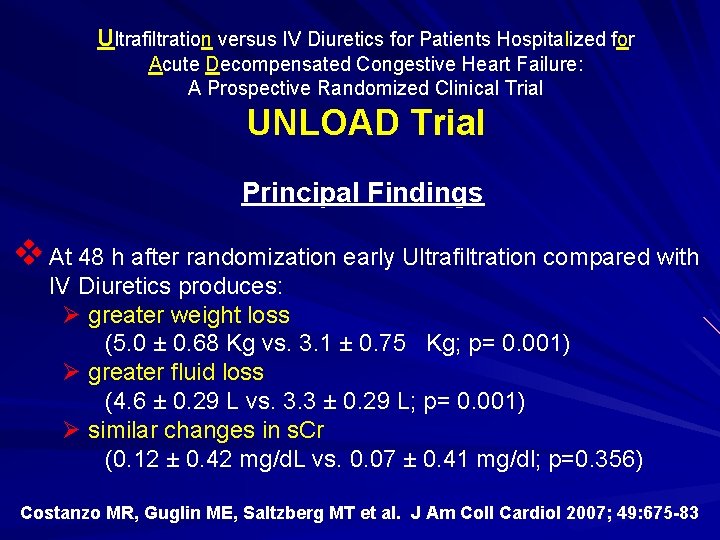
Ultrafiltration versus IV Diuretics for Patients Hospitalized for Acute Decompensated Congestive Heart Failure: A Prospective Randomized Clinical Trial UNLOAD Trial Principal Findings v At 48 h after randomization early Ultrafiltration compared with IV Diuretics produces: Ø greater weight loss (5. 0 ± 0. 68 Kg vs. 3. 1 ± 0. 75 Kg; p= 0. 001) Ø greater fluid loss (4. 6 ± 0. 29 L vs. 3. 3 ± 0. 29 L; p= 0. 001) ( Ø similar changes in s. Cr (0. 12 ± 0. 42 mg/d. L vs. 0. 07 ± 0. 41 mg/dl; p=0. 356) Costanzo MR, Guglin ME, Saltzberg MT et al. J Am Coll Cardiol 2007; 49: 675 -83
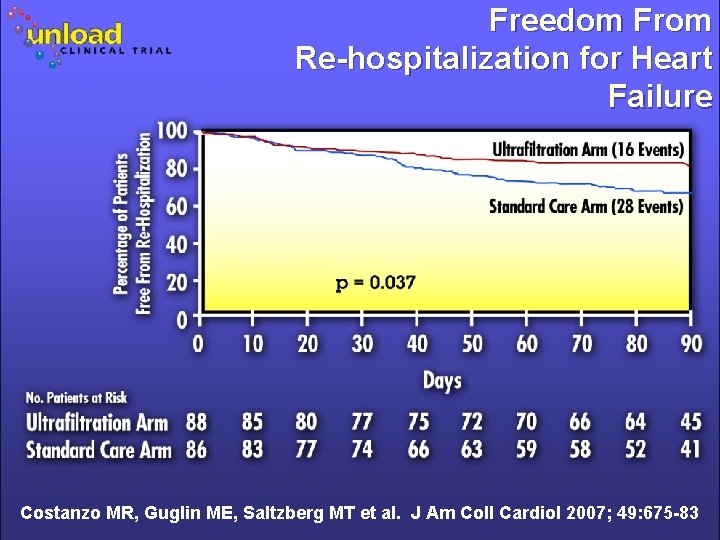
Freedom From Re-hospitalization for Heart Failure Costanzo MR, Guglin ME, Saltzberg MT et al. J Am Coll Cardiol 2007; 49: 675 -83
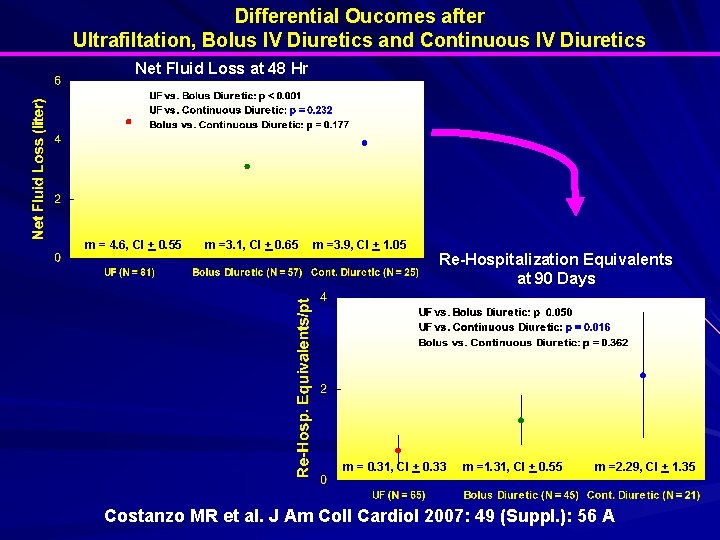
Differential Oucomes after Ultrafiltation, Bolus IV Diuretics and Continuous IV Diuretics Net Fluid Loss at 48 Hr m = 4. 6, CI + 0. 55 m =3. 1, CI + 0. 65 m =3. 9, CI + 1. 05 Re-Hospitalization Equivalents at 90 Days m = 0. 31, CI + 0. 33 m =1. 31, CI + 0. 55 m =2. 29, CI + 1. 35 Costanzo MR et al. J Am Coll Cardiol 2007: 49 (Suppl. ): 56 A
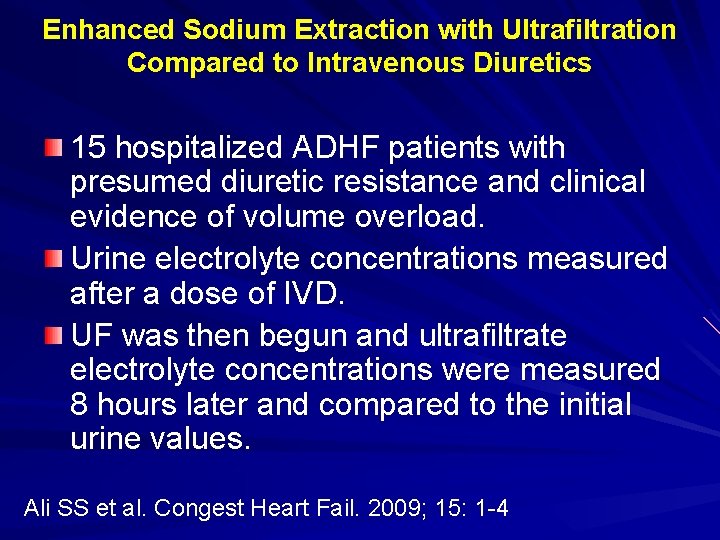
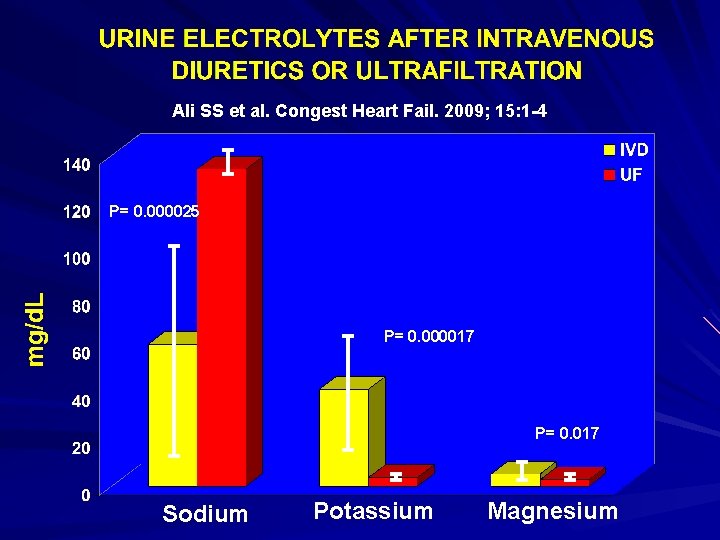
Enhanced Sodium Extraction with Ultrafiltration Compared to Intravenous Diuretics 15 hospitalized ADHF patients with presumed diuretic resistance and clinical evidence of volume overload. Urine electrolyte concentrations measured after a dose of IVD. UF was then begun and ultrafiltrate electrolyte concentrations were measured 8 hours later and compared to the initial urine values. Ali SS et al. Congest Heart Fail. 2009; 15: 1 -4
Ali SS et al. Congest Heart Fail. 2009; 15: 1 -4 P= 0. 000025 P= 0. 000017 P= 0. 017 Sodium Potassium Magnesium
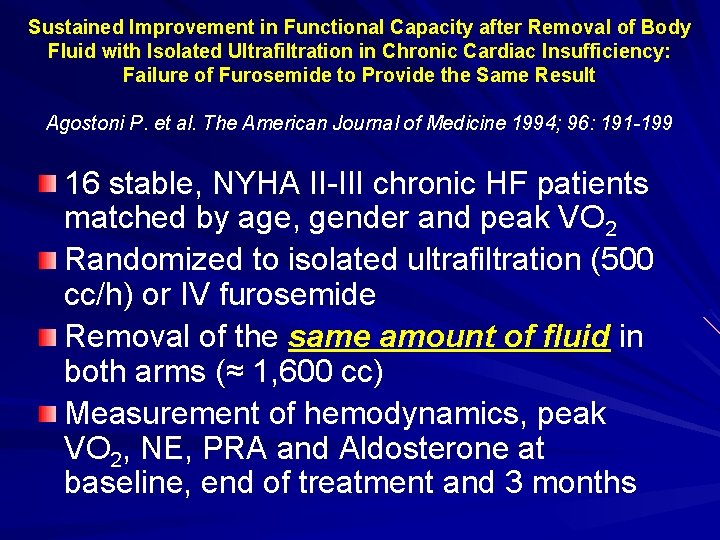
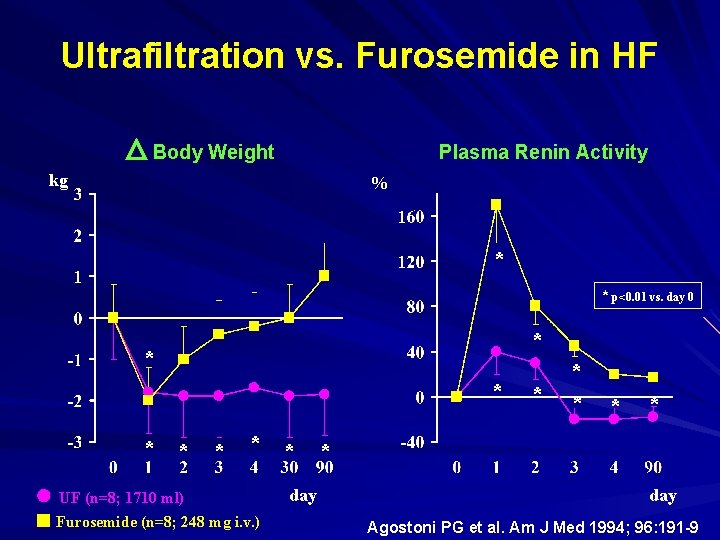
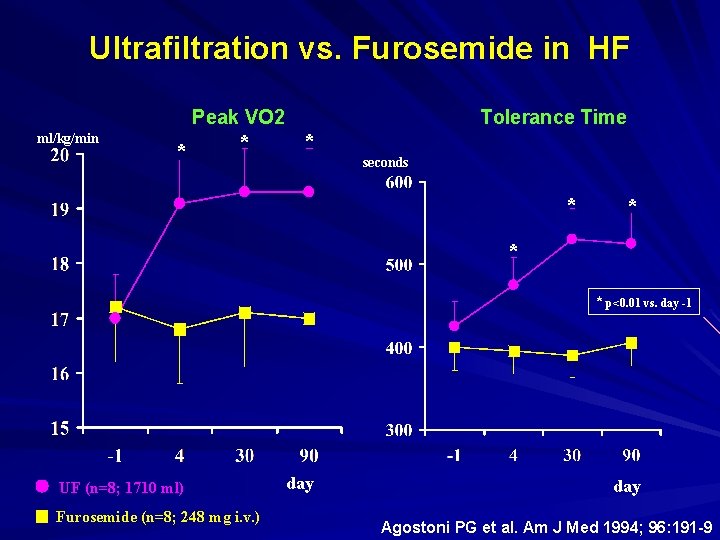
Sustained Improvement in Functional Capacity after Removal of Body Fluid with Isolated Ultrafiltration in Chronic Cardiac Insufficiency: Failure of Furosemide to Provide the Same Result Agostoni P. et al. The American Journal of Medicine 1994; 96: 191 -199 16 stable, NYHA II-III chronic HF patients matched by age, gender and peak VO 2 Randomized to isolated ultrafiltration (500 cc/h) or IV furosemide Removal of the same amount of fluid in both arms (≈ 1, 600 cc) Measurement of hemodynamics, peak VO 2, NE, PRA and Aldosterone at baseline, end of treatment and 3 months
Ultrafiltration vs. Furosemide in HF Body Weight Plasma Renin Activity kg % * * p<0. 01 vs. day 0 * * * * UF (n=8; 1710 ml) Furosemide (n=8; 248 mg i. v. ) day * * * day Agostoni PG et al. Am J Med 1994; 96: 191 -9
Ultrafiltration vs. Furosemide in HF Peak VO 2 ml/kg/min * * Tolerance Time * seconds * * p<0. 01 vs. day -1 UF (n=8; 1710 ml) Furosemide (n=8; 248 mg i. v. ) day Agostoni PG et al. Am J Med 1994; 96: 191 -9
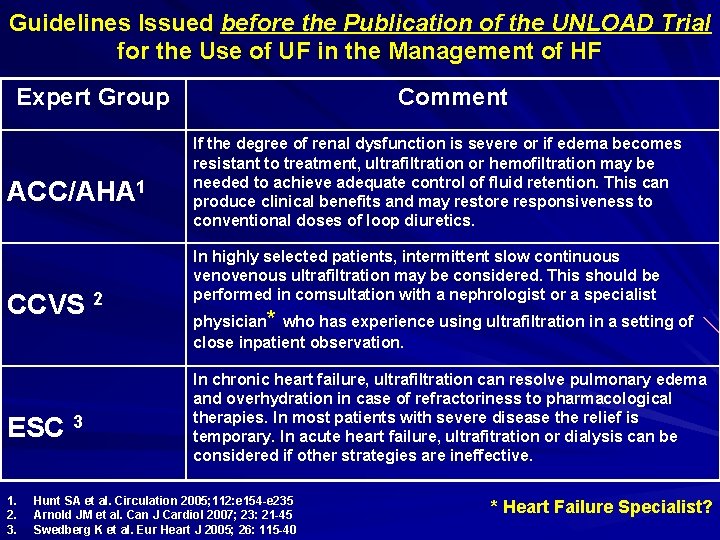
Guidelines Issued before the Publication of the UNLOAD Trial for the Use of UF in the Management of HF Expert Group ACC/AHA 1 CCVS 2 ESC 3 1. 2. 3. Comment If the degree of renal dysfunction is severe or if edema becomes resistant to treatment, ultrafiltration or hemofiltration may be needed to achieve adequate control of fluid retention. This can produce clinical benefits and may restore responsiveness to conventional doses of loop diuretics. In highly selected patients, intermittent slow continuous venous ultrafiltration may be considered. This should be performed in comsultation with a nephrologist or a specialist physician* who has experience using ultrafiltration in a setting of close inpatient observation. In chronic heart failure, ultrafiltration can resolve pulmonary edema and overhydration in case of refractoriness to pharmacological therapies. In most patients with severe disease the relief is temporary. In acute heart failure, ultrafitration or dialysis can be considered if other strategies are ineffective. Hunt SA et al. Circulation 2005; 112: e 154 -e 235 Arnold JM et al. Can J Cardiol 2007; 23: 21 -45 Swedberg K et al. Eur Heart J 2005; 26: 115 -40 * Heart Failure Specialist?
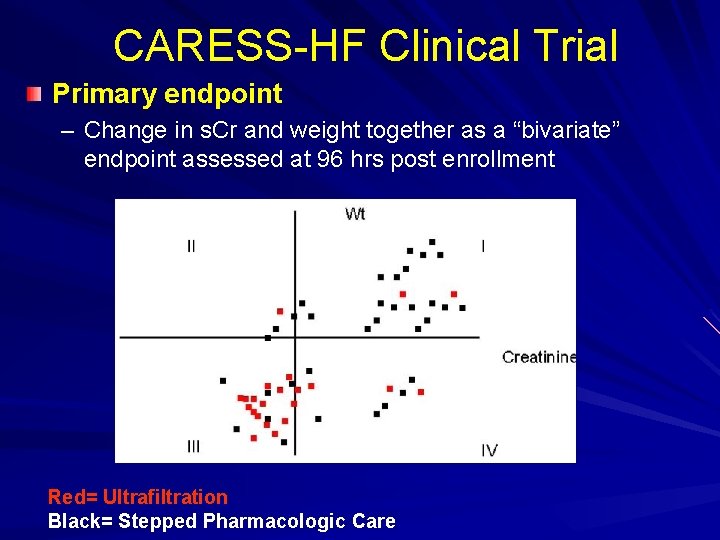
CARdiorenal REScue Study in Acute Decompensated Heart Failure (CARESS-HF) NIH Heart Failure Network trial Prospective, randomized trial 100 patients each arm Patient Population: – Patients hospitalized with ADHF will be eligible for enrollment if they develop cardiorenal syndrome (defined as an increase in s. Cr of > 0. 3 mg/dl from baseline) while demonstrating signs and symptoms of persistent congestion Primary endpoint – Change in s. Cr and weight together as a “bivariate” endpoint assessed at 96 hrs post enrollment Secondary Endpoint – PE assessed at days 1 -3 and 7 days – Treatment failure, weight and fluid loss, clinical decongestion, peak s. Cr, change in electrolytes, LOS, biomarkers, change in diuretic doses all at various time points
CARESS-HF Clinical Trial Primary endpoint – Change in s. Cr and weight together as a “bivariate” endpoint assessed at 96 hrs post enrollment Red= Ultrafiltration Black= Stepped Pharmacologic Care
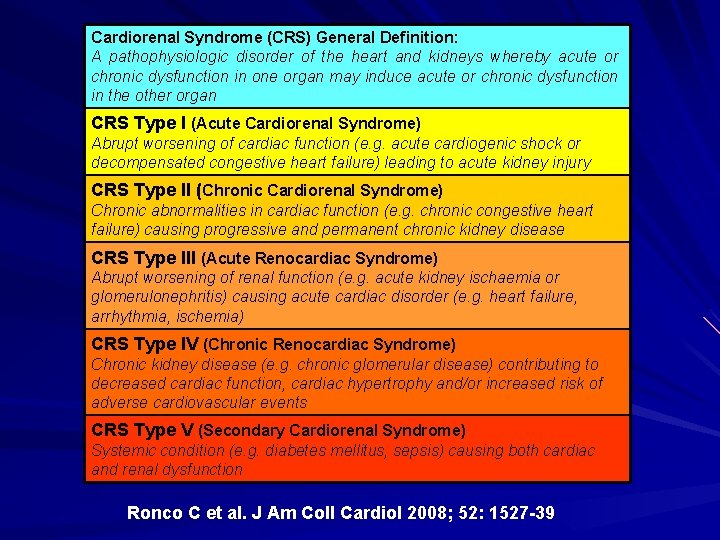
Cardiorenal Syndrome (CRS) General Definition: A pathophysiologic disorder of the heart and kidneys whereby acute or chronic dysfunction in one organ may induce acute or chronic dysfunction in the other organ CRS Type I (Acute Cardiorenal Syndrome) Abrupt worsening of cardiac function (e. g. acute cardiogenic shock or decompensated congestive heart failure) leading to acute kidney injury CRS Type II (Chronic Cardiorenal Syndrome) Chronic abnormalities in cardiac function (e. g. chronic congestive heart failure) causing progressive and permanent chronic kidney disease CRS Type III (Acute Renocardiac Syndrome) Abrupt worsening of renal function (e. g. acute kidney ischaemia or glomerulonephritis) causing acute cardiac disorder (e. g. heart failure, arrhythmia, ischemia) CRS Type IV (Chronic Renocardiac Syndrome) Chronic kidney disease (e. g. chronic glomerular disease) contributing to decreased cardiac function, cardiac hypertrophy and/or increased risk of adverse cardiovascular events CRS Type V (Secondary Cardiorenal Syndrome) Systemic condition (e. g. diabetes mellitus, sepsis) causing both cardiac and renal dysfunction Ronco C et al. J Am Coll Cardiol 2008; 52: 1527 -39
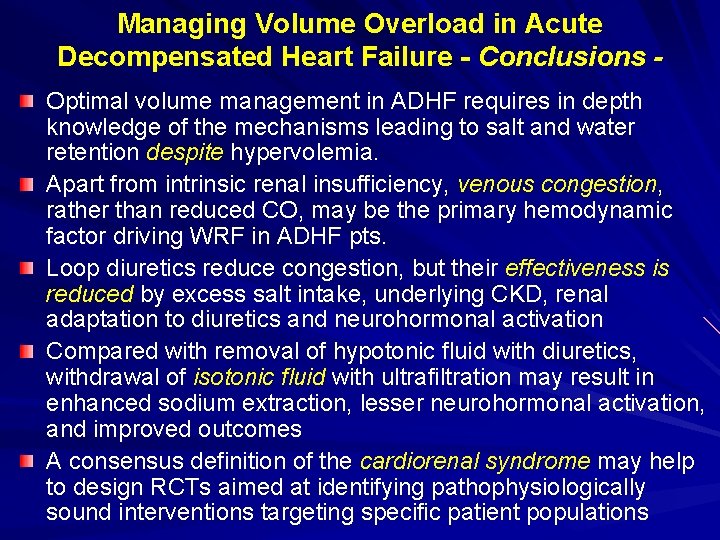
Managing Volume Overload in Acute Decompensated Heart Failure - Conclusions Optimal volume management in ADHF requires in depth knowledge of the mechanisms leading to salt and water retention despite hypervolemia. Apart from intrinsic renal insufficiency, venous congestion, rather than reduced CO, may be the primary hemodynamic factor driving WRF in ADHF pts. Loop diuretics reduce congestion, but their effectiveness is reduced by excess salt intake, underlying CKD, renal adaptation to diuretics and neurohormonal activation Compared with removal of hypotonic fluid with diuretics, withdrawal of isotonic fluid with ultrafiltration may result in enhanced sodium extraction, lesser neurohormonal activation, and improved outcomes A consensus definition of the cardiorenal syndrome may help to design RCTs aimed at identifying pathophysiologically sound interventions targeting specific patient populations