
Mechanisms of Simple Perceptual Decision Making Processes Xueying


- Slides: 36
Mechanisms of Simple Perceptual Decision Making Processes Xueying Wang SAMSI/NCSU CMMSC, NCTU, December 30, 2009
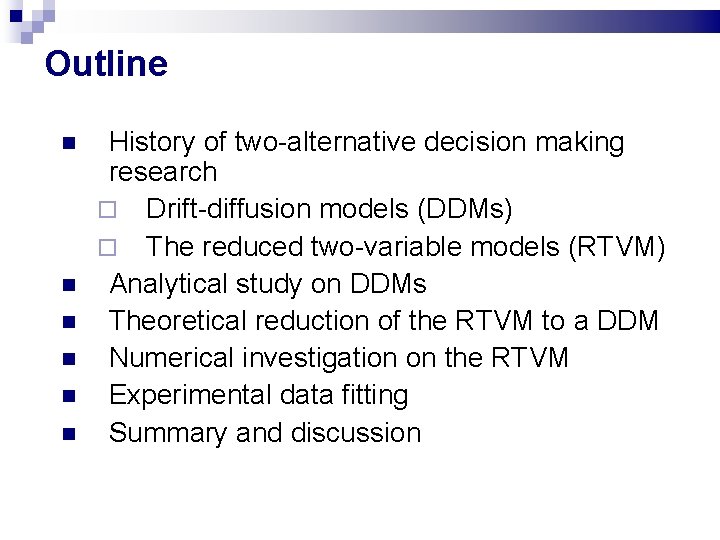
Outline History of two-alternative decision making research Drift-diffusion models (DDMs) The reduced two-variable models (RTVM) Analytical study on DDMs Theoretical reduction of the RTVM to a DDM Numerical investigation on the RTVM Experimental data fitting Summary and discussion
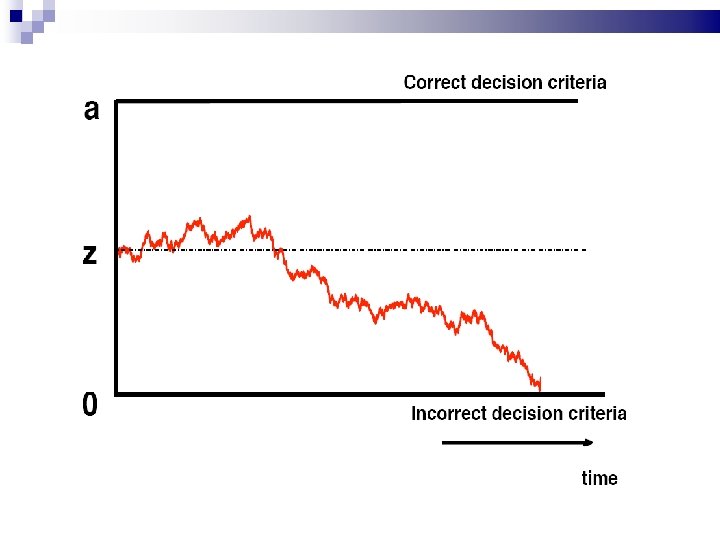
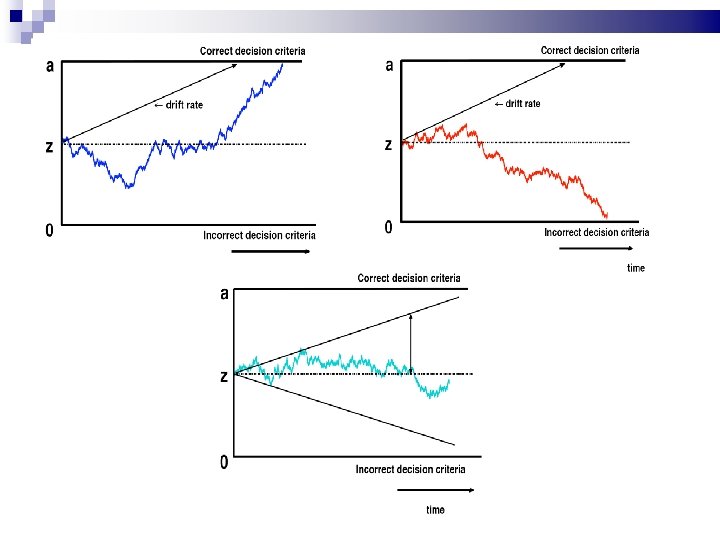
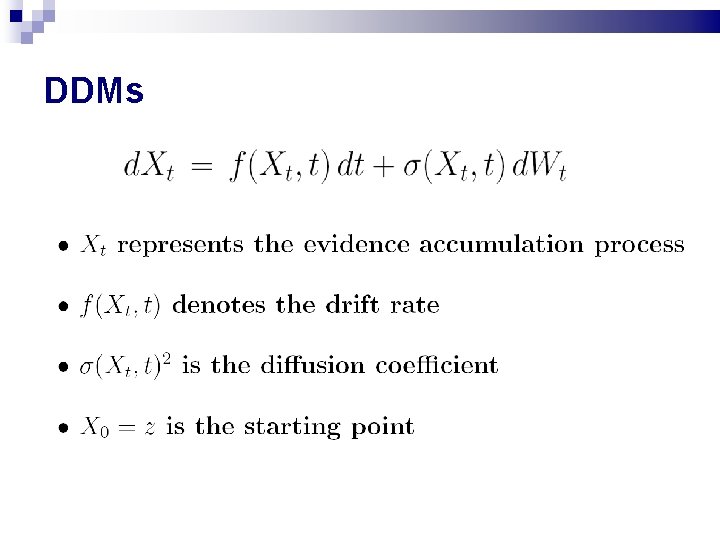
DDMs
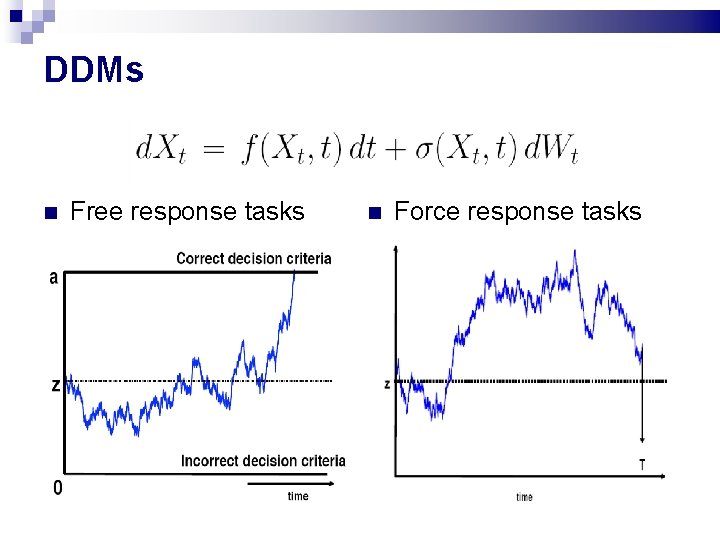
DDMs Free response tasks Force response tasks
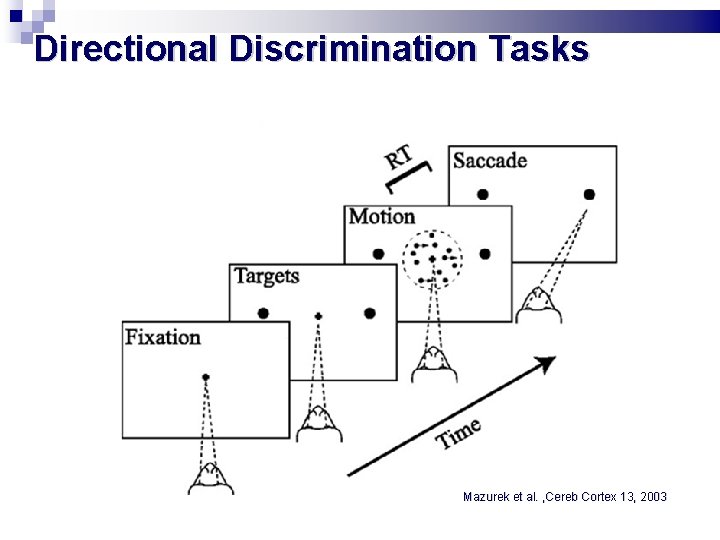
Directional Discrimination Tasks Mazurek et al. , Cereb Cortex 13, 2003
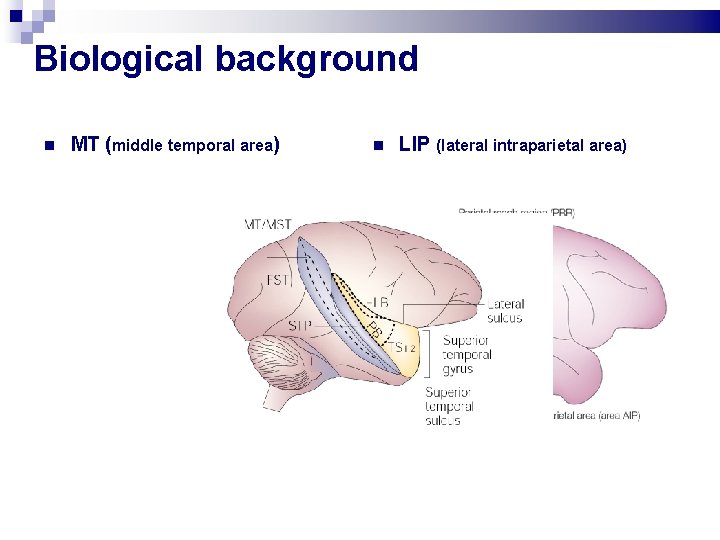
Biological background MT (middle temporal area) LIP (lateral intraparietal area)
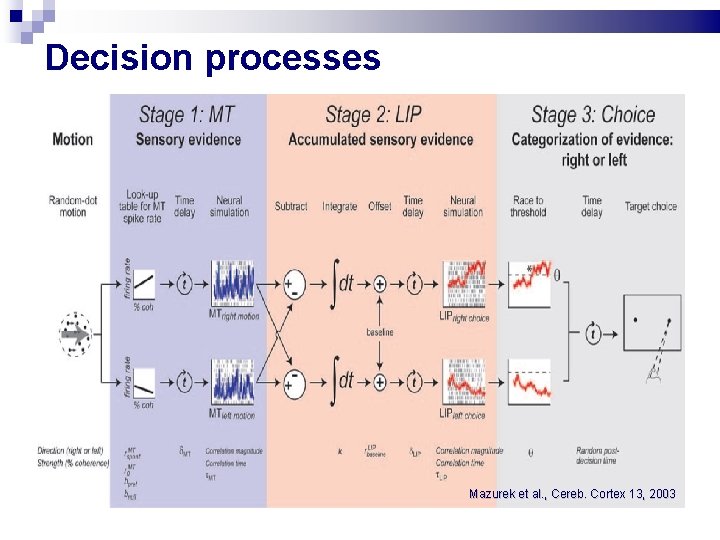
Decision processes Mazurek et al. , Cereb. Cortex 13, 2003
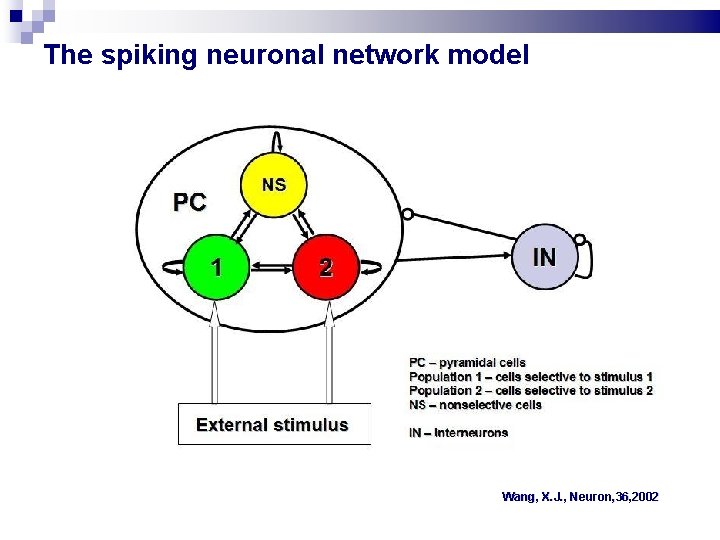
The spiking neuronal network model Wang, X. J. , Neuron, 36, 2002
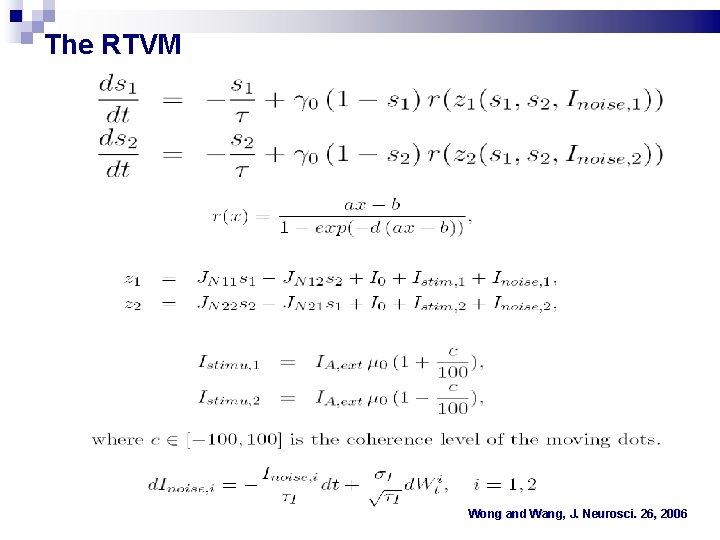
The RTVM Wong and Wang, J. Neurosci. 26, 2006
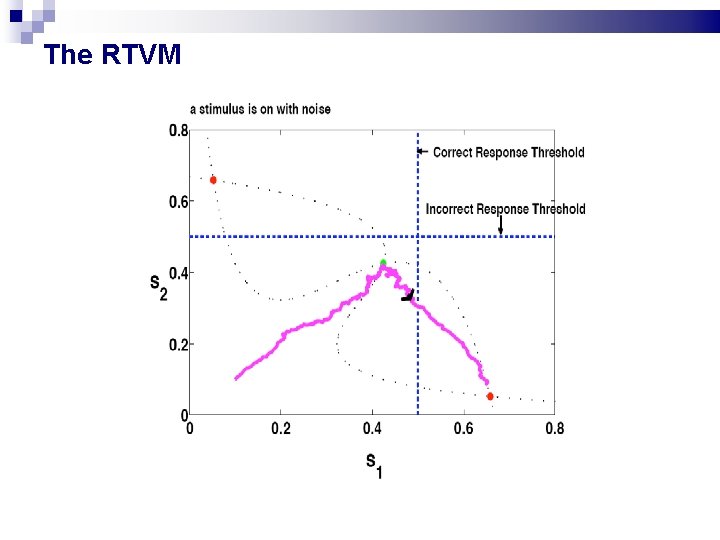
The RTVM
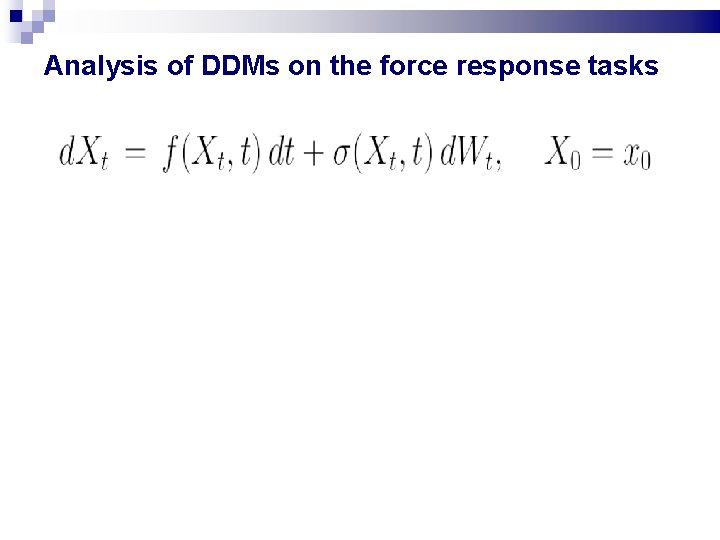
Analysis of DDMs on the force response tasks
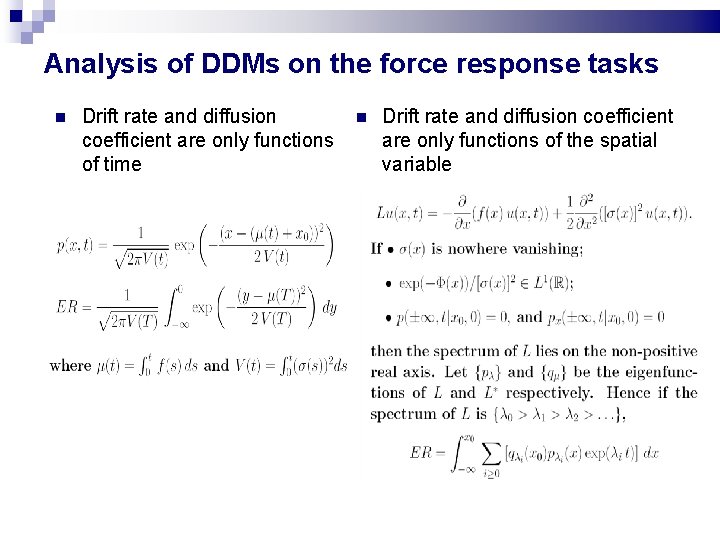
Analysis of DDMs on the force response tasks Drift rate and diffusion coefficient are only functions of time Drift rate and diffusion coefficient are only functions of the spatial variable
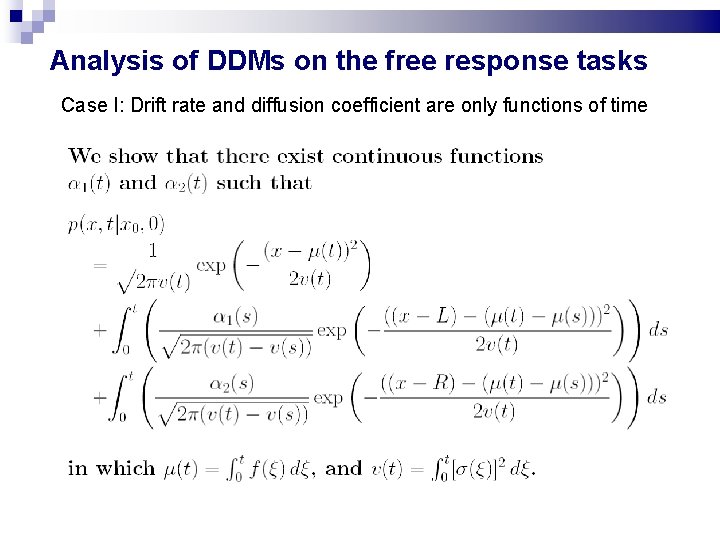
Analysis of DDMs on the free response tasks Case I: Drift rate and diffusion coefficient are only functions of time
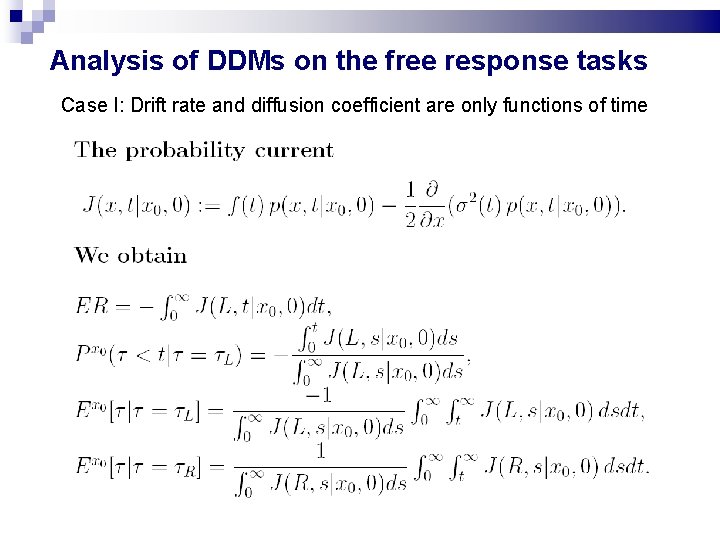
Analysis of DDMs on the free response tasks Case I: Drift rate and diffusion coefficient are only functions of time
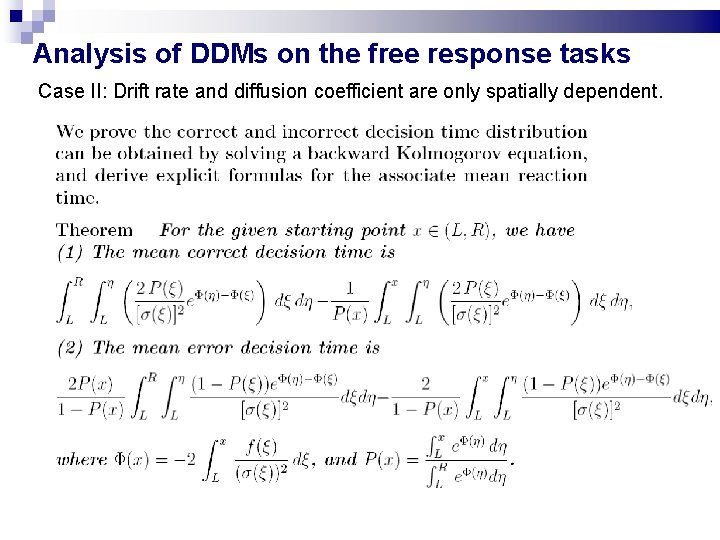
Analysis of DDMs on the free response tasks Case II: Drift rate and diffusion coefficient are only spatially dependent.
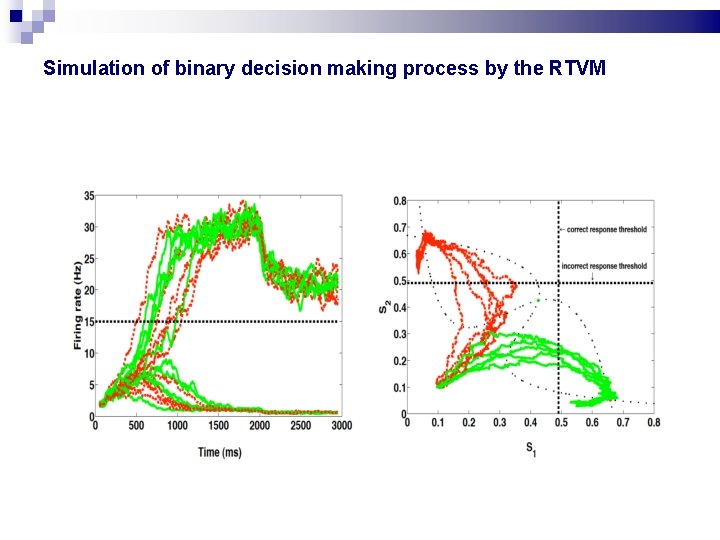
Simulation of binary decision making process by the RTVM
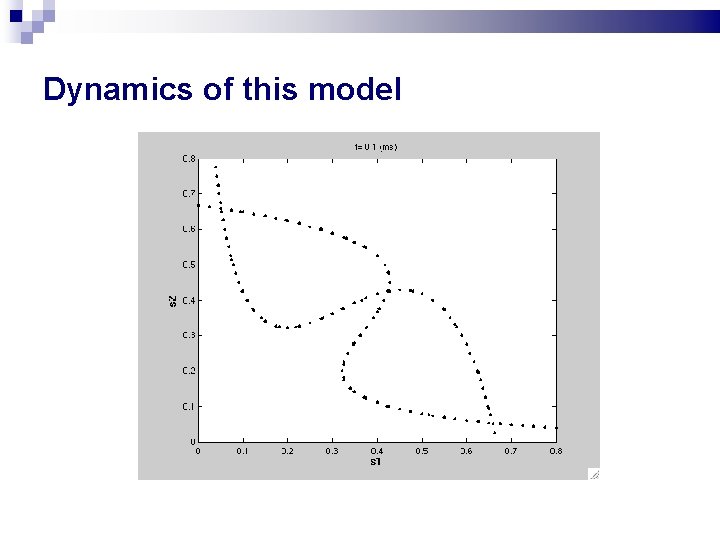
Dynamics of this model
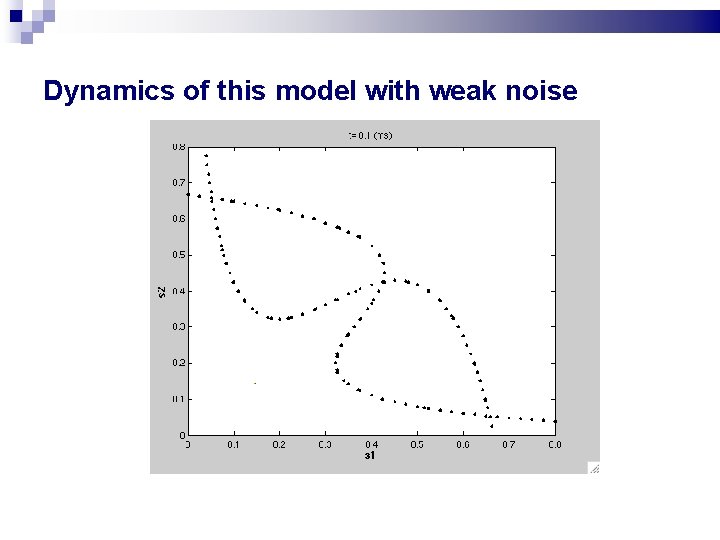
Dynamics of this model with weak noise
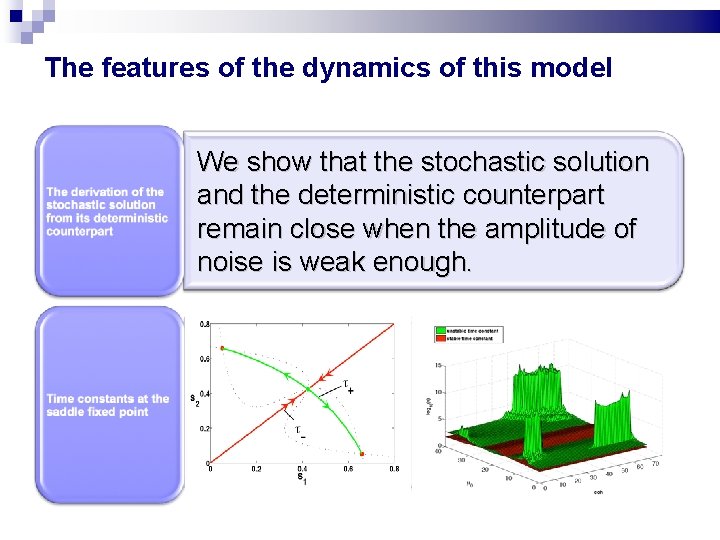
The features of the dynamics of this model We show that the stochastic solution and the deterministic counterpart remain close when the amplitude of noise is weak enough.
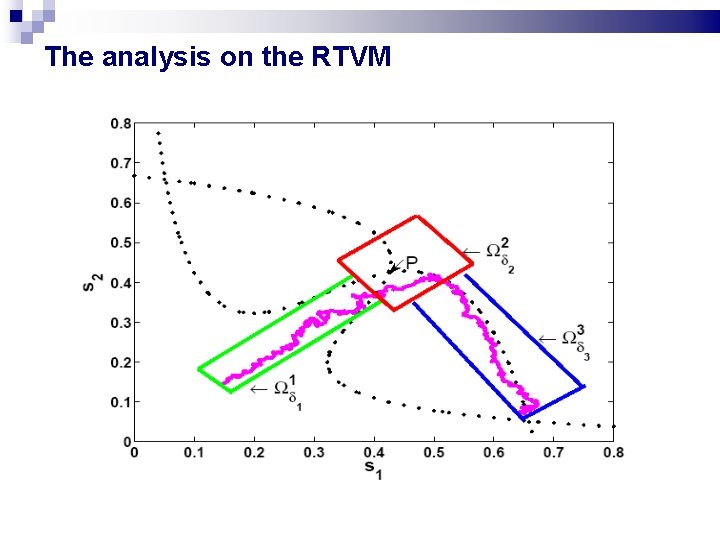
The analysis on the RTVM
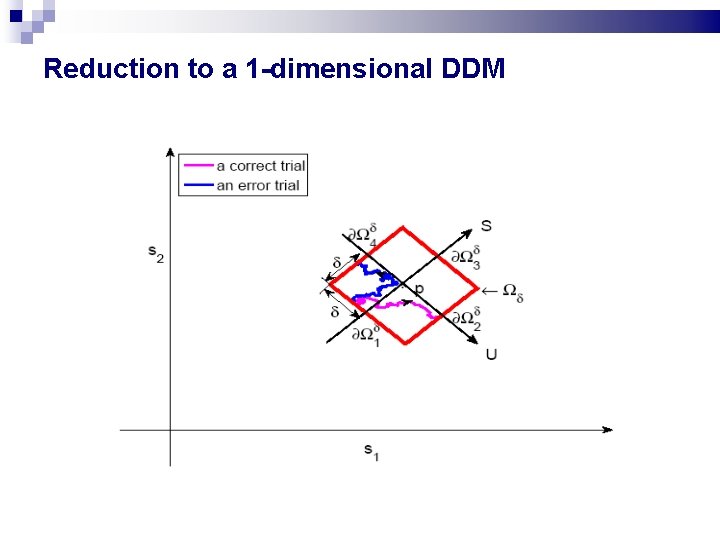
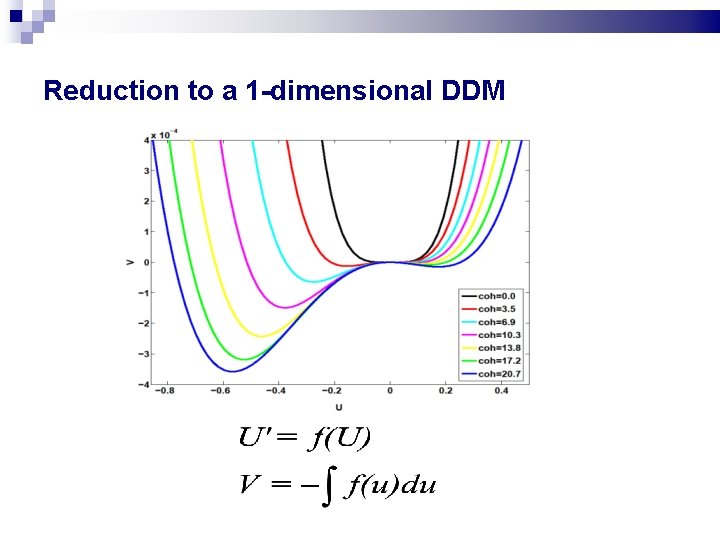
Reduction to a 1 -dimensional DDM
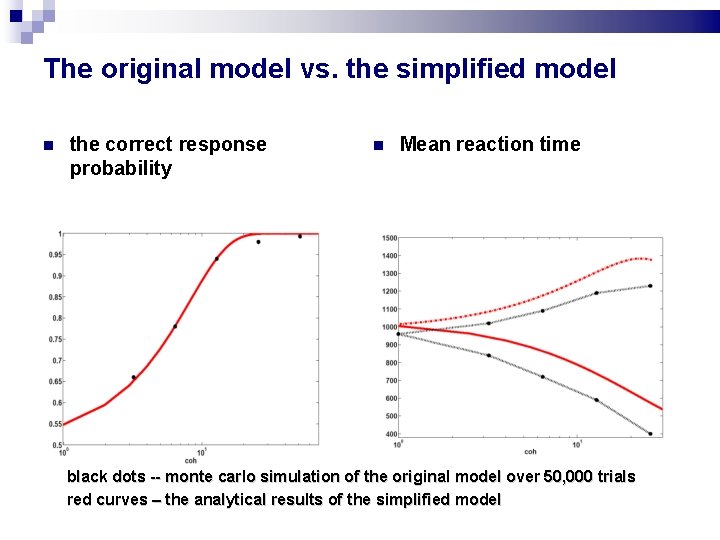
The original model vs. the simplified model the correct response probability Mean reaction time black dots -- monte carlo simulation of the original model over 50, 000 trials red curves – the analytical results of the simplified model
Reduction to a 1 -dimensional DDM
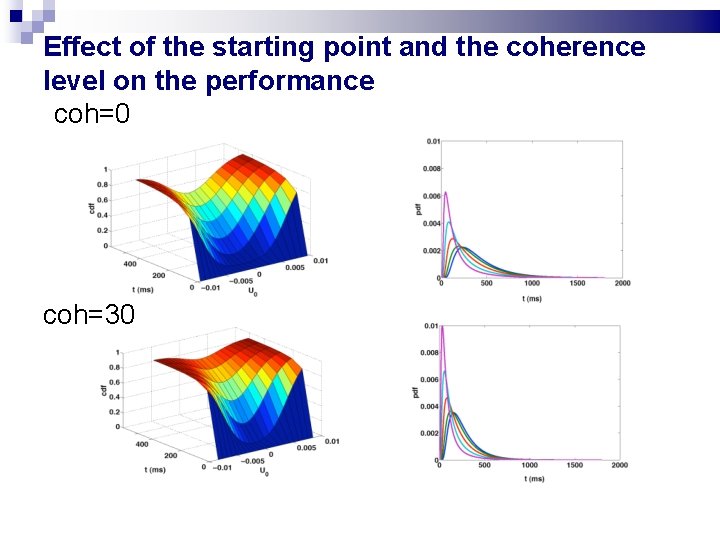
Effect of the starting point and the coherence level on the performance coh=0 coh=30
Accuracy
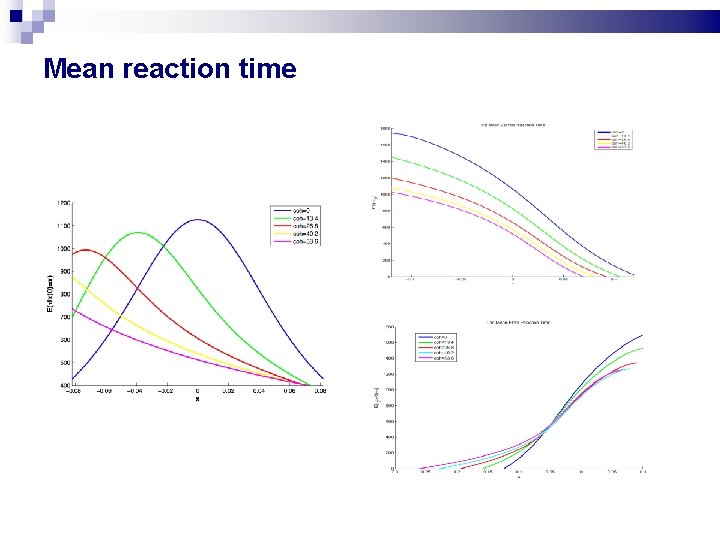
Mean reaction time
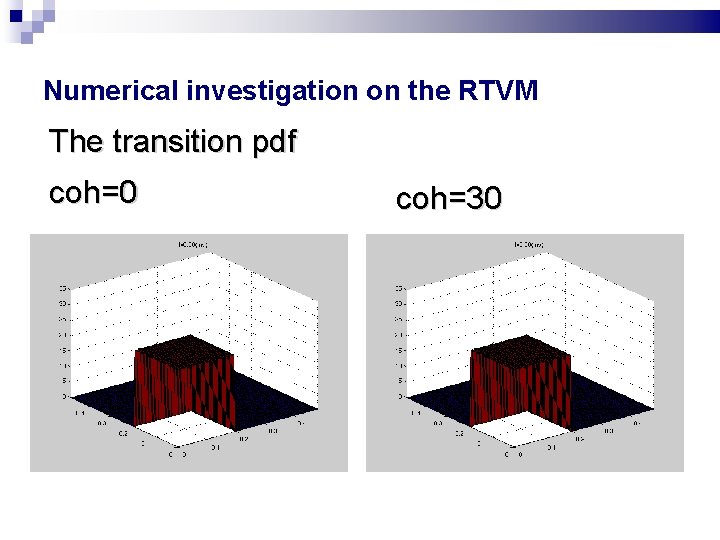
Numerical investigation on the RTVM The transition pdf coh=0 coh=30
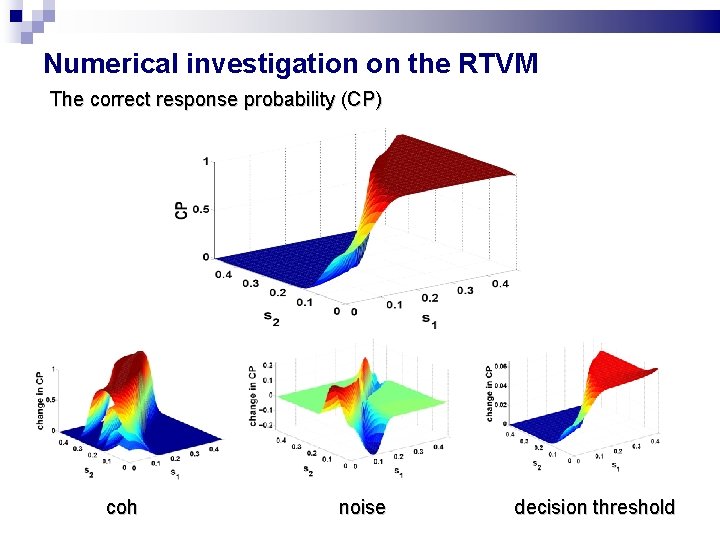
Numerical investigation on the RTVM The correct response probability (CP) coh noise decision threshold
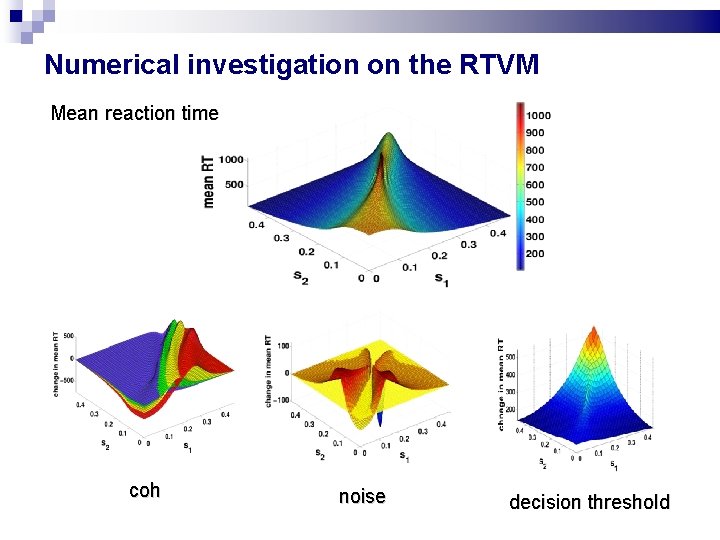
Numerical investigation on the RTVM Mean reaction time coh noise decision threshold
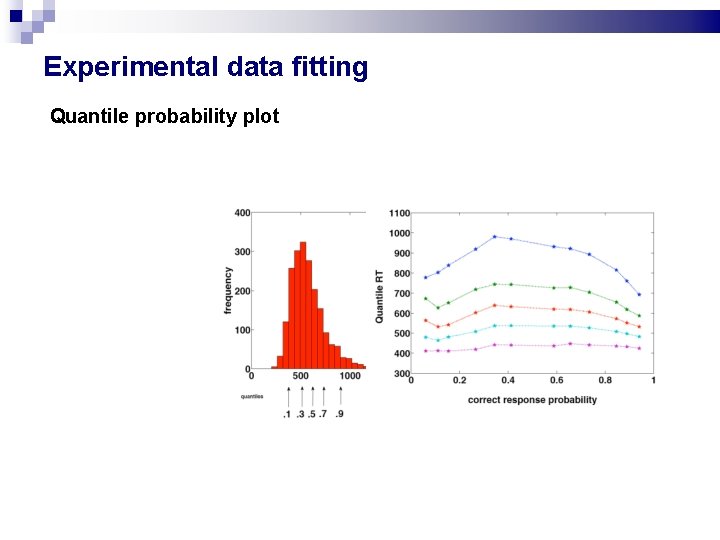
Experimental data fitting Quantile probability plot
Experimental data fitting
Summary We uncovered mechanisms underlying the simple perceptual decision making processes by investigating DDMs and the RTVM. We gave a detailed analysis of DDMs. Force response tasks Free response tasks We found precise conditions on parameters for when the biophysical-based two-dimensional model can be rigorously reduced to a one-dimensional DDM. We provided precise estimates on the parameter values so that the biophysical-based model can be controlled to reproduce the psychological experimental data.
Discussion and future research Apply asymptotic analysis to study the RTVM in the case of weak noise, which may characterize the stochastic dynamics of the whole system without the reduction to the unstable manifold. The dynamics of neural activity governed by the properties of the individual neurons, network architecture and synaptic plasticity The mechanisms of multiple-choice decision making processes
Thanks Questions?