
MECHANISMS OF FEEDBACK Week 5 WHAT IS FEEDBACK

MECHANISMS OF FEEDBACK Week 5
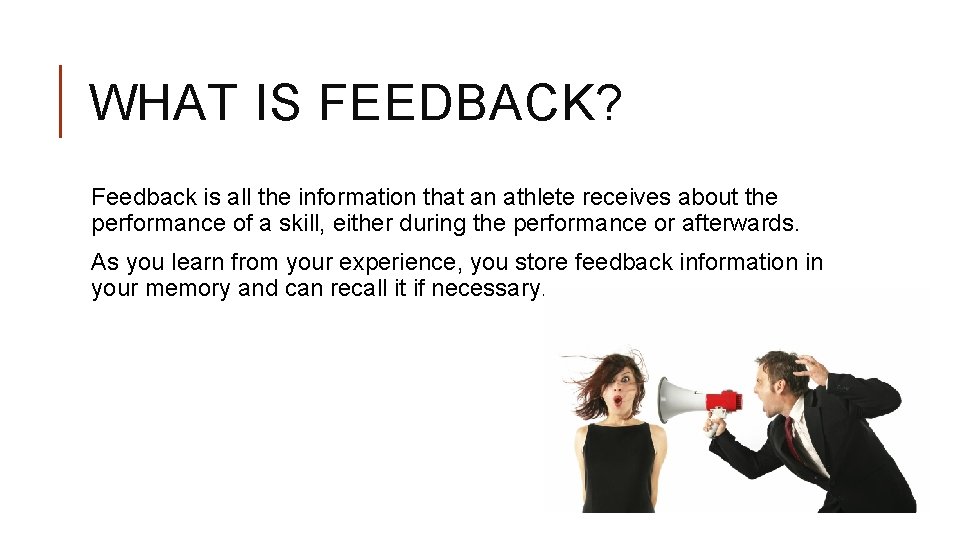
WHAT IS FEEDBACK? Feedback is all the information that an athlete receives about the performance of a skill, either during the performance or afterwards. As you learn from your experience, you store feedback information in your memory and can recall it if necessary.

HOW DO WE USE FEEDBACK? What are some of the uses of feedback? Think about what a beginner uses feedback for, compared to someone who is later on in the learning process. Go to the following website and add your ideas to the wall: http: //padlet. com/wall/enrwfug 2 ayyx
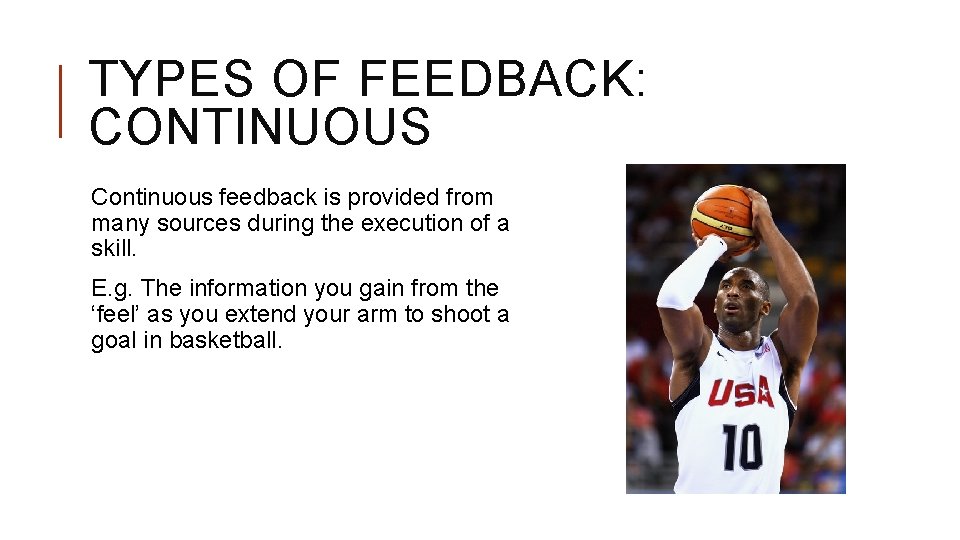
TYPES OF FEEDBACK: CONTINUOUS Continuous feedback is provided from many sources during the execution of a skill. E. g. The information you gain from the ‘feel’ as you extend your arm to shoot a goal in basketball.
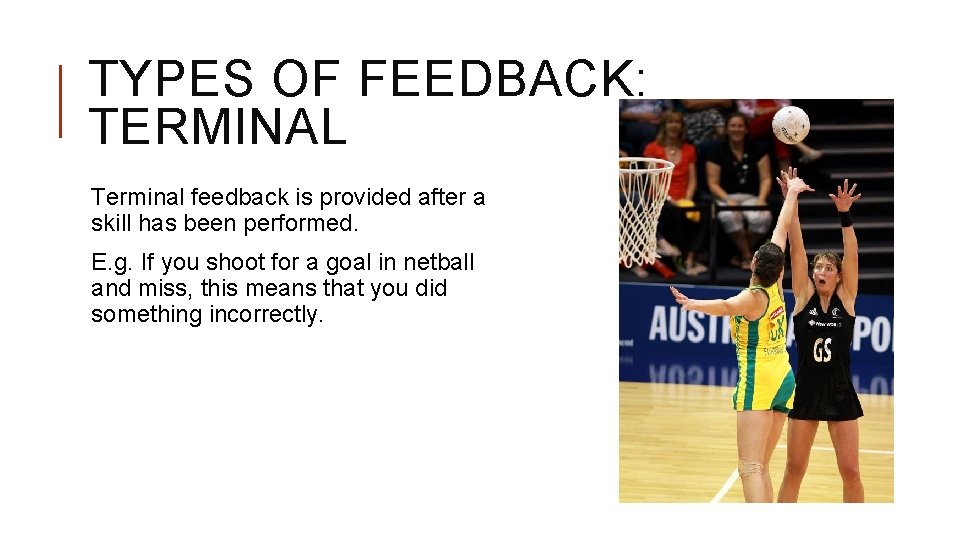
TYPES OF FEEDBACK: TERMINAL Terminal feedback is provided after a skill has been performed. E. g. If you shoot for a goal in netball and miss, this means that you did something incorrectly.
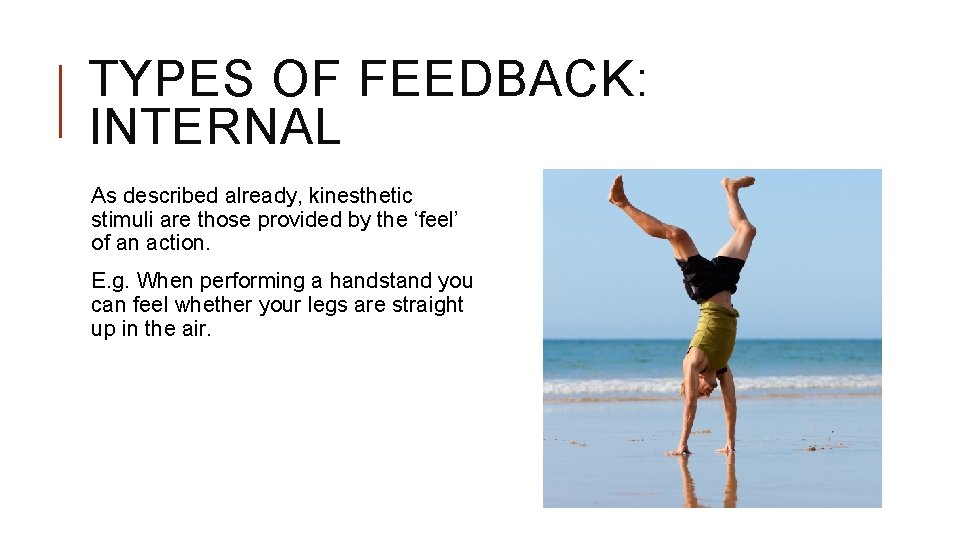
TYPES OF FEEDBACK: INTERNAL As described already, kinesthetic stimuli are those provided by the ‘feel’ of an action. E. g. When performing a handstand you can feel whether your legs are straight up in the air.
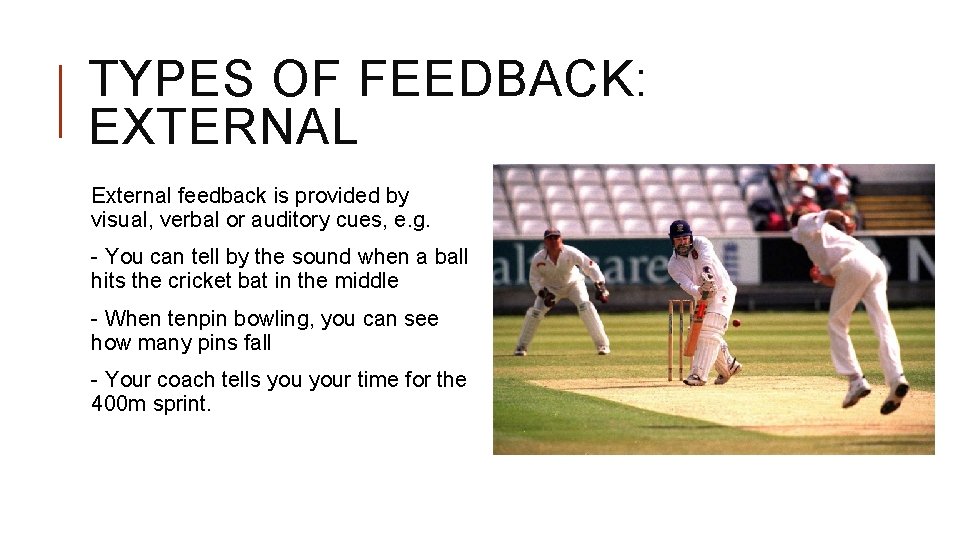
TYPES OF FEEDBACK: EXTERNAL External feedback is provided by visual, verbal or auditory cues, e. g. - You can tell by the sound when a ball hits the cricket bat in the middle - When tenpin bowling, you can see how many pins fall - Your coach tells your time for the 400 m sprint.
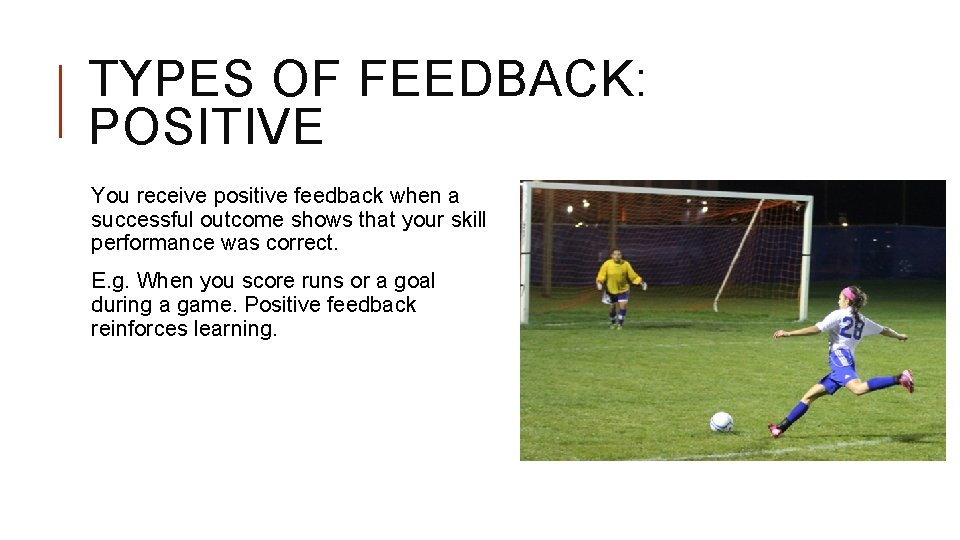
TYPES OF FEEDBACK: POSITIVE You receive positive feedback when a successful outcome shows that your skill performance was correct. E. g. When you score runs or a goal during a game. Positive feedback reinforces learning.
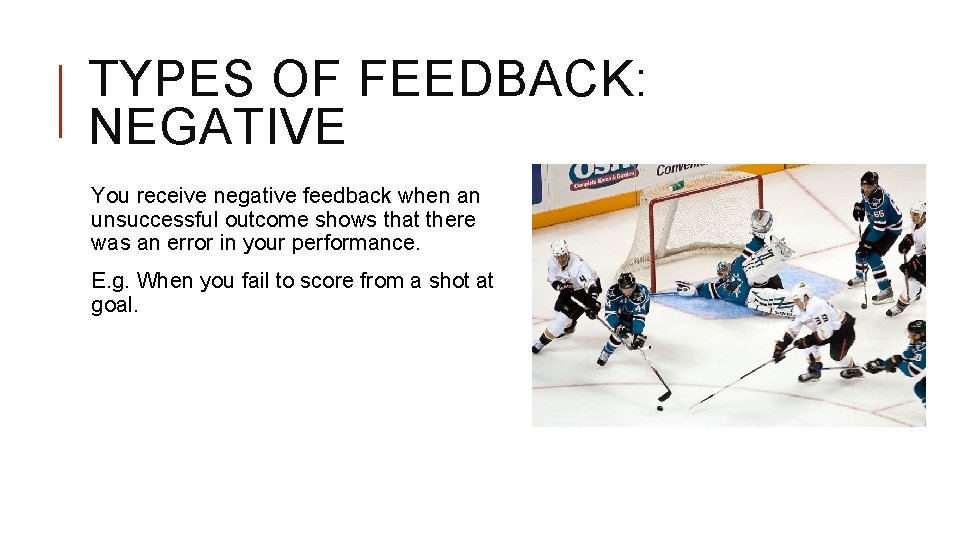
TYPES OF FEEDBACK: NEGATIVE You receive negative feedback when an unsuccessful outcome shows that there was an error in your performance. E. g. When you fail to score from a shot at goal.
KNOWLEDGE OF RESULTS VS. KNOWLEDGE OF PERFORMANCE Knowledge of results: or feedback about the outcome of a performance, is feedback that comes from some external source. For example a teacher, a coach, a film, a video, another performer or a spectator. Examples of such feedback are: - Your coach telling you that you need to tuck earlier in a somersault Knowledge of performance: is feedback that you receive about the performance or execution of a movement, usually during the performance. It can be external or internal. Knowledge of performance comes from three sources: - What the athlete can see or hear - What the athlete feels - What the coach tells the athlete
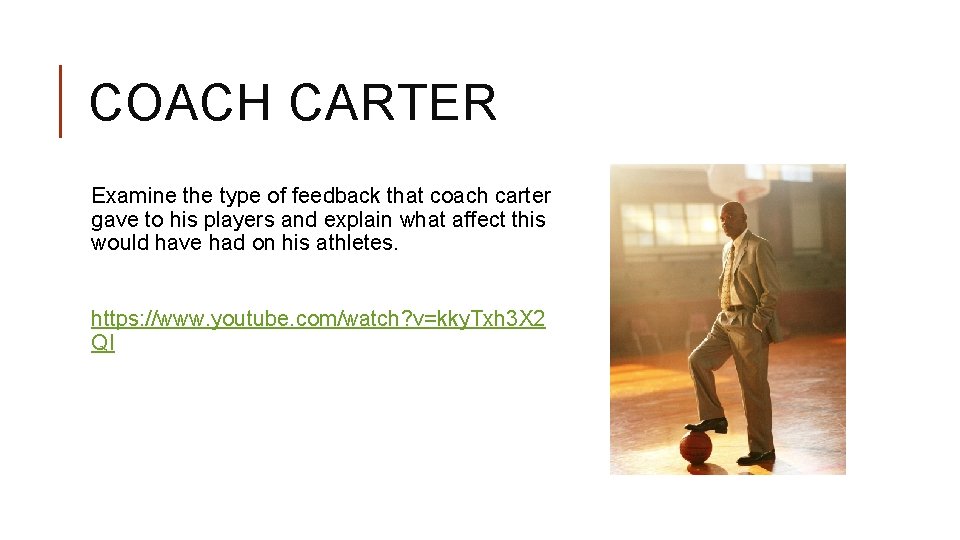
COACH CARTER Examine the type of feedback that coach carter gave to his players and explain what affect this would have had on his athletes. https: //www. youtube. com/watch? v=kky. Txh 3 X 2 QI
INTRODUCTION TO ENERGY SYSTEMS Watch the following clip and answer the questions below: https: //www. youtube. com/watch? v=j. Djr. Or. Jc 5 qc - Where does energy come from and what are the 3 sources? Provide examples of each - Aerobic vs. anaerobic energy systems compare the two by completing the table in your booklet - Can we use both at once? Explain why.

HOMEWORK Read pages 239 – 246 of your textbook.
- Slides: 13