
Mechanisms of Evolution Natural Selection IN Answer the
- Slides: 19
Mechanisms of Evolution Natural Selection
IN • Answer the following on your notes: – What is natural selection and what impact does it have on a population? – Discuss with partner – Share with class
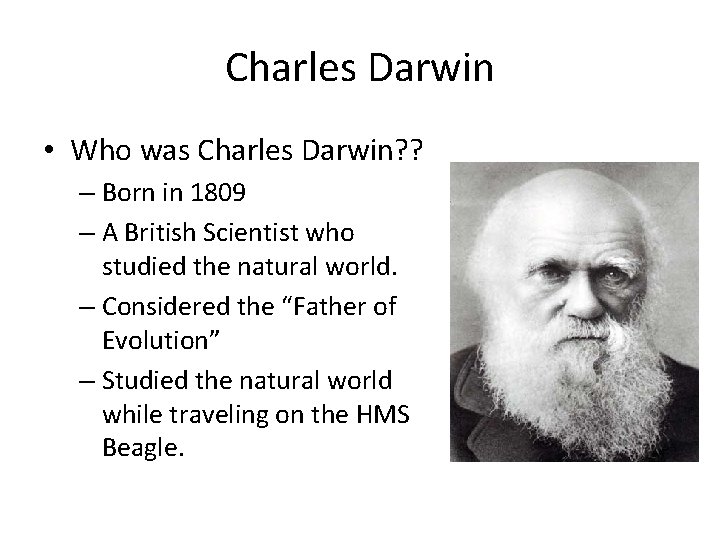
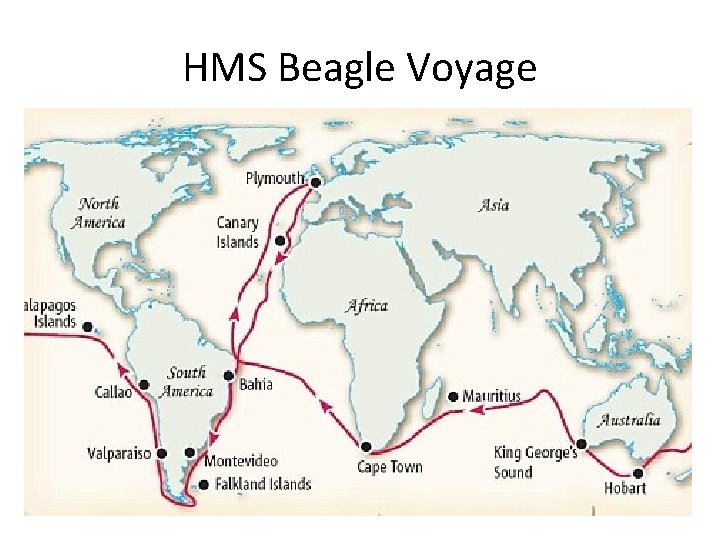
Charles Darwin • Who was Charles Darwin? ? – Born in 1809 – A British Scientist who studied the natural world. – Considered the “Father of Evolution” – Studied the natural world while traveling on the HMS Beagle.
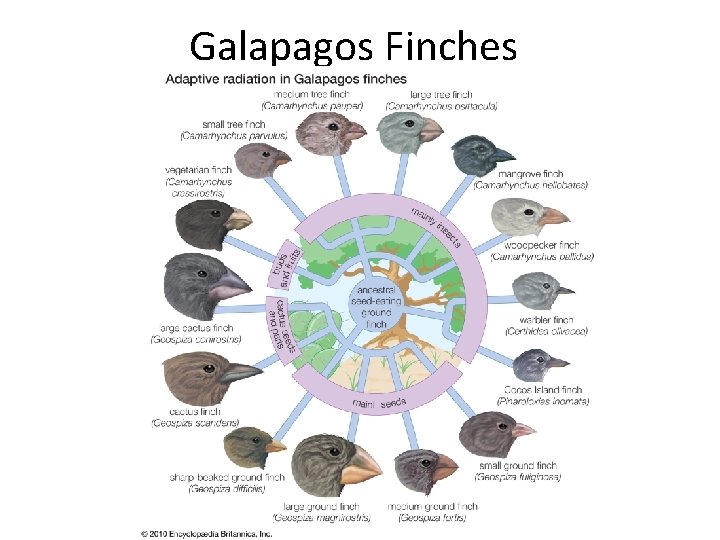
Darwin Continued • Did extensive observations on the Galapagos Finches. • Proposed the idea that organisms that were better suited for their environment were more likely to survive and reproduce. • Also known as “Survival of the Fittest”
HMS Beagle Voyage
Galapagos Finches
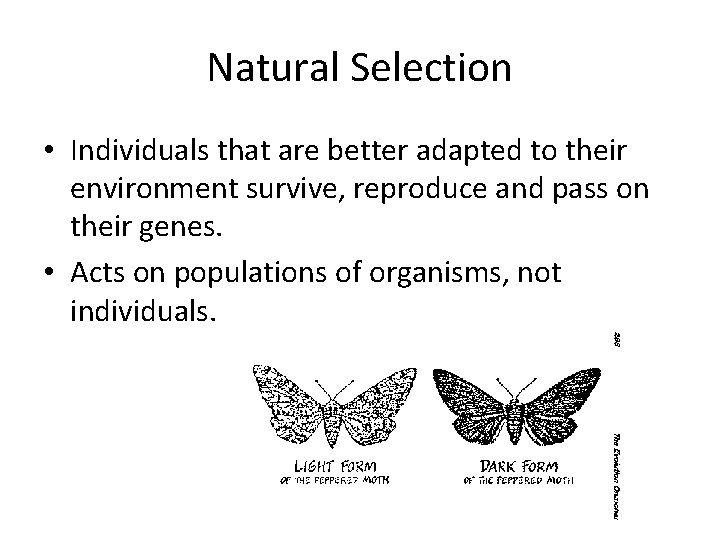
Natural Selection • Individuals that are better adapted to their environment survive, reproduce and pass on their genes. • Acts on populations of organisms, not individuals.
Peppered Moths • Discuss with your partner the following: – What was the predominant color of Peppered Moths before the Industrial Revolution? – What happened to the Peppered Moth population after the Industrial Revolution. – Share with the class.
Natural Selection • Acts on Populations, not individuals. • Occurs because – Individuals within a population vary. – Some traits are better than others – Those traits are inheritable
Antibiotic Resistant Bacteria Antibiotics are used to treat bacterial infections. Bacteria with mutations can survive treatment. They survive and reproduce. Bacteria population changes over time to contain more resistant bacteria than non resistant. • Discuss with your neighbor the impact this could have on humans. • •
Genetic Variation • The measure of genetic differences within a population. • Mutations in DNA cause genetic differences. • Populations that have more genetic variation can adapt to their environment better than populations with little genetic variation
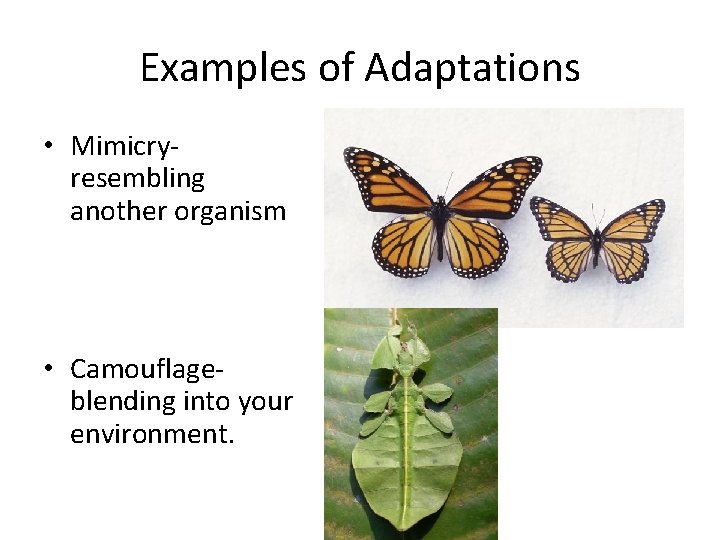
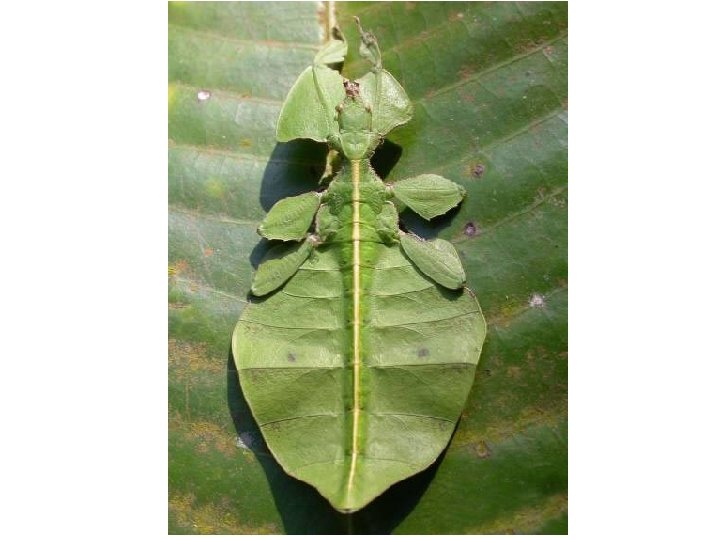
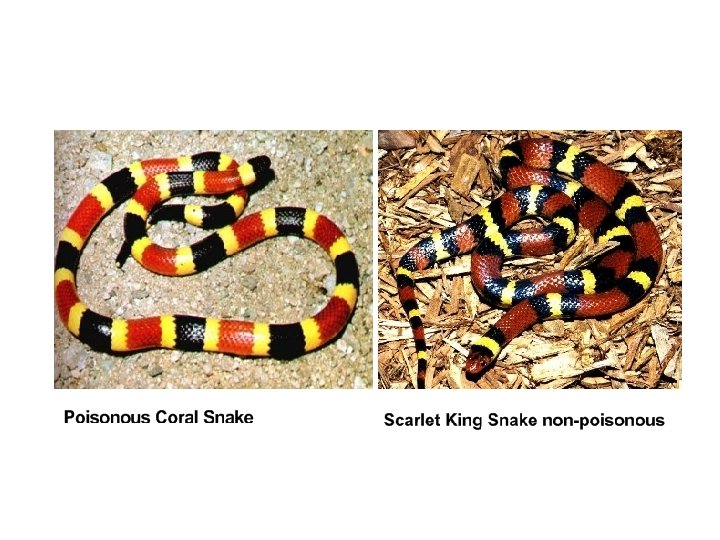
Examples of Adaptations • Mimicryresembling another organism • Camouflageblending into your environment.
Elements of Natural Selection
Inherited Variation • Genetic Variation within a population that can be passed down to offspring. • Typically caused by mutations in DNA • Ex: Mimicry, Camouflage
Finite Supply of Resources • The amount of resources available determines the ability of organisms to survive and reproduce.
Number of Offspring • Organisms produce many offspring to ensure the survival. • More offspring equals higher chance of some surviving which can pass on genes. • Ex: Spiders produce large number of offspring. Many will not survive, but the ones that do will pass on their genes.
Reproductive Success • The ability to reproduce and pass genes on to future generations. • Measured by the number of offspring an organism produces.