
Mechanisms of Evolution Evolutionary Change Populations evolve not

- Slides: 13
Mechanisms of Evolution
Evolutionary Change �Populations evolve, not individuals. �Any change in gene (and allele) frequencies within a population or species can lead to evolution. �Allele Frequency – number of copies of an allele compared to the total number of alleles in a population.
Factors that Cause Evolutionary Change 1. 2. 3. 4. 5. Mutation Gene flow (migration) Non-random mating Genetic Drift Natural Selection
1. Mutation �Provide the variation that can be acted upon by natural selection. �Mutations provide the raw material on which natural selection can act. § Only source of additional genetic material and new alleles. § Examples of mutations: Antibiotic resistance in bacteria, poison resistance in the Norway rat (p. 351).
2. Gene Flow (migration) �Gene flow is the movement of alleles between populations. �Gene flow occurs when individuals join new populations and reproduce. �Gene flow keeps neighboring populations similar. �Low gene flow increases the chance that two populations will evolve into different species.
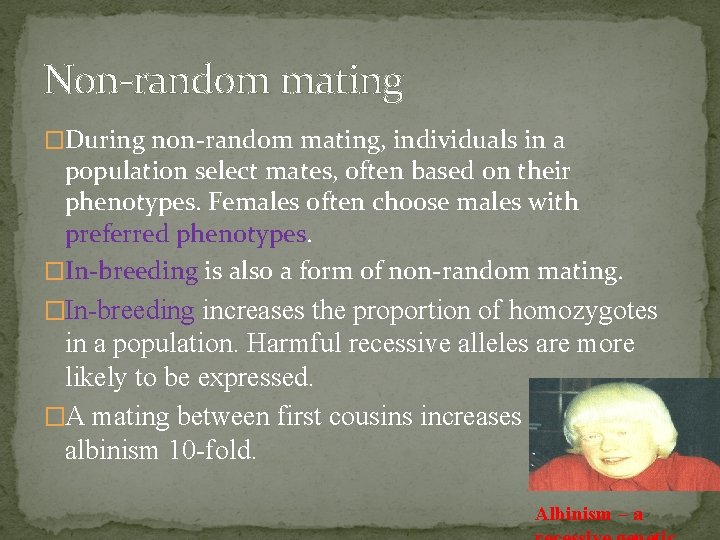
Non-random mating �During non-random mating, individuals in a population select mates, often based on their phenotypes. Females often choose males with preferred phenotypes. �In-breeding is also a form of non-random mating. �In-breeding increases the proportion of homozygotes in a population. Harmful recessive alleles are more likely to be expressed. �A mating between first cousins increases the risk of albinism 10 -fold. Albinism – a
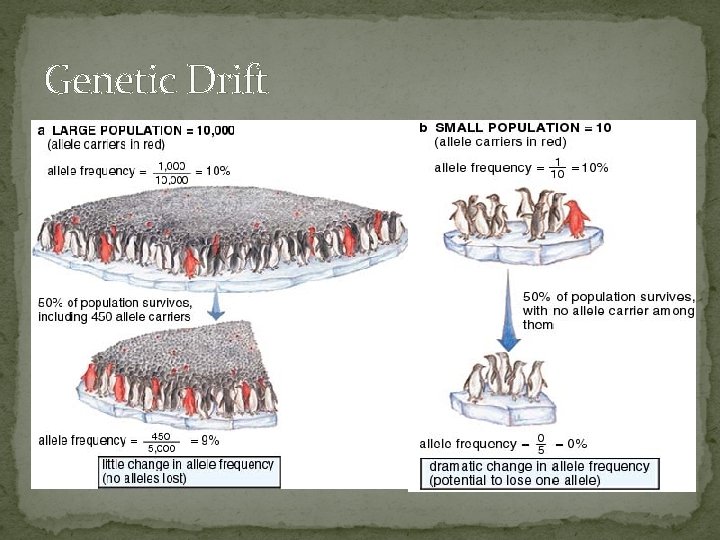
Genetic Drift �Genetic drift is the random fluctuation in allele frequency between generations due to chance. �In each generation, some individuals may, just by chance, leave behind a few more descendants (and genes)than other individuals. The genes of the next generation will be the genes of the “lucky” individuals, not necessarily the healthier or “better” individuals. �Its affects are more pronounced in smaller populations.
Genetic Drift
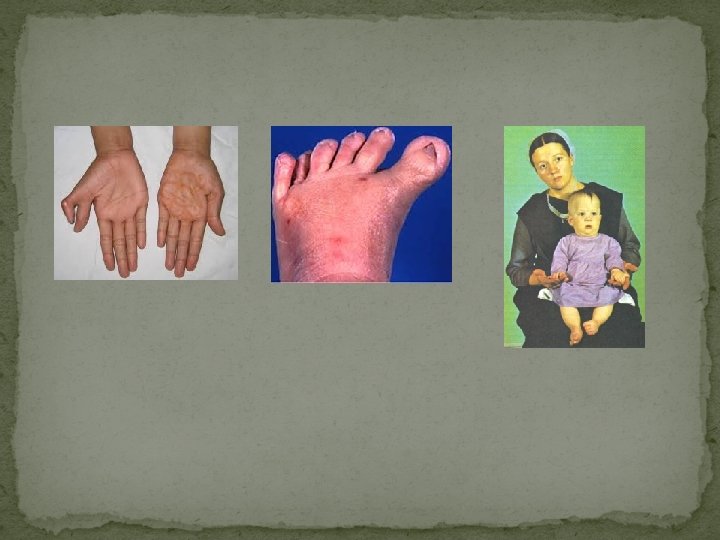
Genetic Drift: The Founder Effect � A new population is formed by only a few individuals or founders. � The allele frequencies in the expanded population are often very different from those of the founder population. � The Amish population of Philadelphia and Pennsylvania was founded by a few families in the 1700’s. The new population has a high frequency of Ellis-van Crevald syndrome: symptoms include short-limb dwarfism, and polydactyly (additional fingers or toes)
Genetic Drift: The Bottleneck Effect �A genetic bottle neck is one form of genetic drift in which a population “crashes” then rebounds. �The survivors only have a fraction of the alleles from the original population, therefore genetic diversity is lost. �Animals known to be affected by genetic bottlenecks include the northern elephant seal, cheetah, and some human populations.
Genetic Drift: The Bottleneck Effect
Natural Selection �Natural selection occurs when an organism is subject to environment pressure. Populations have a range of phenotypes , the fittest survive and pass on their genes, producing a population that is better adapted to its environment. Hmwk Questions: p. 352 # 1 -4 and p. 356 # 7 -12