
Mechanisms of Evolution 1 Microevolution change within a
- Slides: 18
Mechanisms of Evolution • 1) Micro-evolution – change within a species • 2) Macro-evolution – change between species
Micro-evolution • Hardy-Weinberg (2 mathmaticians) – “Frequency of alleles in a population stays the same generation after generation unless acted upon by some outside force. ” • So, what kind of things can change the frequency of alleles in a population?
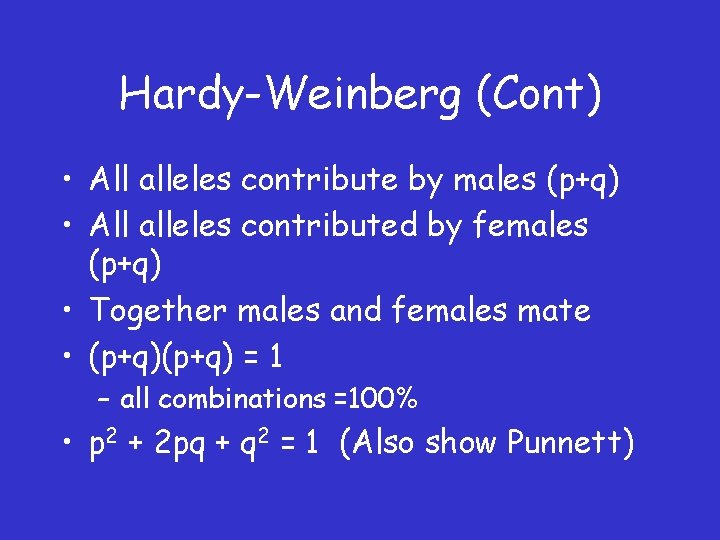
Hardy-Weinberg (Cont) • All alleles contribute by males (p+q) • All alleles contributed by females (p+q) • Together males and females mate • (p+q) = 1 – all combinations =100% • p 2 + 2 pq + q 2 = 1 (Also show Punnett)
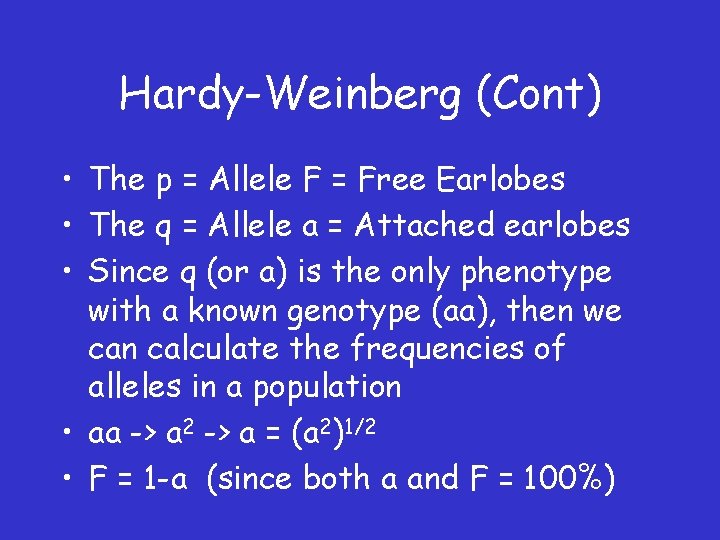
Hardy-Weinberg (Cont) • The p = Allele F = Free Earlobes • The q = Allele a = Attached earlobes • Since q (or a) is the only phenotype with a known genotype (aa), then we can calculate the frequencies of alleles in a population • aa -> a 2 -> a = (a 2)1/2 • F = 1 -a (since both a and F = 100%)
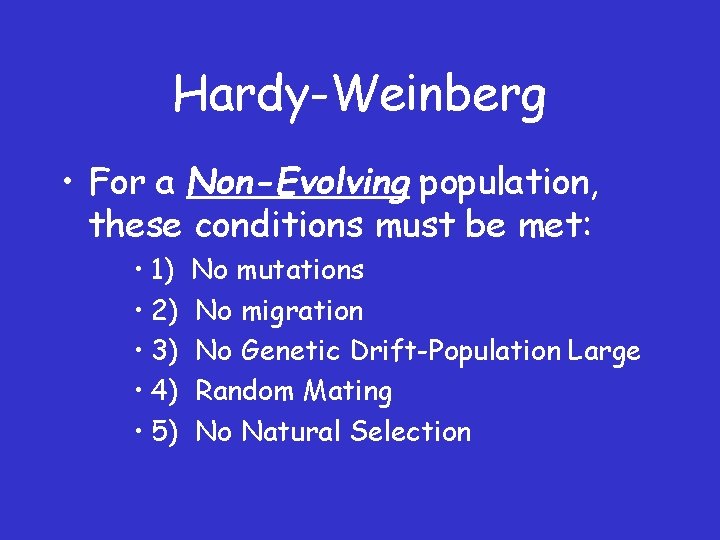
Hardy-Weinberg • For a Non-Evolving population, these conditions must be met: • 1) • 2) • 3) • 4) • 5) No mutations No migration No Genetic Drift-Population Large Random Mating No Natural Selection
• If a population changes (gene frequency) or evolves, it must be due to some factor that violates one of the conditions stated previously.
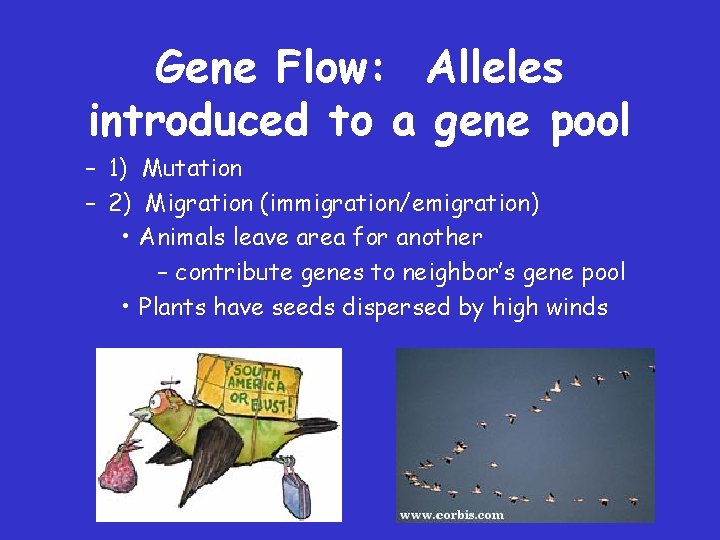
Gene Flow: Alleles introduced to a gene pool – 1) Mutation – 2) Migration (immigration/emigration) • Animals leave area for another – contribute genes to neighbor’s gene pool • Plants have seeds dispersed by high winds
• Immigration/Emigration – Very Common – 2 nd only to Natural Selection as cause of evolution
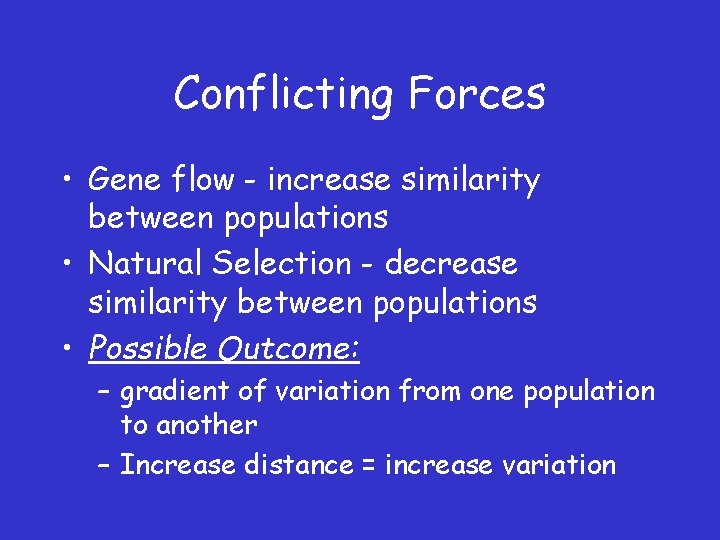
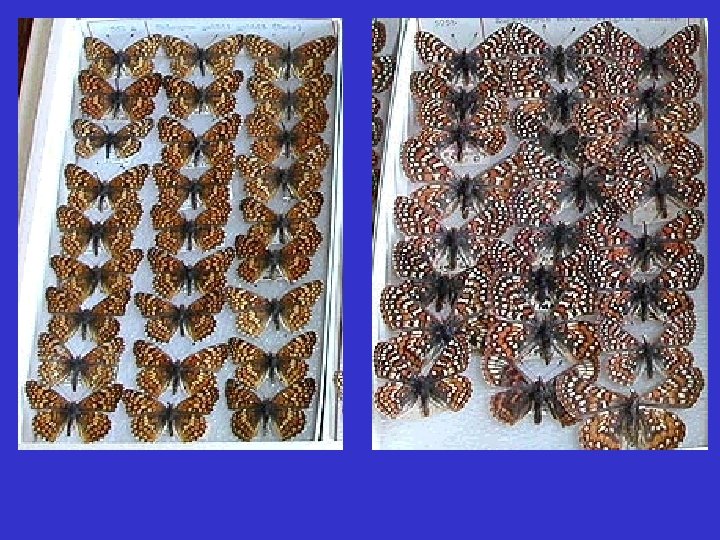
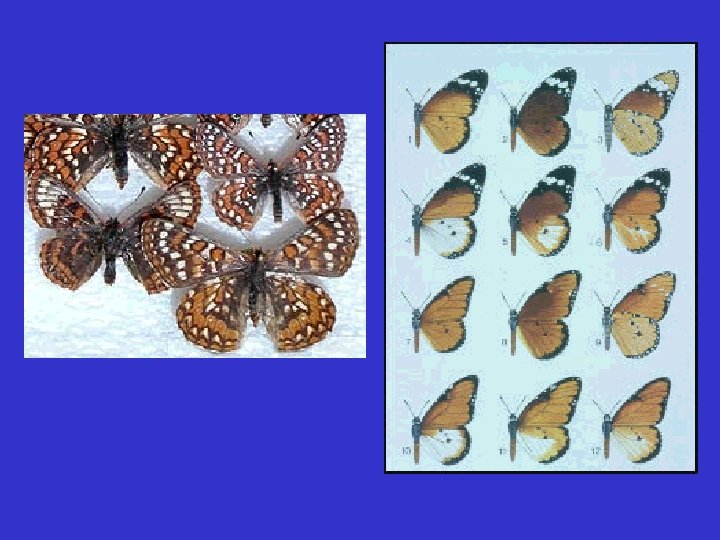
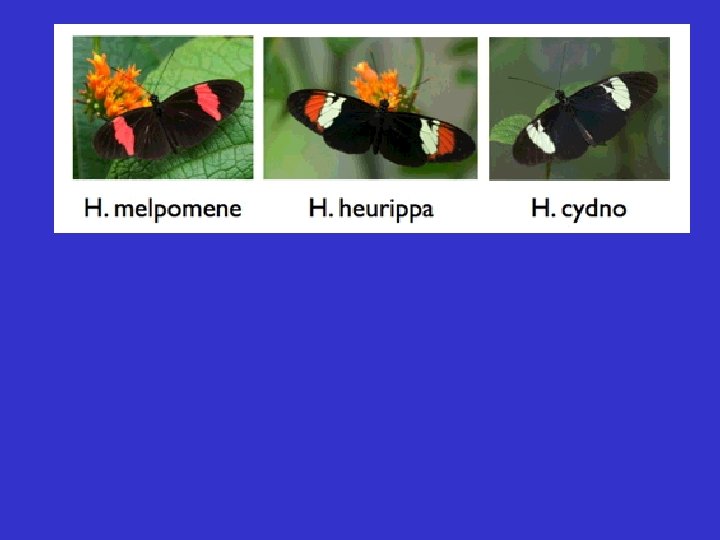
Conflicting Forces • Gene flow - increase similarity between populations • Natural Selection - decrease similarity between populations • Possible Outcome: – gradient of variation from one population to another – Increase distance = increase variation
Genetic Drift: Evolution by chance • 1) Bottleneck Effect: Most of the population is destroyed by a natural event (volcano, earthquake, etc. ) and a few individuals survive to reproduce • 2) Founder Effect: Few people leave an area to colonize new area
– Good chance not carry representative sample of all genes present in original population – Environment is different • different selection pressures • Therefore, evolve in new direction
– In practice, difficult to tell how much of genetic differences between old and new populations is due to: • 1) Founders effect • 2) Different selection pressures in two environments
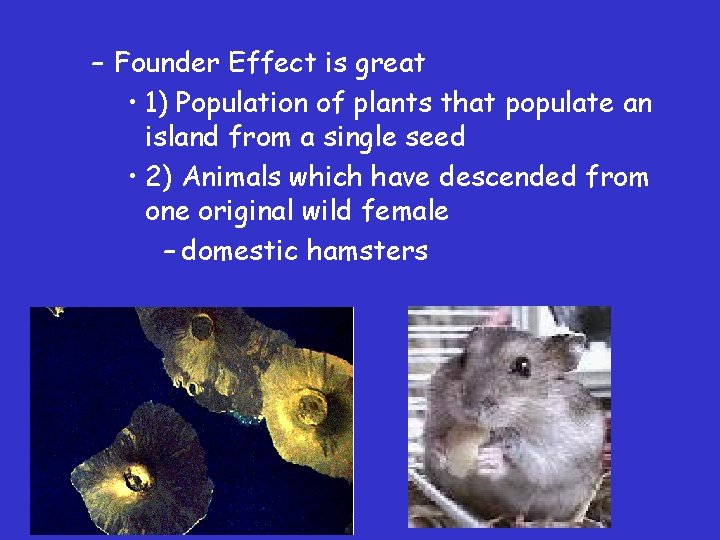
– Founder Effect is great • 1) Population of plants that populate an island from a single seed • 2) Animals which have descended from one original wild female – domestic hamsters
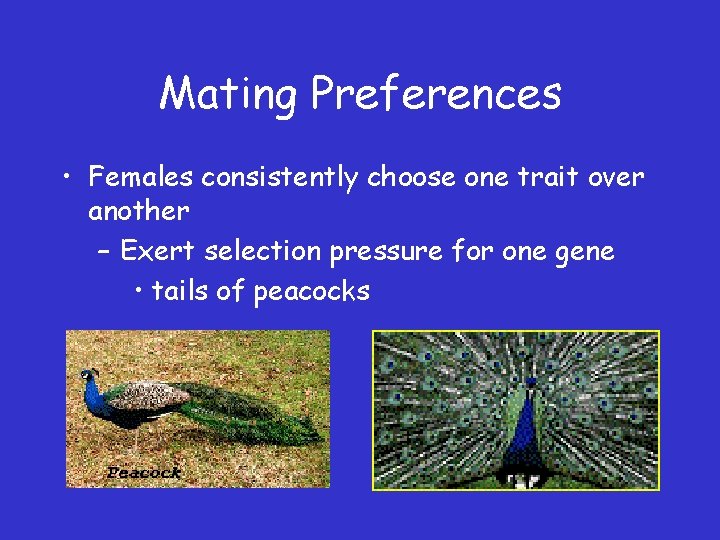
Mating Preferences • Females consistently choose one trait over another – Exert selection pressure for one gene • tails of peacocks
– Female preferences is a form of Natural Selection • One genotype has reproductive advantage over another