
Mechanisms of Disease Disease An abnormality in body
Mechanisms of Disease
Disease • An abnormality in body function that threatens well-being.

Pathology • The study of disease.
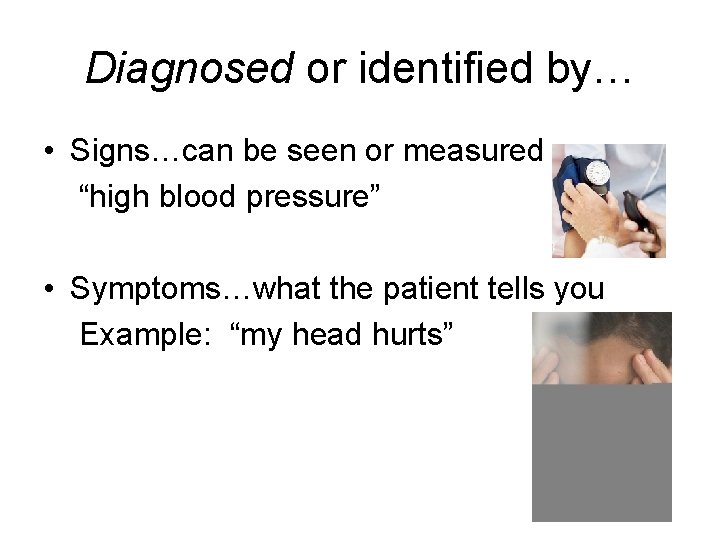
Diagnosed or identified by… • Signs…can be seen or measured “high blood pressure” • Symptoms…what the patient tells you Example: “my head hurts”

• Acute…usually sudden, last for a short time • Chronic…develop slowly, last for a long time
• Endemic…disease native to a local region • Epidemic…spreads to many individuals at the same time • Pandemics…epidemics that affect large geographic regions, perhaps throughout the world
Pathophysiology • The organized study of the underlying physiological processes associated with disease (what is going on in the body during the disease process)
Categories of Disease Mechanisms • • Genetic mechanism Pathogenic organisms (disease-causing) Tumors and cancer Physical and chemical agents Malnutrition Autoimmunity Inflammation degeneration
Risk Factors • Genetic factors • Environmental factors • Age • Preexisting conditions • Lifestyle • stress
Pathogenic Organisms • Viruses • Bacteria • Fungi • Protozoa • Pathogenic animals…mites, ticks, flukes
Key to prevention… • Stop them from entering the body.
Prevent the spread of pathogens by… • • Sterilization Disinfection Antisepsis Isolation
Tumors and Cancer • Neoplasms…abnormal cell growths • Either malignant…tend to spread, or benign…remain localized
Warning signs of cancer… • • Sores that don’t heal Unusual bleeding Change in wart or mole Lump or thickening of tissue Persistent hoarseness or cough Chronic indigestion Change in bowel or bladder funcion
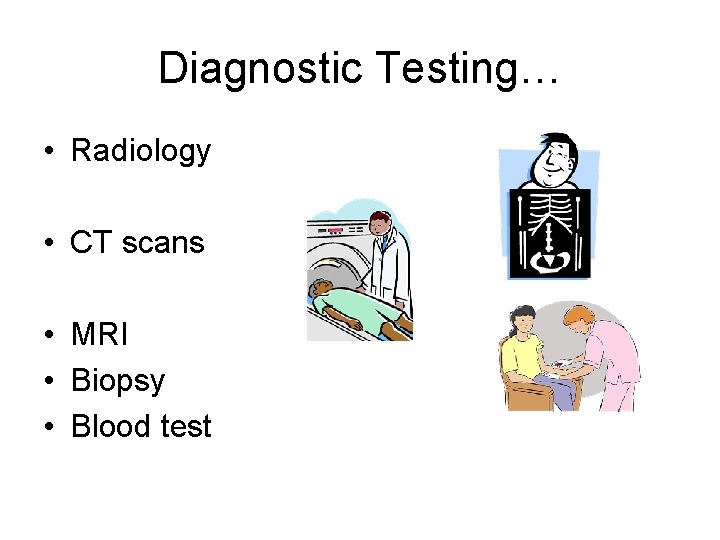
Diagnostic Testing… • Radiology • CT scans • MRI • Biopsy • Blood test
Treatments of Cancer… • Chemotherapy • Radiation therapy • Immunotherapy • Laser
Inflammation • Inflammatory response…a combination of processes that attempt to minimize injury to tissues, thus maintaining homeostasis.
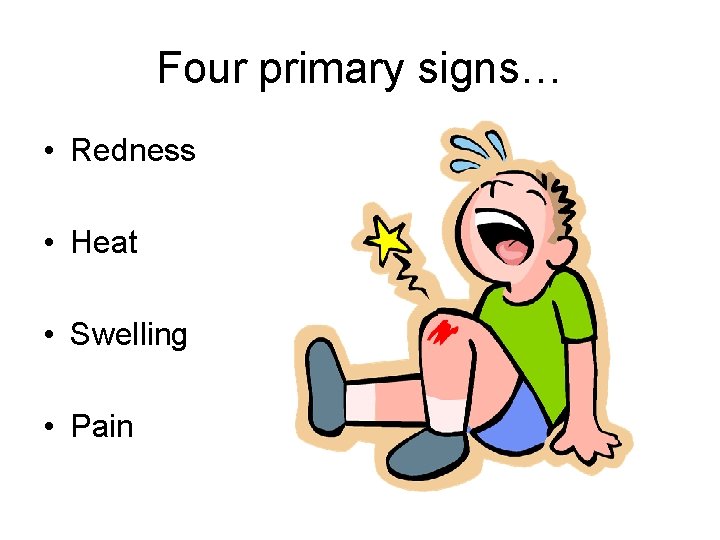
Four primary signs… • Redness • Heat • Swelling • Pain
What causes inflammation? • As tissue cells are damaged, they release inflammation mediators (histamine, prostaglandins). • Blood vessels dilate, increasing blood volume in the tissue…redness. • Also the WBCs in the blood travel quickly and easily to the site • Some mediators change permeability of the blood vessels…
• Allows water to leak out of the vessels…swelling (edema) • Blood clots • Exudate…the fluid that accumulates in inflamed tissue • When the exudate becomes thick with white blood cells, it is called pus.
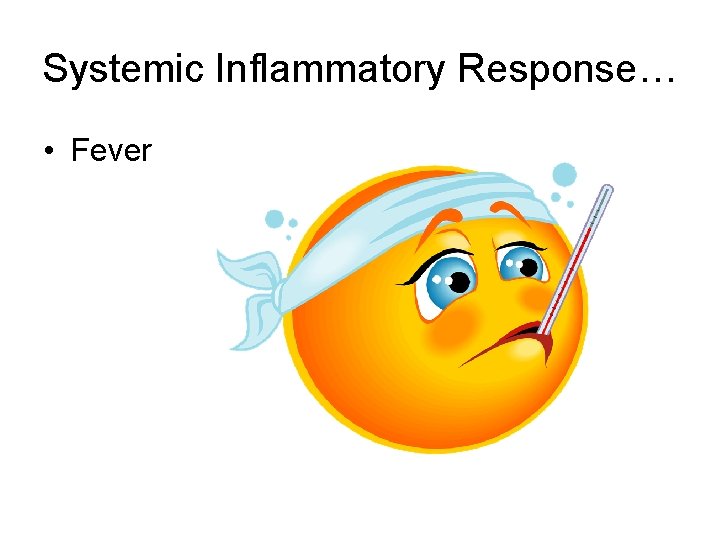
Systemic Inflammatory Response… • Fever


- Slides: 23