
Mechanisms of Capillary Exchange Mechanisms of Capillary Exchange






- Slides: 57
Mechanisms of Capillary Exchange
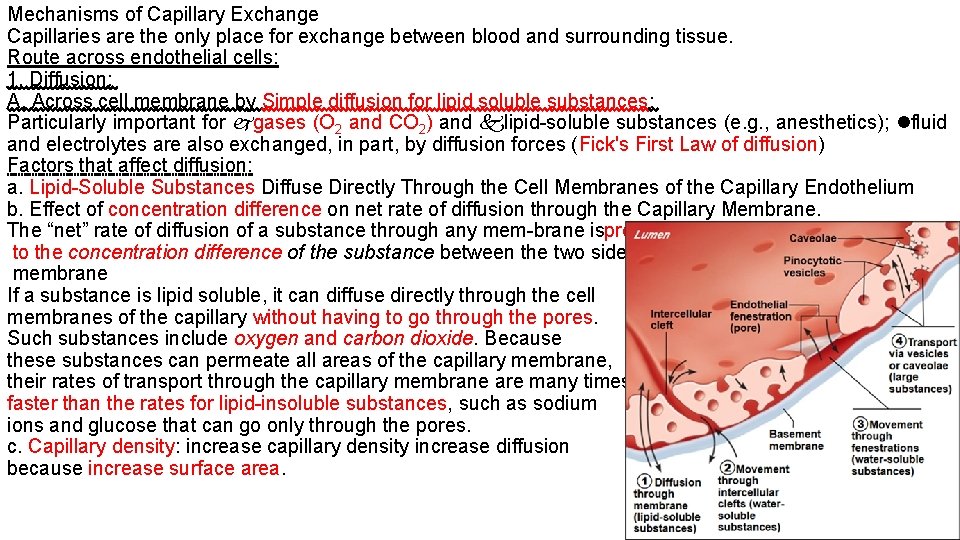
Mechanisms of Capillary Exchange Capillaries are the only place for exchange between blood and surrounding tissue. Route across endothelial cells: 1. Diffusion: A. Across cell membrane by Simple diffusion for lipid soluble substances: Particularly important for gases (O 2 and CO 2) and lipid soluble substances (e. g. , anesthetics); fluid and electrolytes are also exchanged, in part, by diffusion forces (Fick's First Law of diffusion) Factors that affect diffusion: a. Lipid Soluble Substances Diffuse Directly Through the Cell Membranes of the Capillary Endothelium b. Effect of concentration difference on net rate of diffusion through the Capillary Membrane. The “net” rate of diffusion of a substance through any mem brane isproportional to the concentration difference of the substance between the two sides of the membrane If a substance is lipid soluble, it can diffuse directly through the cell membranes of the capillary without having to go through the pores. Such substances include oxygen and carbon dioxide. Because these substances can permeate all areas of the capillary membrane, their rates of transport through the capillary membrane are many times faster than the rates for lipid insoluble substances, such as sodium ions and glucose that can go only through the pores. c. Capillary density: increase capillary density increase diffusion because increase surface area.
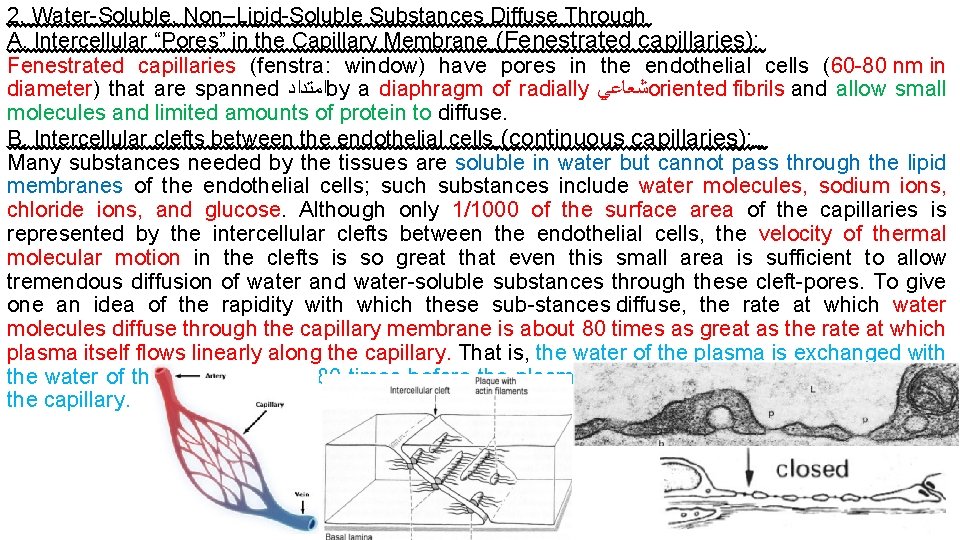
2. Water Soluble, Non–Lipid Soluble Substances Diffuse Through A. Intercellular “Pores” in the Capillary Membrane (Fenestrated capillaries): Fenestrated capillaries (fenstra: window) have pores in the endothelial cells (60 80 nm in diameter) that are spanned ﺍﻣﺘﺪﺍﺩ by a diaphragm of radially ﺷﻌﺎﻋﻲ oriented fibrils and allow small molecules and limited amounts of protein to diffuse. B. Intercellular clefts between the endothelial cells (continuous capillaries): Many substances needed by the tissues are soluble in water but cannot pass through the lipid membranes of the endothelial cells; such substances include water molecules, sodium ions, chloride ions, and glucose. Although only 1/1000 of the surface area of the capillaries is represented by the intercellular clefts between the endothelial cells, the velocity of thermal molecular motion in the clefts is so great that even this small area is sufficient to allow tremendous diffusion of water and water soluble substances through these cleft pores. To give one an idea of the rapidity with which these sub stances diffuse, the rate at which water molecules diffuse through the capillary membrane is about 80 times as great as the rate at which plasma itself flows linearly along the capillary. That is, the water of the plasma is exchanged with the water of the interstitial fluid 80 times before the plasma can flow the entire distance through the capillary.
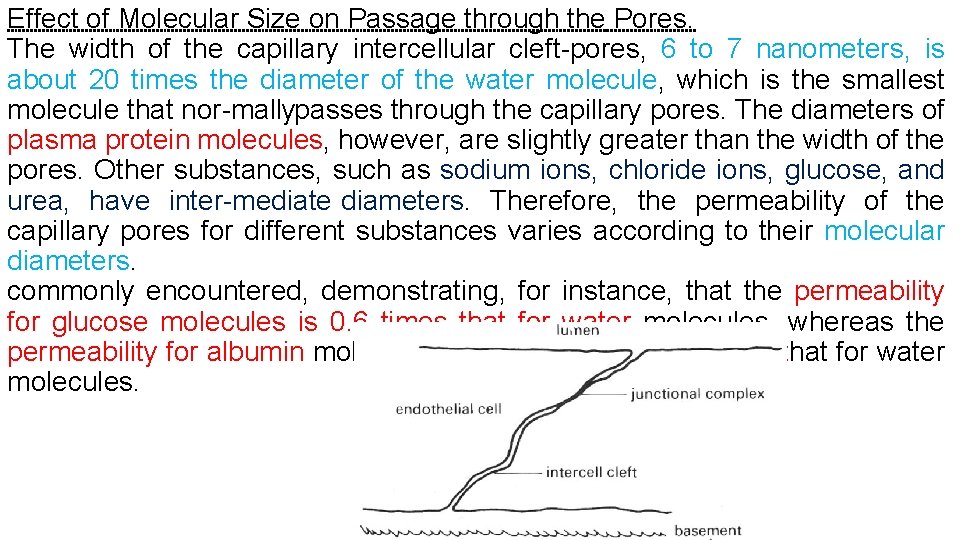
Effect of Molecular Size on Passage through the Pores. The width of the capillary intercellular cleft pores, 6 to 7 nanometers, is about 20 times the diameter of the water molecule, which is the smallest molecule that nor mallypasses through the capillary pores. The diameters of plasma protein molecules, however, are slightly greater than the width of the pores. Other substances, such as sodium ions, chloride ions, glucose, and urea, have inter mediate diameters. Therefore, the permeability of the capillary pores for different substances varies according to their molecular diameters. commonly encountered, demonstrating, for instance, that the permeability for glucose molecules is 0. 6 times that for water molecules, whereas the permeability for albumin molecules is very slight—only 1/1000 that for water molecules.
A word of caution must be issued at this point. The capillaries in various tissues have extreme differences in their permeability. For instance, the membranes of the liver capillary sinusoids are so permeable that even plasma proteins pass through these walls, almost as easily as water and other substances; greater degrees of capillary permeability are required for the liver to transfer tremendous amounts of nutrients between the blood and liver parenchymal cells. Also, the permeability of the renal glomerular membrane for water and electro lytes (the kidneys to allow filtration of large quantities of fluid for the forma tion of urine) is about 500 times the permeability of the muscle capillaries, but this is not true for the plasma proteins; for these proteins, the capillary permeability are very slight, as in other tissues and organs.
Effect of Concentration Difference on Net Rate of Diffusion through the Capillary Membrane. The “net” rate of diffusion of a substance through any mem brane is proportional to the concentration difference of the substance between the two sides of the membrane. That is, the greater the difference between the concentrations of any given substance on the two sides of the capillary membrane, the greater the net movement of the sub stancein one direction through the membrane. For instance, the concentration of oxygen in capillary blood is normally greater than in the interstitial fluid. Therefore, large quantities of oxygen normally move from the blood toward the tissues. Conversely, the concentration of carbon dioxide is greater in the tissues than in the blood, which causes excess carbon dioxide to move into the blood and to be carried away from the tissues. The rates of diffusion through the capillary membranes of most nutritionally important substances are so great that only slight concentration differences suffice to cause more than adequate transport between the plasma and interstitial fluid. For instance, the concentration of oxygen in the interstitial fluid immediately outside the capillary is no more than a few percent less than its concentration in the plasma of the blood, yet this slight difference causes enough oxygen to move from the blood into the intersti tialspaces to
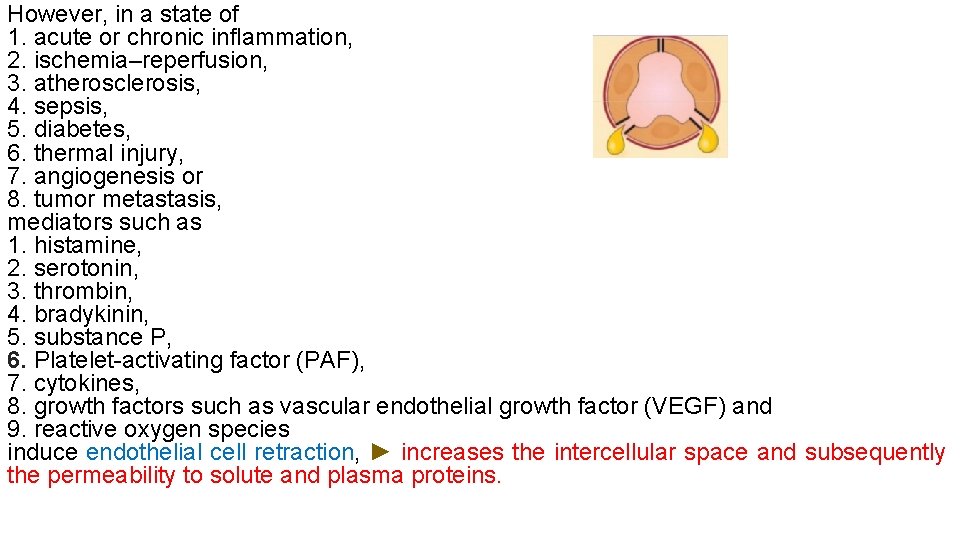
However, in a state of 1. acute or chronic inflammation, 2. ischemia–reperfusion, 3. atherosclerosis, 4. sepsis, 5. diabetes, 6. thermal injury, 7. angiogenesis or 8. tumor metastasis, mediators such as 1. histamine, 2. serotonin, 3. thrombin, 4. bradykinin, 5. substance P, 6. Platelet activating factor (PAF), 7. cytokines, 8. growth factors such as vascular endothelial growth factor (VEGF) and 9. reactive oxygen species induce endothelial cell retraction, ► increases the intercellular space and subsequently the permeability to solute and plasma proteins.
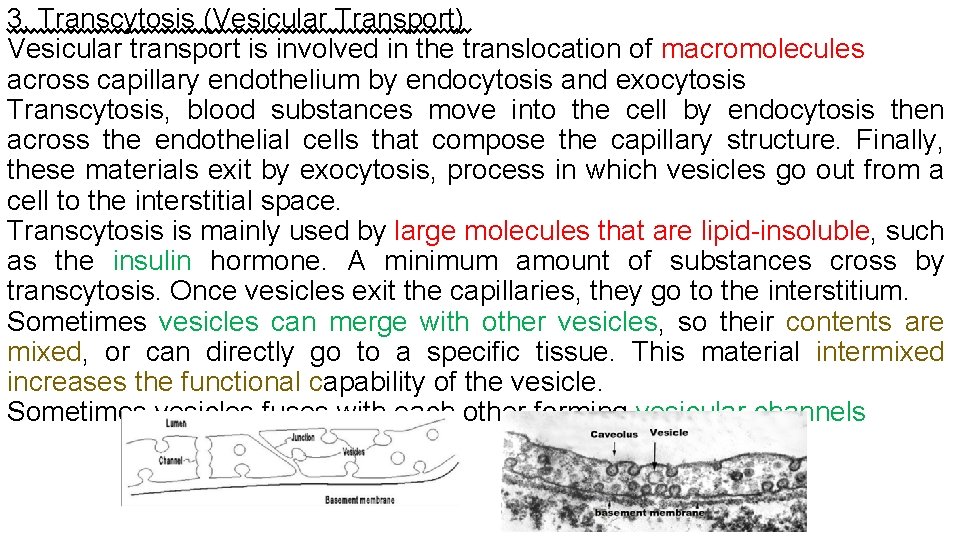
3. Transcytosis (Vesicular Transport) Vesicular transport is involved in the translocation of macromolecules across capillary endothelium by endocytosis and exocytosis Transcytosis, blood substances move into the cell by endocytosis then across the endothelial cells that compose the capillary structure. Finally, these materials exit by exocytosis, process in which vesicles go out from a cell to the interstitial space. Transcytosis is mainly used by large molecules that are lipid insoluble, such as the insulin hormone. A minimum amount of substances cross by transcytosis. Once vesicles exit the capillaries, they go to the interstitium. Sometimes vesicles can merge with other vesicles, so their contents are mixed, or can directly go to a specific tissue. This material intermixed increases the functional capability of the vesicle. Sometimes vesicles fuses with each other forming vesicular channels
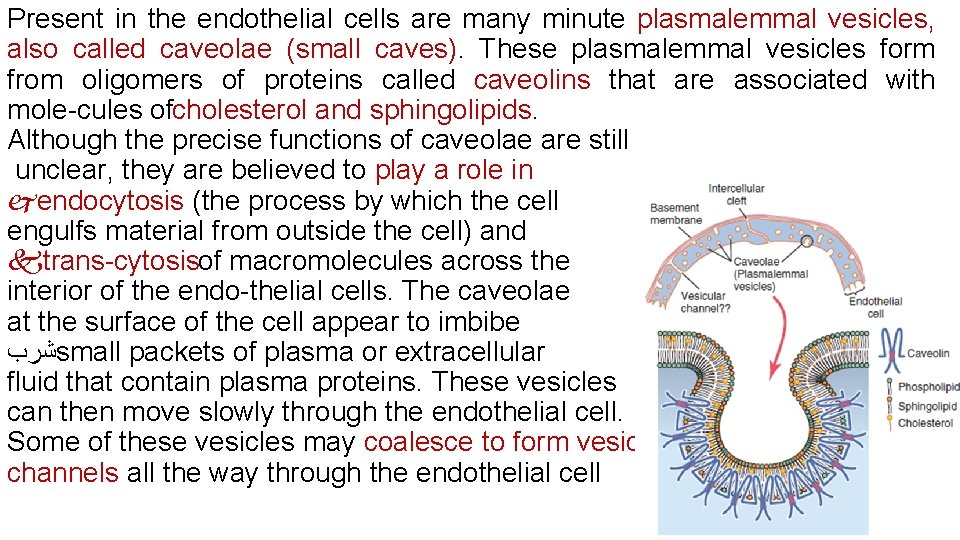
Present in the endothelial cells are many minute plasmalemmal vesicles, also called caveolae (small caves). These plasmalemmal vesicles form from oligomers of proteins called caveolins that are associated with mole cules ofcholesterol and sphingolipids. Although the precise functions of caveolae are still unclear, they are believed to play a role in endocytosis (the process by which the cell engulfs material from outside the cell) and trans cytosisof macromolecules across the interior of the endo thelial cells. The caveolae at the surface of the cell appear to imbibe ﺷﺮﺏ small packets of plasma or extracellular fluid that contain plasma proteins. These vesicles can then move slowly through the endothelial cell. Some of these vesicles may coalesce to form vesicular channels all the way through the endothelial cell
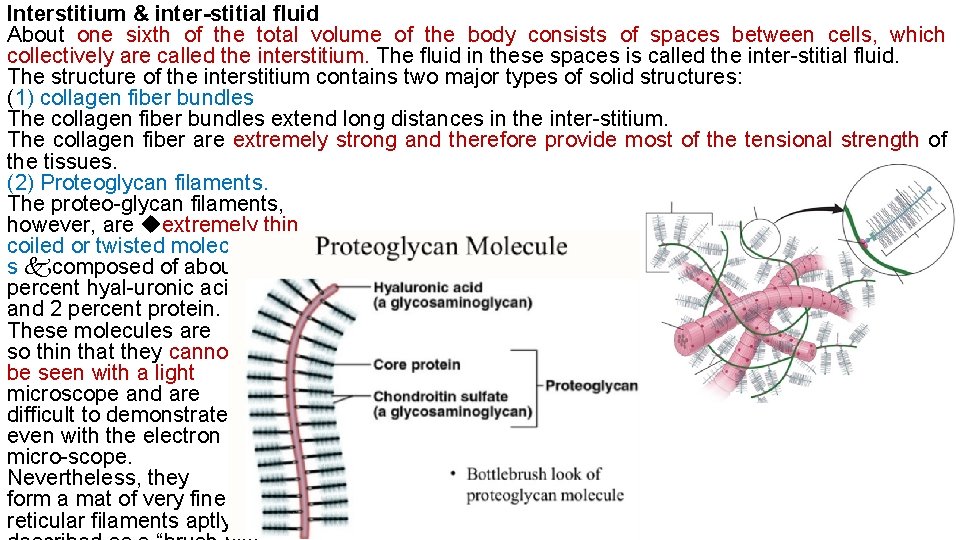
Interstitium & inter stitial fluid About one sixth of the total volume of the body consists of spaces between cells, which collectively are called the interstitium. The fluid in these spaces is called the inter stitial fluid. The structure of the interstitium contains two major types of solid structures: (1) collagen fiber bundles The collagen fiber bundles extend long distances in the inter stitium. The collagen fiber are extremely strong and therefore provide most of the tensional strength of the tissues. (2) Proteoglycan filaments. The proteo glycan filaments, however, are extremely thin coiled or twisted molecule s composed of about 98 percent hyal uronic acid and 2 percent protein. These molecules are so thin that they cannot be seen with a light microscope and are difficult to demonstrate even with the electron micro scope. Nevertheless, they form a mat of very fine reticular filaments aptly
“Gel” in the Interstitium. The fluid in the interstitium is derived by filtration and diffusion from the capillaries. It contains almost the same constituents as plasma except for much lower concentrations of proteins because pro teins do not easily pass outward through the pores of the capillaries. The interstitial fluid is entrapped mainly in the minute spaces among the proteoglycan filaments. This combination of proteoglycan filaments and fluid entrapped within them has the characteristics of a gel and therefore is called tissue gel. Because of the large number of proteoglycan filaments, it is difficult for fluid to flow easily through the tissue gel. Instead, fluid mainly diffuses through the gel; that is, it moves molecule by molecule from one place to another by kinetic, thermal motion rather than by large numbers of molecules moving together. Diffusion through the gel occurs about 95 to 99 percent as rapidly as it does through free fluid.
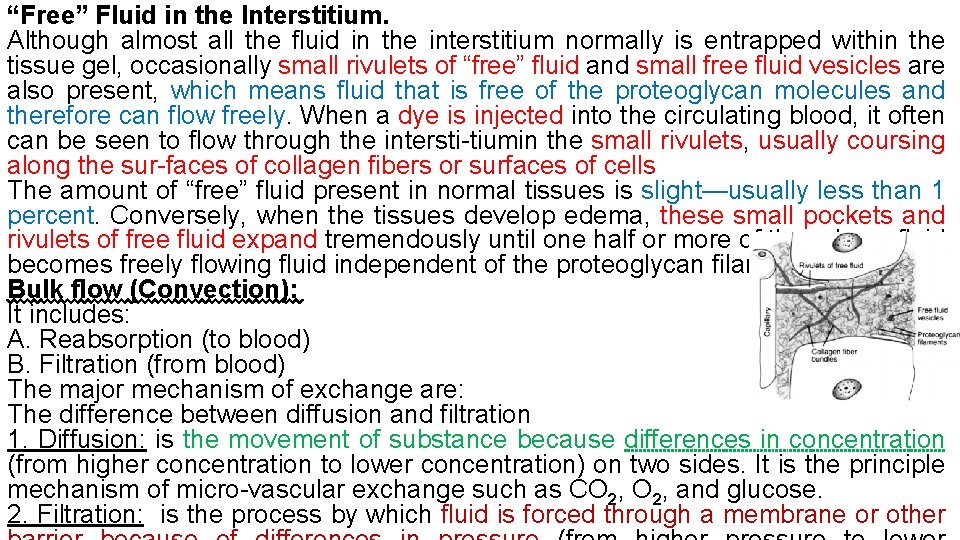
“Free” Fluid in the Interstitium. Although almost all the fluid in the interstitium normally is entrapped within the tissue gel, occasionally small rivulets of “free” fluid and small free fluid vesicles are also present, which means fluid that is free of the proteoglycan molecules and therefore can flow freely. When a dye is injected into the circulating blood, it often can be seen to flow through the intersti tiumin the small rivulets, usually coursing along the sur faces of collagen fibers or surfaces of cells. The amount of “free” fluid present in normal tissues is slight—usually less than 1 percent. Conversely, when the tissues develop edema, these small pockets and rivulets of free fluid expand tremendously until one half or more of the edema fluid becomes freely flowing fluid independent of the proteoglycan filaments. Bulk flow (Convection): It includes: A. Reabsorption (to blood) B. Filtration (from blood) The major mechanism of exchange are: The difference between diffusion and filtration 1. Diffusion: is the movement of substance because differences in concentration (from higher concentration to lower concentration) on two sides. It is the principle mechanism of micro vascular exchange such as CO 2, and glucose. 2. Filtration: is the process by which fluid is forced through a membrane or other
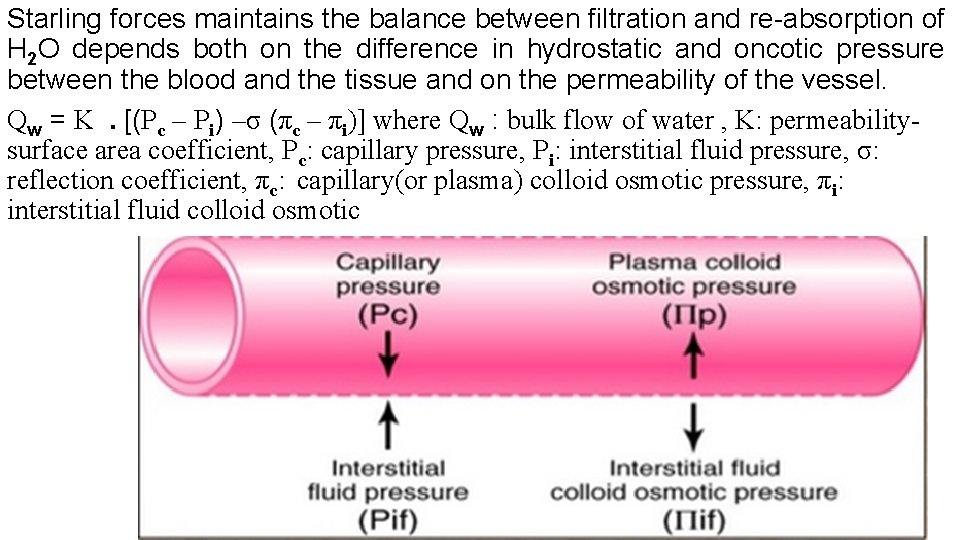
Starling forces maintains the balance between filtration and re absorption of H 2 O depends both on the difference in hydrostatic and oncotic pressure between the blood and the tissue and on the permeability of the vessel. Qw = K. [(Pc – Pi) –σ (πc – πi)] where Qw : bulk flow of water , K: permeabilitysurface area coefficient, Pc: capillary pressure, Pi: interstitial fluid pressure, σ: reflection coefficient, πc: capillary(or plasma) colloid osmotic pressure, πi: interstitial fluid colloid osmotic
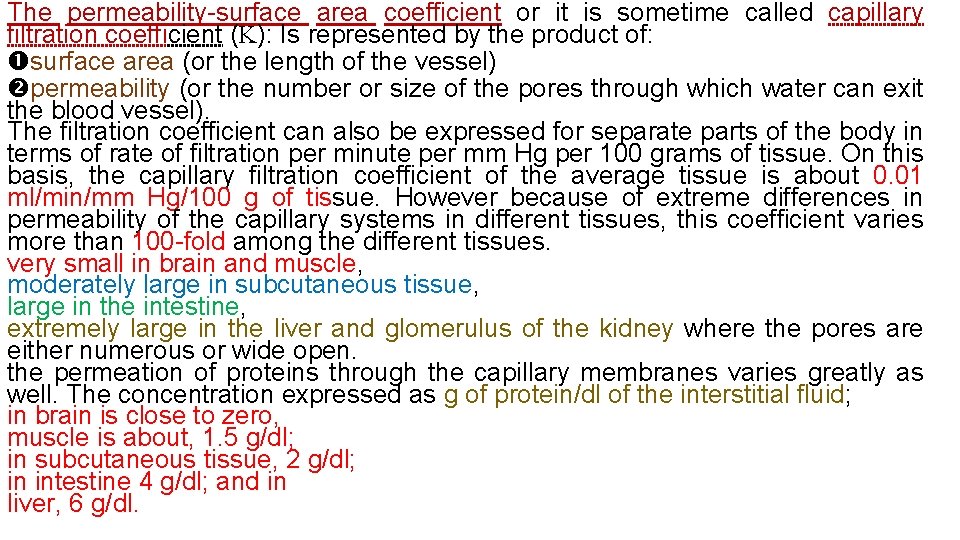
The permeability surface area coefficient or it is sometime called capillary filtration coefficient (K): Is represented by the product of: surface area (or the length of the vessel) permeability (or the number or size of the pores through which water can exit the blood vessel). The filtration coefficient can also be expressed for separate parts of the body in terms of rate of filtration per minute per mm Hg per 100 grams of tissue. On this basis, the capillary filtration coefficient of the average tissue is about 0. 01 ml/min/mm Hg/100 g of tissue. However because of extreme differences in permeability of the capillary systems in different tissues, this coefficient varies more than 100 fold among the different tissues. very small in brain and muscle, moderately large in subcutaneous tissue, large in the intestine, extremely large in the liver and glomerulus of the kidney where the pores are either numerous or wide open. the permeation of proteins through the capillary membranes varies greatly as well. The concentration expressed as g of protein/dl of the interstitial fluid; in brain is close to zero, muscle is about, 1. 5 g/dl; in subcutaneous tissue, 2 g/dl; in intestine 4 g/dl; and in liver, 6 g/dl.
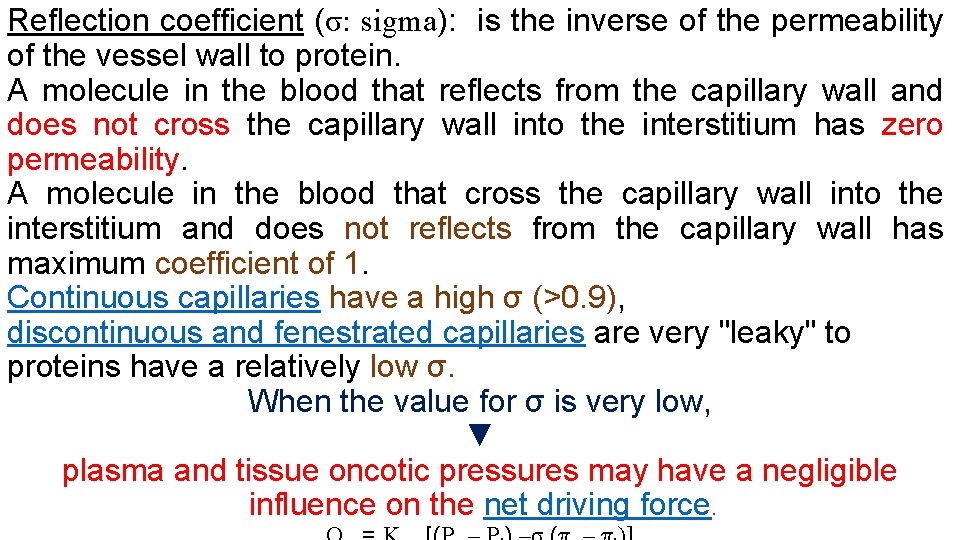
Reflection coefficient (σ: sigma): is the inverse of the permeability of the vessel wall to protein. A molecule in the blood that reflects from the capillary wall and does not cross the capillary wall into the interstitium has zero permeability. A molecule in the blood that cross the capillary wall into the interstitium and does not reflects from the capillary wall has maximum coefficient of 1. Continuous capillaries have a high σ (>0. 9), discontinuous and fenestrated capillaries are very "leaky" to proteins have a relatively low σ. When the value for σ is very low, ▼ plasma and tissue oncotic pressures may have a negligible influence on the net driving force.
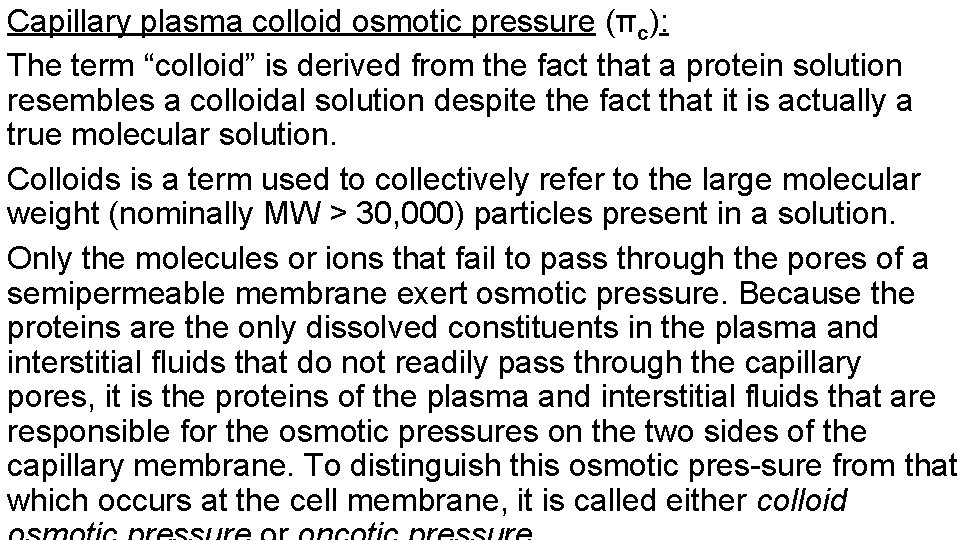
Capillary plasma colloid osmotic pressure (πc): The term “colloid” is derived from the fact that a protein solution resembles a colloidal solution despite the fact that it is actually a true molecular solution. Colloids is a term used to collectively refer to the large molecular weight (nominally MW > 30, 000) particles present in a solution. Only the molecules or ions that fail to pass through the pores of a semipermeable membrane exert osmotic pressure. Because the proteins are the only dissolved constituents in the plasma and interstitial fluids that do not readily pass through the capillary pores, it is the proteins of the plasma and interstitial fluids that are responsible for the osmotic pressures on the two sides of the capillary membrane. To distinguish this osmotic pres sure from that which occurs at the cell membrane, it is called either colloid
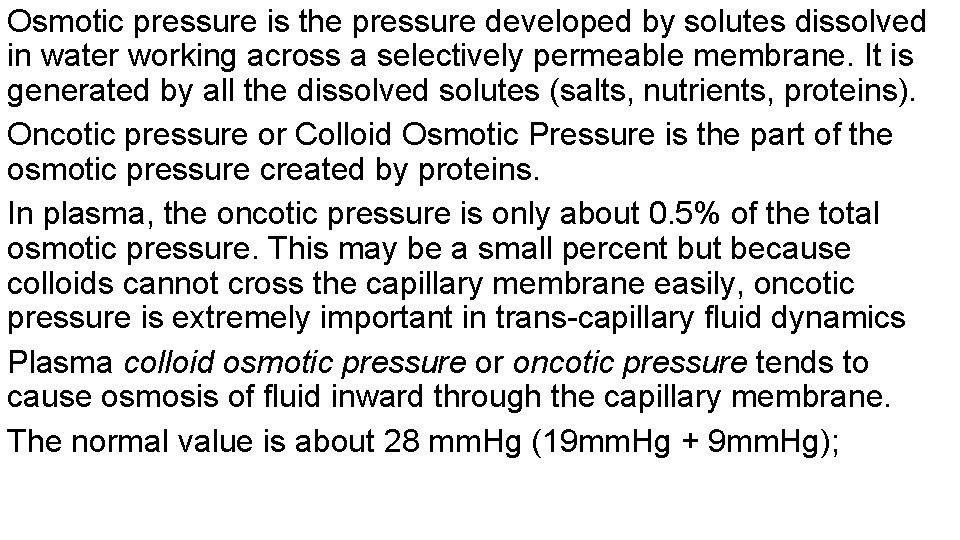
Osmotic pressure is the pressure developed by solutes dissolved in water working across a selectively permeable membrane. It is generated by all the dissolved solutes (salts, nutrients, proteins). Oncotic pressure or Colloid Osmotic Pressure is the part of the osmotic pressure created by proteins. In plasma, the oncotic pressure is only about 0. 5% of the total osmotic pressure. This may be a small percent but because colloids cannot cross the capillary membrane easily, oncotic pressure is extremely important in trans capillary fluid dynamics Plasma colloid osmotic pressure or oncotic pressure tends to cause osmosis of fluid inward through the capillary membrane. The normal value is about 28 mm. Hg (19 mm. Hg + 9 mm. Hg);
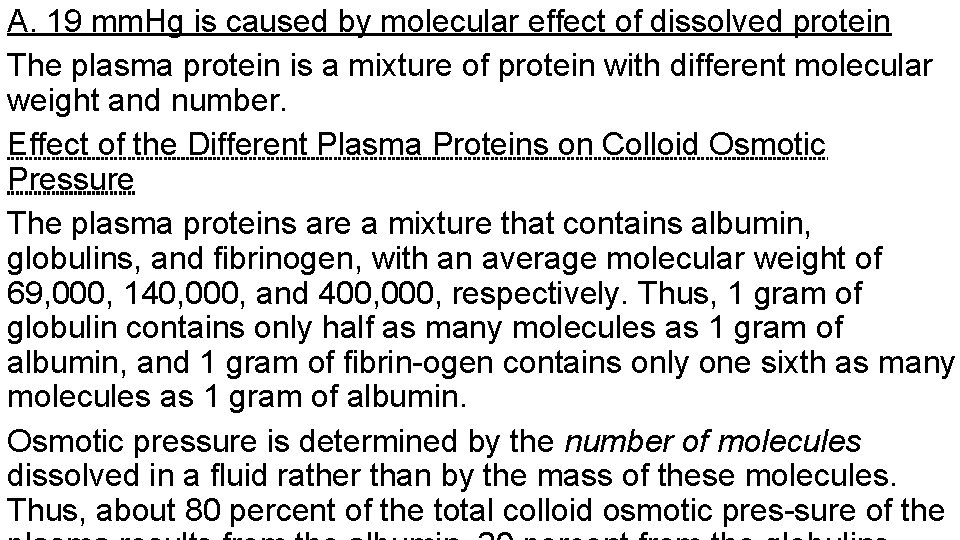
A. 19 mm. Hg is caused by molecular effect of dissolved protein The plasma protein is a mixture of protein with different molecular weight and number. Effect of the Different Plasma Proteins on Colloid Osmotic Pressure The plasma proteins are a mixture that contains albumin, globulins, and fibrinogen, with an average molecular weight of 69, 000, 140, 000, and 400, 000, respectively. Thus, 1 gram of globulin contains only half as many molecules as 1 gram of albumin, and 1 gram of fibrin ogen contains only one sixth as many molecules as 1 gram of albumin. Osmotic pressure is determined by the number of molecules dissolved in a fluid rather than by the mass of these molecules. Thus, about 80 percent of the total colloid osmotic pres sure of the
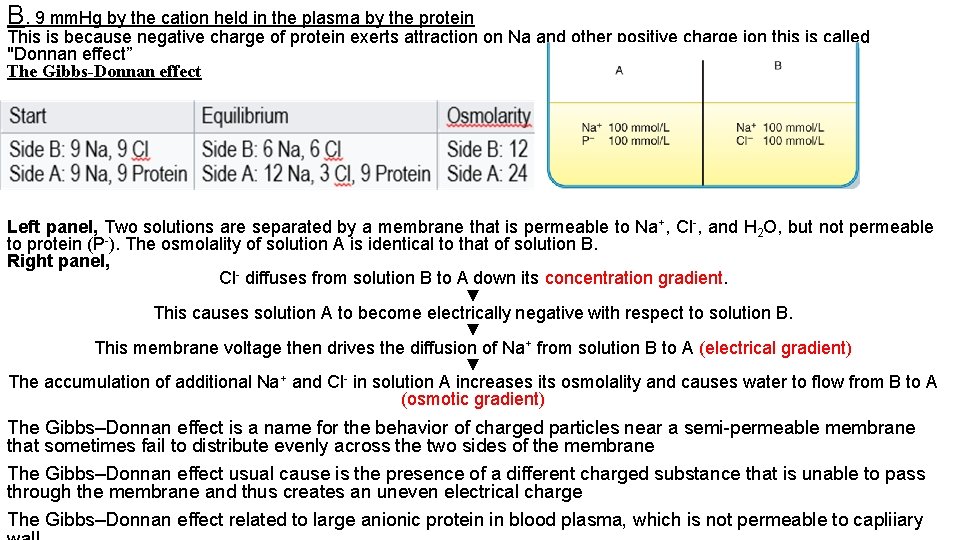
B. 9 mm. Hg by the cation held in the plasma by the protein This is because negative charge of protein exerts attraction on Na and other positive charge ion this is called "Donnan effect” The Gibbs-Donnan effect Left panel, Two solutions are separated by a membrane that is permeable to Na+, Cl , and H 2 O, but not permeable to protein (P ). The osmolality of solution A is identical to that of solution B. Right panel, Cl diffuses from solution B to A down its concentration gradient. ▼ This causes solution A to become electrically negative with respect to solution B. ▼ This membrane voltage then drives the diffusion of Na+ from solution B to A (electrical gradient) ▼ + The accumulation of additional Na and Cl in solution A increases its osmolality and causes water to flow from B to A (osmotic gradient) The Gibbs–Donnan effect is a name for the behavior of charged particles near a semi permeable membrane that sometimes fail to distribute evenly across the two sides of the membrane The Gibbs–Donnan effect usual cause is the presence of a different charged substance that is unable to pass through the membrane and thus creates an uneven electrical charge The Gibbs–Donnan effect related to large anionic protein in blood plasma, which is not permeable to capliiary
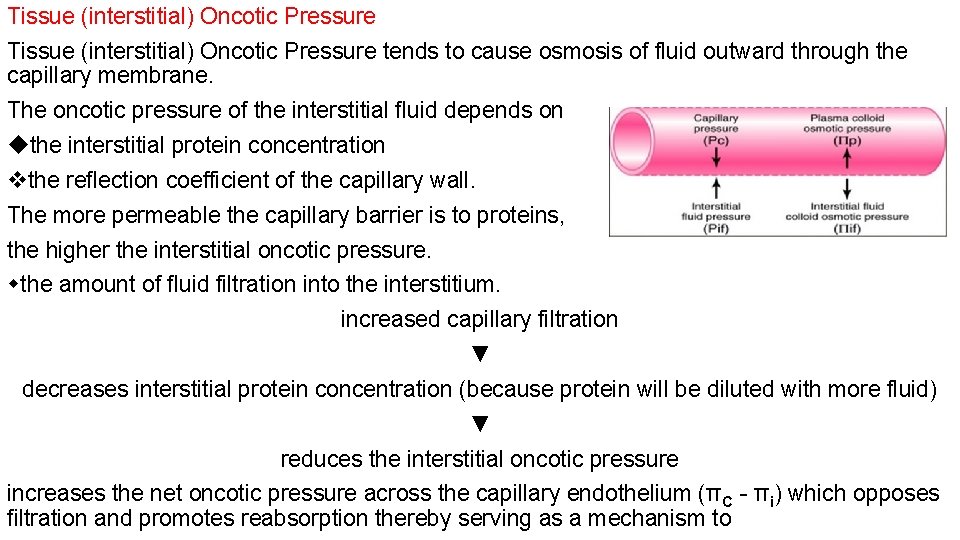
Tissue (interstitial) Oncotic Pressure tends to cause osmosis of fluid outward through the capillary membrane. The oncotic pressure of the interstitial fluid depends on the interstitial protein concentration the reflection coefficient of the capillary wall. The more permeable the capillary barrier is to proteins, the higher the interstitial oncotic pressure. the amount of fluid filtration into the interstitium. increased capillary filtration ▼ decreases interstitial protein concentration (because protein will be diluted with more fluid) ▼ reduces the interstitial oncotic pressure increases the net oncotic pressure across the capillary endothelium (πC πi) which opposes filtration and promotes reabsorption thereby serving as a mechanism to
Capillary hydrostatic pressure (Pc): Capillary hydrostatic pressure tends to force fluid outward through the capillary membrane (i. e. , filtration) Capillary hydrostatic pressure depending upon the organ Capillary hydrostatic pressure is high in kidney (45 mm. Hg) Capillary hydrostatic pressure low in intestine (10 m. Hg). Capillary hydrostatic pressure in skeletal muscle is nearly 40 mm. Hg at arterial end and 12 mm. Hg at venous end. Capillary hydrostatic pressure may drop along the length of the capillary by 15 30 mm. Hg (axial or longitudinal pressure gradient). The axial gradient favors filtration at the arteriolar
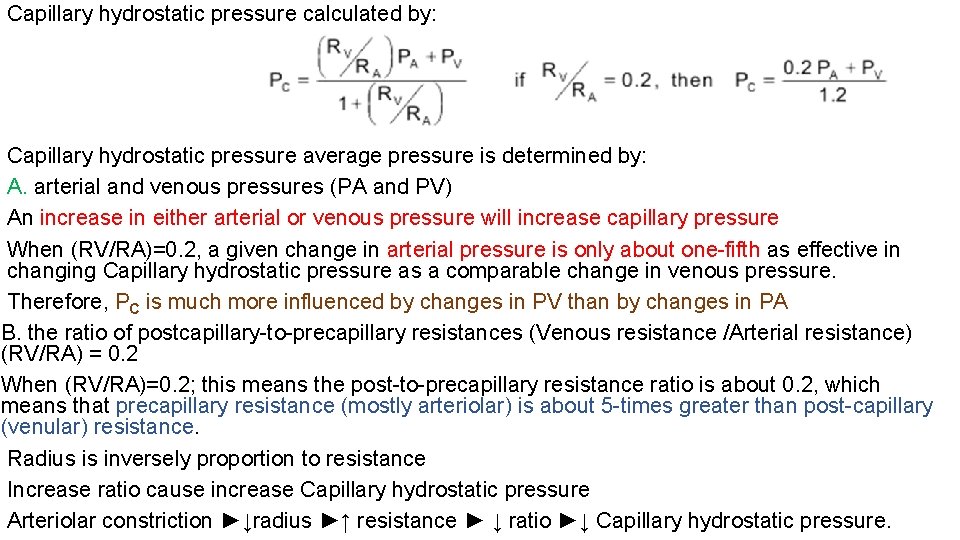
Capillary hydrostatic pressure calculated by: Capillary hydrostatic pressure average pressure is determined by: A. arterial and venous pressures (PA and PV) An increase in either arterial or venous pressure will increase capillary pressure When (RV/RA)=0. 2, a given change in arterial pressure is only about one fifth as effective in changing Capillary hydrostatic pressure as a comparable change in venous pressure. Therefore, PC is much more influenced by changes in PV than by changes in PA B. the ratio of postcapillary to precapillary resistances (Venous resistance /Arterial resistance) (RV/RA) = 0. 2 When (RV/RA)=0. 2; this means the post to precapillary resistance ratio is about 0. 2, which means that precapillary resistance (mostly arteriolar) is about 5 times greater than post capillary (venular) resistance. Radius is inversely proportion to resistance Increase ratio cause increase Capillary hydrostatic pressure Arteriolar constriction ►↓radius ►↑ resistance ► ↓ ratio ►↓ Capillary hydrostatic pressure.
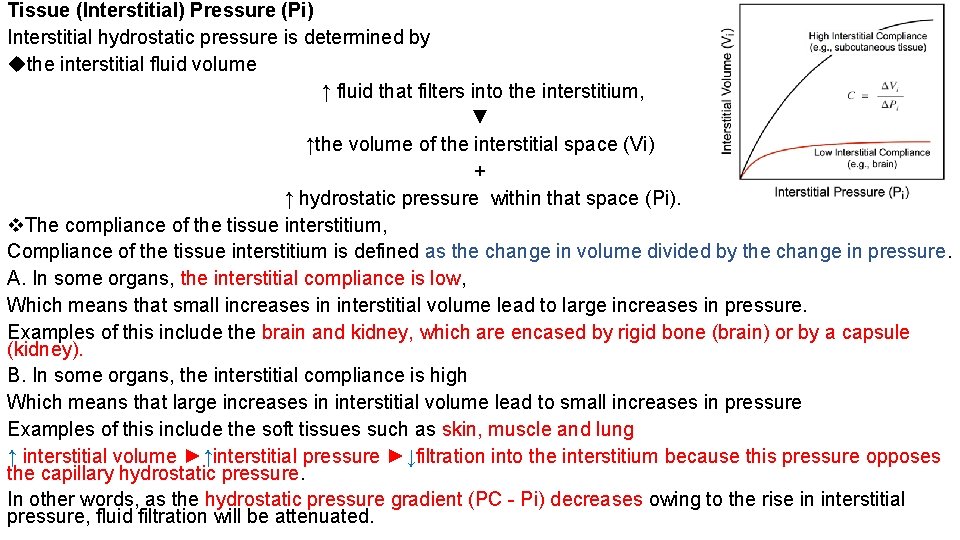
Tissue (Interstitial) Pressure (Pi) Interstitial hydrostatic pressure is determined by the interstitial fluid volume ↑ fluid that filters into the interstitium, ▼ ↑the volume of the interstitial space (Vi) + ↑ hydrostatic pressure within that space (Pi). The compliance of the tissue interstitium, Compliance of the tissue interstitium is defined as the change in volume divided by the change in pressure. A. In some organs, the interstitial compliance is low, Which means that small increases in interstitial volume lead to large increases in pressure. Examples of this include the brain and kidney, which are encased by rigid bone (brain) or by a capsule (kidney). B. In some organs, the interstitial compliance is high Which means that large increases in interstitial volume lead to small increases in pressure Examples of this include the soft tissues such as skin, muscle and lung ↑ interstitial volume ►↑interstitial pressure ►↓filtration into the interstitium because this pressure opposes the capillary hydrostatic pressure. In other words, as the hydrostatic pressure gradient (PC Pi) decreases owing to the rise in interstitial pressure, fluid filtration will be attenuated.
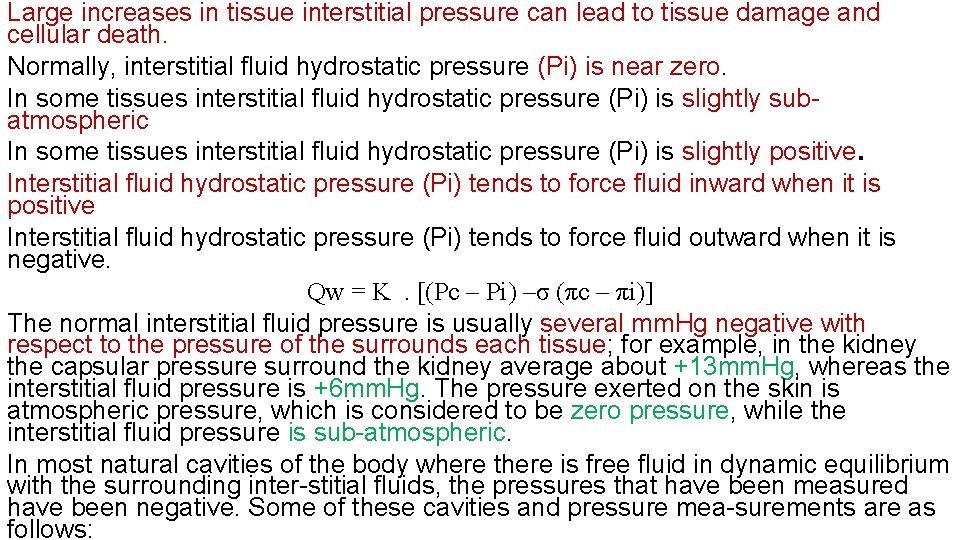
Large increases in tissue interstitial pressure can lead to tissue damage and cellular death. Normally, interstitial fluid hydrostatic pressure (Pi) is near zero. In some tissues interstitial fluid hydrostatic pressure (Pi) is slightly sub atmospheric In some tissues interstitial fluid hydrostatic pressure (Pi) is slightly positive. Interstitial fluid hydrostatic pressure (Pi) tends to force fluid inward when it is positive Interstitial fluid hydrostatic pressure (Pi) tends to force fluid outward when it is negative. Qw = K. [(Pc – Pi) –σ (πc – πi)] The normal interstitial fluid pressure is usually several mm. Hg negative with respect to the pressure of the surrounds each tissue; for example, in the kidney the capsular pressure surround the kidney average about +13 mm. Hg, whereas the interstitial fluid pressure is +6 mm. Hg. The pressure exerted on the skin is atmospheric pressure, which is considered to be zero pressure, while the interstitial fluid pressure is sub atmospheric. In most natural cavities of the body where there is free fluid in dynamic equilibrium with the surrounding inter stitial fluids, the pressures that have been measured have been negative. Some of these cavities and pressure mea surements are as follows:
Significance of negative interstitial fluid pressure as a means for holding the body tissues together Traditionally, it has been assumed that the different tissues of the body are held together entirely by connec tive tissue fibers. However, connective tissue fibers are very weak or even absent at many places in the body, particularly at points where tissues slide over one another (e. g. , skin sliding over the back of the hand or over the face). Yet, even at these places, the tissues are held together by the negative interstitial fluid pressure, which is actually a partial vacuum. When the tissues lose their negative pressure, fluid accumulates in the spaces and the condi tion known asedema occurs.
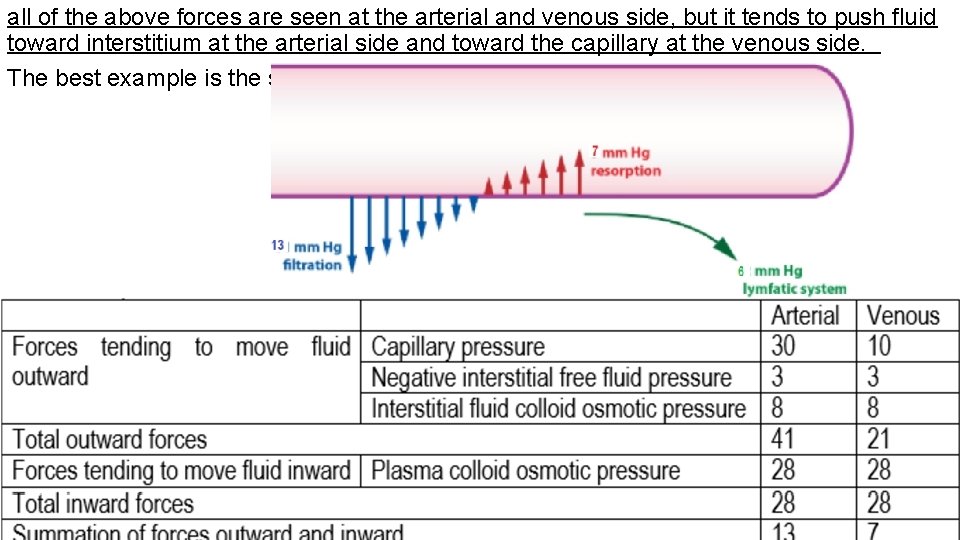
all of the above forces are seen at the arterial and venous side, but it tends to push fluid toward interstitium at the arterial side and toward the capillary at the venous side. The best example is the skin:
Thus, the summation of forces at the arterial end of the capillary shows a net filtration pressure of 13 mm. Hg, tending to move in the outward direction through the capillary pores. Thus, the summation of forces at the venous end of the capillary shows a net filtration pressure of 7 mm. Hg, is the (net re absorption pressure) tending to move in the inward direction through the capillary pores. The re absorption pressure is considerably less than the filtration pressure at the capillary arterial ends, but remember that the venous capillary are more numerous and the venous capillary more permeable than the arterial capillaries, so that less pressure is required to cause the inward movement of fluid. The re absorption pressure causes about (9/10) of the fluid that has filtered out of the arterial of the capillaries to re absorbed at the venous end. The remainder flows into the lymph vessels.
Lymphatic system: Lymph contains Lymph: Lymph daily production is dependent on the diet and daily dietary intake. Lymph is a clear watery fluid, Lymph is similar in composition to plasma, with less composition of plasma proteins; this why Lymph is identical in composition to interstitial fluid. Lymph is derived from interstitial fluid that flows into the lymphatics. Therefore, lymph as it first enters the terminal lymphatics has almost the same composition as the inter stitial fluid. The protein concentration in the interstitial fluid of most tissues averages about 2 g/dl, and the protein con centration of lymph flowing from these tissues is near this value. Lymph formed in the liver has a protein concentra tion as high as 6 g/dl, and lymph formed in the intestines has a protein concentration as high as 3 to 4 g/dl. Because about two thirds of all lymph normally is derived from the liver and intestines, the thoracic duct lymph, which is a mixture of lymph from all areas of the body, usually has a protein concentration of 3 to 5 g/dl. Lymph consist of fat 1 3% composed of Triglyceride (70% long chain), protein (3%), electrolytes content is the same as plasma except of lower calcium concentration and lymphocytes (T lymphocytes)
Functions of the lymphatic system: 1. Tissue drainage: A. Fluid: Every day, around 24 liters (about 0. 3% of cardiac output) of fluid filtered from plasma, carrying dissolved substances and some plasma protein, escape from the arterial end of the capillaries into the tissues. Most of this fluid is returned direct the blood stream via the capillary at its venous end, but 2 to 4 liters of fluid are drained away by the lymphatic vessels. Fluid removed from the interstitium in order to maintain a gel state; without this, the tissues would rapidly become waterlogged, and the cardiovascular system would begin to fail as the blood volume falls. B. Protein: The lymphatic system represents the only mechanism for returning albumin and other interstitial macro molecules to the circulation system. This system recovers approximately 200 gm of protein daily (which is equal to 25 to 50% of the total circulating plasma protein) that has been lost from the micro
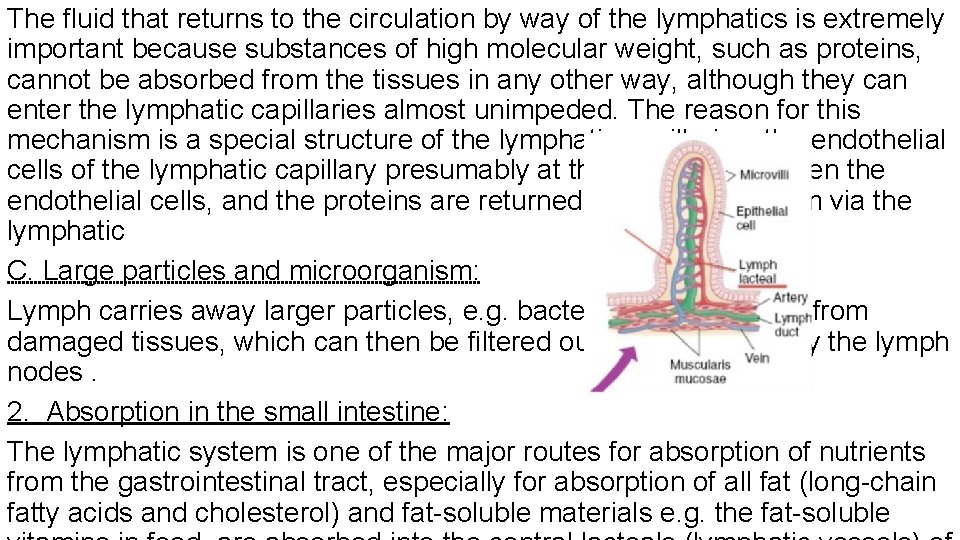
The fluid that returns to the circulation by way of the lymphatics is extremely important because substances of high molecular weight, such as proteins, cannot be absorbed from the tissues in any other way, although they can enter the lymphatic capillaries almost unimpeded. The reason for this mechanism is a special structure of the lymphatic capillaries, the endothelial cells of the lymphatic capillary presumably at the junctions between the endothelial cells, and the proteins are returned to the bloodstream via the lymphatic C. Large particles and microorganism: Lymph carries away larger particles, e. g. bacteria and cell debris from damaged tissues, which can then be filtered out and destroyed by the lymph nodes. 2. Absorption in the small intestine: The lymphatic system is one of the major routes for absorption of nutrients from the gastrointestinal tract, especially for absorption of all fat (long chain fatty acids and cholesterol) and fat soluble materials e. g. the fat soluble
In the Lacteals of the small intestine, fats absorbed into the lymphatics give the lymph (now called chyle), a milky appearance. Indeed, after a fatty meal, thoracic duct lymph sometimes contains as much as 1 to 2 percent fat. The thoracic duct is the conduit for lymph and dietary fat to reach venous blood stream 3. Immunity: The lymphatic organs are concerned with the production and maturation of lymphocytes, the white blood cells responsible for immunity. Bone marrow is therefore considered to be lymphatic tissue, since lymphocytes are produced there. Rate of lymph flow About 100 milliliters per hour of lymph flows through the thoracic duct of a resting human, and approximately another 20 milliliters flows into the circulation each hour through other channels, making a total estimated
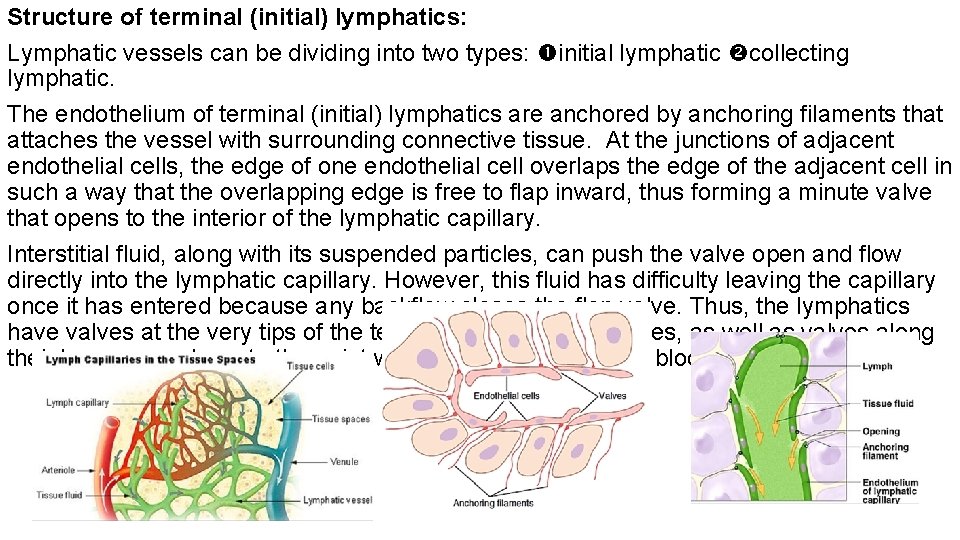
Structure of terminal (initial) lymphatics: Lymphatic vessels can be dividing into two types: initial lymphatic collecting lymphatic. The endothelium of terminal (initial) lymphatics are anchored by anchoring filaments that attaches the vessel with surrounding connective tissue. At the junctions of adjacent endothelial cells, the edge of one endothelial cell overlaps the edge of the adjacent cell in such a way that the overlapping edge is free to flap inward, thus forming a minute valve that opens to the interior of the lymphatic capillary. Interstitial fluid, along with its suspended particles, can push the valve open and flow directly into the lymphatic capillary. However, this fluid has difficulty leaving the capillary once it has entered because any backflow closes the flap valve. Thus, the lymphatics have valves at the very tips of the terminal lymphatic capillaries, as well as valves along their larger vessels up to the point where they empty into the blood circulation
The lymphatic system plays a key role in controlling interstitial fluid protein concentration, volume, and pressure: It is already clear that the lymphatic system functions as an “overflow mechanism” to return excess proteins and excess fluid volume from the tissue spaces to the circula tion. Therefore, the lymphatic system also plays a central role in controlling (1) the concentration of proteins in the interstitial fluids, (2) the volume of interstitial fluid, and (3) the interstitial fluid pressure ▼ increase lymphatic flow Let us explain how these factors interact.
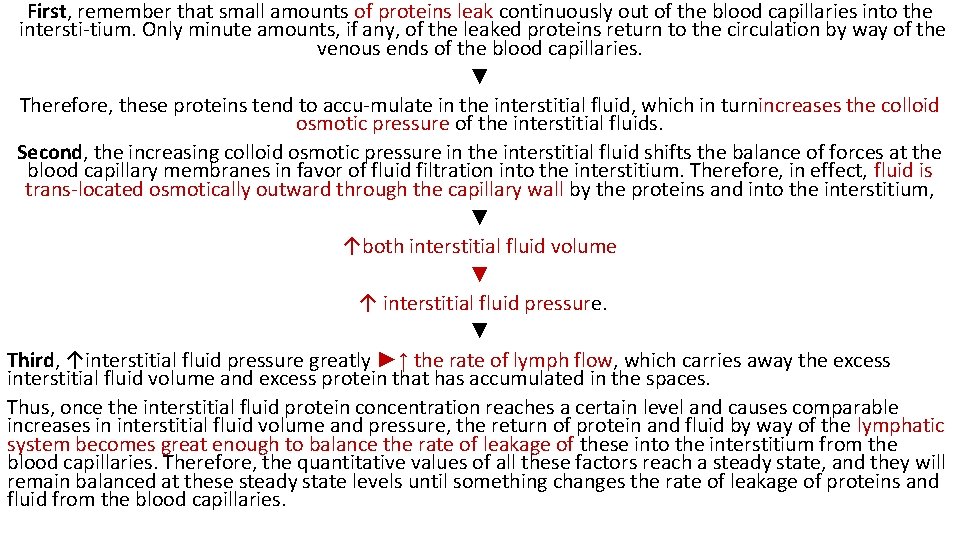
First, remember that small amounts of proteins leak continuously out of the blood capillaries into the intersti tium. Only minute amounts, if any, of the leaked proteins return to the circulation by way of the venous ends of the blood capillaries. ▼ Therefore, these proteins tend to accu mulate in the interstitial fluid, which in turnincreases the colloid osmotic pressure of the interstitial fluids. Second, the increasing colloid osmotic pressure in the interstitial fluid shifts the balance of forces at the blood capillary membranes in favor of fluid filtration into the interstitium. Therefore, in effect, fluid is trans located osmotically outward through the capillary wall by the proteins and into the interstitium, ▼ ↑both interstitial fluid volume ▼ ↑ interstitial fluid pressure. ▼ Third, ↑interstitial fluid pressure greatly ►↑ the rate of lymph flow, which carries away the excess interstitial fluid volume and excess protein that has accumulated in the spaces. Thus, once the interstitial fluid protein concentration reaches a certain level and causes comparable increases in interstitial fluid volume and pressure, the return of protein and fluid by way of the lymphatic system becomes great enough to balance the rate of leakage of these into the interstitium from the blood capillaries. Therefore, the quantitative values of all these factors reach a steady state, and they will remain balanced at these steady state levels until something changes the rate of leakage of proteins and fluid from the blood capillaries.
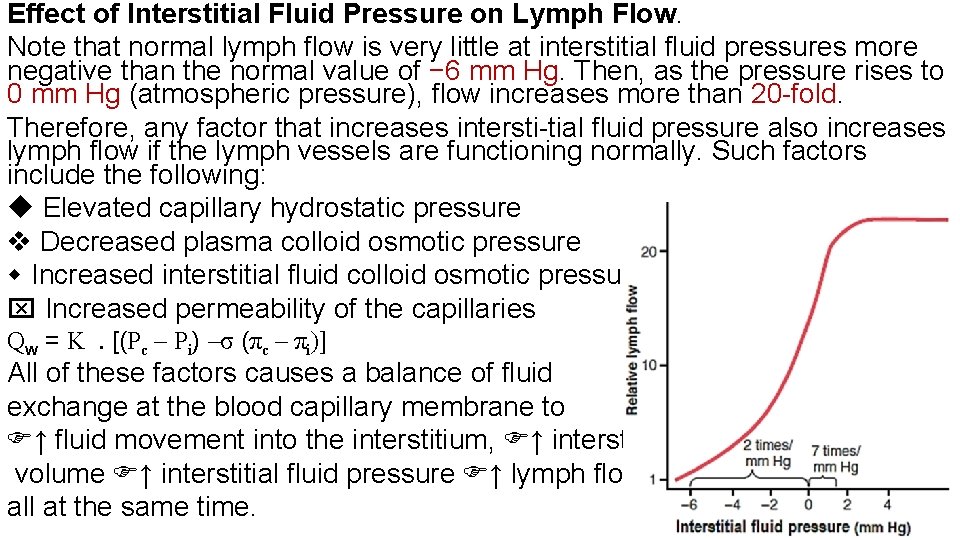
Effect of Interstitial Fluid Pressure on Lymph Flow. Note that normal lymph flow is very little at interstitial fluid pressures more negative than the normal value of − 6 mm Hg. Then, as the pressure rises to 0 mm Hg (atmospheric pressure), flow increases more than 20 fold. Therefore, any factor that increases intersti tial fluid pressure also increases lymph flow if the lymph vessels are functioning normally. Such factors include the following: Elevated capillary hydrostatic pressure Decreased plasma colloid osmotic pressure Increased interstitial fluid colloid osmotic pressure Increased permeability of the capillaries Qw = K. [(Pc – Pi) –σ (πc – πi)] All of these factors causes a balance of fluid exchange at the blood capillary membrane to ↑ fluid movement into the interstitium, ↑ interstitial fluid volume ↑ interstitial fluid pressure ↑ lymph flow all at the same time.
When the intersti tial fluid pressure becomes 1 or 2 mm Hg greater than atmospheric pressure (>0 mm Hg), lymph flow fails to rise any further at still higher pressures. This results from the fact that the increasing tissue pressure not only increases entry of fluid into the lymphatic capillaries but also compresses the outside surfaces of the larger lymphatics, thus impeding lymph flow. At the higher pressures, these two factors balance each other almost exactly, so lymph flow reaches a maximum flow rate. This maximum flow rate is illustrated by the upper level plateau
The terminal lymphatic capillary Pump. The walls of the lymphatic capillaries are tightly adherent to the surrounding tissue cells by means of their anchoring filaments. Therefore, When the tissue swollen each time excess fluid enters the tissue and causes the tissue to swell, ▼ the anchoring filaments pull on the wall of the lymphatic capillary and ▼ fluid flows into the terminal lymphatic capillary through the junctions between the endothelial cells. ☼ Then, when the tissue is compressed, ▼ the pressure inside the capillary increases ▼ causes the overlapping edges of the endothelial cells to close like valves. ▼ Therefore, the pressure pushes the lymph forward into the collecting lymphatic instead of backward through the cell junctions. The lymphatic capillary endothelial cells also contain a few contractile actomyosin filaments. In some animal tissues (e. g. , the bat’s wing), these filaments have been observed to cause rhythmical contraction of the lym phatic capillariesin the same rhythmic way that many of the small blood vessels and larger lymphatic vessels con tract. Therefore, it is probable that at least part of lymph pumping results from lymph
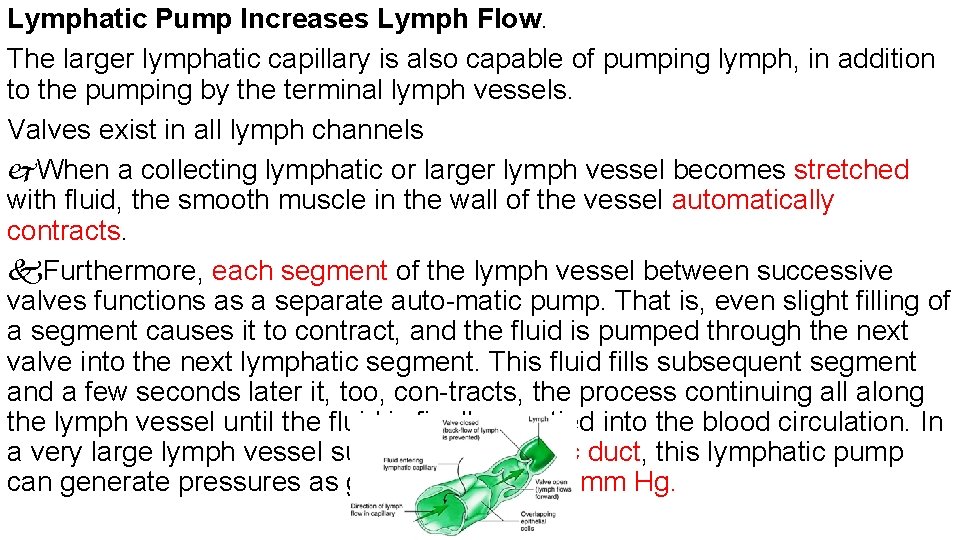
Lymphatic Pump Increases Lymph Flow. The larger lymphatic capillary is also capable of pumping lymph, in addition to the pumping by the terminal lymph vessels. Valves exist in all lymph channels When a collecting lymphatic or larger lymph vessel becomes stretched with fluid, the smooth muscle in the wall of the vessel automatically contracts. Furthermore, each segment of the lymph vessel between successive valves functions as a separate auto matic pump. That is, even slight filling of a segment causes it to contract, and the fluid is pumped through the next valve into the next lymphatic segment. This fluid fills subsequent segment and a few seconds later it, too, con tracts, the process continuing all along the lymph vessel until the fluid is finally emptied into the blood circulation. In a very large lymph vessel such as the thoracic duct, this lymphatic pump can generate pressures as great as 50 to 100 mm Hg.
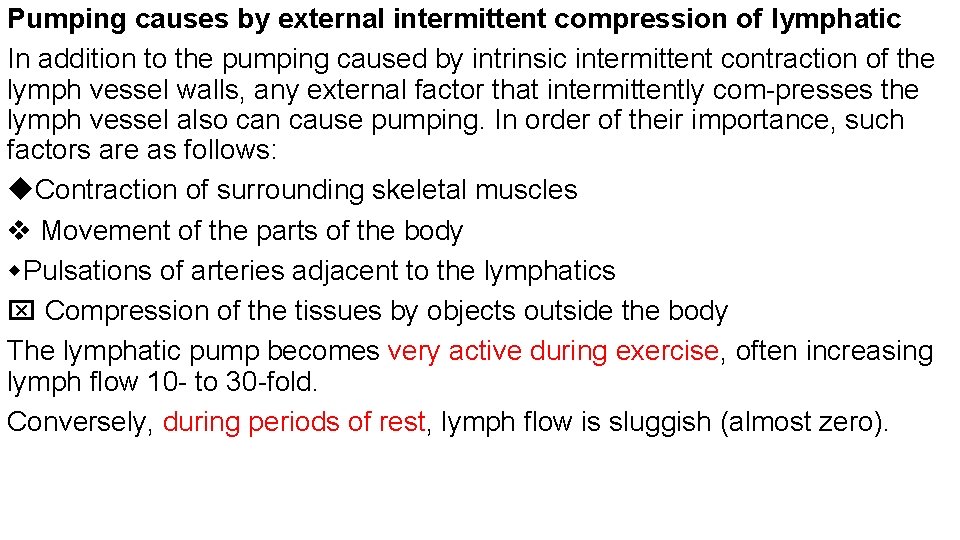
Pumping causes by external intermittent compression of lymphatic In addition to the pumping caused by intrinsic intermittent contraction of the lymph vessel walls, any external factor that intermittently com presses the lymph vessel also can cause pumping. In order of their importance, such factors are as follows: Contraction of surrounding skeletal muscles Movement of the parts of the body Pulsations of arteries adjacent to the lymphatics Compression of the tissues by objects outside the body The lymphatic pump becomes very active during exercise, often increasing lymph flow 10 to 30 fold. Conversely, during periods of rest, lymph flow is sluggish (almost zero).
• Edema refers to the presence of excess fluid in the body tissues. Intracellular Edema Two conditions are especially prone to cause intracellular swelling: (1) Lack of adequate nutrition to the cells and Depression of the metabolic systems of the tissues: For example, when blood flow to a tissue is decreased, ▼ the delivery of oxygen and nutrients is reduced. ▼ If the blood flow becomes too low to maintain normal tissue metabolism, ▼ the cell membrane ionic pumps become depressed. ▼ When this occurs, sodium ions that normally leak into the interior of the cell can no longer be pumped out of the cells, and ▼ the excess sodium ions inside the cells cause osmosis of water into the cells. Sometimes this can increase intracellular volume of a tissue area (even of an entire ischemic leg, for example) to two to three times normal. When this occurs, it is usually a ﻣﻘﺪﻣﺔ prelude to death of the tissue.
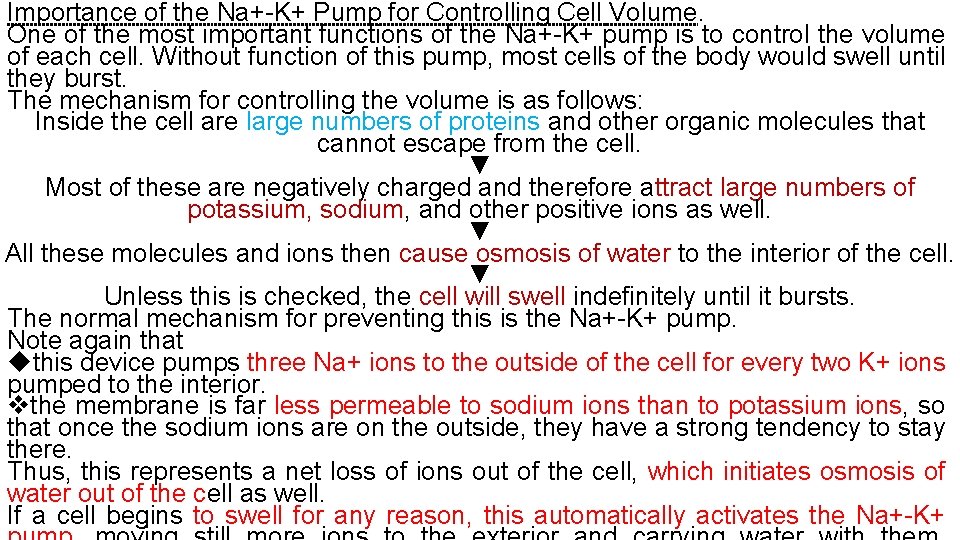
Importance of the Na+ K+ Pump for Controlling Cell Volume. One of the most important functions of the Na+ K+ pump is to control the volume of each cell. Without function of this pump, most cells of the body would swell until they burst. The mechanism for controlling the volume is as follows: Inside the cell are large numbers of proteins and other organic molecules that cannot escape from the cell. ▼ Most of these are negatively charged and therefore attract large numbers of potassium, sodium, and other positive ions as well. ▼ All these molecules and ions then cause osmosis of water to the interior of the cell. ▼ Unless this is checked, the cell will swell indefinitely until it bursts. The normal mechanism for preventing this is the Na+ K+ pump. Note again that this device pumps three Na+ ions to the outside of the cell for every two K+ ions pumped to the interior. the membrane is far less permeable to sodium ions than to potassium ions, so that once the sodium ions are on the outside, they have a strong tendency to stay there. Thus, this represents a net loss of ions out of the cell, which initiates osmosis of water out of the cell as well. If a cell begins to swell for any reason, this automatically activates the Na+ K+
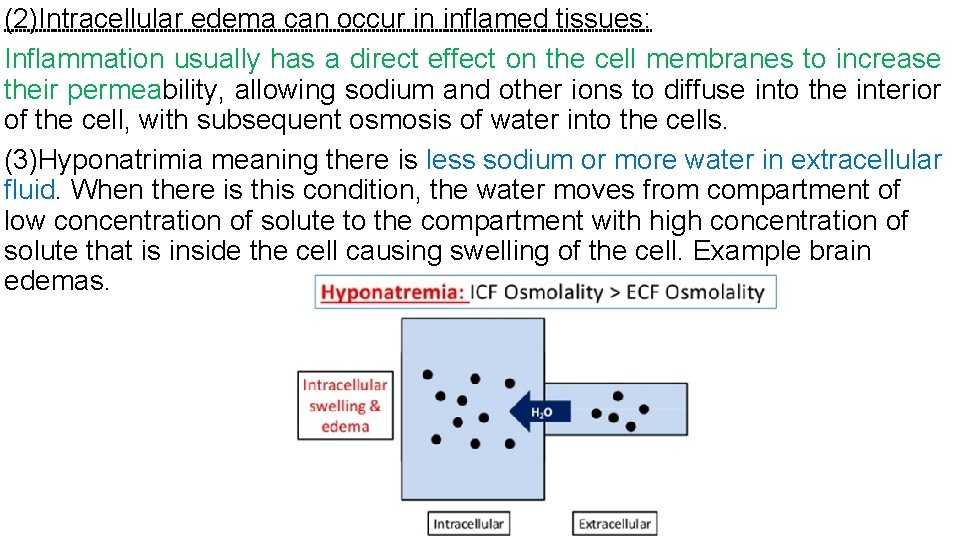
(2)Intracellular edema can occur in inflamed tissues: Inflammation usually has a direct effect on the cell membranes to increase their permeability, allowing sodium and other ions to diffuse into the interior of the cell, with subsequent osmosis of water into the cells. (3)Hyponatrimia meaning there is less sodium or more water in extracellular fluid. When there is this condition, the water moves from compartment of low concentration of solute to the compartment with high concentration of solute that is inside the cell causing swelling of the cell. Example brain edemas.
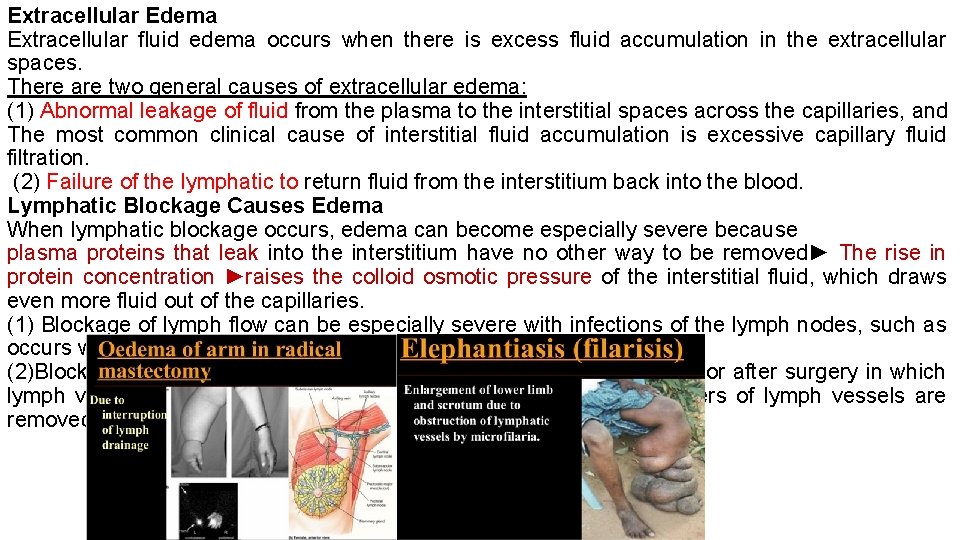
Extracellular Edema Extracellular fluid edema occurs when there is excess fluid accumulation in the extracellular spaces. There are two general causes of extracellular edema: (1) Abnormal leakage of fluid from the plasma to the interstitial spaces across the capillaries, and The most common clinical cause of interstitial fluid accumulation is excessive capillary fluid filtration. (2) Failure of the lymphatic to return fluid from the interstitium back into the blood. Lymphatic Blockage Causes Edema When lymphatic blockage occurs, edema can become especially severe because plasma proteins that leak into the interstitium have no other way to be removed► The rise in protein concentration ►raises the colloid osmotic pressure of the interstitial fluid, which draws even more fluid out of the capillaries. (1) Blockage of lymph flow can be especially severe with infections of the lymph nodes, such as occurs with infection by filaria nematodes. (2)Blockage of the lymph vessels can occur in certain types of cancer or after surgery in which lymph vessels are removed or obstructed. For example, large numbers of lymph vessels are removed during radical mastectomy
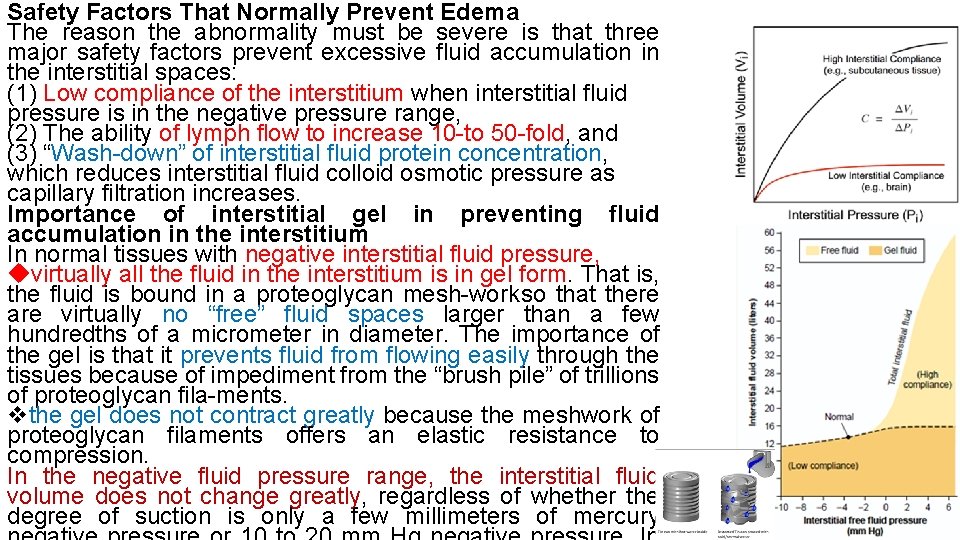
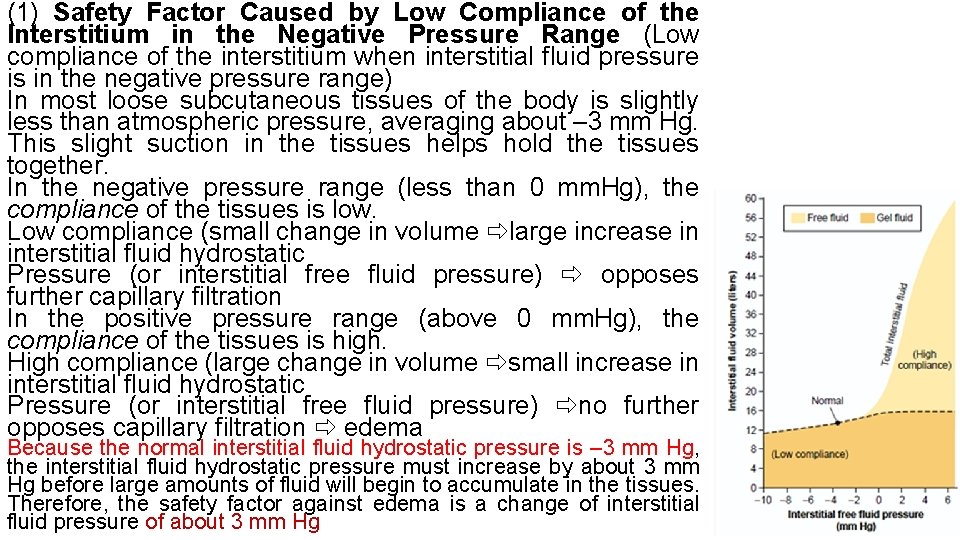
Safety Factors That Normally Prevent Edema The reason the abnormality must be severe is that three major safety factors prevent excessive fluid accumulation in the interstitial spaces: (1) Low compliance of the interstitium when interstitial fluid pressure is in the negative pressure range, (2) The ability of lymph flow to increase 10 to 50 fold, and (3) “Wash down” of interstitial fluid protein concentration, which reduces interstitial fluid colloid osmotic pressure as capillary filtration increases. Importance of interstitial gel in preventing fluid accumulation in the interstitium In normal tissues with negative interstitial fluid pressure, virtually all the fluid in the interstitium is in gel form. That is, the fluid is bound in a proteoglycan mesh work so that there are virtually no “free” fluid spaces larger than a few hundredths of a micrometer in diameter. The importance of the gel is that it prevents fluid from flowing easily through the tissues because of impediment from the “brush pile” of trillions of proteoglycan fila ments. the gel does not contract greatly because the meshwork of proteoglycan filaments offers an elastic resistance to compression. In the negative fluid pressure range, the interstitial fluid volume does not change greatly, regardless of whether the degree of suction is only a few millimeters of mercury
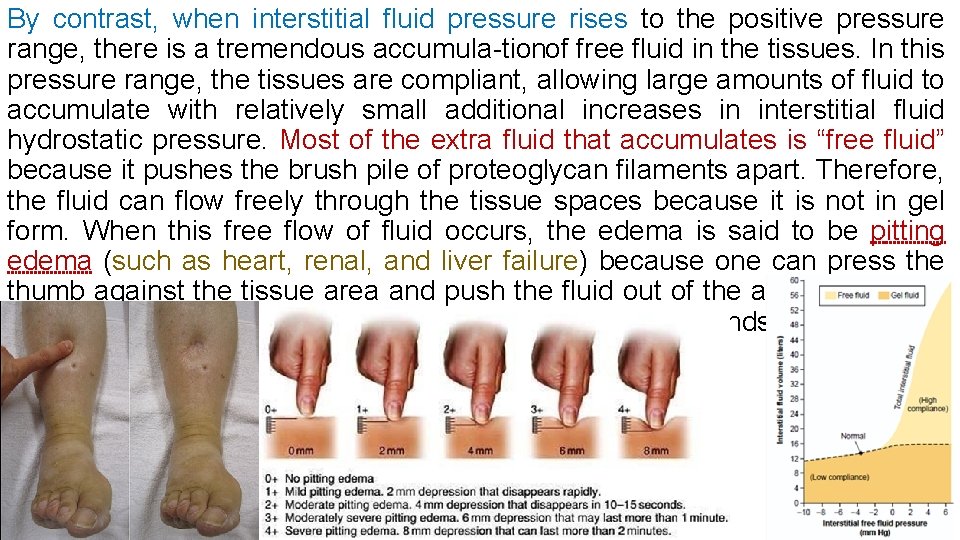
By contrast, when interstitial fluid pressure rises to the positive pressure range, there is a tremendous accumula tionof free fluid in the tissues. In this pressure range, the tissues are compliant, allowing large amounts of fluid to accumulate with relatively small additional increases in interstitial fluid hydrostatic pressure. Most of the extra fluid that accumulates is “free fluid” because it pushes the brush pile of proteoglycan filaments apart. Therefore, the fluid can flow freely through the tissue spaces because it is not in gel form. When this free flow of fluid occurs, the edema is said to be pitting edema (such as heart, renal, and liver failure) because one can press the thumb against the tissue area and push the fluid out of the area. When the thumb is removed, a pit is left in the skin for a few seconds until the fluid flows back from the surrounding tissues.
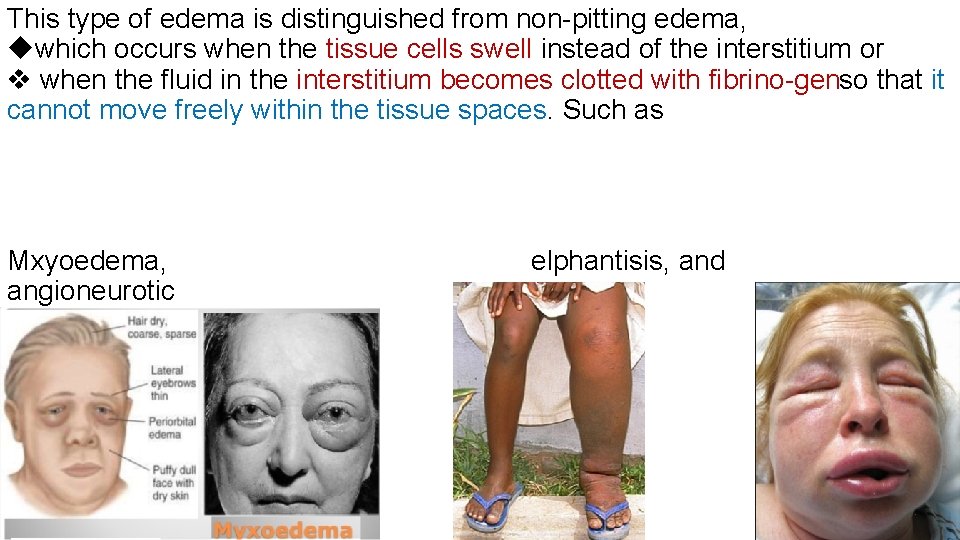
This type of edema is distinguished from non pitting edema, which occurs when the tissue cells swell instead of the interstitium or when the fluid in the interstitium becomes clotted with fibrino genso that it cannot move freely within the tissue spaces. Such as Mxyoedema, angioneurotic elphantisis, and
Importance of the proteoglycan filaments as a “Spacer” ﻳﻔﺴﺢ ﺍﻟﻤﺠﺎﻝ ﺍﻭ ﻣﻔﺴﺎﺡ for the cells and in preventing rapid flow of fluid in the tissues. The proteoglycan filaments, along with much larger collagen fibrils in the interstitial spaces, act as a “spacer” between the cells. Nutrients and ions do not diffuse readily through cell membranes; there fore, without adequate spacing between the cells, these nutrients, electrolytes, and cell waste products could not be rapidly exchanged between the blood capillaries and cells located at a distance from one another. The proteoglycan filaments also prevent fluid from flowing too easily through the tissue spaces. Even though fluid does not flow easily through the tissues in the presence of the compacted proteoglycan filaments, different substances within the fluid can diffuse through the tissues at least 95 percent as easily as they normally diffuse. Therefore, the usual diffusion of nutri ents to the cells and the removal of waste products from the cells are not compromised by the proteoglycan fila mentsof the interstitium. If it were not for the proteoglycan filaments, the simple act of a person standing up would ▼ cause large amounts of inter stitial fluid to flow from the upper bodyto the lower body. ▼ When too much fluid accumulates in the interstitium, as occurs in edema,
(1) Safety Factor Caused by Low Compliance of the Interstitium in the Negative Pressure Range (Low compliance of the interstitium when interstitial fluid pressure is in the negative pressure range) In most loose subcutaneous tissues of the body is slightly less than atmospheric pressure, averaging about – 3 mm Hg. This slight suction in the tissues helps hold the tissues together. In the negative pressure range (less than 0 mm. Hg), the compliance of the tissues is low. Low compliance (small change in volume large increase in interstitial fluid hydrostatic Pressure (or interstitial free fluid pressure) opposes further capillary filtration In the positive pressure range (above 0 mm. Hg), the compliance of the tissues is high. High compliance (large change in volume small increase in interstitial fluid hydrostatic Pressure (or interstitial free fluid pressure) no further opposes capillary filtration edema Because the normal interstitial fluid hydrostatic pressure is – 3 mm Hg, the interstitial fluid hydrostatic pressure must increase by about 3 mm Hg before large amounts of fluid will begin to accumulate in the tissues. Therefore, the safety factor against edema is a change of interstitial fluid pressure of about 3 mm Hg
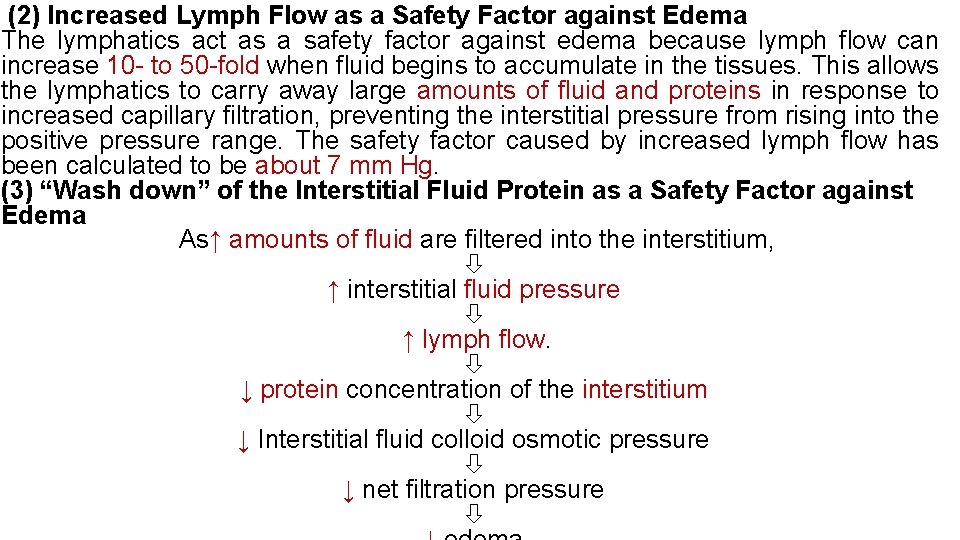
(2) Increased Lymph Flow as a Safety Factor against Edema The lymphatics act as a safety factor against edema because lymph flow can increase 10 to 50 fold when fluid begins to accumulate in the tissues. This allows the lymphatics to carry away large amounts of fluid and proteins in response to increased capillary filtration, preventing the interstitial pressure from rising into the positive pressure range. The safety factor caused by increased lymph flow has been calculated to be about 7 mm Hg. (3) “Wash down” of the Interstitial Fluid Protein as a Safety Factor against Edema As↑ amounts of fluid are filtered into the interstitium, ↑ interstitial fluid pressure ↑ lymph flow. ↓ protein concentration of the interstitium ↓ Interstitial fluid colloid osmotic pressure ↓ net filtration pressure
Factors That Can Increase Capillary Filtration To understand the causes of excessive capillary filtration, it is useful to review the determinants of capillary filtration Qw = K. [(Pc – Pi) –σ (πc – πi)] From this equation, one can see that any one of the following changes can increase the capillary filtration rate: a. Increased capillary filtration coefficient. b. Increased capillary hydrostatic pressure. c. Decreased plasma colloid osmotic pressure. Causes of increase interstitial fluid and edema: 1. Increase filtration pressure (due to increase capillary hydrostatic pressure): a) Arterial dilation. b) Venular constriction. c) Increase venous pressure: heart failure incompetent valves venous obstruction increase total ECF volume effect of gravity 2. Decrease osmotic pressure gradient across the capillary: a) Decrease plasma protein level (decrease production of albumin as in liver failure or increase loss of albumin by kidney as in Glomerulonephritis) b) Accumulation of osmotically active substances in interstitium (as albumin and Na) 3. Increase capillary permeability: by any substance cause vasodilatation like: substance P, histamine,
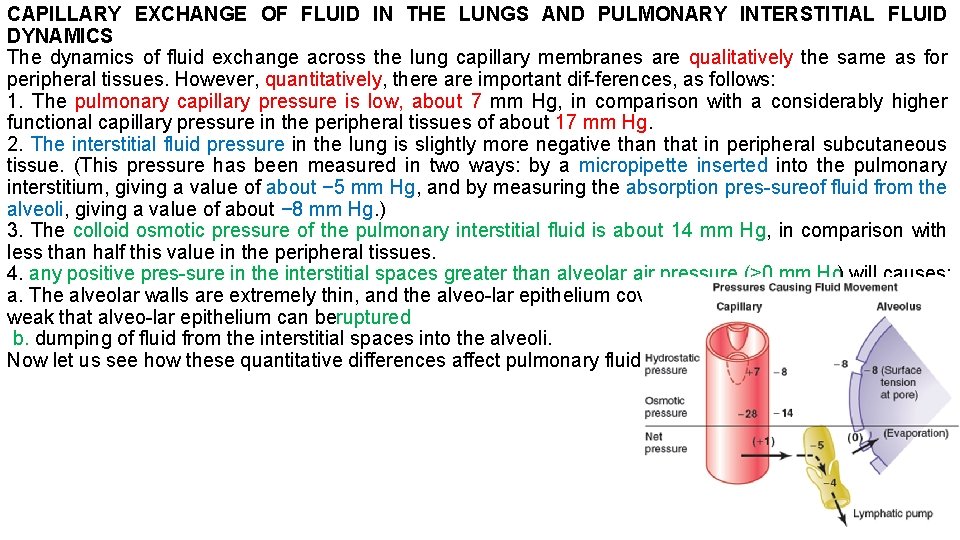
CAPILLARY EXCHANGE OF FLUID IN THE LUNGS AND PULMONARY INTERSTITIAL FLUID DYNAMICS The dynamics of fluid exchange across the lung capillary membranes are qualitatively the same as for peripheral tissues. However, quantitatively, there are important dif ferences, as follows: 1. The pulmonary capillary pressure is low, about 7 mm Hg, in comparison with a considerably higher functional capillary pressure in the peripheral tissues of about 17 mm Hg. 2. The interstitial fluid pressure in the lung is slightly more negative than that in peripheral subcutaneous tissue. (This pressure has been measured in two ways: by a micropipette inserted into the pulmonary interstitium, giving a value of about − 5 mm Hg, and by measuring the absorption pres sureof fluid from the alveoli, giving a value of about − 8 mm Hg. ) 3. The colloid osmotic pressure of the pulmonary interstitial fluid is about 14 mm Hg, in comparison with less than half this value in the peripheral tissues. 4. any positive pres sure in the interstitial spaces greater than alveolar air pressure (>0 mm Hg) will causes: a. The alveolar walls are extremely thin, and the alveo lar epithelium covering the alveolar surfaces is so weak that alveo lar epithelium can beruptured b. dumping of fluid from the interstitial spaces into the alveoli. Now let us see how these quantitative differences affect pulmonary fluid dynamics.
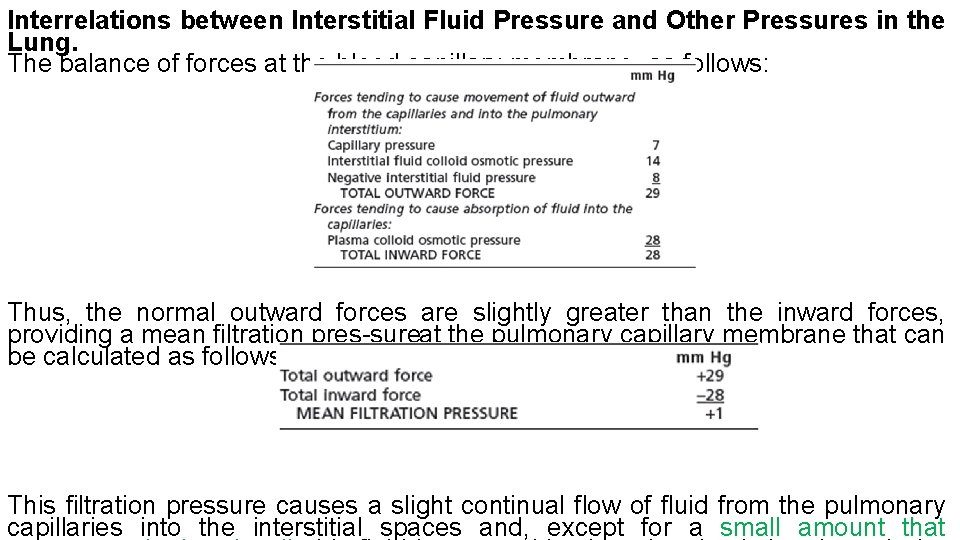
Interrelations between Interstitial Fluid Pressure and Other Pressures in the Lung. The balance of forces at the blood capillary membrane, as follows: Thus, the normal outward forces are slightly greater than the inward forces, providing a mean filtration pres sureat the pulmonary capillary membrane that can be calculated as follows: This filtration pressure causes a slight continual flow of fluid from the pulmonary capillaries into the interstitial spaces and, except for a small amount that
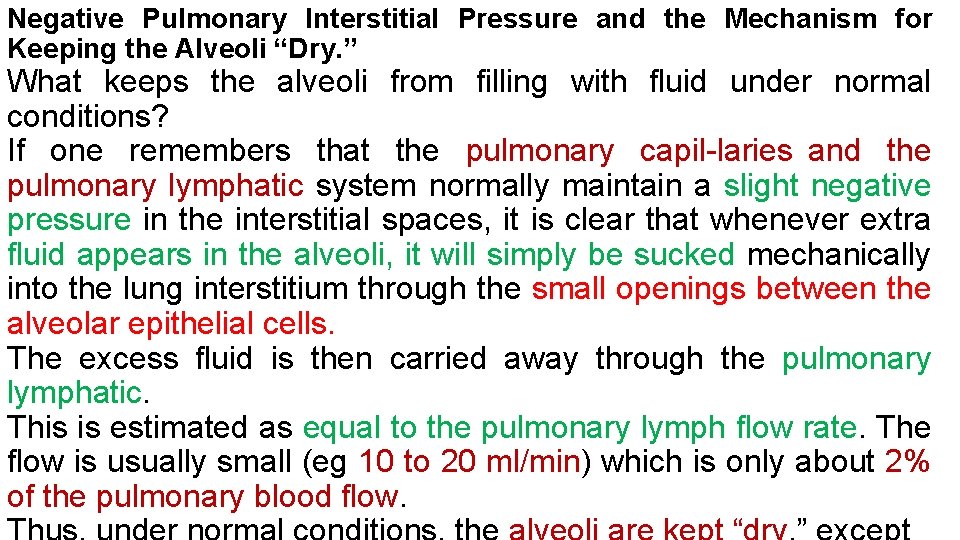
Negative Pulmonary Interstitial Pressure and the Mechanism for Keeping the Alveoli “Dry. ” What keeps the alveoli from filling with fluid under normal conditions? If one remembers that the pulmonary capil laries and the pulmonary lymphatic system normally maintain a slight negative pressure in the interstitial spaces, it is clear that whenever extra fluid appears in the alveoli, it will simply be sucked mechanically into the lung interstitium through the small openings between the alveolar epithelial cells. The excess fluid is then carried away through the pulmonary lymphatic. This is estimated as equal to the pulmonary lymph flow rate. The flow is usually small (eg 10 to 20 ml/min) which is only about 2% of the pulmonary blood flow.
Safety Factors Preventing Pulmonary Oedema For pulmonary edema to occur, excess fluid must first accumulate in the interstitium (interstitial edema), then must move into the alveoli (alveolar flooding). The lung is relatively resistant to the onset of pulmonary oedema and this is usually ascribed to several safety factors: (1) Decrease in interstitial oncotic pressure (oncotic buffering mechanism): ↑ filtration, ▼ ↓albumin loss in the filtrate + ↑lymph flow ▼ washes the albumin out of the interstitium ▼ ↓interstitial oncotic pressure This protection does not work if the capillary membrane is damaged eg by septic mediators. (2)High interstitial compliance:
(3)Low pulmonary capillary hydrostatic pressure Experiments in animals have shown that the pulmonary capillary pressure normally must rise to a value at least equal to the colloid osmotic pressure of the plasma inside the capillaries before significant pulmonary edema will occur colloid osmotic pressure=pulmonary capillary pressure<left atrial pressure Remember that every time the left atrial pressure rises to high values, the pulmonary capillary pressure rises to a level 1 to 2 mm Hg greater than the left atrial pressure. In these experiments, as soon as the left atrial pressure rose above 23 mm Hg (causing the pulmonary capillary pressure to rise above 25 mm Hg), fluid began to accumu late in the lungs. This fluid accumulation increased even more rapidly with further increases in capillary pressure. The plasma colloid osmotic pressure during these experi mentswas equal to this 25 mm Hg critical pressure level. Therefore, in the human being, whose normal plasma colloid osmotic pressure is 28 mm Hg, one can predict that the pulmonary capillary pressure must rise from the normal level of 7 mm Hg ► 28 mm Hg to cause pulmonary edema, giving an acute safety factor
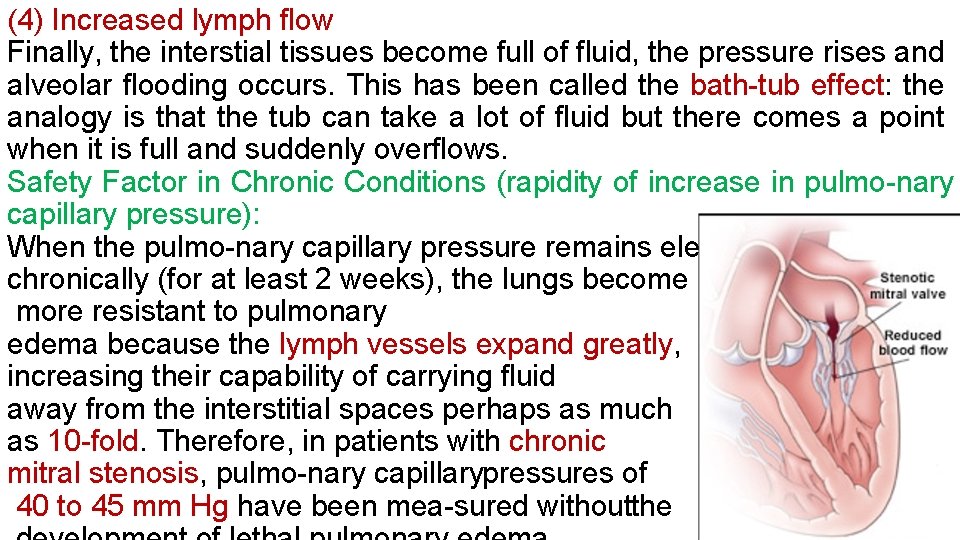
(4) Increased lymph flow Finally, the interstial tissues become full of fluid, the pressure rises and alveolar flooding occurs. This has been called the bath tub effect: the analogy is that the tub can take a lot of fluid but there comes a point when it is full and suddenly overflows. Safety Factor in Chronic Conditions (rapidity of increase in pulmo nary capillary pressure): When the pulmo nary capillary pressure remains elevated chronically (for at least 2 weeks), the lungs become even more resistant to pulmonary edema because the lymph vessels expand greatly, increasing their capability of carrying fluid away from the interstitial spaces perhaps as much as 10 fold. Therefore, in patients with chronic mitral stenosis, pulmo nary capillarypressures of 40 to 45 mm Hg have been mea sured withoutthe
Rapidity of Death in Persons with Acute Pulmonary Edema (degree of increase in pulmo nary capillary pressure): When the pulmonary capillary pressure rises even slightly above the safety factor level, lethal pulmonary edema can occur within hours, or even within 20 to 30 minutes if the capillary pressure rises 25 to 30 mm Hg above the safety factor level. Thus, in acute left sided heart failure, in which the pulmonary capillary pressure occa sionallydoes rise to 50 mm Hg, death may ensue ﻳﺘﺮﺗﺐ ﻋﻠﻰ ﺫﻟﻚ in less than 30 minutes as a result of acute pulmonary edema.