
Mechanisms Dean Hackett March 2012 Types of motion



- Slides: 68
Mechanisms Dean Hackett March 2012
Types of motion • • Linear Rotary Reciprocating Oscillating
Simple (Basic) Machines • Two ‘families’ – Inclined plane – lever
Simple Machines • • • Inclined plane Wedge Screw Lever Wheel and axle Pulley
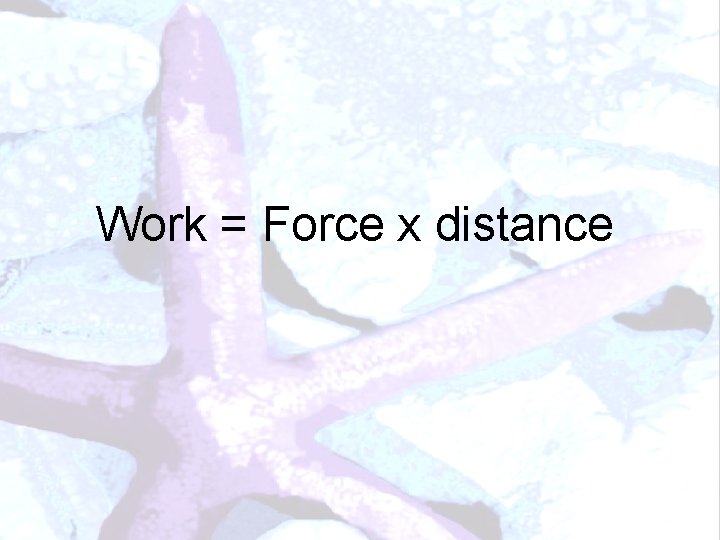
Work = Force x distance
Classes of Lever • Class 1 • Class 2 • Class 3
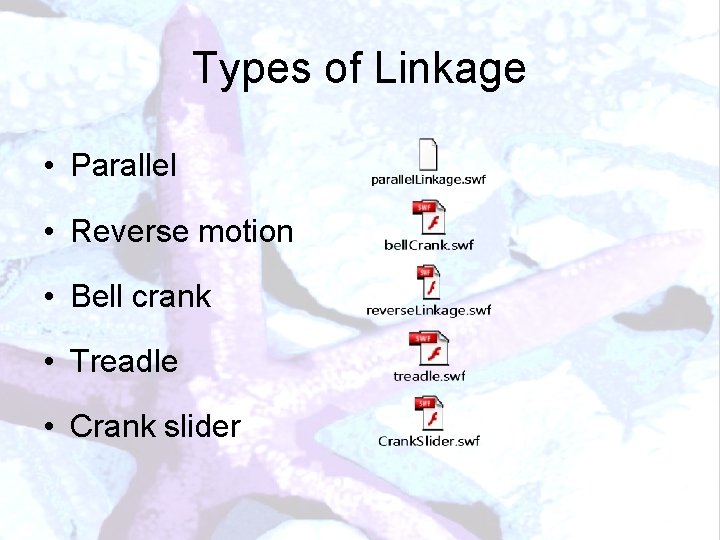
Types of Linkage • Parallel • Reverse motion • Bell crank • Treadle • Crank slider
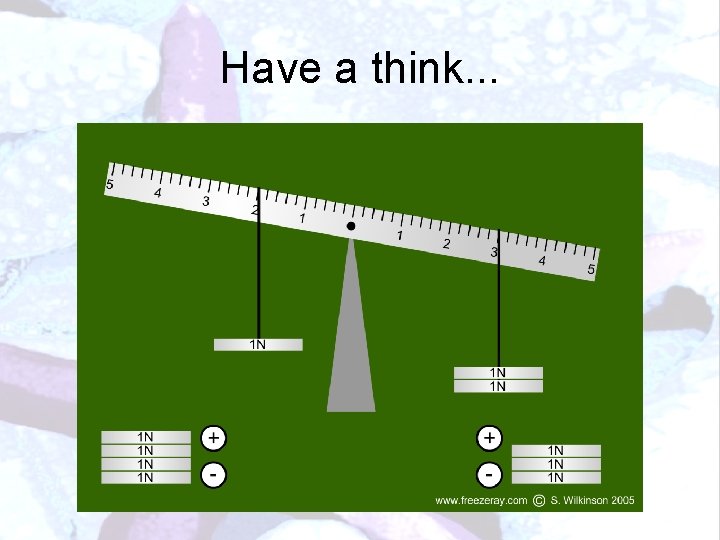
Have a think. . .
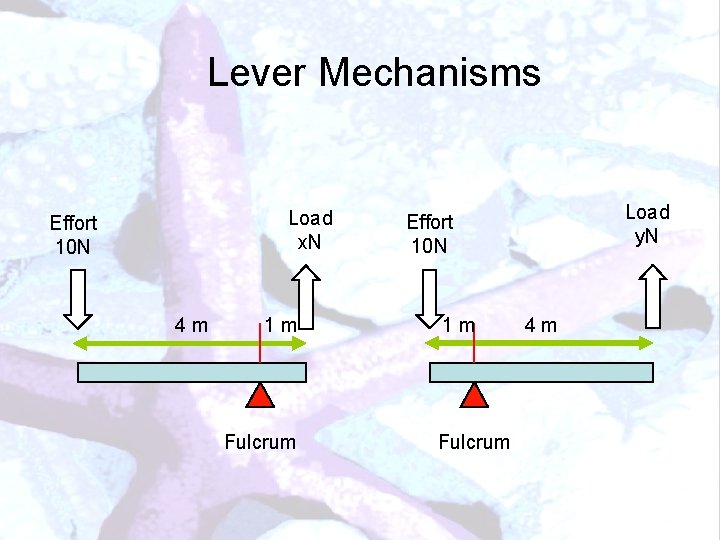
Lever Mechanisms Load x. N Effort 10 N 4 m 1 m Fulcrum Load y. N Effort 10 N 1 m Fulcrum 4 m
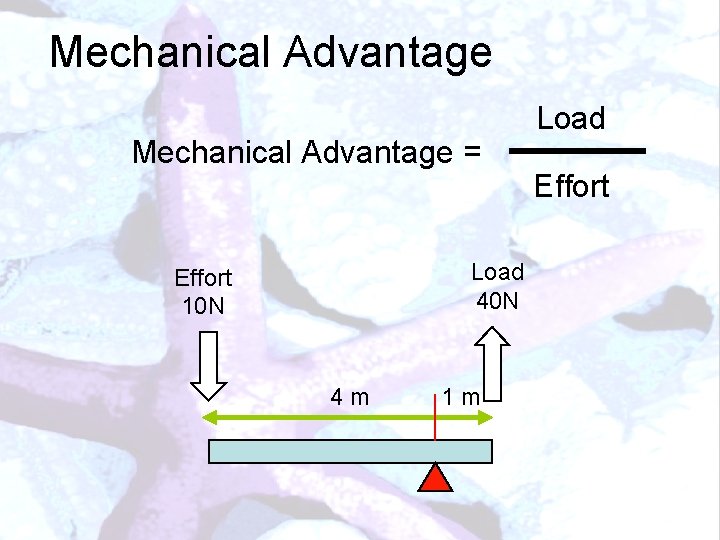
Mechanical Advantage = Load 40 N Effort 10 N 4 m 1 m Load Effort
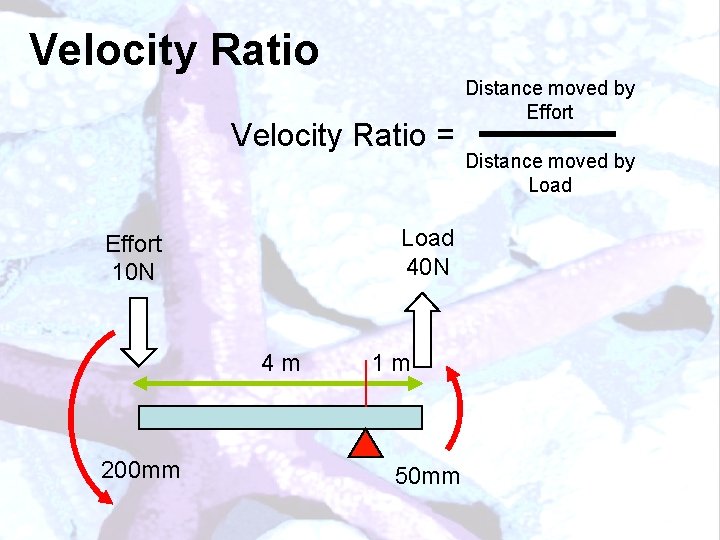
Velocity Ratio = Load 40 N Effort 10 N 4 m 200 mm 1 m 50 mm Distance moved by Effort Distance moved by Load
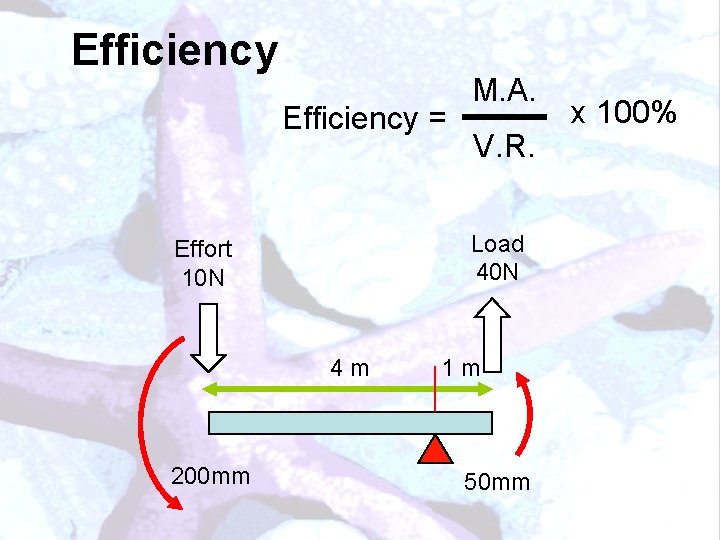
Efficiency = V. R. Load 40 N Effort 10 N 4 m 200 mm M. A. 1 m 50 mm x 100%
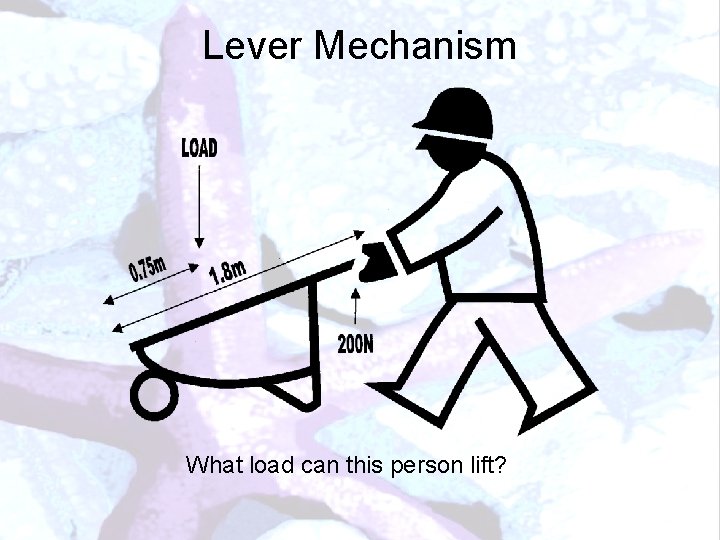
Lever Mechanism What load can this person lift?
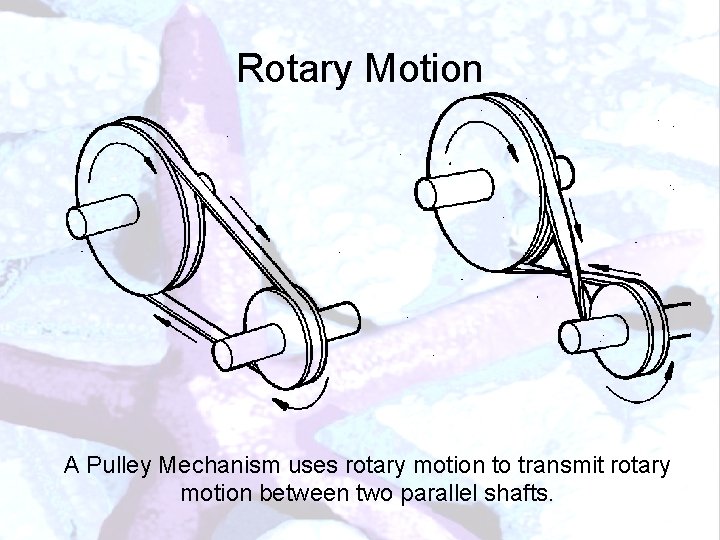
Rotary Motion A Pulley Mechanism uses rotary motion to transmit rotary motion between two parallel shafts.
Discuss. . . • How do you attach a pulley to a shaft?
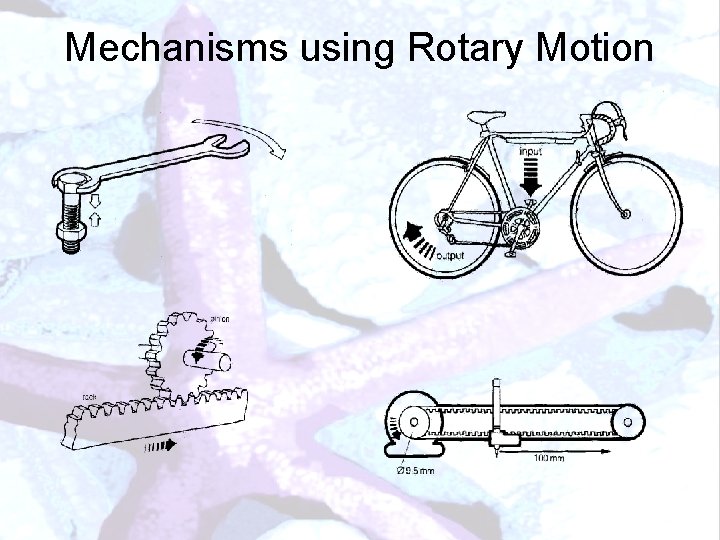
Mechanisms using Rotary Motion
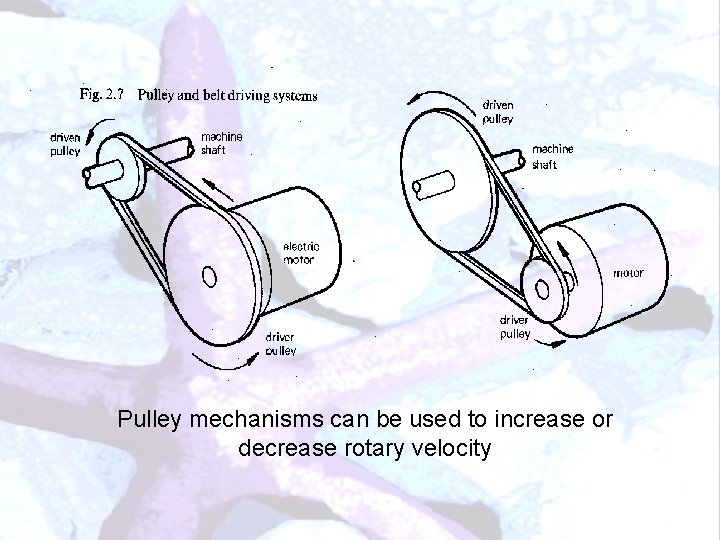
Pulley mechanisms can be used to increase or decrease rotary velocity
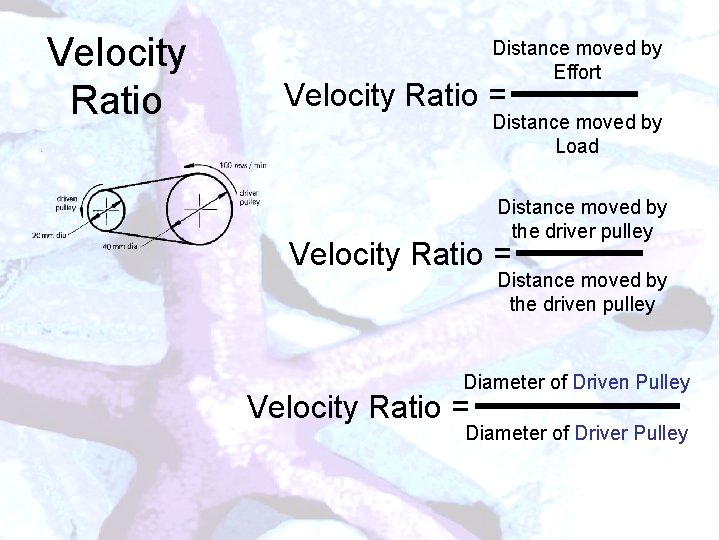
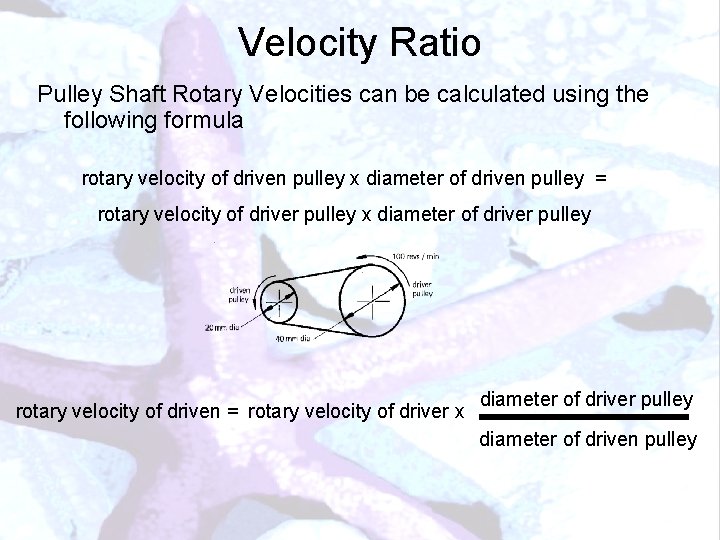
Velocity Ratio Distance moved by Effort Velocity Ratio = Distance moved by Load Distance moved by the driver pulley Velocity Ratio = Distance moved by the driven pulley Diameter of Driven Pulley Velocity Ratio = Diameter of Driver Pulley
Velocity Ratio Pulley Shaft Rotary Velocities can be calculated using the following formula rotary velocity of driven pulley x diameter of driven pulley = rotary velocity of driver pulley x diameter of driver pulley rotary velocity of driven = rotary velocity of driver x diameter of driver pulley diameter of driven pulley
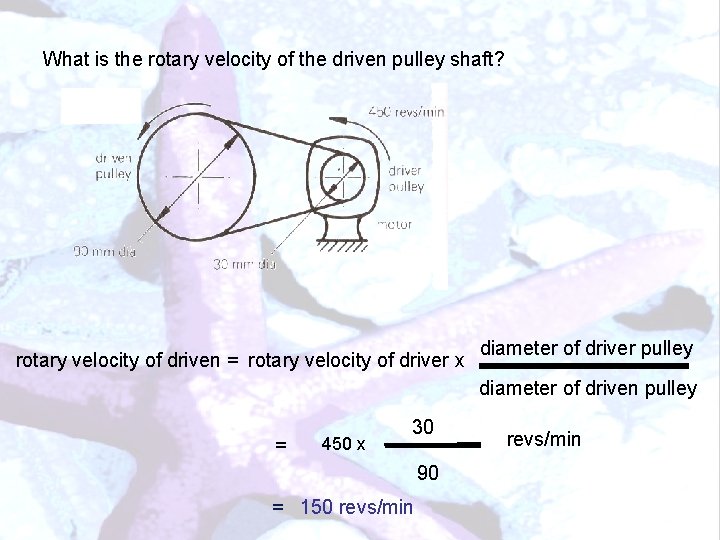
What is the rotary velocity of the driven pulley shaft? rotary velocity of driven = rotary velocity of driver x diameter of driver pulley diameter of driven pulley = 450 x 30 90 = 150 revs/min
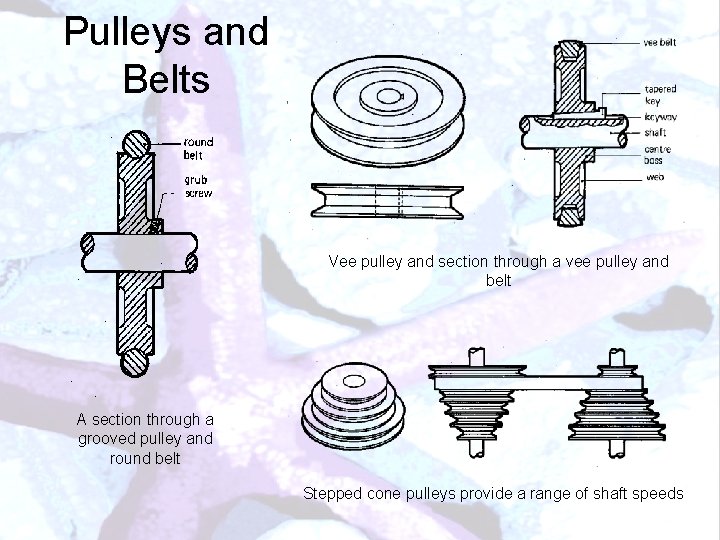
Pulleys and Belts Vee pulley and section through a vee pulley and belt A section through a grooved pulley and round belt Stepped cone pulleys provide a range of shaft speeds
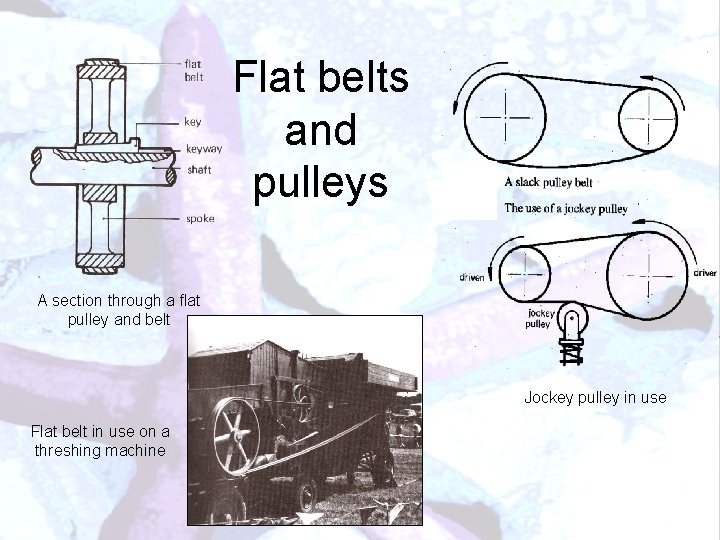
Flat belts and pulleys A section through a flat pulley and belt Jockey pulley in use Flat belt in use on a threshing machine
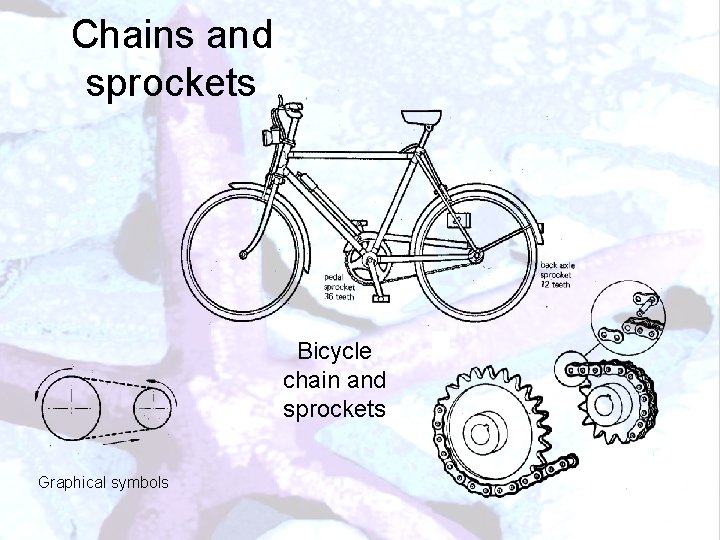
Chains and sprockets Bicycle chain and sprockets Graphical symbols
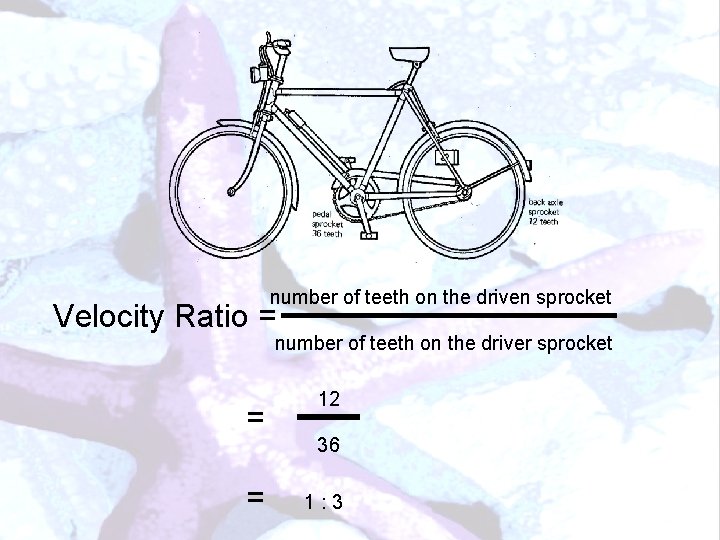
number of teeth on the driven sprocket Velocity Ratio = number of teeth on the driver sprocket = = 12 36 1: 3
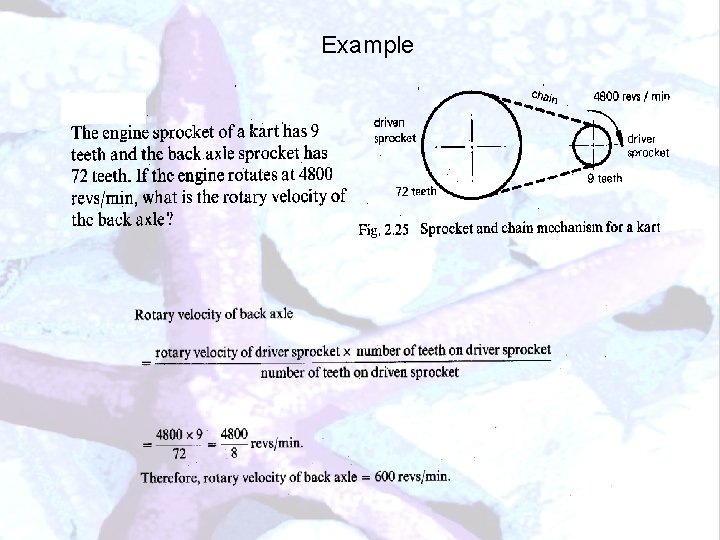
Example
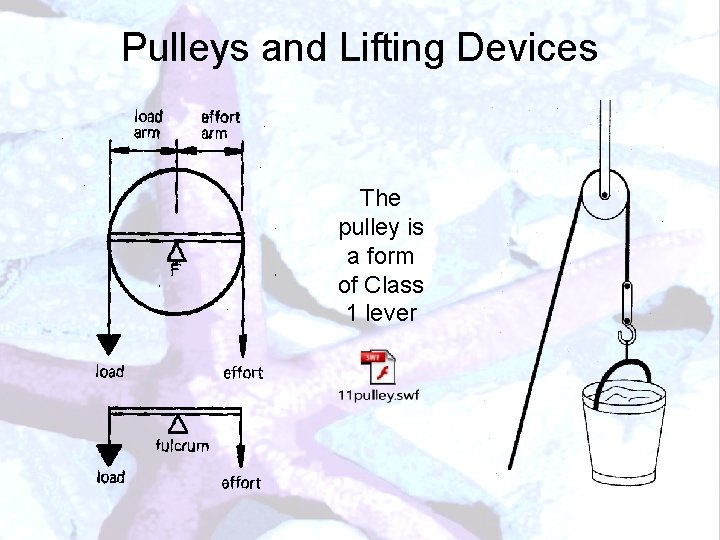
Pulleys and Lifting Devices The pulley is a form of Class 1 lever
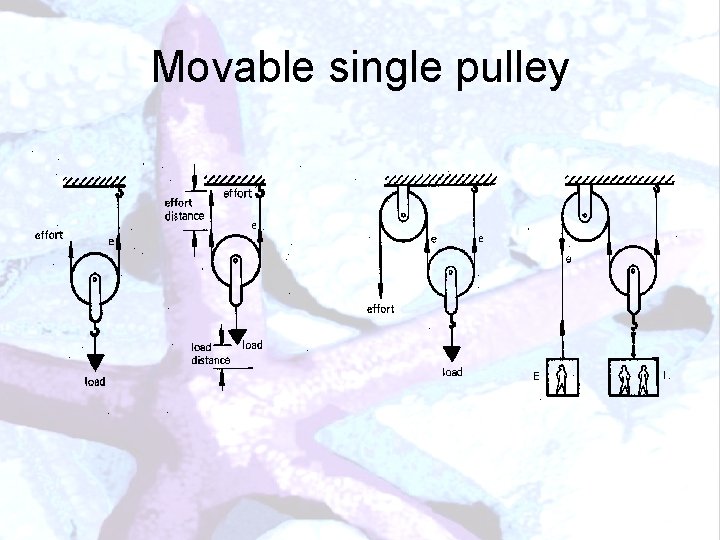
Movable single pulley
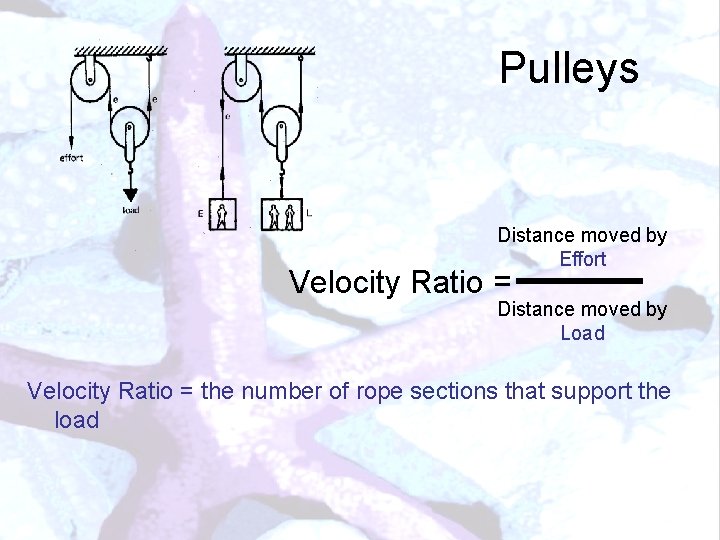
Pulleys Distance moved by Effort Velocity Ratio = Distance moved by Load Velocity Ratio = the number of rope sections that support the load
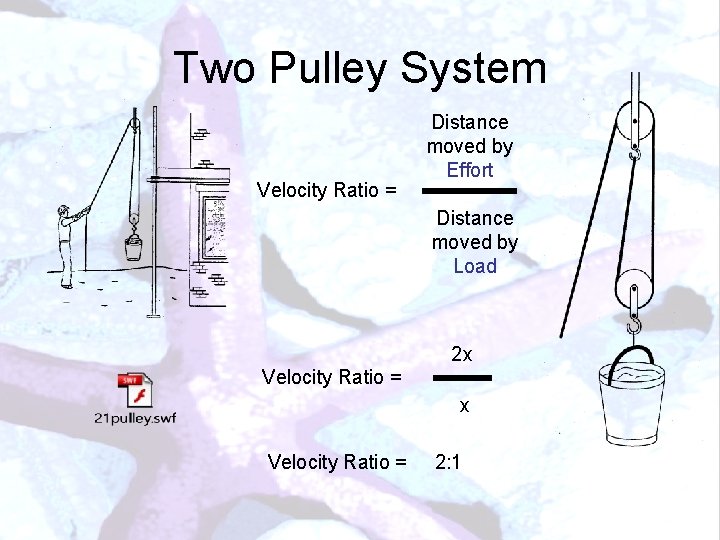
Two Pulley System Velocity Ratio = Distance moved by Effort Distance moved by Load 2 x Velocity Ratio = 2: 1
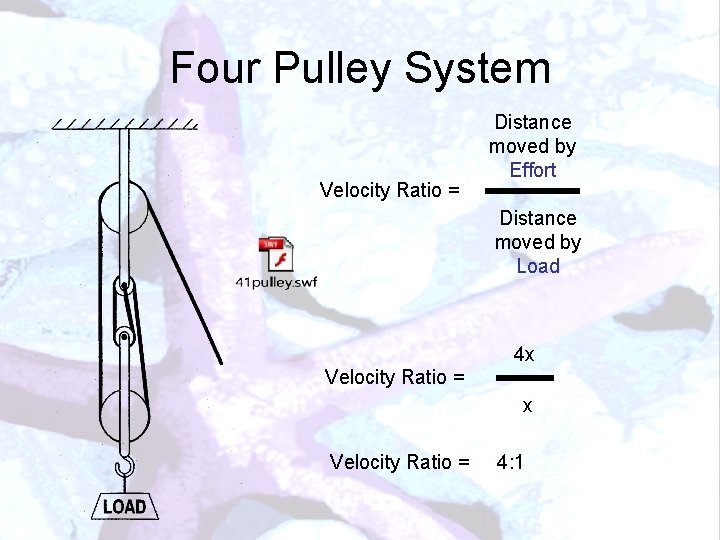
Four Pulley System Velocity Ratio = Distance moved by Effort Distance moved by Load 4 x Velocity Ratio = 4: 1
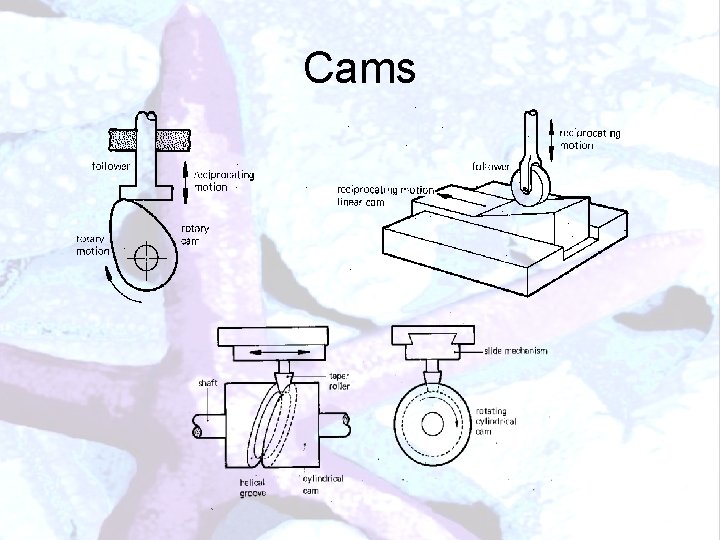
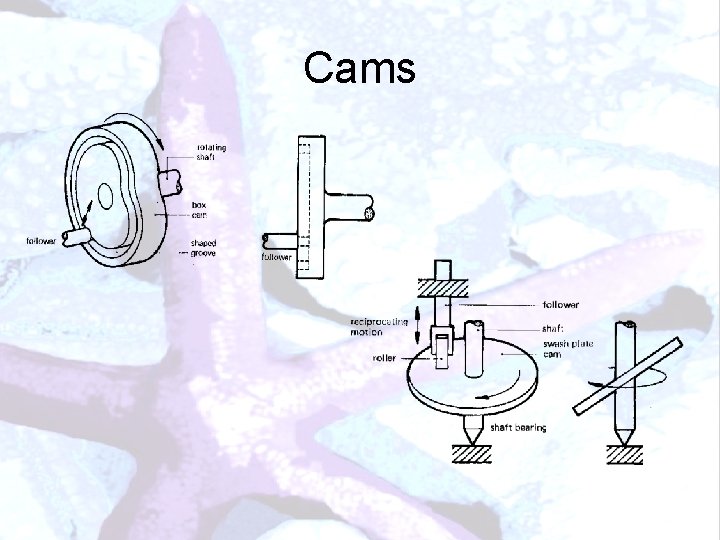
Cams
Cams
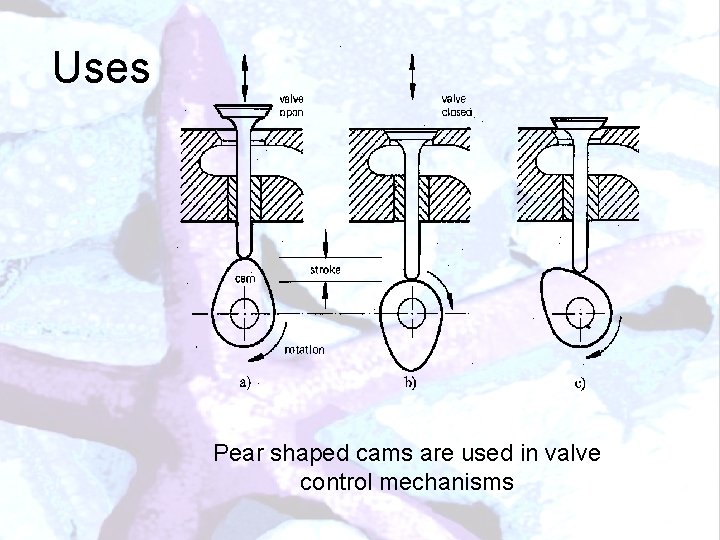
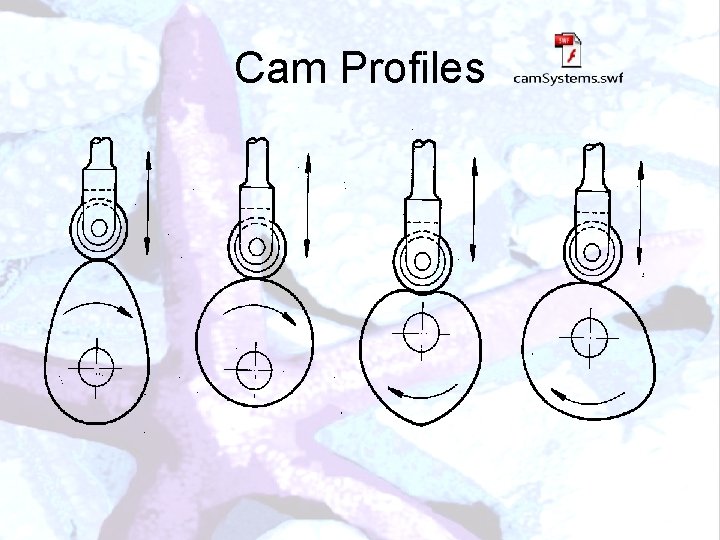
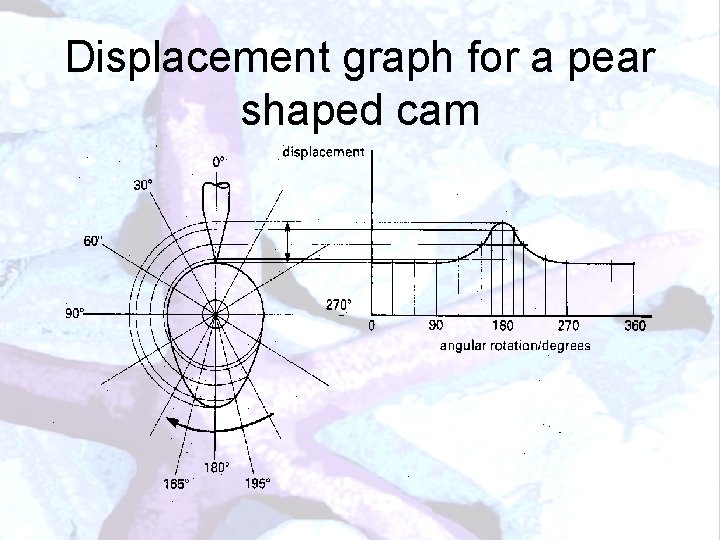
Uses Pear shaped cams are used in valve control mechanisms
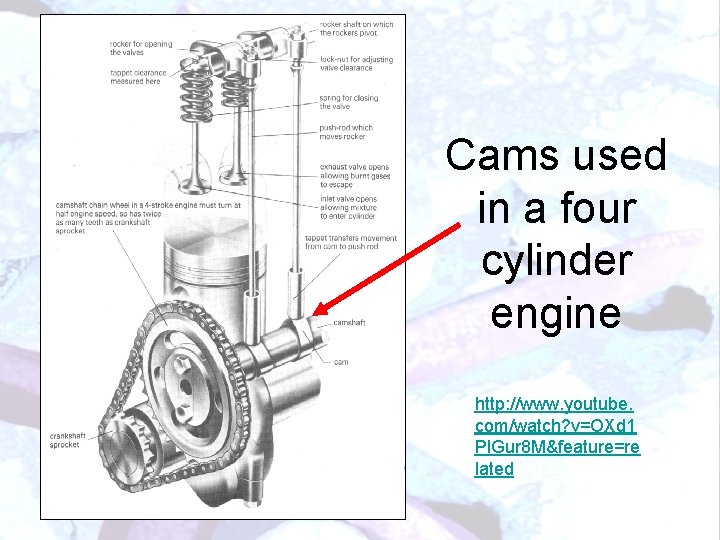
Cams used in a four cylinder engine http: //www. youtube. com/watch? v=OXd 1 Pl. Gur 8 M&feature=re lated
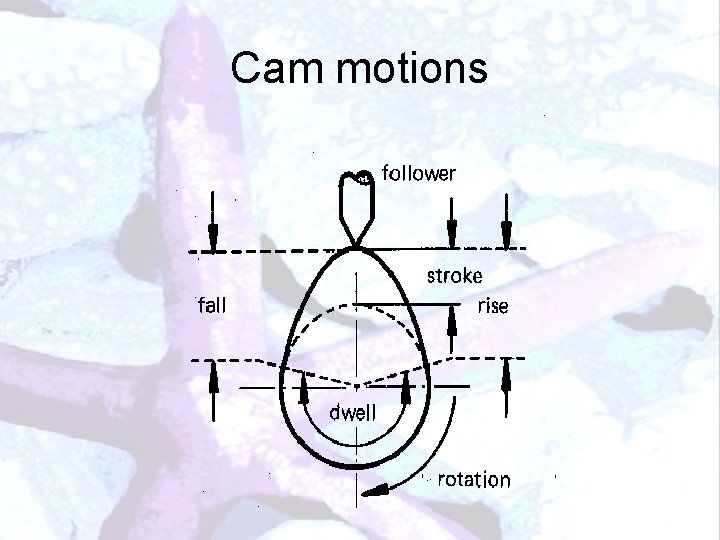
Cam motions
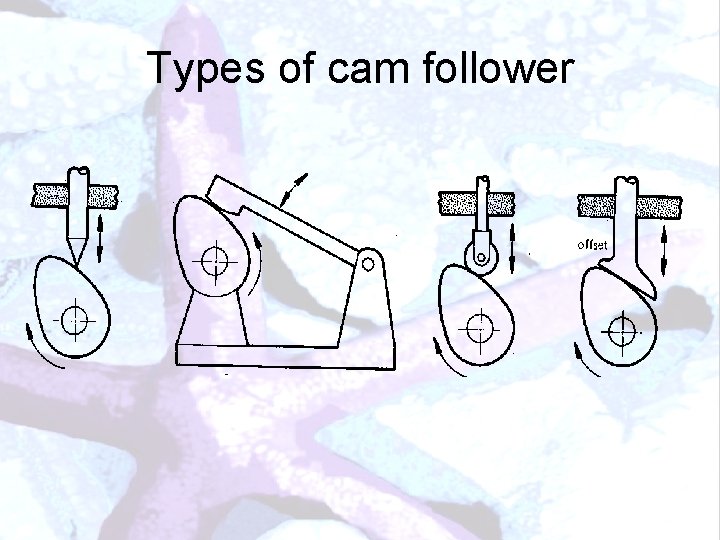
Types of cam follower
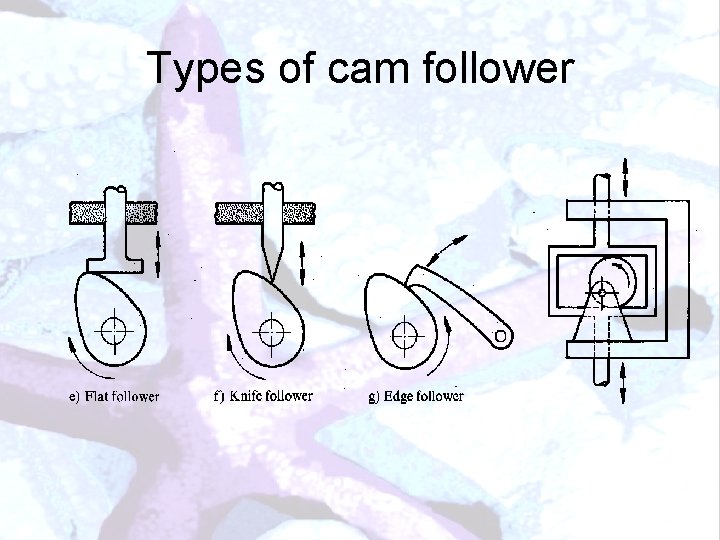
Types of cam follower
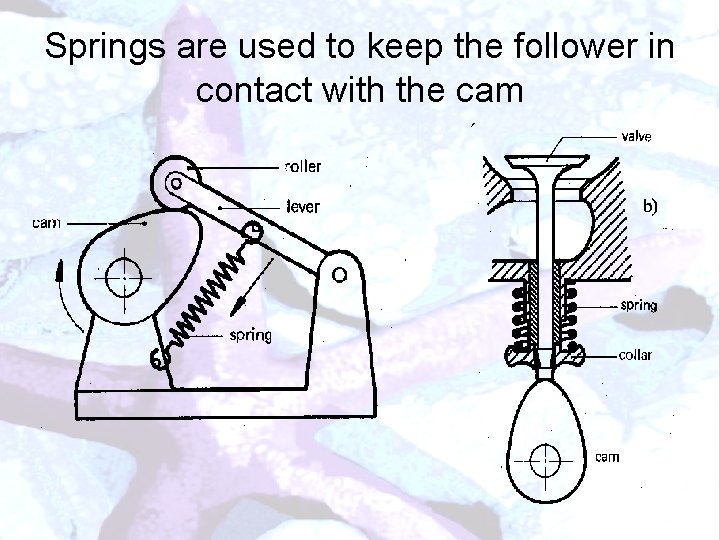
Springs are used to keep the follower in contact with the cam
Cam Profiles
Displacement graph for a pear shaped cam
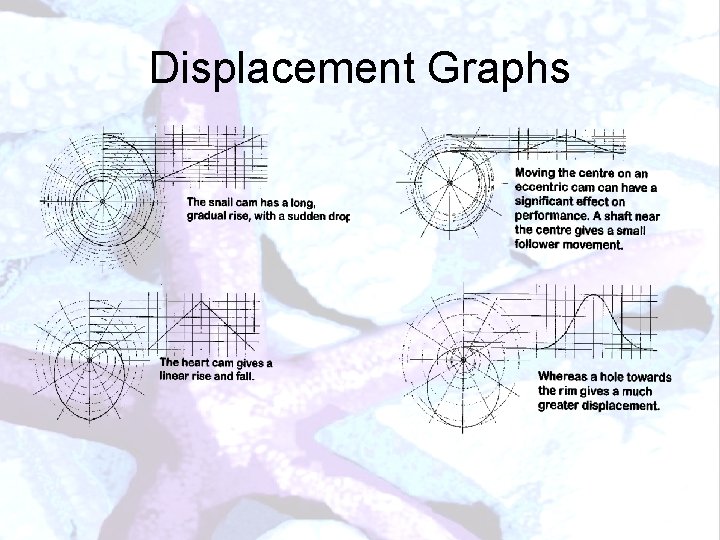
Displacement Graphs
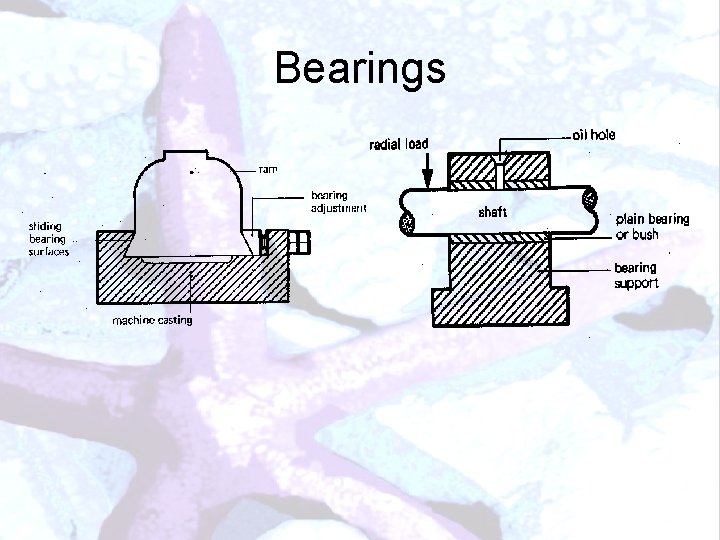
Bearings
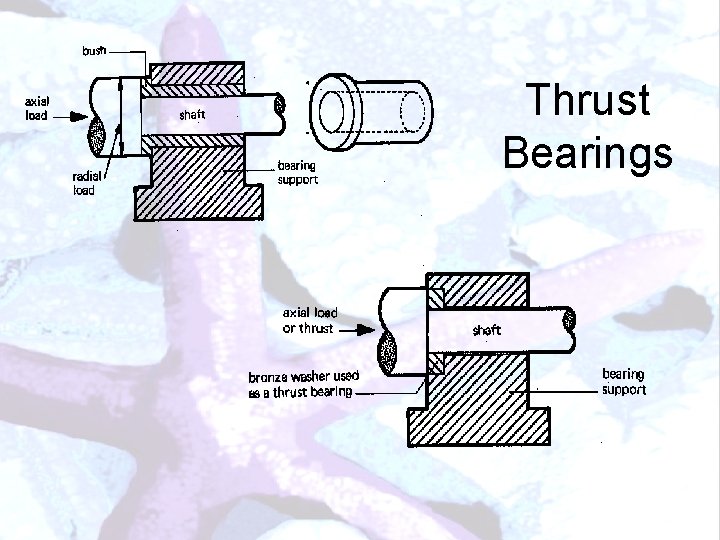
Thrust Bearings
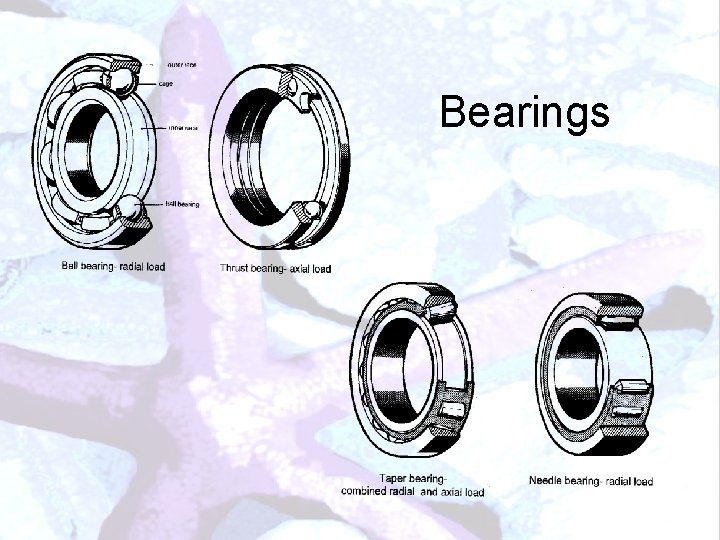
Bearings
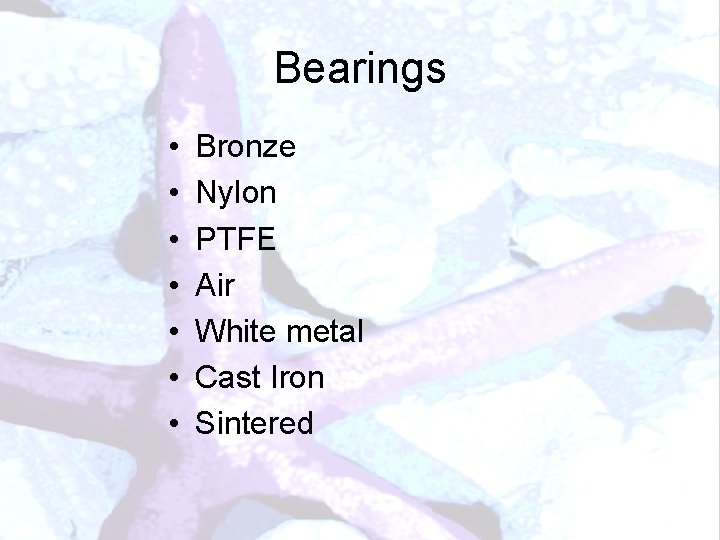
Bearings • • Bronze Nylon PTFE Air White metal Cast Iron Sintered
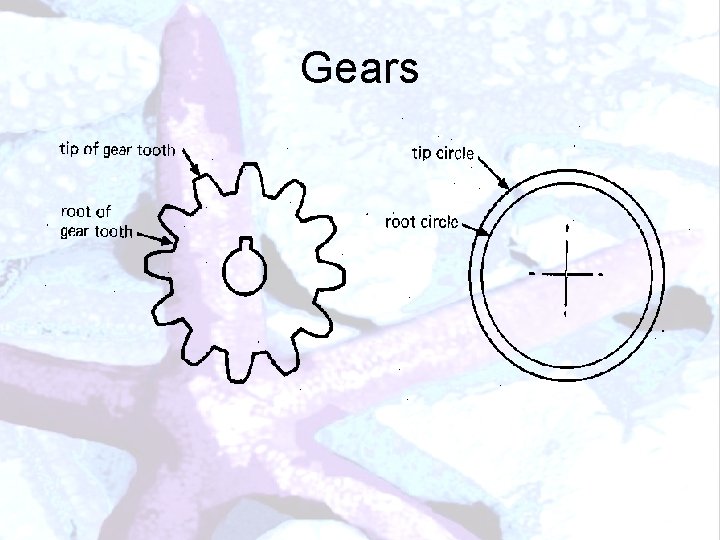
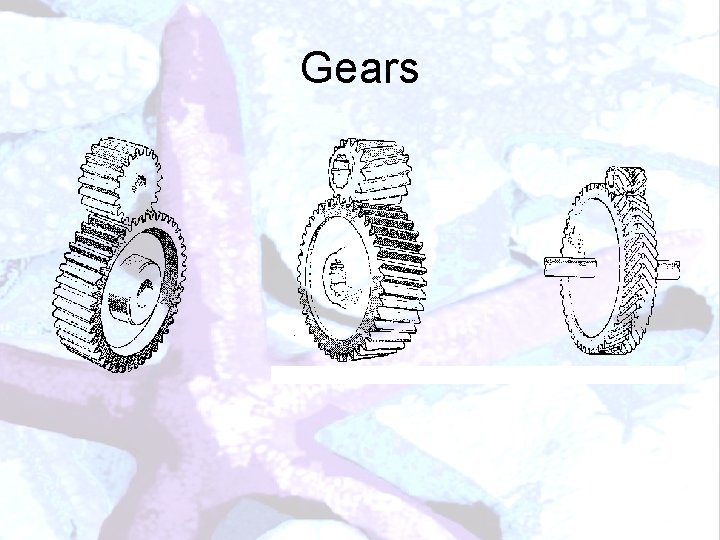
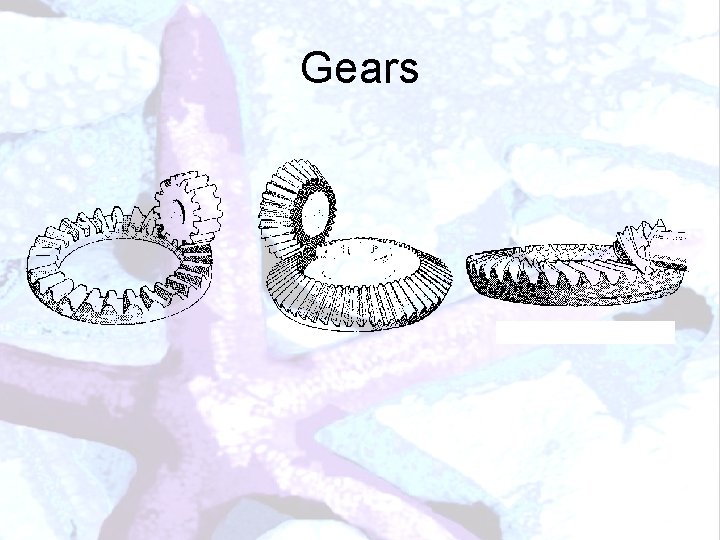
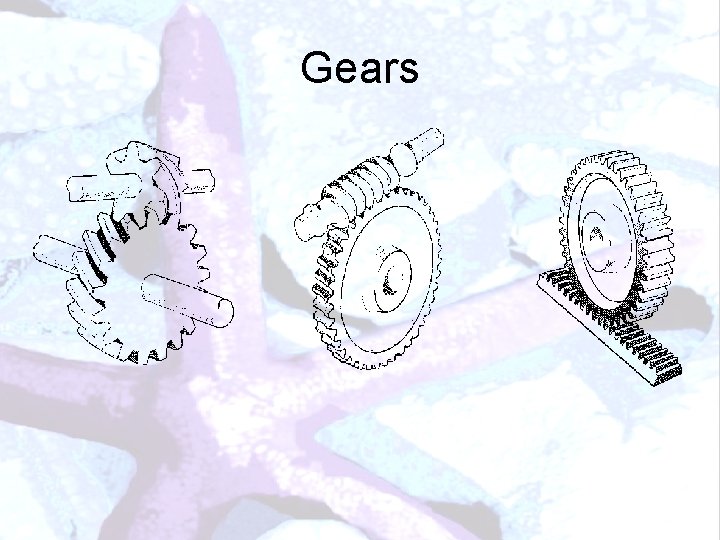
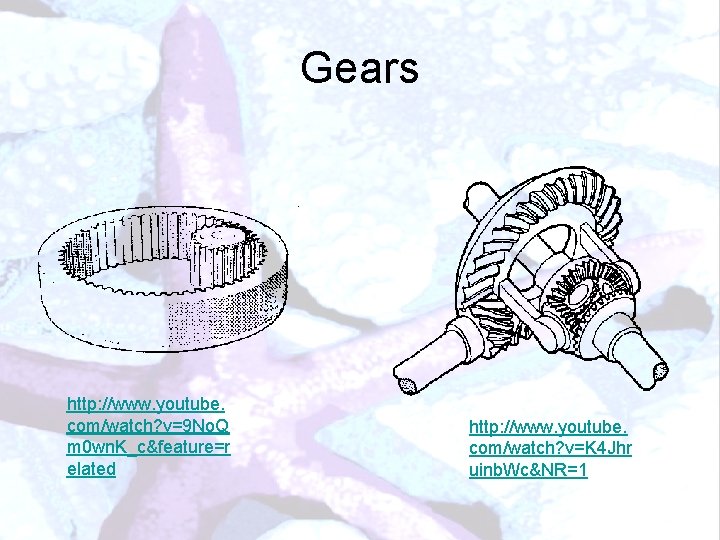
Gears
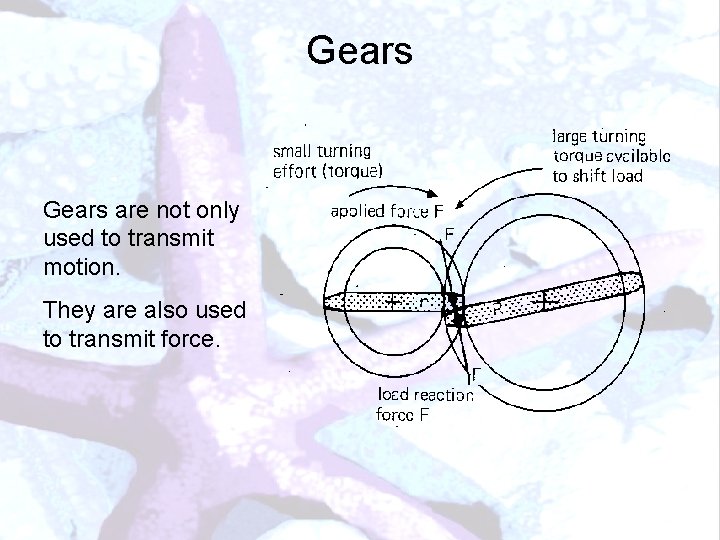
Gears are not only used to transmit motion. They are also used to transmit force.
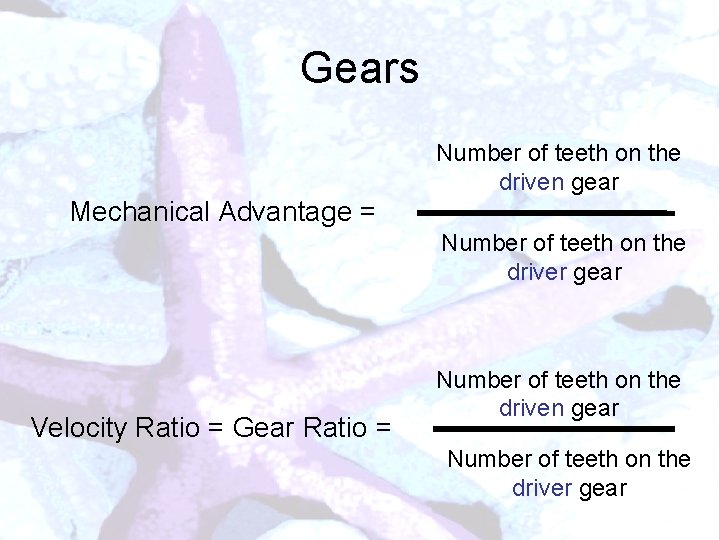
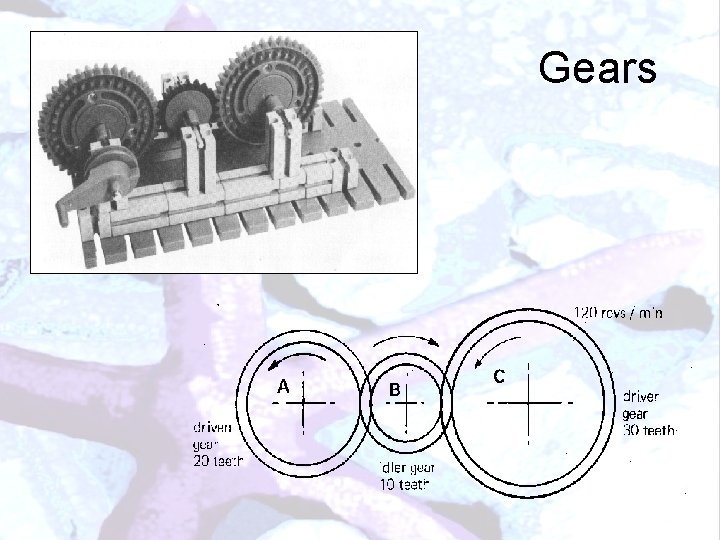
Gears Number of teeth on the driven gear Mechanical Advantage = Number of teeth on the driver gear Velocity Ratio = Gear Ratio = Number of teeth on the driven gear Number of teeth on the driver gear
Gears
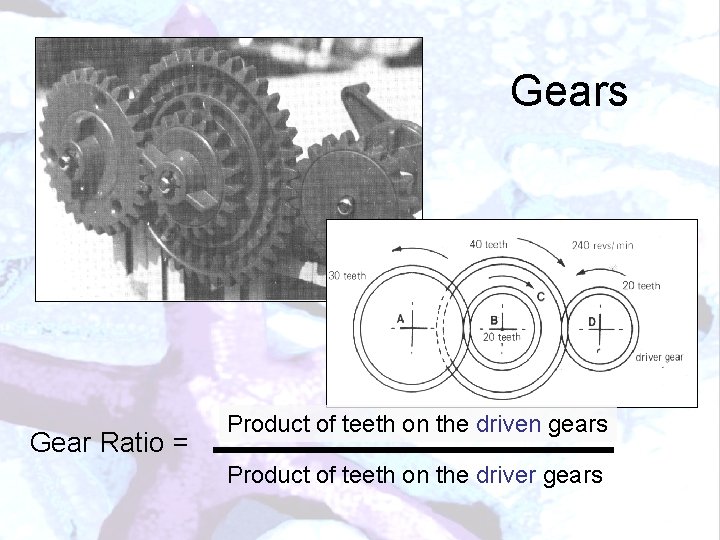
Gears Gear Ratio = Product of teeth on the driven gears Product of teeth on the driver gears
Gears
Gears
Gears
Gears http: //www. youtube. com/watch? v=9 No. Q m 0 wn. K_c&feature=r elated http: //www. youtube. com/watch? v=K 4 Jhr uinb. Wc&NR=1
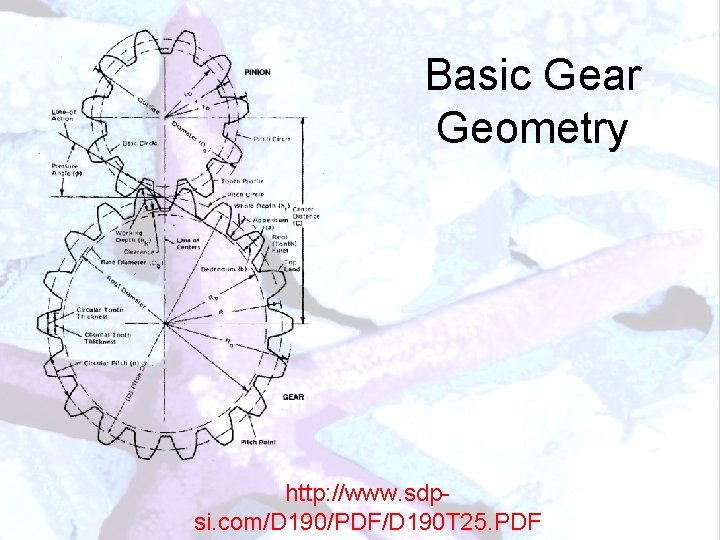
Basic Gear Geometry http: //www. sdpsi. com/D 190/PDF/D 190 T 25. PDF
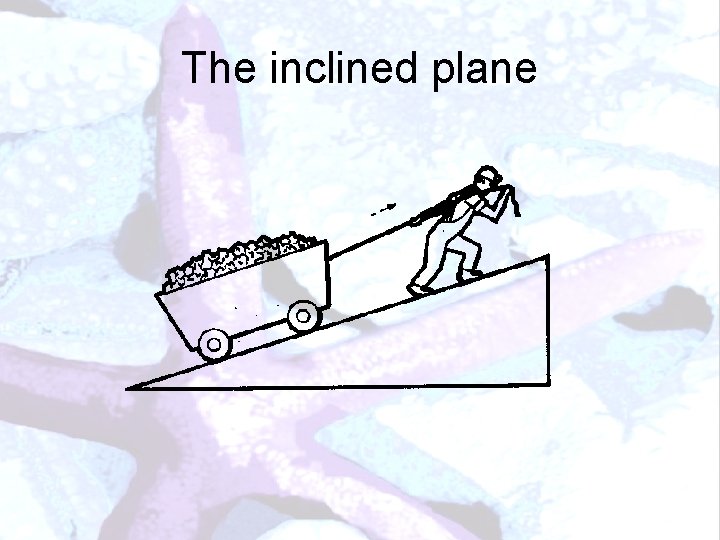
The inclined plane
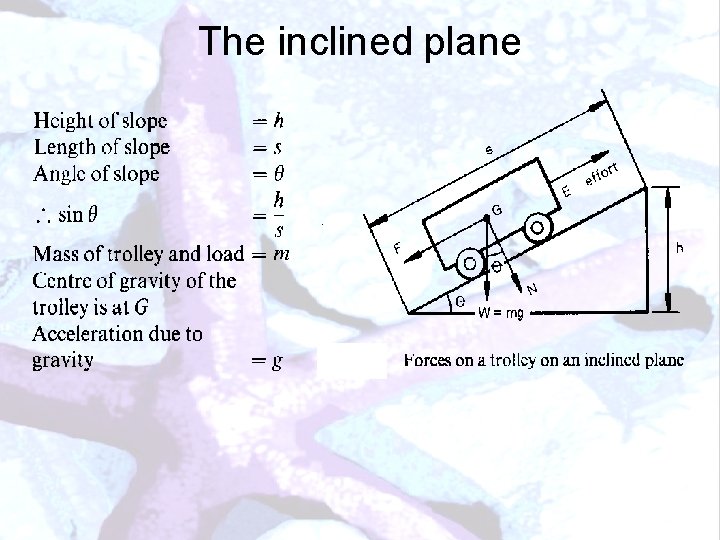
The inclined plane
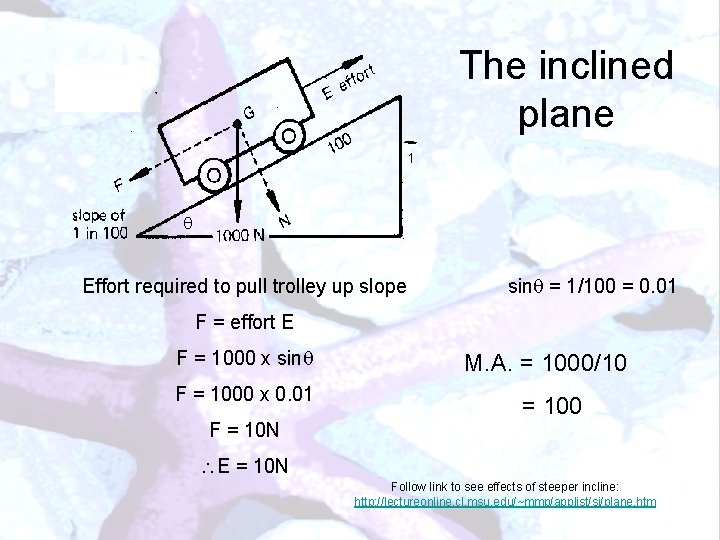
The inclined plane Effort required to pull trolley up slope sin = 1/100 = 0. 01 F = effort E F = 1000 x sin F = 1000 x 0. 01 F = 10 N M. A. = 1000/10 = 100 E = 10 N Follow link to see effects of steeper incline: http: //lectureonline. cl. msu. edu/~mmp/applist/si/plane. htm
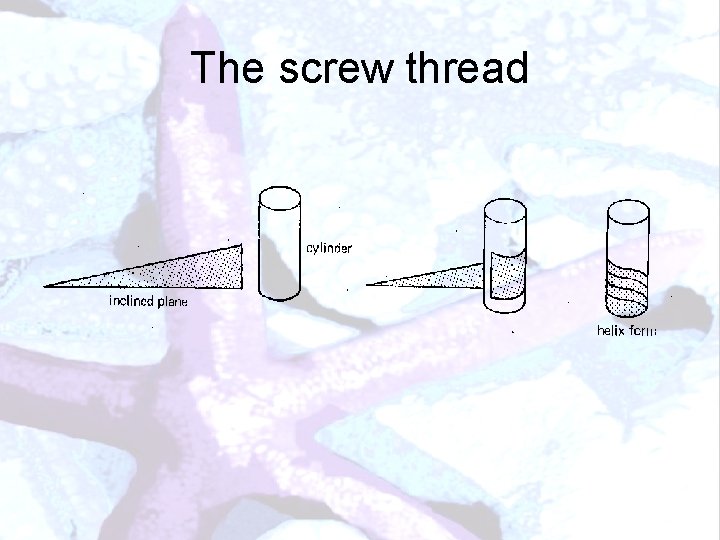
The screw thread
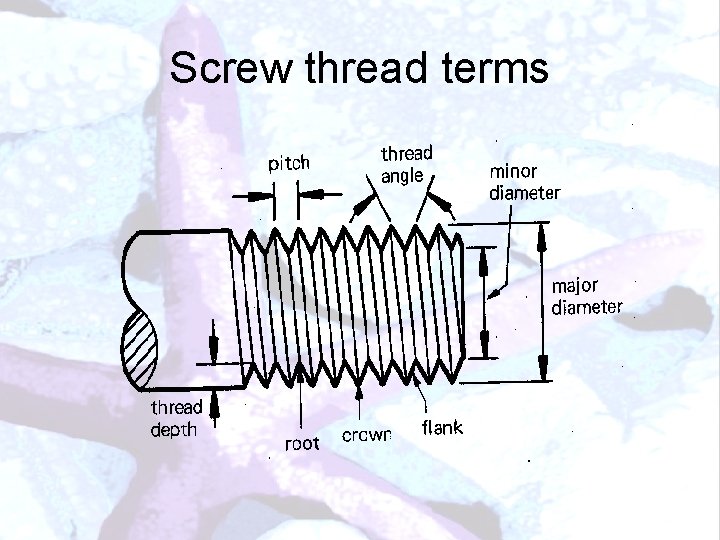
Screw thread terms
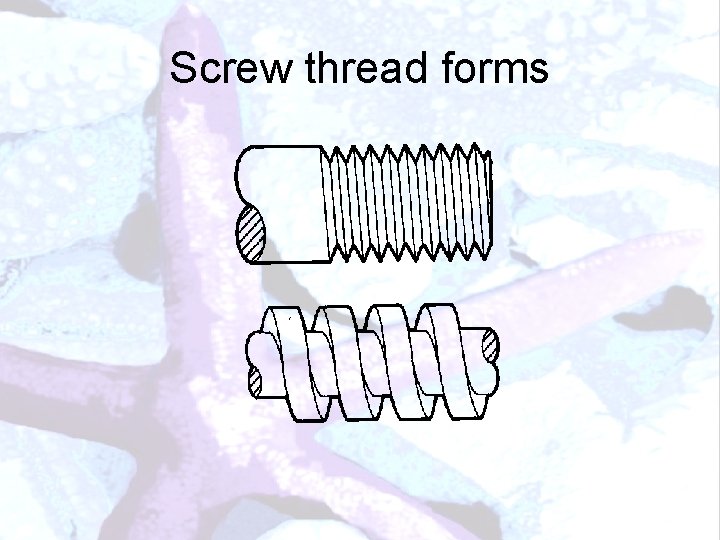
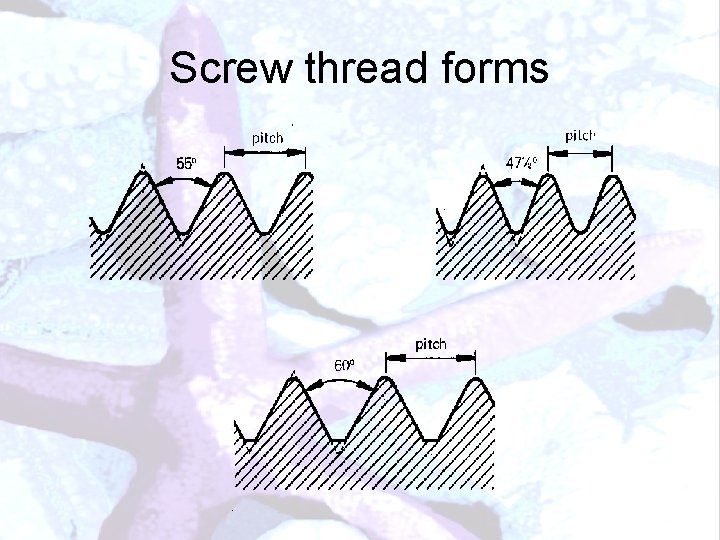
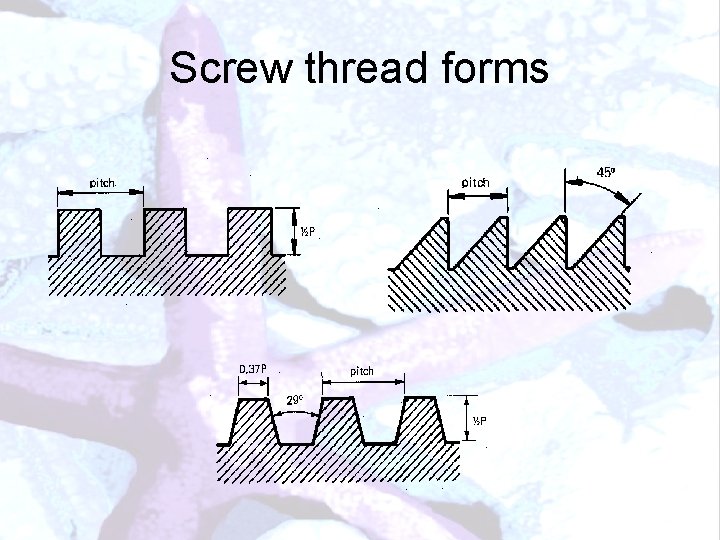
Screw thread forms
Screw thread forms
Screw thread forms
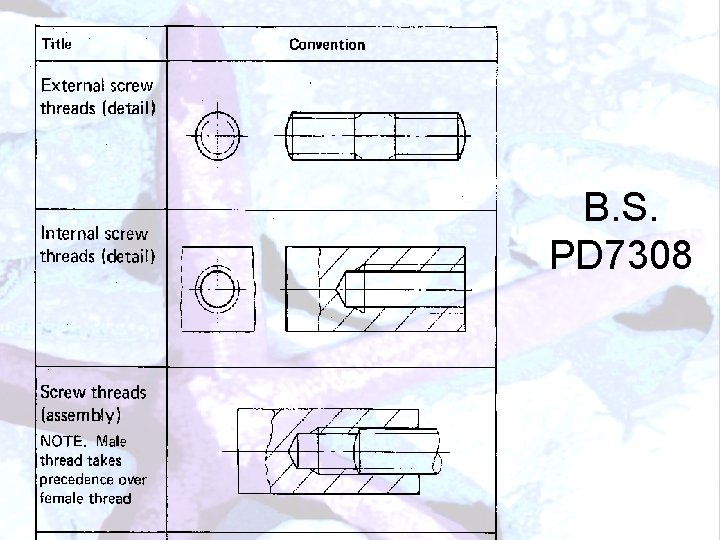
B. S. PD 7308
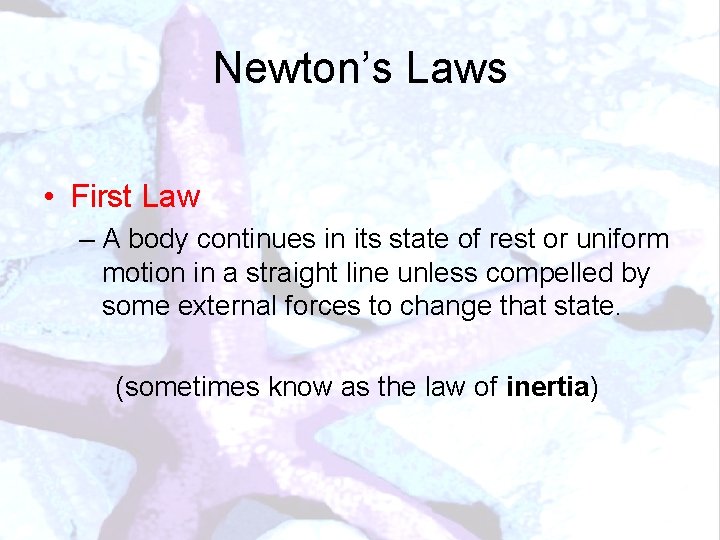
Newton’s Laws • First Law – A body continues in its state of rest or uniform motion in a straight line unless compelled by some external forces to change that state. (sometimes know as the law of inertia)
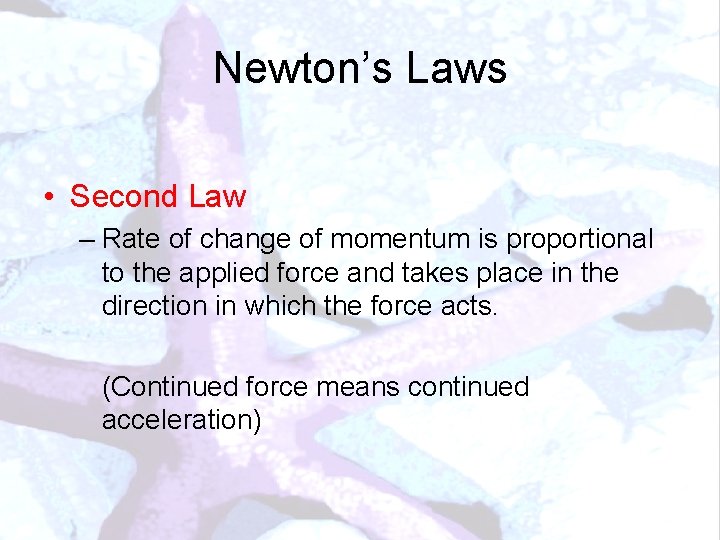
Newton’s Laws • Second Law – Rate of change of momentum is proportional to the applied force and takes place in the direction in which the force acts. (Continued force means continued acceleration)
Newton’s Laws • Third Law – To every action there is an equal and opposite reaction