
mechanisms Changes in gene pool types of genes

- Slides: 43
mechanisms Changes in gene pool (types of genes) cause evolution! • Mutation: can cause changes to a gene - IMPORTANT: has to affect sex cells so the mutations are passed on! • Variation provides the material for natural selection to work on!
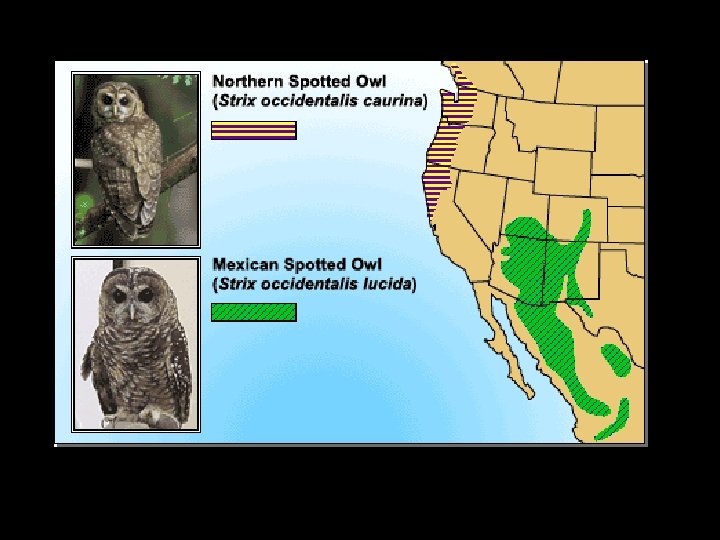
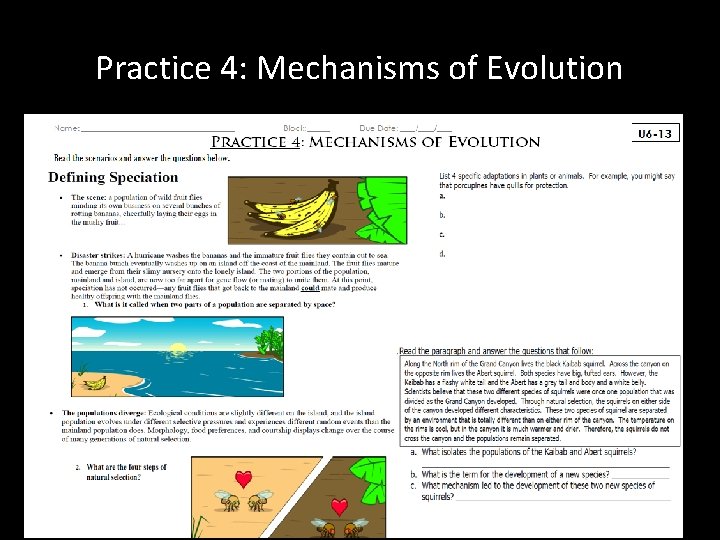
Speciation (new species) when small populations become isolated http: //www. youtube. com/watch? v=YCo. Ei. LOV 8 jc Geographic isolation: two populations of the same species become separated by a physical barrier. Over time, they become two different species and can no longer interbreed.
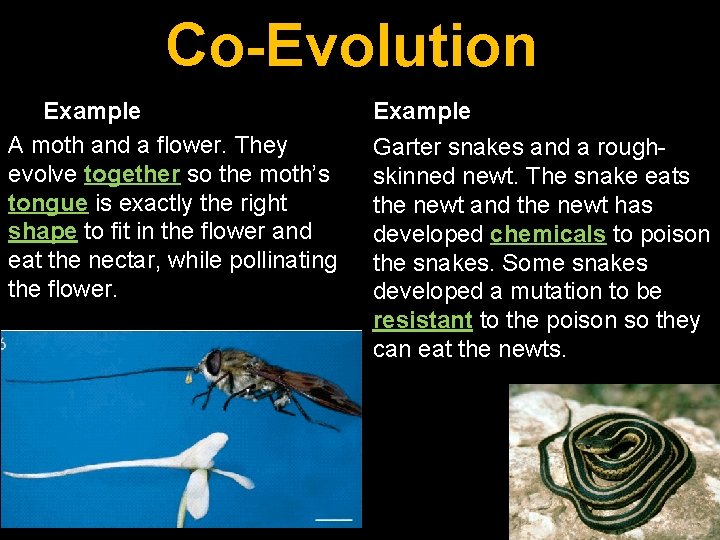
Co-Evolution The evolution of one species influences the evolution of the other species.
Co-Evolution Example A moth and a flower. They evolve together so the moth’s tongue is exactly the right shape to fit in the flower and eat the nectar, while pollinating the flower. Example Garter snakes and a roughskinned newt. The snake eats the newt and the newt has developed chemicals to poison the snakes. Some snakes developed a mutation to be resistant to the poison so they can eat the newts.
Do Now 1. What are the 2 ways to date fossils? 2. How can the anatomy of organisms serve as evidence of evolution? 3. What are vestigal structures? Give an example. 4. What is biochemistry and how does that relate to evolution? 5. What is speciation and how does it happen? 6. What is co-evolution? Give an example.
Do Now 1. What is speciation and how does it happen? 2. What is co-evolution? Give an example. 3. What is the “biology” definition of a species? *this is important to know!* 4. Planet Earth has an estimated 8. 7 million species. How would YOU keep track of them all if that were your job?
Data Tracking
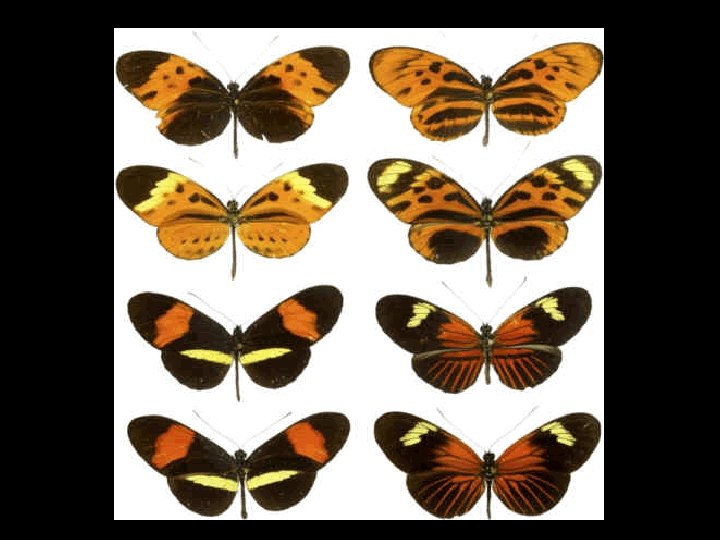
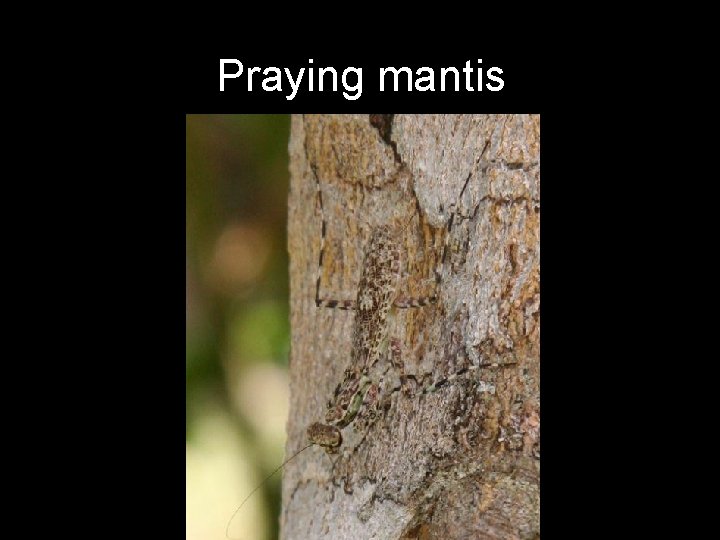
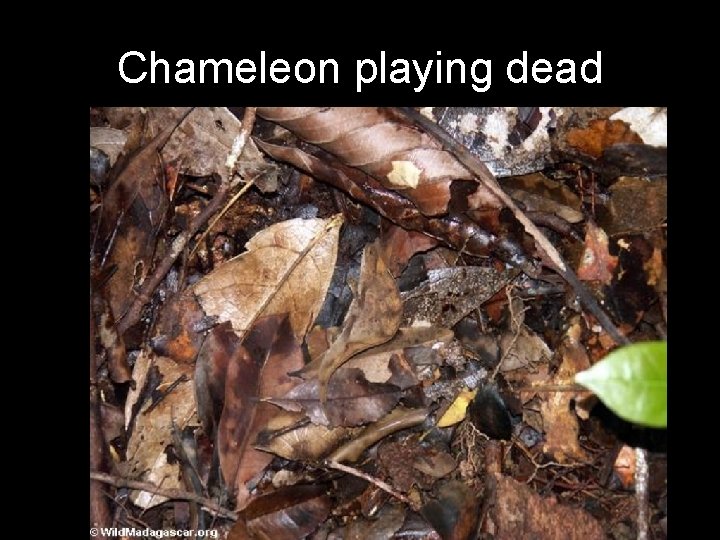
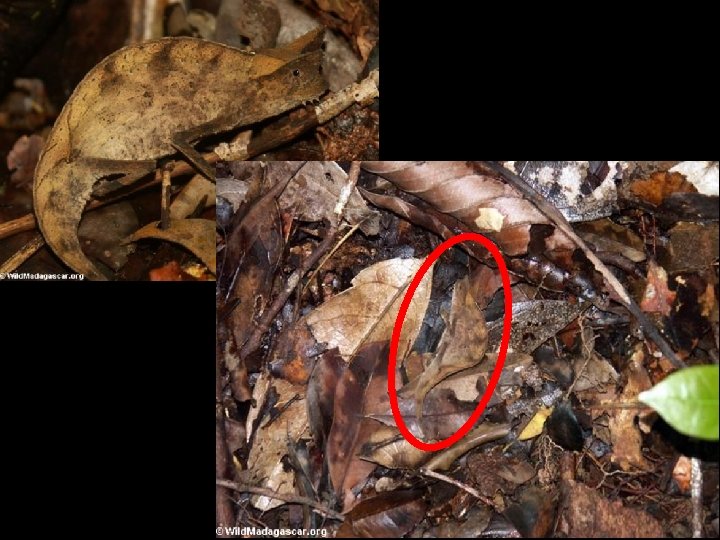
mimicry "To mimic = to copy" • When organisms have evolved to share common characteristics. This adaptation may increase the fitness of the organism and allow it to survive better. * Example: Camouflage and wing patterns in butterflies
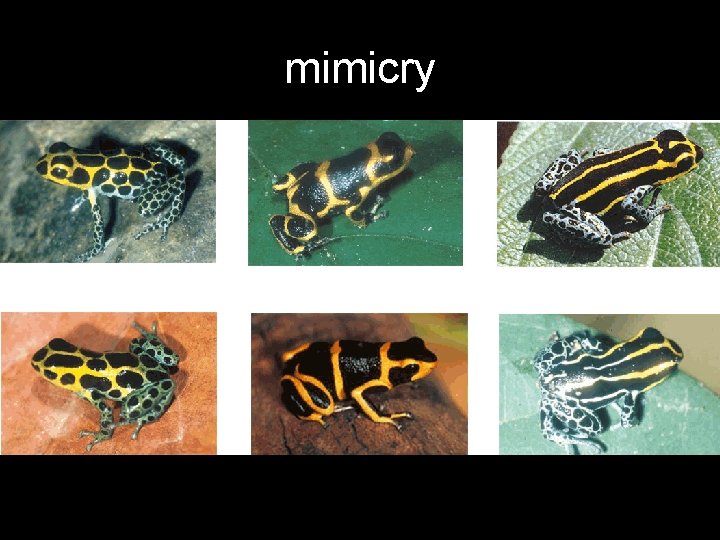
mimicry
mimicry
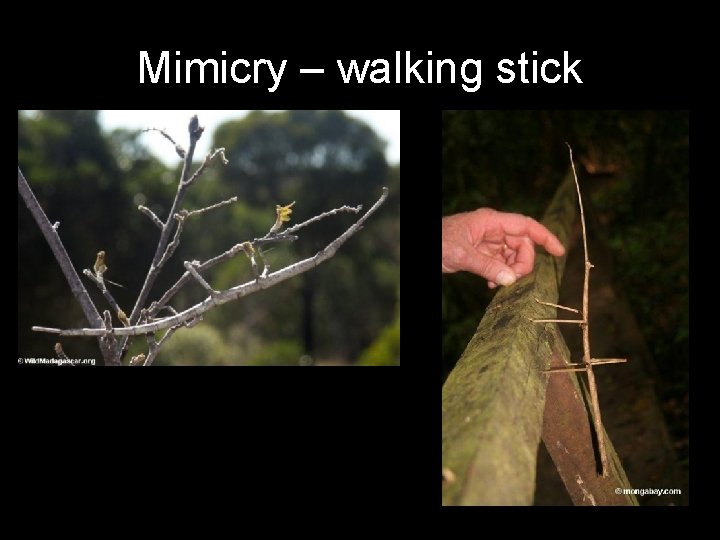
Mimicry – walking stick
Praying mantis
Chameleon playing dead
The environment decides which adaptations are favorable and which are not. An organism cannot determine if it will be more fit; it's all up to the environment!
U 6 -12
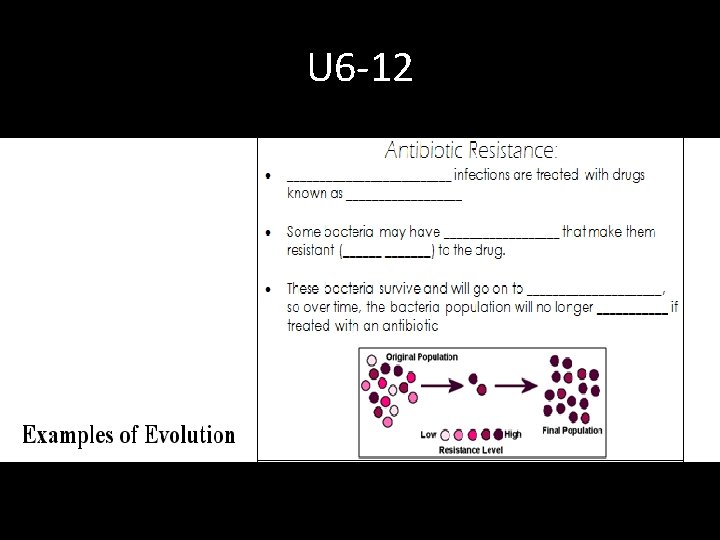
Examples of Evolution Antibiotic Resistance * Bacterial infections are treated with drugs known as antibiotics * Some bacteria may have mutations that make them resistant (don't die) to the antibiotic * These bacteria survive, and will go on to reproduce, so over time, the bacteria population will no longer die if treated with an antibiotic
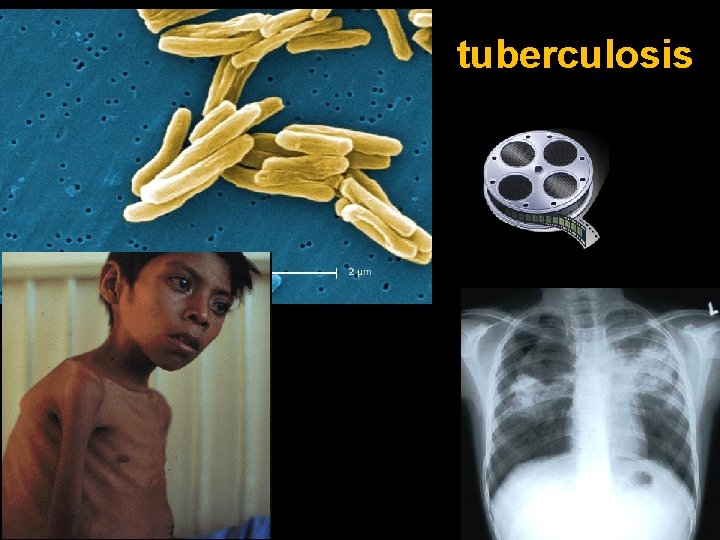
Tuberculosis • http: //www. youtube. com/watch? v=Sfgg 3 S 0 xn zk
U 6 -12
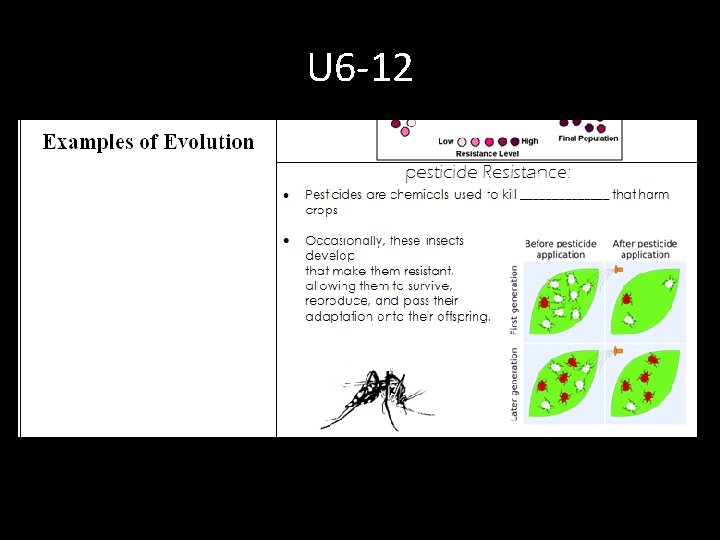
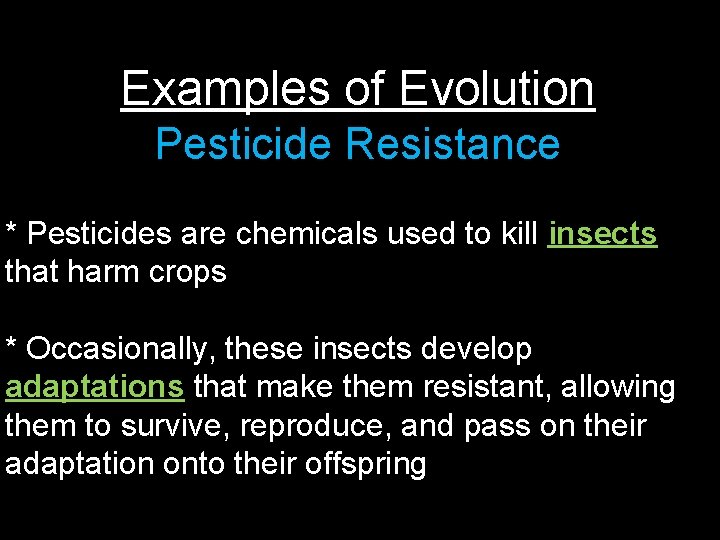
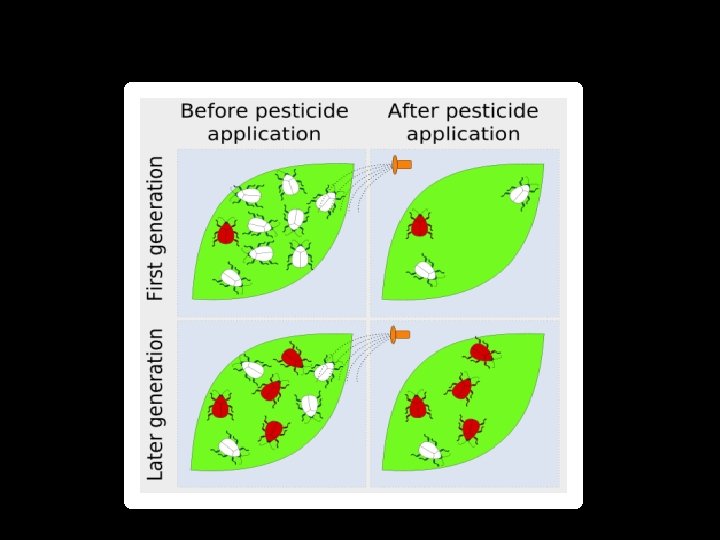
Examples of Evolution Pesticide Resistance * Pesticides are chemicals used to kill insects that harm crops * Occasionally, these insects develop adaptations that make them resistant, allowing them to survive, reproduce, and pass on their adaptation onto their offspring
tuberculosis
Practice 4: Mechanisms of Evolution
Do Now 1. What is speciation and how does it happen? 2. What is co-evolution? Give an example. 3. Where in the cell does cellular respiration take place? 4. What are the 2 organelles that a plant cell has that an animal cell does not have?
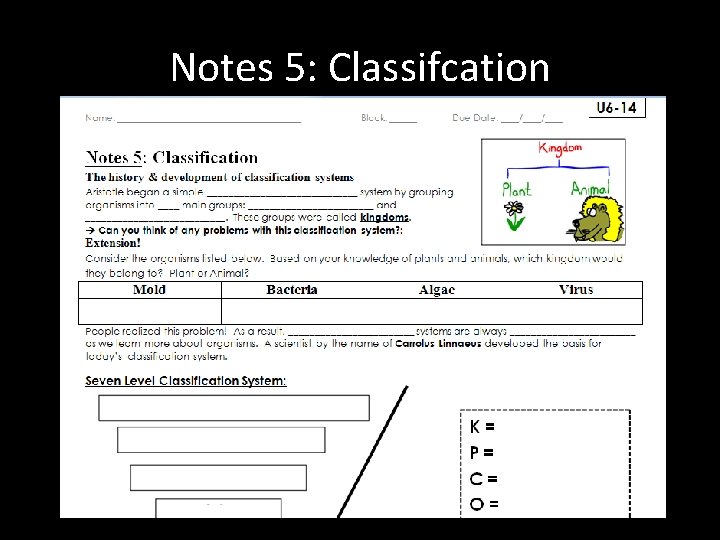
Notes 5: Classifcation
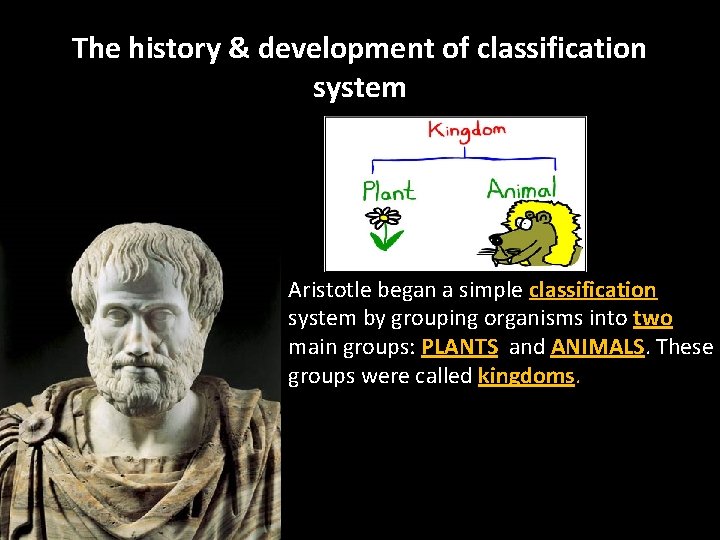
The history & development of classification system Aristotle began a simple classification system by grouping organisms into two main groups: PLANTS and ANIMALS. These groups were called kingdoms.
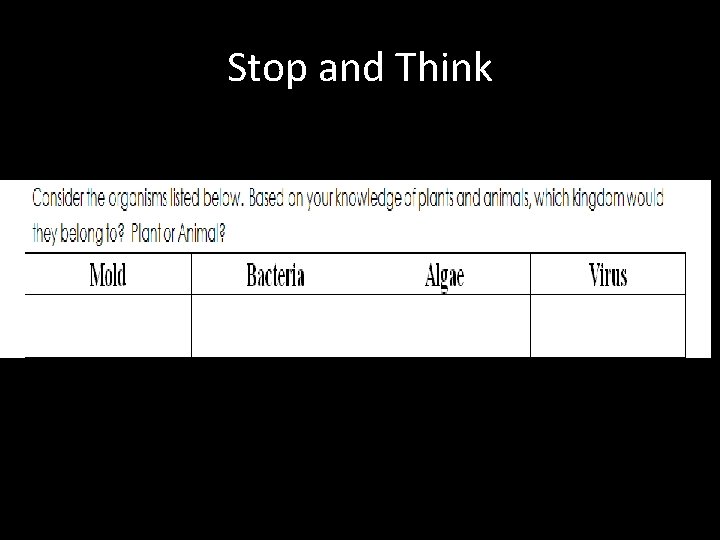
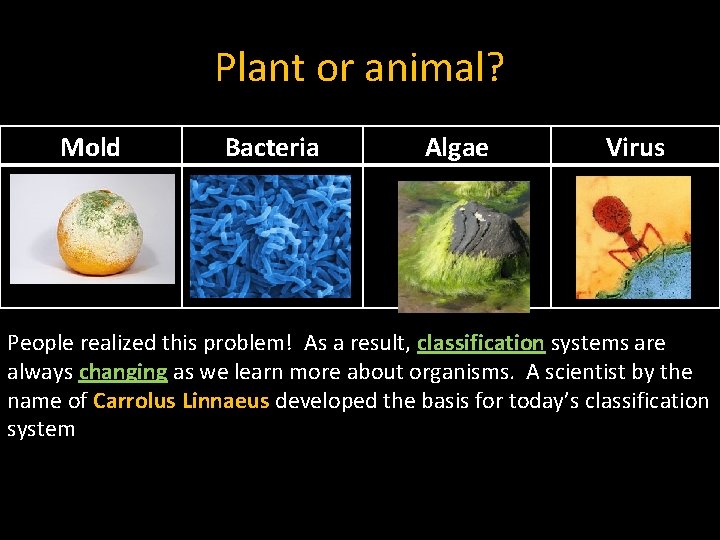
Why is Aristotle’s first classification system problematic? Plant… or …. Animal?
Stop and Think
Plant or animal? Mold Bacteria Algae Virus People realized this problem! As a result, classification systems are always changing as we learn more about organisms. A scientist by the name of Carrolus Linnaeus developed the basis for today’s classification system
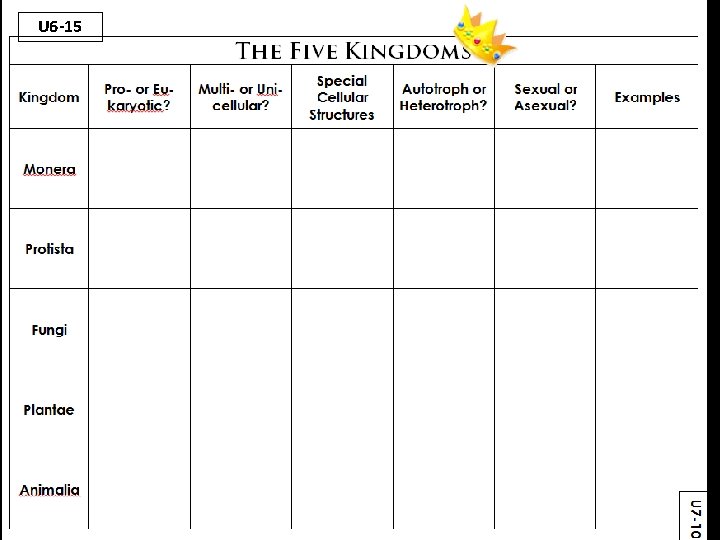
Do Now • Using the chart on page 459 of a textbook, fill in the chart on page U 6 -15 in your packets • For kingdom Monera, use the information from Eubacteria and Archaebacteria • I will help you with the sexual/asexual column but you should be able to figure this out on your own • Must be completed by 7: 35
U 6 -15
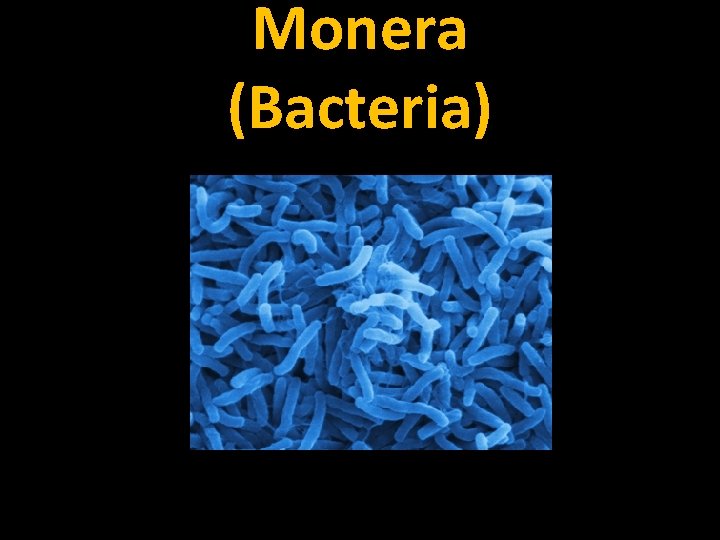
Monera (Bacteria)
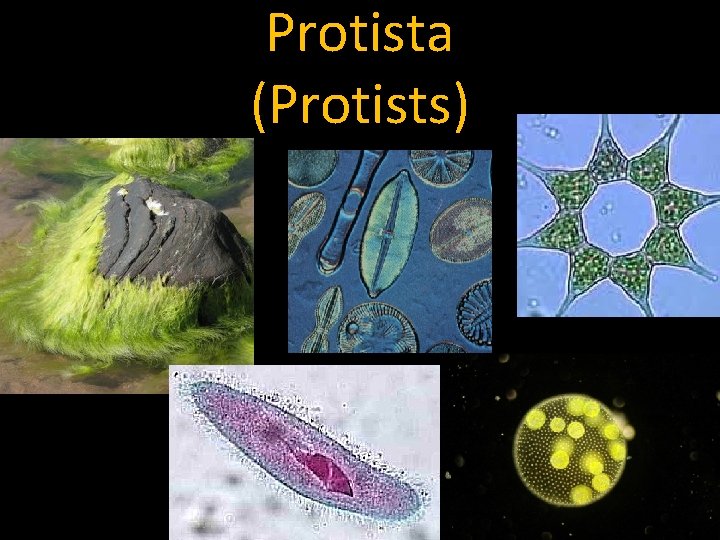
Protista (Protists)
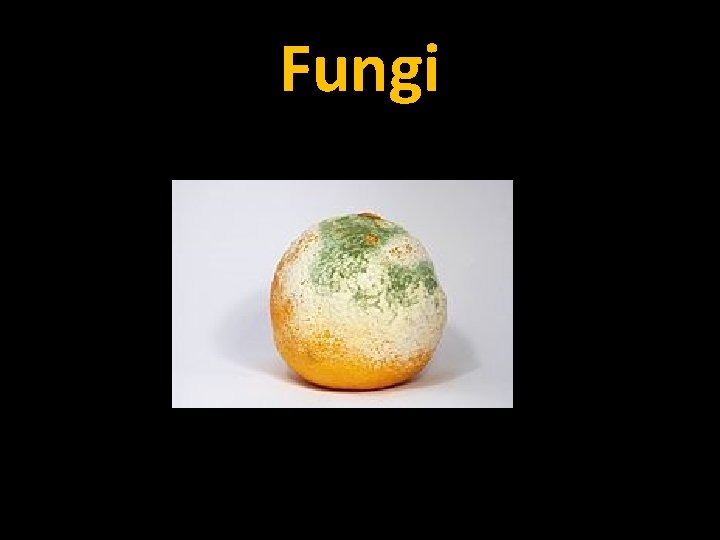
Fungi
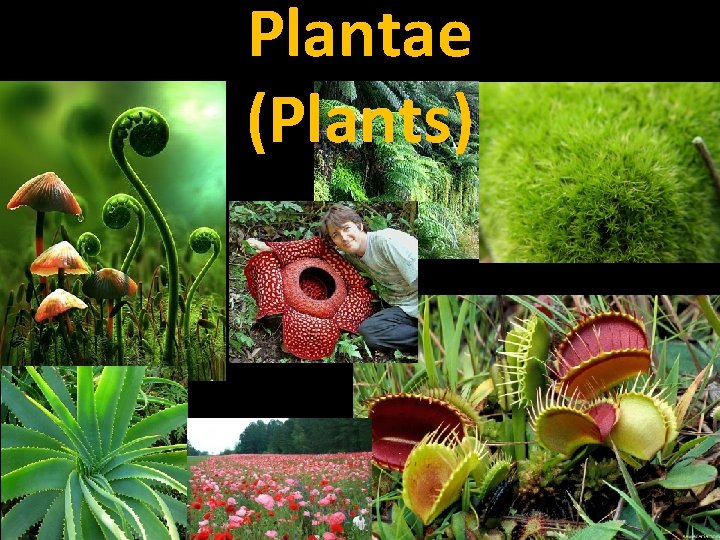
Plantae (Plants)
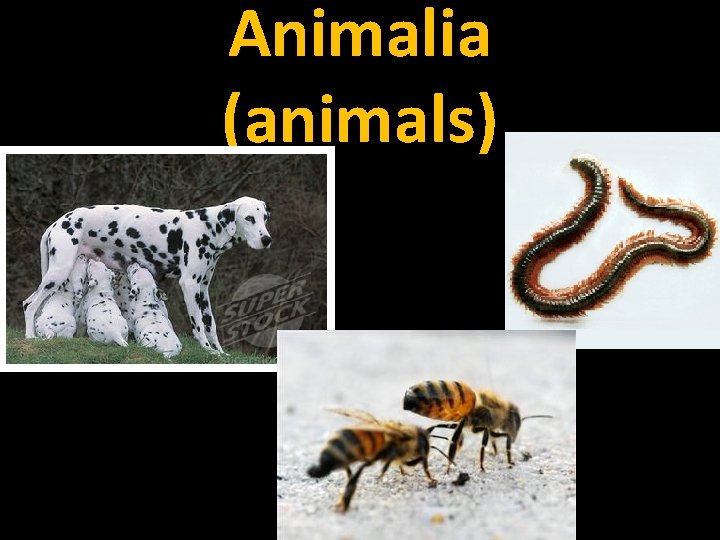
Animalia (animals)
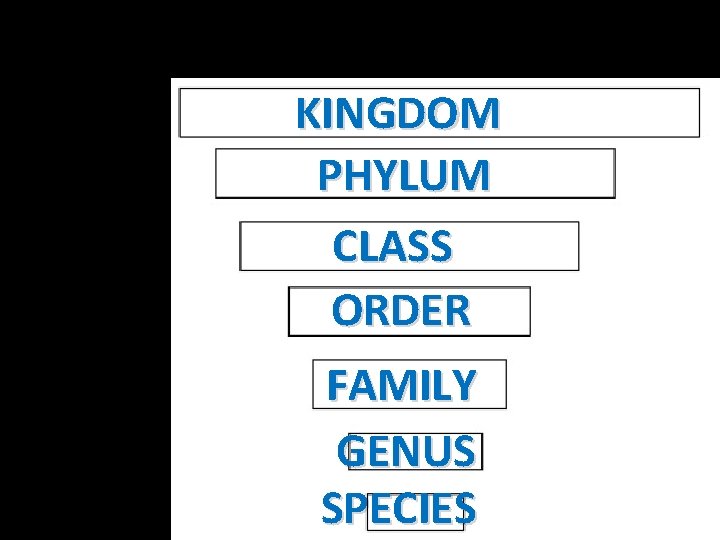
KINGDOM PHYLUM CLASS ORDER FAMILY GENUS SPECIES
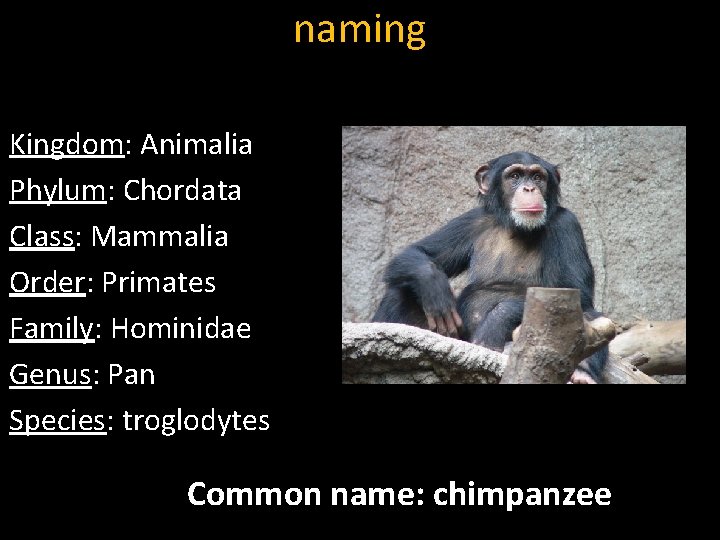
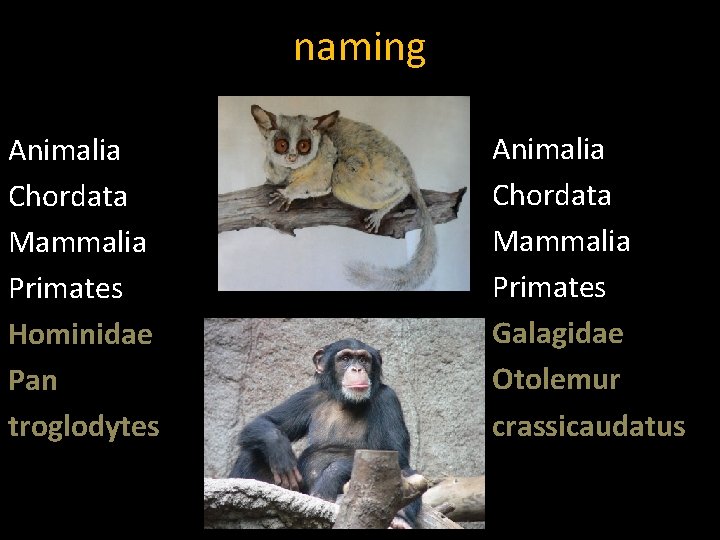
naming Kingdom: Animalia Phylum: Chordata Class: Mammalia Order: Primates Family: Hominidae Genus: Pan Species: troglodytes Common name: chimpanzee
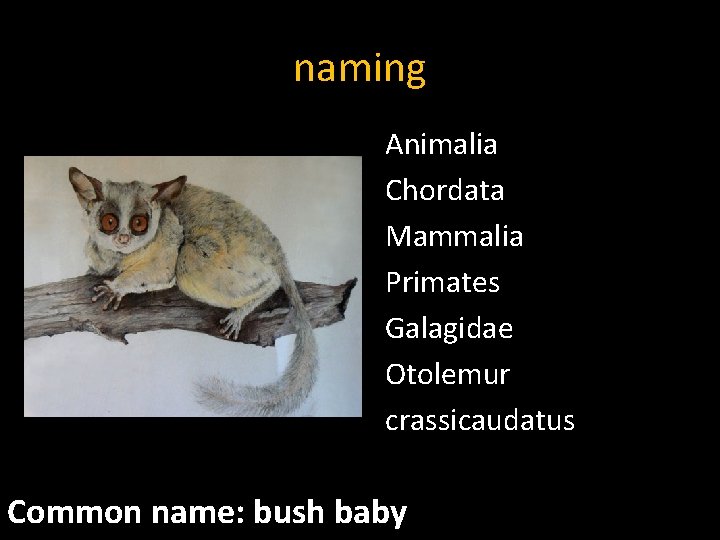
naming Animalia Chordata Mammalia Primates Galagidae Otolemur crassicaudatus Common name: bush baby
naming Animalia Chordata Mammalia Primates Hominidae Pan troglodytes Animalia Chordata Mammalia Primates Galagidae Otolemur crassicaudatus
Do Now 1. Who was the first man to group organisms? 2. What were those first 2 groups? Explain what was wrong with this thought. 3. What are the 5 kingdoms today? 4. What are the 7 levels of classification? 5. Giraffa camelopardalis is the scientific name of a giraffe. Using this information what is the genus and species?