
Mechanism of Procedural Stroke Following CAS and CEA
- Slides: 10
Mechanism of Procedural Stroke Following CAS and CEA Collaborators’ Meeting ACST-2 Oxford, 19 -9 -2014 Anne Huibers, Ph. D student Utrecht (Gert Jan de Borst) – Oxford (Alison Halliday)
Background • Prevalence of severe asymptomatic carotid stenosis (≥ 70%) 0– 3. 1% • Annual risk of stroke 1 % • Main objective CEA/CAS is stroke prevention …. However, • Procedural stroke feared complication
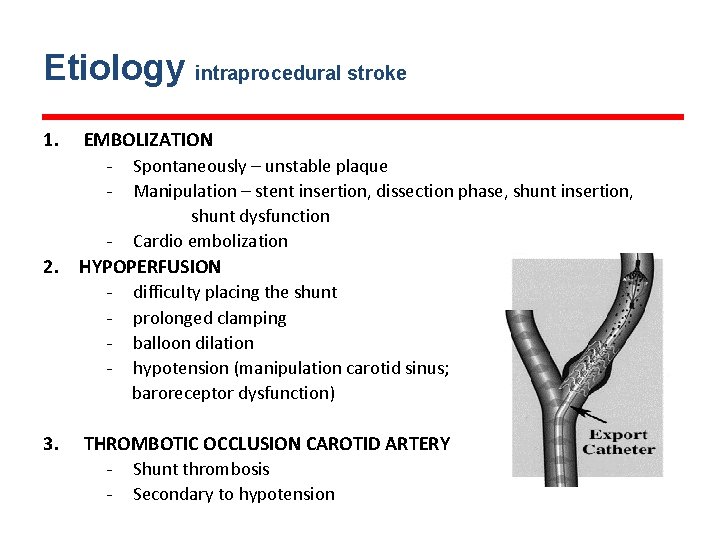
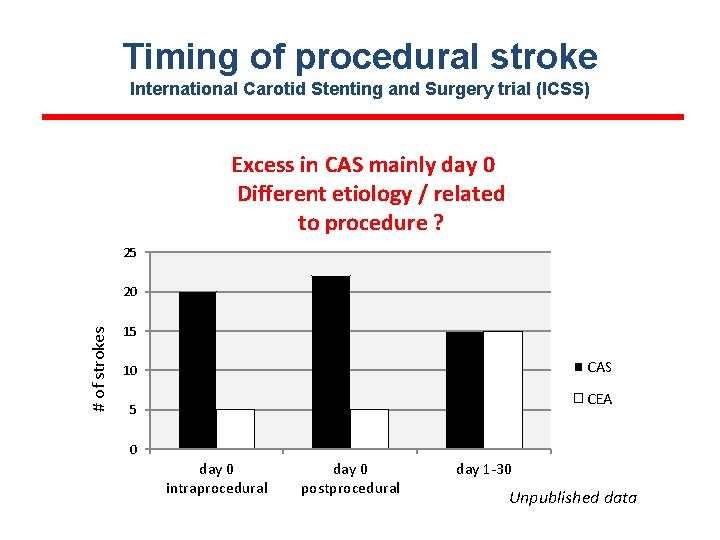
Etiology intraprocedural stroke 1. EMBOLIZATION - Spontaneously – unstable plaque - Manipulation – stent insertion, dissection phase, shunt insertion, shunt dysfunction Cardio embolization 2. 3. HYPOPERFUSION - difficulty placing the shunt - prolonged clamping - balloon dilation - hypotension (manipulation carotid sinus; baroreceptor dysfunction) THROMBOTIC OCCLUSION CAROTID ARTERY - Shunt thrombosis - Secondary to hypotension
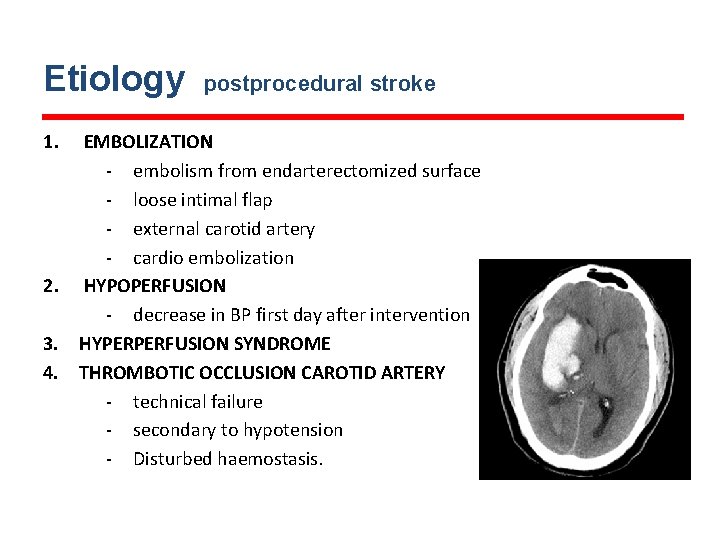
Etiology 1. 2. 3. 4. postprocedural stroke EMBOLIZATION - embolism from endarterectomized surface - loose intimal flap - external carotid artery - cardio embolization HYPOPERFUSION - decrease in BP first day after intervention HYPERPERFUSION SYNDROME THROMBOTIC OCCLUSION CAROTID ARTERY - technical failure - secondary to hypotension - Disturbed haemostasis.
Timing of procedural stroke International Carotid Stenting and Surgery trial (ICSS) Excess in CAS mainly day 0 Different etiology / related to procedure ? 25 # of strokes 20 15 CAS 10 CEA 5 0 day 0 intraprocedural day 0 postprocedural day 1 -30 Unpublished data
Scoring Strokes in ACST-2 substudy • Opportunity to prospectively classify strokes according to their mechanism • Potential problem: no standardised assessment of patients with procedural strokes
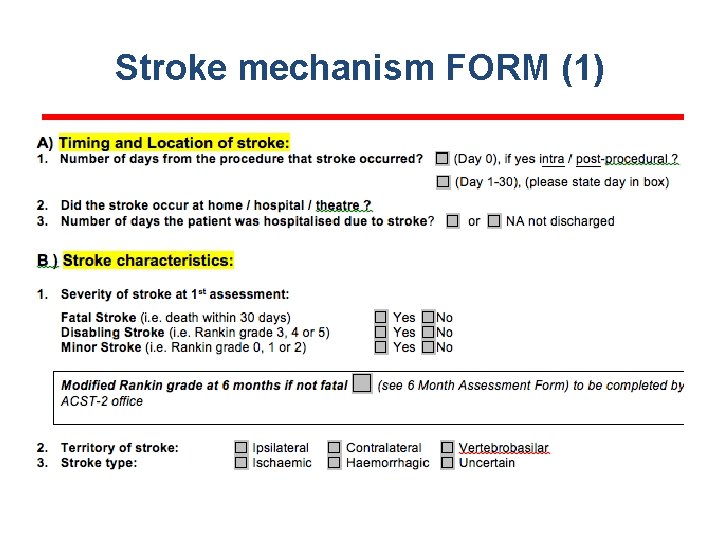
Stroke mechanism FORM (1)
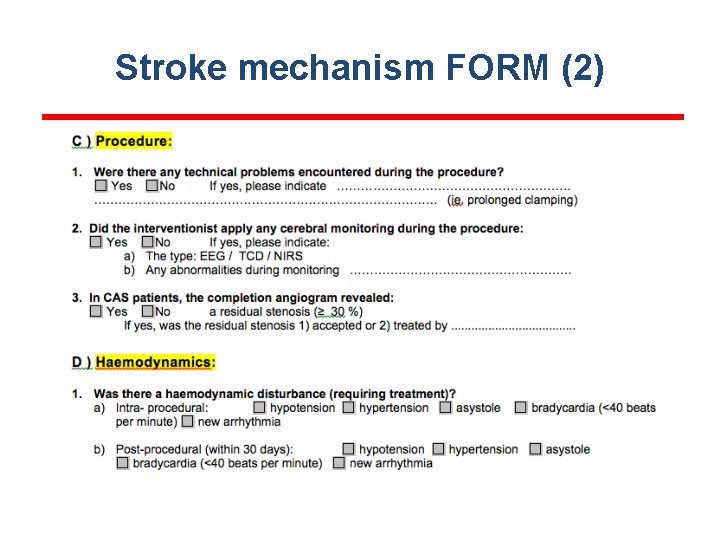
Stroke mechanism FORM (2)
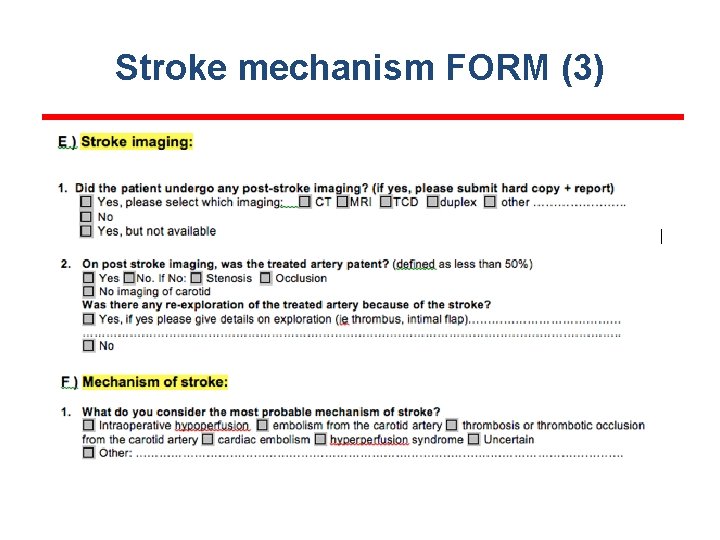
Stroke mechanism FORM (3)
Ultimate goals • Define the most probable cause of stroke • Better understand pathophysiological mechanism, detect strokes that are preventable ? ……. • Improve the safety of carotid surgery and stenting.